
The history of medicine contains many discoveries that challenged accepted beliefs before eventually earning recognition. Others generated tremendous excitement before evidence revealed important limitations. High-dose intravenous vitamin C occupies an unusual place between those two stories. Few therapies have inspired such passionate debate while remaining under active scientific investigation decades after first capturing public attention. Supporters describe it as an overlooked tool that deserves greater attention. Critics argue that the available evidence has not demonstrated clear anticancer benefits. Patients often struggle to understand why respected physicians can reach such different conclusions while discussing the same research.
Behind the controversy lies a much larger question. Cancer does not develop overnight, and no single treatment addresses every biological process that fuels malignant growth. Modern cancer research increasingly recognizes that tumors alter metabolism, weaken immune surveillance, increase chronic inflammation, and reshape their surrounding environment to support continued expansion. Scientists continue exploring whether high-dose intravenous vitamin C can interrupt some of these processes. Understanding that possibility requires examining how cancer develops, how vitamin C functions inside the body, and why intravenous administration differs dramatically from swallowing a tablet.
Cancer Begins Long Before a Tumor Appears
Cancer rarely begins with a single catastrophic event. Most malignancies emerge after years of accumulated cellular injury. Every day, trillions of cells divide to replace aging tissues and repair damage. Each division requires accurate DNA replication, efficient energy production, and careful quality control. Environmental toxins, tobacco smoke, ultraviolet radiation, chronic infections, excess alcohol, obesity, and normal aging all increase opportunities for DNA damage. Although sophisticated repair systems correct many mistakes, some mutations escape detection and become permanently incorporated into future generations of cells.
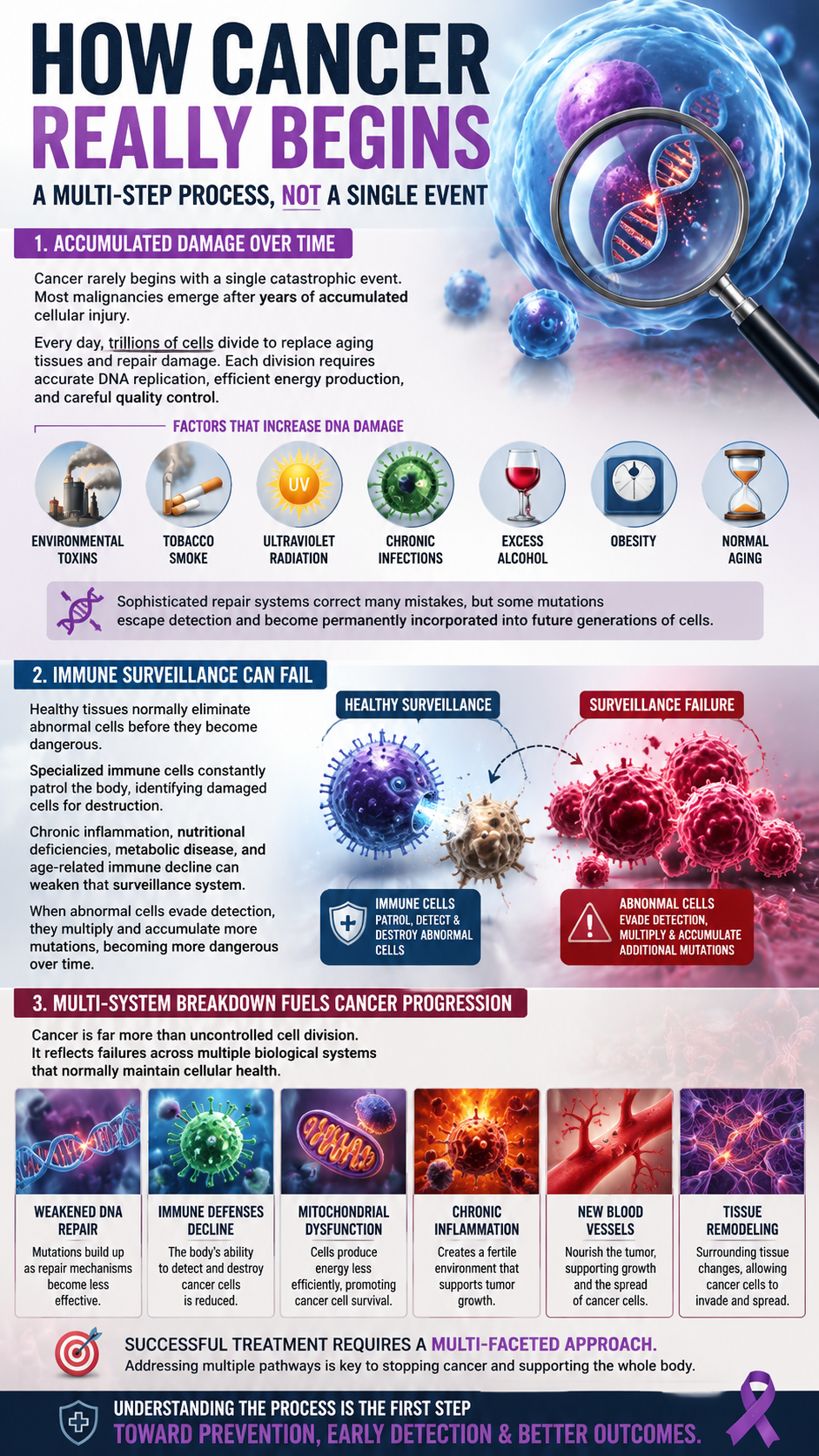
Healthy tissues normally eliminate abnormal cells before they become dangerous. Specialized immune cells constantly patrol the body, identifying damaged cells for destruction. Chronic inflammation, nutritional deficiencies, metabolic disease, and age-related immune decline can weaken that surveillance system. When abnormal cells evade detection, they gain opportunities to multiply and accumulate additional mutations. Over time, these altered cells acquire the ability to resist normal growth controls, invade surrounding tissues, and eventually spread throughout the body.
Cancer therefore represents far more than uncontrolled cell division. The disease reflects failures across multiple biological systems that normally maintain cellular health. DNA repair mechanisms become less effective. Immune defenses lose efficiency. Mitochondria produce energy less efficiently. Chronic inflammation creates an environment that favors continued tumor growth. Blood vessels expand to nourish malignant tissue, while surrounding connective tissue gradually remodels to accommodate invasion. Successful treatment often requires addressing several of these processes simultaneously rather than focusing on only one target.
The Hidden Environment That Helps Cancer Thrive
Many people picture cancer as an isolated mass growing independently inside the body. Modern research paints a much different picture. Every tumor exists within a highly active neighborhood known as the tumor microenvironment. Blood vessels deliver nutrients that sustain rapid growth. Immune cells release inflammatory signals that may either attack or unintentionally support malignant tissue. Fibroblasts reshape connective tissue, allowing cancer cells to migrate into healthy organs. Chemical messengers continuously influence communication between malignant cells and their surroundings.
This environment often determines whether a tumor grows aggressively or remains relatively contained. Cancer cells manipulate nearby tissues to secure additional blood supply through angiogenesis. They release substances that suppress immune attacks while recruiting cells that promote inflammation. Many tumors also alter the extracellular matrix, making it easier to invade adjacent structures. These changes transform the surrounding tissue into fertile ground for continued progression rather than a barrier against disease.
Researchers increasingly believe that disrupting this supportive environment may improve treatment outcomes. Therapies that reduce inflammation, improve immune function, strengthen connective tissue, or alter tumor metabolism could complement traditional approaches in carefully selected patients. High-dose intravenous vitamin C entered scientific discussion because laboratory studies suggested it might influence several of these biological pathways simultaneously. Those findings sparked renewed interest after decades of relative neglect.
Oxidative Stress Drives Cellular Damage
Every cell continuously produces energy through metabolic reactions occurring inside mitochondria. These reactions naturally generate reactive oxygen species, commonly called free radicals. Healthy cells maintain balance by producing antioxidants that neutralize these reactive molecules before significant injury occurs. Oxidative stress develops when free radical production overwhelms the body’s protective systems. Excessive oxidative stress damages proteins, cell membranes, and DNA while disrupting normal cellular communication.
Cancer cells often exist under far greater oxidative stress than healthy tissues. Rapid growth demands enormous amounts of energy, increasing production of reactive oxygen species. Malignant cells survive by enhancing antioxidant defenses that protect them from self-inflicted injury. This adaptation creates an unusual biological vulnerability. Scientists wondered whether sufficiently high concentrations of vitamin C might overwhelm those protective systems without harming surrounding healthy tissues.
This hypothesis transformed vitamin C research. Instead of viewing the vitamin solely as a nutritional antioxidant, investigators began studying its pharmacological behavior at concentrations achievable only through intravenous administration. The distinction proved essential because blood levels produced through oral supplementation remain far below those reached during intravenous infusion. Appreciating that difference explains why earlier clinical studies produced conflicting conclusions and why researchers eventually revisited the therapy with renewed interest.
Why Oral Vitamin C Cannot Replicate Intravenous Therapy
Many discussions about vitamin C overlook one of the most important concepts in nutritional pharmacology. The digestive tract carefully controls how much vitamin C enters the bloodstream. Specialized transport proteins absorb the vitamin until they become saturated. Once saturation occurs, additional vitamin C remains inside the intestine before eventually leaving the body. Taking larger oral doses therefore produces only modest increases in blood concentration despite consuming significantly more vitamin C.
Intravenous administration bypasses these intestinal transport systems completely. Physicians deliver vitamin C directly into the bloodstream, producing plasma concentrations many times greater than oral supplementation can achieve. Researchers describe these levels as pharmacologic because they exceed concentrations normally obtained through diet or conventional nutritional supplements. At these elevated concentrations, vitamin C behaves differently than it does under ordinary physiological conditions.
Laboratory experiments suggest pharmacologic vitamin C may generate hydrogen peroxide within extracellular fluid surrounding certain cancer cells. Healthy tissues generally possess robust enzyme systems that rapidly eliminate hydrogen peroxide before damage occurs. Some malignant cells appear less capable of neutralizing these reactive molecules, making them more susceptible to oxidative injury under experimental conditions. Scientists continue investigating whether this selective vulnerability contributes to the effects observed in laboratory models and early clinical studies.
The Discovery That Revived Scientific Interest
Interest in intravenous vitamin C largely faded after studies from the late twentieth century failed to confirm dramatic anticancer effects. Many researchers concluded that earlier reports reflected flawed methodology rather than genuine biological activity. The conversation changed after pharmacokinetic studies demonstrated that oral and intravenous vitamin C represented fundamentally different interventions. Investigators realized previous clinical trials had compared two therapies that produced vastly different blood concentrations.
This discovery prompted renewed laboratory research across several academic institutions. Scientists examined how pharmacologic vitamin C influenced cancer cell metabolism, oxidative stress, inflammation, and gene regulation. Multiple laboratory studies reported encouraging findings across several tumor types. Researchers observed reduced growth of certain cancer cells, increased sensitivity to chemotherapy in selected models, and alterations in pathways involved in tumor progression. These observations justified further investigation but did not establish effectiveness in human patients.
Early clinical trials therefore shifted toward evaluating safety, tolerability, and biological activity rather than immediate cure rates. Investigators sought to determine whether high-dose intravenous vitamin C could improve quality of life, reduce treatment-related side effects, or complement established therapies. Results varied across studies, yet several trials reported reductions in fatigue, improvements in physical functioning, and acceptable safety profiles among carefully selected participants. Larger randomized trials remain necessary before determining whether these findings translate into meaningful improvements in long-term outcomes.
Why the Debate Continues Today
High-dose intravenous vitamin C remains controversial because different groups often emphasize different parts of the available evidence. Laboratory researchers focus on compelling biological mechanisms that justify continued investigation. Clinicians emphasize the need for large randomized trials before changing treatment guidelines. Patients facing advanced cancer frequently search for additional options after exhausting conventional therapies, increasing public interest in supportive approaches with relatively favorable safety profiles.
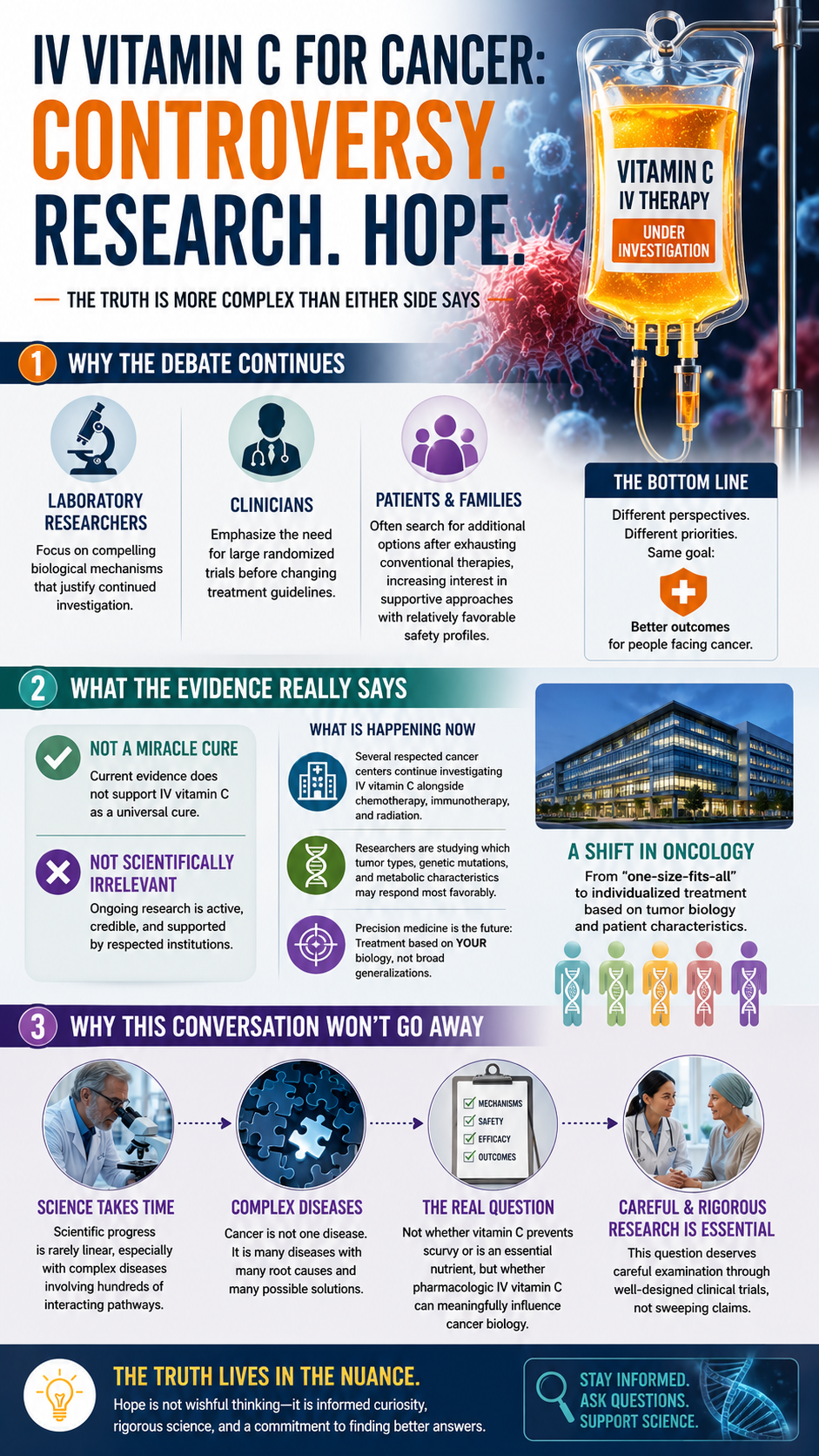
Current evidence neither supports describing intravenous vitamin C as a universal cure nor justifies dismissing ongoing research as scientifically irrelevant. Several respected cancer centers continue investigating its role alongside chemotherapy, immunotherapy, and radiation. Researchers increasingly study which tumor types, genetic mutations, and metabolic characteristics might respond most favorably rather than assuming every cancer behaves identically. This precision medicine approach reflects a broader shift within oncology toward individualized treatment based on tumor biology rather than broad generalizations.
Understanding these nuances helps explain why the discussion persists despite decades of disagreement. Scientific progress rarely follows a straight path, especially when investigating complex diseases involving hundreds of interacting biological pathways. The remaining question is not whether vitamin C prevents scurvy or functions as an essential nutrient. Researchers instead seek to determine whether pharmacologic intravenous vitamin C can meaningfully influence cancer biology within carefully selected clinical settings. That question remains under active investigation and deserves careful examination through rigorous research rather than sweeping conclusions.
The Real Question Is Not Whether Vitamin C Kills Cancer
The public conversation often begins with the wrong question. People ask whether high-dose intravenous vitamin C kills cancer cells. That question oversimplifies one of the most complex diseases known to medicine. Cancer develops through countless biological changes that occur over many years. A single therapy rarely reverses every process that drives malignant growth. Scientists therefore ask a more meaningful question. Can intravenous vitamin C weaken some of the biological systems that allow cancer to survive, spread, and resist treatment?
Researchers continue exploring that possibility because cancer cells differ significantly from healthy tissues. Malignant cells consume nutrients differently, generate energy through altered metabolic pathways, and create an environment filled with oxidative stress and chronic inflammation. They manipulate nearby blood vessels, suppress immune defenses, and alter surrounding connective tissue. These biological changes create opportunities for therapies that target cancer’s unique weaknesses rather than attacking every rapidly dividing cell indiscriminately.
High-dose intravenous vitamin C has attracted attention because it may influence several of these processes simultaneously. Laboratory investigations suggest pharmacologic vitamin C can increase oxidative stress within susceptible cancer cells while leaving healthy tissues relatively unharmed. Other studies indicate that vitamin C may influence immune signaling, collagen production, inflammation, and cellular metabolism. Although these findings remain under active investigation, they explain why researchers continue studying intravenous vitamin C decades after many believed the subject had ended.
Cancer Exhausts the Body Long Before It Becomes Fatal
Most people associate cancer with tumors, chemotherapy, and surgery. They rarely consider the profound metabolic changes occurring throughout the entire body. Cancer behaves like an energy thief. Rapidly growing tumors consume enormous amounts of glucose, amino acids, vitamins, and minerals to support continuous cell division. At the same time, inflammatory chemicals released by malignant tissue alter normal metabolism, reduce appetite, increase muscle breakdown, and accelerate fatigue.
This metabolic disruption often produces cachexia, a condition characterized by severe muscle loss despite adequate calorie intake. Cachexia weakens the immune system, reduces physical strength, impairs healing, and limits tolerance to aggressive cancer treatments. Patients frequently lose weight, develop profound exhaustion, and struggle to recover after chemotherapy or surgery. These complications contribute significantly to declining quality of life and may influence overall prognosis.
Vitamin C enters this discussion because it supports several systems that become compromised during cancer progression. The vitamin participates in collagen synthesis, immune cell function, wound repair, neurotransmitter production, and antioxidant defense. Deficiency does not cause cancer, yet depleted vitamin C levels may worsen fatigue, delay healing, and impair immune responses in individuals already battling advanced disease. Researchers therefore continue investigating whether restoring pharmacologic vitamin C levels improves resilience during cancer treatment rather than expecting the vitamin alone to eliminate malignancy.
Why Chronic Inflammation Fuels Tumor Growth
Inflammation protects the body after injury or infection. Problems arise when inflammatory activity continues month after month without resolution. Chronic inflammation exposes tissues to constant oxidative stress while stimulating repeated cycles of damage and repair. This environment increases opportunities for DNA mutations, promotes abnormal blood vessel formation, and encourages cancer cells to invade surrounding organs. Many scientists now recognize persistent inflammation as one of the defining characteristics of cancer progression.
Inflammatory molecules also influence communication between malignant cells and the immune system. Certain cytokines suppress normal immune surveillance, allowing tumors to escape destruction while continuing to expand. Other inflammatory signals stimulate angiogenesis, providing growing tumors with oxygen and nutrients. These changes transform inflammation from a protective response into a biological partner that unintentionally supports malignant growth.
Several early clinical studies suggest intravenous vitamin C may reduce selected inflammatory markers in some patients. Researchers continue evaluating whether these changes translate into measurable improvements in fatigue, pain, treatment tolerance, or overall outcomes. Current evidence remains preliminary, yet it supports continued investigation into inflammation as one pathway through which vitamin C may provide supportive benefits during comprehensive cancer care.
The Immune System Cannot Fight What It Cannot See
A healthy immune system identifies abnormal cells before they develop into dangerous tumors. Specialized lymphocytes, natural killer cells, and macrophages constantly inspect tissues for signs of infection or malignant transformation. Cancer survives by disrupting this surveillance network. Tumors release signaling molecules that confuse immune cells, suppress normal defenses, and create local environments where malignant cells remain largely undetected.
Nutritional status strongly influences immune performance. Deficiencies of vitamin C, vitamin D, zinc, selenium, protein, and other nutrients impair several aspects of immune function. Vitamin C accumulates inside white blood cells at concentrations far exceeding those found in blood plasma, highlighting its importance during immune activation. These cells consume vitamin C rapidly while responding to inflammation, infection, and tissue injury. Advanced illness can therefore increase vitamin C requirements beyond amounts supplied through ordinary dietary intake.
Researchers continue exploring whether pharmacologic intravenous vitamin C enhances immune function during cancer therapy. Some laboratory studies suggest improved activity of immune cells under specific conditions, while clinical research remains limited. Scientists agree that adequate nutrition supports healthy immune responses, yet they continue studying whether high-dose intravenous administration provides additional advantages beyond correcting deficiency. Larger trials will determine whether encouraging laboratory observations produce meaningful clinical improvements.
What Current Clinical Research Actually Shows
Human studies provide a more cautious picture than headlines often suggest. Researchers have not demonstrated that intravenous vitamin C cures cancer when used alone. At the same time, several clinical investigations have reported encouraging findings that justify continued research. Many early trials focused on safety because pharmacologic vitamin C achieves blood concentrations far beyond those obtained through ordinary nutrition.
Results consistently show that carefully screened patients generally tolerate intravenous vitamin C well when experienced medical professionals supervise treatment. Physicians routinely evaluate kidney function, hydration status, and glucose-6-phosphate dehydrogenase deficiency before initiating therapy because these factors influence safety. Appropriate patient selection remains essential for minimizing potential complications.
Several clinical studies have reported improvements in fatigue, nausea, pain, appetite, and overall quality of life among patients receiving intravenous vitamin C alongside conventional cancer treatment. Other investigations have suggested reduced chemotherapy-related side effects without diminishing anticancer activity. These findings remain encouraging rather than definitive because many studies involved relatively small numbers of participants. Researchers now seek larger randomized trials capable of determining whether these supportive benefits translate into improved survival or disease control.
Why Conventional Oncology Remains Cautious
Many patients interpret cautious recommendations as evidence of bias or deliberate suppression. The reality proves more complicated. Modern oncology depends upon large randomized controlled trials before incorporating new therapies into standard treatment guidelines. Physicians must demonstrate consistent improvements in survival, disease progression, or quality of life across diverse patient populations before recommending widespread adoption.
High-dose intravenous vitamin C has not yet accumulated that level of evidence. Existing studies vary considerably regarding cancer type, treatment protocols, dosage, patient selection, and outcome measures. These differences make direct comparisons difficult while limiting confidence in broad conclusions. Oncologists therefore acknowledge intriguing preliminary findings while requesting stronger evidence before changing clinical practice.
Scientific caution should not discourage continued investigation. Many accepted cancer therapies required decades of careful research before becoming standard care. Researchers continue conducting clinical trials because laboratory evidence and early human studies suggest vitamin C deserves further evaluation. The scientific process advances through rigorous testing rather than premature acceptance or automatic rejection.
Supporting Your Body During Cancer Begins at Home
No dietary pattern eliminates established cancer, yet everyday choices strongly influence inflammation, immune function, metabolic health, and overall resilience. Building a supportive internal environment begins with nutrient-dense whole foods that provide vitamins, minerals, phytonutrients, healthy fats, and adequate protein. Fresh vegetables, colorful fruits, quality seafood, pasture-raised poultry, lean meats, legumes, herbs, and spices supply compounds that support normal cellular function while helping control chronic inflammation.
Maintaining stable blood sugar also deserves careful attention. Persistent hyperglycemia increases oxidative stress while promoting inflammatory pathways associated with numerous chronic diseases. Choosing minimally processed foods, limiting refined sugars, and emphasizing balanced meals helps reduce unnecessary metabolic strain. Regular physical activity further improves insulin sensitivity, supports immune function, preserves muscle mass, and enhances overall cardiovascular health during recovery from treatment.
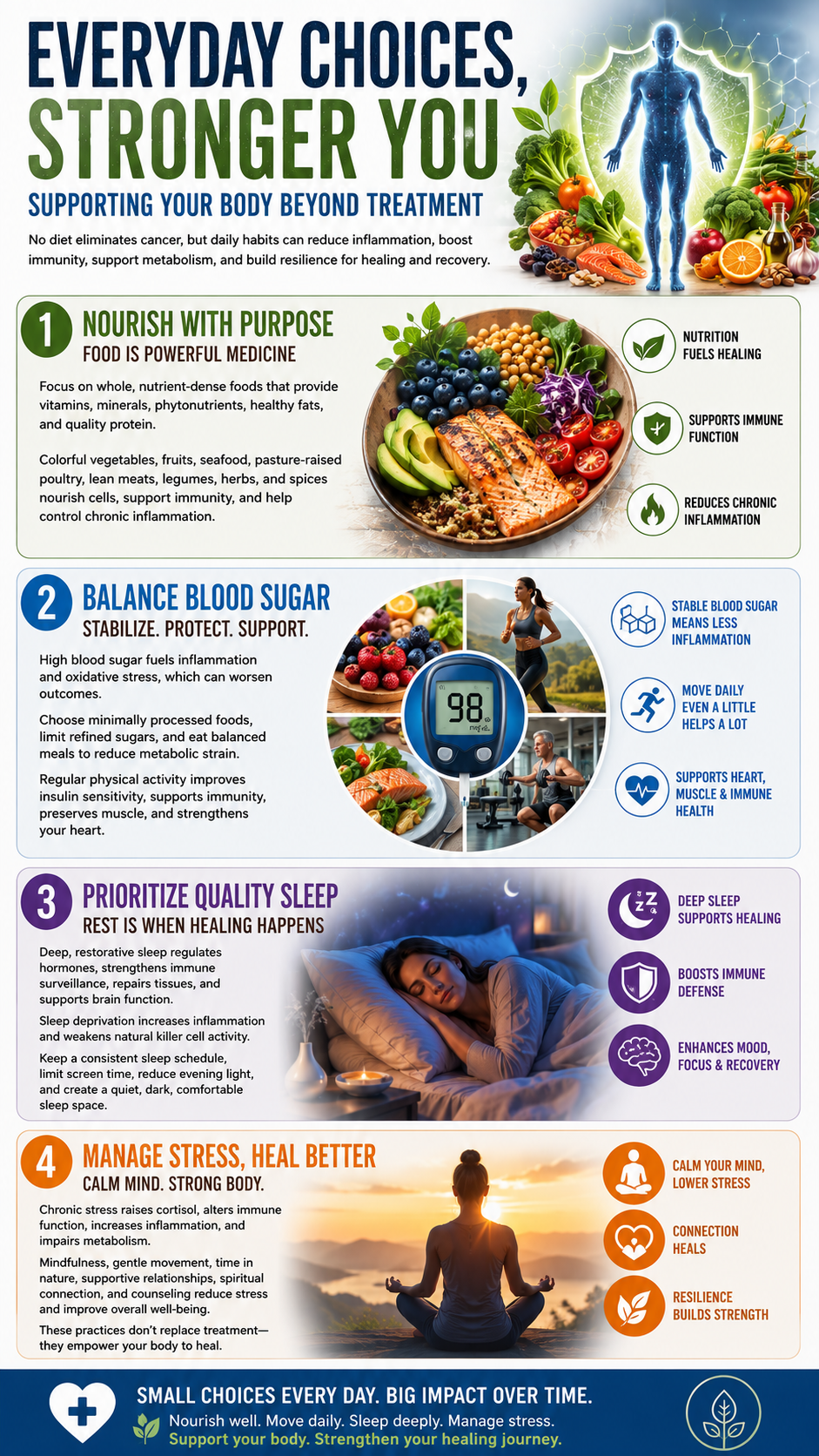
Quality sleep represents another essential component of supportive care. Deep sleep regulates hormone production, immune surveillance, tissue repair, and cognitive function. Chronic sleep deprivation increases inflammatory signaling while impairing natural killer cell activity. Establishing consistent sleep schedules, reducing evening light exposure, and creating quiet sleeping environments support many biological processes that become disrupted during serious illness.
Stress management also influences physiological health. Persistent psychological stress elevates cortisol, alters immune regulation, increases inflammatory activity, and disrupts healthy metabolic function. Mindfulness practices, moderate exercise, supportive relationships, spiritual engagement, and counseling each help reduce chronic stress while improving overall well-being. These approaches cannot replace cancer treatment, yet they strengthen the body’s capacity to recover from physical and emotional challenges.
A Balanced Perspective on High-Dose Vitamin C
High-dose intravenous vitamin C should neither occupy the pedestal of a miracle cure nor disappear beneath the weight of premature dismissal. Current research supports continued investigation because laboratory findings and early clinical studies reveal biologically plausible mechanisms deserving careful exploration. Evidence also demonstrates that intravenous vitamin C differs fundamentally from oral supplementation, making earlier comparisons scientifically misleading.
Patients considering intravenous vitamin C should discuss the therapy with their oncology team and seek clinicians experienced in evidence-informed supportive cancer care. Individual health status, kidney function, ongoing treatments, and specific cancer characteristics all influence whether this approach may be appropriate. Careful medical supervision remains essential because responsible supportive care requires personalized evaluation rather than one-size-fits-all recommendations.
Cancer challenges every major system within the human body. Successful treatment therefore extends beyond shrinking tumors alone. Preserving nutritional status, controlling inflammation, supporting immune function, maintaining muscle mass, optimizing metabolic health, and protecting quality of life all contribute to comprehensive cancer care. High-dose intravenous vitamin C continues to attract scientific interest because it may influence several of these biological systems simultaneously. Whether future research establishes a larger clinical role remains uncertain, but the ongoing investigation reflects a growing recognition that understanding cancer requires addressing the entire biological environment in which the disease develops, survives, and progresses.