
THE NUMBER THAT REVEALS YOUR BODY’S RESERVE
There is a revealing moment that often arrives years before anyone calls a person unhealthy. The staircase suddenly feels steeper than it did five years ago. A brisk walk creates heavier breathing, while carrying groceries requires an unexpected pause. Most people dismiss these changes as normal aging because nothing dramatic has happened. Yet something important may already be disappearing beneath the surface: physiological reserve. One useful measurement of that reserve is VO₂ max, the maximum amount of oxygen your body can use during intense exercise.
VO₂ max has traditionally lived inside exercise laboratories and elite athletic programs. Runners discuss it, cyclists chase it, and coaches use it to evaluate endurance. However, viewing VO₂ max only as an athletic measurement misses its larger significance. This number reflects cooperation among your lungs, heart, circulation, blood, muscles, and mitochondria. Those systems determine whether oxygen reaches working tissues when demand rises. Their combined performance can influence how comfortably you move through life.
The deeper issue is not whether someone can run a marathon. Longevity requires enough physical capacity to withstand aging, illness, inactivity, stress, and unexpected physiological challenges. A person with substantial reserve has more capacity available when life becomes demanding. Someone living near the bottom of that reserve has much less room for error. VO₂ max matters because it helps expose that difference.
What Is VO₂ Max?
VO₂ max measures the maximum amount of oxygen your body can consume during strenuous exercise. Scientists usually express it in milliliters of oxygen per kilogram of body weight each minute. Although the definition sounds simple, the biology behind the number is remarkably complex.
First, the lungs must bring oxygen into the body efficiently. Oxygen then crosses into the bloodstream and binds largely to hemoglobin inside red blood cells. Next, the heart pumps oxygenated blood through arteries toward active tissues. Smaller vessels distribute that blood throughout skeletal muscle. Finally, muscle cells extract oxygen, and mitochondria use it during aerobic energy production.
A weakness anywhere within this chain can restrict overall aerobic performance. Poor cardiac output can limit oxygen delivery despite healthy lungs. Reduced hemoglobin can compromise transport despite strong muscles. Deconditioned skeletal muscle may struggle to extract and use available oxygen effectively. VO₂ max therefore represents an integrated measurement rather than an isolated heart or lung test.
That distinction makes the number unusually informative. Resting measurements show what the body does while demands remain low. VO₂ max examines what happens when physiology must accelerate. Stressing the system can reveal limitations that remain hidden while someone sits comfortably in an examination room.
The Real Problem Is Losing Physiological Reserve
The real longevity problem is not simply having a low VO₂ max score. The greater concern involves losing enough reserve that ordinary life gradually approaches your physical ceiling. This decline can occur quietly for decades before disability becomes obvious.
Imagine that climbing two flights of stairs once required 25 percent of your available aerobic capacity. Years of inactivity and declining fitness might eventually make those stairs require 60 percent. Later, the same task could consume nearly everything available. Nothing changed about the stairs. The machinery moving you upward changed.
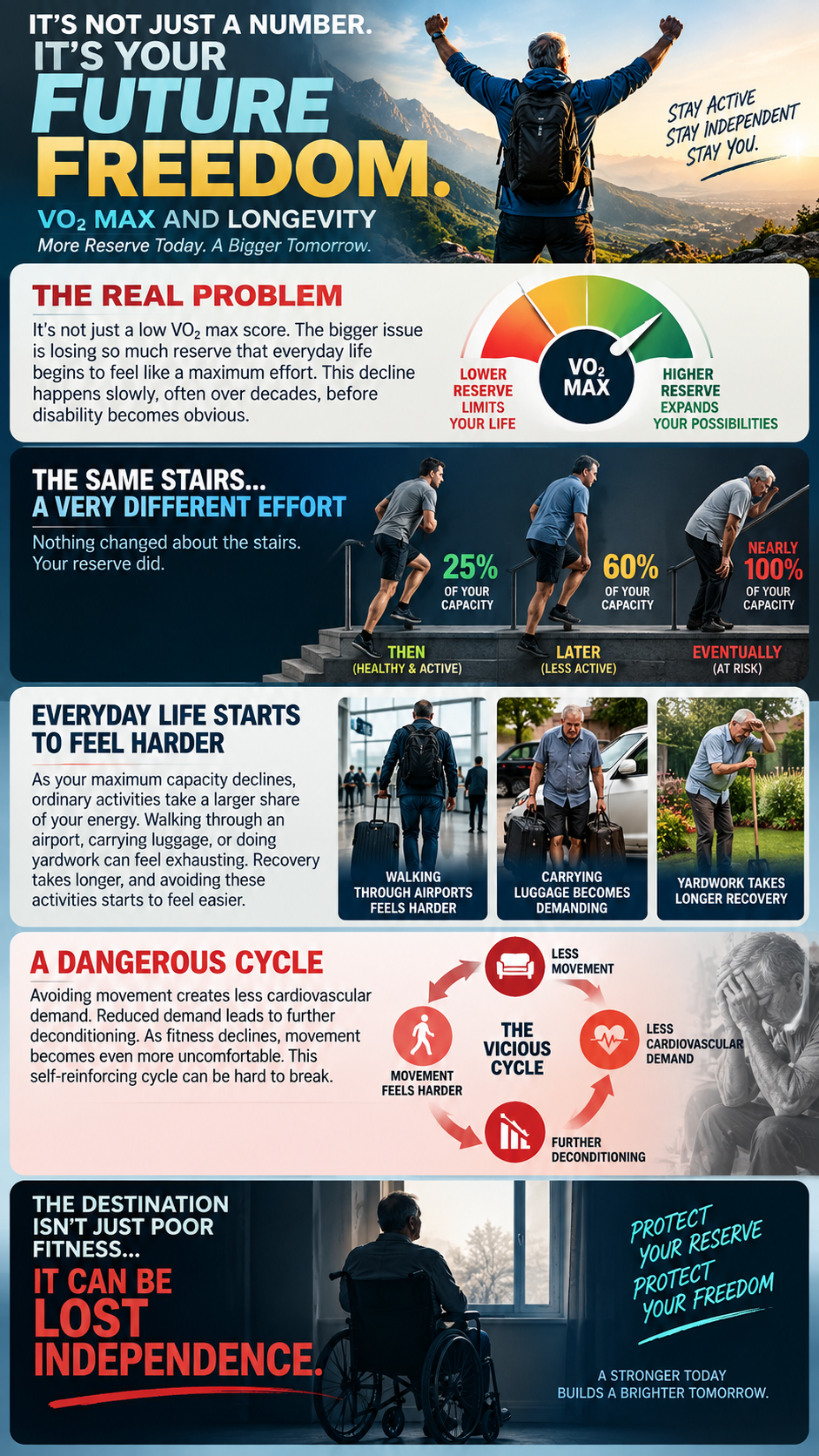
This explains an important feature of aging that people often misunderstand. Everyday activities become exhausting partly because maximum capacity has fallen closer to everyday requirements. Walking through an airport feels harder. Carrying luggage becomes demanding. Yardwork requires longer recovery. Eventually, avoiding these activities feels easier than performing them.
Avoidance then accelerates the original problem. Less movement creates less cardiovascular demand. Reduced demand encourages further deconditioning, while declining fitness makes movement increasingly uncomfortable. A self-reinforcing cycle develops between inactivity and diminished capacity.
The destination of that cycle is not merely poor athletic performance. It can become lost independence.
Where Does Declining VO₂ Max Come From?
Age influences VO₂ max, but chronological aging tells only part of the story. Genetics, sex, body composition, altitude, health conditions, medications, and training history also influence aerobic capacity. Among modifiable influences, physical activity remains particularly important.
Modern environments make physical inactivity extraordinarily easy. Many adults move from bed to car, car to chair, chair to car, and car to sofa. Elevators replace stairs, machines replace physical labor, and screens dominate recreation. Food can arrive without anyone walking farther than the front door.
Human physiology adapts to these conditions with ruthless efficiency. The body does not maintain expensive biological capacity without a reason. Stop challenging muscle and strength declines. Remove cardiovascular demand and endurance falls. Reduce sustained movement and the cellular machinery supporting aerobic metabolism receives less stimulation.
This response is not a defect. It is adaptation.
Unfortunately, the modern environment frequently asks the human body to adapt toward physical incapacity.
The Mitochondrial Connection to VO₂ Max
At the cellular level, the VO₂ max conversation eventually arrives at the mitochondria. These structures help convert energy from food into adenosine triphosphate, or ATP. Cells use ATP to power contraction, transport molecules, maintain electrical gradients, and support countless biological processes.
Aerobic exercise creates a powerful reason for muscle cells to strengthen their oxidative machinery. Repeated training can increase mitochondrial content and improve oxidative enzyme activity. Exercise also stimulates signaling involved in mitochondrial biogenesis, including pathways associated with PGC-1α.
Capillary networks can adapt alongside those cellular changes. More effective capillary delivery improves the exchange of oxygen and nutrients between blood and working tissues. Muscles also become better at extracting oxygen from circulating blood.
These adaptations help explain why trained people can perform substantially more work before becoming exhausted. Their bodies do not simply tolerate suffering better. Their tissues have remodeled around repeated metabolic demand.
Inactivity sends the opposite message. Without regular demand, the body has little incentive to maintain peak aerobic machinery. Over time, mitochondrial capacity, cardiovascular conditioning, and muscular endurance can deteriorate together.
What Poor Aerobic Fitness Does to Metabolic Health
Low cardiorespiratory fitness rarely exists inside a physiological vacuum. It often accompanies several conditions associated with metabolic dysfunction. Reduced physical activity can contribute to insulin resistance, loss of muscle capacity, increased visceral fat, and impaired glucose regulation.
Skeletal muscle plays an enormous role in glucose metabolism. Active muscle consumes fuel and increases glucose uptake during contraction. Regular exercise can also improve insulin sensitivity, helping tissues respond more effectively to insulin after activity ends.
When large muscles remain inactive for most of the day, this metabolic opportunity shrinks. Energy expenditure falls, while repeated calorie excess can promote fat accumulation. Visceral fat can expand around abdominal organs and contribute to inflammatory signaling.
A dangerous feedback loop can then emerge. Poor metabolic health makes exercise feel harder, while inactivity worsens metabolic health. Weight may rise, mobility may fall, and aerobic capacity may decline further.
VO₂ max does not diagnose insulin resistance or mitochondrial disease. However, cardiorespiratory fitness provides valuable information about how effectively several systems work together.
Your Heart Is Part of the Oxygen-Delivery Engine
The heart sits near the center of VO₂ max physiology because oxygen cannot reach muscle without blood flow. During exercise, cardiac output must rise substantially. Cardiac output represents the amount of blood the heart pumps each minute.
Training can improve this system in several ways. One important adaptation involves stroke volume, which describes blood pumped with each heartbeat. A well-conditioned cardiovascular system can often deliver greater output without requiring extreme heart rates at moderate workloads.
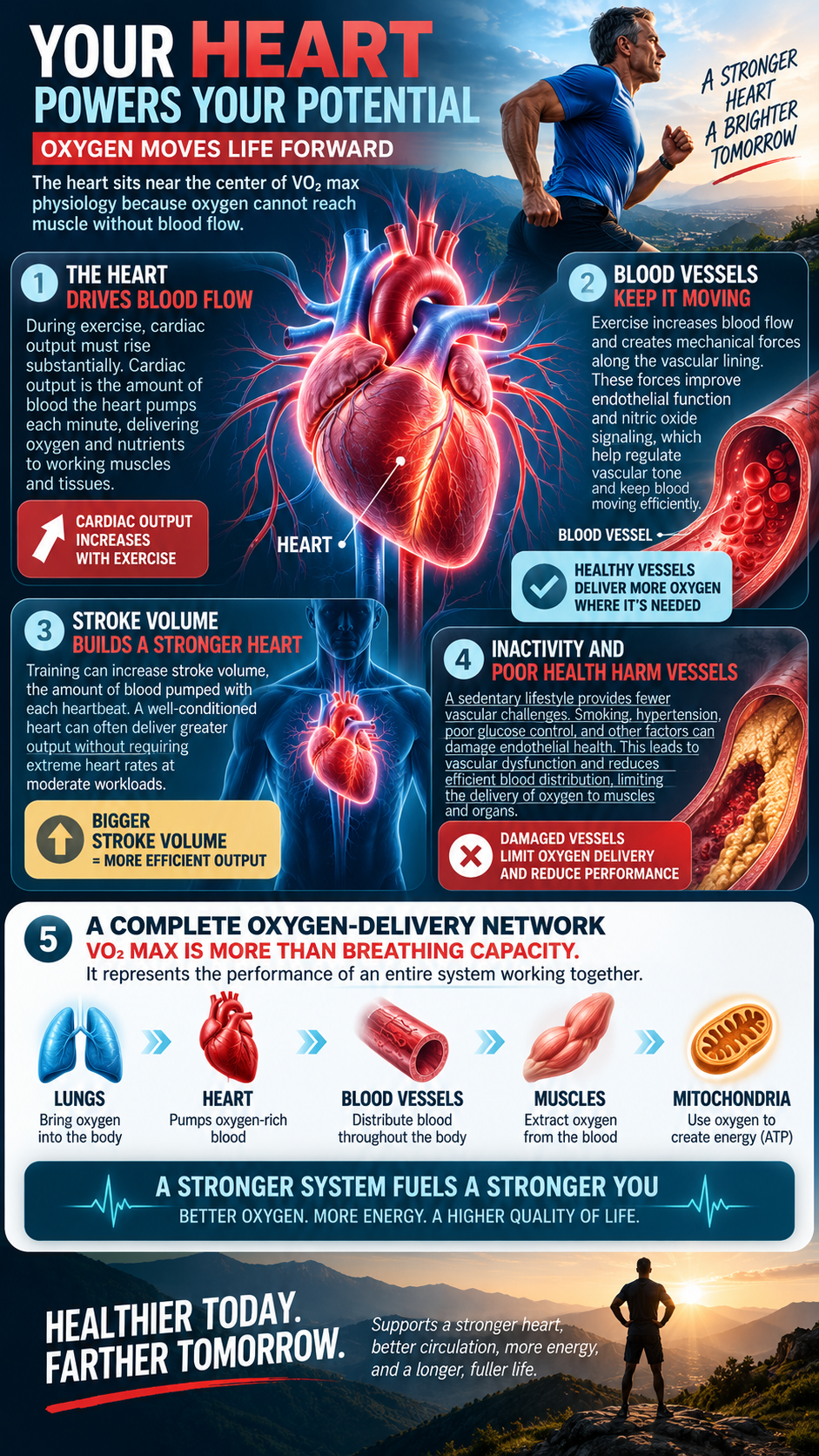
Blood vessels also matter. Exercise increases blood flow and creates mechanical forces along the vascular lining. These forces influence endothelial function and nitric oxide signaling, which help regulate vascular tone.
A sedentary body receives fewer repeated vascular challenges. Meanwhile, smoking, hypertension, poor glucose control, and other factors can damage endothelial health. The resulting vascular dysfunction can further impair efficient blood distribution.
VO₂ max therefore reflects far more than breathing capacity. It represents the performance of an entire oxygen-delivery network.
The Muscle Problem Hiding Inside Aging
People frequently talk about cardiovascular fitness and muscle strength as separate subjects. Aging does not respect that separation. Cardiovascular capacity delivers oxygen, while skeletal muscle uses that oxygen to create movement.
Muscle mass and strength commonly decline with advancing age, especially when resistance exercise disappears. Aerobic capacity also tends to decline. When both deteriorate simultaneously, functional reserve can collapse faster than either measurement suggests alone.
Consider what independent living actually requires. Getting out of a low chair demands leg strength. Walking several blocks requires endurance. Recovering balance after a stumble requires rapid muscular force. Carrying groceries requires grip, trunk stability, and cardiovascular capacity.
Physical independence therefore depends on an integrated system. A powerful heart attached to severely weakened muscles cannot solve the entire problem. Strong muscles supported by poor aerobic capacity also face limitations.
Longevity training must protect both sides.
VO₂ Max and the Longevity Research
Large observational studies have consistently linked greater cardiorespiratory fitness with lower mortality risk. One widely discussed study examined more than 120,000 adults undergoing exercise treadmill testing. Researchers reported an inverse association between cardiorespiratory fitness and long-term mortality.
The broader literature supports the same general conclusion. Higher fitness commonly associates with reduced cardiovascular disease and all-cause mortality. Poor cardiorespiratory fitness consistently appears as an important health risk marker.
These findings require careful interpretation. Association does not prove that increasing one laboratory number guarantees additional years of life. Fit individuals may also differ in smoking, diet, body composition, healthcare access, and numerous other variables.
Yet the consistency of the relationship remains difficult to ignore. Cardiorespiratory fitness captures something fundamental about the body’s ability to perform work. That ability becomes increasingly valuable as physiological challenges accumulate.
The Difference Between Lifespan and Healthspan
Modern conversations about longevity sometimes focus obsessively on extending lifespan. A more meaningful question asks what those additional years actually look like. Living longer offers limited comfort when the final decades involve profound physical dependency.
Healthspan describes years lived with meaningful health and functional ability. Maintaining mobility, cognition, strength, metabolic resilience, and independence belongs at the center of that goal. VO₂ max intersects directly with several of those qualities.
Imagine reaching eighty with enough reserve to travel, walk hills, carry luggage, and play with grandchildren. Compare that future with reaching the same age while every staircase becomes an obstacle. Both people may possess identical chronological ages.
Their functional ages could look remarkably different.
This is where VO₂ max becomes more than a fitness statistic. It becomes a measurement of capacity available for living.
The Body Does Not Forget How to Adapt
The most encouraging truth about VO₂ max is that aerobic capacity remains remarkably responsive to training. The body continuously remodels itself according to the demands placed upon it. When daily life demands very little movement, cardiovascular capacity gradually becomes unnecessary biological overhead. When physical demand returns consistently, the body begins rebuilding the systems required to meet it. The heart pumps more efficiently, skeletal muscle improves oxygen utilization, and mitochondrial machinery expands. Blood vessels also adapt to repeated increases in circulation. This ability to remodel gives adults enormous leverage over how quickly physical capacity disappears.
Age certainly influences the upper limits of aerobic performance, but aging does not dictate the entire outcome. Someone who remains active throughout adulthood can preserve considerably more cardiovascular reserve than someone who becomes sedentary. Over several decades, that difference can determine whether stairs remain ordinary or become intimidating. It can also influence whether illness produces a temporary setback or a permanent loss of independence. The important question is therefore not whether VO₂ max eventually declines. Some decline will occur with age. The more important question asks how much capacity you can preserve before that decline becomes functionally significant.
Why Cardiovascular Reserve Must Be Earned Repeatedly
Human physiology evolved under conditions where movement was unavoidable. Walking, carrying, climbing, lifting, hunting, gathering, and physical labor repeatedly challenged oxygen delivery. Modern technology has removed much of that demand while leaving human biology largely unchanged. An automobile can eliminate thousands of steps each week. Elevators erase climbing, while screens replace active recreation. Convenience saves time, but it can also quietly remove the physiological signals that preserve endurance.
The cardiovascular system responds to challenge because increased movement raises oxygen requirements throughout working muscle. Heart rate climbs, breathing deepens, and cardiac output increases to meet that demand. With repeated exposure, the body becomes better at delivering blood without requiring the same relative effort. Stroke volume can improve, allowing more blood to leave the heart with each contraction. Peripheral tissues also become better at extracting oxygen from circulation. Over time, these changes make the same workload feel easier because the workload consumes less of your maximum capacity.
That improvement represents the very essence of physiological reserve. A staircase that once required substantial effort gradually becomes routine. A walking pace that once caused heavy breathing becomes comfortable. Recovery after exertion shortens because the cardiovascular system no longer operates near its limits. These seemingly small changes matter because daily independence depends on staying comfortably below those limits. The goal of training should therefore extend far beyond burning calories. Training should expand the distance between ordinary living and maximum physical capacity.
Rebuilding the Mitochondrial Engine
Improving VO₂ max cannot happen through the heart alone because oxygen delivery represents only one part of the equation. Muscle cells must also possess the machinery needed to use that oxygen effectively. Mitochondria perform much of this work by helping convert nutrients into ATP, the usable energy required for muscular contraction. When aerobic demand increases repeatedly, muscle cells receive signals that greater oxidative capacity has become necessary. Exercise therefore acts as an instruction rather than merely an energy expenditure event.
Endurance training can increase mitochondrial content and improve oxidative enzyme activity inside skeletal muscle. Greater mitochondrial capacity allows muscle fibers to produce energy more efficiently during sustained activity. Capillary networks surrounding muscle can also improve, shortening the distance oxygen must travel from blood to tissue. These changes increase the muscle’s ability to extract and use oxygen once it arrives. Aerobic fitness therefore improves from both ends of the delivery chain. The heart sends more oxygen-rich blood, while trained muscle becomes increasingly capable of using what arrives.
This mitochondrial adaptation matters far beyond exercise performance. Muscle represents one of the body’s largest metabolically active tissues and plays an essential role in glucose regulation. Active muscle consumes glucose during movement and can become more insulin sensitive after training. Greater muscle capacity also creates a larger metabolic destination for incoming fuel. When activity declines, this metabolic advantage shrinks. Over time, declining muscle function can combine with excess energy intake, visceral fat accumulation, and worsening insulin resistance.
Low VO₂ Max Can Become a Metabolic Trap
Poor aerobic fitness often creates problems that reinforce themselves. An unconditioned person reaches fatigue sooner, making physical activity less enjoyable and more difficult to sustain. Reduced activity then decreases energy expenditure and weakens the stimulus for maintaining muscle and mitochondrial capacity. As conditioning falls further, everyday movement consumes a greater percentage of available energy. The individual often responds by moving even less, which accelerates the original problem.
Metabolic dysfunction can deepen that cycle. Poor glucose regulation may increase fatigue and reduce exercise tolerance. Excess visceral fat can increase inflammatory signaling and make movement mechanically harder. Loss of skeletal muscle reduces functional capacity while shrinking an important site for glucose disposal. Sleep disruption may further decrease energy and recovery. What initially appears to be simple laziness can become a complex physiological loop involving metabolism, muscle, cardiovascular fitness, and behavior.
Breaking that loop requires rebuilding capacity rather than simply demanding greater willpower. Someone who struggles through ten minutes of walking does not need punishment for poor conditioning. That person needs repeated exposures the body can successfully adapt to. Once capacity increases, movement becomes easier and therefore more sustainable. Improved sustainability creates more movement, which encourages additional adaptation. The same biological feedback loop that once drove decline can begin working in the opposite direction.
The Mistake of Turning Every Workout Into a Battle
Many fitness programs approach VO₂ max through exhaustion because high intensity produces dramatic sensations. Hard intervals certainly provide a powerful training stimulus, but repeated maximal effort does not create optimal longevity training. The body adapts when stress and recovery remain appropriately balanced. Excessive intensity can create persistent fatigue, reduce training quality, and increase orthopedic stress. People often quit aggressive programs because the experience becomes incompatible with normal life.
Lower-intensity aerobic training serves a different and equally important purpose. Moderate sustained exercise allows someone to accumulate larger amounts of cardiovascular work without overwhelming recovery. During these sessions, muscles repeatedly rely upon aerobic metabolism while the heart maintains elevated output. That repeated exposure supports mitochondrial adaptations and improves endurance. Easier training also prepares the body to tolerate harder work later. A strong aerobic foundation therefore makes interval training more productive rather than less necessary.
Higher-intensity sessions can then challenge the upper end of oxygen delivery. During demanding intervals, cardiac output rises substantially and oxygen consumption approaches higher percentages of maximum capacity. These sessions can stimulate meaningful improvements in VO₂ max when appropriately programmed. However, they should complement easier aerobic work rather than replace it. Longevity requires a cardiovascular system capable of both sustained activity and occasional high demand. Training should reflect both requirements.
Strength Is the Other Half of Longevity
Cardiorespiratory fitness cannot protect independence by itself because life also demands force. Getting up from a low chair requires leg strength. Catching yourself during a stumble requires rapid muscular power. Carrying luggage requires grip, trunk stability, and upper-body capacity. Walking several miles requires the aerobic system to support all of those muscles repeatedly. Healthy aging therefore depends on strength and endurance functioning together.
Resistance training helps preserve muscle tissue that commonly declines with advancing age. Stronger muscles also allow everyday tasks to consume less relative effort. A person who can comfortably squat substantial resistance will find standing from a chair relatively easy. Someone barely strong enough to stand has almost no reserve remaining for that task. The same principle that applies to VO₂ max also applies to muscular strength. Independence becomes vulnerable when normal life approaches maximum capacity.
Aerobic exercise and resistance training should therefore operate as partners. Cardiovascular training improves the systems delivering oxygen and supporting sustained work. Resistance training protects the tissue that uses that oxygen to create force. Together, they increase the physical margin between normal activity and exhaustion. That margin becomes increasingly valuable with every passing decade. Longevity is not merely remaining alive; it is preserving enough capacity to continue participating in life.
Recovery Determines Whether Exercise Becomes Adaptation
Training provides the signal for improvement, but the body performs much of its rebuilding between workouts. Sleep influences nervous-system recovery, glucose metabolism, appetite regulation, immune function, and exercise performance. Chronically inadequate sleep can make ordinary workouts feel harder and reduce the quality of subsequent training. Poor recovery also increases the temptation to become sedentary during the remainder of the day. A successful VO₂ max strategy therefore cannot ignore what happens at night.
Nutrition also influences the body’s ability to adapt. Adequate protein supports muscle repair and maintenance, while sufficient energy allows training quality to remain high. Micronutrients participate throughout oxygen transport and cellular energy metabolism. Iron contributes to hemoglobin production, while several B vitamins support metabolic pathways involved in energy production. Magnesium participates in hundreds of enzymatic reactions, including processes involving ATP. More supplementation does not automatically produce better physiology, so deficiencies should be identified rather than guessed.
Hydration deserves similar attention because blood volume influences cardiovascular performance. Dehydration forces the heart to work harder to maintain circulation during exercise. Heat can magnify this effect by increasing the demand for blood flow toward the skin. Someone attempting to improve aerobic capacity should therefore view recovery, hydration, sleep, and nutrition as part of training. Exercise cannot be separated from the biological environment surrounding it. The strongest training plan becomes weaker when recovery continually fails.
Start at Home by Establishing Your Real Baseline
Improving VO₂ max begins with understanding where your body currently stands. Laboratory cardiopulmonary exercise testing provides precise measurement, but most people can start without specialized equipment. Pay attention to how your body responds to stairs, brisk walking, hills, and sustained household activity. Notice when breathing becomes uncomfortable and how quickly it settles afterward. Observe whether leg fatigue or breathlessness becomes the limiting factor first.
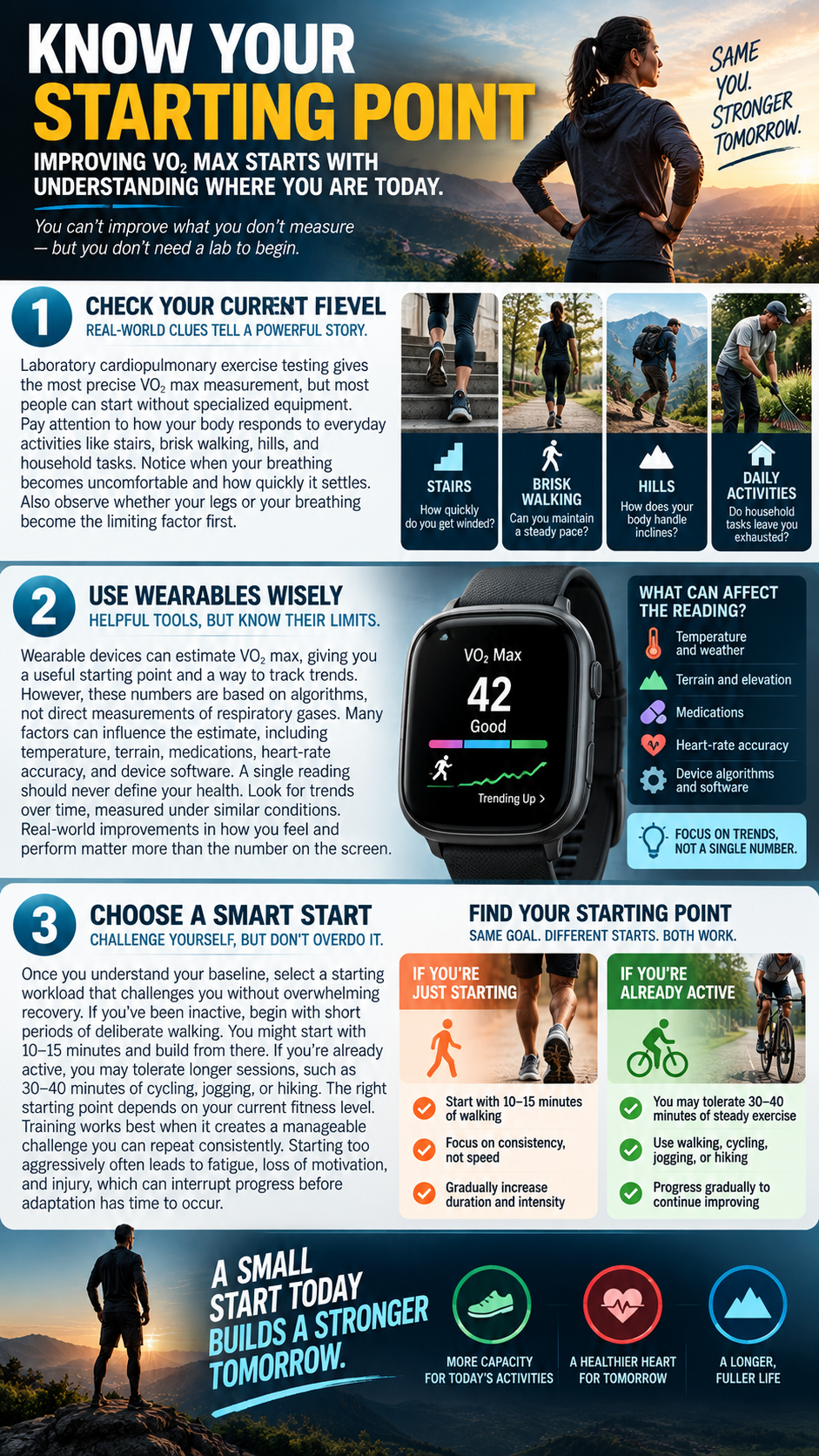
Wearable devices can provide estimated VO₂ max values, although these numbers should remain in perspective. Watches use algorithms rather than direct measurement of respiratory gases. Temperature, terrain, medications, heart-rate accuracy, and device software can influence the estimate. A single reading should therefore never determine how someone views their health. Trends measured under similar conditions provide more useful information. Real-world improvements in function matter even more than the number displayed on a screen.
Once you establish a baseline, choose a starting workload that challenges you without overwhelming recovery. Someone who has been inactive may begin with short periods of deliberate walking. Another person may already tolerate forty minutes of steady cycling. The correct starting point differs because physiological capacity differs. Training succeeds when it repeatedly creates a manageable challenge. Starting too aggressively often interrupts consistency before adaptation has time to occur.
Turn Walking Into Deliberate Aerobic Training
Walking remains one of the most underestimated tools for rebuilding aerobic capacity. The difference between casual walking and training often lies in intention and pace. During a productive aerobic walk, breathing should increase while remaining controlled. Conversation should still be possible, although long sentences may require more effort. The goal is maintaining enough intensity to challenge circulation without constantly reaching exhaustion.
Terrain can transform walking even further. Hills increase muscular work and oxygen demand without requiring the impact associated with faster running. Walking uphill briskly can raise heart rate rapidly while strengthening the lower body. Flat terrain during recovery allows breathing to settle before another climb. This natural alternation creates a simple interval format without specialized equipment. Stairs can provide a similar challenge for people whose joints tolerate them comfortably.
Progress should happen gradually because cardiovascular fitness improves through accumulated training rather than isolated heroic sessions. Increase duration before constantly increasing speed. Add hills after flat walking becomes manageable. Extend difficult sections when previous workloads feel comfortable. Repeating this process teaches the body to tolerate greater oxygen demand over time. What once felt strenuous gradually becomes part of your new baseline.
Use Intervals to Expand the Upper Ceiling
After an aerobic foundation develops, controlled intervals can target the upper limits of cardiovascular performance. A hard interval temporarily forces the heart, lungs, circulation, and muscles to operate much closer to maximum capacity. Breathing becomes heavy, cardiac output rises, and muscles demand substantially more oxygen. Recovery periods allow enough physiological reset to repeat that stimulus. Several quality efforts can create a powerful adaptive signal without requiring an hour of maximal exercise.
Intervals can take many forms because physiology responds to intensity rather than equipment. A brisk hill, stationary bicycle, rower, swimming pool, or staircase can all provide the necessary demand. The hard portion should feel demanding while technique remains controlled. Recovery should continue until breathing becomes manageable enough for another quality effort. Beginners should use shorter efforts and longer recoveries. Conditioning can gradually shift that balance as fitness improves.
One or two interval sessions may provide sufficient high-intensity stimulus for many adults when combined with easier aerobic training. More is not automatically better because repeated hard sessions increase recovery requirements. The goal is expanding maximum capacity without destroying consistency. Sustainable training produces adaptations for years rather than several enthusiastic weeks. VO₂ max responds best when challenge becomes a permanent part of life.
Rebuild Strength Inside the Same Home Program
Home strength training can support longevity without complicated equipment. Chair squats strengthen the muscles used to rise from seated positions. Step-ups develop climbing strength and single-leg control. Hip hinges target the posterior chain that supports lifting and walking. Push-ups and rows strengthen the upper body while loaded carries challenge grip and trunk stability.
Resistance bands, dumbbells, kettlebells, or household objects can provide additional loading. The exact tool matters less than progressive resistance. Muscles must gradually encounter greater demands if strength is expected to improve. Repetitions can increase, resistance can rise, or movement range can expand. Progress should remain controlled enough to maintain good technique. The aim is creating useful strength rather than accumulating meaningless fatigue.
This strength work supports VO₂ max training because stronger muscles tolerate cardiovascular workloads more effectively. Hills become easier when the legs produce greater force. Faster walking becomes more sustainable when posture remains strong. Everyday tasks also require a smaller percentage of maximum strength. Cardiovascular reserve and muscular reserve therefore grow together. That combination offers one of the strongest foundations for physical independence.
Make the Hours Between Workouts Count
A formal workout cannot completely erase an otherwise motionless day. Daily movement matters because skeletal muscle responds to what happens across many hours, not only during exercise sessions. Walking after meals provides a simple way to interrupt long sedentary periods. Household work, gardening, carrying groceries, and taking stairs can create additional muscular demand. These activities may appear ordinary, but their cumulative effect becomes substantial across months and years.
After-meal walking deserves particular attention because contracting muscle can increase glucose uptake during a period of rising blood sugar. A brief walk does not need to become strenuous to provide value. It also increases total daily movement without requiring another formal workout. Someone who walks after two meals each day can accumulate considerable additional activity across a week. Small habits become powerful when repetition turns them into permanent physiology. Longevity often grows from these unremarkable decisions rather than spectacular interventions.
Reducing prolonged sitting also supports a more active metabolic environment. Stand during phone conversations, walk while discussing ideas, or complete brief movement breaks between periods of desk work. These actions should not replace structured training, but they reinforce it. The goal is creating a life in which movement becomes normal again. Human physiology performs best when exercise stops being an isolated event surrounded by inactivity.
Measure What Your Body Can Do, Not Only What Technology Reports
The most meaningful sign of improving VO₂ max may never appear on a laboratory printout. A familiar staircase becomes easier without conscious effort. A hill that once required stopping can be climbed continuously. Walking pace increases while breathing remains controlled. Recovery after strenuous activity becomes noticeably faster. These changes show that everyday tasks now consume less of your available physiological reserve.
Wearable estimates can still provide useful trends when interpreted intelligently. Track measurements under similar conditions and focus on changes across months rather than days. Day-to-day fluctuations often reflect sleep, temperature, stress, hydration, or measurement error. Long-term improvement carries greater meaning. Laboratory testing becomes useful when someone wants precise measurement or deeper physiological information. Functional capacity, however, remains the outcome that matters most.
The ultimate purpose of improving VO₂ max is not earning a superior score. It is expanding what your body can comfortably accomplish. Numbers matter because they help illuminate biology, but they are not the destination. The destination is greater capacity for movement, recovery, travel, recreation, and independence. Fitness should enlarge your life rather than become another statistic to obsess over.
Build More Life Into the Years Ahead
VO₂ max deserves attention because it captures something few routine measurements reveal. It reflects how effectively multiple systems cooperate when the body faces demand. The number tells a story about the heart, circulation, muscle, mitochondria, and available physiological reserve. When that reserve shrinks, ordinary life gradually moves closer to maximum effort. When reserve expands, the same life becomes easier to inhabit.
The path toward improvement does not require elite athleticism. Walking deliberately can rebuild the aerobic foundation. Hills and controlled intervals can challenge the upper limits of oxygen delivery. Resistance training can preserve the muscles required for independence. Sleep, nutrition, hydration, and daily movement allow those adaptations to take hold. None of these actions looks revolutionary by itself, yet together they can dramatically change physical capacity.
Aging will continue regardless of what appears on a fitness watch. The opportunity lies in determining how much function accompanies those years. Maintaining cardiorespiratory fitness creates a larger buffer against illness, inactivity, and physical decline. Preserving strength gives that endurance somewhere useful to go. Building both creates something increasingly precious as decades accumulate: reserve.
That reserve may determine whether later life becomes smaller or remains expansive. It may decide whether stairs represent a barrier or simply another path upward. VO₂ max matters because it measures more than fitness. At its deepest level, it reflects how much physical life your body still has available to use.