
The Most Important Nerve in Your Body May Be Fighting a Battle You Cannot See
A century ago, people worried about contaminated water, infectious disease, and industrial pollution. Today, those concerns still exist, but modern life has introduced a completely new environmental exposure. Unlike smoke, mold, chemicals, or heavy metals, this exposure cannot be seen, smelled, tasted, or touched. It moves silently through homes, schools, offices, vehicles, airports, coffee shops, and nearly every public space on earth. Most people spend their entire day immersed in it without giving it a second thought.
WiFi routers transmit signals twenty-four hours a day. Smartphones communicate continuously with nearby cellular towers. Bluetooth devices exchange information with wireless networks. Smart televisions, watches, appliances, speakers, security systems, and tablets contribute to an environment saturated with electromagnetic frequencies. Humanity has become more connected than ever before, yet very few people stop to ask how constant exposure to these signals may influence the nervous system.
The debate surrounding wireless radiation often becomes emotional. Some dismiss concerns entirely. Others assume every wireless device represents an immediate danger. Neither position helps move the conversation forward. The more important question asks whether chronic exposure contributes to low-grade neurological stress that accumulates over time. When viewed through the lens of nervous system function, that question becomes increasingly important.
At the center of this discussion sits one of the most powerful structures in the human body: the vagus nerve. This remarkable nerve influences digestion, heart rhythm, breathing, inflammation, immune function, blood sugar regulation, stress adaptation, emotional balance, and sleep quality. Every second of every day, the vagus nerve serves as a communication highway connecting the brain to nearly every major organ. When this communication system functions efficiently, the body adapts, repairs, and heals. When communication becomes impaired, symptoms often appear throughout multiple body systems simultaneously.
Understanding how modern environmental stressors may influence the vagus nerve represents one of the most important frontiers in functional medicine, neurological health, and chiropractic care. More importantly, understanding how to protect this vital nerve may help people preserve health in an increasingly wireless world.
Understanding the Vagus Nerve: The Body’s Master Communication Network
The vagus nerve originates within the brainstem and extends throughout the body like a vast biological communication network. The name vagus comes from the Latin word meaning wandering because this nerve travels farther than any other cranial nerve. Along its journey, it communicates with the heart, lungs, liver, stomach, pancreas, gallbladder, intestines, immune system, and countless other structures.
Few nerves influence as many physiological functions. The vagus nerve helps regulate heart rate, blood pressure, digestive activity, stomach acid production, pancreatic enzyme release, intestinal movement, immune responses, inflammation control, breathing patterns, mood regulation, and sleep quality. Every moment of every day, it sends information from the body to the brain and from the brain back to the body.
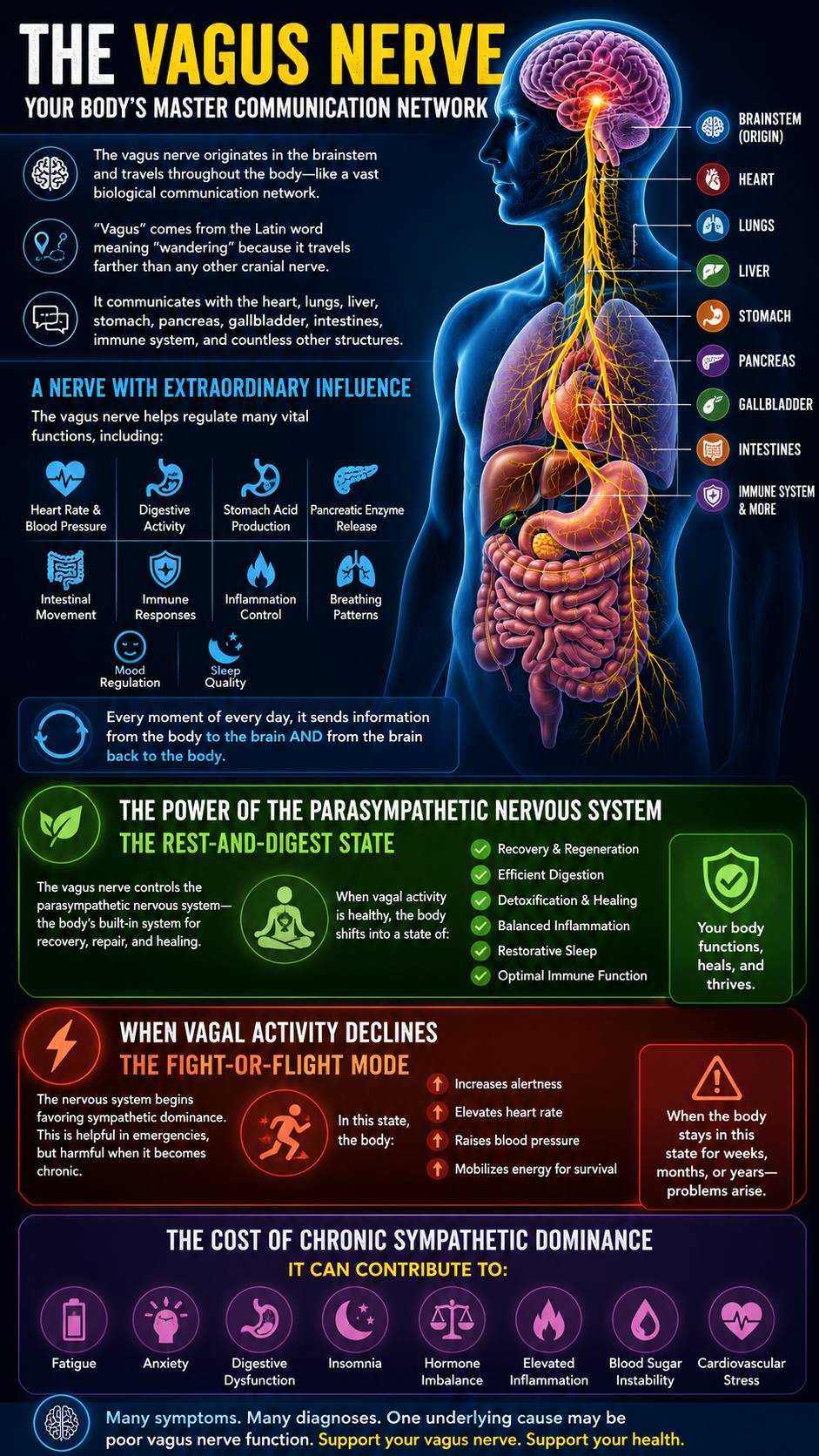
One of its most important responsibilities involves controlling the parasympathetic nervous system. This branch of the nervous system governs recovery, repair, regeneration, digestion, detoxification, and healing. Functional medicine practitioners often refer to this as the rest-and-digest state. During periods of healthy vagal activity, the body shifts resources toward maintenance and recovery. Inflammation remains controlled, digestion operates efficiently, sleep becomes restorative, and healing mechanisms function at full capacity.
Problems emerge when vagal activity declines. The nervous system begins favoring sympathetic dominance, commonly known as fight-or-flight mode. This state serves an important purpose during emergencies. It increases alertness, elevates heart rate, raises blood pressure, and mobilizes energy for survival. However, when the body becomes trapped in this state for weeks, months, or years, significant health consequences develop.
Chronic sympathetic dominance contributes to fatigue, anxiety, digestive dysfunction, insomnia, hormone imbalance, elevated inflammation, blood sugar instability, and cardiovascular stress. Many people spend years chasing individual symptoms without realizing that a common neurological mechanism may connect them all. Poor vagus nerve function often sits near the center of that pattern.
How Modern Life Is Overwhelming the Nervous System
Human biology evolved under conditions dramatically different from those experienced today. For thousands of years, people lived according to natural cycles of light, darkness, movement, and environmental exposure. The nervous system developed in response to those conditions. During the last century, however, technological advances transformed the environment faster than biology could adapt.
Modern individuals face a relentless combination of stressors. Processed foods challenge metabolic health. Artificial lighting disrupts circadian rhythms. Environmental toxins burden detoxification pathways. Chronic psychological stress elevates cortisol levels. Sedentary lifestyles impair circulation and mitochondrial function. Poor sleep weakens recovery mechanisms. Constant digital stimulation keeps the brain in a state of continuous engagement.
Wireless radiation enters this already crowded landscape as another potential stressor. Rather than acting alone, it may contribute to a cumulative burden that gradually reduces the nervous system’s ability to adapt. This concept helps explain why some individuals appear highly sensitive while others notice few immediate effects. The issue may not revolve around a single exposure. Instead, it may involve the total stress load imposed upon the body’s regulatory systems.
Adaptability represents one of the defining characteristics of health. Healthy individuals recover from stress efficiently. They sleep deeply. Their digestion functions normally. Their immune systems respond appropriately. Their energy levels remain stable. As adaptability declines, symptoms begin emerging across multiple body systems. This loss of resilience often occurs long before disease becomes visible on laboratory tests.
The vagus nerve plays a central role in maintaining that adaptability. Anything that interferes with vagal function has the potential to influence overall health in profound ways.
What Wireless Radiation May Be Doing to the Body
Wireless devices communicate using radiofrequency electromagnetic fields. These signals carry information between devices, routers, satellites, and cellular towers. Scientists continue debating the long-term implications of these exposures, but several biological mechanisms have attracted increasing attention.
One of the most discussed mechanisms involves voltage-gated calcium channels located on cell membranes. These channels regulate calcium movement into cells and help coordinate communication throughout the nervous system. Research suggests that electromagnetic fields may influence these channels, leading to increased calcium influx within cells.
Excess intracellular calcium creates several downstream effects. Oxidative stress increases. Free radical production rises. Mitochondrial function may become impaired. Inflammatory signaling pathways become more active. Because neurons consume enormous amounts of energy, nervous tissue remains particularly vulnerable to these changes.
Oxidative stress acts like biological corrosion. Just as rust gradually damages metal, oxidative stress gradually damages cellular structures. Proteins lose efficiency. Cell membranes become compromised. DNA repair mechanisms face greater demands. Energy production declines. Communication between cells becomes less reliable.
The body possesses remarkable antioxidant defenses, but those defenses have limits. When oxidative stress exceeds the body’s capacity to neutralize it, dysfunction begins accumulating. Symptoms often appear gradually. Fatigue increases. Mental clarity declines. Recovery slows. Sleep quality worsens. Inflammation becomes more persistent.
Although researchers continue investigating the exact relationship between wireless radiation and these biological processes, the underlying mechanisms deserve serious attention because they intersect directly with vagus nerve health.
The Link Between Wireless Radiation and Inflammation
Inflammation remains one of the most important drivers of chronic disease. Cardiovascular disease, diabetes, autoimmune disorders, neurodegenerative conditions, obesity, and chronic pain all involve inflammatory processes. While inflammation serves as a necessary component of healing, excessive or persistent inflammation becomes destructive.
The vagus nerve helps regulate inflammatory activity through a mechanism known as the cholinergic anti-inflammatory pathway. This pathway allows the nervous system to communicate directly with immune cells and control the intensity of inflammatory responses. In essence, the vagus nerve acts as a biological thermostat that prevents inflammation from becoming excessive.
When vagal function weakens, inflammatory regulation becomes less efficient. Immune cells may produce larger quantities of inflammatory compounds. Recovery from stress slows. Tissues remain irritated longer. Small inflammatory events that would normally resolve quickly may persist for extended periods.
If wireless radiation contributes to oxidative stress and autonomic imbalance, it may indirectly influence inflammation through vagal pathways. This possibility helps explain why nervous system health has become such an important focus within functional medicine. Addressing inflammation requires more than targeting the immune system alone. It requires supporting the neurological systems that regulate immunity.
Why Brain Fog, Anxiety, and Poor Sleep Often Travel Together
Many individuals experiencing nervous system dysfunction describe a remarkably similar collection of symptoms. Brain fog develops. Sleep becomes fragmented. Anxiety increases. Concentration declines. Energy fluctuates unpredictably. Digestive issues emerge. Traditional medical evaluations often fail to identify a clear cause.
The vagus nerve provides an important piece of the puzzle. Since it regulates communication between the brain and body, dysfunction rarely remains isolated to a single symptom. Instead, multiple systems begin struggling simultaneously.
Sleep disturbances frequently appear first. Deep restorative sleep depends upon strong parasympathetic activity. During healthy sleep cycles, the body repairs damaged tissues, balances hormones, strengthens immunity, and restores neurological function. When the nervous system remains trapped in sympathetic dominance, these processes become less efficient.
Brain fog often follows. The brain requires enormous amounts of energy to maintain optimal performance. Oxidative stress, inflammation, poor sleep, and autonomic dysfunction all interfere with energy production. Mental clarity suffers. Memory becomes less reliable. Focus declines. Individuals often describe feeling disconnected from their usual level of cognitive performance.
Anxiety also becomes more common when vagal tone decreases. Strong vagal activity signals safety throughout the body. Reduced vagal activity creates the opposite effect. The nervous system behaves as though danger remains present even when no threat exists. Over time, this physiological state contributes to chronic worry, tension, irritability, and emotional instability.
Why Chiropractic Care Matters
Most discussions about wireless radiation focus entirely on reducing exposure. While minimizing unnecessary exposure makes sense, it represents only one side of the equation. The other side involves strengthening the body’s ability to adapt.
This is where chiropractic care becomes especially important.
The vagus nerve originates within the brainstem and travels through structures located near the upper cervical spine. This region contains an extraordinary concentration of neurological receptors that continuously communicate with the brain. Every movement of the head generates information that influences balance, posture, coordination, and autonomic regulation.
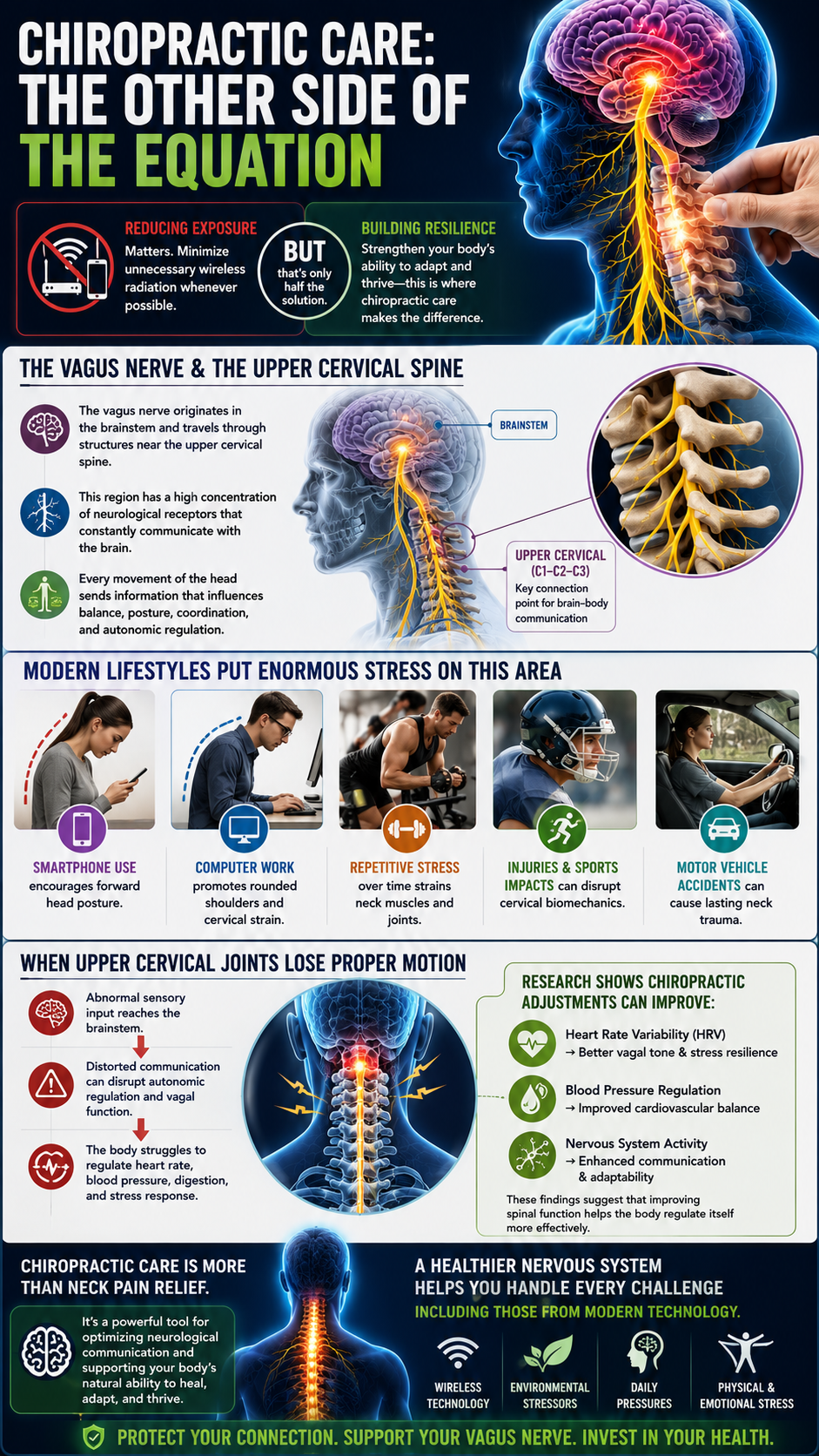
Modern lifestyles place enormous stress on this area. Smartphone use encourages forward head posture. Computer work promotes rounded shoulders and cervical strain. Repetitive stress, injuries, sports impacts, and motor vehicle accidents can further disrupt cervical biomechanics.
When upper cervical joints lose proper motion, abnormal sensory input may reach the brainstem. This distorted communication can influence autonomic regulation and vagal function. Research has demonstrated that spinal adjustments affect heart rate variability, blood pressure regulation, and nervous system activity. These findings suggest that improving spinal function may enhance the body’s ability to regulate itself.
Rather than viewing chiropractic care as simply a treatment for neck pain, many functional practitioners recognize it as a tool for optimizing neurological communication. A healthier nervous system responds more effectively to every environmental challenge, including those posed by modern technology.
Heart Rate Variability: A Window Into Vagus Nerve Health
Heart rate variability, commonly called HRV, has become one of the most valuable measurements of nervous system resilience. Contrary to popular belief, a healthy heart does not beat at perfectly regular intervals. Small variations occur constantly as the nervous system adapts to changing demands.
Higher HRV generally reflects stronger vagal activity and greater adaptability. Lower HRV often indicates chronic stress, inflammation, poor recovery, and autonomic imbalance. Researchers have linked low HRV to cardiovascular disease, metabolic dysfunction, anxiety, depression, and increased mortality risk.
Many factors influence HRV. Sleep quality, exercise habits, nutrition, inflammation, emotional stress, toxin exposure, and nervous system health all play important roles. Because the vagus nerve contributes significantly to HRV, this measurement provides valuable insight into autonomic function.
Improving HRV requires addressing underlying causes rather than chasing numbers. Better sleep, regular movement, stress reduction, nutritional support, chiropractic care, and healthy lifestyle habits all contribute to stronger vagal tone.
Protecting Your Vagus Nerve at Home
Protecting the vagus nerve begins with supporting the body’s natural recovery systems. Small daily habits often produce the greatest long-term results.
Creating a low-stimulation sleep environment represents one of the most effective strategies available. Turning off wireless routers during sleeping hours reduces unnecessary nighttime exposure. Keeping smartphones away from the bed further minimizes stimulation during the body’s primary recovery period.
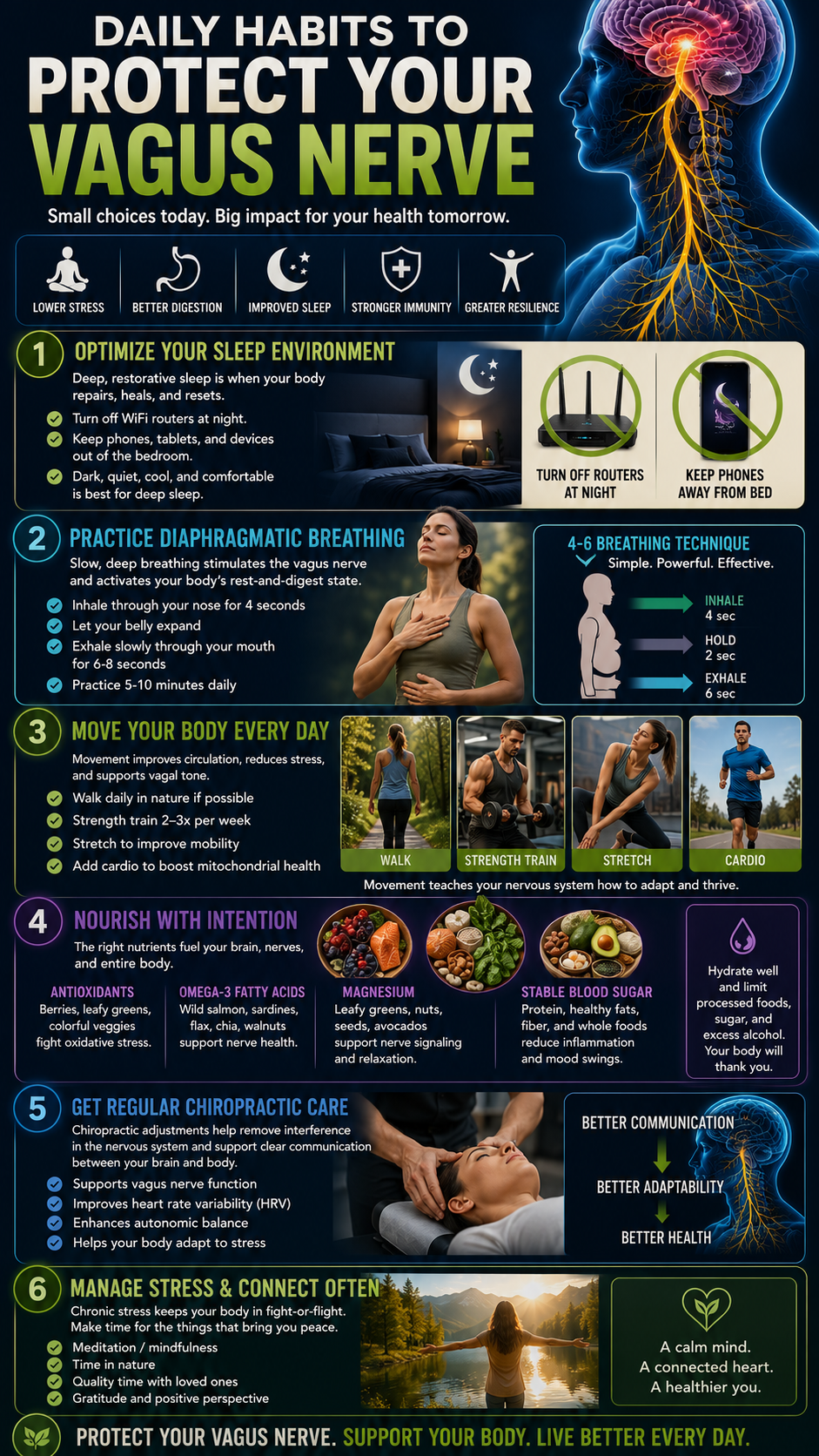
Breathing exercises provide another powerful tool. Slow diaphragmatic breathing directly stimulates vagal pathways and encourages parasympathetic activity. Practicing controlled breathing for several minutes each day can improve stress resilience and autonomic balance.
Physical movement remains essential for neurological health. Walking, strength training, stretching, and cardiovascular exercise improve mitochondrial function while supporting vagal activity. Movement teaches the nervous system how to adapt efficiently to changing demands.
Nutrition also plays a critical role. Antioxidant-rich foods help neutralize oxidative stress. Omega-3 fatty acids support neuronal membranes. Magnesium assists nerve signaling and energy production. Stable blood sugar reduces inflammatory burden throughout the body.
Regular chiropractic care may provide an additional layer of protection by supporting communication between the brain and body. When neurological communication improves, adaptability improves as well.
The Future of Health in a Wireless World
Technology will continue advancing. Wireless devices will become more integrated into daily life. Expecting society to abandon these innovations is unrealistic. The more practical approach involves understanding how to preserve health while embracing modern convenience.
The future of healthcare will increasingly focus on resilience. Practitioners will examine nervous system function, inflammatory burden, mitochondrial health, environmental exposures, and autonomic regulation. Rather than treating isolated symptoms, they will work to improve the body’s ability to adapt.
The vagus nerve sits at the center of this emerging model. It influences nearly every major healing process within the body. Supporting vagal function may improve digestion, sleep, immunity, cardiovascular health, emotional resilience, and recovery simultaneously.
Whether future research ultimately confirms every concern surrounding wireless radiation or not, one principle remains undeniable. A stronger nervous system handles stress more effectively. A healthier vagus nerve improves adaptability. Better adaptability improves health.
In a world filled with invisible environmental challenges, protecting the communication network that controls healing may become one of the smartest investments a person can make. The goal is not fear. The goal is resilience. When the vagus nerve functions properly and the nervous system communicates clearly, the body becomes far more capable of doing what it was designed to do from the beginning: heal, recover, and thrive.