
There was a time when butter required no defense. It existed as a foundational food, used across continents and cultures, valued not only for its flavor but for its sustaining qualities. Generations relied on it without controversy, not because they lacked scientific understanding, but because they observed its effects directly in their health, resilience, and longevity. That relationship began to fracture in the mid-20th century, when nutrition was reduced to isolated variables and fat became the primary target of blame.
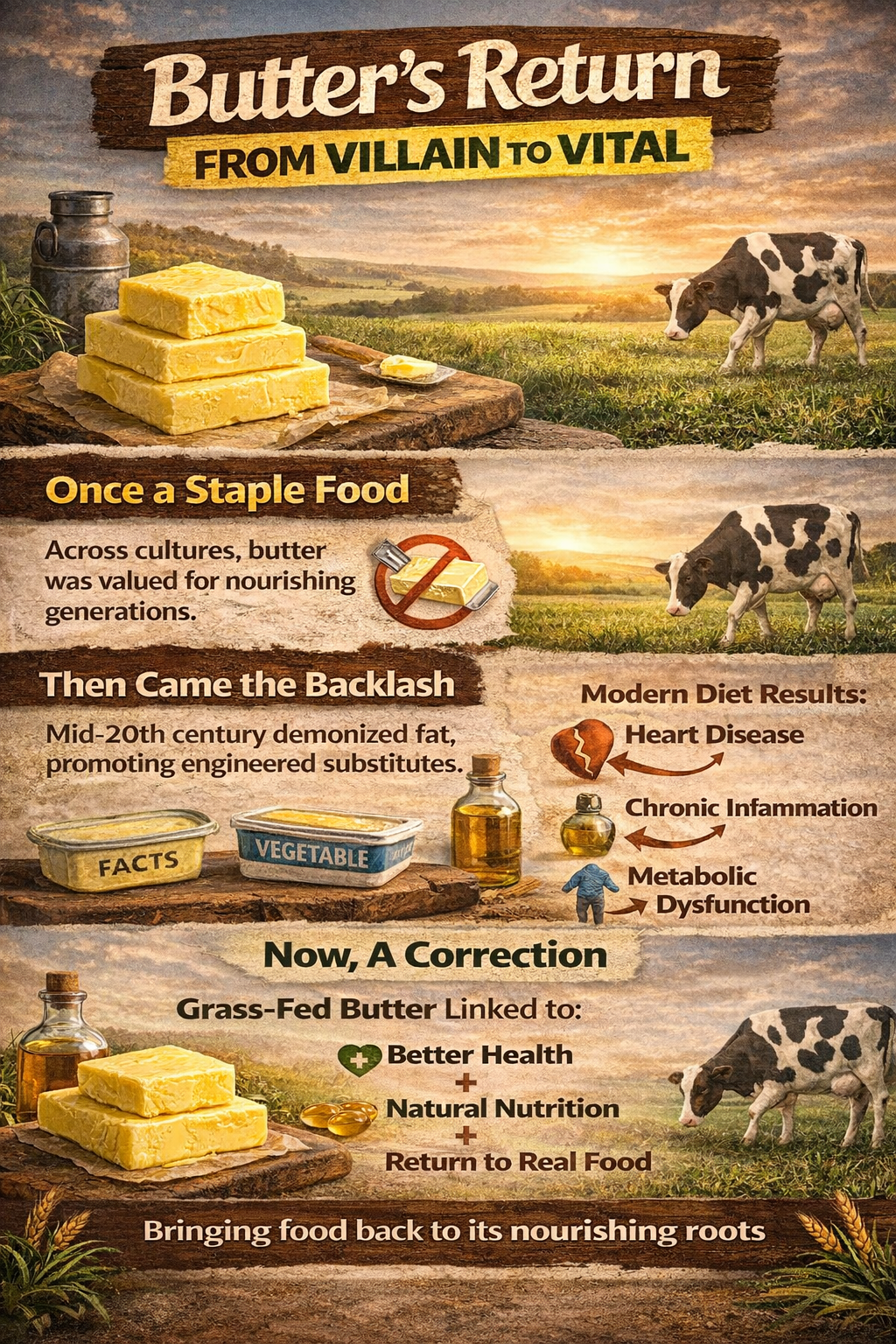
The removal of butter from the modern diet did not occur in isolation. It was accompanied by the introduction of industrial seed oils, synthetic spreads, and highly processed substitutes that promised improved cardiovascular outcomes. Instead, what followed was a steady increase in chronic disease, metabolic dysfunction, and systemic inflammation. The assumption that replacing natural fats with engineered alternatives would produce better health has not held up under long-term observation.
What is now emerging is not a trend, but a correction. Grass-fed butter is returning to the table not as an indulgence, but as a deliberate choice rooted in a deeper understanding of food quality. It represents a shift away from reductionist thinking and toward a more integrated view of nutrition, one that considers the origin, composition, and biological impact of what is consumed.
What Defines True Grass-Fed Butter
The term “grass-fed” has entered mainstream awareness, but its meaning is often diluted by inconsistent standards. Not all butter labeled as grass-fed reflects a fully pasture-based system. In many cases, cows may graze for part of the year but are still supplemented with grain during other seasons, which alters the fatty acid composition of the milk they produce.
Authentic grass-fed butter comes from cows whose diets consist primarily of grass and forage throughout their lives. This distinction has measurable effects. The butter develops a deeper yellow hue due to elevated beta-carotene levels, and its nutrient profile shifts toward higher concentrations of omega-3 fatty acids and conjugated linoleic acid. These changes are not cosmetic. They reflect a fundamentally different metabolic output from the animal.
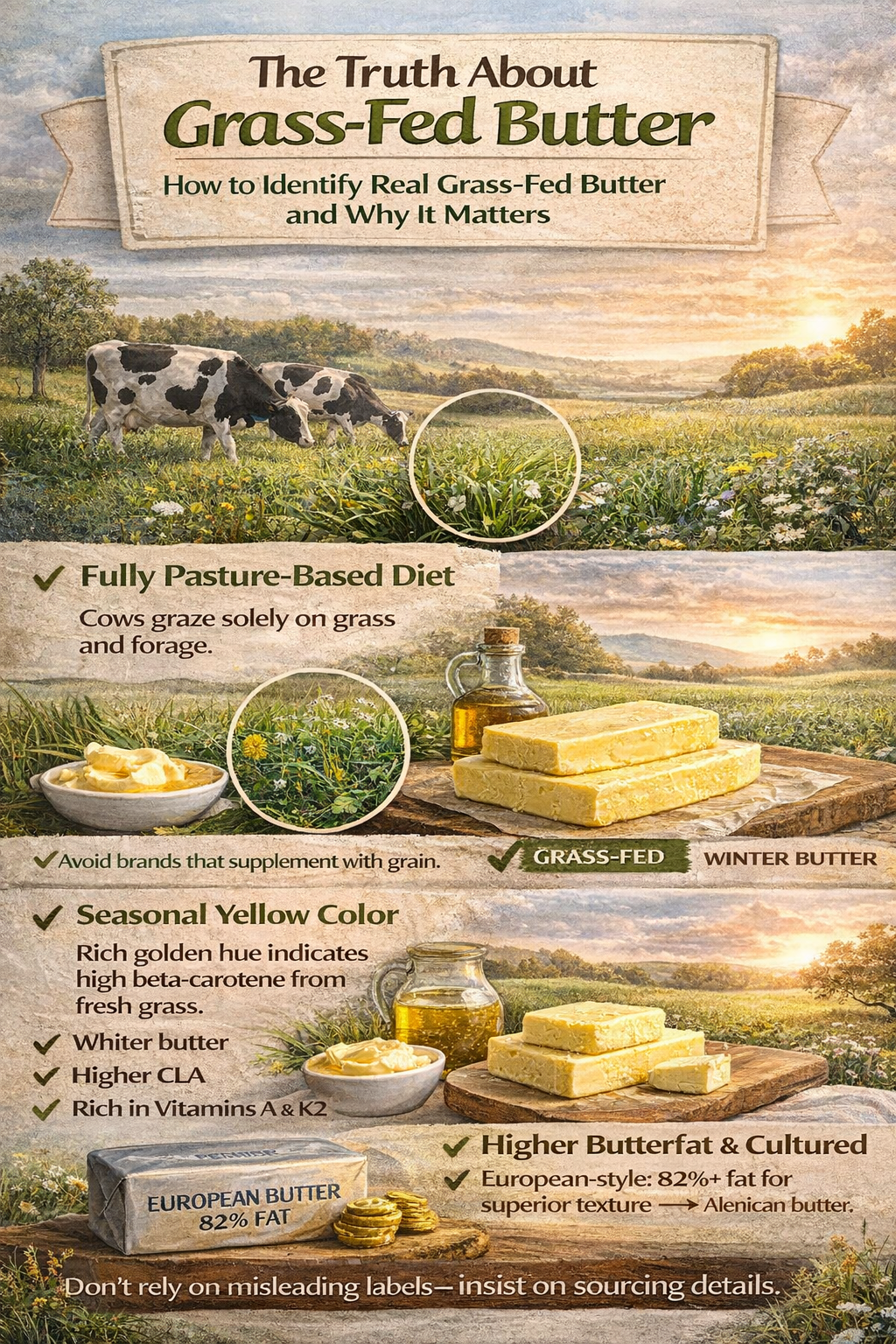
Seasonality is another often-overlooked marker of authenticity. Butter produced from cows grazing on fresh spring and summer pasture tends to have a richer color and more complex flavor than butter produced during winter months. Industrial systems aim to eliminate this variation for consistency, but in doing so, they remove one of the key indicators of real food.
Fat content also plays a role. European-style butters typically contain 82 percent fat or more, compared to the lower fat percentages found in conventional American butter. This difference affects not only texture and flavor, but also how the butter behaves in cooking and baking.
Cultured butter adds another layer of depth. By introducing beneficial bacteria during production, it develops a subtle tang and a more nuanced flavor profile. This traditional method reflects older food preparation practices that prioritized both taste and digestibility.
The 20 Best Grass-Fed Butter Brands
Kerrygold (Ireland) has become synonymous with grass-fed butter, largely due to Ireland’s unique climate, which supports nearly continuous grazing. The butter’s rich golden color and smooth texture reflect the quality of the pasture, while its slightly sweet, nutty flavor makes it versatile across both savory and sweet applications.
Kirkland Signature Grass-Fed Butter (New Zealand) provides an accessible entry point into higher-quality butter. Sourced from New Zealand’s pasture-based dairy systems, it offers a clean flavor and consistent texture that rivals more expensive options, making it a practical choice for everyday use.
Organic Valley (United States) operates as a cooperative of small farms, emphasizing organic certification and pasture-based practices. Its cultured butter introduces a mild tang, offering a more traditional flavor profile while supporting farming systems that prioritize soil and animal health.
Anchor (New Zealand) benefits from the country’s strong dairy heritage and consistent grazing conditions. The butter is mild and balanced, making it particularly effective in baking where subtlety is preferred over intensity.
Maple Hill Creamery (United States) stands out for its commitment to 100 percent grass-fed dairy and regenerative agriculture. This approach not only enhances the nutrient profile of the butter but also supports soil health, which in turn influences the quality of the food produced.
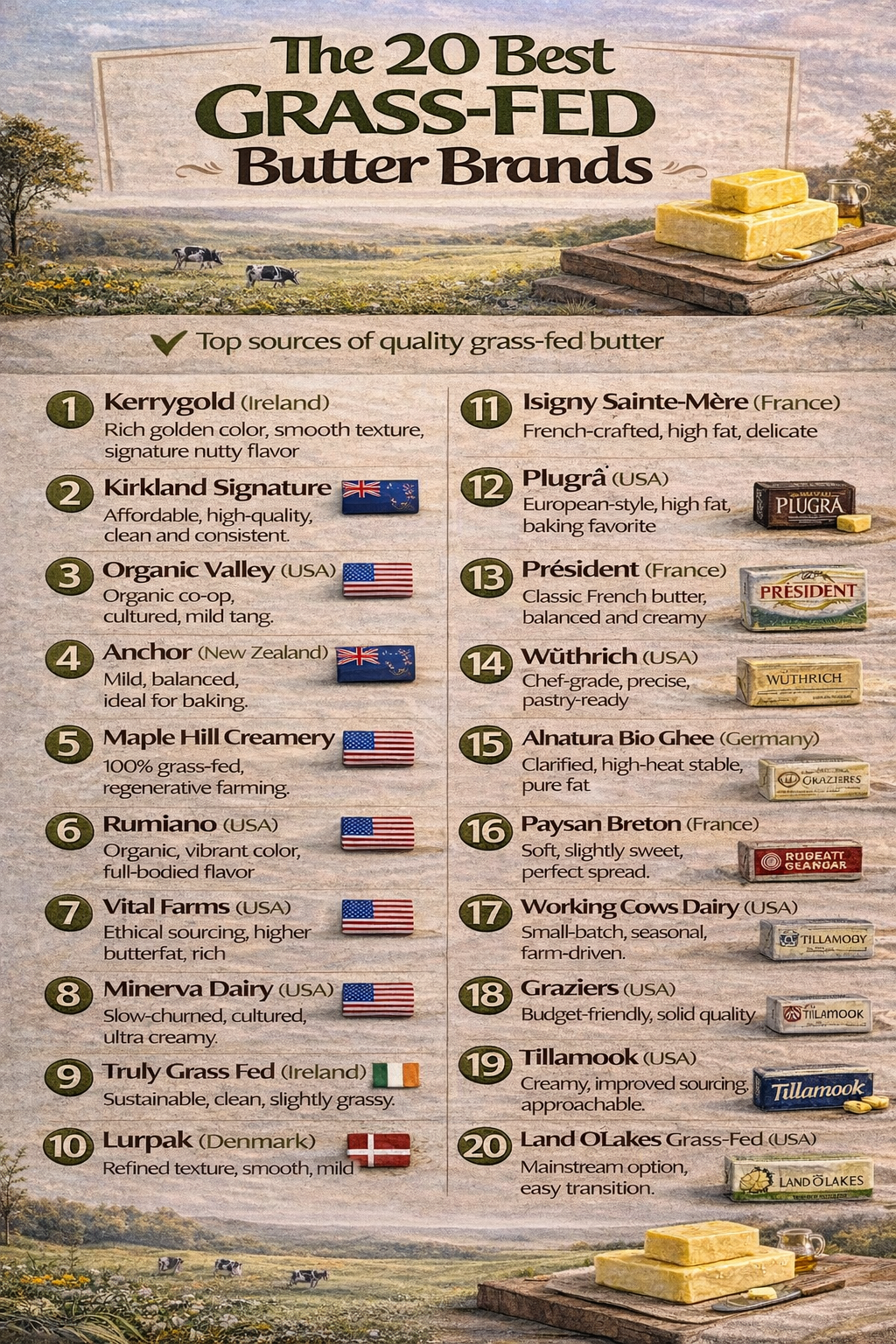
Rumiano (United States) produces organic grass-fed butter with a vibrant color and a full-bodied flavor. Its commitment to clean sourcing and sustainable practices makes it a reliable option for those seeking both quality and transparency.
Vital Farms (United States) focuses on ethical production and higher butterfat content, resulting in a richer, creamier product. The increased fat content enhances both flavor and performance, particularly in baking applications where texture is critical.
Minerva Dairy (United States) employs a slow-churned, cultured process that creates an exceptionally creamy butter with a tangy finish. This method reflects traditional European techniques and produces a product that feels distinctly different from mass-produced alternatives.
Truly Grass Fed (Ireland) emphasizes sustainability, traceability, and pasture-based farming. The butter offers a clean, slightly grassy flavor and a smooth consistency that works well across a wide range of culinary uses.
Lurpak (Denmark), while not strictly 100 percent grass-fed, adheres to high European dairy standards. Its refined texture and mild flavor make it a popular choice for those who prefer a more subtle butter.
Isigny Sainte-Mère (France) represents a level of craftsmanship that reflects centuries of dairy tradition. Its high fat content and delicate texture make it particularly valuable in pastry applications where precision and consistency are essential.
Plugrá (United States) is designed to mimic European-style butter, offering a higher fat content that enhances both flavor and functionality. It is widely used in baking due to its ability to produce superior texture.
Président (France) delivers a balanced, creamy butter that remains true to traditional production methods while being widely available. Its consistency makes it a dependable choice for both everyday use and more refined applications.
Wüthrich (United States) is favored in professional kitchens for its reliability and performance. It is particularly well-suited for technical baking processes such as laminated doughs, where precision is critical.
Alnatura Bio Ghee (Germany) provides a clarified butter option that removes milk solids, resulting in a nearly pure fat with a higher smoke point. This makes it ideal for high-heat cooking while retaining the benefits of grass-fed dairy.
Paysan Breton (France) offers a soft, slightly sweet butter that excels as a finishing ingredient. Its texture and flavor make it particularly suited for spreading and enhancing simple dishes.
Working Cows Dairy (United States) represents a smaller-scale, farm-driven approach to butter production. The product reflects seasonal variation, a hallmark of authentic grass-fed systems that prioritize natural cycles over uniformity.
Graziers (United States) provides a more affordable introduction to grass-fed butter, maintaining a reasonable level of quality while remaining accessible to a wider audience.
Tillamook (United States), although not fully grass-fed, represents an improvement over conventional butter. Its creamy texture and improved sourcing make it a transitional option for those beginning to upgrade their food choices.
Land O’Lakes Grass-Fed Line (United States) reflects the influence of consumer demand on large-scale producers. While not at the level of smaller, fully grass-fed brands, it offers a convenient step toward better fat quality.
Choosing Butter With Intention
Choosing butter requires a shift in perspective. Instead of viewing it as a commodity, it becomes necessary to evaluate it as a functional food with varying levels of quality. The difference between products is not marginal. It is significant enough to influence both flavor and physiological impact.
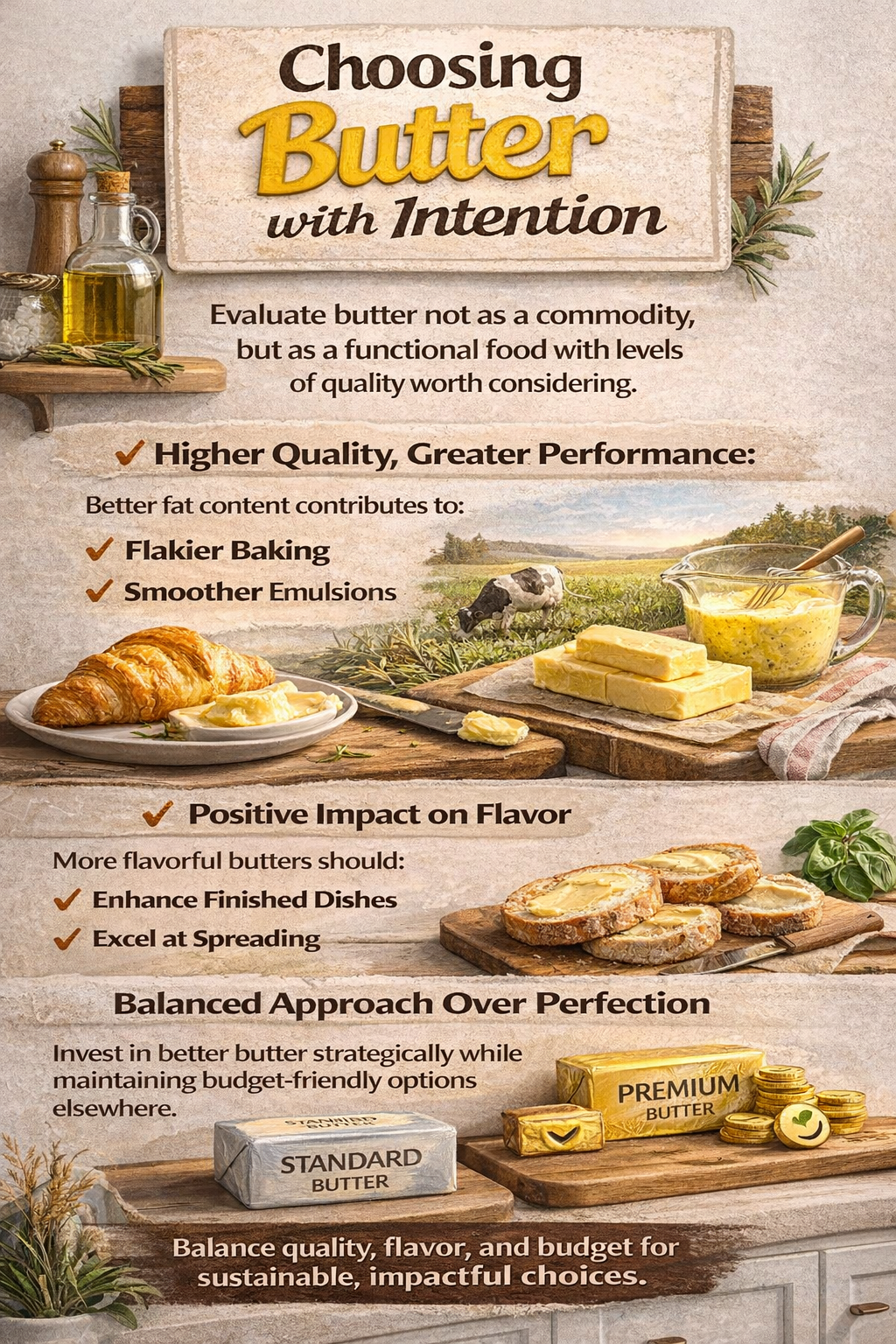
Higher fat content contributes to better performance in baking, creating flakier textures and more stable emulsions. More flavorful butters are best used in ways that highlight their character, such as spreading or finishing dishes. Understanding these distinctions allows for more intentional use rather than default consumption.
Budget considerations often influence decision-making, but improvement does not require perfection. Incorporating higher-quality butter in key areas while maintaining practicality elsewhere creates a balanced approach that is both sustainable and effective.
Butter as a Functional Component of Health
Fat is often misunderstood because it is discussed in overly simplistic terms. In reality, it serves multiple roles within the body, functioning as both a structural and signaling component. Butter, when sourced from grass-fed animals, contributes compounds that support these processes in meaningful ways.
Butyrate plays a role in maintaining the integrity of the gut lining, influencing immune function and inflammation. Vitamin K2 supports proper calcium distribution, reducing the risk of arterial calcification while promoting bone health. These functions highlight the importance of considering food in its full biological context rather than reducing it to isolated nutrients.
The body does not respond to labels such as saturated or unsaturated fat. It responds to the total composition of what is consumed, including the presence of supporting nutrients that influence how that fat is utilized.
A Return to Foundational Nutrition
The renewed interest in grass-fed butter reflects a broader reevaluation of modern dietary practices. It signals a movement away from highly processed, industrial foods and toward those that align more closely with human biology.
This shift is not rooted in nostalgia, but in observation. As individuals experience the limitations of conventional approaches, they begin to seek alternatives that address underlying causes rather than symptoms. Food becomes one of the most direct ways to influence that process.
Grass-fed butter represents a small but meaningful part of that transition. It embodies a return to simplicity, not as a rejection of progress, but as a recognition that some of the most effective solutions have existed for generations.
Final Reflections
The reemergence of butter is not about reclaiming a lost indulgence. It is about redefining how food is evaluated and understood. When quality is prioritized, the conversation shifts from restriction to nourishment.
Grass-fed butter stands as an example of what happens when food is produced in alignment with natural systems. It carries properties that extend beyond taste, influencing the body in ways that are both measurable and meaningful. Choosing it is less about following a trend and more about participating in a broader return to foods that support health at its foundation.