Why Millions Continue to Suffer Despite Treatment
A woman sits in a dental chair for the third time in two years. Her jaw clicks every time she chews. Headaches arrive almost daily. Ringing in her ears keeps her awake at night. Her dentist adjusts her bite, provides a custom mouthguard, and recommends avoiding hard foods. For a few weeks, she notices improvement. Then the symptoms return. A man visits his physician complaining of facial pain, neck stiffness, and headaches that begin behind his eyes. He receives anti-inflammatory medications and muscle relaxers. The discomfort decreases briefly, yet the problem remains. Months later, his symptoms become worse than before.
Stories like these unfold every day across America. Millions of people suffer from temporomandibular joint disorders, commonly known as TMJ or TMD, yet many never receive an explanation that addresses the true cause of their condition. Instead, they move from provider to provider searching for relief while the underlying dysfunction continues to progress. Symptoms become more complicated. Pain becomes more widespread. Quality of life slowly declines.
The unfortunate reality is that many approaches focus almost entirely on the jaw itself. While the jaw certainly hurts, it is often not the true source of the problem. In many cases, the jaw acts more like a victim than a culprit. The dysfunction may originate elsewhere within the body and eventually express itself through the temporomandibular joints. This distinction changes everything because treatment aimed at symptoms rarely produces lasting results when the root cause remains untouched.
A growing body of evidence and clinical experience suggests that TMJ disorders often involve far more than a simple joint problem. The condition frequently reflects dysfunction within the skull, cervical spine, nervous system, posture, airway, muscles, and connective tissues. Understanding these relationships allows patients to move beyond temporary symptom relief and toward genuine correction.
Understanding the Jaw’s Extraordinary Design
The temporomandibular joint ranks among the most complex joints in the human body. Unlike a simple hinge joint, the TMJ performs multiple movements simultaneously. It rotates, glides, stabilizes, absorbs force, and coordinates activity with dozens of muscles every second of the day. Every spoken word, every swallow, every bite of food, and every facial expression depends upon the precision of this remarkable structure.
Between the jawbone and skull sits a specialized cartilage disc that serves as a shock absorber. This disc allows smooth movement while protecting the joint surfaces from excessive wear. Numerous muscles attach to the jaw and surrounding structures, creating a sophisticated system capable of generating tremendous force while maintaining delicate control. When functioning properly, most people never notice the TMJ at all.
Problems arise when even small disturbances develop within this intricate system. A slight change in muscle tension can alter joint mechanics. Minor shifts in head posture can affect jaw movement. Subtle cranial distortions can create imbalances that eventually stress the joint. Over time, these changes accumulate. The body compensates until compensation becomes impossible. Symptoms then emerge as warnings that something deeper requires attention.
Unlike many other joints, the TMJ maintains intimate relationships with the brain, cranial nerves, ears, airway, and upper cervical spine. Dysfunction within the jaw therefore has the potential to influence numerous systems throughout the body. This explains why TMJ disorders often produce symptoms that appear unrelated to the jaw itself.
The Hidden Epidemic of Modern Jaw Dysfunction
TMJ disorders have become increasingly common during the past century. While genetics certainly play a role, genetics alone cannot explain the dramatic rise in prevalence. Something about modern life has changed the way human jaws develop and function.
For thousands of years, humans consumed diets requiring substantial chewing effort. Tough meats, fibrous vegetables, roots, nuts, and minimally processed foods challenged the muscles of mastication daily. This mechanical demand helped shape facial structures, strengthen muscles, and support healthy jaw development. Modern diets look dramatically different. Soft processed foods dominate grocery store shelves and restaurant menus. Many people rarely challenge their chewing muscles at all.
Researchers have observed significant changes in craniofacial development among modern populations. Narrower jaws, smaller airways, crowded teeth, and altered facial growth patterns appear with increasing frequency. These structural changes create conditions that predispose individuals to TMJ dysfunction. The jaw often develops within an environment that lacks the mechanical stimulation necessary for optimal growth and stability.
Technology introduces another powerful influence. Millions spend hours each day looking down at phones, tablets, and computers. This posture places enormous stress upon the cervical spine and surrounding muscles. As the head migrates forward, the jaw must adapt to maintain balance and function. What begins as a seemingly harmless habit gradually alters biomechanics throughout the head and neck.
Stress compounds the problem further. Modern life keeps many individuals trapped in a constant state of physiological tension. The nervous system remains alert, muscles stay contracted, and jaw clenching becomes an unconscious coping strategy. Some individuals grind their teeth throughout the night. Others clench while driving, working, or concentrating. These repetitive forces place extraordinary stress upon the temporomandibular joints and accelerate dysfunction.
The Real Root Cause of Most TMJ Disorders
Conventional thinking often reduces TMJ disorders to a problem involving teeth or bite alignment. While dental factors can contribute, they rarely tell the entire story. Focusing exclusively on the teeth resembles examining the smoke while ignoring the fire.
Many TMJ disorders begin with structural imbalances affecting the skull and upper neck. The human skull contains twenty-two bones connected through specialized joints called sutures. Contrary to popular belief, the skull does not function as a single rigid structure. Subtle movement occurs between these bones throughout life. Trauma, falls, sports injuries, birth stress, dental procedures, and repetitive strain can influence these relationships.
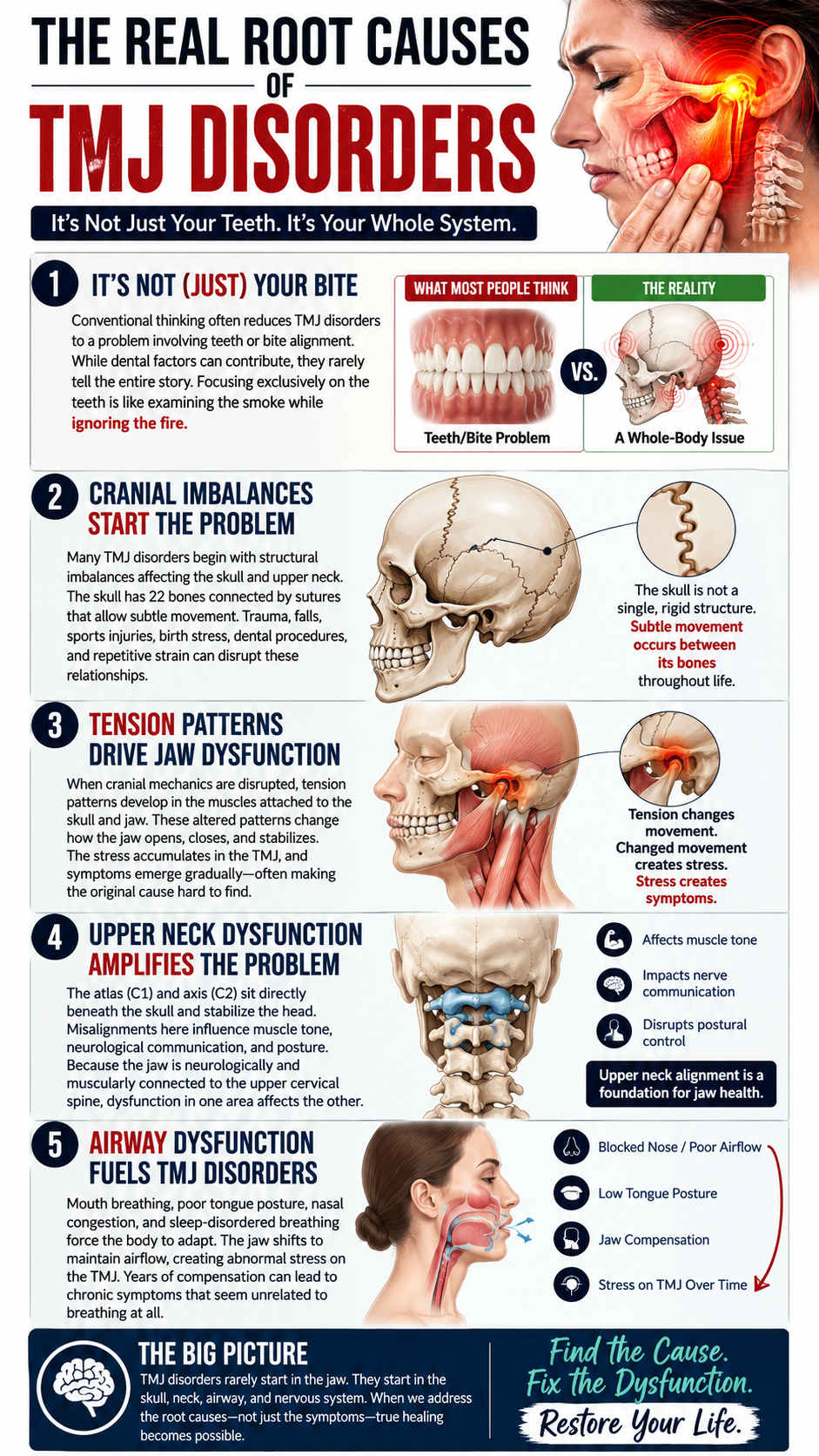
When cranial mechanics become disrupted, tension patterns develop throughout the muscles attached to the skull and jaw. These altered patterns change how the jaw opens, closes, and stabilizes. The resulting stress accumulates within the temporomandibular joints. Symptoms often emerge gradually, making it difficult for patients to identify the original cause.
Upper cervical dysfunction frequently accompanies cranial imbalances. The atlas and axis vertebrae sit directly beneath the skull and serve as critical stabilizers for the head. Misalignments within this region influence muscle tone, neurological communication, and postural control. Because the jaw shares extensive muscular and neurological connections with the upper cervical spine, dysfunction in one area often affects the other.
Airway problems represent another overlooked contributor. Many individuals struggle with mouth breathing, poor tongue posture, nasal congestion, or sleep-disordered breathing. The body instinctively adjusts jaw position to preserve airflow. While these adaptations may improve breathing temporarily, they often place abnormal stress upon the TMJ. Years of compensation eventually produce symptoms that appear unrelated to the original airway issue.
What TMJ Dysfunction Does to the Body
Most people associate TMJ disorders with jaw pain and clicking sounds. Unfortunately, the consequences often extend far beyond these obvious symptoms. The temporomandibular joints influence numerous systems throughout the body because of their close relationship with the nervous system.
Headaches rank among the most common complications. Muscles responsible for jaw movement connect directly to regions surrounding the temples, forehead, and base of the skull. Chronic tension within these muscles frequently generates pain patterns that mimic migraines or tension headaches. Many patients spend years treating headaches without recognizing the contribution of TMJ dysfunction.
Neck pain often develops alongside jaw problems because the muscles controlling these regions function as an integrated unit. Increased tension within the jaw creates compensatory activity throughout the cervical spine. Over time, this pattern contributes to stiffness, restricted mobility, muscle fatigue, and accelerated wear of spinal structures. Patients frequently describe a constant sense of tightness that extends from the jaw into the shoulders and upper back.
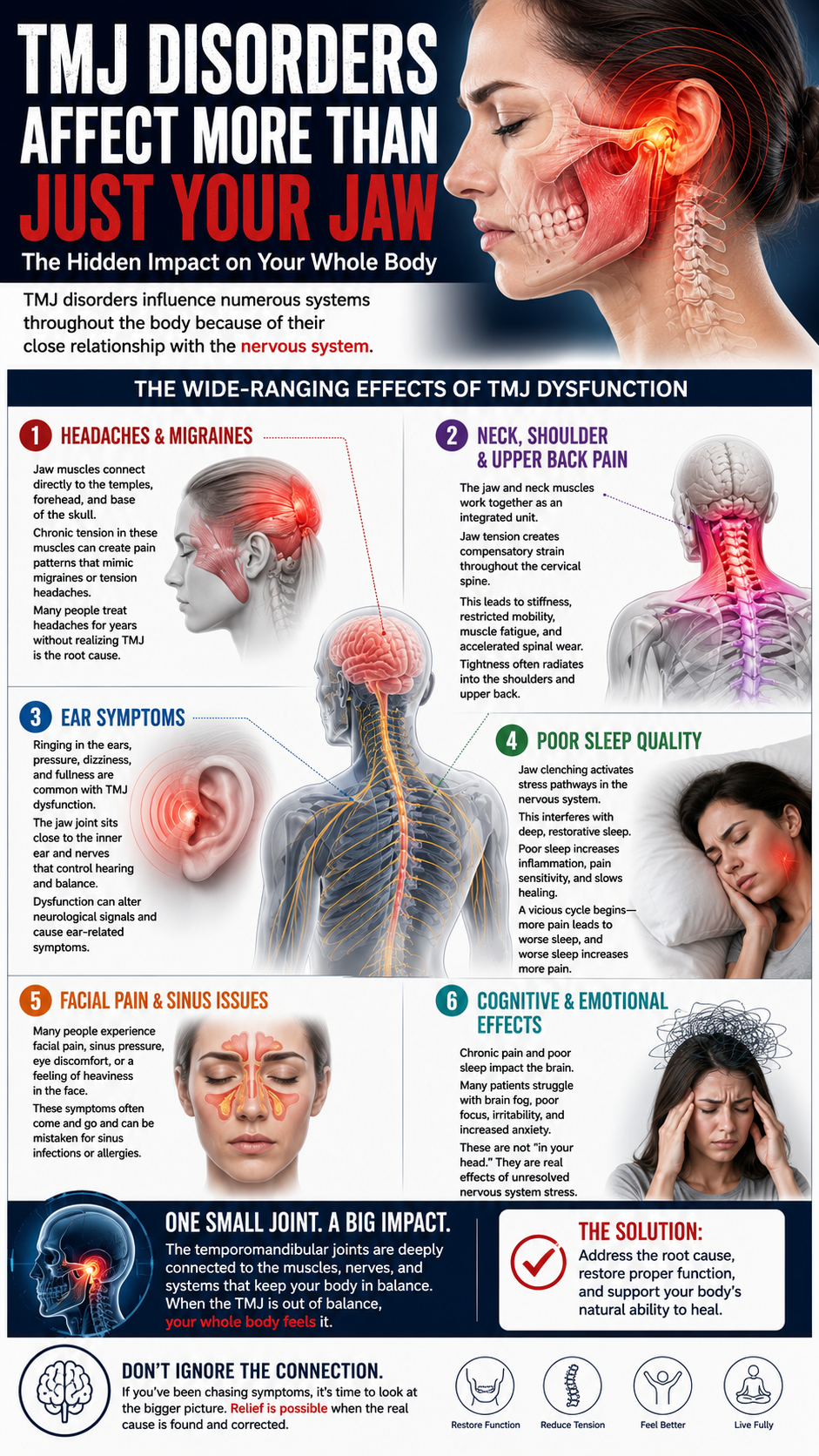
Ear symptoms present another common manifestation. Ringing in the ears, pressure sensations, dizziness, and feelings of fullness often accompany TMJ disorders. The jaw joint sits remarkably close to structures involved in hearing and balance. Dysfunction within this region can alter neurological input and create symptoms that resemble primary ear conditions.
Sleep quality frequently deteriorates as TMJ dysfunction progresses. Jaw clenching activates stress pathways within the nervous system and interferes with the body’s ability to relax fully. Poor sleep then increases inflammation, heightens pain sensitivity, and impairs tissue repair. This creates a vicious cycle in which worsening symptoms further disrupt restorative sleep.
Many individuals also experience facial pain, sinus pressure, eye discomfort, difficulty concentrating, and increased anxiety. The interconnected nature of these symptoms often leaves patients frustrated because they seem unrelated. In reality, they frequently reflect different expressions of the same underlying dysfunction.
Why Conventional Treatments Often Miss the Mark
Most conventional TMJ treatments focus on symptom management rather than functional correction. Pain medications reduce discomfort temporarily. Anti-inflammatory drugs decrease inflammation for a period of time. Muscle relaxers lessen muscle activity while their effects last. These interventions may provide short-term relief, but they rarely address the mechanical and neurological factors driving the condition.
Mouthguards remain one of the most common recommendations. While these devices can protect teeth from excessive wear, they often fail to eliminate the reason patients continue clenching or grinding. Imagine placing padding between two machine parts that remain misaligned. The padding may reduce damage, yet the underlying problem persists.
Injections and surgical procedures address symptoms at a more invasive level. Certain patients benefit from these interventions, particularly when significant structural damage exists. However, surgery rarely corrects cranial distortions, postural imbalances, airway dysfunction, or neurological stress patterns. Without addressing these factors, symptoms may return or continue evolving.
The greatest limitation of conventional treatment lies in its tendency to view the jaw as an isolated structure. Human physiology does not operate in isolated compartments. Every joint, muscle, nerve, and organ functions within an integrated system. Effective treatment must respect this reality.
Why Jaw and Cranial Chiropractic Works Differently
Jaw and cranial chiropractic begins with a different question. Instead of asking how to suppress symptoms, practitioners seek to understand why the dysfunction developed in the first place. This perspective shifts attention toward structural relationships involving the skull, jaw, neck, posture, and nervous system.
Cranial chiropractic focuses on restoring balanced movement among the bones of the skull. Trauma and repetitive stress can create restrictions that alter muscular tension patterns. Correcting these distortions often reduces abnormal forces affecting the temporomandibular joints. Patients frequently report improvements in jaw mobility, headaches, facial tension, and overall comfort.
Upper cervical chiropractic care addresses dysfunction involving the atlas and axis vertebrae. Proper alignment within this region supports healthy neurological communication and muscular balance. Because the upper neck influences jaw mechanics profoundly, correcting cervical dysfunction often produces significant improvements in TMJ symptoms.
Perhaps most importantly, this approach recognizes the body’s remarkable capacity for healing when underlying obstacles are removed. Instead of forcing adaptation through medications or invasive procedures, functional correction seeks to restore conditions that allow normal physiology to return.
What You Can Do at Home to Begin Healing TMJ Naturally
Recovery begins with understanding that habits shape function. Every hour of every day, the body responds to the positions, movements, and behaviors repeated most often. Small changes performed consistently can create substantial improvements over time.
Posture deserves immediate attention. Keeping the head aligned over the shoulders reduces stress upon the jaw and cervical spine. Many individuals unknowingly spend hours with their heads positioned forward. Correcting this pattern decreases muscular tension and improves joint mechanics. Frequent posture awareness throughout the day can produce meaningful benefits.
Nasal breathing represents another powerful strategy. Breathing through the nose promotes proper tongue posture and supports healthy airway function. Mouth breathing often encourages jaw instability and muscular compensation. Consciously practicing nasal breathing during waking hours helps retrain these patterns and supports long-term improvement.
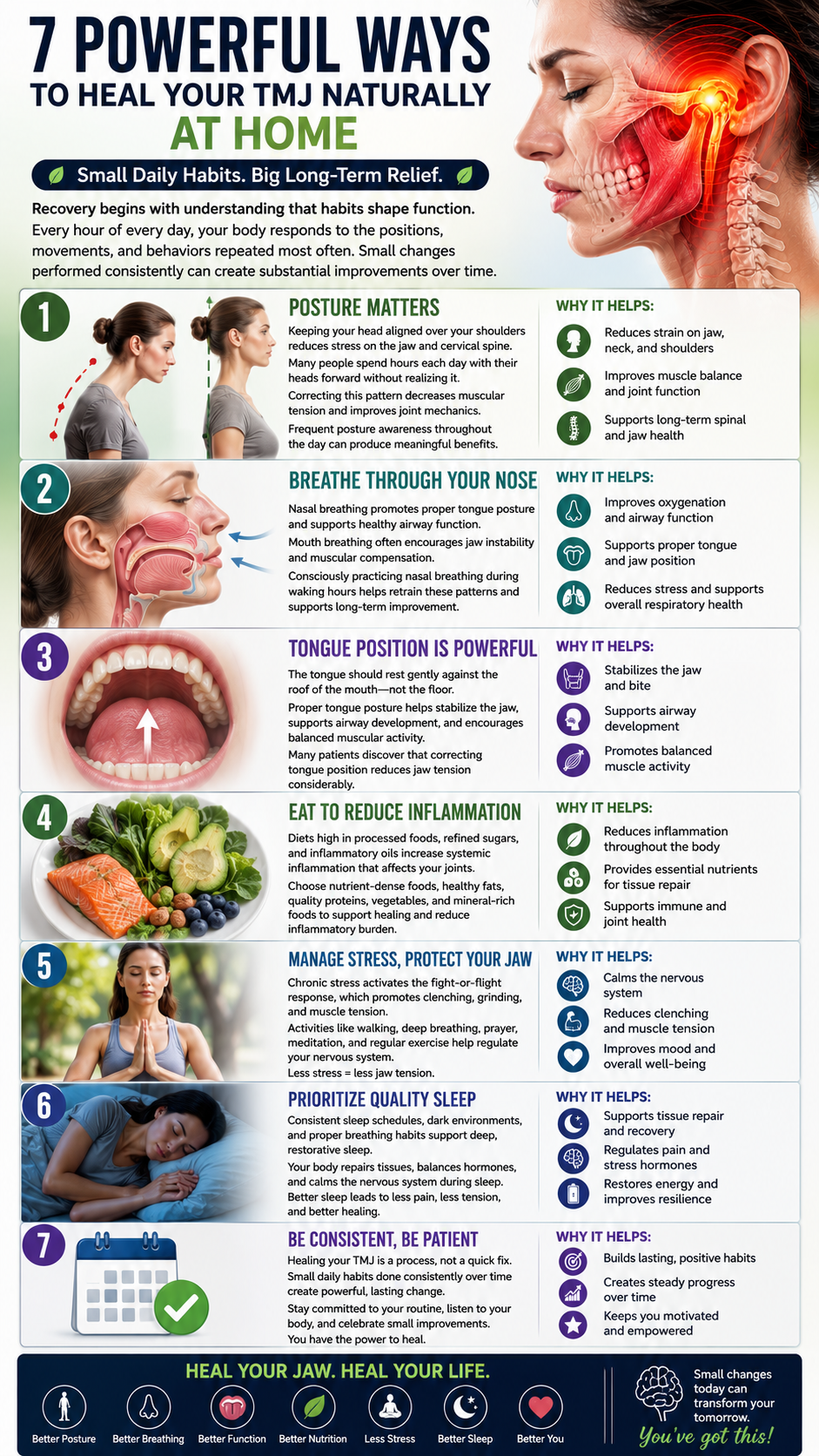
Tongue position also matters significantly. The tongue should rest gently against the roof of the mouth rather than the floor. Proper tongue posture helps stabilize the jaw, supports airway development, and encourages balanced muscular activity. Many patients discover that correcting tongue position reduces jaw tension considerably.
Nutrition influences TMJ health through its effects on inflammation. Diets high in processed foods, refined sugars, and inflammatory oils contribute to systemic inflammation that affects joints throughout the body. Emphasizing nutrient-dense foods, healthy fats, quality proteins, vegetables, and mineral-rich foods supports healing while reducing inflammatory burden.
Stress management cannot be ignored. Chronic activation of the stress response promotes clenching, grinding, and muscle tension. Activities such as walking, deep breathing, prayer, meditation, and regular exercise help regulate the nervous system. Reduced stress often translates directly into reduced jaw tension.
Sleep quality plays a critical role in recovery. Consistent sleep schedules, dark sleeping environments, and proper breathing habits support tissue repair and neurological balance. Many patients notice significant improvements when they prioritize restorative sleep.
The Future of TMJ Treatment
The future of TMJ care lies in understanding the condition as a whole-body disorder rather than a localized joint problem. Research continues revealing connections between jaw function, airway health, posture, neurological regulation, and systemic inflammation. These discoveries support a more comprehensive approach that addresses root causes rather than merely suppressing symptoms.
Patients deserve more than temporary relief. They deserve explanations that make sense and solutions that address the true source of dysfunction. Jaw pain does not occur in isolation. Neither do headaches, neck tension, ringing ears, or chronic facial discomfort. Each symptom represents part of a larger story that deserves careful investigation.
TMJ disorders can be complex, but complexity should not create hopelessness. When structural, neurological, postural, and lifestyle factors receive proper attention, many individuals experience remarkable improvements. The body possesses an extraordinary ability to heal when given the right conditions.
The goal should never be simply reducing pain. The goal should be restoring function. Once function returns, the body often accomplishes what medications and procedures alone cannot. True healing begins when we stop chasing symptoms and start addressing causes. That philosophy represents the foundation of jaw and cranial chiropractic that actually works.