The Hidden Structural Story Behind a Night of Broken Breathing
Every night, millions of people close their eyes believing they are about to give their bodies the rest they desperately need. The lights go out, the room grows quiet, and sleep begins as it has countless nights before. Yet, hidden beneath the silence, an invisible struggle unfolds. The airway narrows. The tongue drifts backward. The muscles supporting the throat relax. Oxygen levels begin to fall. The brain, sensing danger, repeatedly jerks the body just enough to restart breathing before consciousness ever returns. By sunrise, eight hours may have passed, but true restoration never arrived. Instead, another day begins with crushing fatigue, mental fog, stubborn weight gain, elevated blood pressure, and an overwhelming dependence on caffeine simply to function.
For decades, conventional medicine has largely treated sleep apnea as a nighttime breathing disorder managed with continuous positive airway pressure, commonly known as CPAP. The machine certainly has an important role. It keeps the airway open while it operates and reduces dangerous breathing interruptions in many patients. Yet that success has unintentionally narrowed the conversation. Far too often, attention centers on forcing air through a collapsing airway instead of asking the deeper question that every great physician should ask first: What caused the airway to collapse in the first place?
That single question changes everything.
An airway rarely becomes obstructed overnight. Most cases develop gradually over years, sometimes decades, as subtle structural changes reshape the face, jaw, neck, tongue, muscles, nervous system, and surrounding tissues. Those changes rarely occur in isolation. Instead, they build upon one another until the body reaches a tipping point where normal breathing during sleep becomes impossible. Understanding those structural origins opens an entirely different perspective on sleep apnea, one that looks beyond symptom management and begins searching for the mechanical and neurological contributors that may be driving the disorder. While CPAP remains an evidence-based treatment for many people, especially those with moderate to severe disease, understanding and addressing contributing structural factors may improve airway function and overall health as part of a comprehensive treatment plan.
A Disorder That Begins Long Before the First Snore
Most people assume sleep apnea begins the first night someone snores loudly enough to wake a spouse. In reality, the condition often starts years earlier, long before anyone notices interrupted breathing. The earliest warning signs frequently appear during childhood as facial development changes in subtle but important ways. A child who breathes primarily through the mouth instead of the nose often develops a narrower upper jaw, a higher palate, and a longer facial profile. Those seemingly minor differences alter the amount of space available for the tongue and airway throughout life. As adulthood arrives, the consequences of those developmental changes become increasingly apparent, even though the original cause may have been forgotten decades earlier.
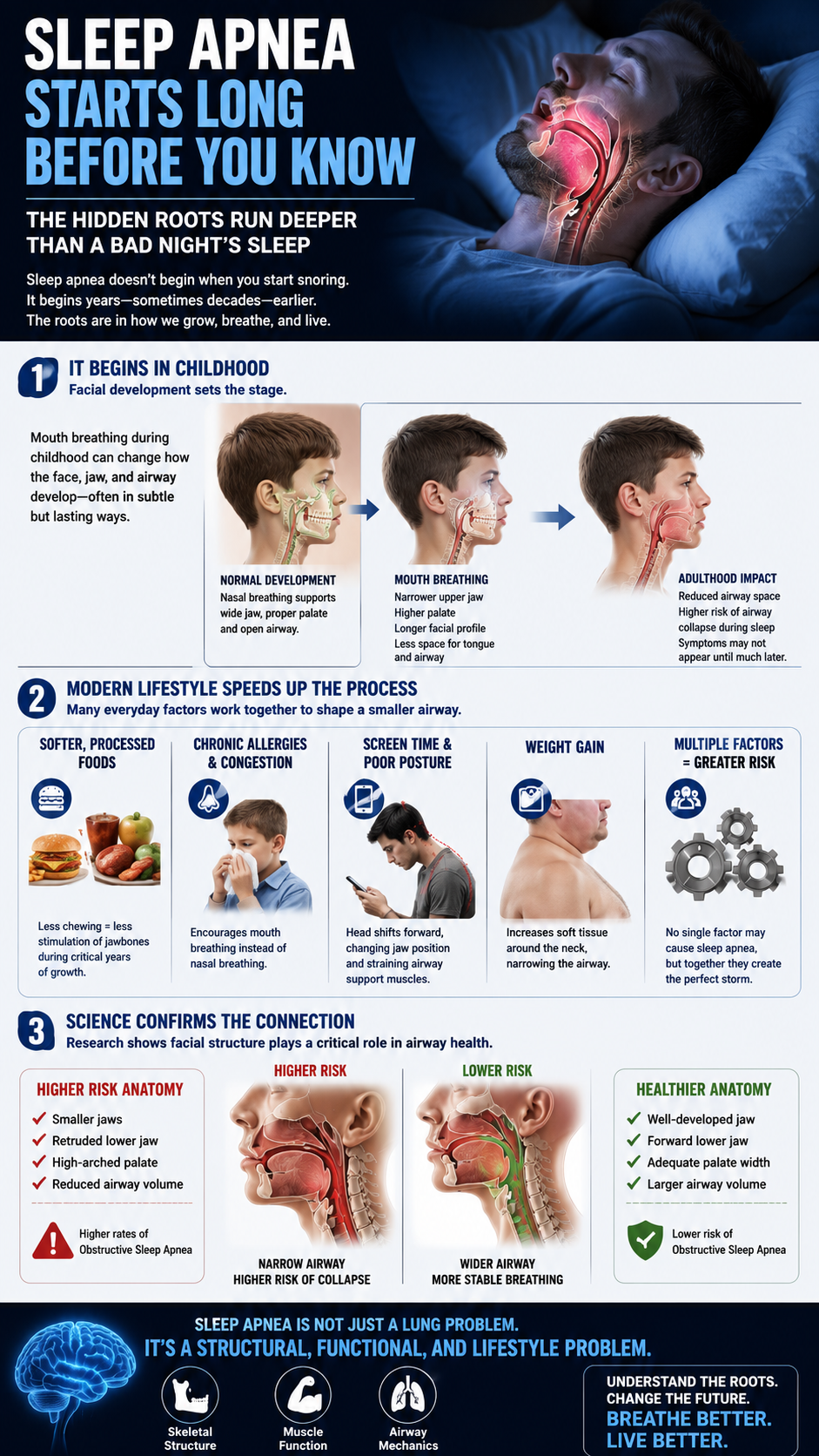
Modern lifestyles have quietly accelerated this process. Processed foods require far less chewing than the fibrous diets consumed by previous generations. Reduced chewing decreases stimulation of the jawbones during critical years of growth. Chronic allergies encourage mouth breathing instead of nasal breathing. Hours spent looking downward at phones and computers gradually shift the head forward, changing the position of the jaw and placing additional strain on the muscles supporting the airway. Weight gain compounds these mechanical disadvantages by increasing soft tissue around the neck. None of these factors alone necessarily causes sleep apnea. Together, however, they create an anatomical environment where airway collapse becomes increasingly likely.
Researchers studying craniofacial development have repeatedly demonstrated that individuals with smaller jaws, retruded lower jaws, high-arched palates, and reduced airway volume experience obstructive sleep apnea at higher rates than those with more favorable facial anatomy. These observations have shifted scientific attention away from viewing sleep apnea solely as a lung disorder and toward recognizing it as a condition deeply influenced by skeletal structure, muscle function, and airway mechanics.
The Jaw Holds the Airway Together
Few structures influence nighttime breathing more than the lower jaw. Although most people think of the mandible simply as the bone that allows chewing and speaking, it also serves as the foundation for the tongue. Multiple muscles attach the tongue directly to the jaw, meaning the tongue generally follows wherever the mandible rests. When the jaw maintains a healthy forward position, the tongue naturally occupies the roof of the mouth, leaving generous space behind it for air to flow toward the lungs. When the jaw shifts backward, however, the tongue often follows, reducing the diameter of the upper airway.
This relationship explains why even small anatomical differences can dramatically influence breathing during sleep. The airway resembles a flexible tunnel rather than a rigid pipe. During inhalation, negative pressure develops inside that tunnel as air rushes toward the lungs. If surrounding muscles and supporting structures fail to maintain adequate tension, the airway narrows or collapses. A jaw positioned farther back than normal places the tongue closer to the throat, making collapse far more likely each time muscle tone naturally decreases during sleep.
Dentists, orthodontists, sleep physicians, and maxillofacial surgeons increasingly recognize this relationship. Cone-beam computed tomography has allowed researchers to visualize airway volume with remarkable precision. Many studies demonstrate that individuals with retruded jaws often possess significantly smaller upper airway dimensions than those with well-developed facial structures. Those findings do not mean every person with a small jaw develops sleep apnea. They do, however, reinforce the idea that skeletal architecture plays an essential role in determining whether the airway remains open throughout the night.
The Neck Tells Another Part of the Story
The cervical spine receives surprisingly little attention during discussions about sleep apnea despite supporting the skull, jaw, and many of the muscles responsible for maintaining airway stability. Every movement of the head influences the position of the jaw, tongue, hyoid bone, and surrounding soft tissues. As posture changes over months and years, these structures gradually adapt to new mechanical demands.
Forward head posture has become one of the defining musculoskeletal characteristics of modern life. Looking downward at smartphones, tablets, and computer screens encourages the head to migrate in front of the shoulders. That shift increases stress throughout the cervical spine while altering muscle balance around the throat and jaw. The body often compensates by tightening some muscles and weakening others, creating a pattern that may influence airway dimensions.
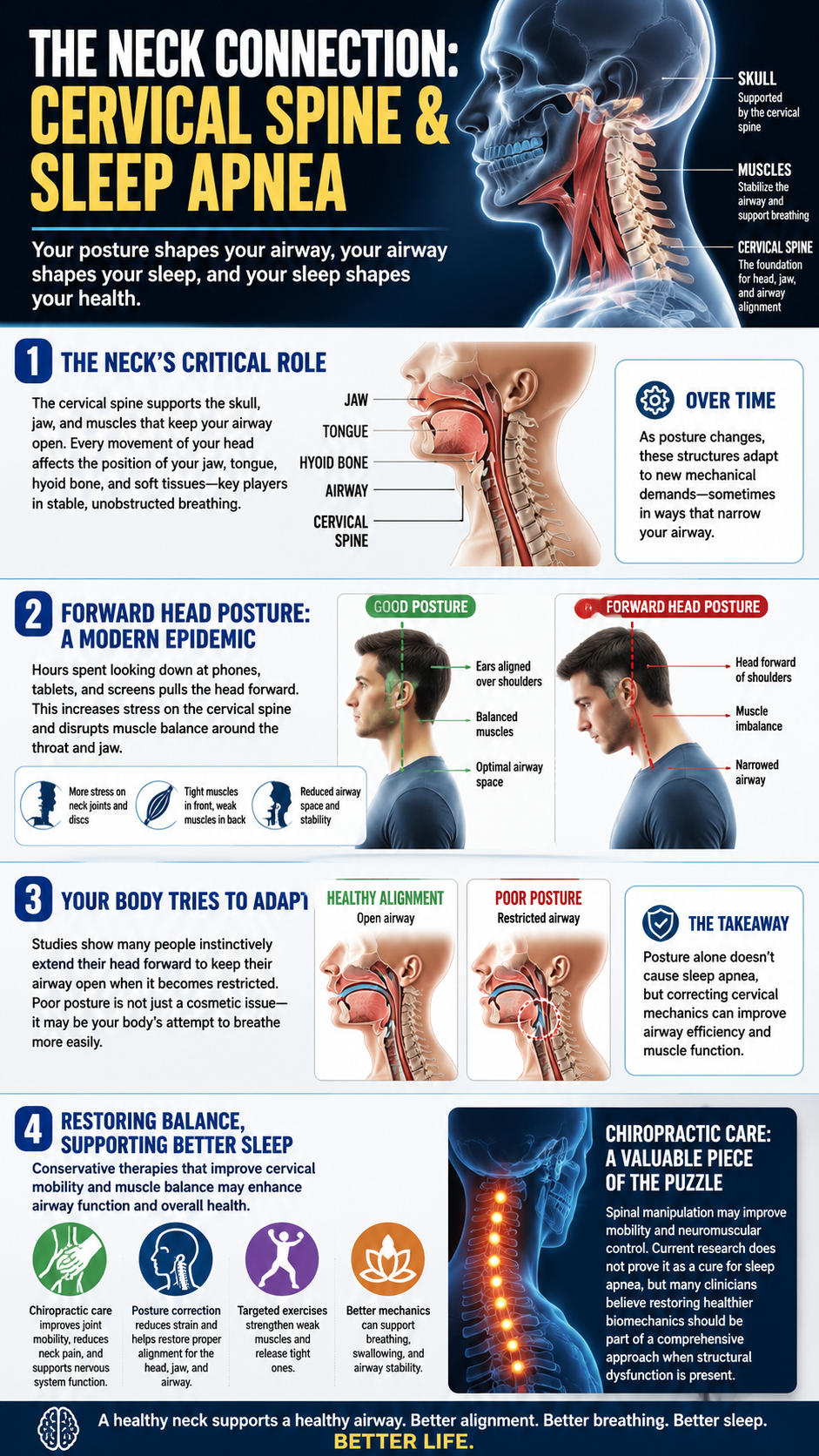
Interestingly, several imaging studies suggest that many individuals instinctively extend their heads forward to maintain airflow when their upper airway becomes restricted. In other words, poor posture may represent more than a cosmetic concern. It may reflect the body’s attempt to improve breathing despite underlying anatomical limitations. While posture alone does not create obstructive sleep apnea, correcting abnormal cervical mechanics may improve the efficiency of muscles involved in breathing, swallowing, and maintaining head position.
This relationship has prompted growing interest in whether conservative therapies that improve cervical mobility and muscular balance might contribute to better airway function. Chiropractic care has emerged as one area of investigation because spinal manipulation can improve joint mobility, reduce neck pain, and influence neuromuscular control. Current evidence does not establish chiropractic adjustment as a cure for sleep apnea, yet many clinicians believe restoring healthier biomechanics deserves consideration alongside established treatments when structural dysfunction contributes to airway compromise.
The Tongue Becomes the Airway’s Greatest Obstacle
The tongue performs thousands of coordinated movements each day without conscious effort. It assists speech, chewing, swallowing, and breathing while constantly adjusting its position in response to changing demands. During sleep, however, muscle activity naturally declines. That reduction in tone presents little difficulty when the tongue rests forward against the palate. Problems arise when years of altered jaw position, mouth breathing, or poor muscle coordination encourage the tongue to settle farther back inside the throat.
As the tongue falls posteriorly, it occupies valuable airway space precisely when surrounding muscles become least capable of resisting collapse. Each inhalation increases negative pressure inside the throat, drawing relaxed tissues inward. Snoring frequently represents the first audible sign that turbulence has developed within this narrowing passage. Over time, repeated collapse produces the breathing interruptions characteristic of obstructive sleep apnea.
Researchers studying oropharyngeal muscle training have discovered that strengthening the muscles of the tongue, palate, cheeks, and throat may reduce apnea severity in selected patients, particularly those with mild to moderate disease. These findings reinforce an important principle. The airway does not depend solely upon bones or soft tissue volume. Muscle strength and coordination also determine whether breathing remains uninterrupted throughout the night.
Every Missed Breath Echoes Throughout the Entire Body
Sleep apnea affects far more than sleep quality. Every interruption in breathing briefly deprives tissues of oxygen while activating the body’s stress response. The brain responds by releasing adrenaline and other stress hormones designed to restore airflow immediately. Although this survival mechanism protects life in the short term, repeating it dozens or even hundreds of times each night gradually transforms normal physiology into chronic dysfunction.
The cardiovascular system often bears the earliest burden. Repeated oxygen deprivation promotes oxidative stress, inflammation, endothelial dysfunction, and sympathetic nervous system activation. Blood pressure rises because blood vessels remain in a heightened state of constriction. The heart works harder despite receiving less restorative recovery during sleep. Numerous studies have linked untreated obstructive sleep apnea with increased risks of hypertension, atrial fibrillation, coronary artery disease, heart failure, and stroke, underscoring the importance of timely diagnosis and treatment.
The brain suffers as well. Interrupted sleep reduces time spent in restorative slow-wave and rapid eye movement sleep, both essential for memory consolidation, emotional regulation, and glymphatic waste clearance. Many individuals attribute worsening concentration or forgetfulness to aging when fragmented sleep quietly drives much of the decline. Hormonal regulation also changes as disrupted sleep alters cortisol rhythms, increases hunger-promoting hormones, decreases insulin sensitivity, and makes maintaining a healthy weight progressively more difficult. What begins as a mechanical problem inside the airway ultimately influences nearly every organ system through chronic oxygen deprivation and repeated activation of the body’s stress response.
Restoring the Airway by Addressing Its Structural Foundation
The human body possesses an extraordinary capacity to heal when its structure supports its function. That principle explains why a broken bone mends once it is properly aligned, why an inflamed tendon recovers after mechanical stress decreases, and why damaged muscles strengthen when movement patterns improve. The upper airway follows the same biological rules. Although no single exercise, supplement, or adjustment can eliminate sleep apnea in every individual, especially in moderate or severe cases, improving the structural environment surrounding the airway may reduce the forces that encourage collapse. Rather than viewing sleep apnea as a condition managed only by nighttime machinery, a growing number of clinicians now recognize that restoring healthy breathing mechanics requires attention to posture, jaw position, muscle coordination, nasal airflow, inflammation, metabolic health, and cervical function. Each improvement strengthens another piece of the airway’s natural support system.
The Nose Was Designed to Be the Primary Airway
Long before air reaches the lungs, it passes through an organ specifically engineered to prepare every breath for the body. The nose warms incoming air, humidifies it, filters microscopic particles, and produces nitric oxide, a signaling molecule that improves oxygen delivery while supporting healthy blood vessel function. Every nasal breath conditions the air before it reaches the delicate tissues of the lungs. Mouth breathing bypasses nearly all of those protective mechanisms.
Years of habitual mouth breathing gradually reshape facial muscles and alter tongue posture. The tongue drops away from the roof of the mouth because it no longer needs to seal the oral cavity during nasal respiration. As the tongue falls, it occupies more space inside the throat, reducing the airway available for nighttime breathing. Dry mouth develops because saliva evaporates more rapidly, increasing the risk of dental decay and gum disease. Chronic mouth breathing also encourages shallow chest breathing rather than efficient diaphragmatic breathing, increasing sympathetic nervous system activity throughout the day.
Improving nasal breathing begins with identifying the reason the mouth remains open. Seasonal allergies, chronic sinus inflammation, nasal polyps, deviated septums, enlarged turbinates, and environmental irritants frequently contribute to nasal obstruction. Many people discover that saline nasal irrigation before bedtime, controlling indoor allergens, maintaining appropriate humidity, and treating chronic nasal inflammation significantly improve nighttime airflow. Developing the habit of breathing through the nose during daily activities further retrains respiratory muscles while encouraging healthier tongue posture throughout the day and night.
The Jaw Deserves More Attention Than It Usually Receives
Every discussion about sleep apnea eventually returns to the same anatomical reality: the jaw determines where the tongue rests. When the lower jaw retracts during sleep, the tongue often follows, narrowing the airway behind it. This mechanical relationship explains why oral appliance therapy has become an accepted treatment option for selected patients with mild to moderate obstructive sleep apnea. These custom devices gently position the lower jaw forward while sleeping, increasing airway dimensions without using continuous positive airway pressure.
That principle also helps explain why maintaining healthy jaw mechanics throughout the day matters just as much as nighttime positioning. Clenching the teeth, chewing predominantly on one side, poor temporomandibular joint function, previous facial injuries, and chronic muscular imbalance may influence resting jaw posture over many years. Addressing those issues does not guarantee resolution of sleep apnea, yet improving jaw function creates a more favorable environment for maintaining airway stability.
Simple habits performed consistently can reinforce healthier mechanics. Resting the tongue gently against the roof of the mouth while keeping the lips closed encourages a forward tongue position that supports the upper airway. Avoiding prolonged mouth opening while sitting at a computer or watching television reduces unnecessary strain on the jaw muscles. Choosing foods that require moderate chewing rather than relying entirely on highly processed meals provides healthy mechanical stimulation to the muscles responsible for facial stability. Although these practices appear modest, their cumulative effects become meaningful over months and years.
Strong Airway Muscles Resist Collapse More Effectively
Athletes understand that muscles become stronger through deliberate training. The muscles surrounding the airway follow the same biological principles. Researchers studying myofunctional therapy have demonstrated that structured exercises targeting the tongue, cheeks, palate, and throat can reduce snoring while improving airway stability in selected patients. These exercises do not enlarge the airway permanently, but they improve muscular tone and coordination, allowing surrounding tissues to resist collapse more effectively during sleep.
Consistent tongue exercises encourage the tongue to remain elevated against the palate rather than drifting backward into the throat. Controlled swallowing exercises retrain muscles that stabilize the hyoid bone and surrounding tissues. Lip-strengthening movements improve mouth closure, reinforcing nasal breathing throughout the day. Over time, these coordinated improvements help restore more efficient airway mechanics while complementing other structural interventions.
The greatest advantage of myofunctional therapy lies in its ability to address function rather than anatomy alone. Two people may possess similar airway dimensions, yet the individual with stronger airway muscles often experiences fewer breathing interruptions because those tissues maintain better support throughout the night. Strength cannot overcome severe anatomical obstruction, but improved neuromuscular control frequently enhances overall airway performance.
The Neck Serves as the Airway’s Foundation
Every movement of the jaw depends upon the position of the cervical spine beneath it. Poor cervical alignment changes muscle tension throughout the neck, influences head posture, and alters the mechanical relationship between the skull, jaw, tongue, and upper airway. Forward head posture, now common in people who spend hours looking at digital devices, often creates chronic tension throughout the muscles responsible for stabilizing these structures.
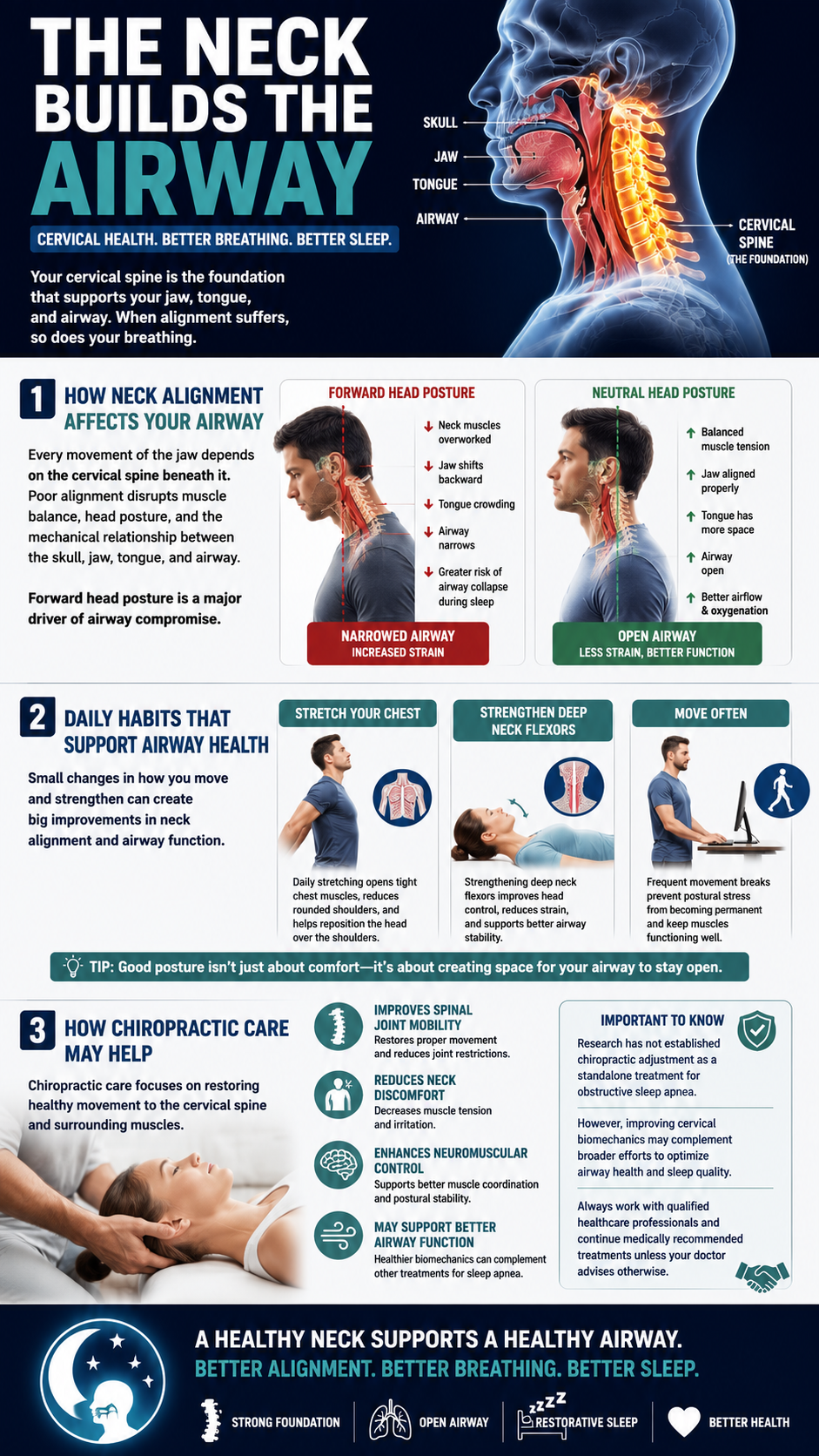
Improving cervical mobility represents one of the most overlooked components of airway health. Daily stretching of the chest muscles reduces the rounded shoulder posture that encourages forward head carriage. Gentle strengthening of the deep neck flexor muscles helps reposition the head over the shoulders, decreasing unnecessary muscular strain. Frequent movement breaks throughout the workday prevent prolonged postural stress from becoming permanent.
Chiropractic care may contribute to this process by improving spinal joint mobility, reducing neck discomfort, and restoring more normal movement patterns in selected patients. Current research has not established chiropractic adjustment as a standalone treatment for obstructive sleep apnea, yet improving cervical biomechanics may complement broader efforts aimed at optimizing airway function. Patients considering chiropractic care for sleep apnea should work collaboratively with qualified healthcare professionals and continue medically recommended treatments unless their physician advises otherwise.
Inflammation Quietly Narrows the Airway
Mechanical factors tell only part of the story. Chronic inflammation affects nearly every tissue involved in breathing. Allergic reactions swell nasal passages, reducing airflow before air even reaches the throat. Reflux disease irritates delicate tissues around the larynx, promoting additional swelling that further narrows the airway. Excess body fat surrounding the neck increases external pressure on airway structures, making collapse more likely during sleep.
Diet strongly influences many of these inflammatory processes. Meals dominated by refined carbohydrates, sugar-sweetened beverages, highly processed foods, and excessive alcohol contribute to systemic inflammation while promoting weight gain. Conversely, diets emphasizing vegetables, fruits, lean proteins, healthy fats, legumes, and minimally processed foods support metabolic health and reduce inflammatory burden. Individuals with overweight or obesity who achieve sustained weight loss often experience meaningful reductions in sleep apnea severity because decreased fat deposition around the neck enlarges the functional airway.
Even modest weight reduction produces measurable improvements in many patients. Losing ten percent of body weight may significantly reduce apnea severity for some individuals, although responses vary considerably. Sustainable lifestyle changes consistently outperform rapid dietary extremes because long-term airway health depends upon long-term metabolic improvement.
Sleep Position Influences Every Breath
Gravity remains one of the simplest yet most powerful contributors to airway collapse. Sleeping flat on the back allows the tongue and surrounding tissues to fall directly toward the throat, particularly in people with already narrow airways. Many individuals experience substantially fewer breathing interruptions when sleeping on their side because gravity no longer pulls the tongue directly backward.
Positional therapy has therefore become an important component of comprehensive sleep apnea management. Specialized pillows, wearable positional devices, or even simple techniques that discourage back sleeping may reduce apnea severity in carefully selected individuals. Elevating the head of the bed slightly also decreases airway resistance for some people by reducing gravitational pressure on upper airway tissues. Although these approaches rarely eliminate moderate or severe sleep apnea completely, they often improve breathing quality while complementing other treatments.
Restoring Sleep Requires More Than One Solution
The greatest misconception surrounding sleep apnea involves believing that one intervention alone must solve every case. Human physiology rarely works that way. Airway stability depends upon skeletal anatomy, muscle tone, neurological coordination, body composition, nasal airflow, sleep position, inflammation, and overall health. Addressing only one factor while ignoring the others frequently limits progress.
That reality explains why comprehensive treatment plans often produce the best outcomes. A patient may use CPAP to protect against dangerous oxygen deprivation while simultaneously improving nasal breathing, strengthening airway muscles, correcting poor posture, managing body weight, treating allergies, and addressing jaw dysfunction. Another patient with milder disease may benefit from a custom oral appliance combined with structured myofunctional therapy and lifestyle modification. Individual anatomy ultimately determines which combination provides the greatest benefit.
The future of sleep apnea management will likely move beyond choosing between CPAP and structural therapies. Instead, clinicians increasingly recognize that protecting the airway requires integrating medical treatment with mechanical optimization whenever appropriate. Rather than asking whether one therapy replaces another, the more productive question asks how each intervention contributes to restoring healthy breathing throughout the entire day rather than only during the hours spent asleep.
Looking Beyond the Mask
Sleep apnea represents far more than loud snoring or restless nights. Left untreated, it quietly strains the heart, disrupts hormone regulation, impairs cognitive performance, increases accident risk, and diminishes quality of life year after year. Every interrupted breath reminds us that structure and function remain inseparable throughout the human body. When the airway narrows because the surrounding framework no longer provides adequate support, restoring healthier mechanics becomes an important part of protecting long-term health.
Continuous positive airway pressure remains one of the most effective treatments for many people with clinically significant obstructive sleep apnea, and no one should discontinue prescribed therapy without medical guidance. At the same time, understanding the structural contributors to airway collapse empowers patients to pursue additional strategies that support healthier breathing. Improving nasal airflow, restoring jaw function, strengthening airway muscles, correcting cervical posture, reducing inflammation, maintaining a healthy weight, and improving sleep habits all target contributors that CPAP alone cannot change.
True healing rarely comes from masking symptoms indefinitely. It begins by asking better questions about why the body changed in the first place. When those answers guide thoughtful, evidence-informed action, better sleep becomes more than a nightly hope. It becomes a realistic goal supported by healthier structure, stronger function, and a deeper understanding of how the body was designed to breathe.