
The Biology of a Body That Never Fully Stands Down
The most consequential changes inside the human body rarely arrive with an alarm. Arteries can deteriorate without aching, while insulin resistance advances without producing a single dramatic symptom. Fat can accumulate within the liver while digestion appears normal. Blood pressure can climb for years without creating pain. During that same period, chronic low-grade inflammation may influence tissues throughout the body. Feeling reasonably well, therefore, does not always mean physiology remains healthy.
This distinction matters because most people understand inflammation through injuries and infections. A sprained ankle swells, an infected cut becomes red, and influenza can produce fever. Those reactions make inflammation seem loud, immediate, and unmistakable. Yet chronic inflammation follows another pattern entirely. Immune activity can remain slightly elevated without producing the sensations associated with an acute inflammatory response. Scientists often describe this persistent state as chronic low-grade inflammation or metabolic inflammation.
The central problem is not that the immune system suddenly becomes defective. More often, the body keeps responding to conditions that never fully disappear. Excess visceral fat produces inflammatory signals, while insulin resistance places tissues under metabolic strain. Poor sleep disturbs hormonal regulation, and chronic stress changes nervous system activity. Periodontal disease can continuously challenge immunity, while smoking adds oxidative and vascular injury. An unhealthy intestinal environment may create another source of immune stimulation.
These influences rarely occur alone, which explains why chronic inflammation becomes difficult to understand through one laboratory value. A person may sleep poorly because abdominal weight worsens breathing during the night. Poor sleep can then increase hunger and reduce insulin sensitivity. Worsening insulin resistance encourages additional visceral fat, which produces more inflammatory signaling. The biological problem becomes a network of reinforcing disturbances. Removing one symptom while preserving that network rarely changes the entire trajectory.
Inflammation Was Designed to End
Inflammation itself remains one of nature’s most important survival systems. When tissue becomes injured, the immune system identifies damage and coordinates a repair response. Blood vessels change, immune cells move toward the affected area, and chemical messengers organize the process. Damaged material gets removed while rebuilding begins. Once the threat passes, healthy physiology shifts toward inflammatory resolution. The ending matters just as much as the beginning.
Chronic inflammation emerges when repeated signals interfere with that return toward balance. Instead of a short response followed by recovery, inflammatory pathways stay active. Cytokines continue carrying messages between immune cells and tissues. The liver may produce more acute-phase proteins, including C-reactive protein. Metabolic organs encounter these signals while managing excessive nutrients, hormones, and oxidative stress. Over time, the body’s normal defense system can become part of the disease environment.
Modern research increasingly recognizes this inflammatory component within atherosclerosis. Immune activity participates in plaque formation, progression, and complications within arterial walls. Inflammation does not replace cholesterol as a cardiovascular factor, because both processes interact. Lipids enter vulnerable arterial tissue, while immune cells respond within the developing lesion. Persistent inflammation can also affect plaque stability and vascular function. The process can progress for years before chest discomfort ever develops.
The same principle appears throughout metabolic disease. Inflammation can accompany obesity-related insulin resistance and dysfunctional visceral adipose tissue. Enlarged fat cells experience cellular stress and recruit immune activity. Those immune responses can then worsen insulin signaling within nearby and distant tissues. Consequently, metabolic dysfunction creates inflammation while inflammation can deepen metabolic dysfunction. This relationship helps explain why simply “lowering inflammation” misses the larger physiological problem.
The Problem Often Begins With Metabolic Overload
Human metabolism evolved to alternate between obtaining energy, storing energy, and using stored energy. Modern living can keep the storage side of that equation continuously active. Food remains available throughout the day, while physical activity often remains remarkably low. Refined carbohydrates and calorie-dense foods make excessive energy intake easy. Skeletal muscle receives less demand, yet the bloodstream repeatedly delivers glucose and fatty acids. Eventually, tissues can become less efficient at handling that constant supply.
Insulin resistance often develops during this period without creating obvious symptoms. The pancreas compensates by secreting additional insulin, which helps maintain acceptable blood glucose. That compensation can create false reassurance when someone examines glucose alone. The system may already require considerably more hormonal effort to achieve the same result. Meanwhile, elevated insulin and excessive energy availability can encourage fat storage. The abdomen and liver frequently become important destinations for that excess energy.
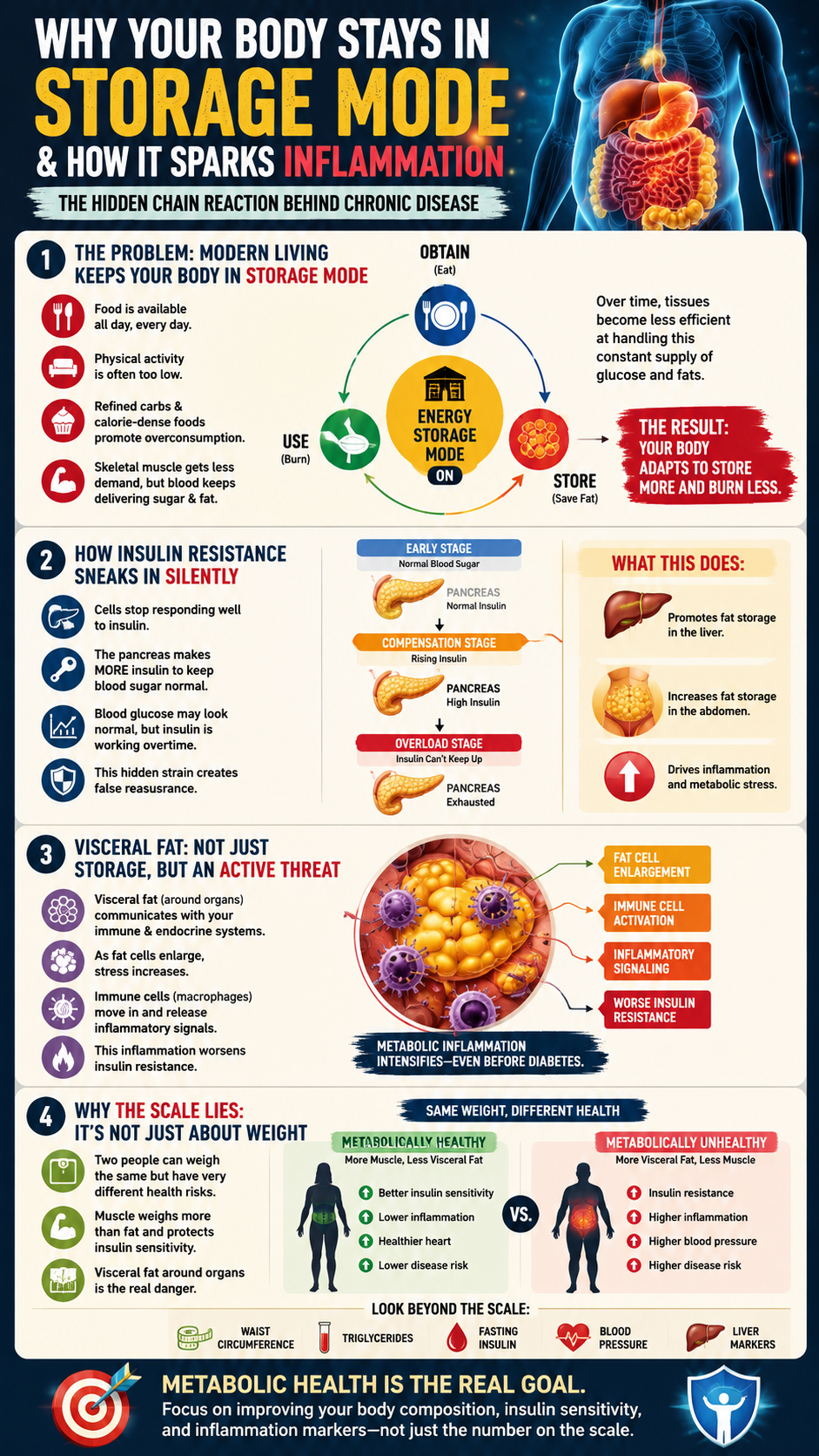
Visceral adipose tissue deserves particular attention because it behaves differently from passive storage. Fat cells communicate with the immune and endocrine systems through numerous signaling molecules. As these cells enlarge, local stress increases and immune cells become more active. Macrophages enter adipose tissue and participate in inflammatory signaling. This environment can interfere further with insulin sensitivity. Metabolic inflammation can therefore intensify even before diabetes develops.
Weight alone cannot reveal this process accurately. Two people may weigh the same while carrying completely different amounts of muscle and visceral fat. Someone with substantial muscle may appear heavier yet maintain excellent insulin sensitivity. Another person can look relatively thin while storing excessive fat around internal organs. Waist circumference, triglycerides, fasting insulin, blood pressure, and liver markers provide additional context. Metabolic health demands a broader investigation than the bathroom scale offers.
Ultra-Processed Food Alters More Than Calorie Intake
Food enters this story because metabolism responds differently to different dietary environments. Protein, carbohydrates, fats, minerals, and plant compounds create specific hormonal and digestive responses. Food structure also influences eating speed, satiety, and total calorie intake. Ultra-processed foods often combine refined ingredients with textures that make rapid eating remarkably easy. Their convenience can quietly transform occasional consumption into a daily dietary foundation. That repeated exposure matters far more than an isolated dessert.
A tightly controlled NIH feeding trial demonstrated how powerful this environment can become. Participants ate roughly 500 additional calories daily during the ultra-processed phase. They also gained weight compared with the minimally processed dietary phase. Researchers had matched the offered diets for several nutritional characteristics. The result suggested that processing characteristics can influence spontaneous food intake beyond simple willpower. One meal did not create the problem; the dietary environment changed eating behavior.
Excess calorie intake then creates consequences far beyond the waistline. More energy must either be used or stored somewhere within the body. When muscle demand remains low, excess energy can increasingly enter adipose tissue and the liver. Insulin resistance may worsen as these storage systems become metabolically stressed. Visceral fat then adds inflammatory signals to an already strained metabolic environment. Food becomes relevant to inflammation because repeated dietary patterns change the terrain producing it.
This explains why reducing inflammation requires more sophistication than avoiding one supposedly inflammatory ingredient. The entire metabolic context matters. A healthy person may process a carbohydrate-rich meal differently from someone with severe insulin resistance. Likewise, an occasional processed food behaves differently from a diet dominated by processed products. The real question concerns what the body experiences repeatedly. Chronic disease grows from patterns much more often than isolated events.
The Gut Sits at the Border Between Environment and Immunity
Few organs interact with the outside world as intimately as the intestinal tract. Everything swallowed enters a vast biological interface containing food molecules, microorganisms, chemicals, and microbial products. Only a thin cellular barrier separates this environment from internal circulation. Mucus, epithelial cells, tight junctions, immune tissue, and microorganisms help control that boundary. Healthy digestion therefore involves far more than breaking food into nutrients. It also requires precise communication between the gut and immune system.
Microorganisms within the intestine produce compounds that affect barrier integrity and immune regulation. Short-chain fatty acids represent one example, particularly compounds produced through microbial fermentation. Dietary patterns influence which substrates reach those organisms and which metabolites they produce. Alcohol, medications, infections, and chronic stress can also change gastrointestinal physiology. When barrier function becomes impaired, immune exposure to microbial products may increase. Researchers continue investigating how these processes influence metabolic inflammation.
However, gut dysfunction should not become an explanation for every chronic disease. “Leaky gut” has become so broadly used that the phrase can lose clinical meaning. Constipation, celiac disease, inflammatory bowel disease, food intolerance, and bacterial overgrowth require different reasoning. Treating all digestive complaints with the same probiotic ignores important biological distinctions. A genuine root-cause approach becomes more specific as information increases. It should never replace one oversimplification with another.
Sleep Can Change Metabolism Before Breakfast Arrives
Sleep appears passive from the outside, yet profound metabolic work happens throughout the night. Hormones follow circadian patterns, while the nervous system changes its activity across sleep stages. Glucose regulation and appetite signaling also respond to sleep quality. Restricting sleep can reduce insulin sensitivity and disturb metabolic control. Researchers have repeatedly examined this relationship through controlled sleep studies. The effects become especially concerning when insufficient sleep turns into a permanent lifestyle.
Poor sleep also changes the next day’s behavior. Hunger can become harder to manage, while physical activity may feel more difficult. People often compensate for fatigue with caffeine, sugar, or frequent snacking. Those responses introduce additional metabolic stress into an already impaired system. Repeated nights can therefore create a cycle linking sleep loss with insulin resistance and weight gain. Current research continues to connect chronic sleep restriction with impaired insulin sensitivity.
Obstructive sleep apnea makes this problem even more important. Repeated airway obstruction fragments sleep and periodically lowers oxygen during the night. Abdominal obesity can increase risk, while poor sleep can worsen metabolic health further. Someone may spend eight hours in bed yet receive inadequate physiological restoration. Morning headaches, loud snoring, witnessed breathing pauses, and daytime sleepiness deserve attention. More coffee cannot correct disrupted nighttime breathing.
The Mouth Can Keep the Immune System Busy
Another potential source of inflammatory burden sits only inches from the brain. Periodontal disease involves chronic inflammation within tissues supporting the teeth. Diseased gums can bleed easily while bacterial communities interact with exposed and inflamed tissue. This creates persistent immune activity rather than a brief response. Yet many adults normalize bleeding gums for years. That normalization can obscure an important source of chronic inflammation.
Research consistently reports associations between periodontal disease and cardiovascular disease. An umbrella review published in 2024 found supportive associations across multiple systematic reviews. Researchers still caution that association does not prove every cardiovascular event originates from gum disease. Shared risk factors and bidirectional relationships complicate the picture. Nevertheless, periodontal inflammation deserves recognition within whole-body health. Ignoring the mouth leaves an important inflammatory compartment unexamined.
What Chronic Inflammation Can Do Across the Body
The cardiovascular system offers one of the clearest examples of inflammatory damage. Inflammatory activity participates in atherosclerosis from early plaque development through later complications. Immune cells enter arterial lesions and interact with cholesterol-containing particles. Plaques can enlarge, while the surrounding vascular environment becomes increasingly dysfunctional. Certain inflammatory events can contribute to plaque instability and thrombosis. This process may remain completely painless until a serious cardiovascular event occurs.
Metabolic tissues face a different but related problem. Inflammatory signaling can interfere with insulin action within muscle, liver, and adipose tissue. The pancreas must compensate by producing additional insulin. Liver fat can accumulate while glucose control gradually deteriorates. Eventually, the compensatory machinery may fail to maintain normal blood sugar. What appears suddenly as diabetes may actually represent the endpoint of years of metabolic deterioration.
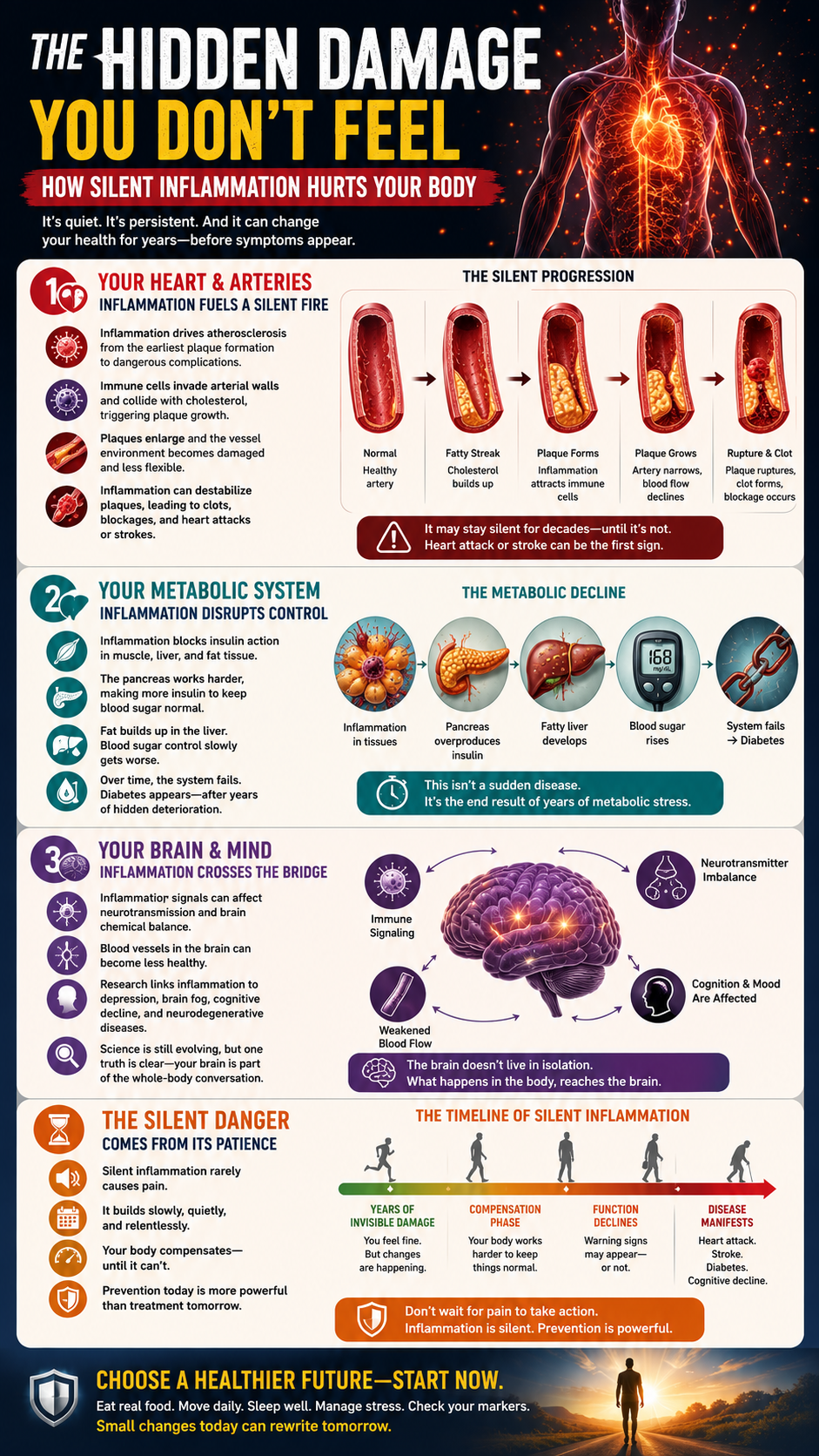
Chronic inflammation also intersects with brain health, although these relationships require careful interpretation. Immune signaling can influence neurotransmission, vascular health, and communication between the brain and body. Researchers continue studying inflammation within depression, cognitive decline, and neurodegenerative diseases. No single inflammatory pathway explains every neurological disorder. However, the brain clearly does not live outside systemic physiology. What happens throughout the body can influence the environment surrounding nervous tissue.
The most damaging feature of silent inflammation may therefore be its patience. It does not need to incapacitate someone today to influence health tomorrow. The body can compensate remarkably well while underlying pressures continue accumulating. Symptoms often appear only after those compensatory reserves begin shrinking. Prevention becomes more powerful when intervention begins during that quieter period. Waiting for pain allows physiology to dictate the timetable.
Begin With a Personal Inflammation Audit
Reducing silent inflammation starts by identifying the conditions most likely to sustain it. Someone with severe insulin resistance needs a different emphasis than someone with advanced periodontal disease. Another person may eat exceptionally well while sleeping five hours every night. Smoking can overwhelm smaller dietary improvements, while untreated sleep apnea can sabotage weight-loss efforts. A useful strategy therefore begins with prioritization rather than supplementation. The largest recurring physiological stressors deserve attention first.
Simple measurements can reveal more than many people expect. Waist circumference provides information about abdominal fat trends. Blood pressure can expose cardiovascular strain that causes no pain. Fasting glucose and hemoglobin A1c help characterize glucose regulation over time. Fasting insulin, triglycerides, HDL cholesterol, and liver enzymes may add metabolic context. High-sensitivity CRP can sometimes help characterize inflammatory cardiovascular risk, although it never identifies the cause alone.
Home observations matter alongside laboratory testing. Notice whether meals create severe fatigue or constant hunger shortly afterward. Pay attention to snoring, restless sleep, bleeding gums, chronic bloating, and irregular bowel movements. Observe whether waist size continues expanding despite stable body weight. Track daily movement instead of assuming one weekly workout creates an active lifestyle. These clues can reveal where the biological pressure is coming from.
Give Metabolism Periods Without Incoming Food
Many people now eat across most waking hours. Breakfast begins the metabolic day, snacks maintain it, and evening food extends it toward bedtime. This pattern leaves little separation between one feeding period and the next. Creating defined meals can reduce mindless calorie intake and constant grazing. A reasonable overnight fasting interval can also create clearer separation between eating periods. Extreme fasting remains unnecessary for most people.
Meal composition matters equally. Protein should occupy a meaningful place because muscle preservation supports metabolic health. Whole foods generally provide greater nutrient density and satiety than heavily processed alternatives. Refined carbohydrates can be reduced when insulin resistance or glucose instability remains a concern. Sugary beverages deserve particular attention because liquid calories disappear quickly without strong fullness. Removing them can change energy intake without requiring complicated dietary mathematics.
The objective is not nutritional perfection. Sustainable improvement comes from changing what happens repeatedly. A minimally processed breakfast five days weekly matters more than one elaborate healthy meal. Cooking more frequently changes the ingredients controlling daily nutrition. Keeping highly processed snacks outside the home reduces automatic exposure. The environment often shapes behavior more effectively than motivation alone.
Use Muscle as a Metabolic Treatment
Skeletal muscle deserves far more attention in conversations about inflammation. Active muscle removes glucose from circulation and stores it for future work. Greater muscle mass also provides a larger reservoir for glucose disposal. Resistance exercise can improve insulin sensitivity while protecting functional capacity. Muscle contraction produces signaling molecules that communicate with other tissues. Building strength therefore changes the metabolic environment, not merely physical appearance.
Home training can remain simple and still become effective. Squats, lunges, wall push-ups, resistance bands, and loaded carries can challenge major muscle groups. Beginners can start with modest resistance and increase difficulty gradually. Two or three consistent weekly sessions create a more useful pattern than occasional exhaustion. Progress should appear through additional repetitions, resistance, or better movement quality. The body changes when demand increases consistently.
Walking adds another powerful tool because timing can matter. A brief walk following meals gives active muscles another opportunity to use circulating glucose. Several short walks can also interrupt prolonged sitting across the day. Stairs, gardening, household work, and carrying groceries contribute meaningful movement. Human metabolism developed in bodies that moved frequently. Returning movement throughout the day addresses that mismatch directly.
Reduce Visceral Fat Without Declaring War on Food
Visceral fat reduction often improves several inflammatory drivers simultaneously. Less abdominal fat can accompany better insulin sensitivity and healthier liver metabolism. Yet aggressive calorie restriction can sacrifice muscle and produce repeated weight regain. A better strategy reduces foods that promote effortless overeating while preserving nutrient density. Protein, minimally processed foods, and resistance exercise help protect lean tissue. Sleep and stress management then support appetite regulation.
Measure progress beyond body weight. Waist circumference may change even when the scale moves slowly. Strength can increase while fat decreases, making body weight appear deceptively stable. Triglycerides, insulin, blood pressure, and glucose regulation can improve before dramatic weight loss occurs. Those changes represent metabolic progress rather than failure. The purpose is healthier physiology, not winning a daily argument with a scale.
Treat Sleep Like a Biological Requirement
A consistent waking time can become the anchor for better circadian rhythm. Morning outdoor light reinforces that timing signal for the brain. Evening light should gradually decrease as the body approaches sleep. Bedrooms work best when they remain dark, cool, and quiet. Phones introduce stimulation precisely when the nervous system needs less input. Moving screens outside the bed can transform sleep without costing anything.
Caffeine deserves similar attention because its effects last longer than many people realize. Afternoon use can affect sleep even when someone falls asleep easily. Alcohol often creates another illusion because sedation does not equal restorative sleep. Drinking near bedtime can fragment sleep and aggravate breathing problems. Reducing both substances later in the day may improve sleep architecture. Better nights frequently produce easier food choices the following day.
Persistent snoring requires a different approach. No amount of magnesium, meditation, or blackout curtains can correct significant airway obstruction. People experiencing witnessed breathing pauses should pursue appropriate evaluation. Correcting sleep apnea may improve energy, blood pressure, and metabolic control. Root-cause care means recognizing when a home strategy reaches its limits. Sometimes the missing lifestyle intervention is proper diagnosis.
Rebuild the Gut Environment Through Fundamentals
Start gut support with what enters the digestive tract every day. Minimally processed foods provide a different microbial environment than a diet dominated by packaged products. Fiber can support microbial fermentation when the individual tolerates it well. Hydration, movement, and regular bowel habits also influence intestinal function. Excessive alcohol can disrupt this environment and deserves reduction. Consistency again matters more than occasional “gut cleanses.”
Fermented foods may benefit some people, while others experience uncomfortable reactions. The same principle applies to probiotics, because strains produce different biological effects. Buying the largest bacterial count does not guarantee better digestion. Persistent symptoms require investigation rather than an endless supplement rotation. Blood in stool, unexplained weight loss, severe pain, or chronic diarrhea need appropriate evaluation. Functional thinking should become more rigorous when warning signs appear.
Lower the Everyday Toxic Load Intelligently
Environmental health works best when exposure reduction remains practical. Tobacco smoke should receive immediate attention because its cardiovascular and inflammatory consequences are well established. Indoor air quality also matters when particulate pollution, combustion, or significant mold exposure exists. Ventilation and appropriate filtration can reduce some airborne burdens. Fixing an active source generally matters more than buying another detoxification supplement. Prevention starts before the substance enters the body.
Water deserves the same measured approach. Municipal reports or appropriate testing can identify contaminants that actually warrant attention. Different filtration technologies remove different substances, so matching the filter matters. Occupational exposures may deserve even greater priority for certain individuals. Solvents, pesticides, metals, and airborne particles can create substantial repeated contact. Protective equipment and source control remain fundamental.
The human body already contains sophisticated elimination systems. The liver transforms compounds, while kidneys filter blood and excrete waste. Lungs remove volatile compounds, and the gastrointestinal tract carries material toward elimination. Supporting these organs begins with adequate nutrition, hydration, bowel regularity, movement, and lower exposure. Sweating can accompany healthy physical activity, but it does not replace liver and kidney function. Reducing incoming burden gives normal physiology less unnecessary work.
Calm the Nervous System Every Day, Not Only During Crisis
Stress reduction should become a biological practice rather than a luxury reserved for vacations. Slow breathing can change autonomic activity within minutes. Prayer, meditation, quiet reflection, and time outdoors can create similar opportunities for recovery. Social connection also matters because human beings regulate stress through relationships. Chronic isolation can increase psychological burden and alter behavior. Recovery requires deliberate space within an overstimulated life.

Technology has introduced a relatively new form of continuous interruption. Messages, notifications, headlines, and social media can keep attention fragmented from waking until sleep. Setting defined periods without screens reduces those incoming demands. Evening boundaries may also support healthier circadian patterns. A walk without a phone combines movement with genuine cognitive decompression. Small periods of recovery become powerful when repeated daily.
The goal is not eliminating every stressful event. Life will continue producing deadlines, losses, conflicts, and uncertainty. Resilience depends partly on returning toward baseline after those events. That principle mirrors healthy inflammatory biology itself. Activation should occur when necessary, followed by recovery when the threat passes. A nervous system that never receives recovery can keep adding pressure elsewhere.
Take the Mouth Seriously
Bleeding gums deserve action rather than normalization. Daily brushing and careful interdental cleaning provide an important home foundation. Persistent bleeding, gum recession, or loose teeth require professional periodontal evaluation. Diet and metabolic control also matter because diabetes and periodontal disease can interact. Improving one system may help the other, although dental disease still requires direct care. Whole-body health includes the tissues supporting every tooth.
This area illustrates the broader lesson of silent inflammation perfectly. A person can swallow expensive supplements while ignoring an obvious inflammatory source twice daily. The same contradiction appears with smoking, severe sleep apnea, or uncontrolled metabolic disease. Foundational problems usually deserve priority over sophisticated add-ons. Supplements may have supportive roles, but they cannot replace removing persistent drivers. Strategy matters more than the number of products involved.
Measure Whether the Body Is Actually Changing
After several months of consistent change, reassessment becomes essential. Waist circumference should be compared under similar conditions. Blood pressure can reveal whether cardiovascular strain is improving. Metabolic markers can show whether insulin resistance and liver stress are moving favorably. Relevant inflammatory markers may add information when interpreted within clinical context. Objective improvement prevents health decisions from becoming exercises in belief.
Daily function deserves measurement as well. Better morning energy can reflect improved sleep, while greater strength reveals successful adaptation to exercise. Reduced food cravings may accompany better meal structure and sleep quality. More predictable digestion can suggest improved gastrointestinal function. These changes do not prove every inflammatory pathway has normalized. Together, however, they help reveal whether the biological terrain is changing.
Persistent abnormalities should increase curiosity rather than trigger stronger assumptions. An elevated inflammatory marker may arise from infection, autoimmune disease, obesity, periodontal disease, or other conditions. A failed intervention does not prove the body cannot heal. It may simply mean the working explanation was incomplete. Root-cause reasoning must remain willing to revise itself. Good investigation follows evidence instead of protecting a favorite theory.
The Goal Is Not an Inflammation-Free Body
Trying to eliminate inflammation entirely misunderstands human physiology. You need inflammatory responses to survive infections, repair tissue, and adapt to exercise. The healthier goal involves appropriate activation followed by effective resolution. An immune system should respond when danger appears and stand down afterward. Chronic low-grade inflammation represents a failure of that balance. Something keeps telling the body that the emergency continues.
For one person, that signal may come primarily from visceral fat and insulin resistance. Another may carry untreated periodontal disease, chronic sleep disruption, or significant smoking exposure. Several drivers frequently coexist and reinforce one another. Therefore, the most effective program changes the conditions sustaining the response. The body does not need another slogan about inflammation. It needs fewer reasons to remain inflamed.
Can You Be Inflamed Without Feeling It?
Yes, and that answer should change how we define prevention. Chronic low-grade inflammation can exist without the redness, pain, heat, or swelling associated with injury. Metabolic dysfunction can also progress silently while the body continues compensating. Atherosclerotic changes may advance without warning, and fatty liver often creates few early symptoms. Feeling well remains valuable, but it cannot measure every aspect of physiology. Health requires attention to what the body is doing, not merely what it is saying.
The encouraging part of this story is that many inflammatory drivers remain modifiable. Meals can change, muscle can grow, and waist circumference can decrease. Sleep can improve, periodontal disease can receive attention, and cigarettes can disappear. Daily movement can return, while unnecessary environmental exposures can decline. Stress recovery can become part of ordinary life instead of an occasional rescue. Each improvement removes another reason for the body to maintain unnecessary inflammatory signaling.
Silent inflammation becomes less mysterious when viewed through this lens. It is rarely a mysterious substance wandering through the bloodstream without explanation. More often, it reflects communication between immunity, metabolism, lifestyle, and the surrounding environment. Understanding those relationships allows prevention to begin before pain dictates the conversation. The most important task is not silencing inflammation at any cost. It is creating a body that no longer needs to keep sounding the alarm.