
Why Migraine Sufferers Continue Searching for Answers
Millions of migraine sufferers spend years moving from one doctor to another without discovering the true reason behind their pain. Most leave medical offices carrying prescriptions while their condition quietly worsens underneath the surface. Conventional medicine commonly blames hormones, genetics, stress, or chemical imbalances inside the brain. These explanations sound convincing initially, yet they fail to explain why migraine rates continue rising despite enormous advances in pharmaceuticals and neurological research.
The average migraine patient receives medications designed to suppress symptoms rather than identify causes. Triptans constrict blood vessels temporarily. Antidepressants alter neurotransmitter activity. Anti-seizure medications attempt calming excessive nerve firing. Botox paralyzes muscles around the head and neck. New injectable drugs block pain signaling proteins. Some patients experience temporary relief, but the underlying dysfunction usually remains untouched. Many eventually develop chronic migraines, medication rebound headaches, digestive dysfunction, fatigue, hormonal disturbances, or worsening neurological instability.
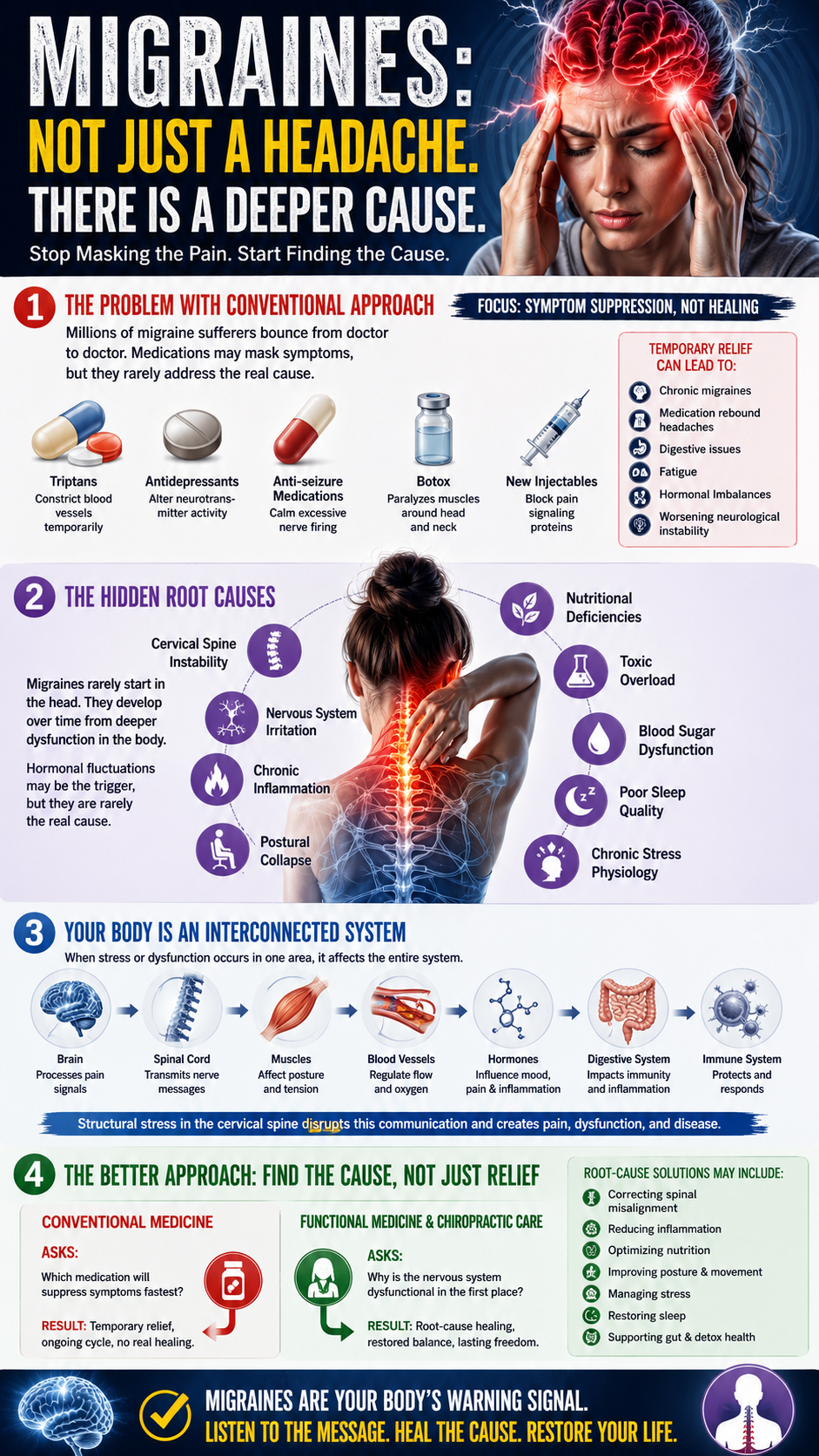
A far deeper problem often hides beneath the migraine itself. Chronic migraines rarely begin inside the head alone. They frequently originate through years of cervical spine instability, nervous system irritation, chronic inflammation, postural collapse, nutritional deficiencies, toxic overload, blood sugar dysfunction, poor sleep quality, and chronic stress physiology. Hormonal fluctuations may trigger migraines in susceptible individuals, but hormones alone rarely create the entire condition.
The human body functions as one interconnected neurological system. The brain communicates constantly with the spinal cord, muscles, blood vessels, hormones, digestive organs, immune tissues, and sensory nerves. When structural stress develops inside the cervical spine, the nervous system cannot function normally. Over time, the body begins producing warning signals. Migraines often become one of the loudest alarms.
Functional medicine and chiropractic care approach migraines from an entirely different perspective. Instead of asking which medication suppresses symptoms fastest, they investigate why the nervous system became dysfunctional initially. This root-cause approach frequently uncovers structural and inflammatory problems that conventional medicine completely overlooks.
The Dangerous Myth That Migraines Are “Just Hormones”
Women hear the hormone explanation constantly because females suffer migraines more frequently than males. Physicians often connect migraines to menstrual cycles, menopause, pregnancy, birth control pills, or estrogen fluctuations. Hormones absolutely influence neurological function, but blaming migraines entirely on hormones oversimplifies a much larger problem.
If hormones alone caused migraines, nearly every woman would suffer chronic neurological attacks monthly. That clearly does not occur. Millions of women experience hormonal fluctuations without debilitating migraines. Something else determines why one nervous system adapts normally while another collapses into inflammation and pain.
Functional medicine recognizes hormones as one contributing factor among many interconnected systems. Estrogen influences neurotransmitters, blood vessel tone, fluid balance, and inflammatory pathways. However, cervical spine dysfunction, gut inflammation, nutrient deficiencies, blood sugar instability, and toxic burden can dramatically lower the nervous system’s tolerance to hormonal shifts. Hormones become the spark, but chronic neurological dysfunction provides the fuel.
Many migraine sufferers notice symptoms beginning with neck stiffness, shoulder tension, jaw tightness, or pressure near the base of the skull. Others wake with cervical pain before migraine symptoms intensify. These clues strongly suggest structural involvement, yet conventional medicine frequently dismisses them as secondary symptoms instead of recognizing them as primary causes.
The body never separates systems the way modern medicine often does. Hormones affect inflammation. Inflammation affects nerves. Nerves affect muscles. Muscles affect blood flow. Blood flow affects brain oxygenation. Brain oxygenation affects migraine susceptibility. Every system influences the others continuously.
The Cervical Spine: The Most Overlooked Cause of Chronic Migraines
The cervical spine protects some of the most neurologically important structures in the human body. The upper neck houses the lower brainstem, cranial nerve pathways, vertebral arteries, lymphatic drainage channels, and major communication centers controlling autonomic nervous system function. Even slight structural abnormalities within this region can create widespread neurological consequences.
The atlas vertebra, also called C1, supports the entire weight of the head while allowing extensive mobility. Directly beneath it sits the axis vertebra, known as C2. These structures rotate, flex, and stabilize the skull while protecting the spinal cord and brainstem. Unfortunately, they also remain highly vulnerable to injury and long-term dysfunction.
Car accidents, sports injuries, falls, poor posture, birth trauma, repetitive stress, sleeping improperly, and excessive screen use commonly damage cervical alignment over time. Many patients never associate old neck injuries with present migraine symptoms because the degeneration develops gradually across years.
Forward head posture creates especially severe stress on the upper cervical spine. The average adult head weighs approximately twelve pounds when properly aligned. Every inch the head shifts forward dramatically increases cervical load. Poor posture can force the neck supporting sixty pounds or more continuously throughout the day.
This abnormal pressure damages discs, ligaments, joints, muscles, nerves, and blood vessels simultaneously. Muscles surrounding the neck tighten constantly attempting stabilizing unstable structures. Over time, inflammation spreads throughout surrounding tissues. Blood circulation decreases. Nerve irritation intensifies. Brainstem stress increases. Eventually, the nervous system loses its ability regulating pain signals normally.
Migraines frequently emerge after years of hidden cervical degeneration.
How Neck Misalignment Triggers Neurological Chaos
The upper cervical spine connects directly with migraine-producing neurological pathways. One of the most important structures involved in this relationship is the trigeminocervical complex. This region inside the brainstem allows sensory information from the trigeminal nerve and upper cervical nerves merging together.
The trigeminal nerve controls sensation throughout much of the face, scalp, jaw, eyes, and forehead. Cervical dysfunction can bombard this neurological center continuously with abnormal sensory input. Over time, the brain becomes hypersensitive. Small triggers suddenly provoke massive neurological responses.

This explains why many migraine sufferers experience symptoms beyond simple head pain. Patients frequently develop facial pressure, eye pain, scalp tenderness, dizziness, nausea, visual disturbances, jaw dysfunction, ringing ears, numbness, and balance problems. These symptoms reveal widespread neurological involvement rather than isolated vascular headaches.
Vertebral arteries further complicate the situation. These arteries travel directly through openings inside the cervical vertebrae before supplying blood to the brainstem and posterior brain regions. Poor posture, muscle spasm, instability, and joint dysfunction can alter blood flow dynamics significantly. Reduced circulation affects oxygen delivery while increasing neurological stress.
Patients commonly report migraines worsening during activities placing additional strain on the neck. Looking downward at phones, driving long distances, sleeping awkwardly, working on computers, or sitting with poor posture often trigger attacks. These patterns strongly indicate cervical involvement.
Unfortunately, most migraine treatments never address structural dysfunction directly. Patients continue receiving medications while the mechanical stress provoking neurological irritation remains unchanged.
Chronic Inflammation Creates the Perfect Migraine Environment
Inflammation acts like fuel poured onto an already unstable nervous system. Modern lifestyles expose people to enormous inflammatory burdens daily, yet many remain unaware how deeply inflammation affects brain function.
Processed foods, refined sugar, industrial seed oils, environmental toxins, sleep deprivation, chronic stress, alcohol, food additives, sedentary behavior, and gut dysfunction create systemic inflammation continuously. Inflamed tissues become hypersensitive. Nerves fire excessively. Muscles tighten defensively. Blood vessels lose flexibility. The nervous system becomes reactive instead of adaptable.
Migraine sufferers frequently live inside chronic inflammatory states without recognizing the warning signs. Fatigue, brain fog, bloating, joint pain, acid reflux, anxiety, constipation, skin issues, poor sleep, and weight gain commonly accompany migraines because the entire body remains inflamed.
The digestive system plays a particularly important role. The gut and brain communicate constantly through the vagus nerve, immune signaling pathways, and neurotransmitter production. Poor gut health therefore directly affects neurological function.
Leaky gut syndrome contributes heavily to migraine development in many patients. Damage to the intestinal lining allows partially digested proteins, toxins, bacteria, and inflammatory compounds entering the bloodstream. The immune system reacts aggressively against these substances. Inflammatory chemicals circulate throughout the body and eventually cross into brain tissue, increasing neuroinflammation.
Many migraine sufferers unknowingly consume inflammatory foods daily. Gluten commonly damages intestinal permeability while triggering immune activation. Dairy proteins may provoke neurological inflammation in sensitive individuals. Refined sugar destabilizes blood sugar while feeding inflammatory gut bacteria. Artificial sweeteners disrupt neurotransmitter function and digestive balance. Processed oils promote oxidative stress throughout the nervous system.
The modern diet creates an inflammatory neurological environment perfectly suited for chronic migraines.
Nutritional Deficiencies Quietly Damage the Brain
The brain requires enormous nutritional support functioning properly. Modern diets often provide excessive calories while delivering very little meaningful nutrition. Deficiencies gradually impair neurotransmitter production, mitochondrial energy generation, blood vessel regulation, detoxification pathways, and nerve stability.
Magnesium deficiency remains one of the most common nutritional problems among migraine sufferers. Magnesium regulates muscle relaxation, stress responses, blood vessel flexibility, nerve conduction, and sleep quality. Chronic stress rapidly depletes magnesium stores. Processed foods contain little usable magnesium. Certain medications further worsen deficiency.
Low magnesium levels increase neurological excitability dramatically. Muscles tighten more easily. Blood vessels constrict improperly. Stress tolerance decreases. Sleep quality deteriorates. Patients often develop light sensitivity, anxiety, muscle cramps, heart palpitations, and migraines simultaneously.
B vitamins also play critical roles in neurological health. Riboflavin, vitamin B6, folate, and vitamin B12 support mitochondrial energy production inside brain cells. Poor mitochondrial function leaves neurons vulnerable to overstimulation and fatigue. The brain consumes tremendous amounts of energy daily. Nutritional deficiencies impair its ability handling stress effectively.
Omega-three fatty acids help reduce inflammation while stabilizing neuronal membranes. Unfortunately, most modern diets contain excessive omega-six inflammatory oils from processed foods. This imbalance promotes chronic inflammation throughout brain tissue.
Functional medicine practitioners frequently investigate these deficiencies because proper neurological function depends heavily on nutritional balance. Conventional medicine often ignores nutritional status entirely despite overwhelming evidence linking deficiencies with chronic neurological disorders.
Technology Is Destroying Cervical Health
Modern technology created one of the greatest structural health crises in human history. People spend countless hours staring downward at phones, tablets, laptops, and televisions daily. This posture compresses the cervical spine continuously while weakening critical stabilizing muscles.
Children now develop cervical degeneration and postural collapse at increasingly younger ages. Many teenagers already show spinal damage once seen mainly in elderly adults decades ago. The body simply cannot tolerate prolonged forward head posture without consequences.
Suboccipital muscles located beneath the skull become especially problematic. These tiny muscles contain large concentrations of neurological receptors communicating directly with balance centers, visual processing systems, and spatial orientation pathways inside the brain.
Chronic tension within these muscles can contribute to dizziness, visual disturbances, headaches, vertigo, brain fog, and migraines. Many patients experience temporary relief when massaging the base of the skull because reducing muscular tension decreases neurological irritation briefly.
Poor posture also compromises breathing mechanics. Forward head posture collapses the rib cage while limiting diaphragmatic breathing. Patients begin breathing shallowly through the chest instead of deeply through the diaphragm. Chronic shallow breathing activates stress pathways continuously, reducing oxygen delivery while increasing sympathetic nervous system activation.
The body essentially remains trapped inside low-grade survival mode all day long.
Stress Physiology and the Migraine Connection
Chronic stress damages the nervous system far beyond emotional discomfort. Stress hormones influence inflammation, digestion, blood sugar regulation, sleep quality, muscle tension, immune activity, and vascular function simultaneously.
The body initially handles short-term stress effectively through cortisol and adrenaline release. Chronic stress exposure eventually exhausts adaptive capacity. The nervous system becomes hypersensitive. Muscles remain tight constantly. Sleep quality deteriorates. Blood sugar fluctuates unpredictably. Inflammation rises steadily.
Many migraine sufferers notice attacks appearing after stressful periods rather than during them. This pattern reflects neurological exhaustion. The body suppresses symptoms temporarily during survival situations. Once stress subsides, inflammatory rebound and nervous system instability trigger migraines.
Stress also changes breathing patterns significantly. Chronic stress encourages rapid shallow breathing and occasional hyperventilation. Low carbon dioxide levels constrict blood vessels while increasing muscle tension and neurological irritability. Brain oxygenation becomes impaired despite adequate oxygen intake.
The nervous system heals best inside parasympathetic states associated with relaxation, recovery, digestion, and restorative sleep. Chronic stress prevents the body entering these healing states consistently.
Sleep Dysfunction Intensifies Neurological Instability
Sleep represents one of the most critical factors affecting migraine recovery. The brain performs detoxification, repair, hormonal regulation, neurotransmitter balancing, and inflammatory control during deep sleep cycles. Poor sleep disrupts every one of these processes.
Many migraine sufferers sleep poorly because neck tension, stress hormones, blood sugar instability, and inflammation prevent restorative rest. Sleeping positions frequently worsen cervical dysfunction throughout the night.
Stomach sleeping forces the neck rotating aggressively for hours continuously. Unsupportive pillows distort cervical alignment while increasing muscle tension and nerve irritation. Patients often wake with stiffness, headaches, dizziness, or brain fog because their neck remained mechanically stressed overnight.
Blue light exposure from phones, televisions, and computers further disrupts sleep quality. Artificial blue light suppresses melatonin production while overstimulating the brain before bedtime. Poor melatonin production affects inflammation, detoxification, hormonal regulation, and neurological recovery.
Without restorative sleep, the nervous system cannot repair itself properly. Migraine susceptibility steadily increases when sleep quality declines.
Why Chiropractic Care Changes Migraine Outcomes
Chiropractic care focuses on restoring structural balance and neurological function rather than suppressing symptoms temporarily. Proper spinal alignment reduces nerve irritation while improving mobility, circulation, posture, and nervous system communication.
Upper cervical chiropractic techniques specifically address dysfunction involving the atlas and axis vertebrae. Precise corrections help reduce abnormal stress affecting the brainstem and trigeminal pathways. Many migraine sufferers experience significant improvements once cervical mechanics normalize.
Soft tissue therapy further enhances recovery by reducing chronic muscle tension surrounding the neck and shoulders. Tight muscles perpetuate neurological irritation continuously when left untreated.
Postural rehabilitation also remains essential. Patients must strengthen weak stabilizing muscles while correcting destructive movement patterns developed across years. Lasting recovery requires changing the habits creating structural dysfunction initially.
Functional chiropractors frequently combine spinal care with anti-inflammatory nutrition, stress management, detoxification support, exercise rehabilitation, ergonomic corrections, and lifestyle modification. This comprehensive strategy addresses the true complexity behind chronic migraines.
Patients often report reduced migraine frequency, decreased intensity, improved sleep, clearer thinking, better posture, increased energy, and reduced medication dependence after addressing cervical dysfunction properly.
What You Can Start Doing at Home Immediately
Healing migraines requires creating an environment supporting nervous system recovery consistently every day. Small daily habits either strengthen neurological function or slowly destroy it.
Improving posture should become a top priority immediately. Keep screens at eye level whenever possible. Pull the head gently backward while maintaining relaxed shoulders. Avoid prolonged downward phone use. Take movement breaks frequently during workdays.
Sleep positioning deserves equal attention. Back sleeping and side sleeping generally support healthier cervical alignment. A supportive cervical pillow helps maintain the natural neck curve during sleep. Stomach sleeping should stop because it severely stresses cervical structures nightly.
Reducing inflammatory foods often produces dramatic neurological improvements. Removing gluten, dairy, refined sugar, processed oils, alcohol, and artificial additives frequently decreases inflammation substantially. Whole foods rich in nutrients support brain repair more effectively than processed convenience foods.

Hydration also matters enormously. Dehydration worsens vascular instability, muscle tension, and neurological stress. Filtered mineral-rich water supports healthy circulation and cellular function throughout the nervous system.
Daily walking improves circulation, posture, lymphatic drainage, stress resilience, and neurological recovery. Outdoor sunlight exposure further supports circadian rhythm regulation and healthy hormone production.
Deep diaphragmatic breathing calms the nervous system while improving oxygen delivery and reducing muscle tension. Slow breathing activates parasympathetic healing pathways helping stabilize neurological activity naturally.
Limiting nighttime screen exposure improves melatonin production and sleep quality significantly. Dimming lights after sunset supports natural circadian rhythms while reducing neurological overstimulation before bedtime.
Tracking migraine patterns often reveals overlooked triggers involving posture, foods, stress, sleep quality, hydration, or hormonal timing. Awareness frequently becomes the first step toward recovery.
Most importantly, migraine sufferers should seek evaluation from practitioners understanding cervical biomechanics, functional neurology, posture correction, and root-cause healthcare principles. Many patients spend decades chasing symptoms while the real dysfunction remains completely unaddressed.
The Future of Migraine Care Must Focus on Root Causes
The current migraine treatment model continues failing millions because it prioritizes symptom suppression over physiological restoration. Medication-centered care rarely investigates why the nervous system became dysfunctional initially.
Patients deserve better than lifelong pharmaceutical dependence. The human body possesses remarkable healing capacity when interference gets removed appropriately. Structural correction, inflammation reduction, nutritional optimization, stress regulation, restorative sleep, and nervous system rehabilitation provide a far more intelligent path toward lasting recovery.
Migraines should never become normalized simply because they occur commonly. Chronic pain always signals deeper dysfunction somewhere within the body. Symptoms represent warning signals, not random bad luck.
The future of migraine care must integrate functional medicine, chiropractic care, neurological rehabilitation, nutritional science, postural correction, and lifestyle medicine together. Patients need education empowering them understanding the body rather than depending entirely on medications suppressing symptoms temporarily.
True healing begins once patients stop asking how to silence migraines and start asking why the nervous system became unstable in the first place.
Final Thoughts
Migraines represent one of the clearest examples of how disconnected modern healthcare became from true physiology. The body does not randomly create pain without reason. Chronic migraines usually reflect years of structural stress, inflammation, neurological overload, postural dysfunction, nutritional depletion, poor sleep, chronic stress, and impaired nervous system regulation.
Hormones may influence migraines, but hormones rarely tell the entire story. The cervical spine often contains the missing link overlooked for years. Structural dysfunction within the neck can alter blood flow, irritate nerves, increase inflammation, disrupt brainstem communication, and destabilize neurological function continuously.
Functional medicine and chiropractic care approach migraines differently because they investigate causes rather than chasing symptoms endlessly. This perspective changes outcomes profoundly. Instead of masking warning signals temporarily, practitioners work restoring the body’s natural ability regulating itself normally.
The nervous system thrives when structural balance, proper nutrition, restorative sleep, healthy posture, reduced inflammation, and stress resilience work together harmoniously. Removing interference allows the body healing itself far more effectively.
Many migraine sufferers spent years believing they inherited a lifelong condition requiring endless medications. In reality, many carry correctable structural and inflammatory dysfunctions that nobody fully investigated.
The body constantly attempts protecting and healing itself. Migraines often represent the nervous system crying out for attention long before deeper neurological degeneration develops. Listening to those warning signals instead of suppressing them may become the most important step toward lasting recovery and restored health.