
The Health Threat Most People Never See Coming
A woman walks into her doctor’s office carrying a list of symptoms that seem impossible to connect. She feels exhausted despite sleeping eight hours every night. Her memory has become unreliable. She struggles to find words during conversations. Her weight continues to increase even though her diet has improved. Anxiety appears without warning. Headaches occur several times each week. Digestive issues have become routine. Blood work looks relatively normal. Specialists offer different explanations. One physician blames stress. Another suggests aging. A third recommends medication. Yet none of those explanations answer the most important question: why did these symptoms begin in the first place?
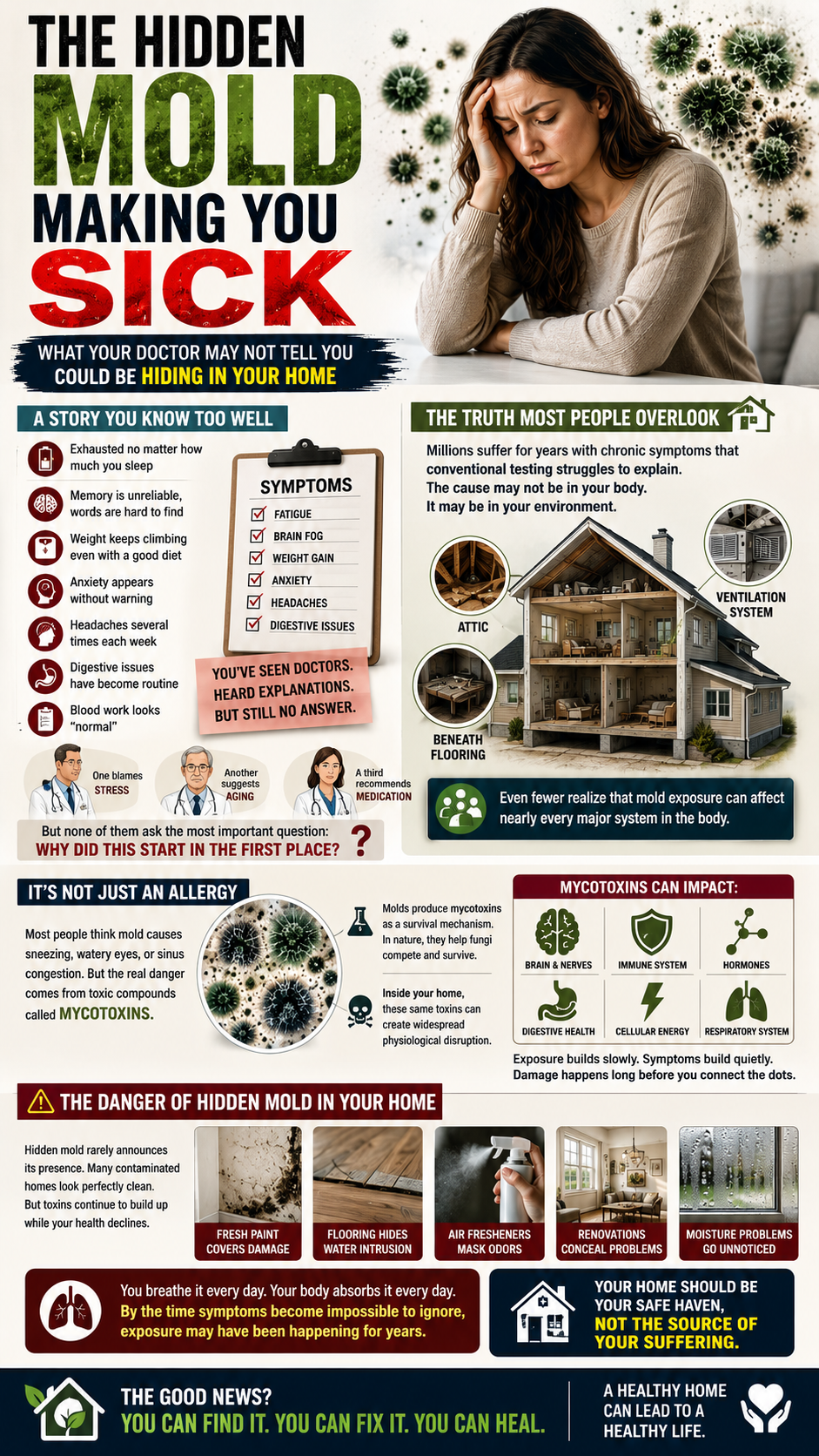
Stories like this unfold every day in clinics across America. Millions of people live with chronic symptoms that conventional testing struggles to explain. Many spend years searching for answers while focusing exclusively on the body itself. Few ever consider that the source of their illness may be hidden within the walls of their home, beneath their flooring, inside their attic, or circulating through their ventilation system. Even fewer realize that mold exposure can trigger symptoms affecting nearly every major system in the human body.
Most people think mold is a simple allergy problem. They associate it with sneezing, watery eyes, or mild sinus congestion. While mold can certainly trigger those symptoms, the more serious concern involves toxic compounds known as mycotoxins. Certain molds produce these chemicals as a survival mechanism. In nature, mycotoxins help fungi compete against other organisms. Inside a home, those same compounds can create widespread physiological disruption. Unlike a respiratory infection or an injury, mycotoxin exposure often develops slowly. The body compensates for months or even years before symptoms become severe enough to demand attention.
The danger lies in the fact that hidden mold rarely announces its presence. Many contaminated homes appear perfectly clean. Fresh paint covers damaged drywall. Flooring hides previous water intrusion. Air fresheners mask musty odors. Renovations conceal years of moisture problems. Occupants continue breathing contaminated air every day while wondering why their health continues to decline. By the time symptoms become impossible to ignore, exposure may have been occurring for years.
The Real Problem: Water Damage Creates Toxic Buildings
Mold is not the true problem. Water damage is the real culprit. Every mold issue begins with moisture. Without water, mold cannot grow, spread, or produce toxins. Understanding this principle changes the entire conversation surrounding mold illness because it shifts attention toward the conditions that allow contamination to develop.
Many homeowners assume mold requires a dramatic flood or major plumbing failure. In reality, countless toxic mold problems begin with minor leaks that remain hidden for years. A loose pipe connection beneath a sink may drip slowly into a wall cavity. Condensation around windows can saturate drywall over time. A small roof leak may allow water to travel through insulation before becoming visible. Humidity trapped inside bathrooms can create ideal conditions for fungal growth behind tile and drywall.
Modern construction practices have made this problem worse. Today’s homes are designed to conserve energy by reducing air exchange. While energy efficiency lowers utility bills, it also traps moisture inside the structure. Buildings no longer breathe the way older homes once did. When moisture enters the building envelope, it often remains trapped for extended periods. Hidden mold colonies flourish under these conditions.
Basements, crawlspaces, attics, and HVAC systems frequently become ground zero for contamination. These areas experience temperature fluctuations, condensation, and moisture accumulation. Because homeowners rarely inspect them, mold growth often continues unnoticed. By the time visible evidence appears, contamination may have spread throughout large portions of the building.
What Exactly Are Mycotoxins?
Mycotoxins are toxic chemicals produced by certain molds during their growth cycle. Scientists have identified hundreds of different mycotoxins, each possessing unique biological effects. Some attack mitochondria. Others disrupt immune function. Certain toxins increase inflammation while others interfere with detoxification pathways. Several can cross the blood-brain barrier and directly affect neurological function.
Unlike mold spores, mycotoxins are not simply allergens. These compounds can influence cellular behavior throughout the body. They may alter enzyme activity, increase oxidative stress, damage cellular membranes, and impair communication between tissues. Because they operate at the cellular level, symptoms often appear long before conventional laboratory testing identifies abnormalities.
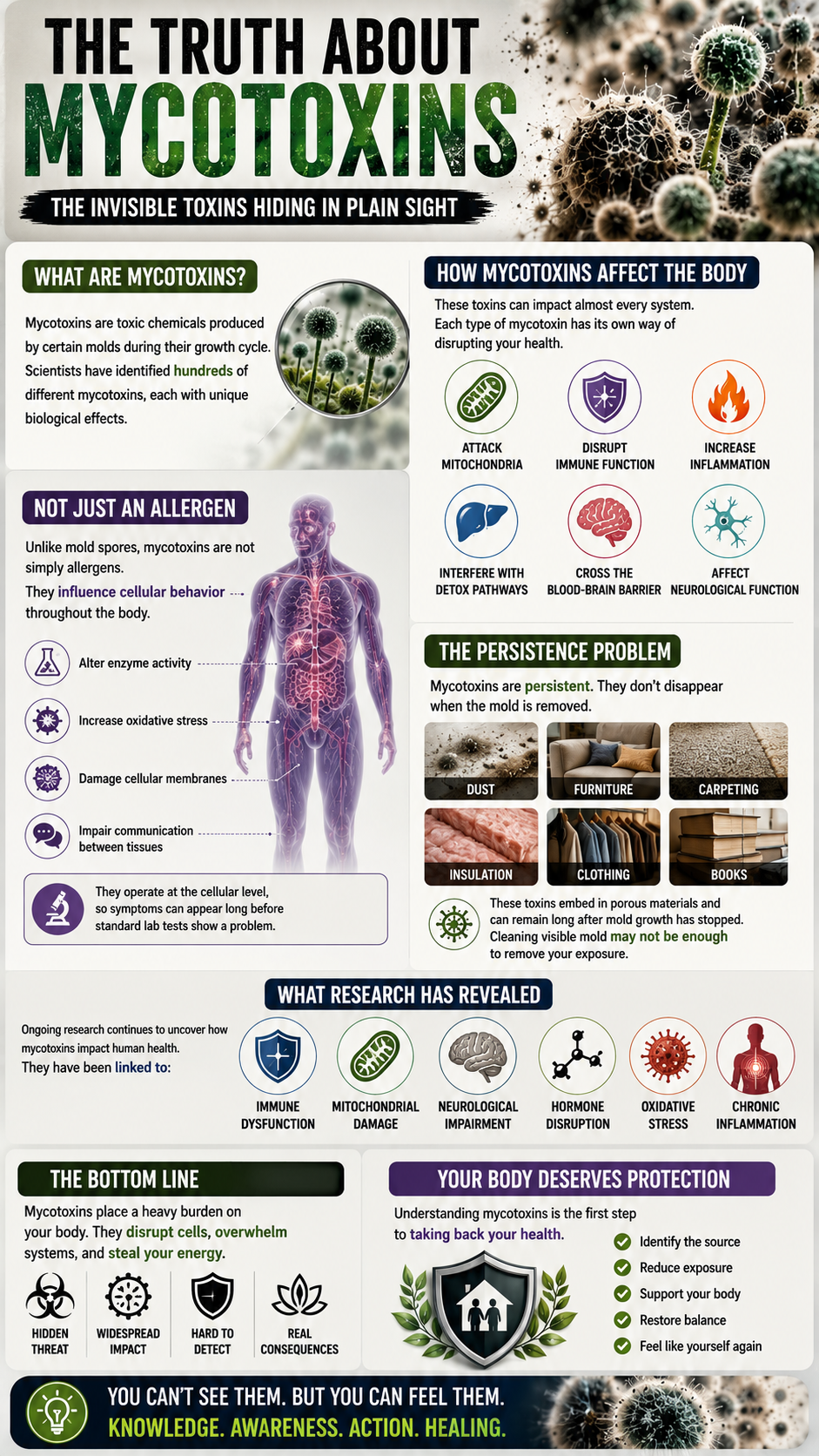
One of the most concerning aspects of mycotoxins involves their persistence. These compounds can contaminate dust, furniture, carpeting, insulation, clothing, books, and household belongings. Removing visible mold does not necessarily eliminate exposure. Mycotoxins can remain embedded within porous materials long after mold growth has stopped. This explains why some individuals continue experiencing symptoms despite cleaning visible contamination.
Research continues uncovering new ways these compounds affect human health. Scientists have linked certain mycotoxins to immune dysfunction, mitochondrial damage, neurological impairment, hormone disruption, oxidative stress, and chronic inflammation. While exposure affects everyone differently, the common theme remains the same: mycotoxins place significant stress on the body’s ability to maintain normal function.
How Mycotoxins Create a Cellular Energy Crisis
Every cell in the body depends on energy production. Mitochondria function as microscopic power plants that convert nutrients into ATP, the body’s primary energy currency. When mitochondria perform efficiently, tissues receive the energy required for repair, detoxification, hormone production, immune regulation, and neurological function. When mitochondrial performance declines, every system in the body suffers.
Several mycotoxins have demonstrated the ability to impair mitochondrial function. Instead of producing energy efficiently, cells begin generating greater amounts of oxidative stress while producing less ATP. This creates a biological energy crisis that affects organs with the highest energy demands. The brain, heart, liver, immune system, and endocrine glands often experience the earliest consequences.
This mechanism helps explain why fatigue becomes one of the most common symptoms of mold toxicity. Many patients describe a level of exhaustion unlike anything they experienced previously. Sleep provides little relief. Coffee becomes less effective. Energy crashes occur throughout the day. Exercise tolerance declines dramatically. Recovery after physical activity becomes prolonged. These symptoms often reflect impaired energy production rather than simple tiredness.
As mitochondrial dysfunction progresses, additional problems emerge. Hormone production becomes less efficient. Detoxification slows. Tissue repair declines. Immune regulation weakens. What initially appears to be isolated fatigue eventually evolves into a complex pattern of symptoms affecting multiple systems simultaneously.
Why Brain Fog Becomes One of the First Warning Signs
The human brain consumes enormous amounts of energy. Although it represents only a small percentage of total body weight, it requires a disproportionate share of available energy resources. This dependence makes the brain especially vulnerable to mycotoxin exposure.
Many mold-exposed individuals report cognitive symptoms before developing significant physical complaints. Memory weakens. Concentration becomes difficult. Mental processing slows. Reading comprehension declines. Tasks that once required minimal effort suddenly feel overwhelming. Patients often describe feeling disconnected from their own thoughts.
Inflammation within the nervous system plays a major role in this process. Certain mycotoxins can trigger neuroinflammation, disrupting communication between neurons. Neurotransmitter production may become impaired. Oxidative stress damages delicate brain tissue. Blood flow to critical regions may decline. Together, these changes create the cognitive dysfunction commonly referred to as brain fog.
Anxiety frequently accompanies these neurological symptoms. Individuals with no prior history of anxiety disorders may develop panic attacks, heightened nervousness, and unexplained fear responses. Depression, irritability, insomnia, and mood instability often follow. Many patients seek psychiatric treatment without realizing that environmental exposure may be contributing to their symptoms.
Headaches and migraines frequently appear as well. Sensitivity to light, noise, fragrances, and chemicals often increases. The nervous system becomes reactive because inflammation alters normal neurological regulation. Understanding this connection helps explain why mold illness often resembles both neurological and psychiatric disorders simultaneously.
The Hormone Disruption Hidden Beneath the Surface
Hormones regulate nearly every aspect of human physiology. They control metabolism, energy production, stress adaptation, reproduction, sleep, appetite, and body composition. Mycotoxins interfere with these systems through multiple mechanisms, creating symptoms that often resemble endocrine disorders.
The thyroid gland frequently becomes affected. Many mold-exposed individuals develop fatigue, weight gain, constipation, hair thinning, cold intolerance, and depression. Standard laboratory values may remain within reference ranges despite significant symptoms. This disconnect occurs because toxins often impair hormone utilization at the cellular level rather than simply reducing hormone production.
The adrenal glands also experience considerable stress during chronic exposure. Persistent inflammation forces the body to remain in a prolonged state of adaptation. Cortisol regulation becomes disrupted. Individuals frequently experience poor stress tolerance, sleep disturbances, afternoon fatigue, and reduced resilience. Everyday challenges begin feeling overwhelming because the body’s ability to respond efficiently has diminished.
Reproductive hormones often suffer as well. Women may experience irregular cycles, worsening PMS symptoms, fertility challenges, and fluctuating energy levels. Men commonly report declining libido, reduced motivation, diminished muscle mass, and lower testosterone levels. These symptoms often improve only after environmental exposure has been addressed.
The Gut-Mold Connection Most Doctors Never Explain
The digestive tract serves as one of the body’s most important barriers against environmental threats. It also houses a large percentage of the immune system. When mold toxins disrupt gut function, the consequences extend far beyond digestion.
Many individuals exposed to mold develop bloating, abdominal discomfort, food sensitivities, constipation, diarrhea, and microbiome imbalances. Beneficial bacteria decline while opportunistic organisms gain a competitive advantage. Nutrient absorption becomes less efficient. Deficiencies develop. Detoxification pathways become compromised.
Chronic inflammation may damage the intestinal barrier, creating increased permeability. This phenomenon, commonly called leaky gut, allows larger particles to enter the bloodstream. The immune system responds aggressively, increasing inflammation throughout the body. Food sensitivities frequently emerge during this process because the immune system becomes more reactive overall.
The relationship between mold toxicity and gut dysfunction often becomes cyclical. Mold damages the gut. Gut dysfunction increases inflammation. Inflammation impairs detoxification. Reduced detoxification allows toxins to accumulate more rapidly. Breaking this cycle requires addressing both the environmental source and the physiological consequences.
How to Find Hidden Mold in Your Home
Recovery begins with identifying the source of exposure. Homeowners should start by investigating areas where moisture commonly accumulates. Bathrooms, kitchens, laundry rooms, attics, crawlspaces, basements, and utility closets deserve careful attention. Water stains, bubbling paint, warped flooring, condensation, musty odors, and discoloration often indicate hidden moisture problems.
HVAC systems require special attention because they can distribute contaminants throughout the building. Air handlers, ductwork, drip pans, and vents should be inspected regularly. If symptoms worsen while indoors and improve during travel, the home environment deserves serious investigation.

Humidity monitoring provides another useful tool. Indoor humidity should generally remain below fifty percent. Excess moisture dramatically increases the likelihood of fungal growth. Dehumidifiers can help maintain appropriate conditions in susceptible areas.
When symptoms strongly suggest environmental involvement, professional inspection may become necessary. Hidden contamination often exists behind walls, beneath flooring, and above ceilings. Specialized testing may reveal problems that visual inspections cannot identify.
The At-Home Recovery Plan
The first step in recovery involves eliminating ongoing exposure. No supplement, medication, or detoxification protocol can fully compensate for continued daily exposure to mold toxins. Moisture sources must be corrected. Contaminated materials may require removal. Indoor air quality must improve before meaningful healing can occur.
Once exposure has been reduced, the body can begin repairing itself. Hydration supports kidney function, circulation, lymphatic drainage, and toxin elimination. High-quality protein provides amino acids required for detoxification and tissue repair. Colorful vegetables deliver antioxidants that help neutralize oxidative stress. Cruciferous vegetables support liver detoxification pathways naturally.
Improving gut health often accelerates recovery. Whole foods provide nutrients needed for microbiome restoration and intestinal repair. Reducing processed foods, excess sugar, and inflammatory ingredients helps decrease immune activation while supporting digestive function.
Sleep should become a non-negotiable priority. Deep sleep supports hormone balance, immune regulation, neurological repair, and cellular recovery. Creating a consistent sleep schedule helps restore biological rhythms disrupted by chronic inflammation and stress.
Regular movement supports circulation, lymphatic flow, mitochondrial health, and metabolic function. Walking, strength training, stretching, and moderate exercise help the body recover without overwhelming already stressed systems. Recovery rarely occurs overnight, but the human body possesses remarkable healing capacity once the source of injury has been removed.
The Bottom Line
Mycotoxins from hidden mold represent one of the most overlooked contributors to chronic illness in modern society. Water damage creates the conditions. Mold colonizes the environment. Mycotoxins spread throughout the building. Exposure continues day after day while symptoms gradually accumulate. The brain, hormones, gut, immune system, mitochondria, and nervous system all respond to this toxic burden.
When chronic fatigue, brain fog, hormone dysfunction, digestive issues, anxiety, headaches, and unexplained inflammation occur together, the environment deserves investigation. Sometimes the missing diagnosis is not hidden inside the body. Sometimes it is hiding behind the walls of the place where you spend most of your life. Understanding that possibility may be the first step toward reclaiming your health and preventing years of unnecessary suffering.