
The Silent Disappearance of the Body’s Most Underrated Organ
A seventy-year-old man stands at the bottom of his staircase, studying eighteen steps he once climbed effortlessly. His knees ache, his legs feel heavy, and his breathing quickens before reaching the second floor. Across the street, another seventy-year-old carries groceries upstairs, maintains his garden, and travels without worrying about physical limitations. Both men have similar cholesterol levels, blood pressure readings, and body weights. Yet their bodies tell remarkably different stories about aging, metabolism, and the biological consequences of losing muscle.
The difference may begin with an organ that rarely receives the medical attention it deserves: skeletal muscle. Most people associate muscles with athletes, bodybuilders, or individuals interested in improving their physical appearance. However, skeletal muscle performs functions far more important than creating strength or shaping the human body. It regulates blood sugar, stores amino acids, supports mitochondrial activity, and communicates chemically with distant organs. Its condition influences how efficiently we use energy and how successfully we withstand physiological stress.
Unfortunately, conventional health assessments often emphasize body weight while overlooking declining muscular strength and changing body composition. Someone can maintain the same weight for decades while gradually replacing metabolically active muscle with fat. This transformation may occur silently, without dramatic symptoms or obvious changes in clothing size. By the time weakness becomes noticeable, significant deterioration may already have occurred. Understanding this process reveals why building muscle after forty, fifty, or sixty deserves serious attention.
Sarcopenia: The Hidden Muscle-Loss Epidemic
Scientists use the term sarcopenia to describe progressive muscle deterioration associated with aging and other contributing conditions. The process involves declining strength, reduced muscle quantity or quality, and sometimes impaired physical performance. Although muscle mass commonly decreases with age, muscular strength can deteriorate even faster. Researchers call this disproportionate decline in strength dynapenia, highlighting changes beyond the simple disappearance of muscle fibers.
Several biological forces contribute to this deterioration, including inactivity, chronic inflammation, inadequate nutrition, and altered hormonal signaling. Aging muscles also become less responsive to the anabolic signals that normally stimulate muscle protein synthesis. Researchers describe this phenomenon as anabolic resistance, a condition that makes maintaining muscle increasingly challenging. Consequently, older adults may require stronger nutritional and exercise stimuli to preserve their muscular capacity.
The problem often begins decades before retirement, especially among individuals who spend most waking hours sitting. Prolonged inactivity reduces the mechanical demands necessary to maintain muscular strength and endurance. Over time, muscle fibers shrink, neuromuscular coordination declines, and physical activity becomes increasingly difficult. Reduced movement then accelerates the very deterioration that made movement uncomfortable. This self-reinforcing cycle can gradually transform an independent adult into someone struggling with ordinary daily activities.
Sarcopenia also creates consequences beyond weakness. Reduced muscle strength increases vulnerability to falls, fractures, disability, and loss of independence. Lower physical reserves can complicate recovery following hospitalization, surgery, or serious illness. These outcomes explain why muscular strength deserves recognition as an important marker of healthy aging. Preserving muscle is not about resisting the calendar; it is about protecting the body’s capacity to function.
Your Muscles Are a Powerful Blood Sugar Regulation System
Every meal initiates a complex metabolic conversation between the digestive system, pancreas, liver, and skeletal muscles. When carbohydrates enter the bloodstream as glucose, the pancreas releases insulin to help regulate circulating sugar. Skeletal muscle represents one of the largest destinations for insulin-stimulated glucose disposal. Under appropriate physiological conditions, muscle accounts for approximately 70–80% of insulin-mediated glucose uptake.
Inside muscle cells, specialized proteins called GLUT4 transporters help move glucose from circulation into muscular tissue. Insulin stimulates these transporters to relocate toward the cellular membrane, allowing glucose to enter. Muscle contraction activates additional signaling pathways that also promote GLUT4 movement. Remarkably, these contraction-related mechanisms can increase glucose uptake even when insulin sensitivity has declined.
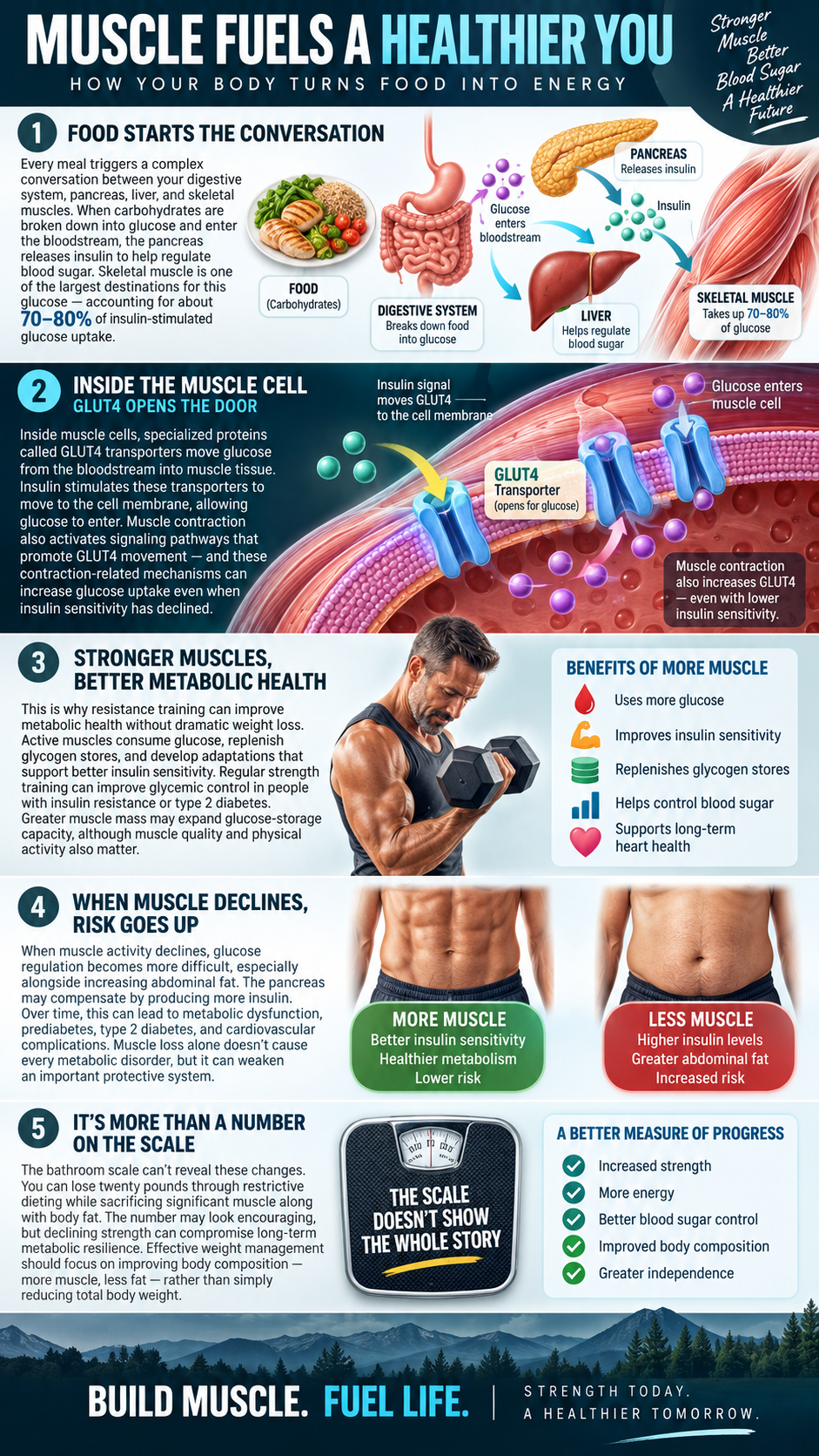
This relationship helps explain why resistance training can improve metabolic health without dramatic weight loss. Active muscles consume glucose, replenish glycogen stores, and develop adaptations that support better insulin sensitivity. Regular strength training can therefore improve glycemic control among people experiencing insulin resistance or type 2 diabetes. Greater muscle mass may expand glucose-storage capacity, although muscle quality and physical activity also matter considerably.
When muscle activity declines, glucose regulation can become more difficult, particularly alongside increasing abdominal fat. The pancreas may compensate for insulin resistance by producing additional insulin. Persistent metabolic dysfunction can eventually contribute to prediabetes, type 2 diabetes, and cardiovascular complications. Muscle loss alone does not cause every metabolic disorder, but it can weaken an important protective system.
The bathroom scale cannot reveal these changes. Someone may lose twenty pounds through restrictive dieting while sacrificing substantial muscle alongside body fat. Although the number appears encouraging, declining strength may compromise long-term metabolic resilience. Effective weight management should therefore prioritize improving body composition rather than simply reducing total body weight.
Mitochondrial Decline: When the Body’s Energy Factories Lose Their Power
Deep inside skeletal muscle cells, thousands of mitochondria work continuously to convert nutrients into usable cellular energy. These microscopic structures produce ATP, the energy currency supporting muscular contraction, cellular repair, and countless biological functions. Healthy muscles contain adaptable mitochondrial networks that respond to physical activity and changing energy demands. Their efficiency influences endurance, fatigue resistance, and the body’s ability to utilize carbohydrates and fats.
Unfortunately, sedentary living can gradually undermine these essential metabolic systems. Reduced muscular activity weakens the stimulus for mitochondrial adaptation, while aging introduces additional challenges involving cellular maintenance and oxidative stress. Mitochondrial dysfunction can contribute to declining exercise tolerance and impaired metabolic flexibility. As physical endurance decreases, individuals may become less active, further reinforcing muscular and mitochondrial deterioration.
Exercise activates important cellular pathways that help maintain mitochondrial health, including AMPK and PGC-1α signaling. These pathways influence mitochondrial biogenesis, energy metabolism, and adaptations to repeated muscular contractions. Aerobic exercise provides especially strong mitochondrial stimulation, while resistance training supports complementary metabolic and structural improvements. Together, these activities help preserve the cellular machinery responsible for sustained physical performance.
Myokines: The Chemical Messages That Connect Muscle to Every Organ
Perhaps the most extraordinary discovery in muscle physiology involves its ability to communicate with distant tissues. Contracting muscles release signaling molecules called myokines, which influence metabolic and immune processes throughout the body. These biochemical messengers participate in communication involving the liver, pancreas, adipose tissue, bones, and brain. Muscle therefore functions as an endocrine organ, not merely a mechanical structure responsible for movement.
Interleukin-6 illustrates the complexity of this communication. Chronically elevated inflammatory signaling can accompany metabolic disease, yet exercise produces a different physiological response. During muscular contraction, temporary increases in muscle-derived IL-6 participate in metabolic regulation and anti-inflammatory signaling. Other molecules, including IL-15 and myostatin, influence muscle adaptation through distinct biological pathways. Scientists continue investigating their precise contributions to healthy aging and disease prevention.
These discoveries challenge the assumption that exercise benefits health only through calorie expenditure. Every meaningful muscular contraction initiates physiological responses extending beyond the muscles performing the movement. Regular activity changes metabolic signaling, supports tissue adaptation, and can improve inflammatory regulation. Although researchers continue clarifying individual myokine functions, the broader relationship between exercise and systemic health remains compelling.
Chronic Inflammation, Visceral Fat, and the Accelerating Cycle of Muscle Loss
Aging often brings an increase in persistent, low-grade inflammation, sometimes described as inflammaging. Excess visceral fat, physical inactivity, chronic illness, and disrupted metabolic regulation can contribute to this inflammatory environment. Inflammatory signaling may interfere with muscle protein synthesis while encouraging pathways involved in tissue breakdown. Meanwhile, declining muscular strength reduces activity, creating additional opportunities for fat accumulation and metabolic deterioration.
This relationship becomes particularly concerning when excess body fat develops alongside reduced muscle mass and function. Researchers describe this combination as sarcopenic obesity, a condition associated with substantial metabolic and functional challenges. Individuals may experience insulin resistance, reduced mobility, and greater difficulty performing ordinary physical tasks. Their apparent body size can conceal significant muscular weakness and diminished physiological reserve.
Muscle deterioration also threatens recovery during periods of illness. Skeletal muscle stores amino acids that support protein production, immune responses, and tissue repair during physiological stress. Severe illness can accelerate muscle breakdown, especially when appetite declines and prolonged bed rest limits movement. Entering these circumstances with poor muscular reserves may increase vulnerability to prolonged weakness and functional disability.
The Nervous System: The Missing Connection in Age-Related Weakness
Muscle strength depends on more than muscle size. Every voluntary movement begins with electrical signals traveling through the nervous system toward specialized muscle fibers. Motor neurons coordinate muscular contractions, while sensory feedback helps regulate balance, positioning, and movement precision. Aging can alter motor-unit function, neuromuscular coordination, and the recruitment of muscle fibers responsible for powerful movements.
These neurological changes help explain why strength sometimes declines faster than muscle mass. A muscle may retain considerable tissue while losing its ability to generate force efficiently. Resistance training challenges both the muscular and nervous systems, improving coordination and force production through repeated practice. This relationship highlights the importance of maintaining mobility, balance, and neuromuscular performance throughout adulthood.
Spinal health also contributes to comfortable movement and functional participation. Pain, restricted mobility, or neurological impairment can discourage activity and indirectly accelerate physical deconditioning. Appropriate rehabilitation and movement-focused care may help restore activity when musculoskeletal problems create limitations. However, evidence does not establish spinal adjustments alone as a treatment for sarcopenia or systemic metabolic dysfunction.
Strength Is Not Vanity. It Is Biological Independence.
The most important consequence of muscle loss may appear nowhere on a laboratory report. It emerges when someone avoids stairs, struggles to lift a grandchild, or fears falling while walking outdoors. These limitations gradually reshape relationships, independence, and quality of life. What begins as declining muscular capacity can eventually influence nearly every meaningful aspect of daily living.
Fortunately, research demonstrates that older muscles retain the capacity to respond to appropriately designed resistance training. Strength, mobility, and physical performance can improve even after years of inactivity. Aging may change the body’s response to exercise, but it does not eliminate its remarkable capacity for adaptation. The human body continues responding to movement, nutrition, and physical challenges throughout life.
The central question is no longer whether muscle matters beyond physical appearance. Scientific evidence clearly establishes its importance in glucose regulation, metabolic health, movement, and physiological resilience. The more urgent question concerns how much muscular function we can preserve through deliberate daily choices. That answer begins with understanding that strength is not simply something we possess. It is something we must continually maintain.
Reversing the Decline: Your Muscles Are Waiting for a Reason to Grow
The human body possesses an extraordinary ability to adapt, even after decades of physical inactivity and declining strength. Muscle fibers respond to mechanical stress, nutritional signals, and neurological stimulation throughout adulthood. Researchers have documented meaningful improvements in strength among people in their eighties and nineties following structured resistance training. These findings challenge the assumption that weakness represents an unavoidable consequence of growing older. Although aging changes muscle physiology, it does not eliminate the biological machinery responsible for adaptation.
Rebuilding muscle begins with understanding the difference between simply moving and deliberately challenging muscular tissue. Walking improves cardiovascular health, circulation, and endurance, but it rarely provides sufficient resistance to maximize muscular growth. Skeletal muscle requires progressively challenging contractions to stimulate adaptations in strength and size. This principle, known as progressive overload, encourages the body to strengthen tissues that encounter increasing physical demands. Without adequate stimulation, muscles have little reason to maintain capacity beyond their usual workload.
The benefits extend far beyond improved appearance or physical performance. Resistance training can enhance insulin sensitivity, glucose regulation, bone health, and functional independence. Stronger muscles also improve balance and make everyday activities less physically demanding. These adaptations help interrupt the destructive cycle connecting inactivity, muscle loss, and metabolic dysfunction. For aging adults, strength training represents an investment in long-term physiological resilience.
Resistance Training: The Most Direct Way to Rebuild Metabolic Muscle
Resistance training works by challenging muscle fibers against an external force, including weights, machines, or body weight. During exercise, mechanical tension activates cellular pathways involved in muscle protein synthesis and tissue adaptation. One important signaling system, known as mTOR, helps coordinate the cellular processes supporting muscular growth. Repeated training sessions gradually improve strength, muscular endurance, and the body’s capacity to perform physical work.
Adults should generally perform muscle-strengthening activities at least twice weekly, targeting all major muscle groups. Beginners can start with manageable resistance before gradually increasing repetitions, sets, or weight. Effective movements include squats, supported lunges, rows, presses, and hip-hinge exercises. The goal is not immediate exhaustion but consistent muscular stimulation that increases safely over time. Individuals with significant weakness or medical limitations may benefit from professional guidance before beginning.
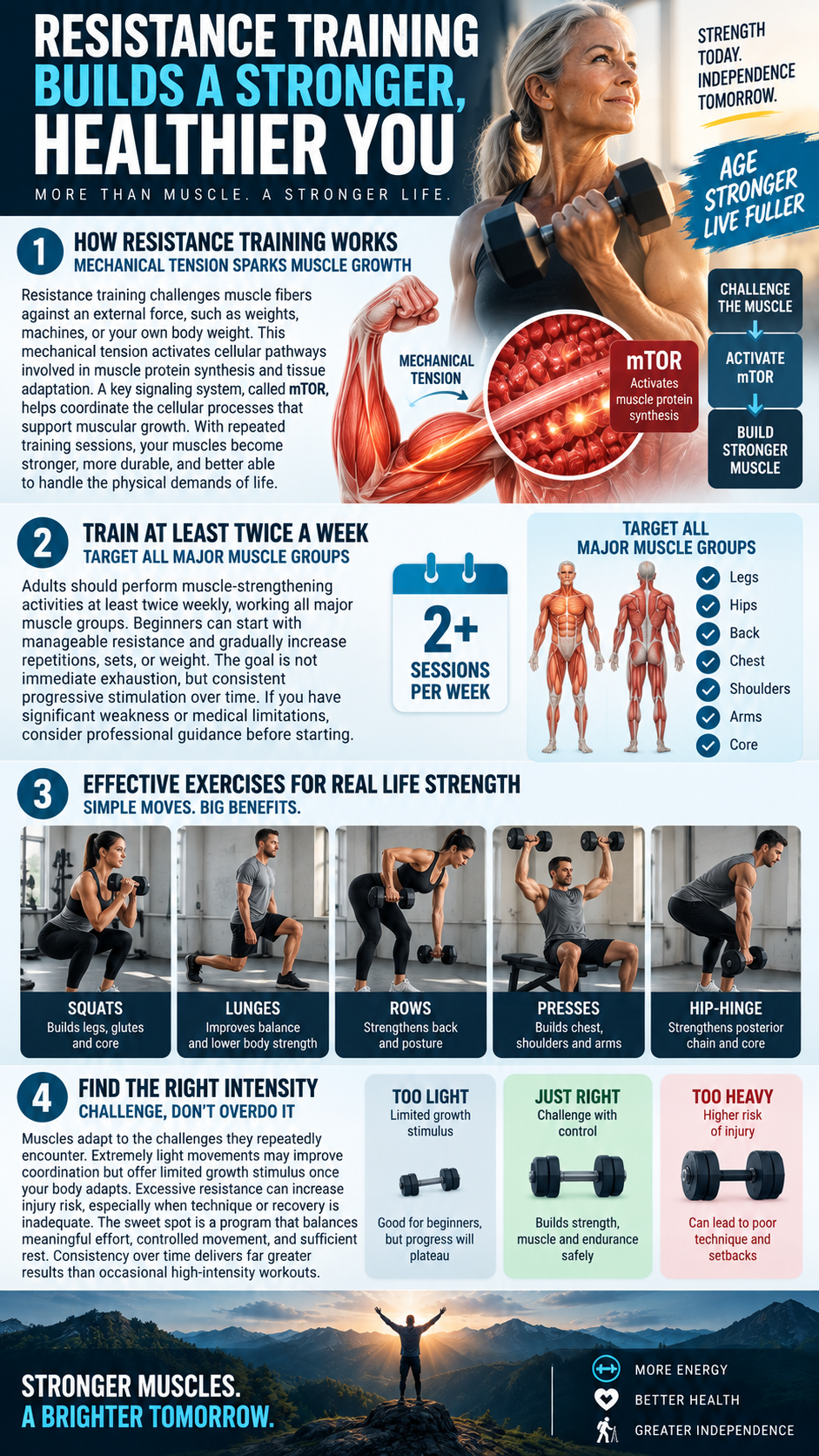
Training intensity matters because muscles adapt to the challenges they repeatedly encounter. Extremely light movements may improve coordination but provide limited growth stimulus once the body becomes accustomed to them. Conversely, excessive resistance can increase injury risk, particularly when technique or recovery remains inadequate. An effective program balances meaningful effort with controlled movement and sufficient rest. Consistency produces greater long-term benefits than occasional sessions of extreme intensity.
Protein: The Essential Building Material for Aging Muscles
Muscle tissue cannot grow or repair efficiently without adequate amino acids, the building blocks of protein. Every day, the body continuously breaks down and rebuilds muscular proteins through tightly regulated metabolic processes. Aging can reduce the muscle-building response to protein intake, creating a condition researchers call anabolic resistance. Consequently, older adults may benefit from higher protein consumption than the minimum required to prevent deficiency.
For many healthy, physically active older adults, approximately 1.2–1.6 grams of protein per kilogram of body weight daily offers a reasonable target. A 180-pound individual weighs approximately 82 kilograms, translating into roughly 98–131 grams of daily protein. Individual requirements vary according to health status, activity, energy intake, and medical conditions. People with significant kidney disease may require individualized recommendations rather than adopting higher protein targets automatically.
Protein quality also influences muscle protein synthesis. Animal foods such as eggs, fish, poultry, and beef provide complete essential amino acid profiles. Carefully combined plant proteins can also support muscular health when total protein and essential amino acid intake remain sufficient. Leucine, an essential amino acid, plays an especially important role in activating muscle-building pathways. However, adequate total protein and resistance exercise matter more than relying on isolated amino acid supplements.
Distributing protein across meals may help older adults stimulate muscle protein synthesis throughout the day. Meals containing approximately 25–40 grams of high-quality protein provide a practical starting point for many individuals. Larger people or those with higher protein needs may require different amounts. Combining adequate protein with resistance training creates a stronger muscle-building stimulus than either intervention alone.
The Metabolic Importance of Healthy Fats and Carbohydrate Management
Muscle development requires sufficient energy alongside adequate protein. Chronically restrictive diets can impair training performance, reduce recovery capacity, and increase the likelihood of losing lean tissue. Healthy fats provide essential fatty acids and support numerous physiological processes, including cellular membrane function. Foods such as olive oil, avocados, nuts, seeds, and fatty fish can contribute to a nutrient-dense dietary pattern.
Carbohydrate intake deserves individualized consideration rather than universal restriction. Skeletal muscle stores carbohydrates as glycogen, providing accessible energy during demanding physical activity. People with insulin resistance may benefit from improving carbohydrate quality, portion sizes, and meal composition. Fiber-rich vegetables, legumes, and minimally processed carbohydrate sources can support metabolic health when tolerated. Resistance training itself improves the body’s ability to utilize glucose, making muscular activity central to blood sugar management.
Extremely low-carbohydrate approaches may suit certain individuals, but they are not essential for building strength or improving insulin sensitivity. The most effective nutritional strategy supports adequate protein, appropriate energy intake, and sustainable metabolic improvements. Preserving muscle should remain a priority during any weight-loss program, particularly for adults over fifty. Losing fat while maintaining strength offers greater functional value than pursuing rapid weight reduction alone.
Sleep, Recovery, and the Hormonal Environment of Muscle Growth
Muscle adaptation does not occur exclusively during exercise. Training provides the stimulus, while recovery allows the body to repair tissues and strengthen physiological systems. Inadequate sleep can interfere with recovery, appetite regulation, glucose metabolism, and exercise performance. Chronic sleep restriction may also contribute to hormonal changes that complicate muscle maintenance.
Most adults should aim for approximately seven to nine hours of quality sleep nightly. Consistent bedtimes, morning daylight exposure, and a dark sleeping environment can support healthy circadian rhythms. Limiting alcohol and avoiding excessive caffeine late in the day may further improve sleep quality. Individuals experiencing persistent snoring, breathing interruptions, or daytime exhaustion should consider evaluation for sleep disorders.
Hormonal health also influences muscle maintenance, although aging involves more than declining testosterone or growth hormone. Thyroid disorders, poorly controlled diabetes, and other endocrine conditions can contribute to weakness and reduced physical performance. Appropriate evaluation can identify treatable medical contributors when muscle loss appears unusually rapid or severe. Hormone supplementation without a documented indication does not replace exercise, nutrition, or adequate recovery.
Your At-Home Muscle Rebuilding Plan: Turning Knowledge Into Daily Action
Rebuilding strength does not require an expensive gym membership or complicated equipment. A sturdy chair, resistance bands, and modest weights can provide meaningful muscular challenges. Beginners should prioritize movements that translate directly into everyday independence. Standing from a chair strengthens the lower body, while wall push-ups challenge the chest, shoulders, and arms. Resistance-band rows help strengthen muscles involved in posture and pulling movements.
Begin with two or three nonconsecutive strength-training sessions weekly, allowing recovery between challenging workouts. Each session can include five or six exercises targeting the legs, hips, back, chest, shoulders, and core. Performing one or two sets of eight to twelve controlled repetitions provides a manageable starting point. Select resistance that makes the final repetitions challenging without compromising technique. As strength improves, gradually increase resistance or training volume.
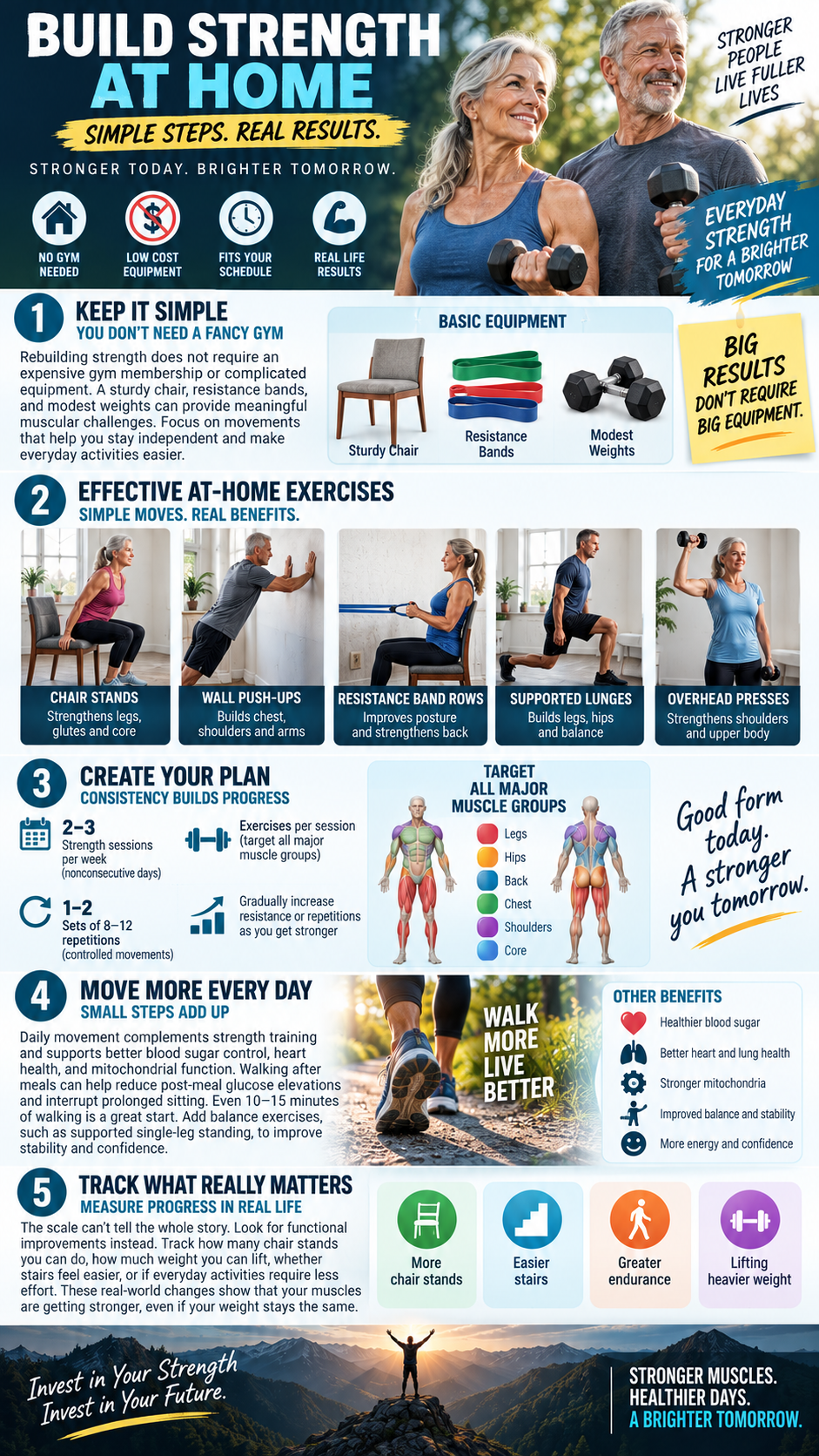
Daily movement should complement structured strength training rather than replace it. Walking after meals can help reduce post-meal glucose elevations and interrupt prolonged sitting. Even ten to fifteen minutes of comfortable walking provides an accessible starting point for many adults. Gradually increasing activity toward recommended aerobic exercise targets can improve cardiovascular fitness and mitochondrial function. Balance exercises, including supported single-leg standing, may further improve stability and confidence.
Track progress through functional improvements rather than relying exclusively on body weight. Record how many controlled chair stands you can perform or how much resistance you can safely lift. Notice whether stairs become easier, walking endurance improves, or everyday activities require less effort. These changes provide meaningful evidence of improved muscular performance, even when the scale remains unchanged.
The Forgotten Partnership Between Muscle, Mobility, and the Nervous System
Muscle performance depends on efficient communication between the brain, spinal cord, peripheral nerves, and muscular tissue. Pain, restricted joint movement, and impaired coordination can discourage exercise and reduce physical activity. Maintaining comfortable mobility therefore supports participation in the resistance training necessary for preserving muscle. Chiropractic care or other appropriate musculoskeletal interventions may help selected individuals manage certain movement-related complaints.
However, improved joint mobility alone cannot substitute for progressive muscular loading. Lasting strength requires repeated neuromuscular challenges, adequate nutrition, and sufficient recovery. Combining movement-focused care with structured exercise may help individuals overcome barriers to physical activity. The objective is to restore the confidence and physical capacity needed for consistent, independent movement.
The Future of Aging Depends on What You Build Today
The most important measure of healthy aging may not be the number of birthdays someone celebrates. It may be their ability to remain physically capable throughout those years. Strong muscles help regulate glucose, support metabolic resilience, preserve mobility, and provide valuable physiological reserves. These benefits accumulate through repeated daily choices rather than occasional dramatic interventions.
Every decade offers another opportunity to strengthen the body’s capacity for movement and independence. A person beginning resistance training at sixty can improve strength and function despite years of inactivity. Someone starting at seventy-five can still develop meaningful muscular adaptations with appropriate programming. Progress varies, but advanced age alone does not eliminate the possibility of improvement.
The future of healthy aging should involve more than monitoring disease markers and managing symptoms. It should also emphasize preserving the physical systems that make independent living possible. Skeletal muscle deserves a central place in that conversation because its influence reaches far beyond movement. By challenging muscles, nourishing them adequately, and allowing consistent recovery, individuals can improve their prospects for healthier aging.
Ultimately, building strength is not an attempt to turn back time. It is a commitment to maintaining the metabolic and physical resources that make life worth living. The body may continue aging, but its capacity for meaningful adaptation remains remarkably persistent. Every carefully performed repetition becomes an investment in the strength, confidence, and independence of the years ahead.