
The Warning Hiding Inside the Gallbladder
A gallstone rarely begins as a stone. Long before ultrasound reveals a hardened deposit, something quieter can develop inside the gallbladder. Bile begins losing its normal fluid balance. Cholesterol crystals, calcium salts, pigments, mucus, and microscopic particles can collect within the bile. Physicians call this material biliary sludge, and its appearance deserves attention because it can precede gallstones and other biliary problems.
Gallbladder sludge does not guarantee that gallstones will develop. In some people, sludge disappears when the underlying trigger resolves. In others, it persists, returns, or progresses toward gallstone formation. Sludge can also contribute to biliary pain, inflammation, pancreatitis, or obstruction even without a large stone. That makes it more than an incidental finding when symptoms or risk factors accompany it.
The larger question is not simply whether sludge exists. The better question asks why the bile became prone to forming sludge. That investigation leads directly into liver function, bile composition, gallbladder emptying, metabolism, hormones, diet, weight changes, medications, and intestinal physiology. Gallbladder sludge can therefore serve as a useful warning that the biliary system has entered an unhealthy environment.
What Gallbladder Sludge Actually Is
Your liver continuously produces bile, a complex digestive fluid containing bile acids, phospholipids, cholesterol, bilirubin, electrolytes, and water. Bile then travels through the biliary system. Between meals, much of it becomes stored and concentrated inside the gallbladder. When food enters the small intestine, especially dietary fat, hormonal signals stimulate gallbladder contraction.
That contraction pushes concentrated bile into the small intestine. Bile acids help emulsify dietary fats into smaller droplets, making digestion and absorption more efficient. This process also supports absorption of fat-soluble vitamins, including vitamins A, D, E, and K. The biliary system additionally provides an important route for cholesterol and bilirubin elimination.
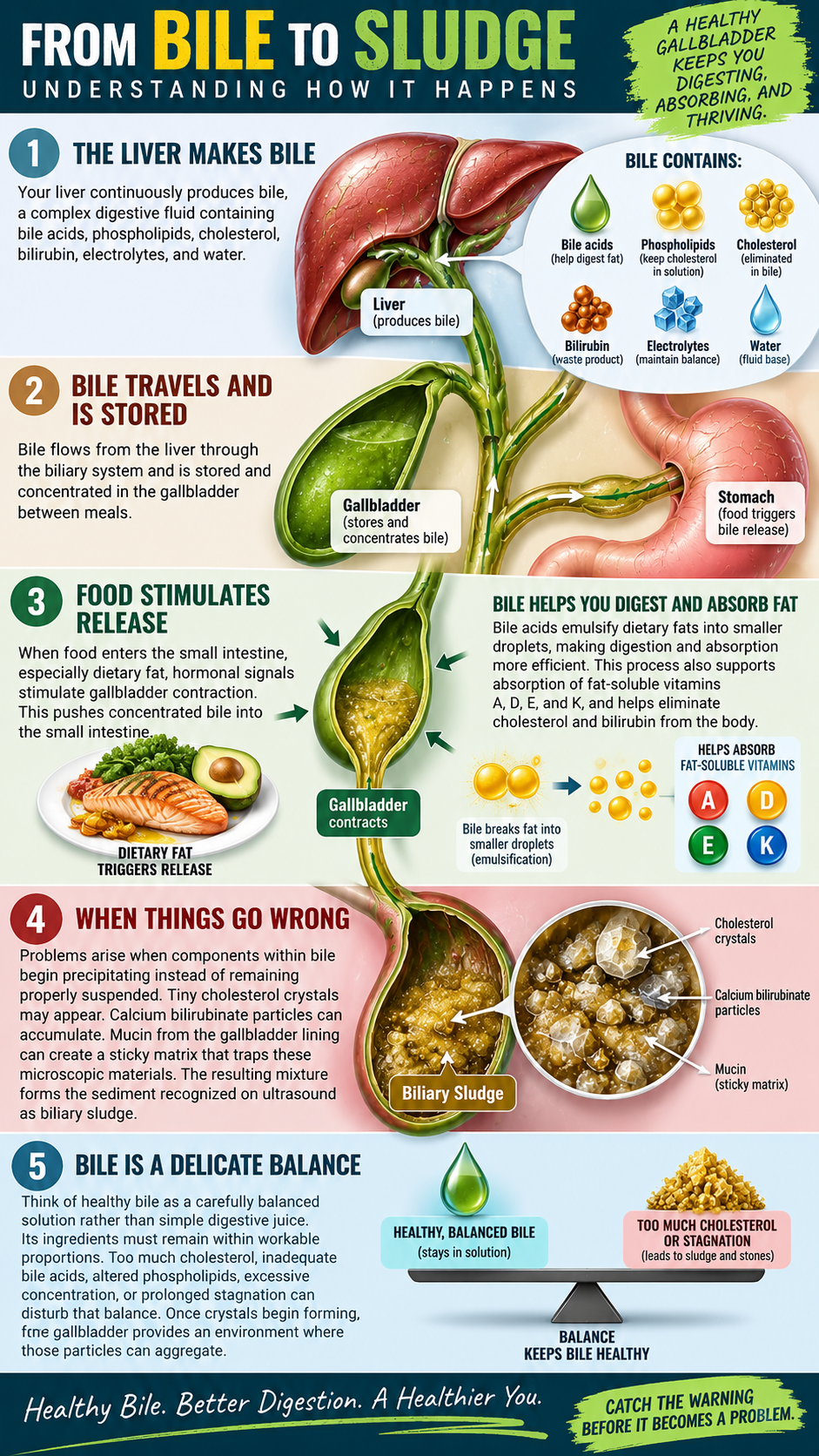
Problems arise when components within bile begin precipitating instead of remaining properly suspended. Tiny cholesterol crystals may appear. Calcium bilirubinate particles can accumulate. Mucin from the gallbladder lining can create a sticky matrix that traps these microscopic materials. The resulting mixture forms the sediment recognized on ultrasound as biliary sludge.
Think of healthy bile as a carefully balanced solution rather than simple digestive juice. Its ingredients must remain within workable proportions. Too much cholesterol, inadequate bile acids, altered phospholipids, excessive concentration, or prolonged stagnation can disturb that balance. Once crystals begin forming, the gallbladder provides an environment where those particles can aggregate.
Sludge Is Often a Process, Not the Final Diagnosis
The word “sludge” can sound harmless because it describes material rather than disease. Yet sludge represents a physical change in bile. That change can be temporary, but it can also reveal conditions favorable for future stone formation.
Research has documented several possible outcomes. Sludge may completely resolve, particularly when a temporary trigger disappears. It may fluctuate over time, disappearing and returning. Persistent sludge can also evolve into gallstones when microscopic crystals grow, aggregate, and remain inside stagnant bile.
This progression explains why gallstones should not always be viewed as isolated objects that suddenly appear. Cholesterol gallstone formation usually requires several interacting conditions. Bile becomes supersaturated with cholesterol. Crystals nucleate within that bile. Gallbladder emptying may become impaired. Mucin and other factors can then facilitate crystal retention and growth.
Sludge can therefore occupy an important middle ground. The person may not yet have a large gallstone, but the chemistry and movement of bile may already favor stone development. Addressing that environment early makes more physiological sense than waiting for escalating symptoms.
The Hidden Problem of Bile Stagnation
Gallbladder motility deserves special attention because bile should not remain motionless indefinitely. The gallbladder acts as a muscular storage organ. It fills, concentrates bile, and empties in response to digestive signals. When emptying becomes inadequate, bile remains concentrated for longer periods.
That stagnation creates additional time for microscopic crystals to develop and settle. Imagine a river that suddenly slows into a shallow pool. Material that once traveled downstream begins accumulating on the bottom. The problem is not merely what entered the water. Reduced movement changed the environment.
A similar principle can operate inside the gallbladder. Poor emptying can occur during prolonged fasting, rapid weight loss, pregnancy, severe illness, or extended periods of intravenous nutrition. Certain medications and metabolic conditions can also influence biliary physiology. These examples reveal why sludge frequently reflects several interacting factors rather than one dietary mistake.
Rapid weight loss deserves particular attention. Losing weight can improve metabolic health, yet extremely rapid weight reduction increases gallstone risk. During substantial caloric restriction, the liver can secrete more cholesterol into bile. Meanwhile, reduced food intake can decrease gallbladder stimulation. More cholesterol combined with less frequent emptying creates favorable conditions for crystal formation.
Cholesterol Saturation Changes the Chemistry
Most gallstones in Western populations contain predominantly cholesterol. Their development begins when cholesterol exceeds the bile’s capacity to keep it dissolved. Bile acids and phospholipids normally help maintain cholesterol in solution. When this relationship shifts, cholesterol can begin crystallizing.
Insulin resistance and obesity frequently enter this story because metabolic dysfunction can alter hepatic cholesterol metabolism. Higher triglycerides, abdominal obesity, fatty liver, and impaired glucose regulation often occur within the same metabolic landscape. Not every person with sludge has metabolic syndrome, but these connections deserve investigation.
The liver should therefore remain part of any serious discussion about gallbladder health. Bile begins in the liver before reaching the gallbladder. Changes in hepatic lipid metabolism can consequently alter the material entering biliary storage. Focusing exclusively on the gallbladder may overlook important upstream contributors.
Estrogen also influences biliary cholesterol secretion. This helps explain increased gallstone susceptibility during pregnancy and with certain estrogen exposures. Pregnancy introduces another factor because progesterone can reduce smooth-muscle contractility, contributing to slower gallbladder emptying. The combination can encourage bile stasis and cholesterol crystallization.
What Gallbladder Sludge Can Do to the Body
Some people with biliary sludge experience no symptoms whatsoever. Others develop symptoms resembling gallstone disease. Discomfort commonly appears in the right upper abdomen or upper middle abdomen, particularly after eating. Pain can sometimes travel toward the back or right shoulder region.
Nausea, digestive discomfort, and intolerance of larger fatty meals may accompany biliary problems. However, these symptoms are not specific to gallbladder sludge. Reflux, ulcers, pancreatic disease, liver disorders, and other gastrointestinal conditions can create overlapping symptoms. Proper evaluation matters because guessing from symptoms alone can miss a more serious problem.
Complications become more concerning when sludge migrates into the biliary ducts. Material obstructing the cystic duct can contribute to gallbladder inflammation. Obstruction farther downstream can interfere with bile drainage. Sludge or tiny stones can also reach the region where the bile duct and pancreatic duct interact.
That situation matters because biliary sludge and microlithiasis can contribute to acute pancreatitis. Pancreatitis can become severe and requires medical evaluation. Persistent upper abdominal pain, repeated vomiting, fever, jaundice, dark urine, pale stools, or worsening illness should never become a home-treatment experiment.
The Digestive Consequences of Poor Bile Delivery
Bile performs functions beyond simply sitting inside the gallbladder. Once released into the intestine, bile acids help the digestive system process fats efficiently. They assist the formation of micelles, which help transport fatty acids and fat-soluble nutrients toward the intestinal surface.
When bile delivery becomes substantially impaired, fat digestion and absorption can suffer. Significant biliary obstruction may produce pale stools because less bile pigment reaches the intestine. Severe disruption can also contribute to problems absorbing fat-soluble vitamins.
This does not mean every person with sludge suffers from vitamin deficiencies. Sludge alone may not significantly restrict bile flow. Instead, these consequences illustrate why healthy bile production and delivery matter throughout the digestive system.
Bile acids also function as signaling molecules. Modern research increasingly recognizes their involvement in metabolic signaling and communication between the liver and intestine. The biliary system therefore participates in a much broader physiological network than many people realize.
Gallbladder Sludge Is a Warning Worth Investigating
Finding sludge should not automatically create fear, and it should not automatically lead to the assumption that surgery is inevitable. The finding should instead trigger better questions. What changed the composition of the bile? Is the gallbladder emptying normally? Has rapid weight loss occurred? Are pregnancy, medications, metabolic dysfunction, liver disease, or other recognized risk factors involved?
Those questions shift the conversation from simply naming an ultrasound finding toward understanding the conditions surrounding it. Some cases will resolve. Others require medical treatment because symptoms, obstruction, inflammation, stones, or pancreatitis change the clinical picture. The correct response depends heavily on the individual situation.
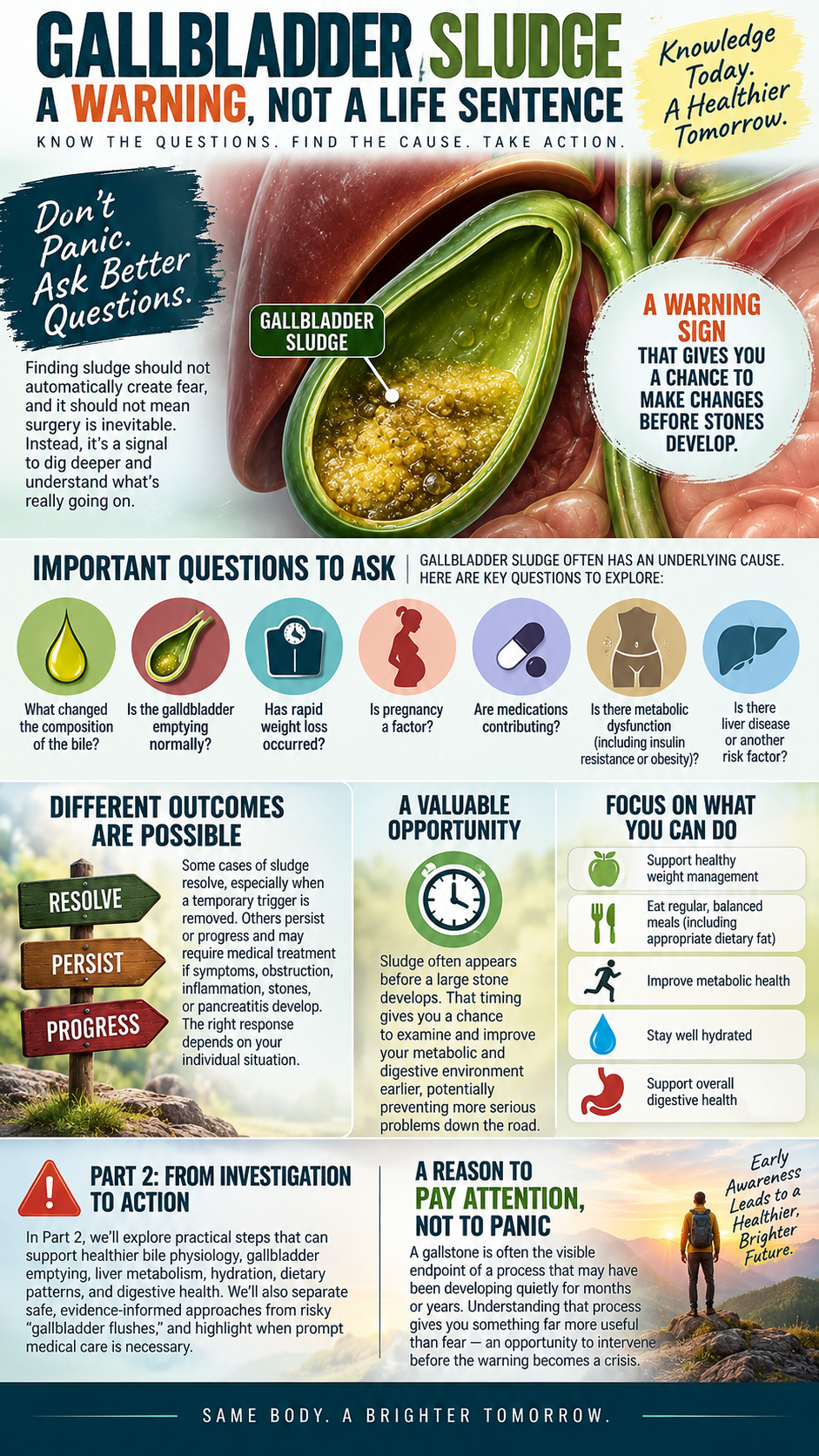
The encouraging opportunity lies in timing. Sludge may appear before a large stone develops, offering a chance to examine the metabolic and digestive environment earlier. Supporting healthy weight management, regular nourishment, metabolic health, and appropriate dietary fat intake may become relevant depending on the cause.
Changing the Environment That Allowed Sludge to Form
Discovering gallbladder sludge should lead to a question more important than how to remove it. Why did the bile become prone to sludge formation? That question changes the entire conversation. The gallbladder does not operate independently from the liver, metabolism, hormones, digestive tract, and eating patterns. Supporting those systems may help improve the environment surrounding bile formation and gallbladder function.
However, sludge can sometimes cause serious complications, including cholecystitis, bile-duct obstruction, and pancreatitis. Home strategies should never replace evaluation when significant symptoms appear. Persistent upper abdominal pain, fever, jaundice, repeated vomiting, or worsening illness requires prompt medical attention. For uncomplicated situations, the starting point involves examining the conditions that encourage concentrated, stagnant, crystal-forming bile.
Start With the Liver, Where Bile Is Born
The gallbladder stores bile, but the liver manufactures it. Every discussion about gallbladder health should therefore begin upstream. Hepatocytes continuously produce bile using cholesterol, bile acids, phospholipids, bilirubin, water, and electrolytes. The composition of that bile helps determine whether cholesterol remains dissolved or begins forming microscopic crystals.
Metabolic health matters enormously within this process. Insulin resistance, obesity, elevated triglycerides, and fatty liver often travel together. These conditions can influence hepatic cholesterol handling and gallstone risk. Improving metabolic health may therefore support more than blood sugar or waist circumference. It can also address an important part of the biological environment associated with cholesterol gallstones.
Food quality becomes central here. Build meals around minimally processed foods rather than refined carbohydrates and ultra-processed products. Vegetables, appropriate whole-food carbohydrates, quality proteins, and healthy fats can create a more metabolically favorable diet. Reducing excessive added sugar may also help people struggling with insulin resistance and elevated triglycerides.
Alcohol deserves consideration as well. Heavy alcohol intake can damage the liver and disrupt normal hepatic physiology. Someone with fatty liver or abnormal liver enzymes should investigate those findings rather than assuming the gallbladder exists separately. The liver and biliary system function as connected biological partners.
Avoid the Rapid-Weight-Loss Trap
Weight loss can improve metabolic health, yet the speed and method matter. Crash diets and severe caloric restriction can increase gallstone risk. Rapid fat loss mobilizes cholesterol from adipose tissue, while the liver may secrete additional cholesterol into bile. At the same time, very low food intake can reduce gallbladder contractions.
That combination creates an unfortunate paradox. Someone may lose weight quickly while simultaneously creating conditions that favor gallstone formation. This risk becomes particularly relevant after bariatric surgery or aggressive dieting. Sustainable weight reduction generally provides a more sensible long-term strategy than repeated cycles of starvation and rebound eating.
Extreme fasting deserves similar caution when someone already has biliary disease. Fasting has legitimate metabolic applications, but longer is not automatically better. Prolonged periods without food can reduce gallbladder emptying because meals normally stimulate contraction. Anyone with symptomatic gallbladder disease should individualize fasting rather than pursuing increasingly aggressive schedules.
Do Not Fear Every Gram of Dietary Fat
For decades, people with gallbladder symptoms often heard one simple instruction: avoid fat. During an acute symptomatic episode, lower-fat meals may reduce gallbladder stimulation and discomfort. That short-term strategy differs from assuming an extremely low-fat diet optimizes gallbladder physiology forever.
Dietary fat entering the small intestine stimulates cholecystokinin, commonly called CCK. This digestive hormone helps trigger gallbladder contraction and pancreatic enzyme secretion. Normal gallbladder emptying therefore depends partly on the presence of food, particularly fat, within the digestive tract.
The goal is not to consume enormous fatty meals to “flush” the gallbladder. That approach could provoke severe pain when stones or obstruction exist. Instead, people without contraindications can discuss incorporating moderate amounts of whole-food fats within balanced meals. Olive oil, avocado, eggs, and fatty fish provide examples depending on individual tolerance and dietary needs.
Fiber, Hydration, and the Gut-Bile Connection
Bile acids do not disappear after digestion. Most become reabsorbed in the terminal ileum and return to the liver through enterohepatic circulation. This recycling system demonstrates the intimate connection between intestinal health and bile metabolism.
Adequate dietary fiber supports bowel regularity and influences bile-acid metabolism. Vegetables, berries, chia, flax, and other tolerated whole foods can provide fiber without relying heavily on refined grains. Increase fiber gradually because suddenly consuming large quantities can produce bloating and abdominal discomfort.
Hydration also supports normal digestive function, although drinking gallons of water cannot dissolve established gallstones. Water supports bowel movements and overall fluid balance. A practical approach involves drinking consistently throughout the day while adjusting intake for climate, exercise, body size, and medical conditions.
Constipation deserves attention because healthy digestion involves regular elimination. Improving fiber intake, hydration, physical activity, and food quality can support bowel regularity. Persistent constipation, however, deserves investigation rather than endless dependence on cleanses.
Move Your Body to Improve the Metabolic Terrain
Physical activity may never appear on a bottle labeled “gallbladder support,” yet it addresses several important risk factors. Regular movement improves insulin sensitivity, assists weight management, and can reduce visceral fat. Those metabolic improvements can indirectly influence gallstone risk.
Walking provides one of the simplest starting points. A ten-to-fifteen-minute walk after meals can support post-meal glucose control. Resistance training adds another powerful metabolic signal because skeletal muscle acts as a major destination for circulating glucose.
Consistency matters more than punishment. Someone does not need exhausting daily workouts to improve metabolic health. Frequent walking, resistance exercise several times weekly, and reduced sedentary time can create meaningful changes over months.
Be Careful With “Gallbladder Flushes”
Internet gallbladder cleanses often recommend large quantities of olive oil, citrus juice, or other mixtures. Advocates sometimes claim that green objects appearing afterward represent expelled gallstones. However, material passed after these protocols can form from oil and digestive contents rather than stones removed from the gallbladder.
More importantly, deliberately triggering forceful gallbladder contraction can be dangerous when an obstructing stone exists. A stone entering a duct can produce biliary colic, inflammation, jaundice, or pancreatitis. Natural does not automatically mean harmless.
The wiser objective involves supporting normal physiology rather than attempting to force stones through narrow ducts. Gallbladder disease deserves respect because the anatomy leaves little room for experimentation once obstruction develops.
Your At-Home Gallbladder Reset
Start by examining the daily conditions that influence bile physiology. Replace crash dieting with gradual weight management. Eat predominantly whole foods and reduce excessive refined carbohydrates and added sugars. Include reasonable dietary fat when tolerated rather than automatically pursuing chronic fat avoidance. Increase fiber gradually, maintain appropriate hydration, move daily, and prioritize metabolic health.
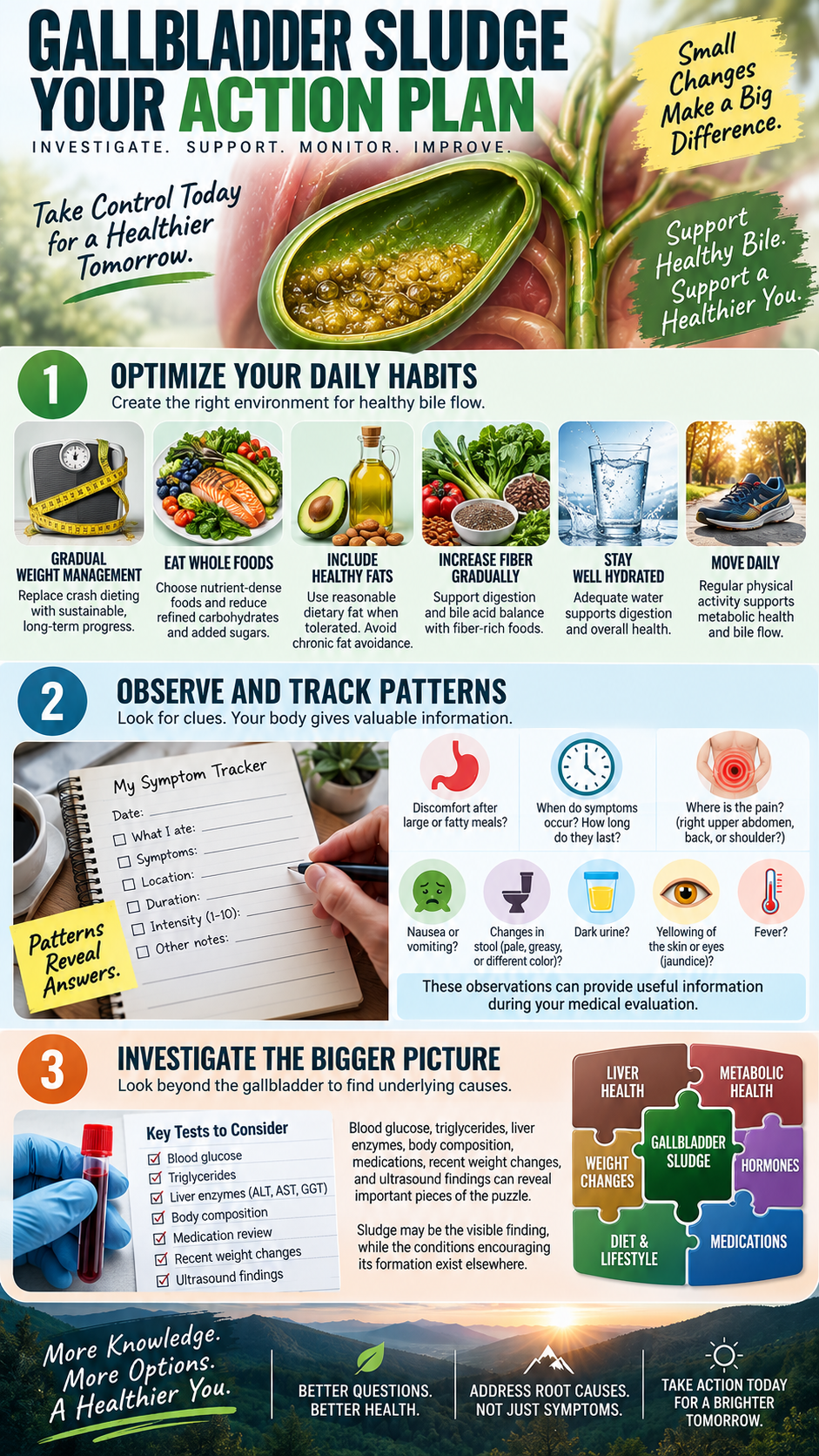
Next, observe patterns rather than guessing. Notice whether discomfort consistently follows large or fatty meals. Record the location, duration, and intensity of symptoms. Pay attention to nausea, stool changes, unexplained itching, dark urine, fever, or yellowing of the skin. These observations can provide useful information during medical evaluation.
Finally, investigate the larger metabolic picture when appropriate. Blood glucose, triglycerides, liver enzymes, body composition, medications, recent weight changes, and ultrasound findings can reveal important pieces of the puzzle. Sludge may be the visible finding, while the conditions encouraging its formation exist elsewhere.
Treat the Warning Before It Becomes the Emergency
Gallbladder sludge represents an opportunity to pay attention before the situation potentially progresses. Some cases resolve spontaneously, while others persist or develop into gallstones and complications. Nobody should assume that every case follows the same path.
The deeper lesson reaches beyond the gallbladder. The body often displays smaller changes before larger problems become obvious. Sludge can be one such signal. Rather than fearing the ultrasound report, use it as an invitation to investigate bile composition, gallbladder movement, metabolic health, liver function, nutrition, and lifestyle.
Health rarely changes because of one dramatic cleanse or miracle supplement. It changes when the biological environment changes consistently. Support the liver, protect metabolic health, maintain sensible nutrition, move regularly, and respect warning symptoms. The goal is not merely avoiding a gallstone. The greater goal is creating conditions that support healthier digestion and metabolism for years to come.