
The Silent Deficiency Driving Modern Disease
There is a growing health crisis quietly spreading through modern society, affecting millions of people who are told their symptoms are unrelated and must simply be managed for life. Individuals struggle daily with anxiety that seems to come out of nowhere, sleep that never feels restorative, and chronic pain that migrates through the body without a clear cause. These issues are often treated as separate diagnoses, each requiring its own medication or therapy, yet this fragmented model fails to recognize a deeper, unifying dysfunction rooted in the body’s chemistry. Magnesium deficiency sits at the center of this problem, acting as a foundational breakdown that disrupts the nervous system, muscular system, and cellular energy production all at once.
The origin of this widespread deficiency is not accidental, nor is it genetic bad luck, but rather the result of profound changes in how humans live, eat, and interact with their environment. Industrial agriculture has systematically depleted the soil of essential minerals, stripping foods of their natural nutrient density. At the same time, the modern lifestyle has become saturated with chronic stress, processed foods, environmental toxins, and pharmaceutical interventions, all of which either deplete magnesium directly or interfere with its absorption. What emerges is a perfect storm where the body is constantly losing magnesium while rarely replenishing it adequately, leading to a slow and progressive decline in physiological resilience.
What Magnesium Actually Does in the Body
Magnesium is not just another mineral to be casually mentioned in a multivitamin label; it is one of the most critical regulators of human physiology, participating in over 300 enzymatic reactions that govern the body’s ability to function and repair itself. It plays a direct role in nerve transmission, muscle contraction and relaxation, blood sugar regulation, blood pressure control, and the synthesis of DNA and proteins. Without sufficient magnesium, these processes begin to break down, not dramatically at first, but gradually, creating subtle dysfunctions that compound over time into more serious conditions.
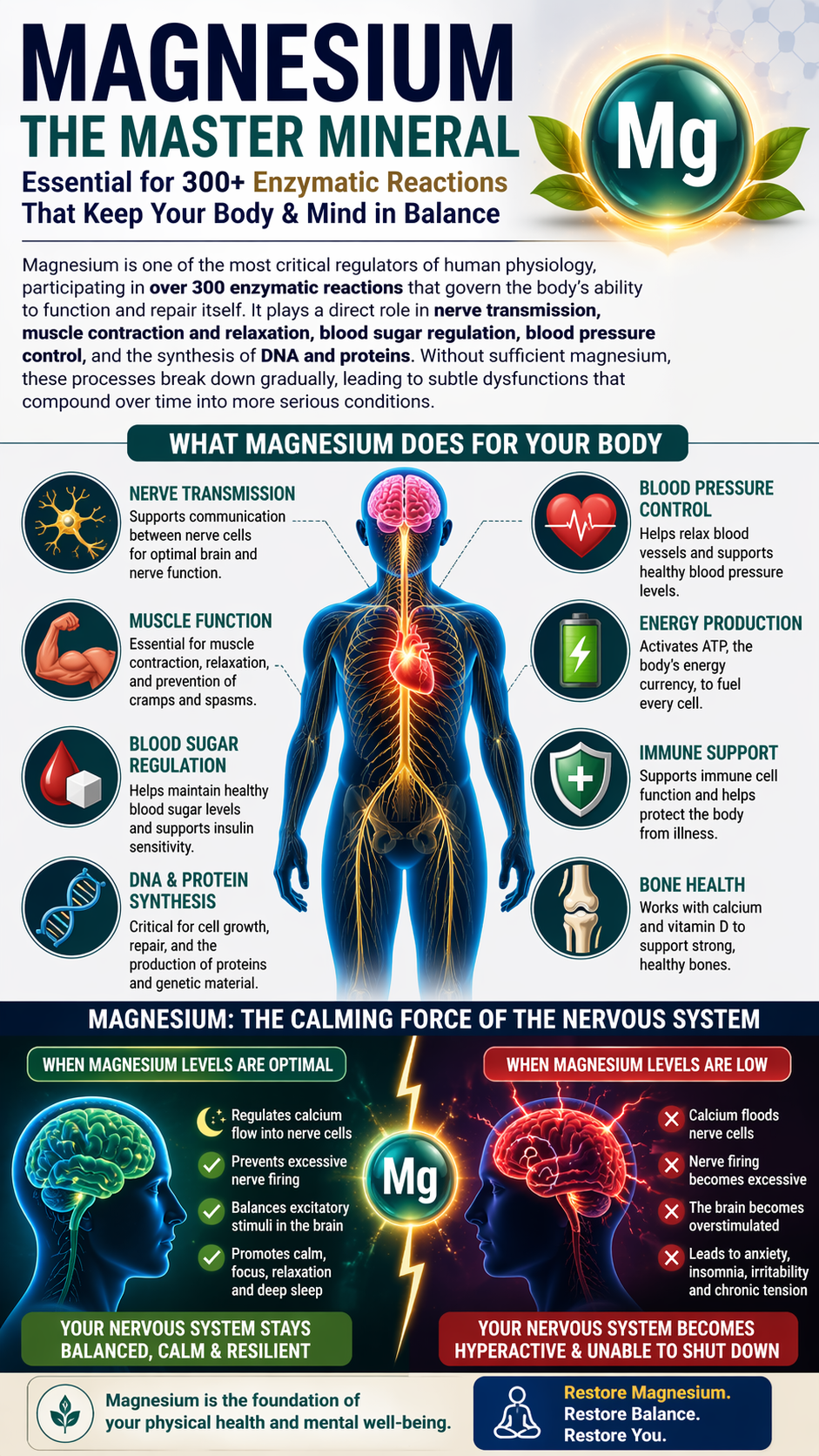
One of magnesium’s most vital roles is maintaining equilibrium within the nervous system, acting as a natural counterbalance to excitatory stimuli that would otherwise overwhelm the brain. It regulates the flow of calcium into nerve cells, preventing excessive firing and protecting against overstimulation. When magnesium levels are optimal, the brain can transition smoothly between states of focus, relaxation, and sleep. When levels are low, this regulation is lost, and the nervous system becomes hyperactive, reactive, and unable to properly shut down, setting the stage for anxiety, insomnia, and chronic tension throughout the body.
Where the Problem Begins: Soil, Stress, and Modern Living
The issue of magnesium deficiency begins long before symptoms appear, originating in the very soil used to grow food. Decades of industrial farming have prioritized yield over nutrient density, leading to crops that may look healthy but contain significantly lower levels of essential minerals. This means that even individuals who consume vegetables regularly may still fall short of their magnesium needs, creating a hidden deficiency that goes unnoticed for years.

At the same time, chronic stress has become an unavoidable aspect of modern life, and it has a direct and measurable impact on magnesium levels within the body. Stress triggers the release of hormones such as cortisol and adrenaline, both of which increase the body’s demand for magnesium while simultaneously accelerating its excretion through the kidneys. This creates a situation where the individuals who need magnesium the most are often the ones losing it the fastest, resulting in a continuous depletion cycle that weakens the body’s ability to cope with stress over time.
Compounding this issue is the widespread use of medications that interfere with magnesium absorption and retention. Drugs designed to reduce stomach acid impair the body’s ability to break down and absorb nutrients, while diuretics increase the loss of magnesium through urine. Antibiotics disrupt the gut microbiome, which plays a critical role in nutrient absorption, further reducing the body’s ability to maintain adequate magnesium levels. When these factors are combined with diets high in sugar and processed foods, which not only lack magnesium but also increase the body’s need for it, the result is a systemic deficiency that affects nearly every organ system.
Magnesium and Anxiety: A Physiological Storm
Anxiety is often framed as a psychological issue, something rooted in thoughts, emotions, or external stressors, but this perspective overlooks the profound biochemical component that drives it. At its core, anxiety is a state of nervous system dysregulation where the brain becomes overly sensitive to stimuli and unable to properly regulate its responses. Magnesium plays a central role in controlling this balance by regulating neurotransmitters such as glutamate, which excites the brain, and GABA, which calms it.
When magnesium levels are insufficient, glutamate activity becomes excessive while GABA function is diminished, creating a brain that is constantly on high alert. This results in symptoms such as racing thoughts, heightened stress responses, irritability, and a persistent feeling of unease that seems disproportionate to actual circumstances. The body is not overreacting without reason; it is lacking the biochemical tools required to maintain stability.
The long-term impact of this imbalance extends beyond emotional discomfort, as chronic anxiety places a significant burden on the cardiovascular system, disrupts digestion, and contributes to hormonal imbalances. Addressing magnesium deficiency helps restore this balance by calming the nervous system at its source, allowing the body to respond to stress more appropriately rather than remaining in a constant state of overdrive.
Magnesium and Insomnia: When the Brain Cannot Shut Down
Sleep is not simply the absence of wakefulness but a highly coordinated process that requires the nervous system to shift into a state of deep relaxation. Magnesium is essential for this transition, as it supports the production of melatonin and enhances the activity of GABA, both of which are necessary for initiating and maintaining sleep. When magnesium levels are adequate, the body naturally moves into deeper stages of sleep, allowing for proper recovery and restoration.
Magnesium deficiency disrupts this process by keeping the brain in an active state, preventing the natural shutdown required for sleep. Individuals often describe feeling physically exhausted but mentally wired, unable to quiet their thoughts or fully relax. This leads to difficulty falling asleep, frequent awakenings, and a lack of restorative sleep, which further exacerbates stress and magnesium depletion.
Over time, chronic sleep disruption affects nearly every aspect of health, including immune function, hormone regulation, and cognitive performance. Restoring magnesium levels helps reestablish the body’s natural sleep rhythm, allowing for deeper, more consistent rest without relying on external sedatives that often interfere with the body’s natural processes.
Magnesium and Chronic Pain: The Missing Link in Muscle and Nerve Function
Chronic pain is often approached as a structural issue, attributed to injuries, degeneration, or inflammation, yet this perspective fails to account for the role of nutrient deficiencies in pain perception and muscle function. Magnesium is essential for regulating muscle contraction and relaxation, acting as a natural antagonist to calcium, which stimulates contraction. Without adequate magnesium, muscles remain in a semi-contracted state, leading to tightness, spasms, and reduced blood flow.
This persistent tension creates an environment where pain can develop and persist, as tissues are unable to fully relax and recover. At the same time, magnesium regulates NMDA receptors involved in pain signaling, preventing the nervous system from becoming overly sensitive. When magnesium is deficient, these receptors become overactive, amplifying pain signals and making even minor discomfort feel more intense.
The result is a body that is both physically tense and neurologically hypersensitive, a combination that contributes to conditions such as tension headaches, fibromyalgia, and chronic muscle pain. Restoring magnesium levels addresses both the muscular and neurological components of pain, providing a more comprehensive approach to relief.
Magnesium and Energy: The Foundation of Cellular Function
Energy production within the body depends on the availability and proper utilization of ATP, the molecule that fuels cellular activity. Magnesium is required for ATP to be activated and used effectively, meaning that without it, energy production is compromised at the most fundamental level. This leads to fatigue, weakness, and reduced physical and mental performance, even in individuals who appear otherwise healthy.
Low energy levels contribute to a cycle of increased stress and decreased recovery, both of which further deplete magnesium and worsen symptoms. This creates a downward spiral where the body becomes progressively less capable of maintaining balance and resilience. Restoring magnesium levels helps break this cycle by supporting efficient energy production and improving the body’s ability to recover from daily stressors.
How to Restore Magnesium and Rebuild the Body
Correcting magnesium deficiency requires a comprehensive approach that addresses both intake and absorption while reducing factors that contribute to depletion. The first step involves improving dietary habits by focusing on whole, nutrient-dense foods that naturally contain magnesium, while minimizing processed foods that lack essential nutrients and increase demand.
Supplementation often becomes necessary due to the limitations of modern food sources, but choosing the right form of magnesium is critical for effectiveness. Highly absorbable forms such as glycinate and threonate provide targeted support for the nervous system and brain, while citrate can assist with digestion and elimination. The goal is not simply to take magnesium, but to use it strategically based on individual needs.

Topical applications such as Epsom salt baths and magnesium oils offer an additional method of absorption, particularly for individuals with digestive issues that impair nutrient uptake. These methods also provide direct benefits for muscle relaxation and stress reduction, making them a valuable part of a daily routine.
Addressing lifestyle factors is equally important, as chronic stress, excessive caffeine intake, and high sugar consumption all contribute to magnesium depletion. Incorporating practices that support relaxation and recovery helps preserve magnesium levels while enhancing overall health. At the same time, improving gut health ensures that magnesium can be properly absorbed and utilized, making it possible to achieve lasting results rather than temporary improvements.
Conclusion: Fix the Deficiency, Fix the System
Magnesium deficiency represents a foundational breakdown in the body’s ability to regulate itself, affecting the nervous system, muscular system, and cellular energy production in profound ways. The symptoms that arise from this deficiency are not random or isolated, but interconnected expressions of a deeper imbalance that has been overlooked for far too long.
By addressing magnesium levels through proper nutrition, targeted supplementation, and lifestyle changes, it becomes possible to restore balance at the root level rather than chasing symptoms with temporary solutions. The body is designed to function efficiently and heal itself when given the right conditions, and magnesium is one of the most critical components of that process. When this forgotten mineral is restored, the results are not subtle but transformative, allowing the body to move out of a state of dysfunction and back into a state of resilience and health.