
The Explosion of ADHD Diagnoses in Modern Children
ADHD diagnoses in children have increased dramatically over the past two decades across developed nations. This trend has raised serious questions about whether children are truly becoming more neurologically impaired or whether the environment has changed in ways that disrupt normal brain function. Many parents feel pressure from schools and healthcare providers to pursue evaluations quickly when behavioral challenges arise. The process often moves rapidly from observation to diagnosis without a deep investigation into underlying biological causes. This pattern reflects a system designed for efficiency rather than root cause discovery.
Modern childhood differs significantly from previous generations in ways that directly affect brain development and function. Children now experience constant digital stimulation, reduced outdoor play, increased consumption of processed foods, and exposure to environmental toxins. These factors create chronic stress on the developing nervous system, which can impair attention and emotional regulation. When these symptoms appear, they are often labeled as ADHD rather than recognized as adaptive responses to environmental stressors. Functional medicine challenges this approach by asking what is driving the behavior instead of simply naming it.
ADHD Is a Symptom Pattern, Not a Disease
Mainstream medicine defines ADHD as a neurodevelopmental disorder involving dopamine and norepinephrine dysregulation in the brain. This explanation focuses on neurotransmitters but does not explain why these imbalances occur. Neurotransmitter production depends on adequate nutrition, stable blood sugar, low inflammation, and proper gut function. When these systems become compromised, the brain adjusts its signaling patterns, which can lead to attention difficulties.
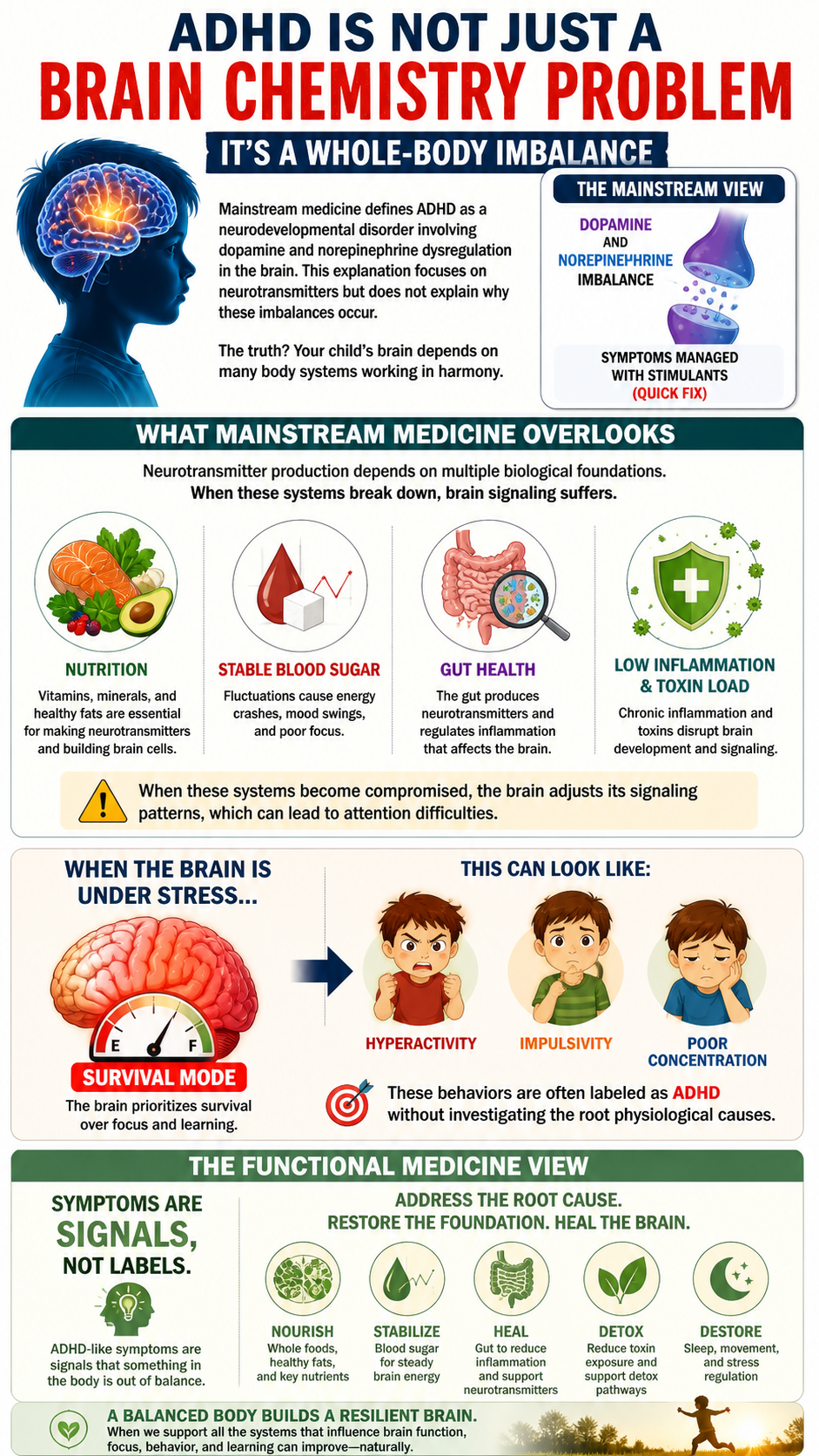
The brain operates as a high-energy organ that requires constant fuel and nutrient delivery to function properly. When energy supply fluctuates or nutrients are lacking, the brain shifts into a survival mode that prioritizes immediate needs over sustained focus. This shift can manifest as hyperactivity, impulsivity, or poor concentration. These behaviors are often labeled as ADHD without investigating the physiological factors that contribute to them. Functional medicine views these symptoms as signals of imbalance rather than fixed disorders.
ADHD Stimulants and How They Work
Common ADHD medications such as Adderall, Ritalin, and Vyvanse increase dopamine and norepinephrine levels in the brain. These neurotransmitters play key roles in attention, motivation, and impulse control. By increasing their availability, stimulants enhance communication between neurons in attention-regulating circuits. This leads to improved focus and reduced impulsivity in structured environments.
The rapid effectiveness of these medications reinforces the belief that they solve the underlying problem. However, they do not address the root causes of neurotransmitter imbalance. Instead, they create an artificial state of stimulation that overrides the brain’s natural regulatory mechanisms. Over time, the brain may adapt to this external input, which can reduce its ability to function independently. This adaptation raises concerns about long-term reliance on medication for cognitive performance.
The Hidden Effects of Stimulants on the Body
Stimulant medications affect multiple systems in the body beyond the brain. Appetite suppression occurs due to increased catecholamine activity, which reduces hunger signals. This can lead to inadequate nutrient intake during critical growth periods. Nutrient deficiencies can impair brain development and overall health, which may worsen attention problems over time.

Sleep disruption is another common effect of stimulant use. These medications can interfere with circadian rhythms and reduce melatonin production. Poor sleep quality affects memory, emotional regulation, and cognitive performance. Children who do not sleep well often exhibit worsened attention and behavior, which can create a cycle of increasing medication use.
Chronic stimulation of the nervous system can also elevate stress hormones such as cortisol. Elevated cortisol levels can lead to anxiety, irritability, and reduced resilience. The brain may become dependent on external stimulation, which can reduce natural dopamine production over time. This dependency can make it difficult for children to function without medication, which raises concerns about long-term neurological health.
Blood Sugar Instability and Its Impact on Attention
The brain relies on glucose as its primary energy source, and stable blood sugar levels are essential for consistent cognitive function. Diets high in refined carbohydrates and sugars cause rapid spikes in blood glucose followed by sharp declines. These fluctuations disrupt the brain’s energy supply and impair attention and focus.
Children who consume sugary breakfasts often experience a mid-morning crash that affects their ability to concentrate. This crash can lead to irritability, hyperactivity, and poor academic performance. Stabilizing blood sugar through balanced meals that include protein, healthy fats, and complex carbohydrates can improve attention significantly. This approach addresses a major but often overlooked contributor to ADHD symptoms.
Nutrient Deficiencies and Brain Function
The brain requires essential nutrients to produce neurotransmitters and maintain neural connections. Magnesium helps regulate neuronal activity and supports relaxation, while zinc plays a role in dopamine regulation and immune function. Iron is necessary for oxygen transport and neurotransmitter synthesis, and deficiencies in this mineral can impair cognitive performance.
Omega-3 fatty acids support the structure of brain cells and reduce inflammation. These fats are essential for proper communication between neurons. B vitamins contribute to energy production and neurotransmitter synthesis, which are critical for focus and mental clarity. Many children do not receive adequate amounts of these nutrients due to poor dietary habits. Addressing these deficiencies can improve brain function and reduce symptoms associated with attention disorders.
The Gut-Brain Axis and Behavioral Health
The gut and brain communicate through a complex system known as the gut-brain axis. This system influences mood, cognition, and behavior through neural and chemical signaling pathways. The gut microbiome plays a key role in producing neurotransmitters and regulating inflammation. When the microbiome becomes imbalanced, it can lead to increased inflammation that affects brain function.
Food sensitivities and poor digestion can exacerbate this process by increasing intestinal permeability. This allows inflammatory molecules to enter the bloodstream and reach the brain. These molecules can disrupt neuronal signaling and contribute to symptoms such as brain fog and hyperactivity. Improving gut health through diet and targeted interventions can reduce inflammation and enhance cognitive function.
Environmental Toxins and Neurological Stress
Children are exposed to a wide range of environmental toxins that can affect brain development and function. These toxins include heavy metals, pesticides, and artificial additives found in food and household products. Exposure to these substances can disrupt neurotransmitter activity and increase oxidative stress in the brain.
Artificial food dyes have been linked to behavioral changes in children. Removing these additives from the diet often leads to improvements in attention and behavior. Reducing toxic exposure involves practical steps such as filtering water and choosing whole foods. These changes can decrease the burden on the body’s detoxification systems and support brain health.
Sleep and Cognitive Performance
Sleep is essential for brain function, as it allows for memory consolidation and neural repair. Inadequate sleep can impair attention, increase impulsivity, and reduce emotional regulation. Children who do not get enough sleep often display symptoms that resemble ADHD.
Electronic devices contribute to sleep disruption by exposing children to blue light, which suppresses melatonin production. Establishing consistent sleep routines and limiting screen time before bed can improve sleep quality. Better sleep supports cognitive performance and reduces attention-related issues.
The Natural Focus Stack for Brain Optimization
A natural focus stack involves supporting the brain through nutrition, supplementation, and lifestyle changes. Stabilizing blood sugar provides consistent energy for the brain, while targeted nutrients support neurotransmitter production. Addressing gut health reduces inflammation and improves communication between the gut and brain.
Reducing exposure to toxins protects the brain from unnecessary stress, and optimizing sleep supports recovery and cognitive function. Physical activity enhances blood flow and promotes natural dopamine production. This comprehensive approach creates an environment in which the brain can function effectively without reliance on medication.
Practical Steps Parents Can Take at Home
Parents can begin by improving their child’s diet and removing processed foods that contribute to blood sugar instability. Balanced meals that include protein, healthy fats, and whole foods provide a foundation for brain health. Supplementation with omega-3 fatty acids, magnesium, and zinc can address common deficiencies.
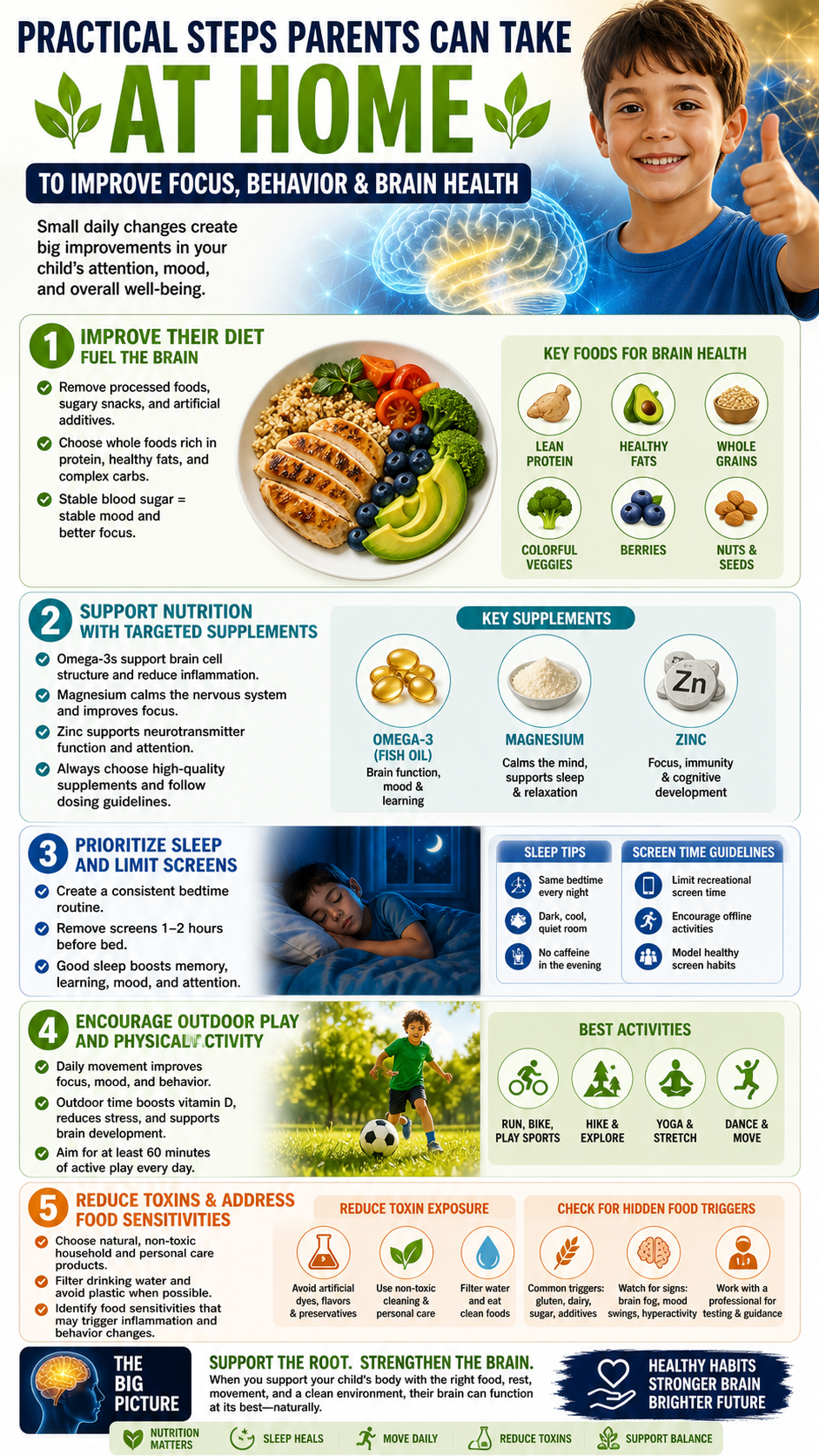
Establishing consistent sleep routines and reducing screen time can improve sleep quality and cognitive performance. Encouraging outdoor play and physical activity supports natural brain function. Reducing exposure to environmental toxins and addressing food sensitivities can further enhance attention and behavior.
A New Approach to ADHD and Brain Health
The current approach to ADHD often focuses on symptom management rather than root cause resolution. This approach may provide short-term relief but does not address the underlying issues. Functional medicine offers a more comprehensive perspective that considers the biological, environmental, and lifestyle factors that influence brain function.
By addressing these factors, it is possible to restore balance and improve cognitive performance naturally. Medication may still be used in certain cases, but it should not replace efforts to optimize the brain’s environment. A holistic approach provides a more sustainable solution for improving attention and overall health.
Conclusion: Supporting the Brain at Its Core
Attention cannot be forced through external stimulation alone, and the brain requires proper support to function effectively. Addressing blood sugar stability, nutrient sufficiency, gut health, toxin exposure, and sleep quality provides a strong foundation for cognitive performance. These factors influence the brain at a fundamental level and allow it to regulate attention naturally.
Children deserve solutions that support their development rather than suppress their symptoms. By focusing on root causes and implementing targeted interventions, parents can help their children achieve lasting improvements in focus and overall well-being.