
The Hidden Defense System Inside the Foods We Eat
A bean sitting quietly in your pantry does not look dangerous. Neither does a tomato ripening on the vine or a stalk of wheat moving in the wind. Yet plants are not passive packages of vitamins, minerals, fiber, and carbohydrates designed for human consumption. They are living organisms programmed to survive, reproduce, and protect their next generation. Unlike animals, plants cannot run from predators, fight an insect, or escape when something begins eating them. Their survival strategy depends heavily on chemistry. Across millions of years, plants developed compounds that can discourage insects, fungi, microorganisms, and animals from consuming vulnerable tissues and seeds. Among those compounds are lectins, carbohydrate-binding proteins found throughout the plant kingdom. The question surrounding lectins is not whether they exist or possess biological activity. Both facts are well established. The more important question is whether the lectins reaching your digestive tract are harmless passengers or active compounds capable of disturbing human physiology.
That question has produced one of nutrition’s most polarized arguments. One side portrays lectins as hidden dietary poisons responsible for intestinal permeability, inflammation, autoimmune disease, obesity, and chronic illness. The other side dismisses lectin concerns because humans have eaten legumes, grains, and vegetables for generations. Neither position adequately explains the biology. Certain lectins can unquestionably harm humans under specific conditions, while traditional preparation can dramatically reduce their activity. The FDA recognizes phytohaemagglutinin poisoning from raw or inadequately cooked kidney beans. Symptoms can include intense nausea, vomiting, abdominal pain, and diarrhea. Yet this documented toxicity does not prove every lectin-containing food damages every person. Understanding the difference requires looking at why lectins exist, how they interact with the intestine, and what changes before food ever reaches your plate.
Lectins Begin With the Plant’s Need to Survive
Lectins are proteins capable of recognizing and attaching to specific carbohydrate structures. Those carbohydrates appear on cellular surfaces throughout living organisms, giving certain lectins the ability to interact directly with biological tissues. Different lectins recognize different carbohydrate structures, which makes the term lectin much broader than many dietary discussions suggest. Comparing every lectin as though it were identical resembles comparing every mushroom because each belongs to the same general category. Structure matters, concentration matters, and biological behavior matters. Some lectins break down relatively easily during preparation, while others require sufficient heat. Consequently, the presence of a lectin tells us much less than the type, amount, preparation method, and remaining biological activity.
Seeds deserve particular attention because they carry the plant’s genetic future. A plant benefits when those seeds survive long enough to germinate under favorable conditions. Consequently, seeds often contain multiple protective substances alongside the nutrients needed for early growth. Legumes can contain lectins, phytates, tannins, protease inhibitors, and other compounds commonly described as antinutrients. These substances do not exist because plants are somehow plotting against humans. They represent part of an intricate survival system developed through evolutionary pressure. The seed can therefore contain impressive nutrition while simultaneously carrying compounds that affect digestion, mineral availability, or predators. Those two realities are not contradictory, although modern nutritional arguments often treat them that way.
The Word “Antinutrient” Should Not Be Dismissed
Calling something an antinutrient does not automatically mean people should never eat it. The term describes compounds capable of interfering with nutrient digestion, absorption, or utilization under certain conditions. Phytates, for example, can bind minerals such as iron and zinc. Protease inhibitors can reduce the activity of enzymes involved in protein digestion. Tannins can interact with proteins and minerals. Lectins can bind carbohydrate structures on cells, including cells lining the gastrointestinal tract. Research examining legumes continues to recognize these compounds as legitimate nutritional variables rather than imaginary internet concerns.
The mistake occurs when researchers, clinicians, or consumers move from mechanism to universal conclusion. A food containing an antinutrient is not automatically unhealthy, just as a food containing antioxidants is not automatically therapeutic. Dose determines much of biology. Nutritional status changes the equation further, while preparation can alter the food before digestion begins. Someone with abundant mineral intake may tolerate modest reductions in absorption without measurable consequences. Another person eating a nutrient-poor diet could face a different situation. The intestinal environment also matters because digestion determines what ultimately reaches the intestinal surface. Nutritional labels tell us what a food contains, but they cannot tell us exactly what an individual will absorb.
The Intestinal Barrier Is Where the Story Gets Interesting
The human intestine performs an astonishing task. Its surface must remain permeable enough to absorb nutrients while remaining selective enough to restrict unwanted substances. A single layer of epithelial cells forms much of this critical boundary. Specialized junctions help regulate movement between neighboring cells, while mucus, immune cells, digestive enzymes, and microorganisms contribute additional protection. When this system functions well, the intestine separates the external environment inside the gastrointestinal tract from the body’s internal circulation. That distinction is essential because everything swallowed technically remains outside the internal body until absorption occurs.
Certain lectins become biologically interesting because they can interact with this intestinal surface. Experimental studies show that some active lectins can bind epithelial structures, influence cellular behavior, alter nutrient transport, and affect intestinal permeability under particular conditions. High experimental exposures have also produced changes in intestinal morphology and nutrient utilization. These findings give the lectin concern a legitimate mechanistic foundation. They should not, however, become evidence that every tomato or properly cooked bean creates a “leaky gut.” Laboratory concentration, lectin identity, cooking method, digestion, exposure duration, and individual physiology determine whether those experimental mechanisms translate into meaningful human effects.
What Can Active Lectins Do to the Body?
When sufficiently active lectins reach the gastrointestinal tract, the first consequences can occur locally. Binding along the intestinal surface may interfere with normal epithelial function. Digestive disturbances can follow, including nausea, cramping, vomiting, or diarrhea when exposure becomes high enough. Changes in nutrient digestion or absorption may also occur under experimental conditions. Once the intestinal environment becomes disrupted, local immune signaling becomes another consideration because the gastrointestinal tract contains extensive immune tissue. The gut is not simply a tube that processes food. It is a densely regulated interface between the outside world, the microbiome, the immune system, and human metabolism.
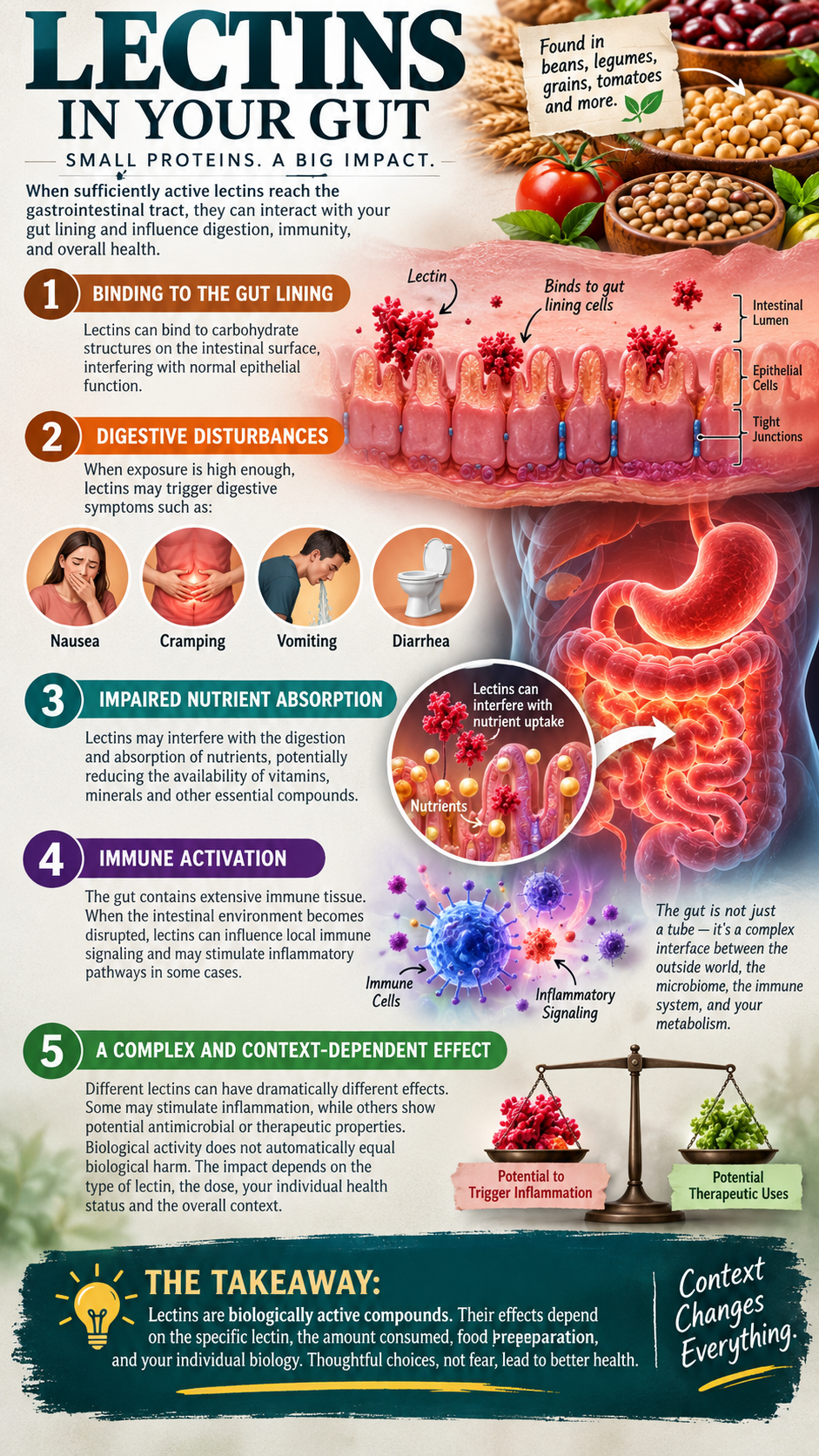
This connection helps explain why lectins have attracted attention in research involving inflammation and immunity. Scientists have documented immunomodulatory effects from various lectins, although those effects differ dramatically between compounds. Some experimental lectins can stimulate inflammatory pathways, while others have attracted interest for antimicrobial or therapeutic applications. This apparent contradiction exposes the central problem with labeling all lectins as harmful. Biological activity does not automatically equal biological damage. Insulin, cortisol, histamine, stomach acid, and immune cytokines all produce powerful biological effects, yet their consequences depend on concentration and context. Lectins require the same careful reasoning.
The Kidney Bean Reveals What the Debate Often Misses
Red kidney beans provide one of the clearest demonstrations of genuine lectin toxicity. Raw kidney beans can contain high concentrations of phytohaemagglutinin, commonly abbreviated PHA. Consuming even a small number of inadequately prepared beans has produced acute gastrointestinal illness. Symptoms commonly develop within hours and may include severe nausea, vomiting, abdominal discomfort, and diarrhea. The FDA has documented this phenomenon and warns about improperly cooked kidney beans. That evidence matters because it establishes something frequently lost in arguments about plant toxins: at least some dietary lectins can produce substantial biological harm in humans.
Kidney beans simultaneously expose the weakness in claims that all lectin-containing foods are dangerous. Appropriate preparation dramatically changes their lectin activity. Soaking and adequate moist heat can reduce phytohaemagglutinin to very low levels. Canning also involves substantial thermal processing. Research examining kidney-bean processing has documented dramatic reductions in active lectins following sufficient cooking. Therefore, raw kidney beans and properly cooked kidney beans may look like versions of the same food while representing profoundly different biochemical exposures. What matters is not simply how much lectin originally existed inside the seed. What matters is how much biologically active lectin survives preparation and reaches the gastrointestinal tract.
Our Ancestors Were Processing Food Before We Understood Biochemistry
Traditional cultures rarely approached difficult plant foods by simply harvesting and eating them raw. Beans were soaked and cooked. Seeds were sprouted. Vegetables were fermented. Grains were soaked, fermented, ground, or transformed through other labor-intensive methods. These techniques improved flavor, preservation, digestibility, and texture, but modern research shows that several also modify antinutritional compounds. Soaking can remove portions of water-soluble substances. Germination activates enzymes inside the seed. Fermentation allows microorganisms to transform components before humans consume them. Sufficient heat can denature many lectins and protease inhibitors. Traditional preparation was therefore doing biochemical work centuries before laboratories could measure the compounds involved.
Modern convenience has changed our relationship with food preparation. We increasingly expect foods to move from package to plate quickly, while older preparation methods can seem unnecessary. Yet the lectin discussion reminds us that cooking does more than make food warm. Processing can determine which compounds survive and what eventually contacts the intestinal lining. Temperature matters, but moisture and cooking duration matter as well. Low-temperature preparation may not produce the same result as vigorous boiling or pressure cooking. This distinction becomes particularly important with kidney beans because insufficient heating can leave problematic PHA activity behind.
The Bigger Problem Is Not Simply Lectins
The deeper issue is our tendency to classify foods as universally healthy or universally harmful. Human biology rarely cooperates with those categories. One person can eat a properly prepared lentil meal without noticeable symptoms. Another may experience substantial bloating because fermentable carbohydrates reach intestinal bacteria. Someone else may react to a completely different component within the same food. Symptoms alone cannot identify lectins as the culprit. They tell us that something about the meal, digestive process, microbiome, or individual physiology deserves investigation.
That is where the lectin conversation becomes valuable. It forces us to distinguish nutrient content from nutrient availability, raw food chemistry from prepared food chemistry, and experimental mechanisms from proven human outcomes. Lectins can become harmful under certain circumstances, and phytohaemagglutinin poisoning proves that point clearly. Yet the evidence does not support declaring every lectin-containing plant toxic. The better investigation asks which lectin is present, how much remains active after preparation, how frequently exposure occurs, and how the individual responds.
When the Gut, Immune System, and Lectins Collide
Understanding that lectins can possess biological activity raises a more difficult question. What happens when the intestinal environment is already compromised? A healthy digestive tract contains several layers of defense between food and circulation. Stomach acid begins breaking proteins apart, digestive enzymes continue that process, mucus protects intestinal surfaces, and epithelial cells regulate absorption. The microbiome adds another layer of metabolic activity. Together, these systems determine whether a compound becomes harmless, useful, irritating, or potentially disruptive. Consequently, the same meal can create remarkably different experiences in different people. Lectins may represent only one variable, but ignoring the condition of the person consuming them misses the larger biological picture.
This distinction matters because modern discussions often treat intestinal permeability as an all-or-nothing condition. In reality, intestinal permeability is a normal and tightly regulated physiological process. The intestine must permit nutrients to cross while restricting microorganisms and undesirable molecules. Problems develop when regulation becomes disturbed. Researchers have investigated altered intestinal permeability in several gastrointestinal and immune-related conditions, although causes vary considerably. Lectins have entered this conversation because certain lectins can interact with intestinal cells experimentally. That mechanism deserves attention, but it does not prove dietary lectins universally cause chronic intestinal permeability. The better question asks whether substantial active lectin exposure could become one contributor within an already stressed intestinal environment.
When the Intestinal Barrier Loses Its Selectivity
Picture the intestinal lining as an intelligent border rather than a brick wall. It constantly evaluates what should cross and what should remain inside the intestinal lumen. Epithelial cells form this border, while tight-junction proteins help control movement between neighboring cells. Immune cells monitor the region beneath the surface, ready to respond when potentially harmful organisms or molecules appear. This system operates continuously because the intestinal tract encounters enormous quantities of foreign material every day.
When barrier regulation becomes disturbed, molecules that normally remain separated from deeper tissues may gain greater access to immune surveillance. That interaction can influence inflammatory signaling. However, numerous factors can affect barrier integrity, including gastrointestinal infections, inflammatory bowel disease, celiac disease, alcohol exposure, medications, severe physiological stress, and dietary patterns. Lectins should therefore never become a convenient explanation for every case of intestinal dysfunction.
Certain active lectins can bind epithelial surfaces and influence membrane behavior in experimental models. Researchers have also documented changes involving intestinal architecture, digestive enzymes, and nutrient transport following substantial lectin exposure. Those observations provide a biologically plausible reason to study lectins further. Yet dose remains essential. A purified lectin placed directly onto cultured cells differs substantially from a cooked food moving through a functioning human digestive system. Confusing those exposures creates nutritional fear instead of nutritional science.
The Immune System Is Listening to the Gut
The intestinal tract contains an enormous concentration of immune tissue because it occupies one of the body’s busiest environmental borders. Every meal introduces foreign proteins, microbial fragments, carbohydrates, and chemicals. The immune system must distinguish between harmless food, beneficial microorganisms, and genuine threats. That requires extraordinary restraint. Excessive immune activation would make eating nearly impossible, while inadequate surveillance could allow dangerous organisms to cross unnoticed.
Lectins become relevant because some can influence immune-cell behavior. Different lectins may stimulate, suppress, or modify signaling depending on their structure and concentration. This property has made lectins useful laboratory tools and subjects of therapeutic research. Scientists have investigated selected lectins for antimicrobial, immunological, and anticancer applications. Such research reveals an important contradiction in popular discussions. The same broad family portrayed as universally inflammatory contains compounds being investigated for potentially beneficial biological effects.
The lesson is not that lectins secretly heal disease. Evidence does not support that sweeping conclusion either. Instead, lectins demonstrate how strongly context governs biology. A molecule’s ability to stimulate immune activity can become harmful in one setting and useful in another. Dose, tissue exposure, timing, individual health, and molecular structure all shape the response. Therefore, labeling every lectin inflammatory provides little meaningful information.
Do Lectins Cause Autoimmune Disease?
Autoimmunity represents one of the most serious claims made about lectins. The proposed argument usually begins with intestinal permeability. Lectins supposedly damage the intestinal barrier, allowing proteins to enter circulation. The immune system then reacts, and molecular similarities allegedly encourage immune attacks against human tissues. This explanation sounds compelling because several components resemble legitimate immunological mechanisms.
The problem appears when a plausible hypothesis gets presented as settled human evidence.
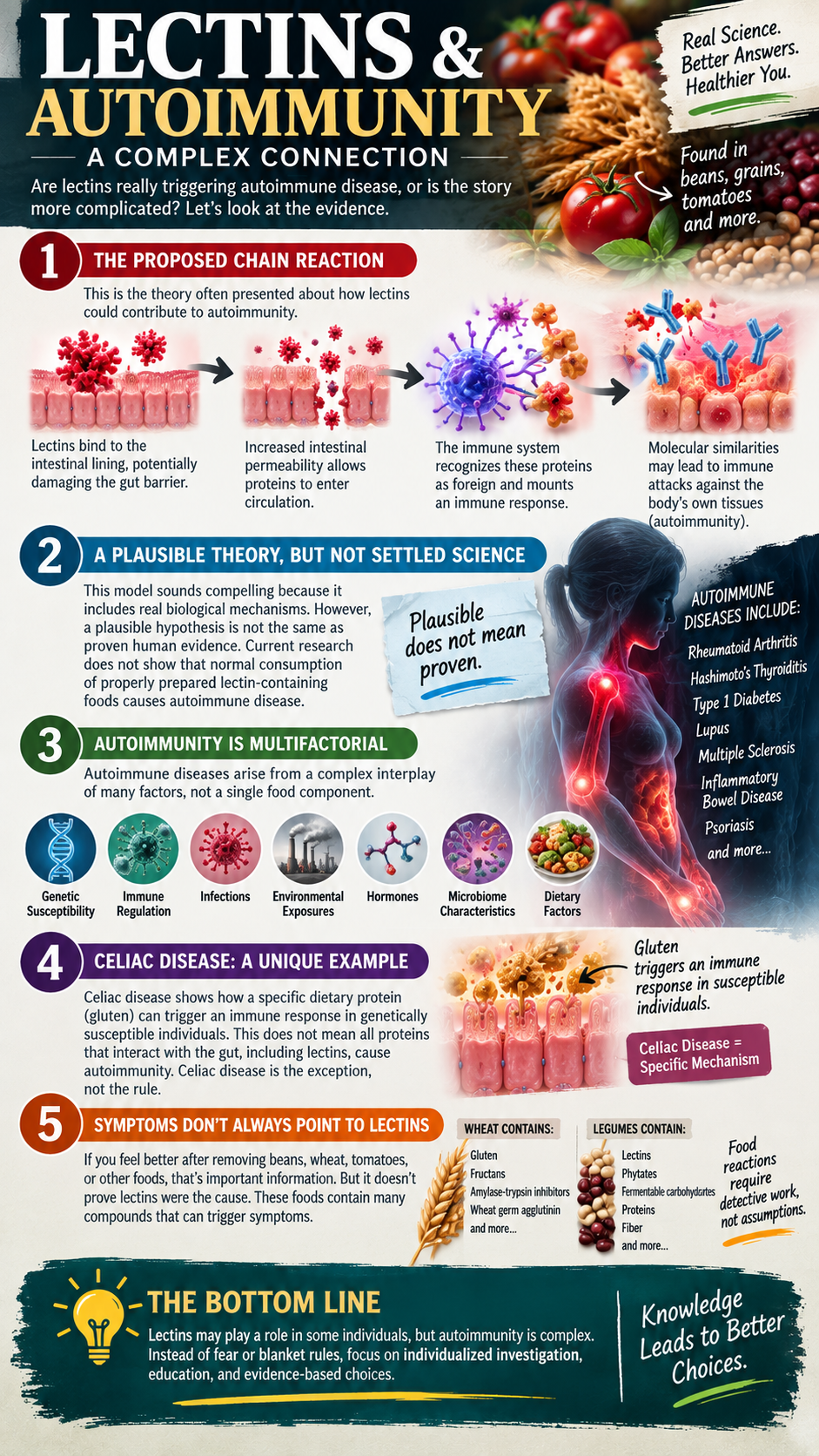
Autoimmune diseases develop through complicated interactions among genetic susceptibility, immune regulation, infections, environmental exposures, hormones, microbiome characteristics, and other factors. Celiac disease provides a powerful example because specific gluten peptides trigger an immune-mediated process in genetically susceptible individuals. However, celiac disease does not prove that every dietary protein capable of interacting with the intestine causes autoimmunity. Evidence directly demonstrating that normal consumption of properly prepared lectin-containing foods causes autoimmune disease remains insufficient.
This distinction should not discourage individualized investigation. Someone with chronic gastrointestinal symptoms may discover that certain foods consistently aggravate symptoms. Removing those foods temporarily may provide useful information. Yet symptom improvement after removing beans, wheat, tomatoes, or another food cannot identify lectins automatically. Wheat contains gluten, fructans, amylase-trypsin inhibitors, wheat germ agglutinin, and numerous other compounds. Legumes contain fermentable carbohydrates alongside lectins, phytates, proteins, and fiber. Food reactions require detective work rather than predetermined conclusions.
Lectins, Inflammation, and the Chronic Disease Question
Inflammation creates another area where lectin claims often outrun available evidence. Certain lectins can trigger inflammatory responses experimentally, particularly at concentrations exceeding typical dietary exposures. Those findings deserve consideration because they reveal possible biological pathways. However, a pathway demonstrated in cultured cells or animals cannot establish chronic disease causation in humans. Human digestion changes compounds before tissues encounter them, while cooking can substantially reduce many active lectins.
Population research creates another complication. Diets containing properly prepared legumes and whole grains repeatedly associate with favorable cardiometabolic outcomes. These foods supply fiber, resistant starch, minerals, plant protein, and numerous phytochemicals. That does not prove their lectins provide health benefits. It does make the claim that all lectin-containing foods inevitably cause systemic inflammation difficult to defend.
At the same time, population averages should not silence individual experience. A food associated with favorable outcomes across thousands of people can still create symptoms in one person. Personalized nutrition becomes valuable precisely because averages cannot describe every digestive system. The goal should remain identifying genuine individual triggers without creating unnecessary dietary restrictions.
Your Symptoms May Be Real While the Explanation Is Wrong
One of the greatest mistakes in functional nutrition occurs when a genuine improvement becomes proof of a favorite mechanism. Imagine someone removes beans, wheat, tomatoes, peppers, and peanuts. Within three weeks, bloating improves dramatically. That improvement matters, but it does not prove lectins caused the original symptoms.
Several variables changed simultaneously. Removing wheat may substantially lower fructan intake. Eliminating legumes reduces fermentable galacto-oligosaccharides. Avoiding processed wheat products may remove refined carbohydrates and numerous additives. Total food intake might decline, meal quality could improve, and fermentation patterns may change. Any combination could explain the improvement.
A structured reintroduction provides better information. Returning foods individually allows patterns to emerge. If tomatoes return without symptoms, keeping them eliminated makes little sense. When properly prepared lentils repeatedly create problems, temporary avoidance may remain reasonable while digestive factors receive further attention. This approach turns elimination diets into experiments instead of lifelong belief systems.
How to Reduce Problematic Lectin Exposure at Home
The first practical strategy begins in the kitchen rather than the supplement cabinet. Never eat raw or inadequately cooked kidney beans. Dry beans should receive appropriate soaking and thorough cooking according to established food-safety instructions. Pressure cooking offers another effective preparation method for many legumes. Canned beans have already undergone extensive heat processing, which substantially reduces active lectins.
Traditional preparation can also improve tolerance beyond lectin reduction. Soaking legumes before cooking can modify their chemical composition. Sprouting changes seed metabolism, while fermentation allows microorganisms to transform components before digestion begins. None of these techniques magically makes every food appropriate for every person. They simply alter the exposure and may improve digestibility.
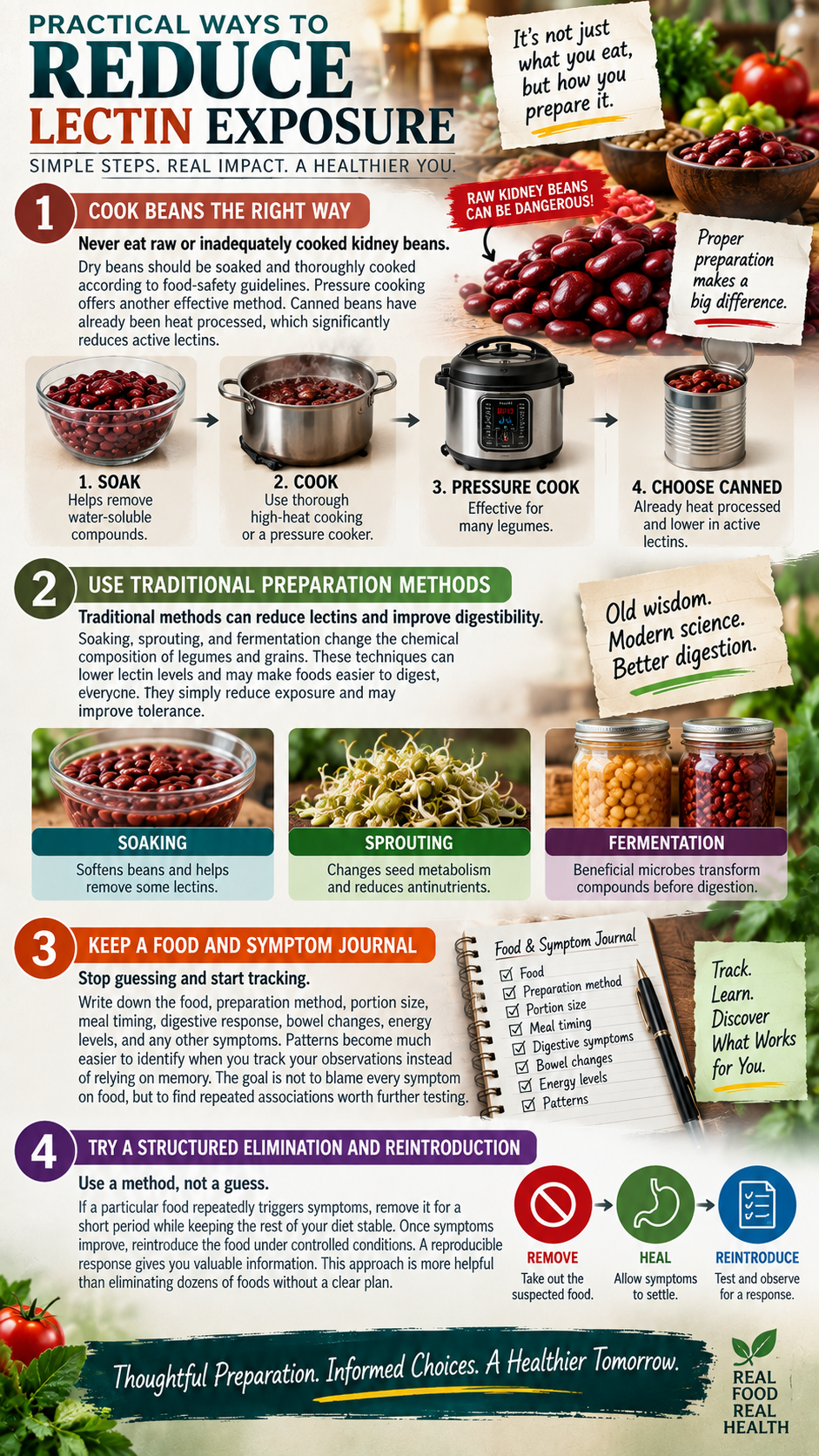
Next, stop guessing about reactions. Keep a detailed food-and-symptom journal for several weeks. Record the food, preparation method, portion, meal timing, digestive response, bowel changes, energy, and other reproducible symptoms. Patterns become far easier to identify when observations exist on paper instead of memory. The objective is not to blame every symptom on food. It is to identify repeated associations worthy of further testing.
When a particular food repeatedly creates symptoms, consider a short, structured elimination followed by deliberate reintroduction. Remove the suspected food while keeping the remainder of the diet reasonably stable. Once symptoms settle, reintroduce that food under controlled conditions. A reproducible response provides more useful information than broad elimination involving dozens of foods.
Fix the Terrain Instead of Fearing the Food
Long-term health requires more than continually shrinking the diet. If someone reacts to an expanding list of foods, the deeper question becomes increasingly important. Digestive dysfunction, celiac disease, inflammatory bowel disease, food allergy, infection, altered motility, pancreatic insufficiency, and other gastrointestinal disorders can produce food-related symptoms. Persistent reactions deserve investigation rather than another permanent elimination list.
Support the fundamentals that make digestion possible. Eat slowly enough to chew thoroughly. Prioritize minimally processed foods that provide adequate protein and micronutrients. Avoid relying heavily on one food repeatedly simply because it carries a healthy reputation. Use proper preparation methods for legumes and other foods traditionally soaked, fermented, sprouted, or thoroughly cooked. Maintain dietary diversity when tolerance allows because unnecessary restriction can make adequate nutrition increasingly difficult.
Most importantly, stop confusing symptoms with mechanisms. Your body can tell you that a food does not agree with you, but symptoms alone cannot identify the molecule responsible. Respect the observation while continuing the investigation.
Lectins Revisited: Context Changes Everything
Lectins deserve neither a halo nor a horror story. They are biologically active compounds that plants produce for several purposes, including defense. Some become clearly toxic at sufficient concentrations, as raw kidney beans demonstrate. Others occur in foods humans commonly tolerate after proper preparation. Their effects depend on molecular structure, dose, cooking, digestion, intestinal health, and individual susceptibility.
The smartest response therefore sits between dismissal and fear. Prepare lectin-rich foods correctly, observe your body’s response, investigate persistent symptoms, and avoid unnecessary dietary restriction. When a food repeatedly creates problems, take that signal seriously without automatically assuming the mechanism.
Nutrition becomes far more powerful when we stop asking whether a food is universally good or bad. A better question examines whether that food, in that form, at that dose, supports that individual.
Lectins remind us of something larger about health. The body does not respond to nutritional headlines. It responds to chemistry, preparation, physiology, dose, and context. Understanding those variables allows us to replace fear with investigation and dietary dogma with something far more useful: informed choices about the foods we place on our plates.