
The Diagnosis That Changes Everything
The room often grows quiet when the diagnosis arrives. A physician reviews laboratory results, studies a computer screen, and delivers words that instantly alter a patient’s perception of the future. The phrase “Type 2 Diabetes” carries enormous emotional weight because most people associate it with medications, insulin injections, amputations, blindness, kidney disease, and a lifetime of medical management. Fear begins filling the space where hope once lived. Questions race through the mind. Many patients immediately wonder whether life will ever feel normal again.
The conversation that follows usually shapes how patients view their condition for years. Most hear that diabetes is chronic. Many hear that it is progressive. Others are told that it can be controlled but never truly reversed. Although these statements contain elements of truth, they often leave patients with a damaging conclusion. The diagnosis becomes a life sentence rather than a warning signal. The focus shifts toward managing symptoms instead of understanding why the disease developed in the first place.
Meanwhile, an entirely different story continues unfolding outside examination rooms. Thousands of individuals who once carried a diagnosis of Type 2 Diabetes have achieved normal blood sugar levels. Many have reduced medications. Others have eliminated them entirely under medical supervision. Scientific literature increasingly documents cases of diabetes remission. These outcomes challenge the traditional narrative and force us to ask an important question. If Type 2 Diabetes cannot be reversed, why are so many people reversing it?
The answer begins by recognizing a fundamental misunderstanding. Type 2 Diabetes is not primarily a blood sugar disease. Elevated glucose represents the final symptom of a much deeper metabolic problem. Blood sugar functions like smoke rising from a fire. Focusing only on glucose is like trying to eliminate smoke while ignoring the flames. True healing requires identifying the source of the fire and removing the conditions that keep it burning.
The Great Diabetes Myth
For decades, healthcare discussions have centered on glucose numbers. Patients learn about fasting blood sugar, hemoglobin A1c, and medication strategies designed to lower glucose. These tools serve important purposes, yet they often distract attention from the underlying dysfunction. Blood sugar becomes the villain while the real culprit remains hidden.
Imagine placing a bucket beneath a leaking roof. The bucket catches water and prevents damage to the floor. That solution helps temporarily, but it does not repair the roof. Blood sugar medications often work in a similar manner. They can lower glucose levels and reduce certain risks, but they do not always address the biological processes that created insulin resistance.
The true story begins years before blood sugar rises. Most patients develop metabolic dysfunction long before laboratory values become abnormal. During this hidden phase, insulin levels increase steadily. The body struggles to manage fuel efficiently. Fat begins accumulating in places it should not exist. Inflammation spreads quietly. Energy production declines. Cravings intensify. Yet routine blood tests may still appear normal.
This silent progression explains why many individuals feel unwell despite receiving reassuring laboratory results. They experience fatigue, brain fog, weight gain, and hunger long before receiving a diagnosis. The body sends warning signs, but those signals often go unnoticed because blood sugar has not yet crossed an official threshold.
Understanding this process changes everything. Once we recognize that diabetes begins years before diagnosis, the possibility of reversal becomes easier to understand. If a disease develops gradually through metabolic dysfunction, improving that dysfunction can produce remarkable changes.
What Insulin Actually Does
Most people know insulin influences blood sugar, but few understand its broader role. Insulin functions as one of the most powerful hormones in human physiology. Every meal triggers its release. Every bite of food influences its activity. Every cell depends upon its signaling.
When functioning properly, insulin acts like a key. It unlocks cellular doors and allows glucose to enter cells where it can be converted into energy. This process supports movement, thinking, healing, and survival. Without insulin, blood sugar rises because glucose remains trapped outside cells.
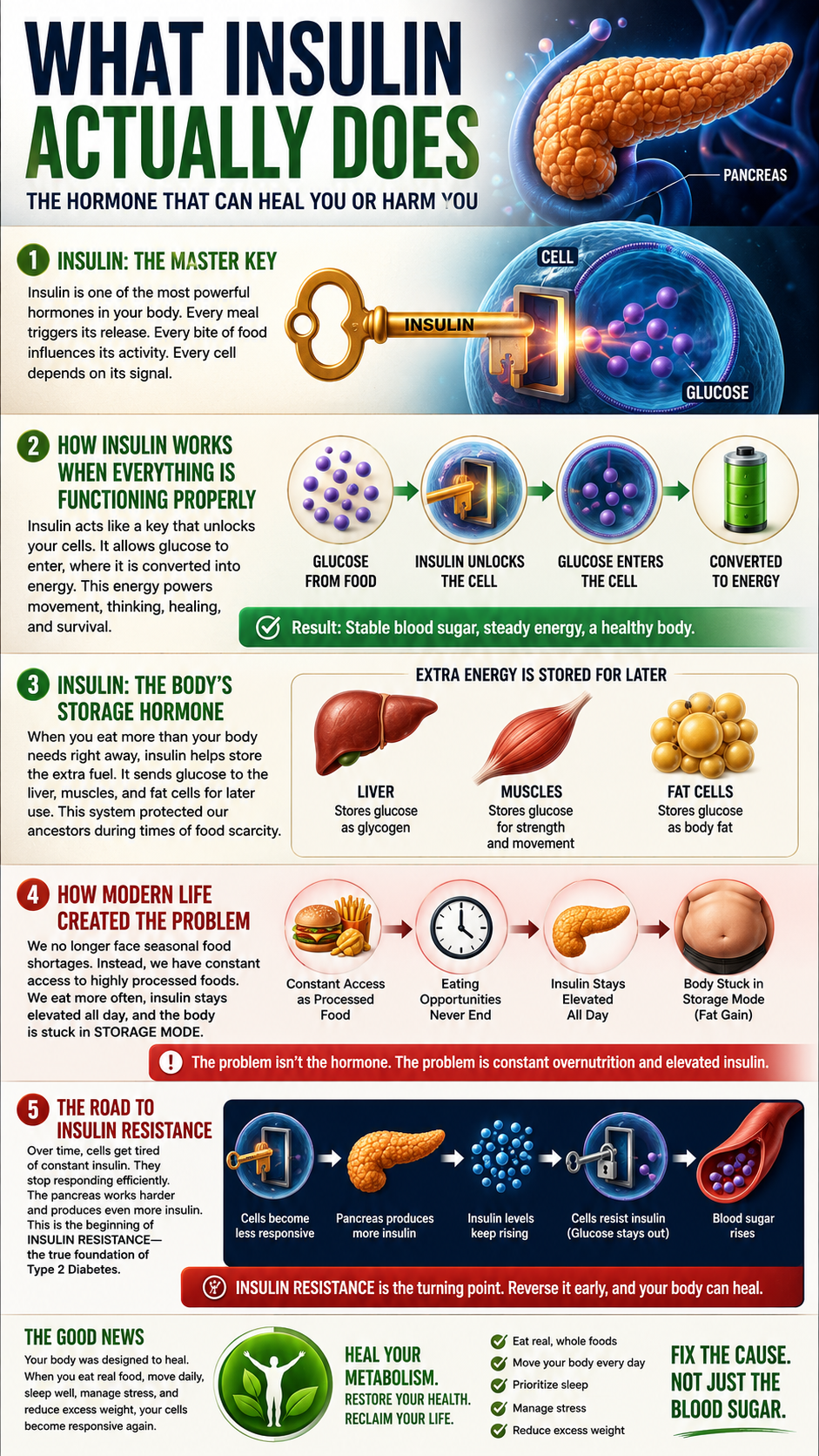
Insulin also serves as a storage hormone. When energy intake exceeds immediate needs, insulin encourages the body to store fuel for future use. This system protected our ancestors during periods of food scarcity. Excess energy could be saved and used later when food became unavailable.
Modern life transformed that survival mechanism into a problem. Most people no longer face seasonal food shortages. Instead, they encounter constant access to highly processed foods. Insulin remains elevated throughout the day because eating opportunities never end. The body receives continuous signals to store energy while rarely receiving signals to burn stored fuel.
Over time, cells begin resisting insulin’s message. They stop responding efficiently. The pancreas compensates by producing even more insulin. This stage marks the beginning of insulin resistance, the true foundation of Type 2 Diabetes.
Where Insulin Resistance Comes From
Insulin resistance rarely develops from a single cause. Multiple factors interact over many years. Poor dietary choices often contribute significantly, but they represent only one piece of a much larger puzzle. The modern environment creates conditions that practically invite metabolic dysfunction.
Refined carbohydrates play a major role because they digest rapidly and flood the bloodstream with glucose. Bread, pasta, cereal, pastries, crackers, chips, and sugary beverages require substantial insulin responses. Repeated exposure keeps insulin elevated and encourages resistance. The body becomes less responsive because it receives the same hormonal signal continuously.
Physical inactivity adds another layer of dysfunction. Muscles act as major storage sites for glucose. Active muscle tissue absorbs and utilizes sugar efficiently. Sedentary lifestyles reduce this capacity dramatically. As movement decreases, blood sugar regulation becomes more difficult. Glucose remains in circulation longer, forcing the pancreas to produce additional insulin.
Sleep deprivation further worsens the situation. Even one night of inadequate sleep can reduce insulin sensitivity. Chronic sleep problems disrupt hormones that regulate hunger, metabolism, and stress. Individuals become more likely to overeat while simultaneously becoming less capable of processing glucose effectively.
Chronic stress creates another significant challenge. Elevated cortisol increases blood sugar because the body interprets stress as a survival threat. Financial pressures, work demands, relationship difficulties, and constant digital stimulation keep stress hormones elevated for long periods. This environment promotes insulin resistance and weight gain.
Environmental toxins may also contribute. Modern humans encounter thousands of chemicals through food, water, air, and consumer products. Some of these compounds interfere with hormones and metabolic signaling. Researchers continue exploring how toxic exposure influences obesity, insulin resistance, and diabetes risk.
How the Food Industry Helped Create a Metabolic Crisis
A century ago, obesity and Type 2 Diabetes were relatively uncommon. Today they affect hundreds of millions of people worldwide. Human genetics did not change dramatically during that period. The environment changed dramatically.
Food manufacturers discovered that highly processed products generate enormous profits. Sugar, refined flour, artificial flavorings, and industrial oils became staples of the modern food supply. Products were engineered for convenience, shelf stability, and addictive appeal. Nutritional quality often became a secondary concern.
Breakfast transformed from eggs, meats, and natural foods into boxes of sweetened cereal. Beverages shifted from water and occasional treats to daily consumption of sugary drinks. Snack foods became a separate category of eating. Portions expanded. Meal frequency increased. Marketing campaigns convinced consumers that constant eating supported health.
The result was predictable. Insulin levels rose. Obesity rates climbed. Fatty liver disease became common. Metabolic dysfunction spread throughout entire populations. Type 2 Diabetes followed closely behind.
This historical perspective matters because it highlights an important truth. The diabetes epidemic did not appear because human biology suddenly malfunctioned. It emerged because the environment changed faster than human physiology could adapt.
The Hidden Role of Fatty Liver Disease
One of the most overlooked contributors to Type 2 Diabetes lives inside the liver. This remarkable organ performs hundreds of essential functions. It processes nutrients, regulates blood sugar, detoxifies chemicals, and manages energy storage. Healthy metabolic function depends heavily upon proper liver performance.
Excess sugar and refined carbohydrates place enormous stress on the liver. When glucose intake exceeds immediate energy needs, the liver converts surplus fuel into fat. Over time, fat accumulates within liver tissue. This condition, known as fatty liver disease, now affects millions of adults and children.
A fatty liver behaves differently than a healthy liver. It becomes less responsive to insulin. Instead of reducing glucose production appropriately, it may continue releasing sugar into the bloodstream. This behavior contributes directly to elevated fasting blood sugar levels.
Many individuals develop fatty liver years before receiving a diabetes diagnosis. Elevated liver enzymes often appear on blood tests long before blood sugar becomes abnormal. Unfortunately, these warning signs frequently receive little attention. The liver continues accumulating fat while metabolic dysfunction progresses.
Improving liver health often becomes a crucial component of diabetes reversal. As liver fat decreases, insulin sensitivity improves. Blood sugar regulation strengthens. Energy production becomes more efficient. The body’s metabolic control center begins functioning properly again.
What Diabetes Does to the Body
Type 2 Diabetes affects far more than blood sugar measurements. Elevated glucose and chronic insulin resistance influence nearly every organ system. The damage often develops slowly, making it easy to underestimate the seriousness of the condition.
Blood vessels experience continuous stress because excess glucose damages delicate tissues lining the circulatory system. Arteries become less flexible. Inflammation increases. Plaque formation accelerates. Heart attacks and strokes become more likely. Cardiovascular disease remains the leading cause of death among people with diabetes.
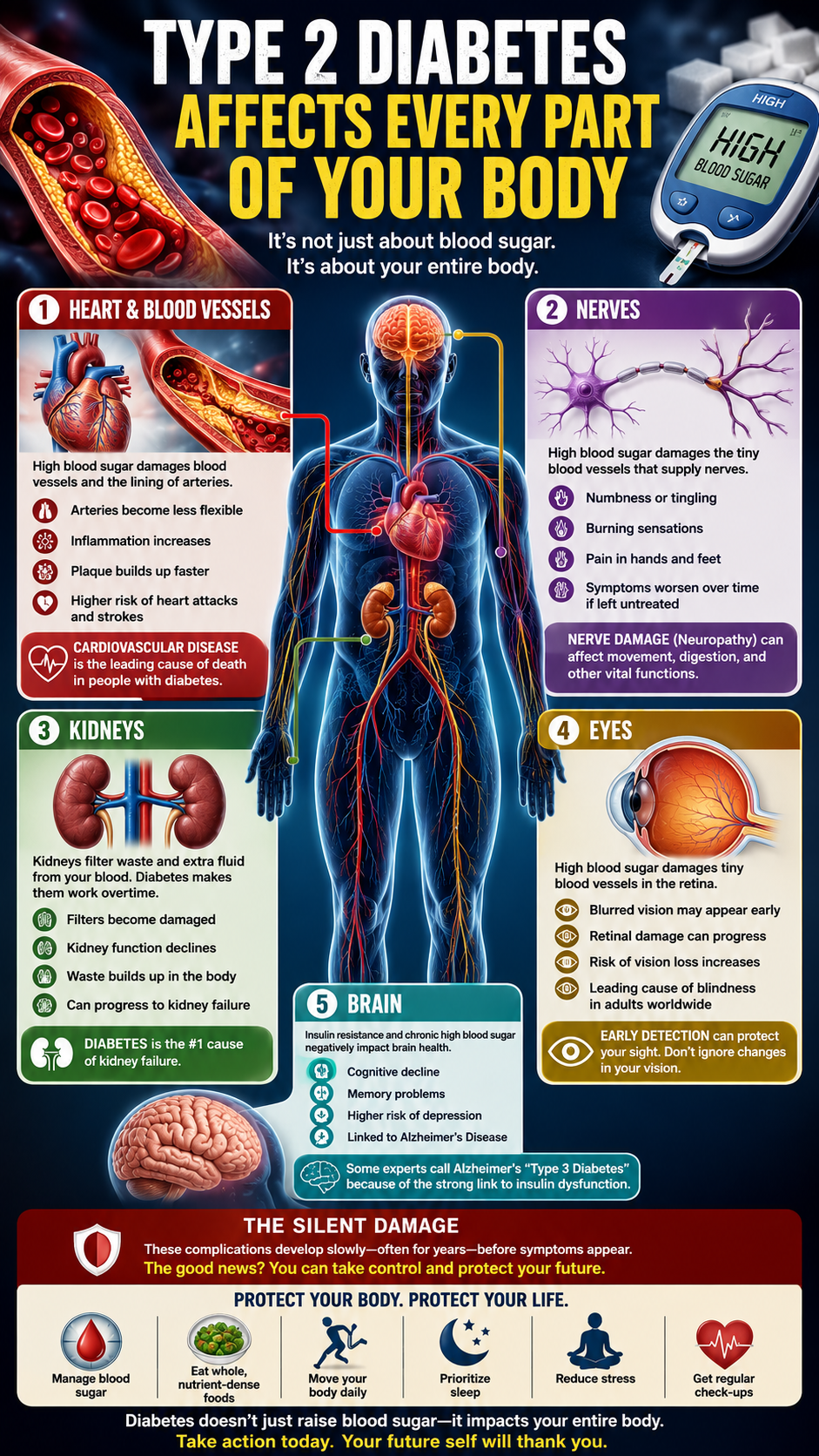
Nerve tissue also suffers. High blood sugar damages small blood vessels that supply nerves with oxygen and nutrients. Patients may develop numbness, tingling, burning sensations, or pain in the hands and feet. These symptoms often worsen over time when underlying metabolic dysfunction remains unresolved.
The kidneys work relentlessly to filter blood and remove waste products. Elevated glucose forces them to work harder. Over time, microscopic filtering structures become damaged. Kidney function declines gradually. Severe cases may progress toward kidney failure.
Vision problems frequently develop because diabetes damages tiny blood vessels within the retina. Blurred vision may appear early. More advanced damage can threaten eyesight permanently. Diabetes remains one of the leading causes of blindness worldwide.
Brain health also suffers. Research increasingly links insulin resistance with cognitive decline, memory problems, and neurodegenerative disease. Some experts even refer to Alzheimer’s disease as “Type 3 Diabetes” because of the strong relationship between insulin dysfunction and brain degeneration.
Why Conventional Treatment Often Misses the Root Cause
Modern medicine excels at emergency care. It performs miracles during trauma, infection, and acute illness. Chronic disease presents a different challenge because it often requires lifestyle changes rather than pharmaceutical solutions.
Most diabetes treatment plans focus primarily on lowering blood sugar. Medications can accomplish this goal effectively. Many reduce symptoms and decrease certain risks. Yet lowering glucose does not automatically eliminate insulin resistance.
Consider a patient with severe insulin resistance. Blood sugar rises because cells no longer respond efficiently to insulin. A medication lowers glucose successfully. Laboratory numbers improve. Meanwhile, the factors causing insulin resistance may remain unchanged. Poor nutrition, inactivity, chronic stress, fatty liver disease, and inflammation continue operating beneath the surface.
This approach resembles turning down a smoke detector without extinguishing the fire. The alarm becomes quieter, but the underlying problem remains. True reversal requires addressing the biological causes rather than focusing exclusively on symptoms.
Why Some Patients Achieve Remission
The body possesses a remarkable ability to adapt and heal. When the conditions driving insulin resistance are removed, metabolic function often improves dramatically. This reality explains why diabetes remission occurs.
Weight loss frequently plays an important role because it reduces visceral fat and improves insulin sensitivity. However, weight loss itself may not be the primary mechanism. The real benefit comes from reducing the metabolic burden associated with excess fat accumulation.
Improved nutrition lowers glucose exposure and decreases insulin demand. Physical activity enhances glucose utilization. Better sleep restores hormonal balance. Stress reduction lowers cortisol levels. Liver health improves. Inflammation decreases. Cells become more responsive to insulin.
As these changes accumulate, blood sugar regulation improves naturally. Medications may become unnecessary because the underlying dysfunction begins resolving. This process does not happen overnight. Yet it demonstrates why remission is possible. The body responds to the environment it experiences.
The Home-Based Diabetes Reversal Blueprint
Successful reversal begins with food because nutrition influences insulin more than any other daily decision. Eliminating sugary beverages provides one of the most powerful starting points. Liquid sugar enters the bloodstream rapidly and creates substantial metabolic stress. Replacing these drinks with water immediately reduces glucose exposure.
Refined carbohydrates deserve careful attention. Bread, pasta, pastries, cereal, crackers, chips, and many processed foods break down into glucose quickly. Reducing these foods lowers insulin demand and supports better blood sugar control. Whole foods provide a stronger foundation because they deliver nutrients without excessive glucose loads.
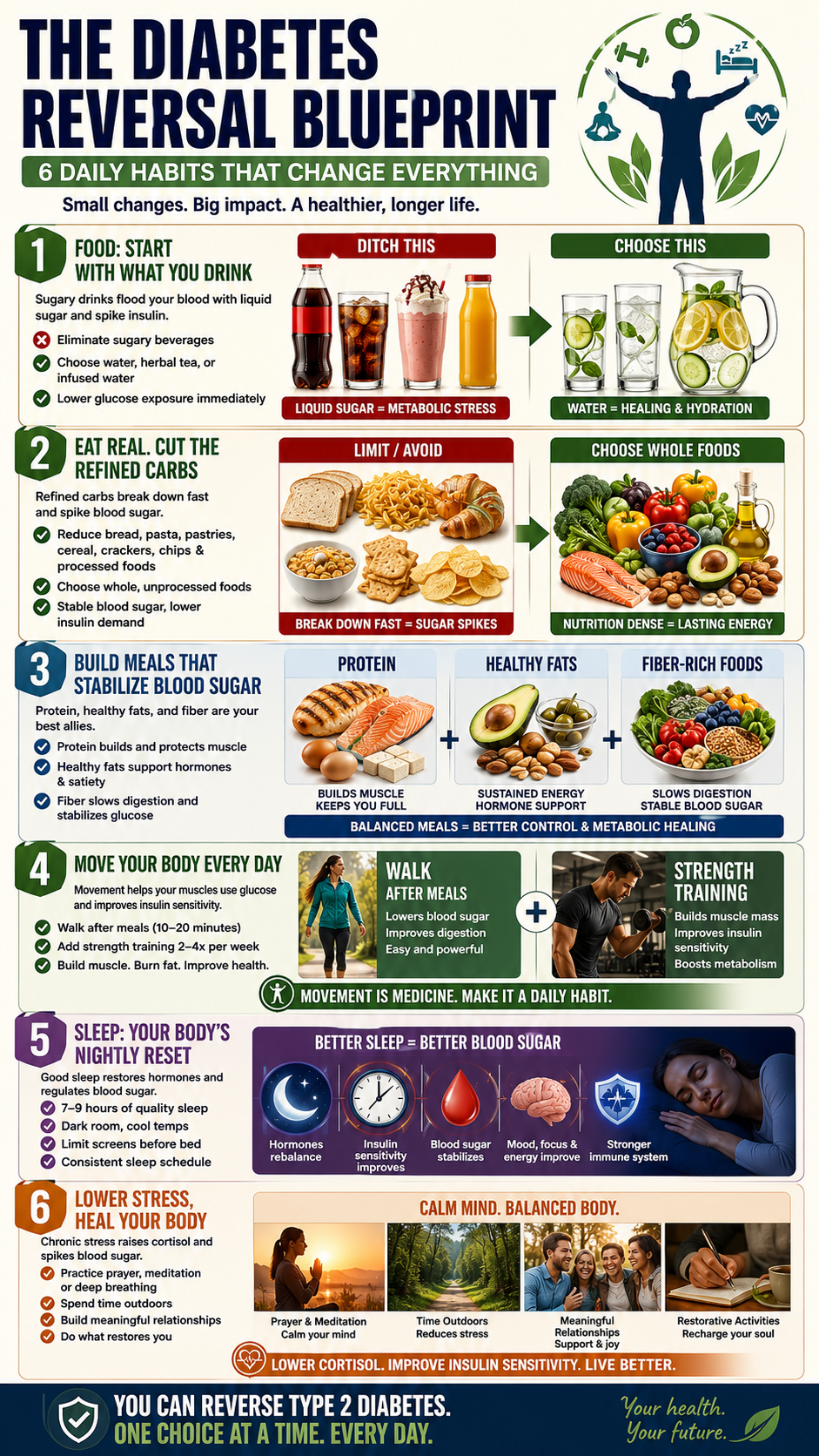
Protein should become a centerpiece of meals. Adequate protein supports muscle maintenance, promotes satiety, and stabilizes blood sugar. Healthy fats also play an important role because they provide energy without causing significant glucose spikes. Together, these nutrients help create a metabolic environment conducive to healing.
Movement should occur daily. Walking after meals helps muscles absorb glucose efficiently. Resistance training builds muscle mass and improves insulin sensitivity. Physical activity acts like medicine because it directly addresses one of the primary causes of metabolic dysfunction.
Sleep deserves equal attention. Consistent sleep schedules support hormone regulation and glucose control. A dark room, reduced evening screen exposure, and stress management practices can improve sleep quality significantly. Better sleep often produces measurable improvements in blood sugar within days.
Stress reduction remains essential. Prayer, meditation, breathing exercises, time outdoors, meaningful relationships, and restorative activities help lower cortisol levels. A calmer nervous system supports healthier metabolism because the body no longer operates in a constant state of perceived danger.
The Future of Diabetes Care
The future of diabetes treatment should focus on metabolic health rather than glucose management alone. Blood sugar remains important, but it should not dominate the conversation. Insulin resistance deserves equal attention because it represents the true foundation of the disease.
Healthcare must evolve toward prevention and root-cause correction. Patients need education about nutrition, movement, sleep, stress, and environmental influences. Clinicians need more time and resources to address lifestyle factors. Public health initiatives should encourage metabolic resilience rather than simply treating disease after it develops.
Emerging research continues supporting this shift. Scientists increasingly recognize the interconnected nature of obesity, fatty liver disease, inflammation, insulin resistance, and diabetes. These conditions rarely exist in isolation. Addressing one often improves the others.
The Body Was Designed to Heal
Type 2 Diabetes does not appear overnight. It develops through years of metabolic dysfunction, hormonal imbalance, inflammation, and environmental stress. Understanding that reality changes how we view the disease. The diagnosis becomes less of a permanent sentence and more of a warning signal.
The body constantly adapts to its environment. Poor nutrition, inactivity, sleep deprivation, and chronic stress push metabolism in one direction. Nutrient-dense foods, movement, restorative sleep, and healthy stress management push it in another. Every day presents opportunities to influence that trajectory.
Not every patient will achieve complete remission. Individual circumstances vary. Genetics matter. Disease duration matters. Existing damage matters. Yet many people can improve dramatically when they address the factors driving insulin resistance. Better blood sugar, reduced medication dependence, increased energy, improved weight control, and enhanced quality of life remain realistic goals.
Doctors are not wrong when they describe diabetes as serious. It is serious. The mistake occurs when people assume serious means irreversible. Human physiology tells a different story. The same body that developed insulin resistance often possesses an extraordinary capacity for recovery.
Type 2 Diabetes reversal is not a miracle. It is not wishful thinking. It is not a rare exception reserved for a fortunate few. In many cases, it represents the predictable result of removing the causes of metabolic dysfunction and restoring the conditions required for health. The body was designed to heal, and when given the opportunity, it often does exactly that.