
The Invisible Environment We Now Live In
We are living in an era defined not only by technological innovation, but by an environmental shift that has occurred so quietly that most people have never stopped to question it. Unlike polluted air or contaminated water, electromagnetic radiation (EMF) cannot be perceived through the senses, yet it surrounds us continuously. It pulses through the walls of our homes, travels through the devices we rely on, and exists as an ever-present background field shaping the biological environment in which we live.
This transformation has happened rapidly. Within just a few decades, humanity has moved from minimal exposure to artificial electromagnetic fields to near-total immersion. Wireless communication, smart technologies, and interconnected systems have become normalized to such a degree that their biological implications are rarely discussed outside of niche scientific or clinical circles. The rollout of 5G has only accelerated this trend, embedding higher-frequency signals into everyday life at an unprecedented density.
Mainstream authorities, including the World Health Organization, continue to reassure the public that EMFs are safe within regulated limits. However, these safety thresholds are based largely on whether radiation produces heat within tissues. This perspective, while technically accurate within its own framework, overlooks the more subtle and complex interactions that occur within living systems. Biology is not governed solely by temperature; it is governed by electrical signaling, chemical gradients, and dynamic feedback mechanisms that can be disrupted without any measurable increase in heat.
The relevance of this issue is not theoretical. It is immediate and personal. As chronic fatigue, sleep disturbances, neurological complaints, and unexplained symptoms become increasingly common, it becomes necessary to consider all contributing factors. The electromagnetic environment, though invisible, is one of the most pervasive influences on modern physiology, and understanding its role may be essential to understanding the state of human health today.
Understanding EMFs and 5G: What Are We Actually Exposed To
Electromagnetic fields exist across a wide spectrum, ranging from extremely low-frequency fields generated by electrical wiring to high-frequency radiation used in wireless communication. Historically, human exposure to EMFs came primarily from natural sources such as sunlight and the Earth’s magnetic field. These exposures were rhythmic, predictable, and aligned with biological systems. Modern exposure, by contrast, is artificial, constant, and highly variable in frequency and intensity.
The introduction of 5G technology represents a significant evolution in this landscape. Unlike previous generations of wireless communication, which relied primarily on lower-frequency bands, 5G incorporates higher-frequency millimeter waves. These waves have shorter wavelengths and behave differently when interacting with biological tissues. While they do not penetrate deeply into the body, they interact intensely with the skin, eyes, and peripheral nerve endings, raising questions about their broader systemic effects.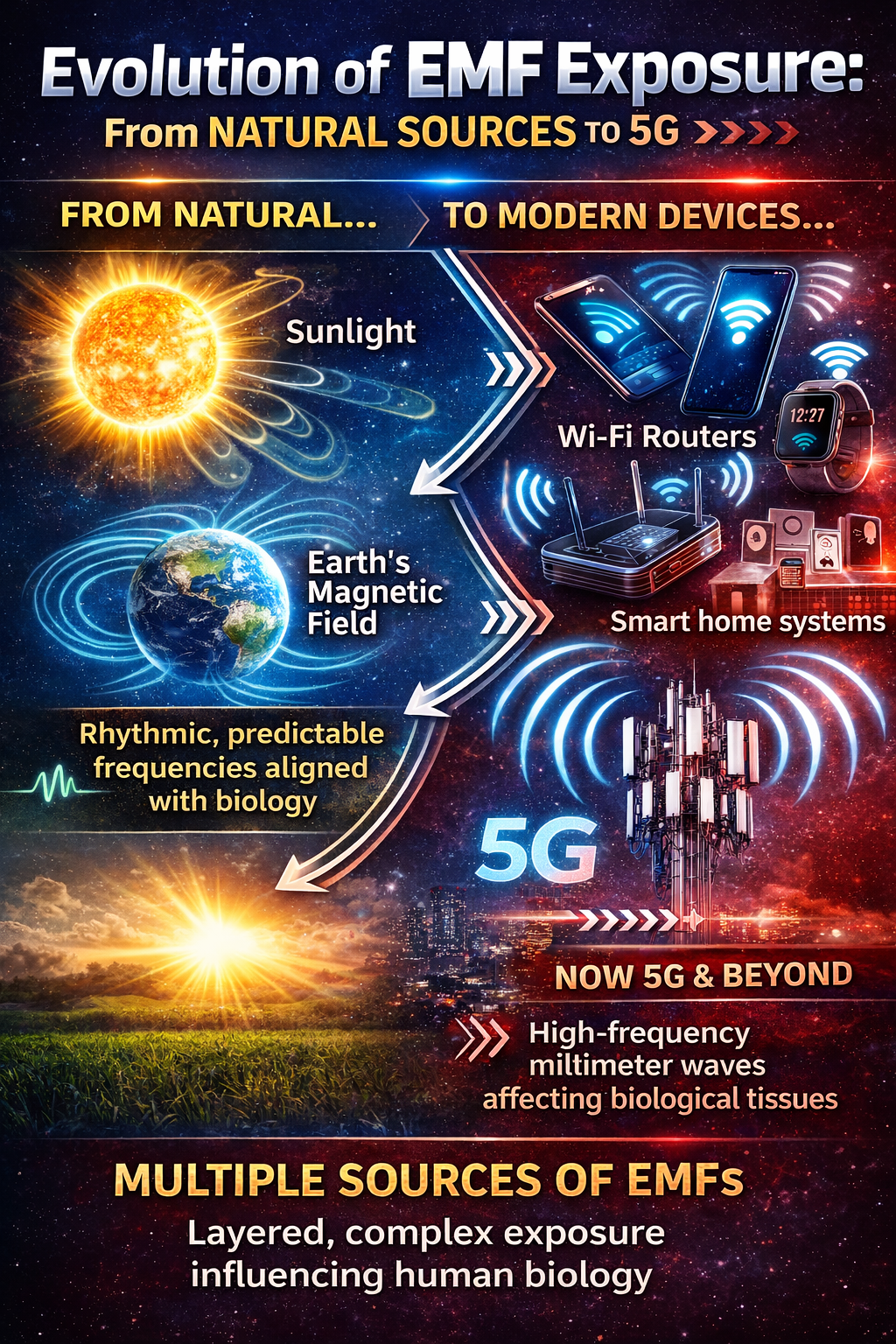
Another important aspect of 5G is the infrastructure required to support it. Because millimeter waves have a shorter range, 5G networks rely on a dense array of small cell antennas placed closer to residential and commercial areas. This results in a more constant and localized exposure compared to earlier technologies. The cumulative effect is not simply a change in frequency, but a fundamental increase in the overall electromagnetic load experienced by the body.
It is also important to recognize that EMF exposure does not occur in isolation. Individuals are exposed to multiple sources simultaneously, including smartphones, Wi-Fi routers, Bluetooth devices, and smart home systems. This layered exposure creates a complex electromagnetic environment that is difficult to measure and even more difficult to fully understand. The question is no longer whether we are exposed, but how this constant exposure interacts with human biology over time.
The Nervous System: Why It Is Uniquely Vulnerable
The human nervous system is one of the most complex and sensitive systems in the body, operating through finely tuned electrical and chemical signals. Every thought, movement, and physiological response depends on the precise transmission of these signals. This makes the nervous system particularly susceptible to external electromagnetic influences, as it relies on the same fundamental principles—electricity and frequency—that define EMFs.
At the cellular level, neurons communicate through voltage gradients across their membranes. These gradients are carefully regulated to ensure proper signaling. When external electromagnetic fields interact with these systems, they have the potential to alter the behavior of ion channels, particularly voltage-gated calcium channels. These channels play a critical role in regulating calcium entry into cells, which is essential for neurotransmitter release and cellular communication.
Excessive activation of these channels can lead to increased intracellular calcium levels, triggering a cascade of effects that include oxidative stress and mitochondrial dysfunction. The mitochondria, often referred to as the powerhouses of the cell, are responsible for energy production. When their function is compromised, the result is reduced cellular energy, which can manifest as fatigue, cognitive impairment, and decreased resilience to stress.
The nervous system is also highly dependent on stable circadian rhythms. Disruptions in melatonin production, which have been associated with EMF exposure, can impair sleep quality and reduce the body’s ability to repair itself. Over time, this creates a feedback loop in which poor sleep exacerbates neurological dysfunction, further increasing vulnerability to environmental stressors.
Mainstream Medicine’s Misconception: The Thermal Fallacy
The dominant framework used to evaluate EMF safety is based on thermal effects, meaning the extent to which radiation can heat biological tissue. If exposure does not produce measurable heating, it is generally considered safe. While this approach provides a clear and quantifiable standard, it fails to capture the full complexity of biological interactions.
Human physiology operates on electrical and chemical signaling that occurs at levels far below the threshold of heat. Subtle disruptions in these signaling pathways can lead to functional changes that are not immediately visible but can accumulate over time. This is a critical limitation of the thermal model, as it overlooks non-thermal effects that may have significant biological consequences.
This misconception reflects a broader pattern within conventional medicine, which often prioritizes structural damage over functional impairment. Conditions are typically recognized only when they produce measurable changes in tissue or laboratory values. However, dysfunction can exist long before it becomes detectable through standard diagnostic methods.
The history of medicine provides numerous examples of this pattern. Environmental toxins, nutritional deficiencies, and chronic inflammatory processes were once underestimated because their effects were not immediately apparent. Over time, as research advanced, their impact became undeniable. The current approach to EMFs may represent a similar gap between emerging evidence and established guidelines.
Functional Medicine Perspective: Susceptibility Over Universality
Functional medicine offers a different lens through which to view EMF exposure, focusing not on whether it is universally harmful, but on how it interacts with the individual. This approach recognizes that health is influenced by a combination of internal and external factors, and that susceptibility varies widely from person to person.
The concept of “terrain” is central to this perspective. The internal environment of the body—comprising nutrient status, inflammation levels, detoxification capacity, and cellular health—determines how it responds to external stressors. Individuals with robust systems may tolerate higher levels of exposure, while those with underlying imbalances may experience significant effects even at lower levels.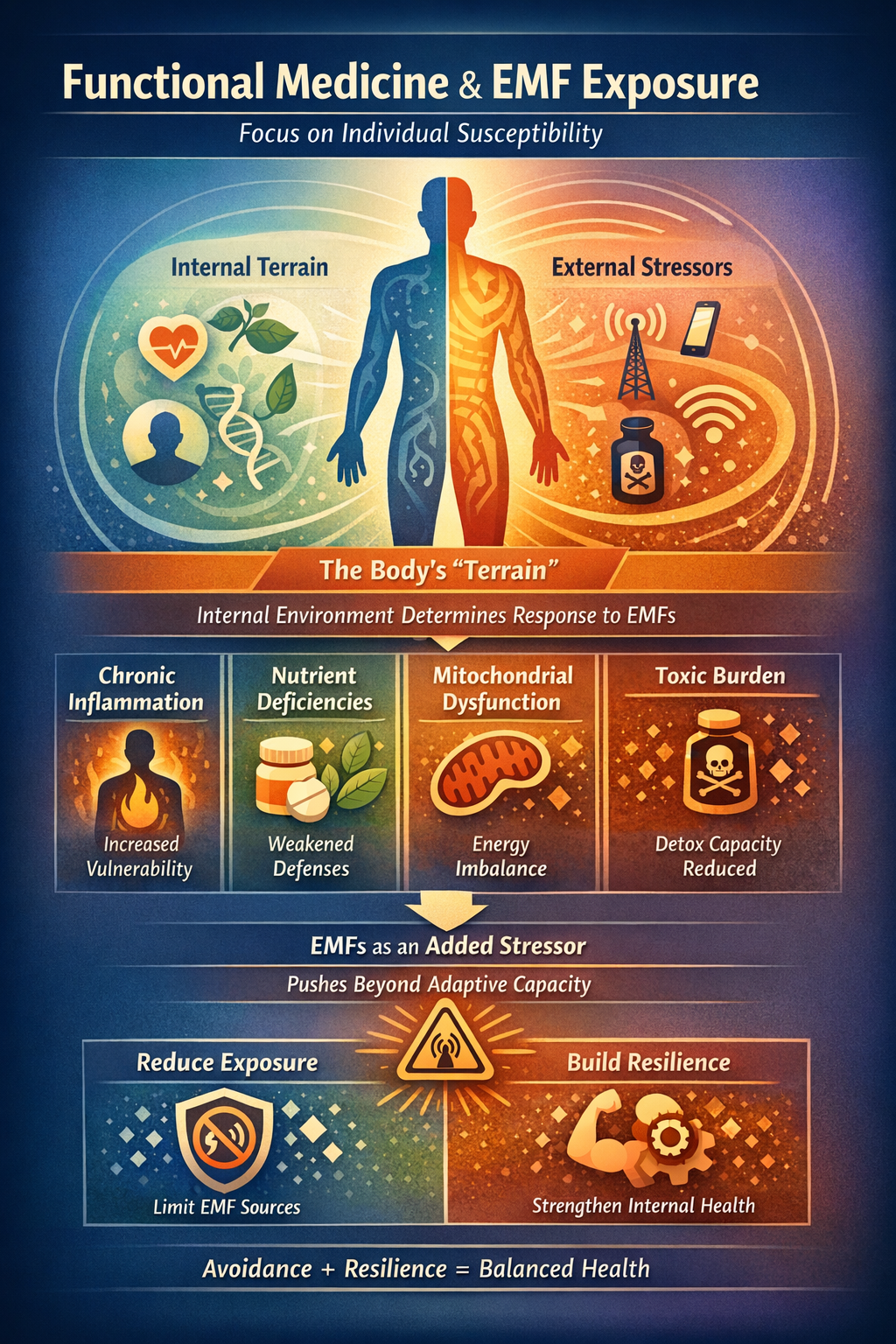
Factors such as chronic inflammation, nutrient deficiencies, mitochondrial dysfunction, and toxic burden can increase vulnerability to EMFs. When these factors are present, the body’s ability to maintain equilibrium is compromised. EMFs, in this context, act as an additional stressor that can push the system beyond its adaptive capacity.
This perspective shifts the focus from avoidance alone to resilience. While reducing exposure is important, strengthening the body’s internal defenses is equally critical. By addressing underlying imbalances, it becomes possible to improve the body’s ability to adapt to environmental challenges, including electromagnetic exposure.
Is This a Conspiracy or an Emerging Health Concern
The conversation surrounding EMFs is often polarized, with one side dismissing concerns as unfounded and the other attributing a wide range of health issues solely to electromagnetic exposure. This dichotomy oversimplifies a complex issue and hinders meaningful discussion.
Scientific understanding evolves over time, often lagging behind technological advancements. The rapid expansion of wireless technology has outpaced the ability to fully study its long-term effects, leaving gaps in knowledge that are still being explored. This does not imply harm, but it does warrant careful consideration.
History has demonstrated that environmental exposures once considered safe can later be reevaluated as new evidence emerges. While EMFs are not directly comparable to substances like lead or asbestos, the pattern of initial reassurance followed by gradual reassessment is familiar. This underscores the importance of maintaining an open and critical perspective.
A balanced approach acknowledges both the benefits of technology and the potential risks associated with its widespread use. It avoids alarmism while recognizing that uncertainty is not synonymous with safety. In this context, taking proactive steps to reduce exposure and support health becomes a rational and responsible choice.
Practical Protection Protocols: What Actually Works
Reducing EMF exposure does not require abandoning modern conveniences. Instead, it involves making intentional choices that minimize unnecessary exposure while maintaining functionality. These strategies are most effective when applied consistently and in combination.
Creating a low-EMF sleep environment is one of the most impactful steps. During sleep, the body undergoes critical processes of repair and regeneration. Minimizing exposure during this time allows the nervous system to recover more effectively. Turning off Wi-Fi at night, removing electronic devices from the bedroom, and using airplane mode can significantly improve sleep quality.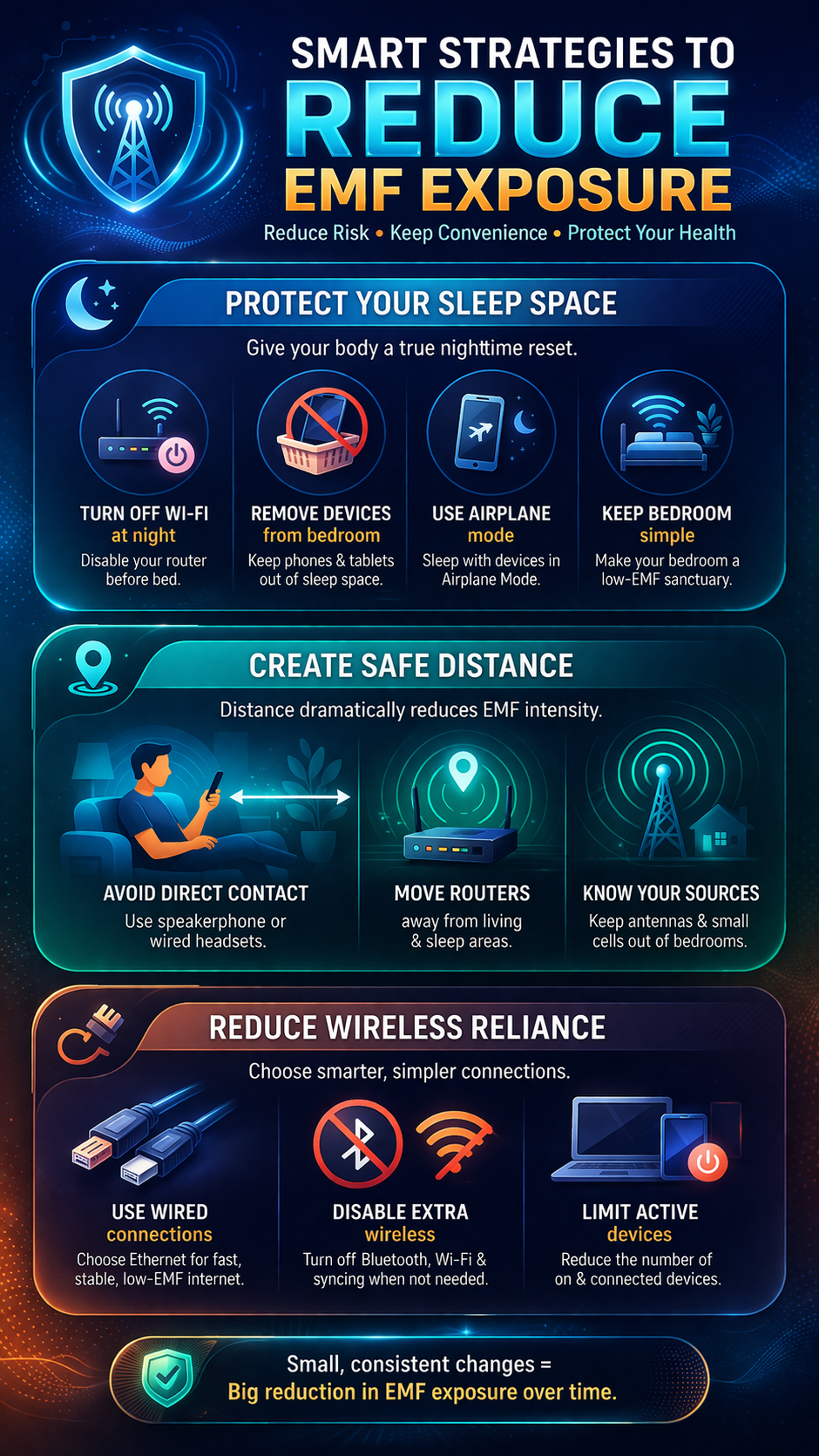
Distance is another powerful tool. The intensity of electromagnetic fields decreases rapidly with increased distance from the source. Simple changes, such as avoiding direct contact with devices and positioning routers away from living spaces, can reduce cumulative exposure without requiring major lifestyle adjustments.
Reducing reliance on wireless technology further enhances these efforts. Using wired connections where possible, disabling unnecessary Bluetooth functions, and limiting the number of active devices can create a more stable electromagnetic environment. These changes, while subtle, can have a meaningful impact over time.
Strengthening the Body’s Internal Defense Systems
Supporting the body’s internal resilience is essential for mitigating the effects of environmental stressors. Nutrition plays a central role in this process, providing the building blocks necessary for cellular function and repair.
Magnesium is particularly important for nervous system stability, as it regulates calcium channels and supports relaxation. Antioxidants such as vitamin C and compounds that enhance glutathione production help neutralize oxidative stress, protecting cells from damage. Nutrients that support mitochondrial function, including coenzyme Q10 and B vitamins, are critical for maintaining energy production.
Hydration is another key factor, as water serves as a medium for electrical signaling within the body. Ensuring adequate intake of mineral-rich fluids supports cellular communication and overall physiological balance.
In addition to nutrition, lifestyle factors such as regular physical activity, adequate sleep, and stress management contribute to resilience. These practices strengthen the body’s ability to adapt to environmental challenges, reducing the impact of EMF exposure.
Grounding, Detoxification, and Strategic Shielding
Grounding, or earthing, involves direct physical contact with the Earth’s surface, allowing the body to reconnect with natural electromagnetic frequencies. Walking barefoot on grass, sand, or soil provides a simple and accessible way to incorporate this practice into daily life. While research is ongoing, many individuals report improvements in sleep and overall well-being.
Detoxification is another important component, particularly in the context of oxidative stress. Supporting the body’s natural detox pathways through sweating, adequate fiber intake, and liver-supportive nutrition enhances its ability to eliminate toxins. This reduces the overall burden on the system, allowing it to function more efficiently.
Shielding technologies can also play a role when used appropriately. High-quality, tested products may help reduce exposure in specific areas, such as sleeping environments. However, shielding should be approached with caution, as improper use can sometimes reflect or concentrate electromagnetic fields.
The most effective strategy is a comprehensive approach that combines exposure reduction, biological support, and environmental awareness. By addressing both external and internal factors, it becomes possible to create a balanced and sustainable path toward health.
Conclusion: Awareness Without Fear, Action Without Delay
The question of whether 5G and EMF radiation pose a threat to the nervous system does not lend itself to simple answers. What is clear is that the human body is an intricate electrical system operating within an increasingly complex electromagnetic environment.
The absence of definitive proof of harm does not equate to proof of safety, nor does it justify fear. The most rational response lies in informed awareness and proactive action. By reducing unnecessary exposure, strengthening the body’s internal defenses, and creating environments that support recovery, individuals can navigate this modern landscape with confidence.
Health is not determined by a single factor, but by the cumulative effect of many. Electromagnetic exposure is one of those factors—subtle, often overlooked, yet increasingly relevant. Recognizing its role allows for a more comprehensive approach to health, one that integrates both the benefits of technology and the needs of human biology.