
A Question That Refuses to Disappear
Few topics in modern health provoke as much concern, confusion, and emotional weight as the question of whether vaccines are connected to autism. For many parents, this is not an abstract debate but a deeply personal search for answers. They are trying to understand why neurodevelopmental conditions have become more common, why children today seem more biologically sensitive, and what they can do to protect their families.
The persistence of this question is not simply the result of misinformation. It reflects a broader gap between lived experience and institutional messaging. On one side, mainstream medicine has largely settled the question in categorical terms, stating that vaccines do not cause autism. On the other side, parents continue to observe rising rates of neurological and developmental challenges, often without receiving satisfying explanations for why these changes are occurring.
The conversation, therefore, has become polarized in a way that limits understanding. It is often framed as a binary choice between complete acceptance or complete rejection of prevailing narratives. Yet biology rarely operates in absolutes. Complex conditions such as autism arise from layers of interaction between genetics, environment, immune function, and metabolic health. Reducing the discussion to a single cause oversimplifies a much broader reality.
A more productive approach begins by reframing the question itself. Instead of asking whether one factor alone is responsible, it becomes far more valuable to ask how modern exposures, lifestyle shifts, and biological vulnerabilities intersect. This shift in perspective opens the door to deeper understanding and, more importantly, to meaningful action.
The Scientific Landscape: What Large-Scale Evidence Shows
Over the past two decades, the relationship between vaccines and autism has been extensively studied across multiple populations and research designs. Large epidemiological studies involving hundreds of thousands of children have consistently failed to demonstrate a causal link between vaccines and autism. These findings have been affirmed by organizations such as the Centers for Disease Control and Prevention and the World Health Organization, both of which maintain that current evidence does not support vaccines as a cause of autism.
This consensus is based on repeated attempts to identify patterns that would indicate a direct relationship. Researchers have examined timing of vaccination, cumulative exposure, specific vaccine components, and population trends. Across these analyses, no consistent causal signal has emerged that would meet the standards required for scientific confirmation.
However, the absence of a proven causal link has not resolved the broader concerns of parents and clinicians. One reason for this is that large-scale studies are designed to detect population-level effects, not individual variability. They can determine whether a factor increases risk across a population, but they are less equipped to explain why certain individuals may respond differently to similar exposures.
This distinction is critical. It highlights the difference between population-level safety and individual-level sensitivity. While vaccines are not supported as a direct cause of autism, this does not eliminate the need to understand the underlying biological factors that contribute to neurodevelopmental challenges.
Rising Autism Rates: A Signal Worth Understanding
Autism spectrum disorder has increased dramatically in prevalence over recent decades. Current estimates suggest that approximately 1 in 36 children are diagnosed with ASD, a figure that represents a significant shift from previous generations. While improved awareness and diagnostic criteria account for part of this increase, they do not fully explain its magnitude.
The rise in autism parallels increases in other chronic conditions, including allergies, autoimmune diseases, metabolic disorders, and attention-related conditions. This pattern suggests a broader change in the biological environment in which children are developing. It points toward systemic influences rather than a single isolated cause.
Modern life introduces a wide array of variables that were either absent or significantly reduced in previous generations. These include increased exposure to environmental toxins, changes in diet and nutrient density, alterations in the gut microbiome, higher levels of chronic stress, and reduced time spent in natural environments. Each of these factors has the potential to influence immune function and neurological development.
Understanding autism within this broader context allows for a more comprehensive approach. It shifts the focus from identifying a single culprit to examining how multiple influences converge to shape developmental outcomes. This perspective does not dismiss scientific evidence; rather, it expands the scope of inquiry to include factors that may not be captured in traditional models.
Where Conventional Medicine Falls Short
Conventional medicine is highly effective in managing acute conditions and preventing infectious disease. However, it often struggles with complex, chronic conditions that arise from multifactorial causes. Autism falls into this category, as it involves interactions between neurological, immune, metabolic, and environmental systems.
The prevailing medical approach tends to emphasize diagnosis and symptom management. Behavioral therapies, educational interventions, and supportive care are essential components of treatment, but they do not address underlying biological contributors. Parents are often left with the impression that autism is purely genetic or unavoidable, which can limit exploration of modifiable factors.
Another limitation lies in the way risk is communicated. When institutions state that vaccines are safe, they are referring to population-level outcomes. However, this messaging can feel incomplete to families seeking individualized answers. It does not address why some children appear more sensitive, nor does it provide guidance on how to strengthen resilience.
This gap between reassurance and explanation creates space for confusion. It also highlights the need for a more integrative approach—one that acknowledges both the strengths of conventional medicine and its limitations when addressing complex, chronic conditions.
Functional Medicine Perspective: The Importance of Biological Terrain
Functional medicine introduces a different framework for understanding health and disease. Rather than focusing solely on external exposures, it emphasizes the internal environment of the body—often referred to as the “terrain.” This includes factors such as nutrient status, immune balance, detoxification capacity, and cellular function.
From this perspective, outcomes are not determined by single events but by the cumulative interaction between stressors and resilience. Two children may experience similar exposures, yet respond very differently based on their internal state. One may adapt without difficulty, while another may develop symptoms due to underlying vulnerabilities.
Key elements of this terrain include gut health, mitochondrial function, and immune regulation. The gut microbiome plays a central role in both digestion and immune signaling, while mitochondria are responsible for cellular energy production. When these systems are compromised, the body’s ability to adapt to stress is reduced.
This approach shifts the focus from avoidance to optimization. While minimizing harmful exposures remains important, equal attention is given to strengthening the body’s capacity to respond. By improving the internal environment, it becomes possible to enhance resilience across a wide range of conditions, including those affecting neurological development.
The Immune System–Brain Connection
One of the most significant insights in modern biology is the close relationship between the immune system and the brain. These systems communicate continuously through signaling molecules, influencing each other in ways that are still being explored.
During early development, the immune system plays a critical role in shaping neural pathways. It helps regulate processes such as synaptic pruning, which determines how connections in the brain are formed and refined. When immune signaling is disrupted, these processes can be altered, potentially affecting behavior and cognition.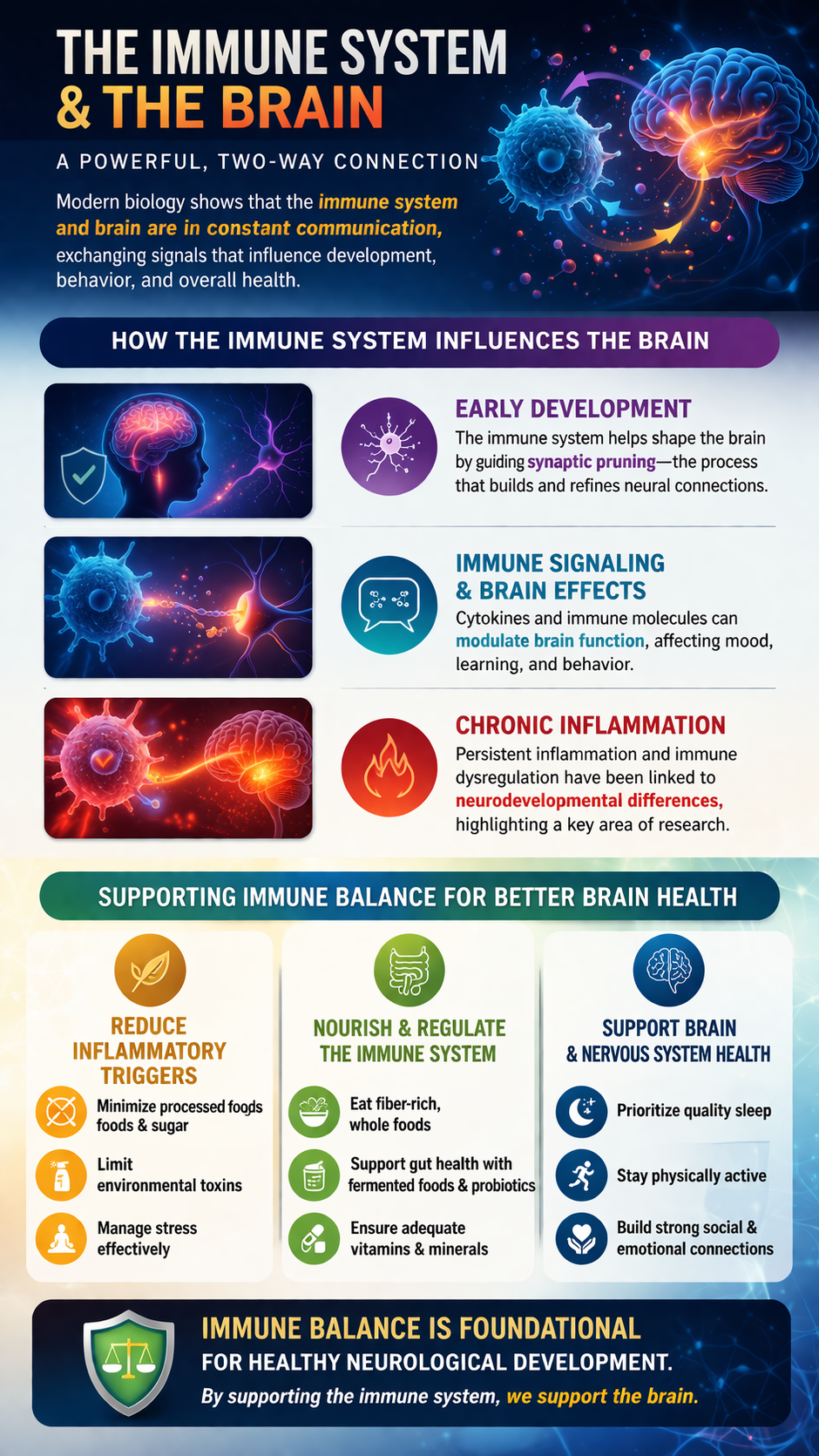
Chronic inflammation is a key factor in this relationship. Elevated inflammatory markers have been observed in some individuals with neurodevelopmental conditions, suggesting that immune dysregulation may contribute to neurological differences. This does not imply causation in a simplistic sense, but it highlights an important pathway for further investigation.
Supporting immune balance, therefore, becomes a central strategy in promoting neurological health. This involves not only reducing inflammatory triggers but also ensuring that the body has the resources it needs to regulate immune responses effectively.
Actionable Strategies: Building Resilience at Home
While many aspects of neurodevelopment are complex and still being studied, there are clear, practical steps that can support a child’s overall health. These strategies focus on strengthening foundational systems rather than targeting a single outcome.
Nutrition is one of the most powerful tools available. A diet rich in whole, unprocessed foods provides essential nutrients needed for brain development and immune function. Magnesium supports nervous system stability, omega-3 fatty acids contribute to neural connectivity, and B vitamins play a critical role in energy production and neurotransmitter synthesis.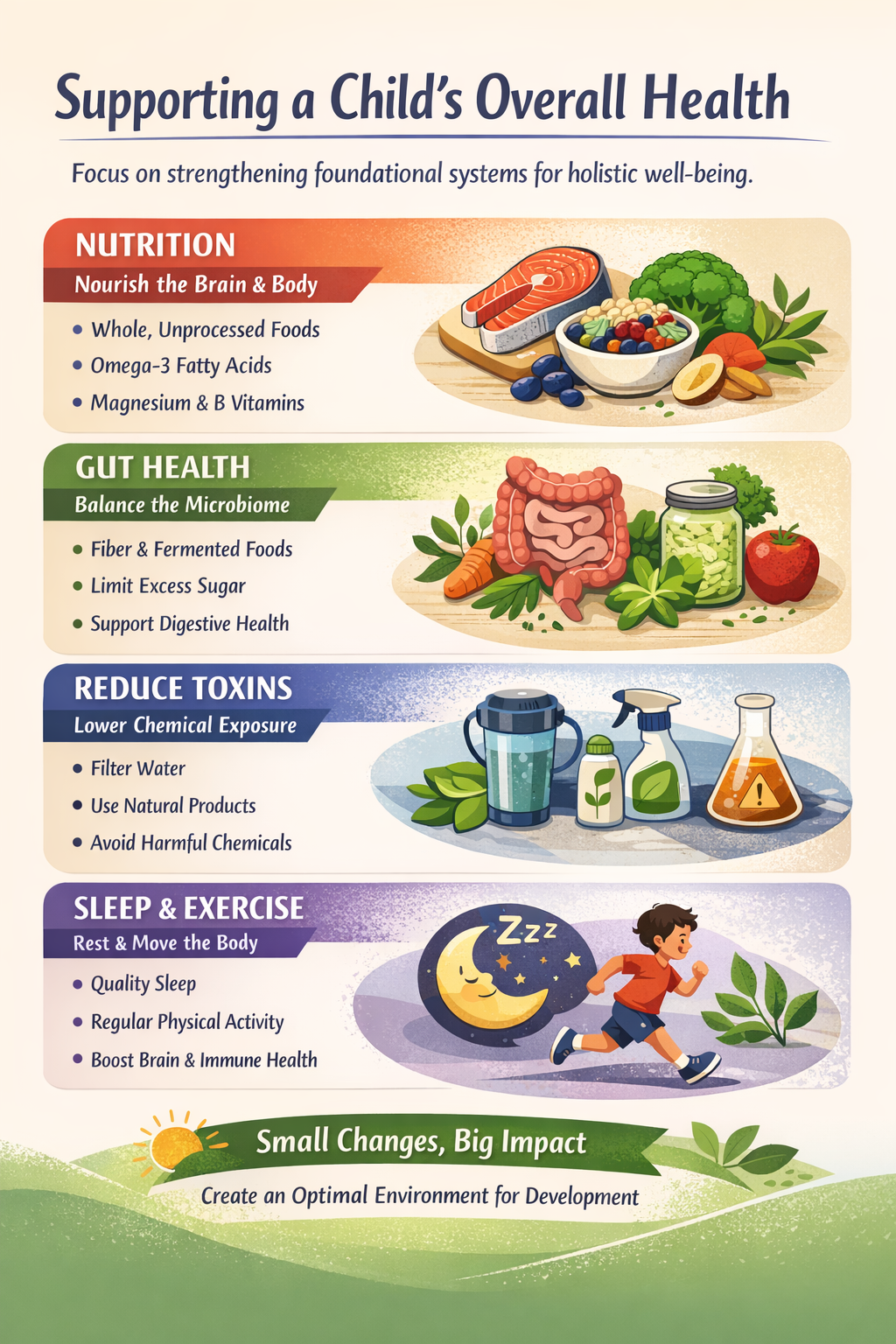
Gut health should also be prioritized, as it influences both digestion and immune signaling. Incorporating fiber-rich foods, fermented foods, and minimizing excessive sugar intake can help maintain a balanced microbiome. This, in turn, supports overall resilience.
Reducing environmental toxin exposure is another important step. Simple measures such as filtering water, choosing natural household products, and avoiding unnecessary chemical exposures can lower the body’s burden. These changes do not require perfection but can have meaningful cumulative effects.
Sleep and physical activity round out the foundation. Adequate sleep supports neurological repair and immune regulation, while regular movement enhances circulation and metabolic health. Together, these practices create an environment in which the body can function optimally.
Moving Beyond Polarization Toward Understanding
The vaccine–autism debate has persisted not because of clear evidence of causation, but because it reflects deeper concerns about children’s health in a rapidly changing world. Parents are not simply questioning one intervention; they are responding to a broader sense that something in the environment has shifted.
Addressing these concerns requires moving beyond polarized thinking. It involves acknowledging the strengths of existing evidence while remaining open to exploring additional factors that influence health. It also requires recognizing that reassurance alone is not enough; families need actionable guidance that empowers them to support their children’s well-being.
A balanced perspective does not rely on fear or dismissal. It integrates scientific evidence with a deeper understanding of biology, recognizing that health outcomes are shaped by multiple interacting influences. This approach fosters both clarity and confidence, allowing individuals to make informed decisions without becoming overwhelmed by conflicting narratives.
Conclusion: A Path Forward Rooted in Resilience
The most important insight to emerge from this discussion is that health is not determined by a single factor. It is the result of countless interactions between genetics, environment, and lifestyle. While the question of vaccines and autism has been extensively studied, the broader challenge lies in understanding and addressing the conditions that influence neurological development.
Focusing on resilience offers a constructive path forward. By optimizing nutrition, supporting immune balance, reducing toxic burden, and creating environments that promote recovery, it is possible to strengthen the systems that underpin health. These strategies are not controversial; they are foundational.
In a world where uncertainty often dominates the conversation, the ability to take meaningful action is both empowering and essential. Rather than becoming trapped in debates that yield little practical benefit, the opportunity lies in building a stronger biological foundation for the next generation. That is where lasting impact is found, and where the conversation ultimately needs to go.