
The Ice-Cold Promise of a Healthier Body
At precisely 5:17 every morning, a successful businessman steps into a stainless-steel tub filled with nearly freezing water. His breathing accelerates, his chest tightens, and thousands of tiny blood vessels constrict beneath his skin. Within seconds, his nervous system activates an ancient survival response that humans developed long before modern civilization. He believes those three uncomfortable minutes will burn stubborn fat, restore his metabolism, sharpen his brain, and reverse years of inflammation. His expensive plunge system promises biological transformation, while his favorite wellness influencers assure him that discomfort produces healing.
What he cannot see is the difference between physiological activation and genuine metabolic restoration. His heart works harder against constricted arteries, while stress hormones prepare his body to survive the sudden temperature change. Specialized fat cells may begin generating heat, and his brain increases chemical signals associated with alertness. Yet none of these reactions proves that his insulin resistance has improved or that his arteries have become healthier. The body responds powerfully to cold because maintaining its internal temperature is essential for survival.
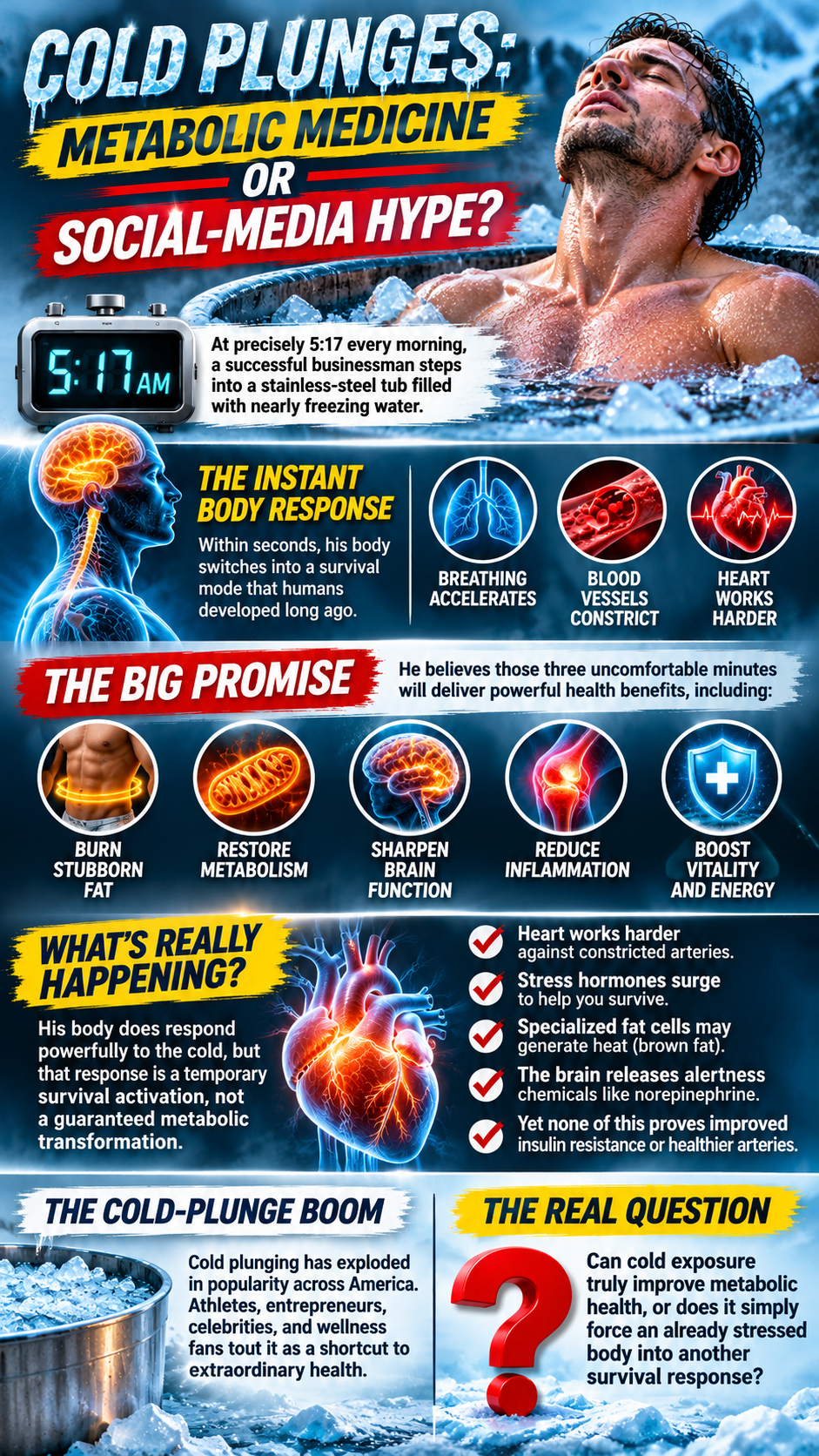
Across America, cold plunging has evolved from an obscure recovery practice into a booming wellness movement. Professional athletes, entrepreneurs, celebrities, and health enthusiasts now celebrate ice baths as a shortcut to extraordinary vitality. Marketing campaigns promise improved mitochondrial function, accelerated fat burning, reduced inflammation, and remarkable increases in dopamine. Unfortunately, the popularity of a physiological intervention often grows much faster than the evidence supporting its clinical benefits. Cold plunging illustrates this problem exceptionally well because its immediate effects are dramatic, measurable, and easily misunderstood.
The central question deserves a deeper investigation than social media typically provides. Can cold exposure improve metabolic health, or does it simply force an already stressed body into another survival response? Answering that question requires examining where metabolic dysfunction originates, how temperature regulates cellular energy, and why extreme exposure sometimes creates unnecessary risks. It also requires recognizing that cold exposure has legitimate scientific potential without accepting every commercial promise attached to it.
The Forgotten Relationship Between Temperature and Human Metabolism
Human beings evolved in environments where temperatures changed dramatically throughout the day and across seasons. Our ancestors encountered cold mornings, hot afternoons, unpredictable weather, and seasonal changes that demanded constant physiological adjustment. Their bodies developed sophisticated systems for preserving internal temperature while managing energy availability. Modern civilization has dramatically reduced many of these environmental challenges through insulated buildings, heated vehicles, climate-controlled offices, and temperature-regulated bedrooms.
This environmental transformation has encouraged researchers to investigate whether constant thermal comfort influences human energy metabolism. Maintaining core temperature requires energy, especially when surrounding temperatures fall below the body’s thermoneutral range. Under cooler conditions, the nervous system recruits heat-producing mechanisms that increase energy expenditure. Some involve involuntary muscle contractions, while others rely on specialized metabolic tissues capable of producing heat without shivering.
However, modern temperature control does not independently explain America’s obesity and diabetes epidemics. Excess calorie intake, insufficient physical activity, inadequate sleep, genetic susceptibility, and numerous environmental influences contribute to metabolic disease. Researchers continue investigating whether reduced exposure to mild cold represents another contributing factor. The hypothesis is biologically plausible, but current evidence cannot establish indoor heating as a major cause of widespread metabolic dysfunction.
This distinction exposes an important weakness in popular wellness explanations. A lifestyle factor can influence human physiology without becoming the primary cause of chronic disease. Similarly, reversing that factor does not automatically reverse the disease itself. Cold exposure may activate metabolic pathways that modern indoor living rarely challenges, but activation alone cannot guarantee meaningful improvements in health.
The Real Metabolic Problem Begins Inside the Cell
Metabolic dysfunction develops when the body’s systems for producing, storing, and using energy become increasingly dysregulated. Insulin resistance often plays a central role, particularly in people with abdominal obesity and type 2 diabetes. Under normal circumstances, insulin helps muscle and fat cells absorb glucose while regulating glucose production in the liver. When tissues become less responsive, the pancreas frequently compensates by producing additional insulin.
Over time, this compensation may become insufficient to maintain normal blood glucose levels. Excess energy storage, ectopic fat accumulation, chronic low-grade inflammation, and impaired metabolic signaling can reinforce the problem. Skeletal muscle may become less effective at handling glucose, while liver fat contributes to abnormal glucose production. Adipose tissue can also develop altered inflammatory and hormonal signaling that affects metabolism throughout the body.
Mitochondria participate in these processes because they convert nutrients into usable cellular energy. Their functions include fatty acid oxidation, glucose-derived substrate metabolism, and regulation of cellular signaling. Yet mitochondrial dysfunction is not a single universal cause of obesity or insulin resistance. In some conditions, altered mitochondrial function contributes to disease, while other changes reflect the body’s response to excess nutrients.
Cold-plunge enthusiasts frequently describe these metabolic disturbances as problems that icy water can repair. The claim sounds convincing because cold exposure increases energy demand and influences thermogenic signaling. Nevertheless, forcing the body to consume additional energy does not necessarily correct the underlying disturbances. Effective metabolic improvement requires sustained changes in glucose regulation, tissue function, body composition, or clinically meaningful health outcomes.
The Cold Shock Response: When Survival Takes Priority Over Healing
The moment icy water touches the skin, millions of temperature-sensitive nerve endings begin communicating with the central nervous system. These signals reach the hypothalamus, which coordinates the body’s defenses against falling temperature. Within seconds, sympathetic nervous system activity increases, peripheral arteries constrict, and breathing becomes faster. Heart rate and blood pressure may rise as the body attempts to protect its internal organs.
Norepinephrine plays an important role in this emergency response by influencing alertness, circulation, and energy mobilization. Adrenaline may also increase, depending on the severity and duration of exposure. These chemical messengers help explain the sudden sensation of energy that many participants experience. However, the nervous system does not distinguish a fashionable wellness activity from an environmental threat. It responds to the physiological challenge according to its established survival mechanisms.
For someone with healthy cardiovascular function, this temporary stress may be manageable. Individuals with coronary artery disease, hypertension, or certain rhythm disorders face a different situation. Rapid vasoconstriction increases the resistance against which the heart must pump, potentially raising myocardial oxygen demand. Sudden immersion can also trigger involuntary gasping and uncontrolled breathing, creating dangerous conditions when water surrounds the face.
The misconception begins when people interpret every strong physiological response as evidence of healing. Increased adrenaline does not necessarily indicate improved adrenal function, and elevated heart rate does not prove enhanced cardiovascular fitness. Likewise, a surge in norepinephrine does not establish that the brain has become permanently healthier. Cold exposure creates a measurable biological challenge, but the body’s immediate reaction should never be confused with lasting therapeutic adaptation.
Brown Fat: The Hidden Furnace Behind Cold-Induced Metabolism
Deep within the human body exists a specialized form of adipose tissue capable of converting stored chemical energy into heat. Scientists call this brown adipose tissue, or brown fat, because its cells contain numerous mitochondria and an extensive blood supply. Unlike white fat, which primarily stores excess energy, brown fat helps defend body temperature through non-shivering thermogenesis. This process represents one of the most scientifically compelling reasons to investigate cold exposure.
Brown fat contains uncoupling protein 1, commonly abbreviated UCP1, within its mitochondrial membranes. This protein allows mitochondria to release energy as heat instead of capturing all available energy as ATP. When sympathetic nerves stimulate brown fat during cold exposure, its cells increase fuel oxidation to support thermogenesis. The process can involve both fatty acids and glucose, connecting temperature regulation with broader metabolic pathways.
Research published in the New England Journal of Medicine in 2009 helped establish that metabolically active brown fat exists in adults. Subsequent investigations demonstrated that repeated mild cold exposure can increase detectable brown fat activity in certain individuals. These discoveries challenged earlier assumptions that thermogenic brown fat mattered primarily during infancy. They also introduced intriguing possibilities for investigating obesity, insulin resistance, and metabolic disease.
Unfortunately, brown fat activation does not automatically produce substantial weight loss. Adults differ considerably in their brown fat volume, activity, age-related changes, and response to cold. Even when thermogenesis increases energy expenditure, the resulting calorie consumption may remain modest across an entire day. Greater hunger or compensatory reductions in physical activity can also offset the additional energy expenditure.
The crucial distinction involves metabolic activation versus clinically meaningful fat reduction. A cold plunge may stimulate thermogenic pathways without creating sufficient sustained energy expenditure to change body composition. Furthermore, many promising brown fat studies involve prolonged mild cooling rather than brief immersion in ice water. The scientific findings deserve attention, but they cannot support claims that three minutes of freezing water eliminates abdominal obesity.
Insulin Resistance and the Surprising Discovery About Cold Acclimation
Among the most intriguing investigations into cold exposure is a 2015 study published in Nature Medicine. Researchers examined eight individuals with type 2 diabetes who underwent repeated mild cold exposure over ten days. The participants experienced temperatures around 57–59 degrees Fahrenheit, considerably warmer than typical recreational ice baths. Following the intervention, investigators reported approximately 43 percent improvement in peripheral insulin sensitivity under controlled testing conditions.
This finding suggested that temperature exposure might influence glucose metabolism through mechanisms beyond ordinary calorie burning. Researchers observed changes involving GLUT4, a glucose transporter that helps skeletal muscle absorb glucose from circulation. Interestingly, brown fat glucose uptake increased only modestly, suggesting skeletal muscle contributed substantially to the metabolic response. These observations opened new questions about how environmental temperature influences glucose transport and insulin responsiveness.
Nevertheless, the experiment involved only eight participants and lasted ten days. Researchers did not establish that cold exposure permanently reversed diabetes or prevented long-term complications. The study also investigated controlled mild cold acclimation rather than sudden full-body immersion. Applying its results directly to recreational ice baths would therefore misrepresent the intervention researchers actually tested.
For people experiencing insulin resistance, the findings remain promising but preliminary. Temperature may influence metabolic flexibility, yet established interventions still carry stronger evidence for improving long-term glucose regulation. Resistance training, appropriate nutrition, regular movement, and sustainable weight management address several contributing mechanisms simultaneously. Cold exposure may eventually complement these approaches, but it has not demonstrated equivalent therapeutic effectiveness.
Inflammation: The Unexpected Problem With Trying to Freeze It Away
Chronic inflammation contributes to numerous metabolic and cardiovascular disorders through complex interactions among immune cells, hormones, and tissue signaling. Excess visceral fat can release inflammatory mediators that influence insulin sensitivity and vascular function. Persistent inflammatory activity may also accompany liver disease, autoimmune disorders, and certain chronic illnesses. These relationships have encouraged wellness marketers to portray cold plunging as a powerful anti-inflammatory treatment.
The biological reality is considerably more complicated because inflammation also supports normal tissue repair and immune defense. Acute inflammatory signaling helps coordinate responses to injury, infection, and exercise-induced tissue stress. Suppressing every inflammatory process would interfere with essential healing mechanisms rather than improve them. Effective health interventions must therefore distinguish harmful persistent inflammation from temporary protective responses.
A 2025 systematic review and meta-analysis published in PLOS ONE investigated cold-water immersion and several health outcomes. Researchers analyzed eleven studies involving 3,177 participants and found that inflammation increased immediately after immersion and one hour afterward. Some measures of stress, sleep, and quality of life showed potential benefits at different intervals. However, the investigators emphasized limitations involving study size, population diversity, and available evidence.
These findings challenge the simplistic assumption that cold exposure automatically reduces inflammation throughout the body. Temporary cooling may relieve pain or alter local inflammatory processes without resolving chronic systemic inflammation. The intervention’s effects also depend on exposure duration, temperature, timing, and individual health status. For athletes, repeated immersion immediately after resistance training may even interfere with adaptations required for muscle growth.
The broader lesson concerns biological balance rather than indiscriminate suppression. Chronic inflammation requires investigation into contributing factors, including metabolic dysfunction, smoking, sleep disturbances, and underlying disease. Cold water may influence selected inflammatory pathways, but it cannot reliably identify or correct those causes. Treating an uncomfortable sensation does not necessarily resolve the process responsible for producing it.
Mitochondrial Health: Does Cold Exposure Create Better Cellular Energy?
The popularity of cold plunging has also revived public interest in mitochondria, the cellular structures responsible for much of aerobic energy production. These organelles participate in nutrient oxidation, ATP generation, calcium regulation, and important signaling processes. Their function changes according to physical activity, nutrient availability, hormonal signaling, and environmental conditions. Cold exposure can influence mitochondrial activity because maintaining body temperature requires additional energy.
In brown fat, sympathetic activation stimulates thermogenic pathways that depend heavily on mitochondrial function. Repeated cooling can alter the expression of proteins involved in heat production and cellular energy metabolism. Animal studies have demonstrated substantial adaptations, including changes in mitochondrial abundance and thermogenic capacity. Human research supports some tissue-specific adaptations, although findings remain less extensive than popular claims suggest.
A critical distinction separates mitochondrial stimulation from mitochondrial repair. Increasing energy demand does not automatically reverse mitochondrial damage, restore impaired cellular signaling, or improve every tissue’s energy production. Someone with fatigue, poor metabolic health, or an underlying medical disorder may experience temporary stimulation without addressing the cause. Moreover, severe cold exposure can create cardiovascular stress that outweighs any speculative mitochondrial benefit.
The strongest established lifestyle interventions for mitochondrial health remain regular physical activity and appropriate metabolic care. Aerobic exercise stimulates adaptations that improve oxidative capacity, while resistance training supports muscle function and glucose handling. Adequate nutrition supplies essential substrates, and restorative sleep helps coordinate systemic recovery. Cold exposure represents an interesting research frontier, but claims of whole-body mitochondrial rejuvenation remain unproven.
The Dangerous Confusion Between Feeling Better and Becoming Healthier
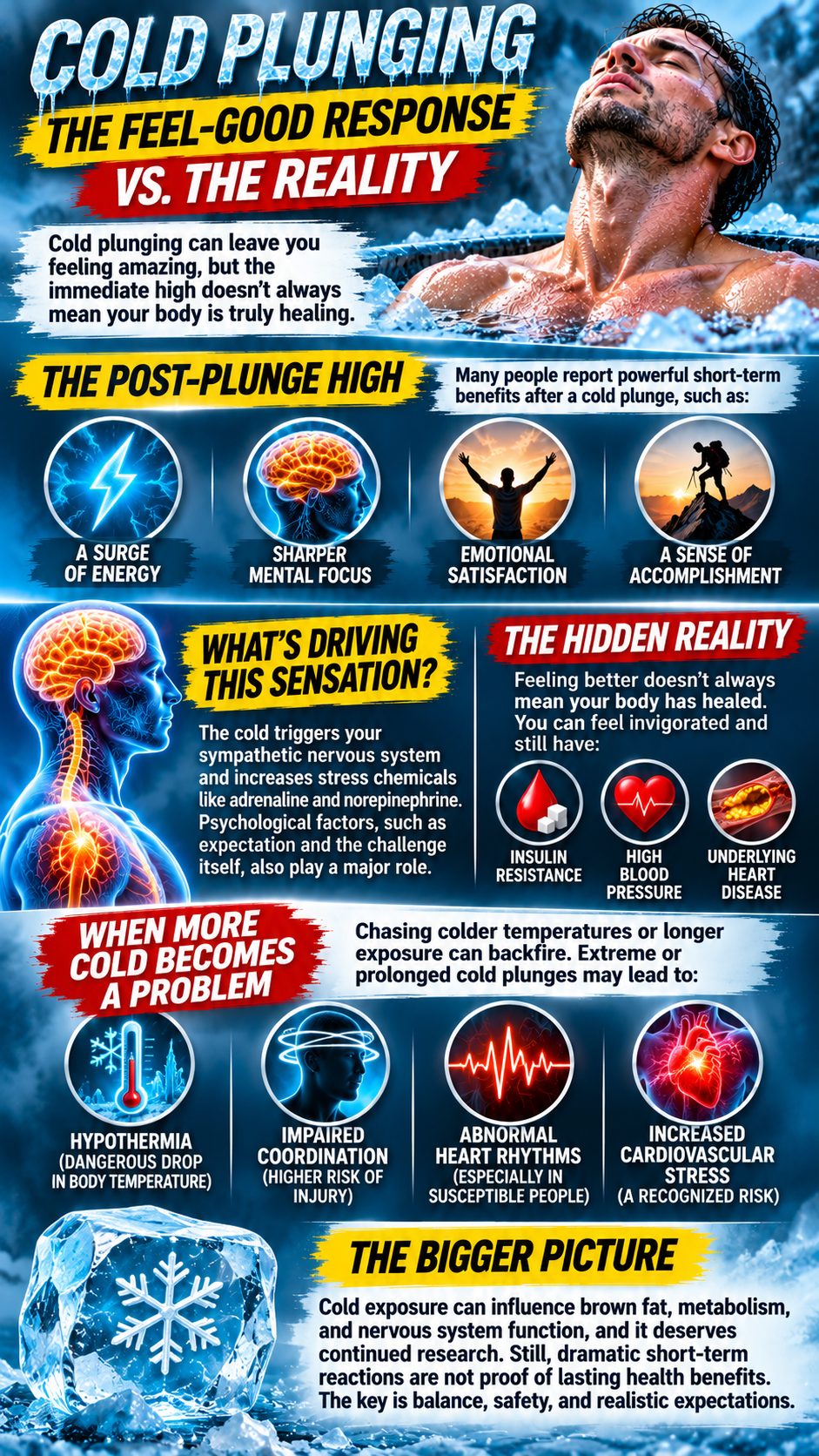
Perhaps the most persuasive feature of cold plunging is the unmistakable sensation that follows the experience. Many participants emerge feeling energized, mentally alert, emotionally satisfied, and proud of overcoming intense discomfort. Sympathetic activation and changes in catecholamine signaling offer plausible explanations for some of these sensations. Psychological expectations, accomplishment, and repeated exposure to a challenging experience may also influence the response.
Yet subjective improvement does not always indicate objective physiological recovery. Caffeine can increase alertness without correcting chronic sleep deprivation, just as adrenaline can temporarily overcome feelings of fatigue. Cold exposure may create similar confusion when participants interpret stimulation as evidence of restored metabolic function. A person can feel invigorated while still experiencing insulin resistance, hypertension, or underlying cardiovascular disease.
The consequences become more concerning when individuals pursue increasingly extreme temperatures to reproduce the original sensation. Prolonged exposure increases the risk of hypothermia, impaired coordination, and dangerous cardiovascular responses. Sudden cold-water immersion can also provoke abnormal heart rhythms in susceptible people. The American Heart Association recognizes cold exposure as a cardiovascular stressor, particularly among vulnerable populations.
The deeper problem is not cold water itself but the assumption that stronger stress always produces greater healing. Human adaptation depends on appropriate exposure, individual tolerance, and sufficient recovery. A healthy intervention should improve meaningful outcomes without creating disproportionate physiological risk. When intensity becomes the primary measure of success, wellness can quietly transform into another form of unnecessary stress.
Cold plunging deserves neither automatic rejection nor unconditional celebration. Its effects on brown fat, thermogenesis, nervous system signaling, and glucose metabolism warrant continued scientific investigation. However, dramatic physiological reactions cannot substitute for evidence of lasting clinical benefit. Understanding that distinction establishes the foundation for using cold exposure responsibly rather than surrendering to another fashionable promise.
The Hormonal Illusion: When a Stress Response Feels Like Healing
The first sensation after emerging from icy water can feel almost euphoric. Breathing gradually settles, mental alertness increases, and the uncomfortable experience gives way to an extraordinary sense of accomplishment. For many cold-plunge enthusiasts, this emotional transformation becomes the strongest evidence that something remarkable has happened inside their bodies. However, the biochemical explanation reveals a more complicated relationship between stress hormones, neurological stimulation, and lasting metabolic health.
Cold exposure activates the sympathetic nervous system, stimulating chemical messengers involved in survival and energy mobilization. Norepinephrine increases alertness, influences blood vessel constriction, and helps coordinate the body’s response to falling temperature. Dopamine may also increase under certain experimental conditions, contributing to interest in cold exposure and motivation. Yet widely circulated claims about enormous dopamine increases often originate from prolonged cold-water experiments, not brief recreational plunges.
Cortisol introduces another important dimension because this hormone helps regulate glucose availability during physiological stress. When environmental conditions threaten normal body temperature, the brain coordinates hormonal responses that support immediate survival. These reactions may temporarily increase circulating glucose and alter cardiovascular function. Although short-term stress responses serve important protective purposes, repeatedly activating them does not automatically improve hormonal balance.
Individuals already experiencing poor sleep, chronic psychological stress, or inadequate recovery should consider this distinction carefully. Adding an intense physical stressor may create a stimulating experience without resolving the conditions contributing to exhaustion. The body needs both adaptive challenges and opportunities for restoration. A temporary surge in energy should never become the primary measurement of whether an intervention improves health.
The Vagus Nerve and the Misunderstood Promise of Nervous System Recovery
The vagus nerve has become a central character in conversations about stress resilience, digestive health, and autonomic regulation. This remarkable cranial nerve carries extensive sensory information from internal organs toward the brain. It also contributes parasympathetic signals that influence heart rate, digestive activity, and other physiological functions. Because cold exposure changes heart rate and breathing, many enthusiasts assume that plunging into ice water automatically strengthens vagal function.
The relationship is considerably more complex. Sudden cold-water immersion typically activates powerful sympathetic responses, including rapid breathing and increased blood pressure. Certain cooling conditions, particularly facial cooling, can also activate reflexes involving parasympathetic pathways. These competing responses influence cardiovascular regulation and may become dangerous when sudden immersion combines with breath-holding. An immediate change in heart rate therefore cannot establish that vagal function has improved.
Heart-rate variability frequently appears in advertisements as proof of nervous system restoration. Although HRV provides useful information about aspects of autonomic regulation, numerous factors influence its measurement. Respiratory rate, physical position, sleep quality, recent exercise, and temperature can all change the result. A favorable reading after cold exposure does not necessarily demonstrate improved neurological health or long-term resilience.
A more meaningful objective involves developing a nervous system that responds appropriately to challenges and returns efficiently toward baseline. Regular exercise, adequate sleep, supportive relationships, and controlled breathing practices can contribute to this broader goal. Cold exposure may become an optional component for appropriately selected individuals, but it remains an unproven treatment for autonomic dysfunction. The most impressive physiological response is not necessarily the healthiest one.
The Cardiovascular Price of Extreme Cold
The greatest danger surrounding cold plunging rarely appears in promotional videos featuring beautiful outdoor tubs and peaceful morning routines. Beneath the surface, sudden immersion can produce substantial cardiovascular changes within seconds. Peripheral arteries constrict to preserve heat, increasing resistance against circulating blood. Simultaneously, the heart may accelerate as the nervous system coordinates its protective response.
For someone with hypertension or coronary artery disease, this combination may place additional demands on an already vulnerable cardiovascular system. Blood pressure can rise sharply, while increased cardiac workload may elevate the heart’s oxygen requirements. Individuals with rhythm disturbances may face additional hazards because sudden immersion can activate competing autonomic reflexes. These responses explain why an intervention that appears harmless to one person may become dangerous for another.
Cold shock also disrupts normal respiratory control. An involuntary gasp can occur immediately upon immersion, followed by rapid breathing that becomes difficult to regulate. If the face enters the water during this response, aspiration and drowning become serious possibilities. Prolonged exposure introduces further risks, including hypothermia, impaired judgment, and reduced muscular coordination.
The belief that colder temperatures produce stronger healing benefits deserves particular skepticism. Researchers have not established that near-freezing immersion provides superior metabolic outcomes compared with controlled mild cooling. More extreme exposure increases physiological stress without guaranteeing additional therapeutic value. A responsible approach must prioritize cardiovascular safety over dramatic displays of endurance.
Immune Function and Inflammation: The Benefits Marketing Cannot Guarantee
Cold-water enthusiasts frequently describe their routines as powerful immune-system training. Their explanations often involve increased white blood cell activity, improved circulation, and greater resistance to infection. Although acute cold exposure can alter immune-cell distribution and inflammatory signaling, these changes do not establish stronger protection against illness. Immune function depends on coordinated cellular responses rather than simply increasing selected laboratory markers.
A large randomized investigation involving cold showers reported fewer self-reported sickness-related absences from work among participants. However, researchers did not find a corresponding significant reduction in illness days. This distinction matters because behavior, motivation, and perceived resilience may influence workplace attendance. Fewer absences cannot automatically establish that cold exposure prevented infections.
Inflammation presents a similar challenge because acute inflammatory activity contributes to normal healing and tissue adaptation. Temporary cooling may reduce discomfort following demanding physical activity, but that does not prove systemic inflammation has resolved. Research examining cold-water immersion has produced inconsistent findings across inflammatory biomarkers and observation periods. Some investigations have even documented temporary increases in inflammatory activity following immersion.
For people struggling with persistent inflammation, meaningful improvement begins with identifying contributing conditions and lifestyle factors. Metabolic disease, inadequate sleep, smoking, and chronic inflammatory disorders may require targeted attention. Cold plunging cannot reliably correct these underlying problems simply by lowering skin temperature. The distinction between short-term symptom relief and sustained physiological improvement remains essential.
The Cold Plunge Recovery Paradox: Less Soreness, Less Muscle Growth?
One of the most surprising discoveries in cold-water research concerns its relationship with resistance training. Athletes often use ice baths to reduce soreness and accelerate recovery after demanding workouts. Cooling can temporarily reduce pain perception and influence local tissue responses, making muscles feel less uncomfortable. However, reducing soreness does not necessarily improve the biological adaptations that make muscles stronger.
Resistance exercise activates signaling pathways involved in muscle protein synthesis, cellular remodeling, and tissue growth. These processes require carefully coordinated responses to mechanical stress and subsequent recovery. Research suggests that repeated cold-water immersion immediately after resistance training may weaken certain muscle-building adaptations. The effect appears particularly relevant when athletes consistently combine intensive cooling with strength-focused workouts.
This creates a fascinating contradiction for individuals using cold plunges to improve metabolic health. Skeletal muscle plays an important role in glucose disposal, insulin sensitivity, and maintaining functional independence during aging. Preserving muscle mass therefore supports several objectives that cold-plunge advocates hope to achieve. Routinely interfering with muscle growth could undermine those goals, even when the immediate experience feels beneficial.
Cold immersion may still serve selected recovery purposes, particularly when reducing soreness between closely scheduled athletic events matters most. However, people prioritizing muscle development should avoid making immediate post-workout plunges a routine habit. The optimal timing remains uncertain, making separation from strength-training sessions a reasonable precaution. Effective recovery should support long-term adaptation rather than merely suppress short-term discomfort.
A Practical At-Home Approach to Cold Exposure and Metabolic Health
Begin With Gentle Temperature Adaptation
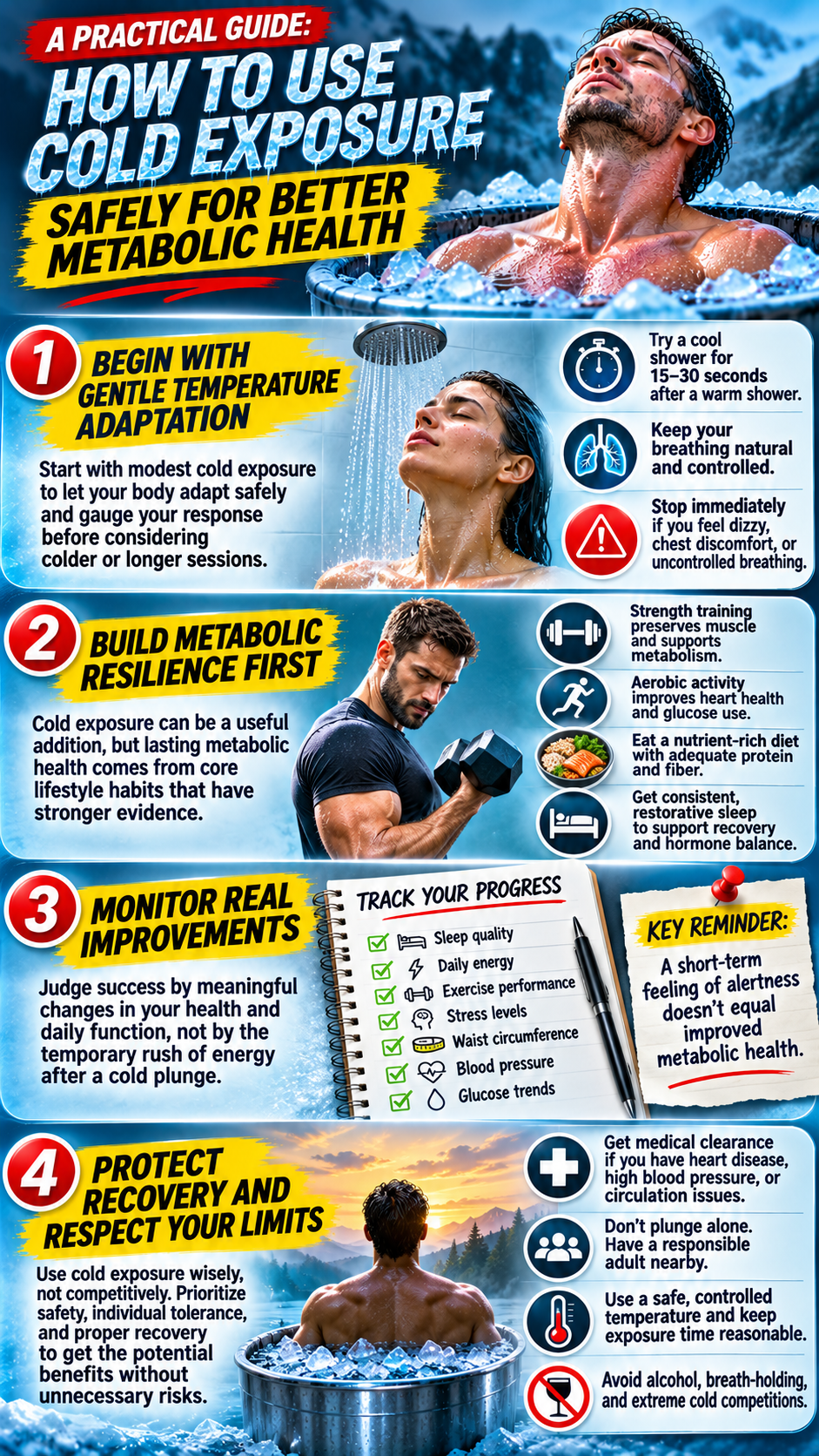
For healthy adults without relevant medical contraindications, the safest introduction begins with modest temperature changes rather than extreme immersion. A normal warm shower can end with approximately 15 to 30 seconds of comfortably cool water. This duration serves as a cautious starting point, not an established therapeutic prescription. The objective is to observe the body’s response without provoking severe respiratory distress or prolonged shivering.
During exposure, breathing should remain natural, controlled, and comfortable. Avoid breath-holding, deliberate hyperventilation, or placing the face underwater during cold exposure. If dizziness, chest discomfort, or uncontrolled breathing develops, immediately stop the session. Individuals with cardiovascular conditions or impaired temperature sensation should obtain individualized medical guidance before experimenting.
Build Metabolic Resilience Before Increasing Cold Exposure
Improving metabolic health requires more than temporarily increasing energy expenditure. Skeletal muscle, liver function, adipose tissue signaling, and glucose regulation all contribute to long-term metabolic performance. Regular resistance training supports muscle preservation, while aerobic activity improves cardiovascular conditioning and glucose utilization. These interventions offer stronger clinical evidence than recreational cold plunging for managing metabolic risk.
Nutrition provides another essential foundation. Adequate protein supports muscle maintenance, while appropriate energy intake helps regulate body composition. Minimally processed foods, sufficient dietary fiber, and individualized carbohydrate choices can contribute to healthier glucose regulation. Consistent sleep further supports appetite control, hormonal signaling, and recovery from physical stress.
Monitor Real Improvements Instead of Temporary Stimulation
An effective wellness practice should produce benefits that extend beyond the immediate experience. Individuals experimenting with cold exposure can monitor sleep quality, daily energy, exercise performance, and perceived stress. Keeping other lifestyle habits reasonably consistent may help identify whether cold exposure contributes meaningfully to improvement. Persistent fatigue, disrupted sleep, or worsening recovery should prompt reconsideration rather than greater exposure intensity.
People monitoring metabolic conditions should prioritize meaningful measurements over claims about instant fat burning. Appropriate indicators may include waist circumference, blood pressure, glucose trends, and clinician-directed laboratory testing. Changes should be interpreted within the broader context of nutrition, activity, medications, and existing medical conditions. A temporary increase in alertness cannot substitute for measurable improvements in metabolic health.
Protect Recovery and Respect Individual Limits
Cold exposure should never become a competition involving lower temperatures or longer immersion times. Individuals who tolerate cool showers may find them enjoyable without progressing to full-body plunges. Those considering immersion should seek medical clearance when appropriate and ensure another responsible adult remains present. Safe entry, reliable temperature monitoring, and immediate access to warmth are essential precautions.
Avoid prolonged exposure, breath-holding exercises, and combining cold immersion with alcohol or sedating substances. Individuals with uncontrolled hypertension, significant heart disease, arrhythmias, or impaired circulation may need to avoid immersion altogether. Severe shivering, confusion, loss of coordination, chest pain, or breathing difficulty require immediate termination and appropriate medical attention. No proposed metabolic benefit justifies ignoring these warning signs.
The Final Verdict: Metabolic Medicine or Social-Media Hype?
Cold plunging reveals an important truth about human physiology: the body possesses sophisticated mechanisms for adapting to environmental challenges. Cold exposure can activate brown adipose tissue, stimulate thermogenesis, alter autonomic signaling, and influence glucose metabolism. These biological effects deserve serious scientific investigation, particularly as researchers explore new approaches to metabolic dysfunction. Nevertheless, the existence of a physiological response does not establish that a treatment reverses chronic disease.
The commercial promises surrounding ice baths frequently extend far beyond the available clinical evidence. Brief cold plunges have not demonstrated reliable reversal of diabetes, substantial long-term fat loss, or meaningful extensions of human lifespan. Claims about immune enhancement, inflammation elimination, and mitochondrial rejuvenation remain similarly uncertain. Meanwhile, cardiovascular stress and interference with selected exercise adaptations represent legitimate concerns.
A responsible functional approach should investigate the underlying causes of metabolic dysfunction before selecting an intervention. Insulin resistance, inadequate physical activity, poor sleep, excess visceral fat, and underlying medical conditions require individualized attention. Cold exposure may complement established lifestyle strategies for some people, but it cannot replace them. Its value depends on the individual’s health, the exposure conditions, and the outcomes being pursued.
Ultimately, the most effective health strategy does not demand that people endure increasingly extreme discomfort. It requires understanding how the body produces energy, responds to stress, and recovers from physiological challenges. Cold plunging may have a useful place within that process, provided enthusiasm remains grounded in evidence and safety. The goal is not to prove how much cold the human body can survive, but to discover which habits genuinely help it thrive.