
Brain Fog Is the Warning Light, Not the Disease
There is a particular kind of frustration that comes when your brain no longer feels dependable. You walk into a room and forget why you went there. During conversations, familiar words suddenly disappear. Reading becomes laborious because you reach the bottom of a page without remembering what you read. Work that once required twenty minutes now consumes an hour. By afternoon, your mind feels wrapped in cotton, and another cup of coffee barely touches the exhaustion. People commonly describe this collection of symptoms as brain fog, but that phrase can create a dangerous misunderstanding. Brain fog describes what someone experiences, yet it tells us almost nothing about what created the problem.

A healthy brain requires extraordinary biological coordination. Neurons need stable energy, adequate oxygen, healthy circulation, thyroid signaling, nutrients, restorative sleep, and controlled immune activity. Mitochondria must continuously manufacture cellular energy. The digestive system must absorb essential nutrients and communicate normally with the nervous system. Meanwhile, the autonomic nervous system must regulate circulation whenever someone stands, exercises, eats, or encounters stress. Disturbances within these systems can produce similar cognitive symptoms, despite having completely different origins.
That is why brain fog should trigger an investigation rather than become the final explanation. Concentration problems can originate from blood-sugar instability. Memory difficulties can accompany thyroid dysfunction or vitamin B12 deficiency. Morning fog can follow untreated sleep apnea. Cognitive crashes after standing may point toward autonomic dysfunction. Severe mental exhaustion after an infection can involve post-infectious changes. The symptom may look similar on the surface, while the biology underneath differs dramatically.
Understanding those differences gives us a much better roadmap. Instead of asking only, “What can I take for brain fog?” ask a more powerful question: “Which biological system is preventing my brain from functioning normally?” Ten major problems deserve consideration when persistent brain fog appears.
Biological Problem #1: Blood-Sugar Instability Is Creating an Energy Roller Coaster
The brain consumes enormous amounts of energy relative to its size. Under ordinary dietary conditions, glucose provides much of that energy, while ketones can provide an alternative fuel. Problems develop when the body repeatedly experiences large glucose fluctuations. A breakfast dominated by sweetened coffee, cereal, pastries, juice, or refined carbohydrates can rapidly raise blood glucose. Insulin then rises to move glucose from the bloodstream into tissues. Several hours later, some people experience hunger, irritability, weakness, cravings, fatigue, and declining concentration. They may interpret the crash as stress or lack of motivation, although metabolic instability may contribute significantly.
Repeated glucose dysregulation creates consequences beyond an afternoon energy slump. Chronically elevated glucose promotes glycation, oxidative stress, inflammation, and vascular injury. Glycation changes proteins and can damage tissues throughout the body. Endothelial dysfunction can gradually reduce the ability of blood vessels to respond normally. Those changes matter enormously to the brain because neurons depend on an intricate network of microscopic vessels. Poor metabolic health can therefore become poor neurological health long before someone connects the two problems.
Fasting glucose provides only one snapshot of this system. Hemoglobin A1c, fasting insulin, triglycerides, waist circumference, post-meal responses, and other metabolic findings can reveal additional clues. Someone may maintain relatively normal fasting glucose while insulin rises progressively to keep glucose controlled. When brain fog predictably appears after certain meals, metabolic dysfunction deserves attention. The timing of the symptom can become one of the most valuable clues.
Biological Problem #2: Insulin Resistance Is Disrupting Metabolic Signaling
Insulin resistance often develops quietly for years. Cells become less responsive to insulin, forcing the pancreas to release larger amounts to maintain glucose control. This compensation can conceal metabolic dysfunction because standard glucose measurements may remain acceptable during the early stages. Meanwhile, elevated insulin encourages fat storage, affects appetite regulation, and commonly accompanies visceral obesity. Triglycerides may rise, fatty liver can develop, and blood pressure may gradually increase.
The brain also responds to insulin signaling. Insulin receptors participate in neuronal metabolism, synaptic function, learning, and memory. Researchers continue studying how impaired insulin signaling relates to cognitive decline and neurodegenerative disease. The important point remains simpler: metabolic dysfunction does not stop at the neck. A body struggling to regulate insulin creates a physiological environment that can influence neurological performance.
Insulin resistance also creates several secondary problems that amplify brain fog. Visceral fat releases inflammatory signaling molecules. Poor sleep worsens insulin sensitivity, while insulin resistance can increase sleep apnea risk. Inactivity reduces glucose disposal into skeletal muscle. Elevated glucose creates additional oxidative stress, and declining mitochondrial flexibility makes energy production less efficient. Brain fog may therefore represent one visible symptom of a much larger metabolic network beginning to fail.
Biological Problem #3: Thyroid Dysfunction Is Slowing Cellular Metabolism
Thyroid hormones act like metabolic conductors throughout the body. They influence energy production, temperature regulation, digestion, cardiovascular function, and neurological activity. When thyroid function declines, the effects rarely remain confined to one organ. Someone may notice fatigue, constipation, cold intolerance, dry skin, hair changes, altered body weight, depression, and slower cognition. Brain fog becomes part of a larger metabolic slowdown rather than an isolated memory problem.
The brain depends upon appropriate thyroid signaling for normal function. Hypothyroidism can accompany problems with attention, memory, processing speed, and executive function. Low thyroid activity may also reduce gastrointestinal motility, physical activity, and overall energy expenditure. Those secondary changes can worsen metabolic health, digestion, and sleep. One endocrine disturbance can therefore spread through several systems involved in cognition.
Testing should match the clinical picture rather than rely on symptoms alone. TSH and free T4 commonly provide the starting point, while additional thyroid testing may become appropriate in selected situations. Autoimmune thyroid disease, medication effects, iodine exposure, pregnancy, and other factors can alter thyroid physiology. The important lesson remains that persistent cognitive slowing accompanied by systemic thyroid symptoms deserves more investigation than another cup of coffee.
Biological Problem #4: Nutrient Deficiencies Are Removing the Brain’s Raw Materials
Neurons cannot manufacture normal physiology without raw materials. Vitamin B12 contributes to neurological function and myelin maintenance. Folate participates in methylation and cellular metabolism. Iron supports oxygen transport and several neurological enzymes. Thiamine plays a crucial role in carbohydrate metabolism and cellular energy production. Magnesium participates in hundreds of enzymatic reactions. When essential nutrients become depleted, neurological function can decline alongside energy production.
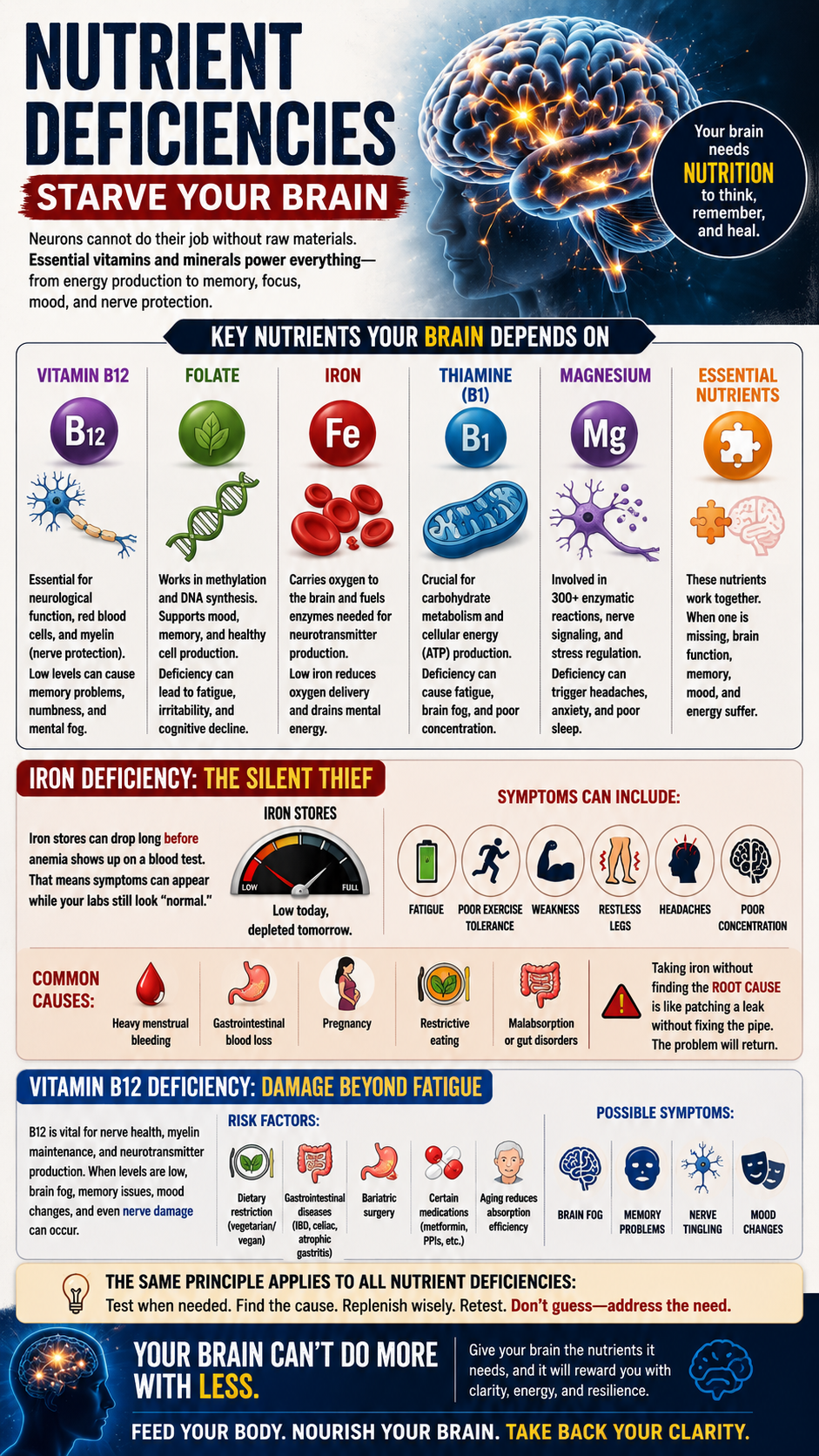
Iron deficiency provides an important example because severe anemia does not need to appear immediately. Iron stores can decline before dramatic changes occur in hemoglobin. Fatigue, poor exercise tolerance, weakness, restless legs, headaches, and concentration problems may develop along the way. Heavy menstrual bleeding, gastrointestinal blood loss, pregnancy, restrictive eating, and malabsorption can contribute. Correcting iron without discovering why it became depleted can leave the underlying problem untouched.
Vitamin B12 deficiency can also produce cognitive and neurological symptoms. Dietary restriction, gastrointestinal disease, bariatric surgery, aging-related absorption problems, and certain medications can increase risk. The same principle applies to other deficiencies: supplementation should answer a biological need rather than become guesswork. When the brain lacks essential materials for oxygen transport, neurotransmitter production, myelin integrity, or ATP production, no amount of motivation can compensate indefinitely.
Biological Problem #5: Poor Sleep and Sleep Apnea Are Preventing Neurological Recovery
Sleep represents one of the most powerful neurological repair periods available to the human body. During normal sleep, the brain cycles through organized stages that support memory consolidation, emotional regulation, immune control, hormonal balance, and metabolic recovery. Fragmented sleep disrupts those processes. Attention weakens, reaction time slows, working memory declines, and executive function becomes less reliable. Someone can spend eight hours in bed yet awaken biologically under-recovered.
Obstructive sleep apnea creates an especially important cause of persistent brain fog. The upper airway repeatedly narrows or closes during sleep, interrupting breathing and triggering repeated neurological arousals. Oxygen levels can fluctuate, sympathetic activity can rise, and sleep architecture becomes fragmented. The person may never remember waking. Morning headaches, dry mouth, snoring, daytime sleepiness, nocturia, hypertension, and unrefreshing sleep can provide important clues.
Poor sleep also damages systems far beyond cognition. Sleep restriction can worsen insulin sensitivity, hunger regulation, blood pressure, inflammation, and stress hormones. Those changes increase cravings and make exercise harder. Weight gain can subsequently worsen sleep apnea, creating another self-reinforcing cycle. Someone may believe they have a concentration problem when the deeper biological problem occurs every night while they sleep.
Five More Biological Problems and How to Rebuild Mental Clarity
The first five biological problems reveal an important truth about brain fog: the brain often becomes the messenger for dysfunction elsewhere. Glucose instability, insulin resistance, thyroid dysfunction, nutrient depletion, and sleep disruption can all alter cognition. Yet many people continue struggling after addressing obvious metabolic factors. Their symptoms may involve another layer involving inflammation, digestion, cellular energy, circulation, or immune recovery.
These mechanisms can also overlap. Chronic inflammation can damage mitochondrial function. Gut disease can produce nutrient deficiencies. Post-infectious illness can disrupt autonomic regulation. Poor circulation can increase mental fatigue, while inactivity further weakens mitochondrial capacity. Instead of searching for one fashionable cause, the better approach examines how several biological systems may be interacting.
Biological Problem #6: Chronic Inflammation Is Changing the Brain’s Chemical Environment
Think about how your mind behaves during a severe infection. Mental sharpness disappears, motivation falls, and even simple tasks feel exhausting. Those changes are not merely psychological reactions to feeling sick. Immune signaling can directly influence neurological function. Cytokines released during inflammation communicate with the nervous system and can alter sleep, appetite, mood, energy, and cognition.
Acute inflammation serves an important purpose because it helps coordinate immune defense and tissue repair. Chronic inflammation creates a different biological environment. Visceral obesity, metabolic disease, smoking, periodontal disease, autoimmune conditions, infections, sleep disruption, and other disorders can maintain inflammatory signaling. The nervous system must then operate inside a body receiving persistent immune distress signals.
Inflammation can also impair vascular health and increase oxidative stress. Endothelial dysfunction reduces the ability of blood vessels to regulate circulation efficiently. Oxidative damage places additional pressure on mitochondria and cellular membranes. Consequently, chronic inflammation can attack mental clarity from several directions simultaneously. The goal should not simply involve “lowering inflammation.” The deeper investigation asks what continues generating the inflammatory signal.
Biological Problem #7: Gut Dysfunction Is Disturbing the Gut-Brain Connection
The digestive tract communicates constantly with the nervous system. The vagus nerve provides one major pathway, while hormones, immune signals, and microbial metabolites create additional communication channels. This interconnected network forms what researchers call the gut-brain axis. Although microbiome science remains developing, the relationship between digestive physiology and neurological function deserves serious attention.
Gut dysfunction can influence cognition through several practical mechanisms. Chronic diarrhea or intestinal disease can impair nutrient absorption. Celiac disease can damage intestinal tissue and contribute to iron, folate, or other deficiencies. Inflammatory bowel conditions can increase systemic immune activation. Constipation can accompany thyroid dysfunction, medications, dehydration, or altered motility. Each problem creates a different pathway toward fatigue and cognitive difficulty.
The microbiome adds another layer of complexity. Intestinal organisms produce short-chain fatty acids and numerous metabolites capable of interacting with human physiology. Diet, medications, infections, and environmental exposures can alter microbial communities. However, blaming every neurological symptom on “bad bacteria” oversimplifies an evolving field. Digestive symptoms should instead become investigative clues, especially when brain fog appears alongside bloating, bowel changes, abdominal discomfort, or food-associated reactions.
Biological Problem #8: Mitochondrial Dysfunction Is Reducing Cellular Energy
Mitochondria manufacture much of the ATP needed to power human cells. Neurons require enormous amounts because they constantly maintain electrical gradients, recycle neurotransmitters, transport cellular materials, and coordinate communication. When mitochondrial performance declines, demanding tissues often reveal the problem through fatigue and reduced functional capacity.
Several biological stressors can impair mitochondrial efficiency. Oxidative stress can damage mitochondrial structures. Chronic inflammation can alter cellular metabolism. Nutrient deficiencies can remove cofactors needed for energy production. Physical inactivity reduces metabolic demand and can decrease mitochondrial capacity. Poor sleep adds further oxidative and metabolic stress.
This mechanism helps explain why some people describe brain fog as mental exhaustion rather than simple forgetfulness. They can think clearly for short periods, but prolonged concentration drains them quickly. Exercise normally improves mitochondrial capacity, although post-exertional symptom worsening requires caution. When cognitive endurance collapses alongside physical endurance, cellular energy deserves consideration within the larger investigation.
Biological Problem #9: Autonomic Dysfunction Is Altering Circulation and Brain Perfusion
Standing looks effortless, yet it creates an immediate cardiovascular challenge. Gravity shifts blood toward the lower body. The autonomic nervous system responds by adjusting heart rate and vascular tone to preserve circulation. Most people never notice this process because it occurs automatically.
Autonomic dysfunction can disrupt that response. Some people develop dizziness, palpitations, weakness, visual changes, fatigue, or brain fog after standing. Heat can worsen symptoms because blood vessels dilate. Large meals can intensify problems because digestion changes circulatory demands. Prolonged showers, exercise, dehydration, and standing in lines may produce similar reactions.
Postural orthostatic tachycardia syndrome represents one recognized form of autonomic dysfunction. Other disorders can produce overlapping symptoms. Researchers continue studying cerebral blood flow, blood volume, vascular regulation, sympathetic signaling, and carbon dioxide changes in these conditions. The most valuable clue often comes from symptom timing. Brain fog that consistently worsens upright deserves a different investigation from brain fog that follows a carbohydrate-heavy meal.
Biological Problem #10: Post-Infectious Dysfunction Is Keeping the Body in a State of Incomplete Recovery
An infection can disappear while the physiological consequences continue. Long COVID brought enormous public attention to this phenomenon, although post-infectious syndromes existed long before COVID-19. Some people develop persistent fatigue, brain fog, sleep problems, exercise intolerance, headaches, digestive changes, and autonomic symptoms after the acute illness resolves.
Researchers continue investigating several possible mechanisms. Persistent immune activation may contribute in some individuals. Autoimmune responses, endothelial dysfunction, altered mitochondrial metabolism, autonomic instability, and blood-brain barrier changes remain active research areas. No single mechanism currently explains every patient, which makes broad claims about one universal cause inappropriate.
The timing of symptoms becomes particularly valuable in these cases. Someone may remember functioning normally until a viral illness, followed by months of cognitive and physical decline. Exercise might suddenly produce delayed exhaustion instead of normal recovery. Standing may increase heart rate dramatically, while sleep no longer feels restorative. Those patterns suggest that the infection may have triggered wider physiological disruption rather than simply causing temporary fatigue.
What These Ten Biological Problems Are Doing to Your Body
The ten causes appear different, yet they converge on several fundamental processes. They can reduce cellular energy, disturb neurological signaling, impair circulation, increase oxidative stress, alter hormone communication, or deprive neurons of essential nutrients. Once several mechanisms overlap, brain fog can become persistent because the body loses its ability to compensate.
Cognitive dysfunction can then create secondary problems. Mental exhaustion reduces physical activity, which worsens insulin sensitivity and mitochondrial conditioning. Poor concentration increases dependence on caffeine and convenience foods. Stress rises because routine responsibilities require greater effort. Sleep becomes less restorative, while reduced resilience makes ordinary challenges feel overwhelming. A neurological symptom gradually becomes part of a whole-body cycle.
The consequences extend beyond productivity. Poor attention can affect driving, workplace safety, and medication management. Memory problems can strain relationships and increase anxiety. Reduced exercise capacity affects cardiovascular health and body composition. Persistent fatigue can encourage social withdrawal. Brain fog should therefore never become something people simply accept as normal aging or an unavoidable consequence of being busy.
How to Start Fixing Brain Fog at Home
Begin with sleep because neurological recovery depends on it. Establish a consistent bedtime and wake time throughout the week. Seek outdoor light soon after waking to strengthen circadian signaling. Reduce bright light and stimulating activity during the final hours before sleep. Keep the bedroom dark, quiet, and comfortably cool. Persistent snoring, gasping, morning headaches, or unrefreshing sleep deserve professional evaluation because lifestyle changes cannot reliably diagnose sleep apnea.
Next, stabilize the metabolic environment surrounding the brain. Build meals around adequate protein, nutrient-dense whole foods, healthy fats, and minimally processed ingredients. Reduce frequent exposure to refined flour, added sugar, sweetened drinks, and ultra-processed snacks. Pay attention to how cognition changes during the hours after eating. A repeated post-meal crash can provide useful information about glucose regulation.
Movement should become a daily metabolic signal rather than an occasional punishment. Walking after meals encourages skeletal muscle to use circulating glucose. Resistance training improves muscle mass and insulin sensitivity. Aerobic activity supports cardiovascular and mitochondrial health when tolerated. People who experience severe delayed worsening after exercise should avoid forcing increasingly intense workouts because post-exertional symptoms require a different approach.
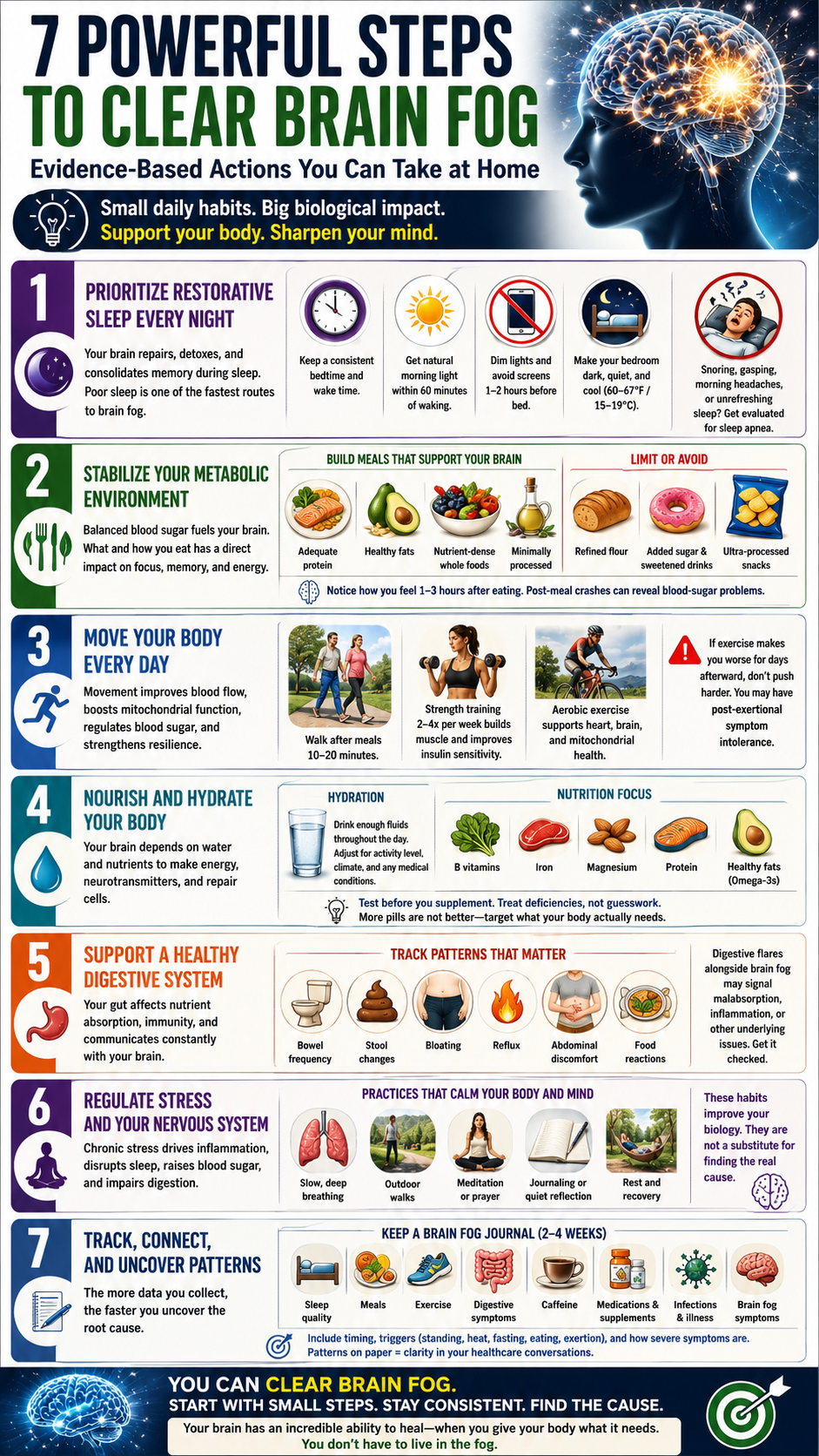
Hydration and nutrition deserve equal attention. Consume enough fluids to maintain normal hydration while considering medical conditions that alter fluid requirements. Build meals around foods supplying B vitamins, iron, magnesium, protein, and essential fatty acids. Persistent fatigue or cognitive problems warrant targeted investigation before aggressive supplementation. Correcting a documented deficiency makes biological sense, while randomly combining dozens of supplements can create confusion.
Digestive health should become part of the investigation when gastrointestinal symptoms accompany brain fog. Track bowel frequency, stool changes, bloating, reflux, abdominal discomfort, and reactions after meals. Notice whether digestive flares occur alongside cognitive decline. Persistent symptoms can justify evaluation for gastrointestinal disease, malabsorption, or other underlying problems rather than endless food elimination.
Stress regulation also matters because chronic sympathetic activation influences sleep, digestion, glucose regulation, and cardiovascular function. Slow breathing, outdoor walking, meditation, prayer, quiet reflection, and regular recovery periods can help reduce physiological arousal. These practices should not become an excuse to label unexplained symptoms as stress. Instead, they improve the biological environment while the real cause receives investigation.
Finally, keep a detailed brain-fog journal for several weeks. Record sleep quality, meals, exercise, digestive symptoms, caffeine, medications, supplements, infections, and symptom timing. Include whether standing, heat, fasting, eating, or exertion changes cognition. Patterns frequently become visible when several days appear together on paper. Those observations can turn an imprecise complaint into a focused biological investigation.
Stop Chasing the Fog and Start Finding the Cause
The most important change happens when brain fog stops being treated as the disease. A person with unstable glucose requires a different strategy from someone with sleep apnea. Iron deficiency requires another investigation, while hypothyroidism demands another. Autonomic dysfunction, chronic inflammation, gut disease, mitochondrial impairment, and post-infectious dysfunction each create distinct biological questions.
The ten biological problems provide a starting framework: blood-sugar instability, insulin resistance, thyroid dysfunction, nutrient deficiencies, poor sleep or sleep apnea, chronic inflammation, gut dysfunction, mitochondrial dysfunction, autonomic dysfunction, and post-infectious dysfunction. More than one can exist simultaneously, which explains why simplistic brain-fog remedies frequently disappoint. A supplement cannot repair every pathway, and caffeine cannot substitute for biological recovery.
Pay attention to timing because the body often reveals its physiology through patterns. Fog after eating points toward different questions than fog after standing. Morning cognitive dysfunction creates different clues from late-afternoon crashes. Symptoms following infection deserve a different investigation from problems that appeared after months of poor sleep. Every pattern narrows the biological search.
Brain fog is not your final answer. It is information coming from a brain struggling to operate under imperfect conditions. Instead of silencing that signal, investigate what produced it. Restore the biological foundations wherever possible, measure what needs measuring, and address the systems that remain dysfunctional.
The fog is the warning.
The real problem is whatever created it.