
Why the Pediatric Chiropractic Debate Refuses to Die
Few healthcare topics ignite stronger emotions than pediatric chiropractic care. Parents hear one side describe chiropractic adjustments as gentle wellness support for growing children. Another side portrays pediatric chiropractic as dangerous spinal manipulation without scientific value. Fear spreads quickly because children sit at the center of the debate. Parents naturally become protective when headlines mention infants, spinal adjustments, or neurological development.
Most public conversations miss the deeper issue entirely. The real controversy does not revolve around spinal adjustments alone. The larger conflict centers on two opposing definitions of health. Mainstream medicine often focuses on diagnosing disease after symptoms appear. Functional medicine focuses on preserving nervous system balance before disease develops. Those opposing philosophies shape how practitioners view the child’s body, brain, immune system, and spine.
Modern pediatric healthcare has become deeply reactive. Children receive medications after symptoms worsen. Doctors prescribe antibiotics after repeated infections emerge. Physicians often recommend stimulants after concentration problems develop. Sleep medications appear after chronic insomnia surfaces. Digestive drugs enter the picture after constipation becomes severe. Most treatment models chase symptoms instead of investigating why dysfunction developed initially.

Pediatric chiropractic challenges that reactive model. Functional chiropractors believe the nervous system controls every organ, muscle, gland, and tissue inside the body. They argue that spinal stress disrupts neurological communication long before disease becomes obvious. That viewpoint creates tension because it shifts attention away from pharmaceutical management and toward structural, neurological, nutritional, and lifestyle-based causes.
The debate also persists because modern children experience unprecedented physical and neurological stress. Poor posture now appears in elementary school students. Chronic inflammation affects children at alarming rates. Anxiety disorders continue rising. Sleep deprivation dominates modern childhood. Processed food consumption damages gut health early in life. Excessive screen exposure alters posture, breathing, and neurological regulation. Pediatric chiropractors believe these stressors overload the nervous system and contribute to chronic dysfunction.
Critics often reduce chiropractic care to loud cracking sounds shown on social media. That image creates widespread misunderstanding. Pediatric chiropractic rarely resembles those dramatic videos. Gentle fingertip pressure commonly replaces forceful movements. Most pediatric chiropractors use light contact techniques designed specifically for developing spines and nervous systems. The public rarely sees that reality because controversy generates more attention than nuance.
Parents deserve a deeper understanding of what truly drives this healthcare conflict. They also deserve honest discussion about what chronic neurological stress does to a child’s body. Most importantly, parents need practical strategies to protect their children naturally inside a culture producing increasing rates of childhood dysfunction.
The Hidden Physical Stress Children Experience During Birth
Many pediatric chiropractors begin their assessment by examining birth history. Conventional medicine often views birth as complete once the infant exits the birth canal safely. Functional practitioners examine birth differently because delivery places enormous mechanical stress on the infant’s spine and nervous system.
Labor creates intense compressive and rotational forces throughout the cervical spine. Prolonged labor increases muscular strain around the neck and cranium. Forceps deliveries create traction forces affecting spinal alignment. Vacuum extraction increases stress on delicate connective tissues. Emergency cesarean sections frequently occur after difficult labor patterns already stressed the infant’s nervous system. Even uncomplicated vaginal births can place significant tension on the upper cervical region.
That mechanical stress matters because the upper cervical spine surrounds the brainstem. The brainstem controls breathing, digestion, sleep regulation, heart rhythm, immune signaling, and vagus nerve activity. Irritation within this region may influence neurological regulation during early development. Functional chiropractors believe unresolved birth stress contributes to common infant problems often dismissed as normal childhood issues.
Many infants develop breastfeeding challenges shortly after birth. Some babies struggle turning their heads equally in both directions. Others arch excessively, cry inconsolably, or develop severe reflux symptoms. Chronic tension patterns often emerge around the neck and jaw. Mainstream medicine frequently labels these symptoms as colic, reflux, or feeding difficulty without investigating structural causes.
Functional pediatric chiropractors approach these problems differently. They examine spinal movement, cranial motion, muscular tension, reflex development, and nervous system regulation. Gentle adjustments aim to reduce stress patterns affecting the infant’s developing neurological system. Parents frequently report improved feeding, calmer sleep patterns, reduced irritability, and improved digestion following care.
Skeptics dismiss those improvements as anecdotal because massive pharmaceutical-style trials remain limited. However, countless parents continue seeking pediatric chiropractic because conventional solutions often fail to address the underlying stress patterns driving symptoms. The growing demand reflects frustration with symptom suppression rather than irrational belief.
What Chronic Nervous System Stress Does to the Child’s Body
The nervous system governs every survival process inside the human body. Digestion, immune defense, sleep regulation, detoxification, hormone signaling, and emotional balance all depend upon proper neurological communication. Chronic stress disrupts those systems rapidly, especially in developing children.
Modern childhood produces continuous sympathetic nervous system activation. Sympathetic dominance represents the body’s fight-or-flight response. Short bursts of sympathetic activation protect survival during emergencies. Chronic activation damages health over time. Many children now live inside persistent neurological stress without parents recognizing the symptoms.
Poor posture compresses the upper cervical spine and alters breathing patterns. Mouth breathing reduces oxygen efficiency and increases sympathetic activation. Excessive screen exposure overstimulates developing brains continuously. Sleep deprivation prevents neurological repair during critical growth periods. Processed foods increase inflammatory cytokines affecting brain function and immune balance. Sedentary lifestyles impair lymphatic drainage and circulation. Emotional stress elevates cortisol levels chronically.
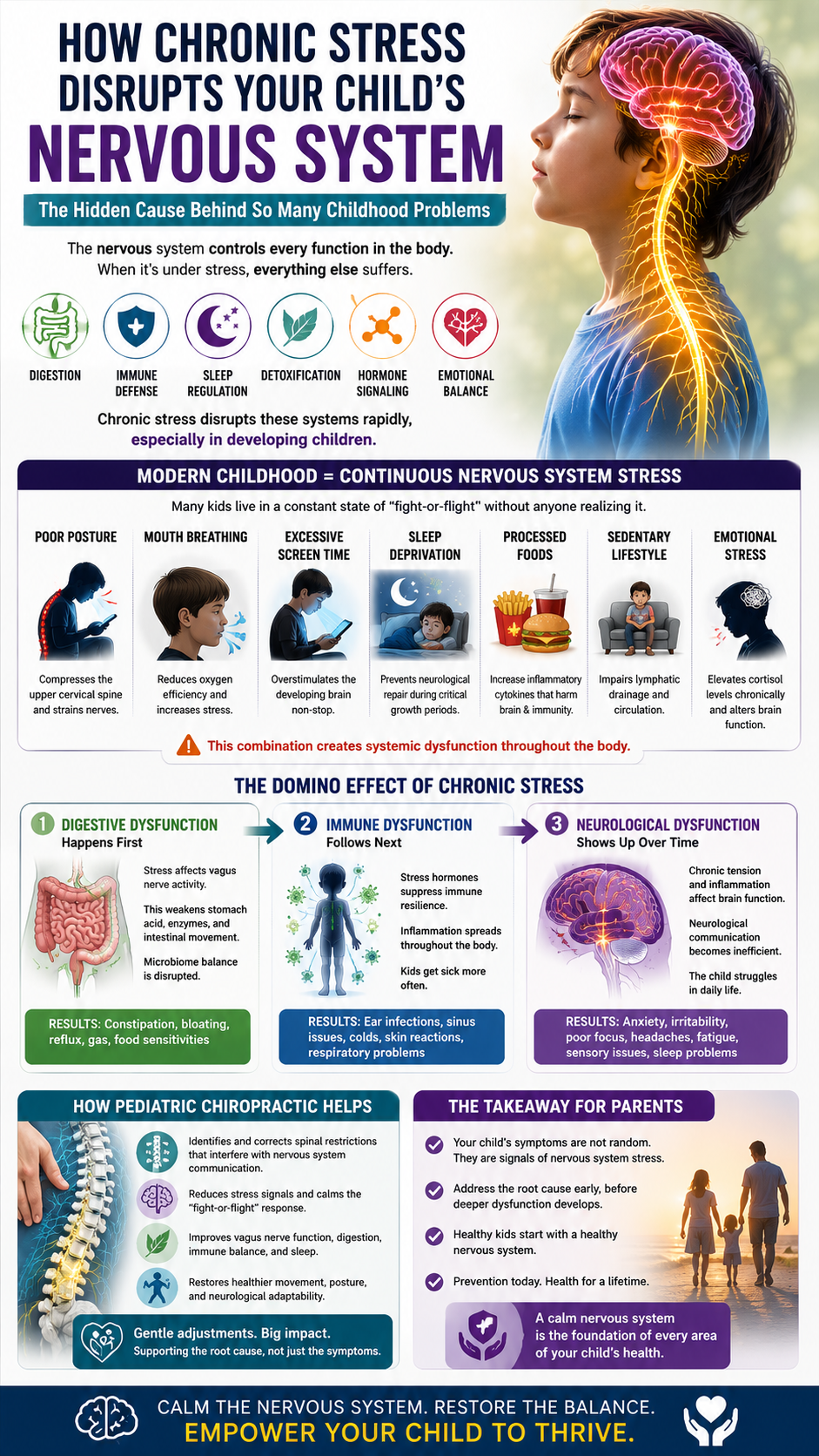
That combination creates systemic dysfunction throughout the body.
Digestive problems frequently emerge first because stress directly affects vagus nerve activity. The vagus nerve regulates stomach acid production, enzyme secretion, intestinal movement, and inflammatory balance within the gut. Chronic stress weakens digestive efficiency and alters microbiome health. Constipation, bloating, reflux, and food sensitivities commonly follow.
Immune dysfunction often develops next. Stress hormones suppress immune resilience over time. Inflammatory signaling increases throughout the body. Children experience repeated ear infections, sinus congestion, respiratory illnesses, and skin reactions. Antibiotics may temporarily suppress infections while deeper inflammatory dysfunction continues progressing.
Neurological symptoms eventually surface as well. Chronic tension affects sensory processing, coordination, concentration, emotional regulation, and sleep quality. Many children become restless, anxious, irritable, or chronically fatigued. Headaches and neck pain increasingly affect younger populations because structural stress now begins earlier than previous generations experienced.
Functional pediatric chiropractic attempts to reduce that neurological overload before deeper dysfunction develops. Practitioners believe spinal restrictions amplify stress patterns throughout the nervous system. Gentle adjustments aim to restore healthier movement and neurological adaptability.
Why Mainstream Medicine Often Rejects Pediatric Chiropractic
The conflict between chiropractic and mainstream medicine extends far beyond spinal adjustments. The disagreement reflects fundamentally different beliefs about how the body heals and regulates itself.
Conventional medicine primarily studies pathology and pharmaceutical intervention. Most medical education emphasizes disease diagnosis, medication management, surgery, and emergency stabilization. Physicians receive limited training regarding biomechanics, nutrition, nervous system regulation, environmental toxicity, or preventative lifestyle medicine. That educational framework shapes how doctors interpret pediatric symptoms.
When a child develops chronic ear infections, conventional treatment often involves antibiotics or surgical tubes. Functional chiropractors ask broader questions regarding inflammation, lymphatic drainage, posture, neurological tension, immune stress, and vagus nerve function. Those contrasting perspectives frequently collide because each profession views the body through a different lens.
Research funding further intensifies the divide. Pharmaceutical companies invest billions studying profitable medications. Non-drug interventions rarely receive comparable financial backing. Chiropractic research therefore remains smaller despite growing public interest. Critics use limited funding as evidence against chiropractic effectiveness while ignoring the financial imbalance shaping research availability.
Media portrayal also distorts public perception. Sensational stories generate attention quickly. Dramatic headlines involving chiropractic complications spread rapidly online. Positive outcomes rarely receive equivalent coverage because successful wellness care lacks controversy. That imbalance creates exaggerated fear surrounding pediatric chiropractic.
Some criticism does hold merit. Certain chiropractors make irresponsible claims regarding curing autism, asthma, or complex neurological disorders. Ethical practitioners should never promise miracle outcomes. Pediatric chiropractic works best as part of an integrated wellness strategy rather than isolated treatment. Poor practitioners exist within every healthcare profession, including medicine, chiropractic, nutrition, and physical therapy.
The larger problem involves polarized thinking. Many parents feel pressured to choose between conventional medicine and functional care. Wise healthcare decisions rarely require extreme loyalty toward one system. Children benefit most when practitioners collaborate honestly while respecting the strengths and limitations of each discipline.
The Posture Crisis Destroying Childhood Health
One of the greatest threats to pediatric neurological health rarely receives serious attention. Modern posture patterns now resemble structural collapse rather than healthy spinal alignment. Children increasingly develop forward-head posture before adolescence. That posture change affects far more than appearance.
The human head weighs approximately ten to twelve pounds in neutral alignment. Forward-head posture dramatically increases stress on the cervical spine. Every inch of forward displacement adds substantial mechanical load throughout the neck and upper back. Muscles tighten continuously while neurological tension increases around the spinal cord and brainstem.
Children now spend hours daily looking downward at phones, tablets, gaming systems, and laptops. Schools further reinforce prolonged sitting patterns. Physical movement declines while digital exposure rises. That combination creates widespread structural dysfunction affecting neurological regulation profoundly.
Forward-head posture alters breathing mechanics significantly. Many children develop shallow chest breathing instead of healthy diaphragmatic breathing. Oxygen efficiency declines while sympathetic stress increases. Mouth breathing often follows, especially during sleep. Poor breathing patterns contribute to anxiety, sleep disruption, concentration problems, and fatigue.
Postural collapse also influences circulation and lymphatic drainage. Tight muscles compress vascular structures surrounding the neck and shoulders. Reduced circulation affects oxygen delivery to tissues and brain function. Chronic muscular tension contributes to headaches, dizziness, jaw pain, and upper back discomfort.
Functional chiropractors view posture as a neurological issue rather than merely a cosmetic concern. Healthy posture supports efficient nerve signaling, breathing patterns, circulation, and musculoskeletal balance. Pediatric chiropractic therefore focuses heavily on restoring proper movement patterns during growth years.
Parents can dramatically improve childhood posture through simple lifestyle changes. Outdoor play strengthens postural muscles naturally. Limiting recreational screen time reduces repetitive forward-head positioning. Standing desks encourage movement during learning. Regular stretching restores flexibility around the chest and shoulders. Encouraging nose breathing improves oxygen efficiency and neurological regulation.
Children cannot maintain healthy nervous systems while spending most waking hours collapsed over digital devices. Structural stress eventually becomes neurological stress. Neurological stress eventually becomes systemic dysfunction.
The Gut-Brain Connection and Pediatric Dysfunction
Many pediatric symptoms originate inside the digestive system long before diagnosis occurs. Functional medicine increasingly recognizes the gut as a central regulator of neurological and immune health. Pediatric chiropractors often incorporate gut health discussions because digestion and nervous system regulation remain deeply interconnected.
The digestive tract contains hundreds of millions of neurons forming the enteric nervous system. That network communicates continuously with the brain through the vagus nerve. Inflammatory signals within the gut therefore influence mood, sleep, immune activity, concentration, and behavior directly.
Modern children consume alarming quantities of ultra-processed foods containing artificial dyes, preservatives, seed oils, refined sugars, and chemical additives. Those substances damage the intestinal lining and alter microbiome diversity rapidly. Antibiotic overuse further disrupts healthy bacterial balance throughout childhood.
Chronic inflammation develops when the intestinal barrier weakens. Undigested food particles and bacterial toxins enter circulation more easily. The immune system responds aggressively, increasing inflammatory cytokines throughout the body. Brain function becomes affected because inflammation crosses the blood-brain barrier.
Children experiencing gut dysfunction often display surprising symptoms. Anxiety, hyperactivity, irritability, headaches, sleep disruption, skin problems, and concentration issues frequently accompany digestive imbalance. Conventional medicine commonly separates those symptoms into unrelated categories despite their interconnected origins.
Stress worsens gut dysfunction dramatically. Sympathetic nervous system activation suppresses digestive efficiency and alters intestinal movement. Chronic neurological tension therefore contributes directly to constipation, reflux, bloating, and nutrient malabsorption. Functional chiropractors attempt to reduce nervous system stress while supporting healthier vagal function.
Parents can improve gut-brain health significantly through dietary and lifestyle changes. Whole foods reduce inflammatory burden rapidly. Healthy fats support brain development and hormone balance. Fiber-rich vegetables improve microbiome diversity naturally. Reducing sugar intake stabilizes inflammatory signaling and blood sugar fluctuations. Proper hydration improves digestion and detoxification.
Sleep also plays a critical role in gut health because repair processes intensify overnight. Children lacking restorative sleep often develop worsening digestive symptoms over time. Physical movement further improves intestinal motility and lymphatic circulation naturally.
The gut and nervous system constantly communicate. Dysfunction rarely remains isolated within one system for long. Supporting digestive health therefore supports neurological resilience simultaneously.
The Truth About Pediatric Chiropractic Safety
Fear dominates many conversations surrounding pediatric chiropractic safety. Parents often imagine forceful twisting movements performed on fragile infant spines. That image rarely reflects clinical reality. Most pediatric chiropractic adjustments involve gentle pressure requiring minimal force.
Infant spines differ dramatically from adult spines because cartilage remains more prominent during early development. Pediatric chiropractors therefore adapt techniques specifically for children’s anatomy. Gentle fingertip contact commonly replaces high-force manipulation. Many adjustments resemble sustained pressure more than sudden movement.
Research regarding pediatric chiropractic safety continues evolving. Current evidence suggests severe adverse events remain extremely rare when trained practitioners use age-appropriate techniques. Most reported side effects involve temporary soreness or mild irritability. Serious complications occur far less frequently than public fear suggests.
Every healthcare intervention carries risk. Antibiotics disrupt microbiome health and increase resistant bacterial strains. Acetaminophen overdose remains a leading cause of liver injury. Surgical procedures create anesthesia risks and infection possibilities. Even common pediatric medications produce documented long-term side effects.
Risk should always be evaluated honestly and comparatively rather than emotionally. Functional practitioners argue that chronic medication exposure may create greater long-term harm than gentle structural care addressing underlying dysfunction. Critics counter that more large-scale research remains necessary before broader recommendations occur.
Parents should focus heavily on practitioner quality when considering pediatric chiropractic care. Advanced pediatric training matters enormously. Ethical chiropractors perform detailed examinations and refer children for medical evaluation when red flags appear. Responsible practitioners avoid exaggerated claims while emphasizing collaborative care.
Warning signs deserve immediate attention. Parents should avoid practitioners using aggressive force on infants or promising miracle cures. Fear-based marketing also signals poor clinical judgment. High-quality pediatric chiropractors educate calmly while respecting parental questions and medical collaboration.
Children deserve thoughtful, individualized care rather than ideological extremes. Safe pediatric chiropractic exists when skilled practitioners prioritize gentle techniques, neurological understanding, and patient-centered ethics.
How Parents Can Protect Their Children Naturally at Home
Parents hold tremendous power to improve childhood neurological health naturally. Small daily choices influence inflammation, posture, sleep quality, emotional regulation, and nervous system resilience profoundly. Functional wellness begins inside the home long before symptoms require professional intervention.
Movement represents one of the most powerful neurological therapies available. Children require frequent physical activity for healthy brain development and spinal stability. Outdoor play strengthens posture while improving sensory integration and coordination. Climbing, crawling, balancing, jumping, and running stimulate neurological pathways essential for healthy development.
Sleep quality directly affects every healing process inside the body. Many children now experience chronic sleep deprivation due to overstimulation and excessive evening screen exposure. Blue light suppresses melatonin production while activating the sympathetic nervous system. Restorative sleep becomes impossible when children remain neurologically stimulated before bedtime.

Parents can improve sleep dramatically through consistent evening routines. Dark sleeping environments enhance melatonin release naturally. Cooler bedroom temperatures support deeper sleep cycles. Removing electronic devices from bedrooms reduces neurological overstimulation. Reading physical books instead of watching screens calms the nervous system effectively.
Breathing patterns also deserve attention because mouth breathing creates widespread physiological stress. Children should breathe primarily through the nose during both daytime and sleep. Nasal breathing improves oxygen efficiency while supporting nitric oxide production and parasympathetic nervous system activation. Chronic mouth breathing often signals underlying structural or inflammatory dysfunction requiring evaluation.
Nutritional quality shapes neurological health continuously. Whole foods provide vitamins, minerals, amino acids, and healthy fats essential for brain development. Processed foods increase inflammatory burden while destabilizing blood sugar regulation. Excess sugar consumption worsens hyperactivity, immune dysfunction, and energy crashes throughout the day.
Hydration supports detoxification, circulation, and cognitive performance simultaneously. Many children consume sugary beverages while remaining chronically dehydrated. Clean water intake improves energy, concentration, digestion, and lymphatic movement naturally.
Emotional stress also affects physical health profoundly. Children absorb tension from chaotic environments quickly. Constant overstimulation elevates cortisol levels and sympathetic nervous system activation. Calm family routines create neurological safety supporting emotional and physical resilience.
Modern health challenges require proactive parenting because society increasingly normalizes dysfunction. Protecting children’s nervous systems now demands intentional lifestyle choices every day.
The Future of Pediatric Wellness Care
The pediatric chiropractic debate reflects a larger transformation occurring throughout healthcare. Parents increasingly question symptom-based treatment models failing to reverse chronic illness trends. Childhood anxiety, obesity, autoimmune disease, sleep disorders, and neurodevelopmental challenges continue rising despite expanding pharmaceutical intervention.
Functional medicine and pediatric chiropractic have gained attention because families seek deeper answers regarding why children become chronically unwell. Many parents recognize that health involves far more than symptom suppression alone. Nervous system balance, nutrition, movement, sleep, emotional regulation, posture, toxin exposure, and structural integrity all influence long-term wellness profoundly.
Future pediatric healthcare will likely become more integrative because no single discipline possesses every answer. Conventional medicine remains essential during emergencies, infections, trauma, and advanced disease management. Functional approaches provide valuable insight regarding prevention, lifestyle medicine, nervous system regulation, and chronic inflammatory dysfunction.
Children deserve practitioners willing to investigate root causes rather than merely suppress symptoms temporarily. They also deserve parents educated enough to recognize how daily lifestyle choices shape neurological and physical development continuously.
Pediatric chiropractic will likely remain controversial because it challenges dominant healthcare assumptions. However, growing public demand suggests many families no longer accept purely reactive models of care. Parents increasingly value prevention, nervous system support, and holistic wellness strategies designed to strengthen resilience before disease develops.
The real question therefore extends beyond chiropractic itself. Society must decide whether healthcare should merely manage disease or actively cultivate wellness. That philosophical divide ultimately fuels the pediatric chiropractic controversy more than spinal adjustments ever could.
Children today face extraordinary neurological and environmental stress. They need movement instead of endless sitting. They require whole foods instead of ultra-processed diets. Their bodies need restorative sleep instead of constant stimulation. Their nervous systems require regulation rather than chronic overload. Pediatric chiropractic represents one piece within that larger wellness conversation.
True pediatric health begins when parents recognize that the body functions as an interconnected system rather than isolated symptoms. Structural stress affects neurological balance. Neurological dysfunction influences digestion and immunity. Chronic inflammation disrupts emotional regulation and sleep. Every system communicates continuously with every other system.
That understanding changes everything because it shifts healthcare away from crisis management and toward foundational wellness. The future of pediatric health may ultimately depend upon how quickly society embraces that reality.