
The Modern Back Pain Crisis Nobody Expected
America faces a devastating spinal health crisis that continues growing despite massive advances in modern medicine. Hospitals perform hundreds of thousands of spinal procedures yearly while chronic back pain rates continue climbing. Millions wake each morning with stiffness, numbness, burning pain, sciatica, or limited mobility. Entire industries now revolve around treating spinal conditions, yet patients often remain trapped inside endless cycles of medications, injections, physical limitations, and surgeries.
The average person believes back pain develops because the body simply “wears out” with age. Mainstream medicine reinforces that belief constantly through frightening diagnoses and grim predictions. Patients hear terms such as degenerative disc disease, spinal stenosis, collapsed discs, arthritic spines, and nerve impingement. Those labels often create fear before true education begins. Fear then drives people toward aggressive procedures long before addressing the actual causes behind spinal dysfunction.
Modern healthcare frequently treats symptoms instead of investigating why the spine deteriorated initially. Most treatment plans focus on suppressing pain signals rather than restoring healthy biomechanics, reducing inflammation, or improving nervous system function. Patients receive muscle relaxers to calm spasms, opioids to numb discomfort, and steroid injections to temporarily reduce inflammation. When those interventions fail, surgery often becomes the next recommendation.
That approach ignores one critical truth. The body rarely breaks down without reason. Spinal degeneration develops through years of accumulated stress, inflammation, muscular imbalance, poor posture, nutritional deficiencies, sedentary living, and nervous system dysfunction. Many people never hear those contributing factors discussed inside conventional treatment rooms. Instead, they become convinced surgery represents the only path forward.
Chiropractic and functional medicine challenge that narrative completely. Rather than viewing the spine as a machine requiring replacement parts, these disciplines recognize the body as a self-healing and adaptive system. Chiropractic care focuses on restoring proper spinal movement and nervous system communication. Functional medicine examines inflammation, toxicity, metabolism, nutrition, hormones, and lifestyle habits that silently damage spinal tissues over time. Together, these approaches often help patients avoid unnecessary spinal procedures entirely.
How the Back Surgery Epidemic Began
The back surgery epidemic did not emerge overnight. Several decades of changing healthcare priorities created the perfect environment for widespread spinal intervention. Insurance reimbursement structures rewarded procedures more heavily than prevention. Hospitals invested heavily in spinal hardware and imaging technologies because those services generated enormous profits. Pharmaceutical companies aggressively marketed medications designed to manage pain instead of correcting dysfunction.
MRI technology dramatically altered spinal medicine as well. Physicians suddenly gained the ability to visualize discs, nerves, joints, and degenerative changes in extraordinary detail. While imaging provided valuable diagnostic information, it also created widespread misunderstanding. Patients began believing every abnormal MRI finding explained their pain perfectly.
Research eventually exposed a shocking reality. Many pain-free adults possess disc herniations, bulging discs, spinal stenosis, and severe degeneration without symptoms. Studies repeatedly demonstrated that structural abnormalities alone cannot fully explain chronic pain. Some individuals with terrible imaging experience little discomfort while others with mild findings suffer intensely.
That discovery revealed a major flaw in conventional spinal treatment. Pain involves far more than damaged anatomy. The nervous system, inflammatory pathways, stress hormones, muscle balance, movement quality, sleep, nutrition, and emotional health all influence pain perception significantly. Treating spinal pain as a purely structural problem oversimplifies an incredibly complex process.
Sedentary lifestyles accelerated spinal decline further. Human beings evolved for movement, yet modern culture promotes prolonged sitting daily. Office workers remain seated for eight to twelve hours while staring at screens. Children spend increasing time hunched over phones and tablets. Weak muscles then fail to stabilize spinal joints properly, creating chronic mechanical stress throughout the body.
Processed foods worsened the problem dramatically. Sugar consumption increased while nutrient density declined sharply. Industrial seed oils became common ingredients in nearly every packaged food. Chronic inflammation spread through the population silently, damaging joints, discs, nerves, and connective tissues continuously. Most healthcare systems responded by managing symptoms instead of correcting inflammatory lifestyle habits.
What Really Causes Chronic Back Pain
The public often believes spinal pain develops from one isolated injury or traumatic event. In reality, chronic back pain usually emerges gradually through years of physiological breakdown. The body adapts constantly to stress, movement patterns, posture, inflammation, and lifestyle habits. When those factors remain unhealthy long enough, spinal tissues begin deteriorating.
Inflammation sits at the center of most chronic spinal conditions. Processed foods, sugar, alcohol, smoking, poor sleep, chronic stress, and environmental toxins all increase inflammatory signaling inside the body. Inflamed tissues become hypersensitive and painful. Nerves begin firing excessively while muscles tighten defensively around unstable joints.
Poor posture creates another massive contributor to spinal dysfunction. Forward head posture places tremendous stress on cervical structures. Rounded shoulders compress the thoracic spine while restricting healthy breathing mechanics. Tight hip flexors pull the pelvis into dysfunctional alignment, increasing lower back stress continuously.
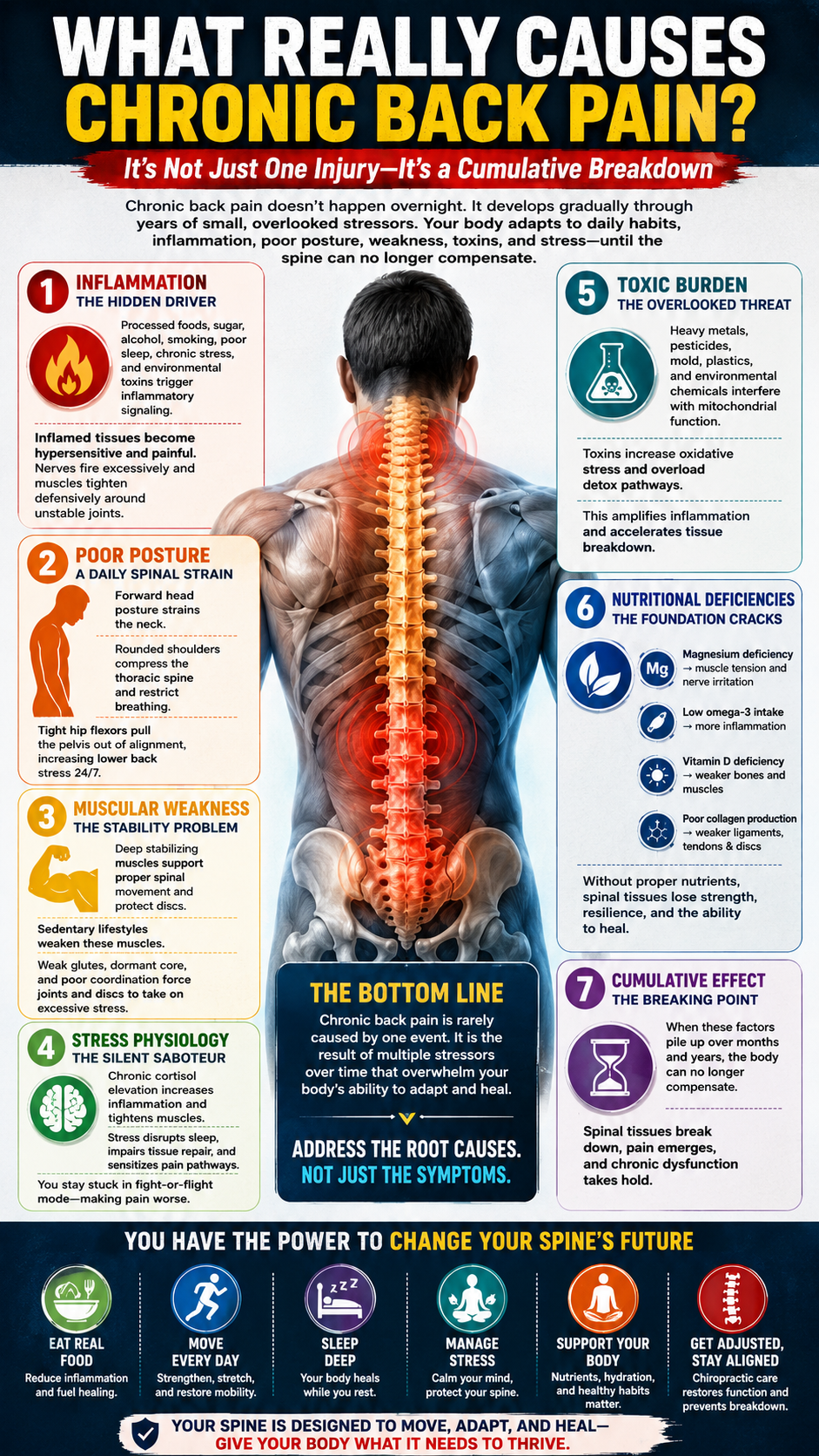
Muscular weakness worsens instability throughout the spine. Deep stabilizing muscles support proper spinal movement and protect discs from excessive force. Sedentary lifestyles weaken those muscles dramatically. Weak glutes, dormant abdominal stabilizers, and poor core coordination force joints and discs to absorb greater mechanical stress during movement.
Stress physiology also damages the spine in powerful ways. Chronic cortisol elevation increases inflammation while tightening muscles throughout the body. Stress disrupts sleep quality, impairs tissue repair, and sensitizes pain pathways inside the nervous system. Many chronic pain sufferers remain trapped inside constant fight-or-flight activation without realizing it.
Toxic burden contributes heavily to chronic pain as well. Heavy metals, pesticides, mold exposure, plastics, and environmental chemicals interfere with mitochondrial function and increase oxidative stress. Toxic overload burdens detoxification systems while amplifying inflammation throughout the body.
Nutritional deficiencies further weaken spinal tissues over time. Magnesium deficiency contributes to muscle tension and nerve irritation. Low omega-3 intake increases inflammatory activity. Vitamin D deficiency weakens bone health and muscular performance. Poor collagen production reduces connective tissue resilience. The spine cannot heal properly without adequate nutritional support.
Why MRI Findings Often Mislead Patients
Modern medicine relies heavily on imaging to diagnose spinal conditions, yet MRI findings frequently create unnecessary fear. Patients often hear alarming phrases immediately after reviewing scans. Doctors describe collapsing discs, severe arthritis, narrowing spaces, or degenerative disease. Those words make patients believe their bodies are permanently damaged.
Research paints a far more nuanced picture. Large studies reveal that many healthy adults possess serious spinal abnormalities without pain. Disc bulges, herniations, and arthritic changes become increasingly common with age, even among active and symptom-free individuals.
That reality changes how spinal pain should be interpreted entirely. An abnormal MRI does not automatically explain symptoms. Imaging findings must always be evaluated alongside movement patterns, neurological function, posture, inflammation, muscular balance, and lifestyle habits.
Fear-based interpretations often worsen outcomes dramatically. Patients told their spine resembles that of an elderly person frequently become terrified of movement. Fear leads to guarding, inactivity, stiffness, and muscular weakness. The nervous system then becomes increasingly sensitive to pain signals.
Functional medicine and chiropractic emphasize function rather than imaging alone. A patient may possess degenerative changes while still improving substantially through better movement, reduced inflammation, and restored spinal mechanics. The body retains remarkable adaptive potential even when imaging appears concerning.
The Nervous System’s Role in Back Pain
Most people view spinal pain as a purely mechanical issue involving bones and discs. The nervous system actually plays a central role in chronic pain development. Every spinal joint contains receptors constantly communicating with the brain regarding movement, position, and stability.
Restricted or dysfunctional spinal joints alter neurological signaling significantly. Abnormal sensory input travels into the brain continuously, creating muscular imbalance and altered movement patterns. Some muscles become chronically tight while others weaken dramatically. Compensation patterns spread throughout the body over time.
Chronic pain also changes how the brain processes sensation. The nervous system becomes hypersensitive after prolonged irritation. Ordinary movement may eventually trigger pain responses even after tissue damage improves. This process, called central sensitization, explains why some chronic pain patients suffer despite minimal structural abnormalities.
Stress intensifies neurological dysfunction further. Elevated cortisol and adrenaline keep the nervous system locked in defensive mode. Muscles remain tense while pain thresholds decrease. Sleep disruption then prevents proper neurological recovery.
Chiropractic adjustments help restore healthier nervous system communication by improving spinal motion and reducing joint irritation. Proper movement sends more balanced sensory information into the brain, allowing muscular coordination and stability to improve naturally.
Why Chiropractic Often Prevents Surgery
Chiropractic care remains one of the most misunderstood healthcare disciplines in America. Many people reduce chiropractic treatment to simple “back cracking” without understanding its neurological and biomechanical significance. Proper chiropractic care focuses on restoring motion, alignment, stability, and nervous system function.
The spine depends on movement for health and survival. Restricted joints lose circulation and become increasingly inflamed over time. Nearby muscles tighten defensively while adjacent joints compensate excessively. Those compensation patterns gradually accelerate degeneration throughout the spine.
Chiropractic adjustments restore healthier movement patterns by reducing joint restriction and improving biomechanics. Improved motion enhances circulation, decreases stiffness, and reduces abnormal mechanical stress on discs and nerves. Many patients experience significant pain reduction naturally after restoring proper movement.
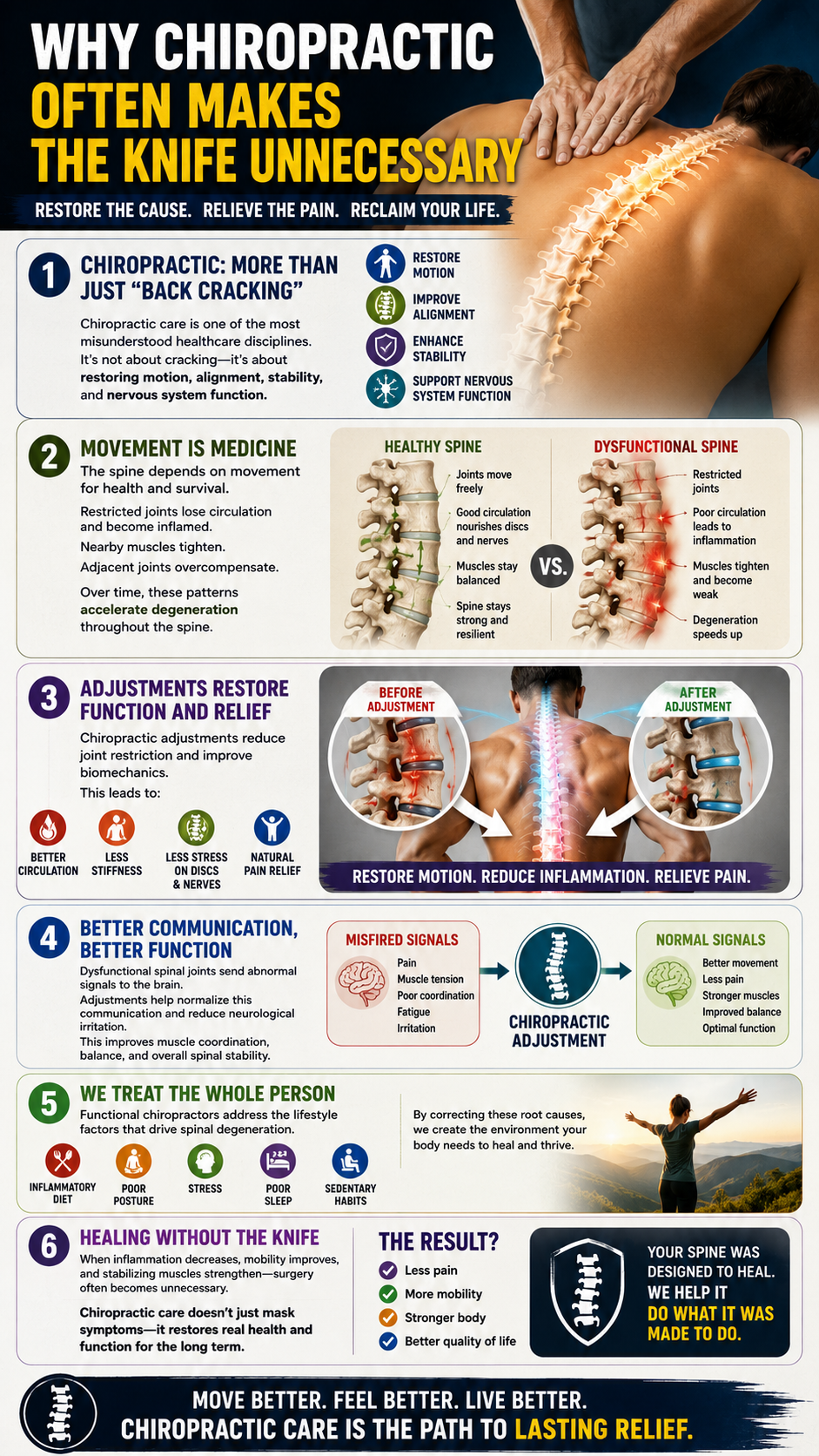
Nervous system regulation improves through chiropractic care as well. Dysfunctional spinal joints constantly bombard the brain with abnormal sensory information. Adjustments help normalize that communication while reducing neurological irritation. Improved signaling allows muscles to coordinate more efficiently and stabilize the spine better.
Functional chiropractors also address lifestyle factors contributing to degeneration. Inflammatory diets, poor posture, stress, sleep deprivation, and sedentary habits all influence spinal health profoundly. Correcting those factors often transforms patient outcomes dramatically.
Many people discover surgery becomes unnecessary once inflammation decreases, mobility improves, and stabilizing muscles strengthen correctly. Chiropractic care does not remove symptoms temporarily. Instead, it often helps restore healthier function throughout the entire neuromusculoskeletal system.
The Hidden Dangers of Spinal Surgery
Surgery absolutely has a place within healthcare. Severe trauma, fractures, tumors, infections, and progressive neurological emergencies require immediate intervention. Problems arise when surgery becomes the default recommendation before conservative therapies receive proper consideration.
Every spinal surgery creates trauma intentionally. Surgeons must cut through muscles, fascia, ligaments, and connective tissues to access spinal structures. Scar tissue then forms during healing, often restricting mobility and irritating nearby nerves.
Fusion procedures eliminate natural spinal movement permanently at targeted segments. Adjacent discs and joints must absorb greater stress afterward, accelerating degeneration elsewhere. Many patients eventually require additional surgeries because neighboring spinal levels deteriorate faster over time.
Hardware complications occur more often than many patients realize. Screws may loosen while rods create chronic irritation. Artificial implants alter biomechanics significantly, changing how forces distribute throughout the spine.
Failed Back Surgery Syndrome affects enormous numbers of patients yearly. Persistent pain, scar tissue formation, nerve sensitization, muscular weakness, and altered movement patterns contribute heavily to poor long-term outcomes. Some patients develop worse symptoms after surgery than before.
Conventional medicine rarely emphasizes these risks during initial consultations. Many patients therefore pursue surgery without fully understanding long-term consequences.
How Inflammation Destroys the Spine
Inflammation acts like gasoline poured onto spinal dysfunction. Inflamed tissues become swollen, hypersensitive, and painful. Nerves fire more aggressively while muscles tighten protectively around unstable regions. Chronic inflammation also weakens connective tissues and slows healing dramatically.
Processed foods represent one of the greatest inflammatory drivers today. Refined sugars elevate insulin rapidly while increasing inflammatory cytokines throughout the body. Industrial seed oils oxidize easily and damage cellular membranes. Artificial additives burden detoxification pathways continuously.
Gut health strongly influences inflammation as well. Intestinal permeability allows inflammatory compounds into circulation, activating the immune system chronically. Many chronic pain sufferers unknowingly experience digestive dysfunction contributing directly to systemic inflammation.
Sleep deprivation intensifies inflammatory activity profoundly. The body performs most tissue repair during deep sleep stages. Poor sleep therefore increases pain sensitivity while impairing healing capacity simultaneously.
Stress hormones worsen inflammation further. Elevated cortisol initially suppresses inflammation temporarily, but chronic stress eventually dysregulates immune function completely. Persistent stress then drives widespread inflammatory damage throughout the body.
Reducing inflammation naturally often changes spinal pain dramatically. Anti-inflammatory nutrition, hydration, sleep optimization, stress reduction, and movement all calm irritated tissues effectively.
Why Sedentary Living Damages the Spine
Human beings evolved for constant movement, yet modern lifestyles encourage prolonged inactivity daily. Sitting weakens stabilizing muscles rapidly while compressing discs unevenly. Poor posture then magnifies mechanical stress throughout the spine.
Inactive muscles lose strength and coordination quickly. Weak glutes fail to support pelvic alignment while dormant abdominal stabilizers reduce spinal support. Joints and discs must compensate for that weakness continuously during movement.
Circulation also decreases significantly during prolonged sitting. Reduced blood flow impairs tissue repair while increasing stiffness and inflammation. Tight hip flexors develop from excessive sitting, pulling the pelvis into dysfunctional positioning.
Children now experience spinal dysfunction earlier than previous generations because screen time dominates modern life. Hours spent hunched over devices create chronic cervical stress and poor posture habits during critical developmental years.
Movement acts as medicine for the spine. Walking improves circulation while nourishing discs naturally. Strength training restores muscular stability while reducing joint stress. Mobility exercises maintain healthier movement patterns and prevent stiffness from worsening.
How to Protect Your Spine Naturally at Home
Protecting spinal health begins with consistent daily habits rather than dramatic interventions. Small actions repeated regularly create powerful physiological improvements over time.
Walking daily remains one of the most effective natural therapies for spinal health. Rhythmic movement improves circulation while supporting disc nutrition and nervous system regulation. Frequent movement breaks throughout the day prevent prolonged compression patterns from developing.
Posture correction dramatically reduces spinal stress as well. Screens positioned at eye level decrease cervical strain significantly. Standing tall with relaxed shoulders improves breathing mechanics and muscular activation naturally. Supportive sitting positions help maintain healthier spinal alignment during work hours.

Anti-inflammatory nutrition creates an internal environment where healing can occur. Whole foods rich in antioxidants reduce oxidative stress while supporting tissue repair. Healthy fats nourish cellular membranes and decrease inflammatory signaling. Proper hydration improves disc function and muscular performance simultaneously.
Core strengthening remains essential for spinal stability. Functional exercises activate deep stabilizing muscles while improving posture and movement coordination. Strong glutes and abdominal muscles protect discs from excessive mechanical stress.
Stress management also plays a critical role in recovery. Deep breathing, prayer, outdoor activity, meditation, and quality sleep calm the nervous system while reducing muscular tension naturally.
Chiropractic care may help maintain healthier biomechanics and nervous system communication over time. Restoring proper movement early often prevents degeneration from progressing further.
The Future of Spinal Healthcare
The future of spinal healthcare will likely shift toward root-cause correction rather than endless symptom suppression. Patients increasingly recognize pain involves far more than damaged anatomy alone. Functional medicine and chiropractic continue growing because they address the underlying drivers of dysfunction directly.
Preventive spinal care will become increasingly important as chronic pain rates continue rising. Education regarding posture, movement, nutrition, inflammation, stress physiology, and nervous system health may eventually replace procedure-centered treatment models.
Regenerative medicine also continues evolving rapidly. Researchers now explore methods supporting tissue healing rather than removing damaged structures surgically. Integrative rehabilitation programs increasingly combine chiropractic care, nutrition, movement therapy, and stress reduction for comprehensive recovery.
The public slowly awakens to an empowering truth. The body possesses remarkable healing potential when interference decreases and proper function returns.
Final Thoughts on the Back Surgery Epidemic
The back surgery epidemic reflects a deeper failure within modern healthcare. Too many patients receive treatments aimed at suppressing symptoms instead of correcting dysfunction. Many never learn how inflammation, poor posture, stress, sedentary living, and nutritional deficiencies damage the spine gradually over time.
Fear-driven diagnoses often push people toward invasive procedures prematurely. Patients hear devastating MRI interpretations without understanding that many abnormalities exist in pain-free individuals. They rarely learn how strongly the nervous system, metabolism, and lifestyle habits influence chronic pain.
Chiropractic and functional medicine provide a radically different perspective. These disciplines view the body as an interconnected and adaptive system capable of healing under the right conditions. Rather than asking what tissue should be removed surgically, they investigate why the spine deteriorated initially.
That shift in thinking changes outcomes profoundly. Reduced inflammation calms irritated nerves. Improved biomechanics decrease abnormal joint stress. Better posture restores healthier movement patterns. Functional exercise strengthens stabilizing muscles while protecting discs naturally. Proper nutrition supports tissue repair and nervous system health simultaneously.
Surgery absolutely remains necessary during certain emergencies and severe structural conditions. However, the knife should rarely become the first conversation for chronic spinal pain. Many patients improve dramatically after addressing the true causes of dysfunction through conservative and functional care.
The spine does not simply collapse because time passes. The body adapts continuously to lifestyle, movement, stress, nutrition, inflammation, and environment. Understanding that reality empowers patients to reclaim control over their health naturally.
Healing begins when people stop viewing the body as broken machinery and start recognizing its extraordinary capacity for repair, resilience, and restoration.