There are certain ingredients so common, so normalized, and so quietly embedded into modern life that most people never stop to question them. Titanium dioxide is one of those substances. It sits invisibly in your pantry, your bathroom cabinet, and even your medicine drawer, rarely listed in bold, rarely discussed in mainstream conversations, yet constantly entering the human body day after day.
What makes titanium dioxide particularly concerning is not just its widespread use, but the illusion of safety that surrounds it. For decades, it has been labeled as “generally recognized as safe,” a phrase that has lulled millions into passive exposure. But as deeper research emerges and more sophisticated methods of evaluating toxicity are developed, a very different picture is beginning to form—one that challenges the foundational assumptions of conventional safety standards.
This article is a deep dive into what titanium dioxide really is, where it hides, what it does inside the human body, and most importantly, how to begin removing its burden from your system. Because once you see where it’s hiding and what it’s doing, you cannot unsee it—and that awareness becomes the first step toward reclaiming control over your health.
What Is Titanium Dioxide?
Titanium dioxide (TiO₂) is a naturally occurring mineral that is processed into a fine, white powder. Its primary appeal lies in its ability to create brightness, opacity, and a smooth, appealing texture. It reflects light extremely well, which is why it is often used to make products appear whiter, cleaner, and more visually appealing.
In industrial applications, titanium dioxide is used in paints, coatings, plastics, and even sunscreen due to its ability to block ultraviolet light. But the real concern begins when this industrial compound crosses into the world of ingestion and absorption—when it moves from external use into the human body.
In food and pharmaceutical labeling, titanium dioxide is often listed as:
- Titanium dioxide
- E171 (common in Europe)
- CI 77891 (in cosmetics)
It is not added for nutritional value. It serves no biological purpose in the human body. It is purely aesthetic—added to make food brighter, pills whiter, and products more visually appealing to the consumer.
And yet, despite having no physiological benefit, it is consumed daily by millions.
Where Titanium Dioxide Is Hiding
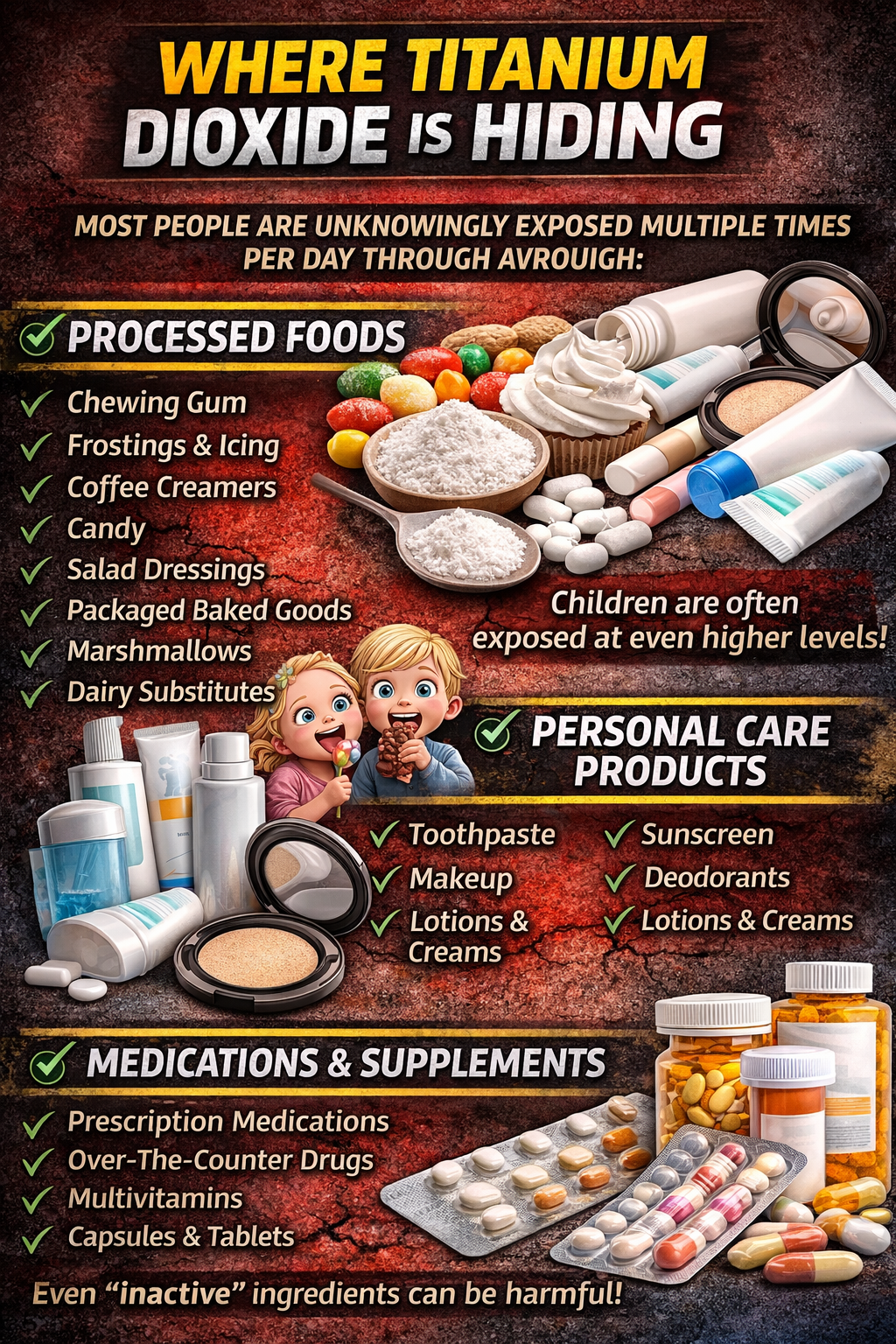
One of the most alarming aspects of titanium dioxide is just how pervasive it is. Most people are unknowingly exposed to it multiple times per day through a variety of sources.
1. Processed Foods
Titanium dioxide is commonly used in processed foods to enhance color and texture. It creates that bright, artificial whiteness or opacity that manufacturers know consumers associate with freshness and quality.
Common sources include:
- Chewing gum
- Frostings and icing
- Coffee creamers
- Candy (especially coated or shiny varieties)
- Salad dressings
- Packaged baked goods
- Marshmallows
- Dairy substitutes
Children are often exposed at even higher levels due to their increased consumption of candy and processed snacks. This is particularly concerning given the vulnerability of developing systems.
2. Personal Care Products
The skin is not an impenetrable barrier. What is applied topically can be absorbed, especially when used repeatedly over time.
Titanium dioxide is commonly found in:
- Toothpaste
- Sunscreen
- Makeup (foundation, powder, eyeshadow)
- Deodorants
- Lotions and creams
In these products, it is used to create opacity, brightness, and UV protection. However, when particles are small enough—especially in nano form—they can penetrate the skin or be inhaled.
3. Medications and Supplements
Perhaps the most overlooked source is pharmaceuticals. Titanium dioxide is frequently used as a coloring agent in pills and capsules.
It is found in:
- Prescription medications
- Over-the-counter drugs
- Multivitamins
- Capsules and tablets
This means that even individuals actively trying to improve their health may be unknowingly increasing their toxic burden through the very substances they trust to help them.
The Nano Problem: Why Size Matters
Not all titanium dioxide is created equal. The real concern lies in nano-sized particles, which are incredibly small—thousands of times smaller than the width of a human hair.
At this scale, substances behave differently. They can:
- Cross biological barriers
- Enter cells directly
- Interact with DNA and cellular structures
Nano titanium dioxide has been shown to accumulate in tissues, including the liver, spleen, and even the brain. This raises serious questions about long-term exposure and cumulative toxicity.
What Titanium Dioxide Does Inside the Body
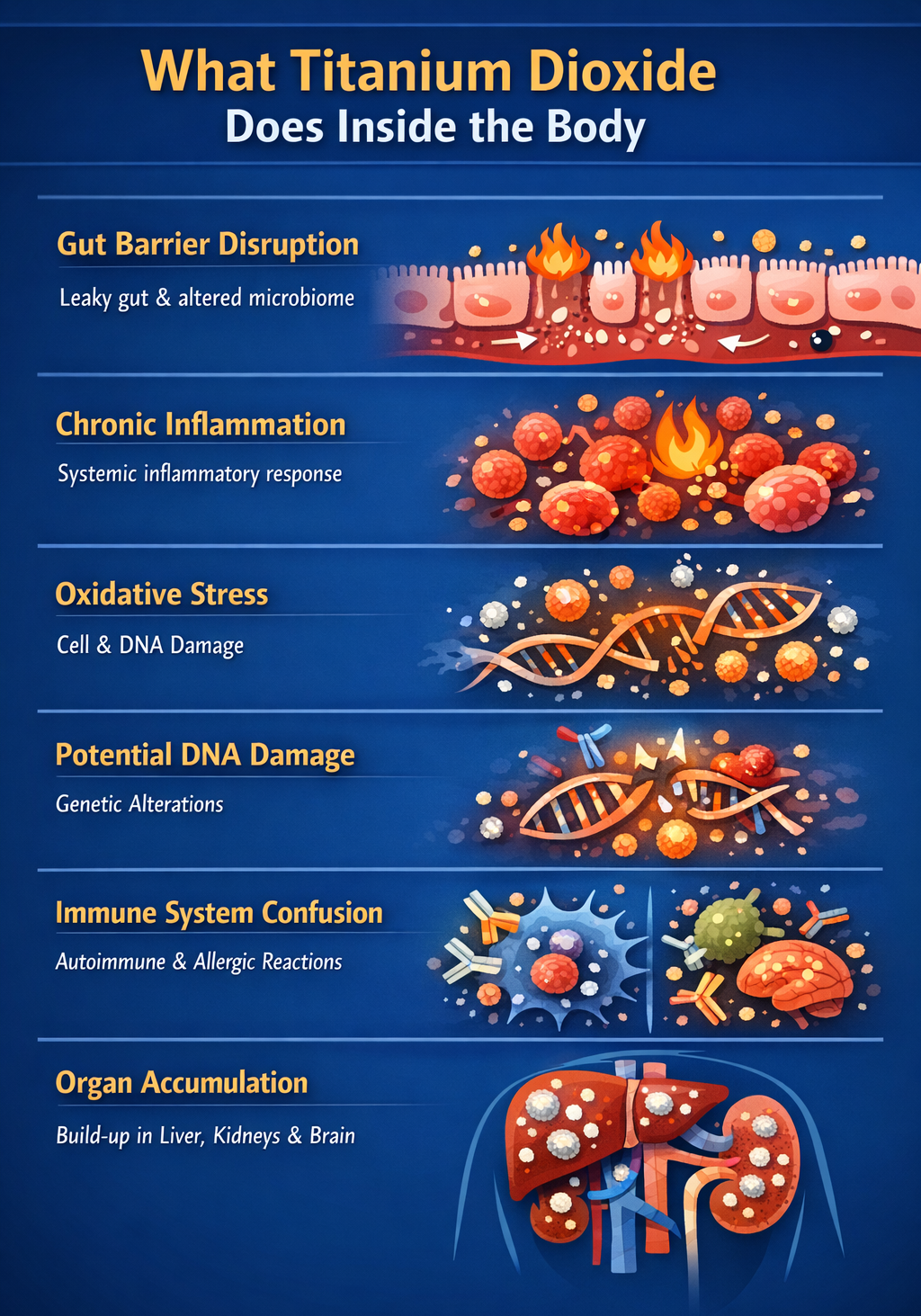
Now we move beyond exposure and into impact. Because the real issue is not just that titanium dioxide is present—but what it does once it enters the body.
1. Disruption of the Gut Barrier
The gut is not just a digestive organ—it is a critical immune interface. Approximately 70–80% of the immune system resides in the gut, and its integrity is essential for overall health.
Titanium dioxide has been shown to:
- Disrupt tight junctions in the intestinal lining
- Increase intestinal permeability (leaky gut)
- Alter gut microbiota
This creates a scenario where undigested food particles, toxins, and microbes can pass into the bloodstream, triggering systemic inflammation.
2. Chronic Inflammation
Once the gut barrier is compromised, the immune system is constantly activated. Titanium dioxide particles themselves can also trigger inflammatory responses.
Studies have shown:
- Activation of inflammatory cytokines
- Increased oxidative stress
- Immune system dysregulation
Chronic inflammation is not just a symptom—it is a driver of nearly every major disease, including heart disease, diabetes, autoimmune disorders, and neurodegenerative conditions.
3. Oxidative Stress and Cellular Damage
Titanium dioxide can generate reactive oxygen species (ROS), especially when exposed to light. These unstable molecules damage:
- Cell membranes
- Proteins
- DNA
Over time, this oxidative damage contributes to aging, tissue degeneration, and increased disease risk.
4. Potential DNA Damage
Emerging research suggests that titanium dioxide nanoparticles may:
- Interact directly with DNA
- Cause strand breaks
- Interfere with normal cellular replication
This raises concerns about long-term exposure and its potential role in carcinogenesis.
5. Immune System Confusion
The immune system is designed to identify threats and respond appropriately. But constant exposure to foreign particles like titanium dioxide can create confusion.
This may contribute to:
- Autoimmune reactions
- Allergic sensitivities
- Chronic immune activation
The body begins reacting not just to toxins, but to foods, tissues, and even itself.
6. Accumulation in Organs
Unlike nutrients that are used and eliminated, titanium dioxide can accumulate over time.
It has been detected in:
- Liver
- Spleen
- Kidneys
- Brain
This accumulation creates a long-term burden that the body must continually attempt to manage.
Why Conventional Safety Standards Fall Short
One of the most important questions is: if titanium dioxide is this problematic, why is it still allowed?
The answer lies in how safety is evaluated.
Traditional toxicology often follows the principle:
“The dose makes the poison.”
But this model fails to account for:
- Chronic low-dose exposure
- Bioaccumulation
- Nanoparticle behavior
- Individual susceptibility
In other words, just because a substance does not cause immediate toxicity at a certain dose does not mean it is safe over time.
Some regions have begun to recognize this. The European Union, for example, has taken steps to ban titanium dioxide as a food additive due to concerns about genotoxicity.
Yet in many places, it remains widely used.
The Illusion of “Inert” Ingredients
Titanium dioxide is often classified as an “inactive” ingredient, especially in medications. But this term is misleading.
Inactive does not mean harmless.
It simply means it is not the primary therapeutic agent.
From a functional perspective, anything that enters the body and interacts with biological systems is active in some way.
And titanium dioxide is far from neutral.
Who Is Most at Risk?
While everyone is exposed to some degree, certain populations may be more vulnerable:
- Children, due to higher intake of processed foods
- Individuals with gut issues, such as IBS or leaky gut
- Autoimmune patients, whose immune systems are already dysregulated
- Those on multiple medications, increasing cumulative exposure
These groups may experience amplified effects from what might otherwise be dismissed as “low-level exposure.”
How to Reduce Exposure
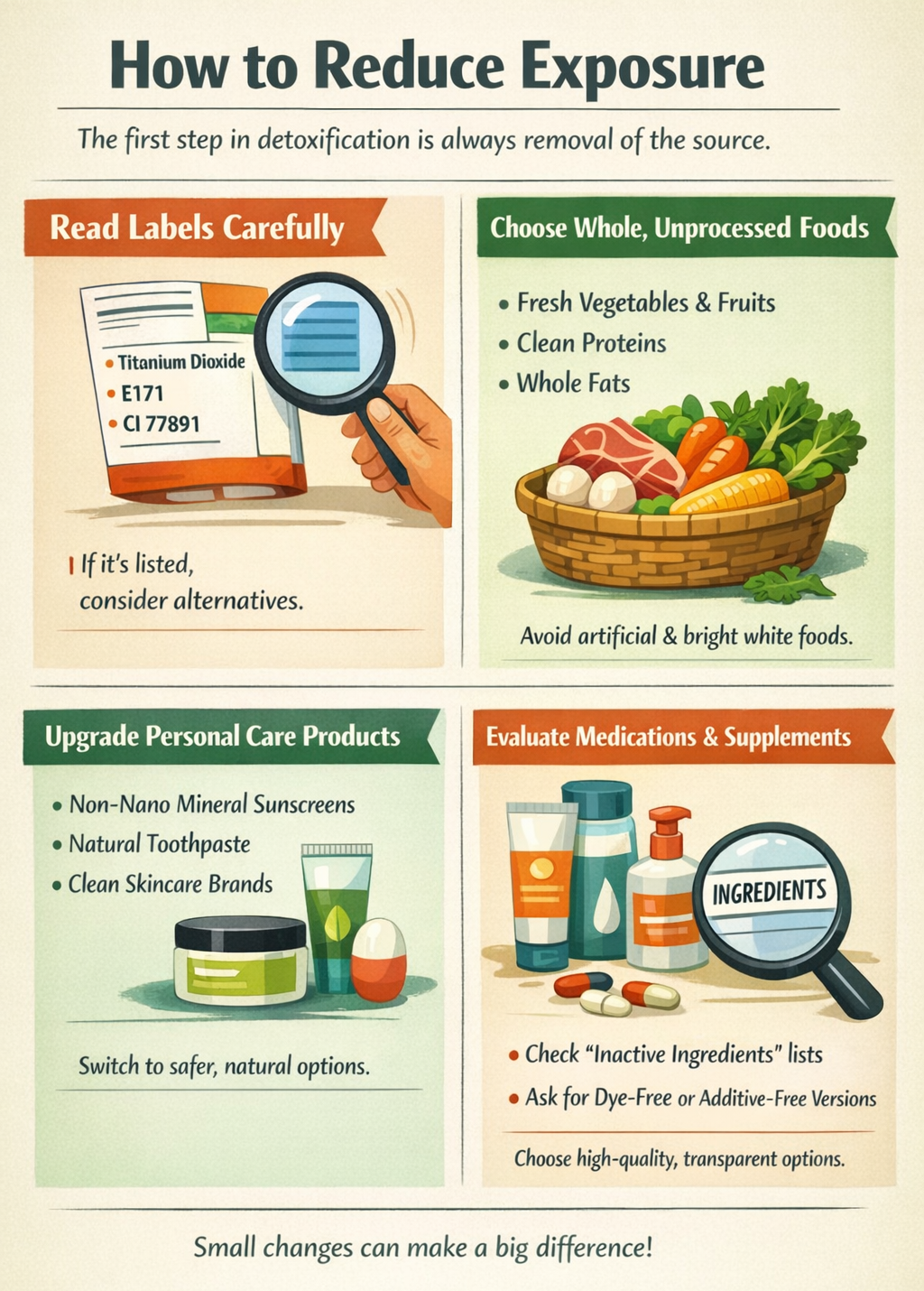
The first step in detoxification is always removal of the source.
1. Read Labels Carefully
Look for:
- Titanium dioxide
- E171
- CI 77891
If it’s listed, consider alternatives.
2. Choose Whole, Unprocessed Foods
The closer a food is to its natural state, the less likely it contains additives.
Focus on:
- Fresh vegetables and fruits
- Clean proteins
- Whole fats
Avoid foods that are artificially bright or unnaturally white.
3. Upgrade Personal Care Products
Switch to products that are free from synthetic additives.
Look for:
- Non-nano mineral sunscreens
- Natural toothpaste
- Clean skincare brands
4. Evaluate Medications and Supplements
This is often overlooked but critical. You can simply search Google “Inactive Ingredients in (Medication)” and if titanium dioxide is present you will see it within the list.
- Ask for dye-free or additive-free versions
- Choose high-quality supplements with transparent labeling
How to Detox from Titanium Dioxide
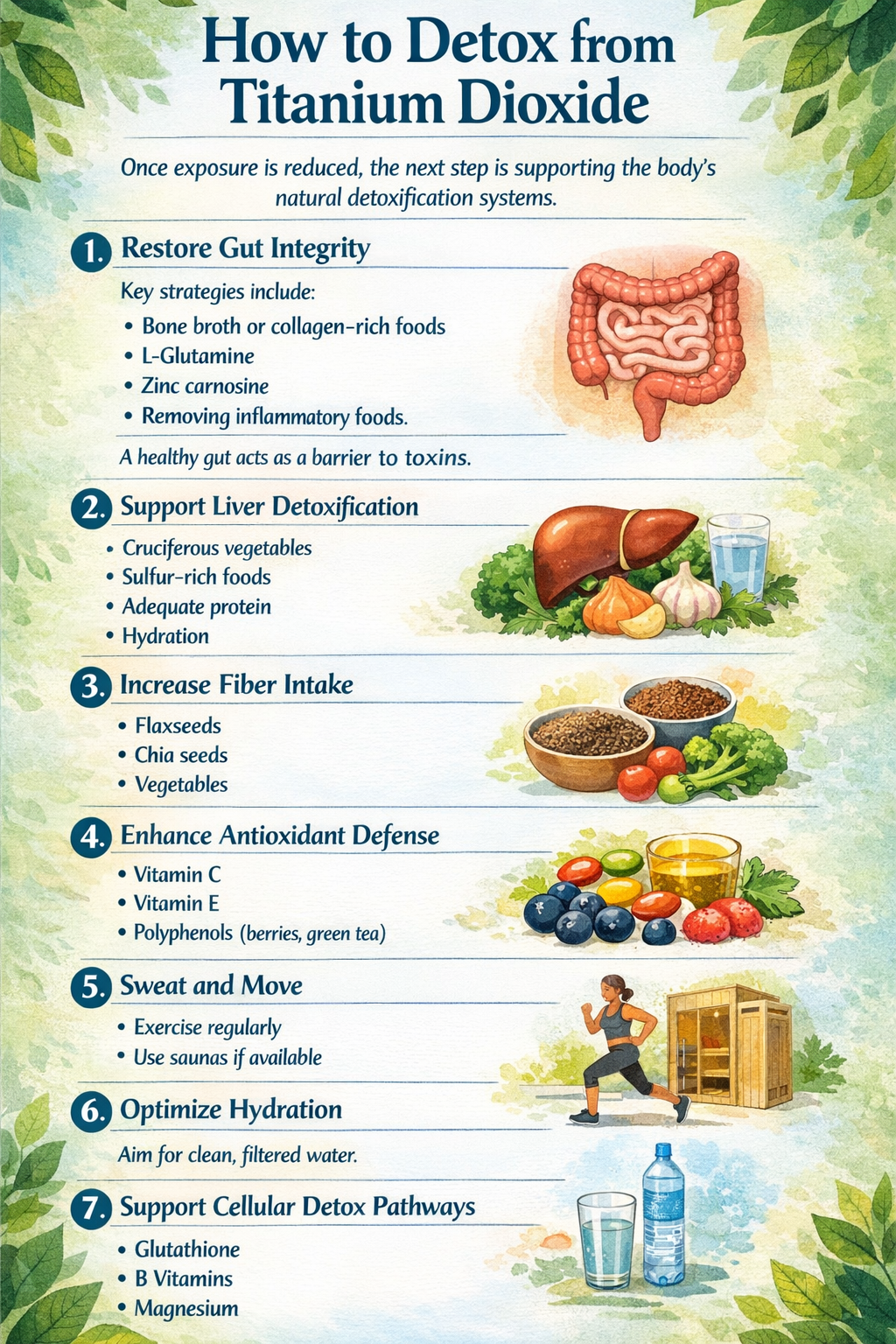
Once exposure is reduced, the next step is supporting the body’s natural detoxification systems.
1. Restore Gut Integrity
Since much of the damage begins in the gut, healing the intestinal lining is foundational.
Key strategies include:
- Bone broth or collagen-rich foods
- L-glutamine
- Zinc carnosine
- Removing inflammatory foods
A healthy gut acts as a barrier, preventing further absorption of toxins.
2. Support Liver Detoxification
The liver is the primary detox organ.
Support it with:
- Cruciferous vegetables (broccoli, kale, Brussels sprouts)
- Sulfur-rich foods (garlic, onions)
- Adequate protein intake
- Hydration
3. Increase Fiber Intake
Fiber binds to toxins and helps eliminate them through the digestive tract.
Sources include:
- Flaxseeds
- Chia seeds
- Vegetables
4. Enhance Antioxidant Defense
Since titanium dioxide increases oxidative stress, antioxidants are essential.
Focus on:
- Vitamin C
- Vitamin E
- Polyphenols (berries, green tea)
5. Sweat and Move
The body eliminates toxins through sweat.
- Exercise regularly
- Use saunas if available
6. Optimize Hydration
Water supports every detox pathway.
Aim for clean, filtered water to avoid adding more toxins.
7. Support Cellular Detox Pathways
At a deeper level, detoxification occurs within cells.
Key nutrients include:
- Glutathione
- B vitamins
- Magnesium
A Forward-Thinking Perspective
The story of titanium dioxide is not just about one ingredient. It is a reflection of a larger issue—the disconnect between what is considered “safe” and what actually supports human health.
Modern life has introduced thousands of compounds that the human body was never designed to process. And while each one may be deemed acceptable in isolation, the cumulative effect is rarely considered.
Health is not built on what is allowed.
It is built on what the body truly needs—and what it does not.
Final Thoughts
Titanium dioxide may not be the most talked-about toxin, but it is one of the most pervasive. It enters the body quietly, accumulates over time, and contributes to processes that underlie many chronic conditions.
The encouraging reality is that awareness changes everything.
When you begin to recognize where these exposures are coming from, you gain the power to reduce them. When you support the body’s natural detoxification systems, you create an environment where healing becomes possible.
This is not about fear.
It is about clarity.
And once you see clearly, you can act decisively—removing what harms, restoring what heals, and moving forward with a level of intention that most people never reach.