
When Childhood Became a Diagnosis Instead of a Developmental Journey
The note arrived home folded neatly inside a backpack. It contained only a few sentences, yet it carried the power to reshape a family’s future. “Your child has difficulty staying seated. He struggles to focus. He interrupts frequently. We recommend an evaluation for ADHD.” Similar letters travel home every school year, quietly transforming energetic children into patients before parents fully understand what those words mean. For many families, the recommendation begins a journey through questionnaires, office visits, educational meetings, and difficult decisions. Some children ultimately receive a diagnosis that accurately explains years of frustration and opens the door to meaningful support. Others enter a medical pathway before anyone asks a more fundamental question. Has anyone investigated whether the child’s environment, development, lifestyle, or learning conditions created the behaviors now viewed as symptoms?
Few subjects create more passionate debate than attention-deficit/hyperactivity disorder. One side argues that ADHD remains underdiagnosed and undertreated, leaving countless children without needed help. Another side believes modern education increasingly labels normal childhood behaviors as medical disorders. Both perspectives contain elements of truth. ADHD exists as a recognized neurodevelopmental disorder, supported by decades of clinical research. At the same time, scientific literature continues to examine evidence suggesting that some children receive the diagnosis when other explanations deserve equal or greater attention. Understanding this distinction requires looking beyond labels and examining the forces shaping today’s classrooms, families, and developing brains.
The conversation often becomes polarized because people frame the issue incorrectly. The real question is not whether ADHD exists. Instead, the question asks whether every restless, distracted, impulsive, or academically struggling child suffers from the same neurological condition. Human behavior rarely emerges from a single cause. Attention develops through a complex interaction between genetics, brain maturation, sleep, nutrition, emotional health, physical movement, educational expectations, family dynamics, and social experiences. When clinicians examine only one piece of that puzzle, they risk overlooking factors that deserve careful investigation.
The Silent Shift from Childhood Behavior to Medical Diagnosis
Several generations ago, classrooms looked remarkably different. Children spent more time outdoors before school and returned outside after class. Recess occupied a larger portion of the school day. Physical education appeared regularly throughout the week. Homework rarely consumed every evening. Teachers expected differences in maturity because childhood itself unfolded at different speeds. One student learned quickly while another required extra time. One child loved reading while another excelled through hands-on exploration. Most educators viewed these differences as part of normal development rather than immediate evidence of disease.
Today’s educational environment reflects very different expectations. Academic standards arrive earlier than ever before. Kindergarten classrooms often resemble first-grade classrooms from previous decades. Extended periods of seated instruction replace active learning. Standardized testing influences curriculum decisions throughout the academic year. Digital technology competes constantly for children’s attention outside school. These changes have created an environment that rewards prolonged concentration while providing fewer opportunities to develop the very skills children need to succeed.
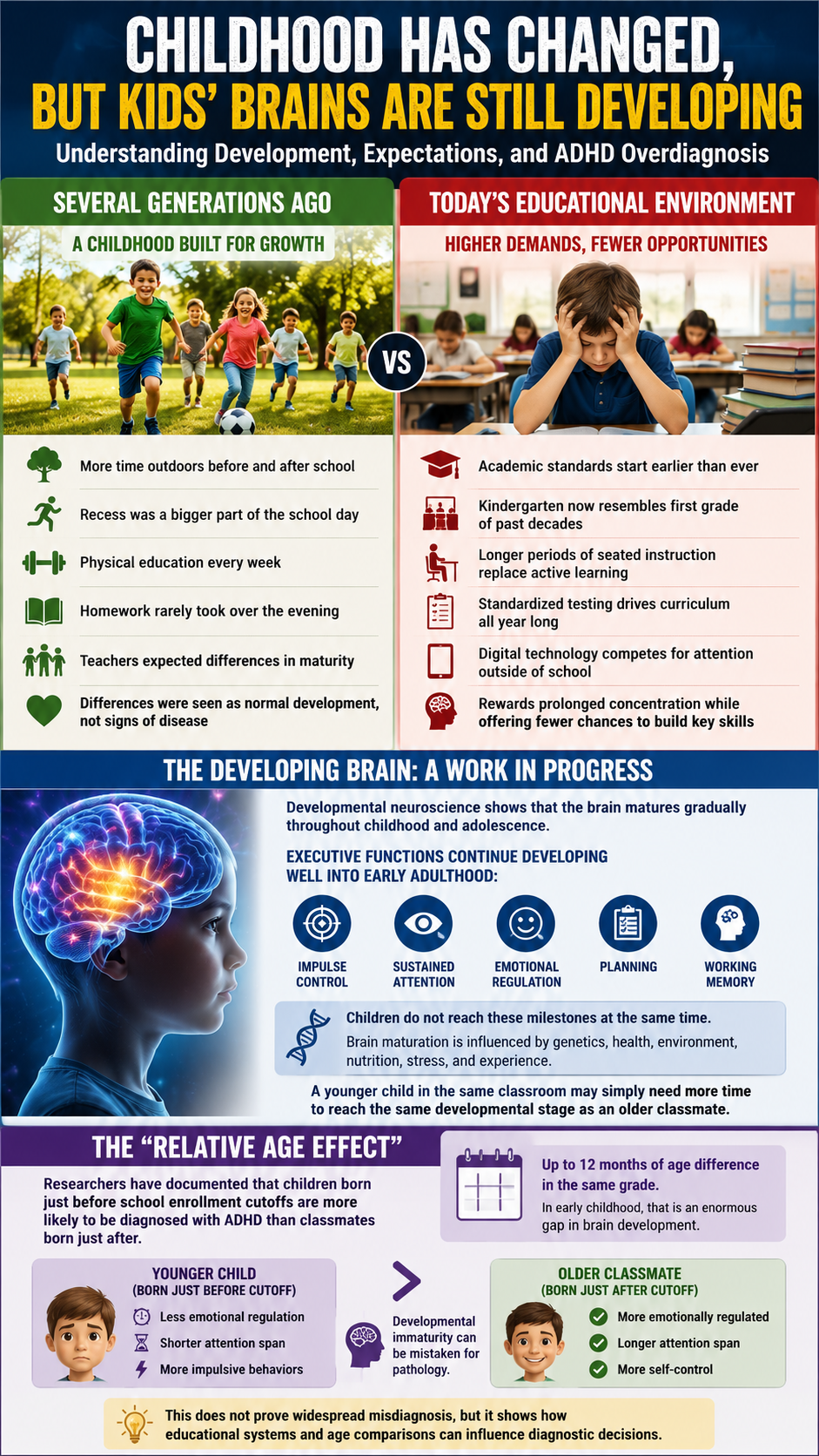
Developmental neuroscience demonstrates that the human brain matures gradually throughout childhood and adolescence. Executive functions such as impulse control, sustained attention, emotional regulation, planning, and working memory continue developing well into early adulthood. Children do not reach these milestones simultaneously. Brain maturation follows individual timelines influenced by genetics, health, environment, nutrition, stress, and experience. A younger child within the same classroom may simply require additional months to reach the same developmental stage as an older classmate.
Researchers have repeatedly documented what scientists call the “relative age effect.” Children born shortly before school enrollment cutoffs often receive ADHD diagnoses more frequently than classmates born shortly afterward. Although these children share the same grade, they may differ in age by nearly twelve months. During early childhood, twelve months represents an enormous difference in neurological development. Younger students naturally display less emotional regulation, shorter attention spans, and greater impulsivity than older classmates. Several large studies suggest that developmental immaturity sometimes becomes mistaken for pathology when educators compare younger children against older peers instead of considering developmental age. This finding does not prove widespread misdiagnosis, but it highlights how educational systems may influence diagnostic decisions.
Two Models Looking at the Same Child
Imagine two physicians evaluating the same eight-year-old student. The child struggles to remain seated during math lessons, forgets homework, interrupts conversations, and frequently loses personal belongings. Both physicians observe identical behaviors, yet each approaches the evaluation through a different conceptual framework.
The first physician follows the medical model. This approach asks whether the child’s symptoms meet established diagnostic criteria for ADHD after gathering information from parents, teachers, developmental history, and clinical observation. If the child satisfies those criteria and symptoms interfere with daily functioning across multiple settings, the clinician may diagnose ADHD and discuss evidence-based treatment options that often include behavioral therapy, educational accommodations, medication, or combinations of these interventions.
The second physician begins with a broader question. Instead of asking only whether the child meets diagnostic criteria, the clinician investigates every factor capable of producing similar behaviors. Sleep quality receives careful evaluation because inadequate sleep dramatically reduces attention and emotional regulation. Vision and hearing undergo assessment because children cannot focus on information they cannot process accurately. Nutritional patterns, emotional stress, learning disabilities, anxiety disorders, depression, family conflict, excessive screen exposure, physical inactivity, developmental maturity, and classroom structure all become part of the investigation. Rather than viewing attention problems as a destination, this model treats them as clues pointing toward underlying causes.
Neither model automatically excludes the other. In many cases they complement one another. A child may genuinely have ADHD while also experiencing chronic sleep deprivation, anxiety, or nutritional deficiencies that worsen symptoms. The danger arises when evaluation stops after identifying one explanation while ignoring others that remain treatable.
Modern Childhood Places Extraordinary Demands on the Developing Brain
Children today experience a world unlike any previous generation. Digital devices compete relentlessly for attention through rapid scene changes, constant notifications, and endless novelty. Social media platforms, streaming entertainment, online gaming, and short-form videos condition the brain to expect frequent stimulation. Meanwhile, classroom learning often requires sustained focus on comparatively slow-paced activities such as reading, writing, and mathematical reasoning. This contrast creates enormous challenges for developing attention systems.
Neuroscientists describe attention as a skill strengthened through repeated practice rather than a fixed trait determined entirely by genetics. Every hour spent shifting rapidly between digital stimuli trains the brain differently than an hour spent reading, building, exploring nature, solving problems, or engaging in imaginative play. Researchers continue investigating how excessive recreational screen exposure influences executive function, emotional regulation, sleep quality, and academic performance. Although screens alone do not cause ADHD, mounting evidence suggests they can worsen attentional difficulties in susceptible children and complicate accurate clinical assessment.
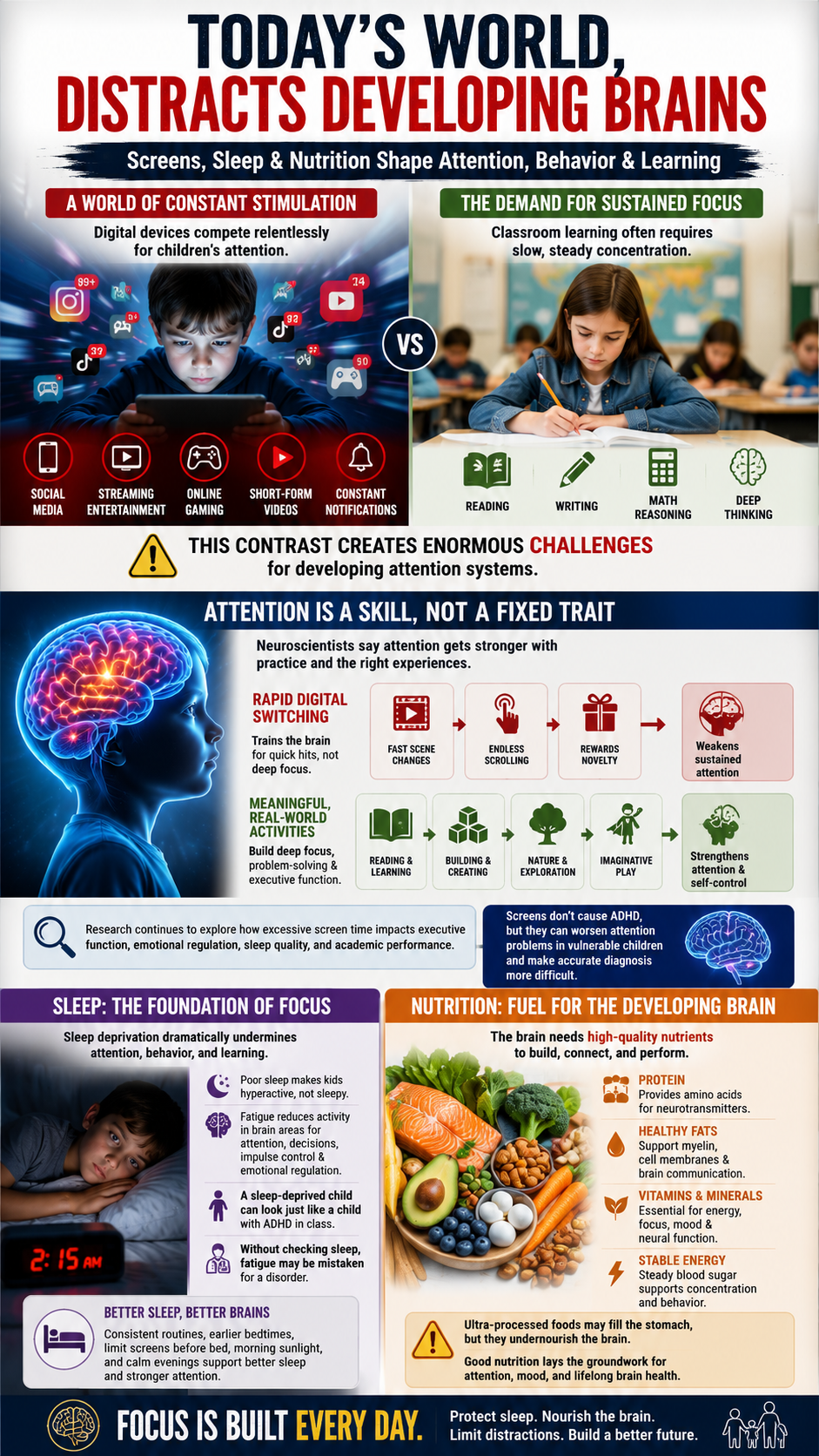
Sleep deprivation compounds this problem dramatically. Modern families often underestimate sleep’s importance because its effects appear gradually rather than suddenly. Children who sleep poorly frequently become hyperactive rather than obviously tired. Fatigue reduces activity in brain regions responsible for attention, decision-making, impulse control, and emotional regulation. A sleep-deprived child may appear remarkably similar to a child with ADHD during classroom observation. Without investigating sleep thoroughly, clinicians risk attributing fatigue-related behaviors to an underlying neurodevelopmental disorder.
Nutrition also influences brain performance through multiple biological pathways. The developing brain requires adequate protein, essential fatty acids, vitamins, minerals, and stable energy availability to support neurotransmitter production, myelin formation, synaptic communication, and cellular repair. Diets dominated by ultra-processed foods often deliver abundant calories while providing relatively poor nutritional quality. Research examining dietary influences on ADHD has produced mixed results, yet evidence supports investigating nutritional status, iron deficiency, zinc deficiency, and overall dietary patterns during comprehensive evaluations, particularly when children display persistent behavioral concerns.
The Biology of Chronic Stress and the Attention System
Perhaps no factor receives less attention than chronic stress. Childhood stress extends far beyond major traumatic events. Constant family conflict, bullying, academic pressure, financial insecurity, social isolation, inconsistent routines, and emotional instability continuously activate biological stress responses. When stress persists, the brain adapts to survival rather than learning.
The hypothalamic-pituitary-adrenal axis coordinates much of the body’s stress response through hormones including cortisol. Short-term cortisol elevation helps humans respond effectively to immediate challenges. Chronic activation produces different consequences. Persistently elevated stress hormones influence brain regions involved in memory, emotional regulation, attention, and executive function. Children living under prolonged stress often struggle to concentrate because their brains prioritize detecting potential threats rather than absorbing classroom instruction.
The prefrontal cortex plays a central role in attention, planning, organization, judgment, and impulse control. This region remains one of the last brain areas to mature fully. Chronic stress, inadequate sleep, insufficient physical activity, and emotional adversity can impair prefrontal cortex function temporarily, making children appear inattentive, impulsive, or emotionally reactive. These biological effects illustrate why behavioral symptoms cannot reveal their own origin. Similar outward behaviors may emerge from very different underlying mechanisms.
Recognizing this complexity does not diminish ADHD as a legitimate diagnosis. Instead, it reminds clinicians, educators, and parents that attention represents one of the brain’s most sophisticated functions. Countless biological and environmental influences shape its development. When evaluation focuses only on observable behavior, the deeper story often remains untold.
Looking Beyond the Label and Restoring the Developing Brain
The moment a child receives a diagnosis, something subtle often changes inside the family. Parents begin interpreting every forgotten assignment, emotional outburst, or restless afternoon through the lens of that diagnosis. Teachers may lower expectations or approach classroom challenges differently. Children themselves sometimes begin believing that their brains are permanently defective rather than still developing. Labels can certainly open doors to educational accommodations and specialized services that many students genuinely need. However, labels also shape identity. When a diagnosis becomes the entire explanation for a child’s struggles, families may stop searching for additional factors that continue influencing behavior every day.
The developing brain remains remarkably adaptable throughout childhood. Neuroscientists describe this characteristic as neuroplasticity, the brain’s ability to reorganize itself in response to experience, learning, movement, nutrition, relationships, sleep, and environmental stimulation. Every healthy habit strengthens neural pathways that support attention, emotional regulation, memory, and executive function. Conversely, chronic stress, inadequate sleep, poor nutrition, sedentary lifestyles, and excessive digital stimulation can weaken those same systems. This reality explains why two children carrying identical ADHD diagnoses often respond very differently to the same intervention. Their brains developed within entirely different environments.
The Cost of Treating Symptoms Without Investigating Causes
One of the greatest strengths of modern medicine involves identifying patterns that respond to effective treatment. Yet medicine occasionally falls into the trap of addressing visible symptoms before understanding the processes producing those symptoms. Attention difficulties illustrate this challenge clearly because the symptom itself tells us very little about its origin. A child struggling to concentrate may have ADHD, but that same child may also suffer from chronic sleep restriction, anxiety, undiagnosed dyslexia, emotional trauma, nutritional deficiencies, vision problems, hearing impairment, or a combination of several contributing factors. Treating attention alone without investigating those influences risks leaving important problems unresolved.
Imagine hearing a smoke alarm repeatedly throughout the night. Silencing the alarm may restore temporary quiet, yet the action accomplishes little if smoke continues filling the house. Responsible homeowners investigate the source of the smoke because the alarm performs an important function. Human behavior often works similarly. Restlessness, impulsivity, distractibility, and emotional volatility frequently represent signals that something deserves closer examination. Sometimes the underlying issue originates within brain development itself. Other times the child’s environment continually overwhelms a nervous system that would otherwise function well.
Researchers increasingly encourage comprehensive assessments because attention develops through multiple interacting systems rather than a single neurological pathway. Genetics influence susceptibility, yet genes never operate independently from the environments surrounding them. Sleep quality alters neurotransmitter activity. Nutrition supports neurotransmitter production and myelin formation. Physical movement strengthens brain-derived neurotrophic factor, a protein essential for learning and neural growth. Positive relationships buffer chronic stress while supporting emotional regulation. Each of these factors shapes the same executive functions educators observe inside the classroom.
The Classroom Cannot Shoulder Every Responsibility
Schools carry extraordinary responsibility, yet educators cannot solve every challenge affecting children’s attention. Teachers work within systems shaped by curriculum standards, testing requirements, staffing limitations, classroom sizes, and administrative expectations. Many educators recognize that students need additional movement, outdoor learning, creative exploration, and individualized instruction. Unfortunately, structural constraints often limit their ability to provide those experiences consistently.
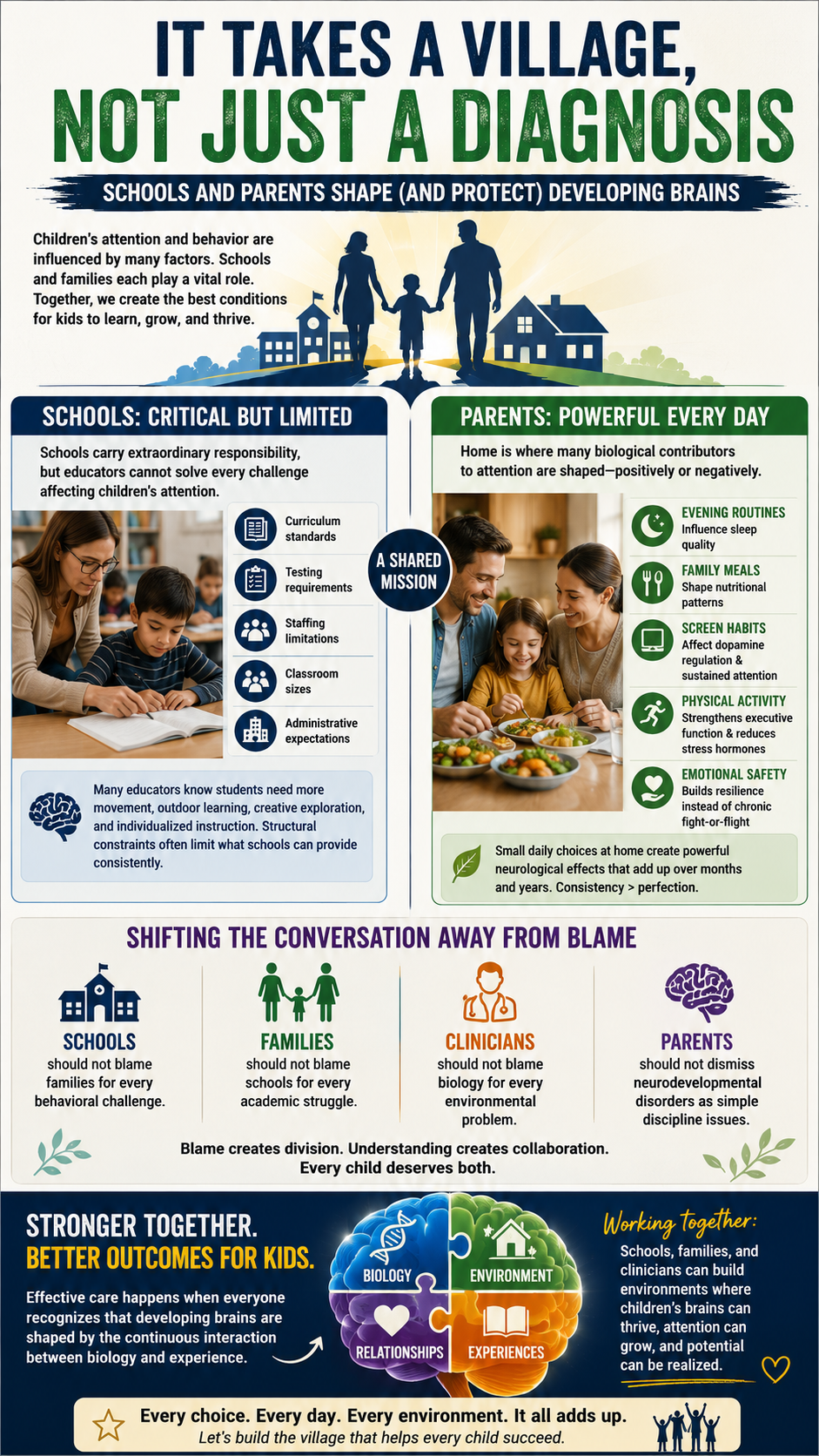
Parents therefore play an equally important role in protecting brain health outside school hours. Home becomes the environment where many biological contributors to attention either improve or deteriorate. Evening routines influence sleep quality. Family meals determine nutritional patterns. Screen habits shape dopamine regulation and sustained attention. Physical activity strengthens executive function while reducing stress hormones. Emotional safety allows children to develop resilience instead of remaining trapped in chronic fight-or-flight responses. Small daily choices accumulate into powerful neurological effects across months and years.
This perspective shifts the conversation away from blame. Schools should not blame families for every behavioral challenge. Families should not blame schools for every academic struggle. Clinicians should not blame biology for every environmental problem, nor should parents dismiss legitimate neurodevelopmental disorders as simple discipline issues. Effective care emerges when everyone recognizes that developing brains reflect continuous interaction between biology and experience.
Building Attention Begins with Restoring Sleep
Few interventions influence attention as profoundly as healthy sleep. During deep sleep, the brain consolidates memories, clears metabolic waste, regulates hormones, repairs neural connections, and restores cognitive performance. Children who consistently sleep too little often become emotionally reactive, impulsive, inattentive, and forgetful during the following day. These behaviors closely resemble ADHD because the same executive functions suffer under sleep deprivation.
Creating healthy sleep habits requires more than simply assigning an earlier bedtime. Consistent schedules strengthen circadian rhythms that regulate hormone production and brain recovery. Bright morning sunlight helps synchronize internal biological clocks while promoting nighttime melatonin release. Reducing stimulating screen exposure before bed supports healthier sleep onset because blue light suppresses melatonin production. Calm evening routines signal the nervous system that it can transition from heightened alertness into restorative rest. Families frequently notice meaningful improvements in mood, concentration, and emotional regulation after several weeks of consistent sleep hygiene.
Sleep also influences physical health beyond cognition. Chronic sleep restriction elevates inflammatory markers, alters glucose metabolism, weakens immune function, disrupts appetite regulation, and increases physiological stress responses. A tired brain struggles to learn because exhausted neurons simply cannot process information efficiently. Supporting healthy sleep therefore strengthens both academic performance and long-term health simultaneously.
Feeding the Brain Instead of Simply Filling the Stomach
Every thought begins with biology. Neurons require amino acids to manufacture neurotransmitters. Cell membranes depend upon healthy fats for flexibility and communication. Vitamins and minerals drive countless enzymatic reactions supporting energy production inside brain cells. Nutrition therefore provides the raw materials from which attention, memory, emotional regulation, and learning emerge.
Parents cannot expect optimal brain performance from diets dominated by ultra-processed foods containing large amounts of refined sugars, highly processed grains, and calorie-dense snacks lacking nutritional density. Although no universal ADHD diet exists, children benefit from eating patterns emphasizing minimally processed foods, quality proteins, colorful fruits and vegetables, healthy fats, legumes, and whole-food carbohydrate sources appropriate for their nutritional needs. Iron, zinc, magnesium, and omega-3 fatty acids deserve particular attention because deficiencies may influence neurological function in some children. Families should discuss supplementation with qualified healthcare professionals when dietary intake or laboratory findings suggest potential deficiencies.
Regular family meals offer benefits extending beyond nutrition alone. Shared meals strengthen emotional connection, improve communication, reduce stress, and create predictable routines that support psychological well-being. Children thrive within environments combining biological nourishment with relational stability. Those daily interactions quietly shape emotional resilience while strengthening the very executive functions parents hope to cultivate.
Movement Changes the Brain More Than Many Parents Realize
Children evolved within environments requiring constant physical movement. Running, climbing, balancing, exploring, throwing, lifting, crawling, and playing all stimulated rapidly developing nervous systems. Modern childhood often replaces those experiences with prolonged sitting both inside and outside school. Consequently, many children spend large portions of their day remarkably inactive despite possessing brains designed for movement.
Exercise produces immediate neurological benefits. Physical activity increases blood flow to the brain while stimulating brain-derived neurotrophic factor, often called the brain’s fertilizer because it supports neuron growth, synaptic plasticity, and learning. Regular movement also improves mood through endorphin release, reduces physiological stress, enhances sleep quality, and strengthens executive function. These changes create fertile conditions for improved attention without relying solely upon external interventions.
Parents need not design elaborate fitness programs. Family walks after dinner, outdoor games, bicycle rides, swimming, martial arts, organized sports, hiking, gardening, playground exploration, and active chores all encourage neurological development. The goal involves replacing sedentary hours with meaningful movement rather than chasing perfection. Consistency matters more than intensity when building healthier brains.
Creating an Environment That Teaches Attention
Attention resembles a muscle more than a switch. Muscles strengthen through gradual training rather than constant stimulation. Likewise, sustained attention develops through repeated opportunities to focus, solve problems, tolerate boredom, and complete meaningful tasks without continuous interruption.
Modern technology often works against this developmental process. Short-form videos, instant notifications, endless scrolling, and rapid content changes reward constant novelty instead of sustained concentration. Children naturally adapt to the environments surrounding them. When every spare moment becomes filled with digital stimulation, the brain receives fewer opportunities to practice deeper attention.
Families can strengthen focus by creating predictable technology boundaries while encouraging reading, puzzles, board games, music practice, creative building projects, art, gardening, cooking, and imaginative play. These activities demand patience, planning, working memory, emotional regulation, and sustained concentration. Each experience strengthens executive function while allowing children to discover satisfaction beyond immediate digital rewards.
Knowing When Professional Help Becomes Essential
Recognizing environmental contributors should never discourage families from seeking professional evaluation when concerns persist. ADHD remains a legitimate neurodevelopmental disorder affecting millions of children and adults worldwide. Some children continue struggling despite excellent sleep, healthy nutrition, supportive families, physical activity, and effective educational environments. Those children deserve comprehensive evaluations performed by qualified professionals capable of distinguishing ADHD from other medical, psychological, developmental, and learning conditions.
The strongest evaluations rarely depend upon a single questionnaire or brief office visit. Instead, they combine developmental history, teacher observations, family interviews, behavioral assessments, educational records, medical evaluation, and careful consideration of alternative explanations. This comprehensive approach respects the complexity of childhood while reducing the likelihood of overlooking important contributing factors. Parents should feel comfortable asking clinicians how thoroughly other possible causes have been investigated before reaching diagnostic conclusions.
Medication may play an appropriate role for many individuals diagnosed with ADHD, particularly when symptoms significantly impair learning, relationships, or daily functioning. Evidence supports stimulant medications for improving attention and reducing core ADHD symptoms in many patients under appropriate medical supervision. Medication, however, should ideally function within a broader strategy that also addresses sleep, movement, nutrition, emotional health, educational support, and healthy family routines rather than replacing those foundational influences.
A Different Conversation About Childhood
Perhaps the greatest lesson emerging from today’s ADHD debate extends far beyond one diagnosis. Childhood cannot be reduced to symptom checklists alone. Every child’s brain develops within an intricate web of biology, relationships, environment, education, nutrition, movement, stress, and opportunity. Looking only through the medical model risks overlooking powerful environmental influences. Looking only through the behavioral model risks missing genuine neurodevelopmental disorders requiring specialized care. Wisdom lies between those extremes.
Parents should resist the temptation to search for quick explanations while remaining equally cautious about dismissing legitimate concerns. Curiosity serves children better than assumptions. Every restless child deserves careful listening. Every struggling student deserves thoughtful investigation. Every family deserves an evaluation that searches for causes instead of merely cataloging symptoms. The healthiest approach asks not, “What label fits this child?” but rather, “What conditions will allow this child’s brain to flourish?”
When society shifts that question, classrooms become places of discovery instead of diagnosis. Families regain hope instead of fear. Children learn that attention is not simply something they either possess or lack. Attention grows through healthy brains, supportive environments, meaningful relationships, restorative sleep, nourishing food, purposeful movement, and patient guidance. Those foundations benefit every child, regardless of whether an ADHD diagnosis ultimately becomes part of their story.