
The Invisible Threat Hiding Inside Your Home
Imagine walking into your home after a long day, closing the front door, and taking a deep breath. There is something comforting about being home. The familiar smell of your furniture, the warmth of your kitchen, and the security of four walls create an environment where your body instinctively relaxes. You assume the air inside your home is cleaner than the air outside, especially when you consider vehicle exhaust, industrial emissions, pesticides, and environmental pollution. Yet what if the very place you consider your safest sanctuary is quietly exposing your body to an invisible mixture of chemicals, microscopic particles, and biological contaminants every single day?
Environmental scientists have spent decades investigating a troubling reality: indoor air can sometimes contain significantly higher concentrations of certain pollutants than outdoor air. The Environmental Protection Agency has reported that concentrations of some indoor pollutants may reach two to five times typical outdoor concentrations, occasionally climbing much higher. These findings do not mean every home has dangerous air, but they challenge a deeply ingrained assumption about environmental safety. Modern homes are filled with synthetic building materials, cleaning chemicals, upholstered furniture, fragrances, and combustion appliances that can release contaminants into the air. When ventilation is inadequate, those substances accumulate, transforming an ordinary living space into a potentially significant source of environmental exposure.
The concern becomes even more important when you consider how much time Americans spend indoors. Research sponsored by the EPA found that people spend approximately 90 percent of their time inside buildings, with much of that time spent at home. Unlike contaminated food or drinking water, which people can consciously avoid, breathing happens automatically. An average adult takes roughly 20,000 breaths daily, continuously drawing air across an enormous respiratory surface designed to exchange oxygen and carbon dioxide. Unfortunately, that same biological efficiency creates opportunities for airborne contaminants to enter the respiratory system, trigger inflammatory responses, and, depending on the substance, reach the bloodstream.
The most unsettling aspect of indoor air pollution is that it rarely announces itself. You may never see the particles floating through your bedroom or recognize the chemicals released by your favorite scented candle. A freshly painted room may smell pleasant, while a new mattress or carpet may produce the familiar aroma people associate with cleanliness and comfort. Yet some of those odors originate from volatile chemicals entering the surrounding air. Understanding indoor air pollution requires looking beyond what smells clean and examining what is actually entering your lungs.
The Modern Home Has Become a Chemical Environment
A century ago, most American homes contained considerably fewer synthetic materials than the average residence today. Wooden furniture, natural textiles, plaster walls, and relatively simple household products dominated domestic environments. Modern construction introduced remarkable improvements in insulation, energy efficiency, durability, and comfort. However, it also brought engineered wood products, synthetic carpeting, polyurethane foams, vinyl flooring, chemical adhesives, flame retardants, and increasingly complex household cleaning formulations. Each material may serve a useful purpose, but some also introduce substances that influence indoor air quality.
One important category involves volatile organic compounds, commonly called VOCs. These carbon-containing chemicals can evaporate from products at ordinary indoor temperatures. Formaldehyde, benzene, toluene, and certain glycol ethers represent examples associated with various building materials, furnishings, solvents, and household products. Their health effects differ substantially, making it scientifically inaccurate to treat every VOC as equally dangerous. Nevertheless, some cause eye irritation, respiratory symptoms, headaches, or neurological effects at sufficient concentrations. Formaldehyde is particularly concerning because it is a recognized human carcinogen and can be released from certain pressed-wood products, adhesives, and finishes.
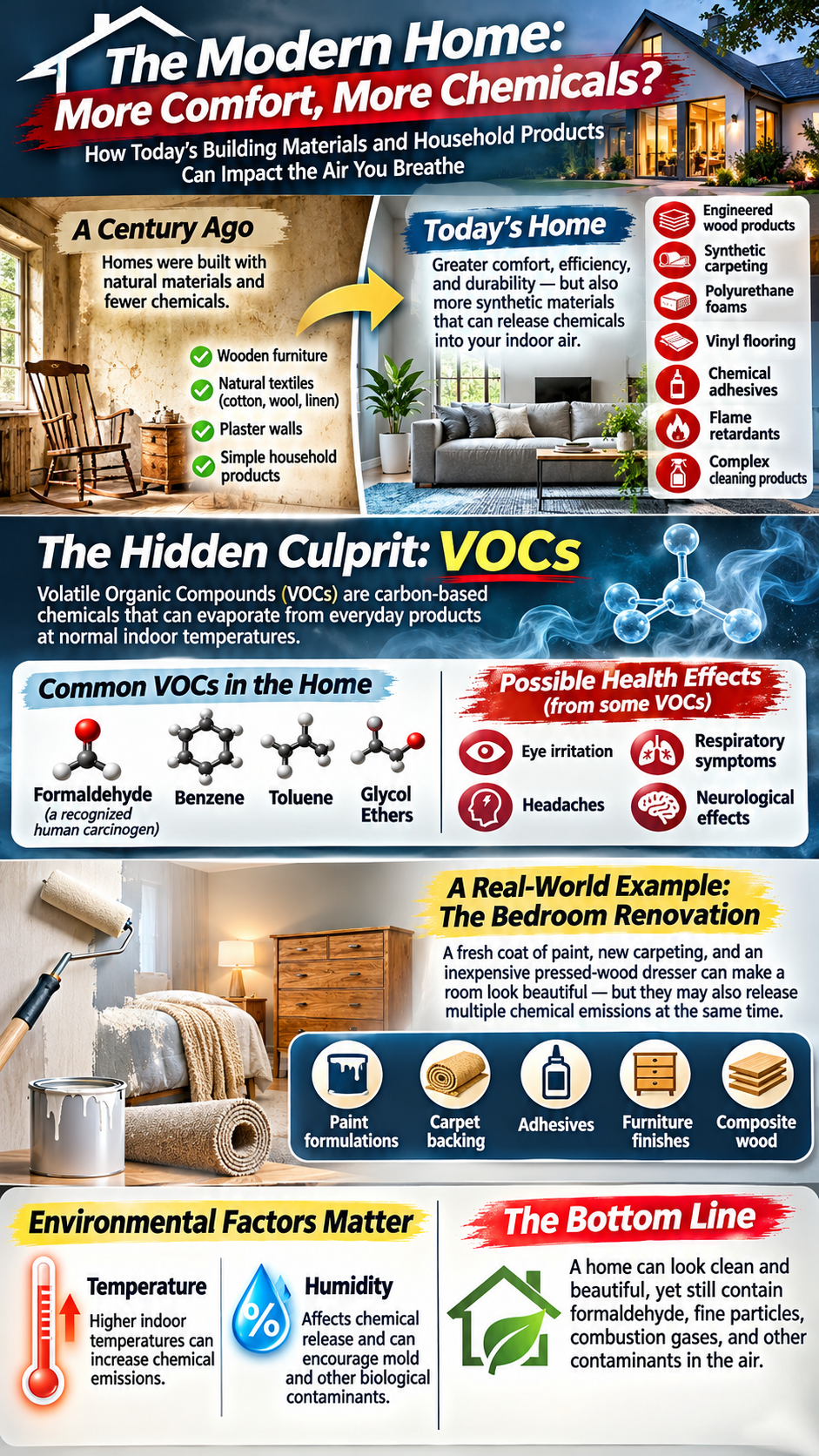
Consider the experience of renovating a bedroom. Fresh paint covers the walls, new carpeting softens the floor, and an inexpensive pressed-wood dresser completes the transformation. Everything looks beautiful, but the renovation may introduce multiple chemical emissions simultaneously. Paint formulations, carpet backing, adhesives, furniture finishes, and composite wood can contribute to the indoor chemical mixture. Emissions generally decline over time, although rates vary according to the product, temperature, humidity, and ventilation. The greatest concern often arises when several sources occupy a poorly ventilated room, creating a cumulative exposure that homeowners never intended.
Temperature also influences this process. As indoor temperatures rise, emissions from certain materials may increase, potentially raising airborne concentrations. Humidity can affect chemical release and may also encourage biological contamination when moisture accumulates. This creates an important distinction between a home that looks clean and one that maintains healthy indoor environmental conditions. Appearance alone cannot reveal the concentration of formaldehyde, fine particles, combustion gases, or microbial contaminants circulating through occupied rooms.
Your Favorite Fragrance May Be Adding to the Problem
Few household products illustrate the difference between perceived cleanliness and actual air quality better than scented candles, plug-in fragrances, and aerosol air fresheners. Manufacturers carefully design these products to create emotional associations with freshness, relaxation, and cleanliness. Lavender suggests tranquility, citrus communicates energy, and pine evokes the outdoors. Yet fragrance does not necessarily indicate that contaminants have disappeared. In many cases, it simply means additional aromatic chemicals have entered the indoor environment.
Many fragrance formulations release VOCs, including terpenes such as limonene and alpha-pinene. These compounds also occur naturally in plants, but their natural origin does not guarantee harmlessness under every exposure condition. Indoor chemistry becomes particularly interesting when certain fragrance compounds react with ozone entering from outdoor air. Those reactions can generate secondary pollutants, including formaldehyde and ultrafine particles. The amount formed depends on ventilation, ozone levels, product composition, and other environmental conditions. Consequently, a product intended to make a room smell refreshing can sometimes contribute to indoor chemical reactions that worsen air quality.
Candles introduce another concern because combustion can generate particulate matter, especially when flames flicker or burn inefficiently. Incense can produce substantial indoor particle concentrations, while certain aerosol products distribute fine droplets and chemical ingredients throughout occupied spaces. These exposures do not mean every scented product will cause illness, nor do they justify attributing unexplained symptoms automatically to fragrance. However, people with asthma, fragrance sensitivity, or existing respiratory disease may experience irritation or worsening symptoms from particular products. The larger lesson is that masking an odor and removing its source are fundamentally different environmental strategies.
The Kitchen: An Unexpected Source of Airborne Contaminants
The kitchen represents one of the most overlooked sources of indoor air pollution because cooking is essential to daily life. Whether someone prepares vegetables, sears a steak, or fries eggs, heating food can release particles and gases into the surrounding air. High-temperature cooking, particularly frying, broiling, and searing, can generate substantial concentrations of fine particulate matter. Oils, fats, and food components undergo chemical changes during heating, producing airborne particles and various organic compounds. Even electric cooking appliances can generate pollutants from the cooking process itself.
Gas stoves introduce additional combustion-related exposures. Burning natural gas can release nitrogen dioxide, carbon monoxide, and ultrafine particles, particularly when burners operate without effective ventilation. Nitrogen dioxide is a respiratory irritant associated with worsening asthma symptoms and other respiratory effects. Studies have linked gas stove use with childhood asthma, although the strength of causal conclusions and the contribution of individual household factors remain subjects of scientific investigation. Regardless of that debate, combustion emissions are measurable, and effective ventilation can substantially reduce exposure.
Imagine preparing dinner while children complete homework at the kitchen counter. A gas burner operates beneath a skillet, oil begins smoking, and the range hood remains switched off because it makes too much noise. Fine particles and combustion gases can spread beyond the kitchen into adjoining living spaces. In an open-concept home, those contaminants may move through areas where family members spend hours relaxing or sleeping. The exposure depends on the cooking method, appliance condition, ventilation effectiveness, and duration of use. This is one reason indoor air quality cannot be evaluated simply by checking whether a home appears dusty.
Mold, Moisture, and the Biological Side of Indoor Pollution
Chemical contaminants represent only one part of the indoor air pollution problem. Homes also contain biological particles originating from fungi, bacteria, dust mites, pets, and human activity. Most microbial exposure is an ordinary part of life, and the presence of a mold spore does not automatically indicate a hazardous environment. Problems develop when moisture allows microbial growth to flourish inside building materials, ventilation systems, carpets, or concealed wall cavities. Persistent dampness creates conditions where indoor microbial concentrations and associated inflammatory exposures can increase.
The World Health Organization has identified dampness and mold as important indoor environmental health concerns. Research consistently associates damp or moldy buildings with respiratory symptoms, asthma exacerbations, coughing, wheezing, and certain allergic conditions. Some fungi also produce mycotoxins, although detecting mold does not establish that occupants have experienced clinically significant mycotoxin exposure. Claims that ordinary household mold routinely causes widespread systemic toxicity exceed what current evidence can reliably demonstrate. Nevertheless, chronic moisture damage deserves serious attention because respiratory health effects are sufficiently established to justify prevention and remediation.
A particularly frustrating feature of moisture-related contamination is that the visible stain may represent only a fraction of the problem. Water can penetrate behind drywall, beneath flooring, or around poorly sealed windows. Condensation from inadequate ventilation may accumulate in bathrooms, closets, and air-conditioning systems. Occupants sometimes notice a persistent musty odor before discovering the moisture source. Other households experience recurring respiratory irritation without recognizing that an unresolved leak is contributing to their indoor environment. Identifying the moisture source matters more than merely covering stains or attempting to disguise the smell.
Fine Particles: Small Enough to Reach Deep Into Your Lungs
Among the most extensively studied air pollutants are particles known as PM2.5, meaning particulate matter with aerodynamic diameters of 2.5 micrometers or smaller. These particles are approximately thirty times smaller than the diameter of an average human hair. Their size allows them to travel deep into the respiratory tract, reaching the smallest airways and gas-exchanging regions of the lungs. Some ultrafine particles may also cross biological barriers under certain conditions. The body possesses sophisticated protective mechanisms, including mucus, cilia, immune cells, and antioxidant defenses, but sustained or elevated exposures can overwhelm aspects of those defenses.
Scientific research links fine particulate pollution with cardiovascular and respiratory disease, including increased risks of heart attacks, strokes, and premature mortality. Much of the strongest long-term evidence comes from outdoor air pollution studies, although indoor-generated particles can contribute meaningfully to personal exposure. Researchers have identified several biological pathways through which particles may affect health, including oxidative stress, inflammatory signaling, endothelial dysfunction, and changes in autonomic nervous system regulation. These mechanisms help explain how inhaled pollutants can influence organs beyond the lungs without requiring every particle to enter the bloodstream directly.
Indoor PM2.5 may originate from cooking, candles, fireplaces, tobacco smoke, and outdoor pollution entering through windows or ventilation systems. Particle concentrations can change dramatically throughout the day, depending on human activity and environmental conditions. A room that appears perfectly clear may still contain elevated concentrations because fine particles are invisible individually. This makes particulate pollution particularly relevant to individuals who experience persistent respiratory symptoms or who already face increased cardiovascular risk. Reducing unnecessary exposure is a practical preventive strategy, even when no specific illness can be attributed to a single indoor source.
When the Body Responds to the Air Around It
The human respiratory system does considerably more than transport oxygen into the bloodstream. It also serves as an active immune interface, continuously evaluating inhaled particles, allergens, microorganisms, and chemical irritants. Epithelial cells lining the airways help maintain a protective barrier, while resident immune cells respond to potentially harmful substances. When exposure becomes excessive, inflammatory signaling may increase, mucus production can change, and sensitive airways may constrict. These reactions are especially important in people living with asthma, chronic obstructive pulmonary disease, or allergic respiratory conditions.
Indoor pollution may also contribute to symptoms that seem unrelated to breathing. Certain chemical exposures can cause headaches, dizziness, eye irritation, or difficulty concentrating, particularly at elevated concentrations. Carbon monoxide deserves special attention because it interferes with oxygen delivery and can produce headache, nausea, confusion, and potentially fatal poisoning without a detectable odor. These symptoms are not specific to indoor pollution, however, and persistent fatigue or cognitive difficulties should never automatically be blamed on household toxins. Appropriate medical evaluation remains important, especially when symptoms are severe, unexplained, or progressive.
The emerging science of environmental health encourages a broader understanding of cumulative exposure. Rather than examining one chemical in isolation, researchers increasingly investigate how combinations of pollutants, exposure duration, personal susceptibility, and existing disease influence biological responses. This perspective complements a root-cause approach to health by asking whether an individual’s environment contributes to ongoing physiological stress. It does not establish that indoor pollution explains every chronic condition, but it highlights an environmental factor that conventional symptom-focused assessments may not always investigate.
The Hidden Cost of Living in a Sealed Environment
Energy-efficient construction has changed how modern homes exchange air with their surroundings. Better insulation, tighter windows, and improved building envelopes reduce unwanted heat transfer and can lower energy consumption. These improvements are valuable, particularly in climates where heating and cooling costs are substantial. However, a tightly sealed home still requires adequate ventilation to remove moisture, odors, combustion byproducts, and internally generated pollutants. Without sufficient fresh-air exchange or appropriate mechanical ventilation, contaminants may accumulate even in a newly constructed, meticulously maintained residence.
This creates a paradox of modern living. Homeowners invest in advanced filtration, expensive furnishings, antimicrobial cleaning products, and high-efficiency appliances, believing they are creating healthier environments. Yet the combination of chemical-emitting materials, indoor combustion, moisture, and insufficient ventilation may undermine those intentions. The solution is not to abandon modern construction or assume that outdoor air is always safer. Outdoor pollution, wildfire smoke, and seasonal allergens can also create substantial risks, making effective indoor air management dependent on local conditions and the pollutants involved.
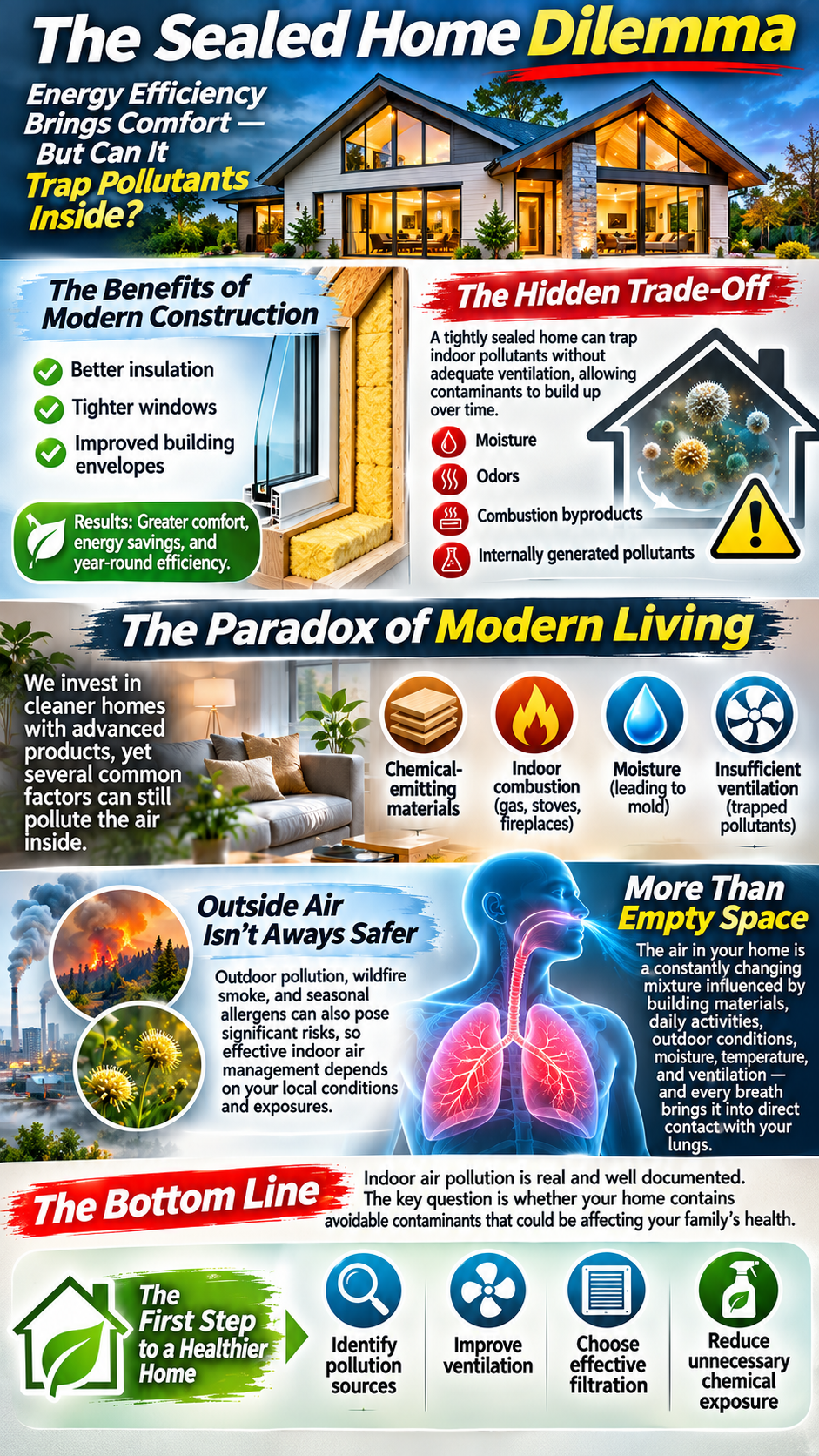
Ultimately, the air inside a home is not simply an empty space surrounding its occupants. It is a constantly changing mixture shaped by construction materials, household activities, outdoor conditions, moisture, temperature, and ventilation. Every breath brings that environment into direct contact with the body’s most delicate respiratory surfaces. Understanding this relationship changes the way we think about preventive health because it expands the conversation beyond diet, exercise, supplements, and laboratory testing to include the air we breathe for thousands of hours every year.
The question is no longer whether indoor air pollution exists. Decades of environmental research have established that it does. The more meaningful question is whether the air circulating through your bedroom, kitchen, and living room contains avoidable contaminants that could be affecting your family’s health. Recognizing those exposures is the first step toward creating a healthier home, and it sets the stage for understanding how to identify pollution sources, improve ventilation, select effective filtration, and reduce unnecessary chemical exposure without turning everyday living into an exercise in fear.
How to Detoxify Your Home, Protect Your Lungs, and Create an Environment That Supports Healing
The moment you discover that the air inside your home may contain more pollutants than the air outside, something changes. That familiar living room, comfortable bedroom, and beautifully remodeled kitchen suddenly deserve a closer examination. The good news is that improving indoor air quality does not require abandoning modern conveniences, purchasing expensive equipment, or transforming your home into a sterile laboratory. It requires understanding how pollutants enter your environment, recognizing where they accumulate, and making deliberate changes that reduce your family’s daily exposure.
Environmental medicine has long recognized that exposure reduction is one of the most effective ways to prevent pollution-related illness. Yet conversations about personal health often focus almost exclusively on what enters the body through food, beverages, medications, and supplements. Far less attention goes toward the thousands of gallons of air passing through the lungs each day. Nutrition, exercise, sleep, and metabolic health remain essential, but their benefits do not eliminate the importance of environmental conditions. A person can eat an exceptionally nutritious diet while continuing to inhale avoidable respiratory irritants throughout the night.
Creating a healthier home begins with an important distinction between supporting the body’s natural protective systems and claiming to remove accumulated toxins through unproven detoxification methods. Your lungs, liver, kidneys, and immune system already perform essential protective and elimination functions. The most reliable environmental strategy is to reduce unnecessary exposures before contaminants enter the body. This approach is particularly important for children, pregnant women, older adults, and individuals with respiratory or cardiovascular disease, who may experience greater consequences from certain pollutants.
Your At-Home Action Plan for Cleaner Indoor Air
Start With an Indoor Air Investigation
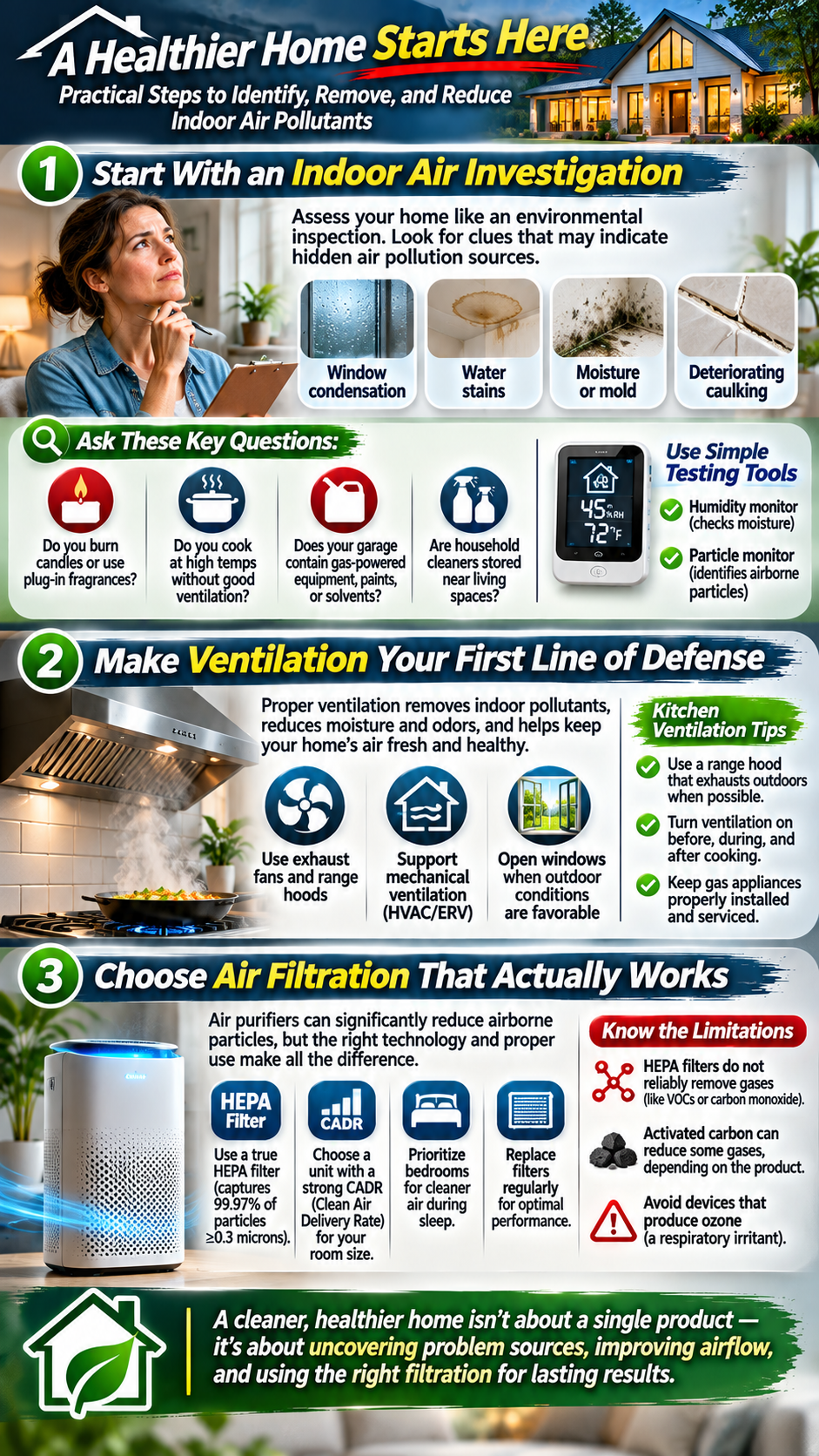
Before purchasing another air purifier or replacing household products, investigate the environment you already have. Walk through your home as though you were conducting an environmental inspection. Pay attention to rooms where odors linger, windows collect condensation, furniture smells unusually chemical, or moisture accumulates. Examine areas surrounding plumbing fixtures, air-conditioning equipment, basement walls, and poorly ventilated bathrooms. Look for water stains, deteriorating caulking, damaged flooring, and signs of persistent dampness. These observations can reveal potential pollution sources that routine household cleaning never addresses.
Consider how your family’s daily activities influence the indoor environment. Do you burn candles every evening, use plug-in fragrances throughout the house, or frequently cook at high temperatures without ventilation? Does your attached garage contain gasoline-powered equipment, paints, or solvents? Are household cleaners stored near living spaces, and do you notice irritation when using them? These questions help identify exposure patterns rather than assuming that every synthetic material presents the same risk. The objective is to prioritize meaningful hazards instead of creating unnecessary anxiety about ordinary household products.
Measurement can make this investigation more useful. A reliable indoor humidity monitor provides inexpensive information about moisture conditions, while a particulate matter monitor can help identify activities that generate airborne particles. However, consumer air-quality devices have limitations, particularly when estimating VOC concentrations. Many inexpensive sensors cannot distinguish individual chemicals or determine whether a particular concentration represents a health hazard. When there is a persistent chemical odor, significant water damage, or suspected combustion problem, qualified environmental assessment may provide more dependable answers than a general-purpose home monitor.
Make Ventilation Your First Line of Defense
Ventilation is one of the most powerful tools available for improving indoor air quality because it helps remove pollutants generated inside the home. Modern buildings often conserve energy by limiting uncontrolled air exchange, but energy efficiency should never come at the expense of adequate fresh-air ventilation. Mechanical ventilation systems, properly functioning exhaust fans, and appropriately designed heating and cooling equipment can help maintain healthier indoor conditions. The goal is to replace contaminated indoor air without unnecessarily introducing outdoor pollution, excessive humidity, or allergens.
Kitchen ventilation deserves particular attention. Whenever cooking generates smoke, steam, or combustion gases, use a range hood that exhausts outdoors whenever possible. A recirculating hood may capture some grease and particles, but it generally cannot remove combustion gases as effectively as outdoor exhaust. Turn ventilation on before cooking and allow it to operate afterward when needed. Using back burners beneath an effective hood, avoiding overheated oils, and keeping burners properly maintained can further reduce exposure. Households using gas appliances should also ensure that combustion equipment is installed and serviced correctly.
Opening windows can improve ventilation when outdoor conditions are favorable, but it is not universally beneficial. During wildfire events, heavy traffic pollution, high pollen periods, or severe outdoor humidity, unrestricted outdoor air may worsen indoor conditions. Homes in hot and humid climates also need to balance ventilation against moisture control. A properly designed mechanical system can provide more consistent results than relying exclusively on open windows. The principle is straightforward: cleaner air requires controlling pollution sources while ensuring that contaminants do not remain trapped indoors.
Choose Air Filtration That Actually Works
Air purifiers have become popular household products, but their effectiveness depends on filtration technology, airflow, room size, and the pollutants involved. High-efficiency particulate air filtration, commonly called HEPA filtration, is especially valuable for reducing airborne particles. A true HEPA filter is designed to capture at least 99.97 percent of particles measuring 0.3 micrometers under specified testing conditions. This does not mean every purifier removes 99.97 percent of all particles from an entire room immediately. Real-world performance depends on how much air passes through the filter, the unit’s placement, and the continued generation of pollutants.
When selecting a portable purifier, look for its clean air delivery rate, or CADR, rather than relying exclusively on marketing claims. CADR describes how quickly a device delivers filtered air for particular particle categories. A purifier that is too small for a large living room may operate continuously without achieving meaningful reductions. Bedrooms are often practical starting points because people spend many uninterrupted hours sleeping there. Position the purifier where airflow remains unobstructed, operate it consistently, and replace filters according to the manufacturer’s recommendations.
Filtration also has important limitations. Standard HEPA filters capture particles but do not reliably remove gases such as carbon monoxide or all VOCs. Activated carbon may help reduce certain gaseous pollutants, although effectiveness varies with the chemical, carbon quantity, and filter design. Be cautious about devices that intentionally produce ozone, since ozone itself is a respiratory irritant. Ionizers and other electronic technologies may introduce additional considerations, including potential byproduct formation. Effective filtration should complement source control and ventilation rather than substitute for them.
Eliminate Unnecessary Fragrances and Chemical Sources
One of the simplest ways to reduce avoidable indoor chemical emissions is to reconsider products used primarily to create a pleasant smell. Scented candles, aerosol fresheners, plug-in fragrances, and heavily perfumed cleaning products can introduce additional VOCs and, in some cases, particles into the home. Although exposure levels vary widely, these products are often unnecessary for maintaining cleanliness. A room that smells like artificial lavender is not necessarily cleaner than one with no noticeable fragrance. Genuine odor control begins by identifying and removing the underlying source.
Choose fragrance-free household products when practical, especially in homes where occupants experience asthma or respiratory irritation. Fragrance-free and unscented are not always interchangeable labels because some unscented products contain masking fragrances. For routine cleaning, simple products used according to their labels are frequently sufficient. Soap, water, and mechanical cleaning can remove many common household contaminants without requiring multiple specialized sprays. Strong disinfectants have legitimate uses, but using them indiscriminately does not automatically create a healthier environment.
Never mix household cleaning chemicals, particularly bleach with ammonia-containing products or acids. These combinations can release dangerous gases and cause serious respiratory injury. Store paints, solvents, fuels, and pesticides in appropriate locations away from occupied rooms, following product safety instructions. When purchasing furniture, flooring, or building materials, consider products with credible low-emission certifications. Newly purchased materials may benefit from appropriate ventilation during installation and early use. Reducing unnecessary chemical sources is often more effective than attempting to filter every substance after it enters the air.
Control Moisture Before Mold Becomes a Problem
Moisture management is essential because mold cannot grow extensively without sufficient water. The EPA generally recommends maintaining indoor relative humidity between 30 and 50 percent when practical, and below 60 percent to discourage mold growth. These targets may require additional attention in humid climates, where air-conditioning systems, dehumidifiers, and ventilation must work together. A simple hygrometer can help homeowners recognize persistent humidity problems that might otherwise remain unnoticed until visible damage develops.
Water intrusion deserves prompt attention. Repair leaking pipes, damaged roofing, and poorly sealed windows rather than repeatedly cleaning the resulting stains. Dry wet materials as quickly as possible, ideally within 24 to 48 hours when circumstances permit. Porous materials that remain wet or develop extensive mold contamination may require removal. Small areas of mold on suitable hard surfaces can sometimes be cleaned safely, but extensive contamination, sewage damage, or mold inside ventilation systems may warrant professional remediation.
Be skeptical of companies promising to diagnose complex systemic illnesses through routine household mold testing alone. Air sampling has limitations, and results can vary substantially depending on weather, ventilation, and sampling conditions. Similarly, the presence of mold does not establish that someone has experienced mycotoxin poisoning. The strongest practical approach focuses on correcting moisture problems and removing contaminated materials. A dry, well-maintained building supports healthier respiratory conditions without requiring exaggerated claims about mysterious toxins.
Protect Your Bedroom and the Air You Breathe Overnight
The bedroom deserves special consideration because sleep involves prolonged exposure to the same indoor environment. Mattresses, pillows, bedding, carpets, upholstered furniture, and accumulated dust can all influence airborne particle and allergen levels. Dust mites thrive in humid environments and may aggravate allergic symptoms in susceptible individuals. Pet allergens can also accumulate in bedding and soft furnishings, even when animals are not physically present in the room. These exposures matter most when a household member has a demonstrated allergy or respiratory sensitivity.
Wash bedding regularly, maintain appropriate humidity, and vacuum with a well-sealed HEPA-filtered vacuum when possible. Allergy-proof mattress and pillow encasements may benefit individuals with dust mite allergies. Avoid allowing moisture to accumulate behind bedroom furniture positioned against cold exterior walls. Keep air-conditioning equipment clean and properly maintained, and consider portable HEPA filtration when particle exposure is a concern. These measures create a more controlled sleeping environment without suggesting that every speck of household dust represents a medical emergency.
Sleep quality also depends on factors beyond air pollution, including temperature, noise, light, and underlying medical conditions. Nevertheless, respiratory irritants and allergens can interfere with comfortable breathing and worsen nighttime asthma or congestion. Improving bedroom air quality may therefore support better sleep in susceptible individuals. It should be viewed as one component of healthy sleep rather than a guaranteed solution for insomnia, fatigue, or other complex symptoms.
Support the Body’s Natural Defenses Without Falling for Detox Myths
Environmental exposure reduction works best alongside habits that support overall physiological resilience. A nutrient-rich diet provides vitamins, minerals, protein, and other compounds required for normal immune function, antioxidant defenses, and tissue maintenance. Regular physical activity supports cardiovascular and respiratory health, while adequate sleep contributes to normal immune regulation and recovery. Hydration helps maintain ordinary physiological functions, including healthy airway secretions, although drinking excessive water does not accelerate the elimination of inhaled chemicals.
Certain nutrients participate in antioxidant systems that protect cells from oxidative stress. Glutathione, for example, is an important intracellular antioxidant involved in maintaining redox balance and processing certain compounds. Its production depends on adequate amino acid availability and normal metabolic function. However, evidence that routine supplements can reverse the effects of household air pollution remains limited. Claims that saunas, binders, juice cleanses, or specialized detoxification protocols reliably remove inhaled pollutants from the body are not established by high-quality clinical evidence.
This distinction is important for anyone interested in functional and preventive healthcare. Supporting normal physiology is worthwhile, but the greatest benefit often comes from preventing exposure rather than attempting to compensate for it afterward. Someone breathing combustion gases from a malfunctioning furnace does not need a stronger antioxidant supplement; that person needs the source identified and corrected immediately. Carbon monoxide alarms should be installed and maintained according to local safety guidance, particularly near sleeping areas and where fuel-burning appliances are present. Suspected carbon monoxide exposure requires immediate evacuation to fresh air and emergency assistance.
A Healthier Home Begins With What You Remove
The pursuit of better health often encourages people to add something new: another supplement, another wellness device, another specialized product, or another elaborate routine. Indoor air quality presents a different opportunity. Sometimes meaningful progress begins by removing unnecessary sources of exposure. Eliminating persistent moisture, reducing indoor smoke, improving ventilation, and avoiding excessive fragrance use can lower pollutant concentrations without introducing complicated interventions. These changes are practical, measurable, and grounded in established environmental health principles.
The most effective improvements also tend to be sustainable. A household does not need to eliminate every synthetic material or achieve laboratory-level air purity to benefit from healthier environmental conditions. Families can prioritize the largest identifiable risks, especially combustion pollutants, tobacco smoke, persistent dampness, and elevated particulate matter. Once those concerns are addressed, additional improvements can be considered according to individual needs, available resources, and measured conditions. This approach avoids the unnecessary expense and anxiety that often accompany exaggerated environmental health claims.
There is also an important difference between being exposed to a substance and developing disease from that exposure. Toxicity depends on the chemical involved, its concentration, exposure duration, route of entry, and individual susceptibility. Environmental science recognizes these distinctions because they determine whether a particular hazard requires urgent intervention or routine preventive management. Understanding risk allows homeowners to make informed decisions rather than treating every detectable chemical as evidence of poisoning.
Ultimately, the home should function as a place of restoration rather than an overlooked source of preventable environmental stress. Clean air cannot guarantee freedom from chronic disease, but reducing harmful exposures can support respiratory and cardiovascular health while protecting vulnerable family members. When we recognize that health is influenced by the environments we inhabit, prevention becomes something we practice not only at the dinner table or in the gym, but also through the choices we make about our buildings, appliances, household products, and ventilation.
The next time you walk through your front door and take that familiar deep breath, consider what you are actually breathing. The most important elements of a healthy home may be invisible, but they are not beyond your influence. By investigating indoor pollution sources and making thoughtful, evidence-informed changes, you can create an environment that better supports the body’s normal protective functions. A healthier home begins not with fear of the air around you, but with the knowledge and practical steps needed to make that air cleaner.