
The Exercise Prescription That Changed the World—But Missed the Real Disease
For generations, one image has defined heart health more than any other. A lone runner glides through the early morning mist while a narrator promises that every mile strengthens the heart and extends life. That image became medicine’s most recognizable prescription. Physicians recommended jogging. Fitness magazines praised marathon training. Television commercials celebrated endless hours on treadmills. An entire generation accepted one simple message without question: if you wanted a healthy heart, you needed more cardio.
The advice sounded logical because the heart beats faster during aerobic exercise. A faster heartbeat appeared to mean a stronger heart. Unfortunately, human physiology rarely follows such simple equations. Heart disease continued climbing despite decades of promoting endurance exercise as the cornerstone of cardiovascular prevention. Millions faithfully completed their daily runs while rates of obesity, metabolic syndrome, insulin resistance, hypertension, and coronary artery disease continued to rise. Something important was missing from the conversation.
The greatest misconception was never that cardiovascular exercise lacks value. Walking, cycling, swimming, hiking, and interval training provide remarkable benefits when used appropriately. The real mistake was convincing the public that cardio alone could overcome poor metabolic health, chronic inflammation, muscle loss, nutritional deficiencies, hormonal dysfunction, and decades of vascular damage. Exercise became the hero while the true villains quietly escaped attention. By treating heart disease as a problem solved with more movement instead of correcting the biological environment that created it, medicine often addressed symptoms rather than causes.
Heart disease does not suddenly appear after a birthday or a stressful month at work. It develops through thousands of microscopic injuries occurring over many years. Every elevated glucose spike, every inflammatory molecule, every episode of oxidative stress, and every period of poor metabolic control slowly reshapes the arteries. The process begins long before chest pain appears or a calcium scan reveals hardened vessels. By the time symptoms emerge, the body has often spent decades responding to an environment that continually damaged the cardiovascular system.
The Heart Is Only One Piece of a Much Larger Story
Conventional discussions often isolate the heart as though it functions independently from the rest of the body. Nothing could be further from reality. The heart depends on healthy blood vessels, balanced hormones, efficient mitochondria, responsive nerves, functional muscles, and a stable immune system. Every heartbeat reflects the health of countless biological systems working together. When one system begins to fail, the heart eventually feels the consequences.
This interconnected design explains why many people with normal cholesterol still suffer heart attacks while others with elevated cholesterol never develop significant cardiovascular disease. Researchers increasingly recognize that chronic inflammation, insulin resistance, endothelial dysfunction, oxidative stress, abnormal blood sugar regulation, and metabolic syndrome often predict cardiovascular risk more accurately than cholesterol alone. The bloodstream carries far more than fats. It transports inflammatory chemicals, hormones, immune cells, nutrients, toxins, and oxygen. Every one of those components influences the health of the arteries.
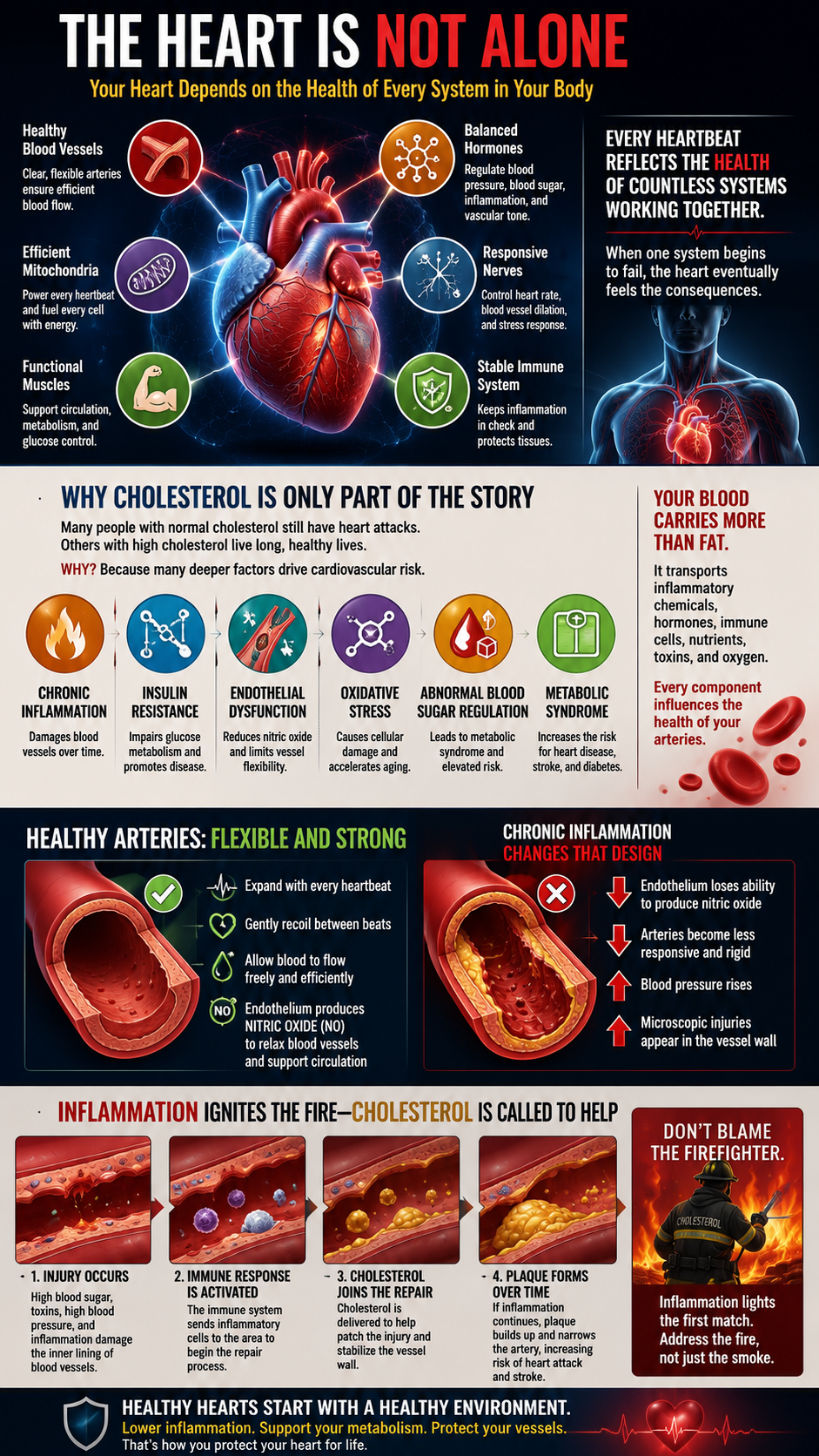
Healthy arteries function much like a flexible garden hose. They expand with every heartbeat and gently recoil between beats. That flexibility allows blood to travel efficiently throughout the body. Chronic inflammation gradually changes that remarkable design. The inner lining of blood vessels, known as the endothelium, begins losing its ability to produce nitric oxide, a signaling molecule responsible for relaxing arteries and maintaining healthy circulation. As nitric oxide production falls, arteries become less responsive, blood pressure rises, and microscopic injuries appear within the vessel wall.
Those injuries trigger an ongoing repair process. The immune system responds by recruiting inflammatory cells into damaged tissue. Cholesterol participates in the repair effort, but public discussions often mistake the firefighter for the arsonist. While cholesterol contributes to plaque formation, inflammation frequently lights the first match. Without addressing the inflammatory environment, removing cholesterol alone cannot fully eliminate the conditions that created vascular injury.
Muscle: The Forgotten Organ That Protects the Heart
One of the greatest omissions in traditional heart health advice involves skeletal muscle. Most people view muscle as cosmetic tissue reserved for athletes and bodybuilders. Modern physiology tells a dramatically different story. Skeletal muscle functions as one of the body’s largest endocrine and metabolic organs. Every contraction sends chemical signals throughout the body that influence inflammation, glucose metabolism, immune function, and cardiovascular health.
Scientists now recognize these signaling proteins as myokines. During resistance exercise, muscles release numerous beneficial compounds that communicate with distant organs, including the liver, pancreas, brain, and heart. Many of these molecules reduce inflammatory activity while improving insulin sensitivity and enhancing metabolic efficiency. In essence, healthy muscle behaves like an internal pharmacy that manufactures protective compounds every time it works.
Loss of muscle creates consequences that extend far beyond weakness. Aging adults naturally lose muscle mass through a process called sarcopenia, yet poor nutrition, inactivity, chronic illness, and prolonged dieting accelerate that decline. As muscle disappears, the body’s largest storage site for glucose shrinks. Blood sugar remains elevated longer after meals. The pancreas compensates by releasing additional insulin. Over time, tissues become less responsive to insulin, creating insulin resistance, one of the strongest drivers of cardiovascular disease.
This relationship changes the entire conversation surrounding exercise. Cardio certainly burns calories while the activity continues. Resistance training creates adaptations that persist throughout the day because muscle remains metabolically active even during rest. Every additional pound of lean muscle improves glucose disposal, supports healthy insulin levels, and reduces one of the major biological forces responsible for arterial damage. A stronger body frequently becomes a healthier cardiovascular system because the underlying metabolism improves.
The Metabolic Crisis Hiding Behind Heart Disease
The modern epidemic of heart disease cannot be understood without examining metabolism. Most cardiovascular discussions begin with blocked arteries. The story actually begins years earlier inside individual cells. Healthy cells efficiently convert nutrients into energy through tiny structures called mitochondria. These microscopic power plants fuel every heartbeat, every muscle contraction, and every biological process required for life.
Poor nutrition, excessive refined carbohydrates, chronic stress, sleep deprivation, environmental toxins, and physical inactivity gradually overwhelm mitochondrial function. Cells become less efficient at producing energy. Fat begins accumulating where it does not belong. Blood sugar regulation deteriorates. Inflammation accelerates. The body enters a state of metabolic dysfunction that quietly damages nearly every organ.
Insulin resistance represents one of the earliest warning signs of this process. Insulin normally escorts glucose from the bloodstream into cells for energy production. Repeated exposure to excessive glucose eventually causes cells to ignore insulin’s signals. The pancreas responds by producing even more insulin. Elevated insulin encourages fat storage, promotes inflammation, raises triglycerides, and contributes to high blood pressure. Each of these changes increases cardiovascular risk long before a physician diagnoses diabetes.
Many individuals continue performing long sessions of steady-state cardio while this metabolic dysfunction quietly progresses. They assume regular exercise protects them completely because they burn hundreds of calories each workout. Unfortunately, exercise cannot fully compensate for persistent insulin resistance if muscle mass continues declining and dietary habits continue driving inflammation. The body requires improved metabolic flexibility, not simply greater calorie expenditure.
The Hidden Limits of Endless Cardio
Endurance training offers unquestionable benefits when performed in moderation. Aerobic exercise improves oxygen utilization, strengthens the heart’s pumping efficiency, enhances circulation, and supports mental health. Problems emerge when quantity replaces quality and recovery disappears from the equation. More exercise does not always produce better physiology.
Years of excessive endurance training may increase mechanical stress on the cardiovascular system. Several studies have observed higher rates of atrial fibrillation, coronary artery calcification, myocardial fibrosis, and structural remodeling among certain lifelong endurance athletes. These findings do not suggest marathon running inevitably causes heart disease. They simply remind us that biological systems respond differently to chronic extremes than to balanced training.
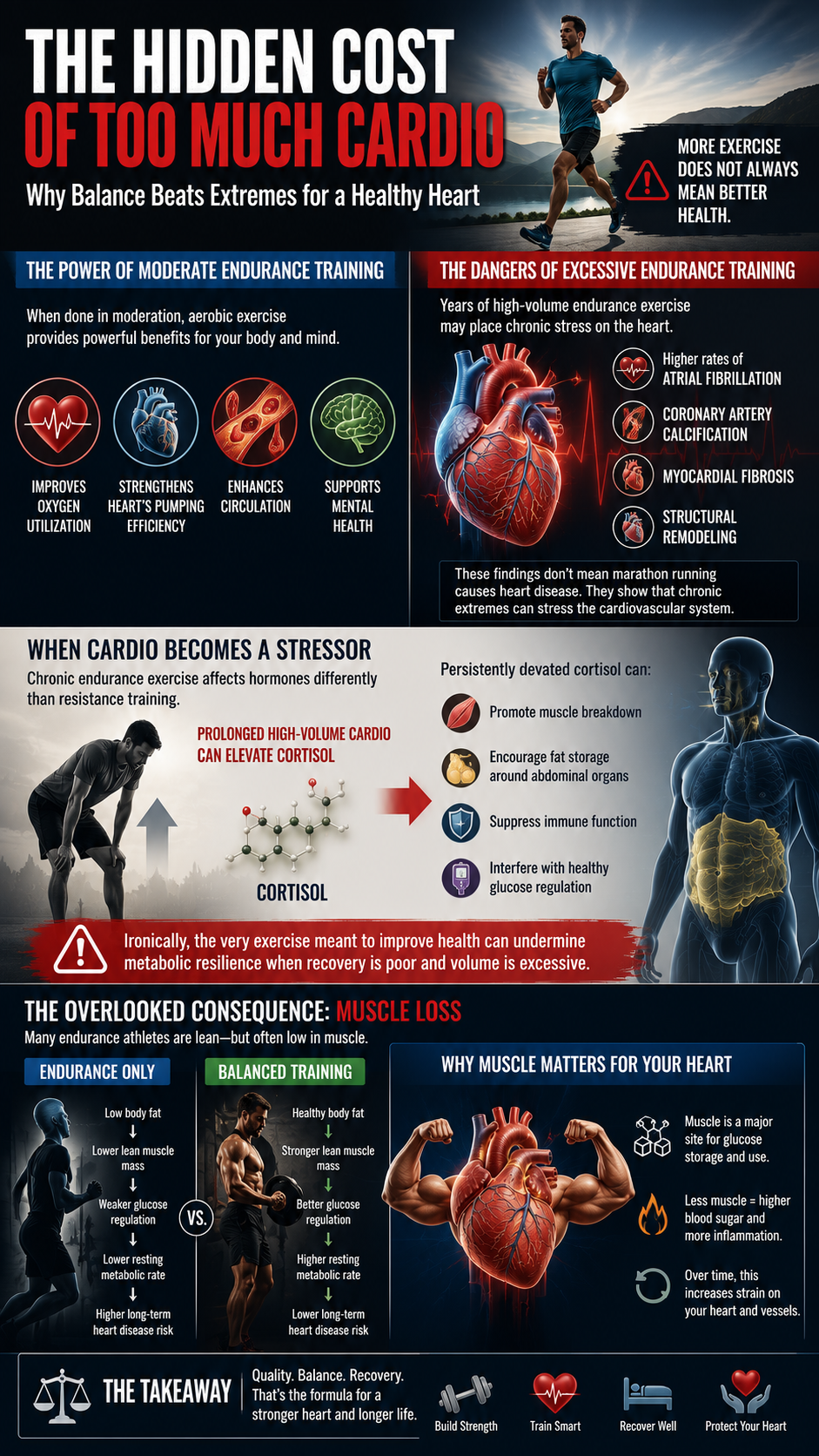
Chronic endurance exercise also influences hormones differently than resistance training. Prolonged high-volume cardio may elevate cortisol when recovery becomes inadequate. Persistently elevated cortisol promotes muscle breakdown, encourages fat storage around abdominal organs, suppresses immune function, and interferes with healthy glucose regulation. Ironically, the very exercise intended to improve health may undermine metabolic resilience when performed excessively without adequate recovery or strength development.
Muscle loss presents another overlooked consequence. Many endurance athletes maintain remarkably low body fat while simultaneously carrying less lean muscle than expected. Reduced muscle mass weakens glucose regulation and lowers resting metabolic rate. Aging adults already face gradual muscle decline. Relying exclusively on cardio may accelerate a process that directly increases cardiovascular risk over time.
A New Understanding of What Builds a Healthy Heart
Perhaps the greatest misunderstanding surrounding exercise involves the heart itself. Most people imagine the heart becoming healthier simply because it beats faster during exercise. While cardiovascular conditioning certainly strengthens cardiac performance, the heart thrives best when the entire biological environment improves. Healthy arteries, responsive muscles, balanced hormones, efficient mitochondria, controlled inflammation, and stable blood sugar create conditions that allow the heart to flourish.
Strength training influences nearly every one of those systems simultaneously. It stimulates muscle growth, improves insulin sensitivity, enhances mitochondrial density, supports bone health, increases functional independence, and promotes beneficial hormonal responses. Cardio contributes essential cardiovascular adaptations, but resistance exercise addresses many of the metabolic disturbances that initiate heart disease years before symptoms appear.
The question, therefore, should never be whether cardio or strength training wins the debate. The more important question asks which form of exercise corrects the biological problems driving modern cardiovascular disease. Increasing evidence suggests that the healthiest heart develops not through endless miles alone but through a carefully balanced program that builds muscle, preserves metabolic health, reduces chronic inflammation, and supports the remarkable interconnected systems that sustain every heartbeat.
Building a Heart That Lasts—The Blueprint for Lifelong Cardiovascular Health
The most remarkable truth about the human body is not its ability to survive disease. Its greatest strength lies in its remarkable capacity to adapt. Every meal, every workout, every night of restorative sleep, and every decision made throughout the day sends instructions to your genes. Those instructions either encourage inflammation or calm it. They either strengthen arteries or slowly weaken them. They either build metabolically active muscle or allow it to disappear year after year. The heart simply responds to the biological environment created by those daily choices.
This understanding completely changes how we should think about cardiovascular health. Instead of asking which exercise burns the most calories, a better question emerges. Which activities create an internal environment where the heart, blood vessels, muscles, and metabolism all improve together? That shift in perspective transforms exercise from punishment into powerful biological communication. Every movement becomes a signal telling your body whether to become stronger or weaker over time.
Fortunately, the body’s adaptive machinery never completely disappears. Research repeatedly demonstrates that people in their sixties, seventies, and even eighties can improve muscle mass, insulin sensitivity, mitochondrial function, and cardiovascular performance through intelligent training. Age certainly changes the rate of adaptation, but it rarely eliminates the body’s ability to respond. The heart continues listening to the messages your lifestyle provides every single day.
Make Strength Training the Foundation Instead of the Finish
Many people still view resistance training as something reserved for competitive athletes or younger adults chasing larger muscles. That outdated belief overlooks decades of exercise physiology. Strength training should serve as the foundation of nearly every long-term heart health program because it directly addresses many of the biological disturbances that initiate cardiovascular disease.
Each resistance workout stimulates microscopic stress within muscle fibers. During recovery, those fibers rebuild stronger than before. This process requires energy, amino acids, hormonal coordination, and improved insulin sensitivity. As muscles grow stronger, they become far more efficient at removing glucose from the bloodstream after meals. Lower glucose levels require less insulin. Reduced insulin decreases inflammatory signaling throughout the vascular system. Better metabolic control gradually reduces one of the major drivers of arterial injury.
Large compound movements create the greatest physiological return because they recruit multiple muscle groups simultaneously. Squats, lunges, step-ups, push-ups, rows, presses, and deadlift variations challenge the legs, hips, chest, shoulders, back, and core during the same workout. Even bodyweight exercises performed consistently can stimulate meaningful improvements in strength when progressed over time. The goal is not lifting the heaviest weight possible. The objective is creating progressive adaptation while maintaining excellent movement quality.
Consistency matters far more than perfection. Two or three well-designed strength sessions each week often produce greater long-term health benefits than sporadic bursts of excessive exercise. Recovery between sessions allows muscles, connective tissues, and the nervous system to rebuild stronger. Improvement occurs during recovery, not while lifting the weight itself.
Rediscover Cardio Without Making It the Centerpiece
Cardiovascular exercise still deserves an important place in a comprehensive fitness program. The difference lies in how we define its role. Cardio should complement strength training rather than replace it. When combined intelligently, the two forms of exercise produce adaptations that neither can achieve alone.
Walking remains one of the most underestimated forms of cardiovascular activity. Unlike exhaustive endurance training, brisk walking places minimal stress on joints while improving circulation, supporting lymphatic drainage, enhancing mitochondrial function, and promoting healthy blood sugar regulation. Walking after meals deserves particular attention because research consistently shows it reduces post-meal glucose spikes. Smaller glucose elevations translate into lower insulin production and less oxidative stress inside blood vessels.
Interval training provides another highly effective strategy. Alternating brief periods of higher effort with active recovery improves cardiovascular conditioning while requiring far less total training time than traditional endurance sessions. Intervals challenge both the aerobic and anaerobic energy systems, encouraging greater mitochondrial adaptation and improved metabolic flexibility. Many individuals achieve significant improvements in cardiovascular fitness without spending endless hours on treadmills.
Moderation remains the guiding principle. The healthiest exercise program supports recovery instead of overwhelming it. Finishing most workouts feeling energized rather than exhausted allows the body to continue adapting positively. Chronic fatigue often signals inadequate recovery rather than insufficient effort.
Feed the Muscle to Protect the Heart
Exercise provides only half of the equation. Muscles cannot rebuild without adequate nutritional support. Every resistance workout creates a demand for high-quality protein, essential minerals, healthy fats, and sufficient micronutrients. Without those building blocks, the body struggles to repair damaged tissue and develop stronger muscle fibers.
Protein deserves special attention because aging adults naturally become less efficient at stimulating muscle protein synthesis. Consuming adequate protein throughout the day provides the amino acids necessary for repair while helping preserve lean body mass. Maintaining muscle becomes increasingly important with age because muscle serves as one of the body’s most effective defenses against insulin resistance and metabolic decline.
Food quality matters just as much as quantity. Diets emphasizing minimally processed foods generally reduce inflammatory burden while supporting healthier mitochondrial function. Excessive refined sugars, ultra-processed carbohydrates, industrial seed oils, and heavily processed foods may contribute to chronic inflammation, impaired insulin signaling, and unfavorable metabolic changes in susceptible individuals. Replacing these foods with nutrient-dense whole foods provides vitamins, minerals, antioxidants, and healthy fats that support vascular function.
Hydration also deserves attention. Blood consists largely of water, and proper hydration supports circulation, nutrient delivery, temperature regulation, and exercise performance. Even mild dehydration increases cardiovascular strain during physical activity by forcing the heart to work harder to maintain adequate blood flow.
Recovery Is Where the Heart Actually Improves
Modern culture often celebrates relentless effort while overlooking the biological importance of recovery. The body does not become healthier simply because exercise occurred. Improvement happens afterward, during periods of repair and adaptation. Ignoring recovery eventually limits progress regardless of how disciplined a workout routine becomes.
Sleep serves as one of the most powerful cardiovascular therapies available. During deep sleep, growth hormone supports tissue repair, inflammatory activity declines, and the nervous system shifts toward restoration. Poor sleep disrupts glucose metabolism, increases cortisol production, raises blood pressure, and impairs recovery from exercise. Chronic sleep deprivation gradually creates the same metabolic disturbances that increase cardiovascular risk.
Stress management deserves equal consideration. Psychological stress activates the sympathetic nervous system, increasing heart rate, blood pressure, and cortisol production. Occasional stress presents little concern because the body evolved to handle temporary challenges. Chronic stress without adequate recovery continuously signals the body to remain in survival mode. Persistent sympathetic activation promotes inflammation, worsens insulin resistance, and places unnecessary strain on the cardiovascular system.
Simple recovery practices often produce profound physiological benefits. Spending time outdoors, maintaining meaningful relationships, practicing diaphragmatic breathing, engaging in hobbies, and protecting sufficient sleep all encourage parasympathetic activity. That restorative branch of the nervous system supports digestion, tissue repair, hormonal balance, and healthy cardiovascular regulation.
Protect the Mitochondria Before Protecting the Arteries
Every heartbeat depends upon mitochondria. These microscopic structures generate the energy required for continuous cardiac contraction throughout life. Damage to mitochondrial function frequently appears years before overt cardiovascular disease develops. Protecting these cellular power plants therefore becomes an essential strategy for preserving heart health.
Regular physical activity stimulates mitochondrial biogenesis, the process of creating new mitochondria. Resistance training and aerobic exercise both contribute to this adaptation through different mechanisms. Together they improve the body’s capacity to generate energy efficiently while reducing oxidative stress. Healthy mitochondria produce energy with fewer damaging free radicals, helping preserve the integrity of blood vessels and cardiac muscle.
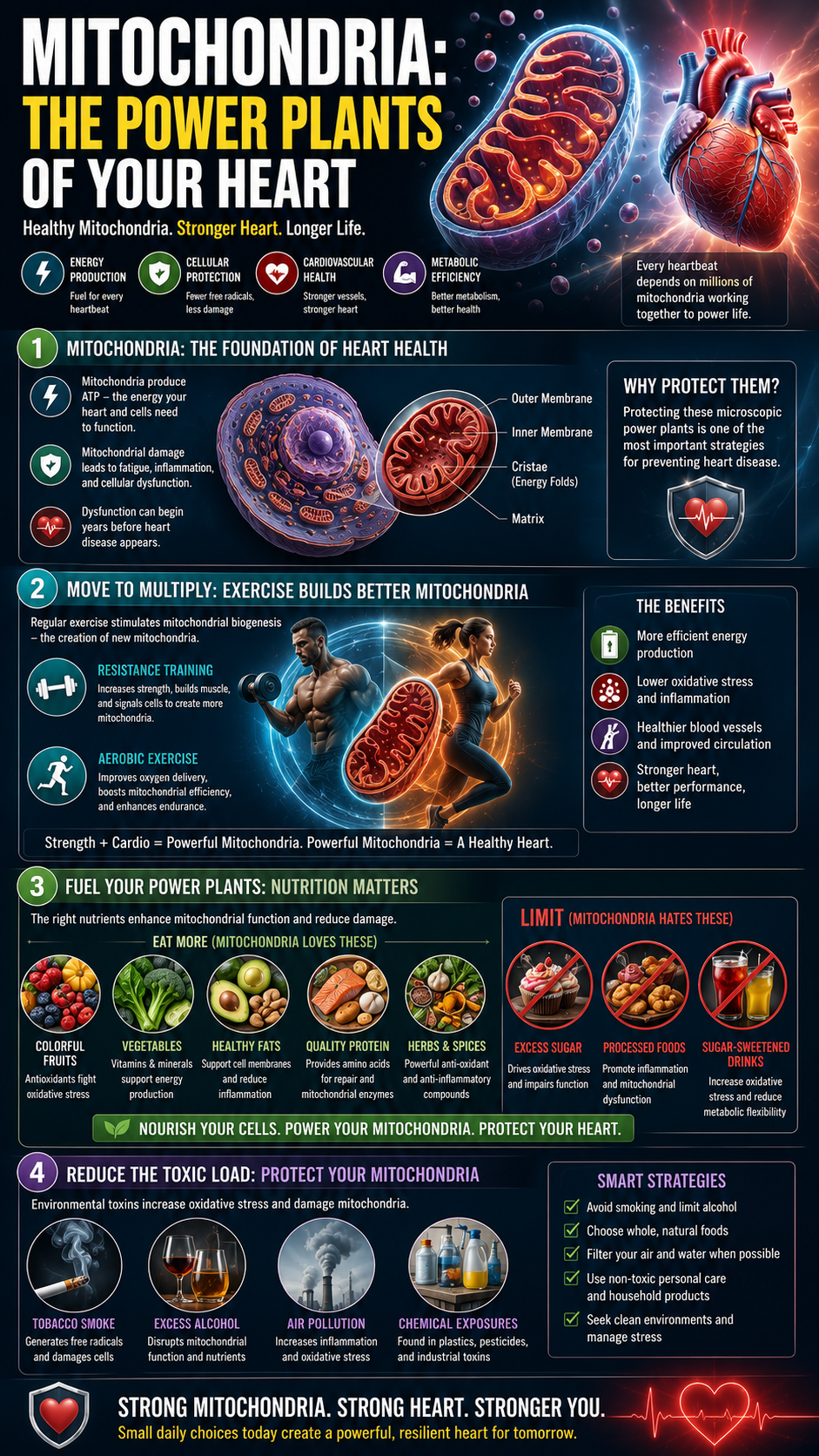
Nutrition strongly influences mitochondrial performance as well. Antioxidant-rich vegetables, colorful fruits, herbs, spices, healthy fats, and high-quality protein provide nutrients that support efficient cellular energy production. Limiting excessive sugar intake reduces unnecessary oxidative stress while improving metabolic flexibility. Healthy mitochondria ultimately support healthier muscles, healthier arteries, and a stronger heart.
Environmental exposures also deserve consideration. Tobacco smoke, excessive alcohol intake, air pollution, and certain industrial chemicals increase oxidative stress throughout the body. Reducing unnecessary exposure whenever possible decreases the burden placed upon mitochondria and the cardiovascular system. While complete avoidance remains unrealistic, minimizing cumulative exposure supports long-term resilience.
The Future of Heart Health Begins With Metabolic Health
The next generation of cardiovascular medicine will likely focus less on treating advanced disease and more on preserving metabolic resilience decades before symptoms develop. Muscle mass, insulin sensitivity, mitochondrial efficiency, inflammatory control, and nervous system balance increasingly appear at the center of that conversation. Those biological systems interact continuously, determining whether arteries remain healthy or gradually deteriorate over time.
This evolving understanding does not diminish the importance of cardiovascular exercise. Instead, it places aerobic training within a much broader framework. A truly healthy heart reflects the health of the entire organism. Strong muscles improve glucose regulation. Balanced hormones reduce inflammation. Healthy mitochondria generate efficient energy. Restorative sleep supports recovery. Nutritious food fuels repair. Intelligent exercise coordinates every one of those systems into a unified response.
The evidence increasingly suggests that building muscle may represent one of the most powerful cardiovascular interventions available because it improves the metabolic environment in which the heart must function. Endurance capacity still matters, but endurance alone cannot overcome chronic inflammation, insulin resistance, muscle loss, and poor recovery. Lasting cardiovascular protection develops when every major physiological system moves in the same direction.
The Real Heart Health Revolution
Perhaps the greatest lesson emerging from modern exercise science is surprisingly simple. The healthiest heart does not belong to the person who spends the most hours on a treadmill. It belongs to the individual who consistently creates an internal environment where every heartbeat becomes easier rather than harder. That environment develops through stronger muscles, healthier arteries, efficient metabolism, restorative recovery, and intelligent movement performed for decades rather than weeks.
The old message insisted that running farther would save your heart. The new evidence paints a richer and more hopeful picture. Lift something challenging. Walk every day. Move with purpose. Sleep deeply. Nourish your muscles with real food. Protect your metabolism before disease appears. Allow recovery to complete the work that exercise begins. Those habits strengthen far more than the heart. They transform the entire biological landscape that determines whether cardiovascular disease ever gains a foothold.
Your heart has faithfully served you since before you took your first breath. Every second of every day, it contracts without asking for recognition. It deserves more than outdated fitness myths and incomplete medical advice. It deserves a strategy built upon modern physiology, metabolic health, muscular strength, and lifelong resilience. Build that foundation consistently, and your heart will reward you with something far more valuable than miles logged on a fitness tracker. It will reward you with the strength to keep living the life those miles were meant to protect.