
The Morning Your Breakfast Became a Medical Emergency
Imagine sitting down to a breakfast you have eaten for years without a second thought. Two pasture-raised eggs, half an avocado, a handful of organic blueberries, and a steaming cup of black coffee. You have eliminated refined sugar, avoided processed carbohydrates, and carefully selected foods that support your health. Yet thirty minutes later, your smartphone displays something unexpected. Your glucose has climbed from 87 to 136 mg/dL, and the colorful graph on your screen makes that increase look like a mountain. Suddenly, your perfectly healthy breakfast feels like a metabolic disaster.
Your mind begins searching for explanations. Were the blueberries responsible? Did the caffeine trigger a cortisol response? Perhaps you slept poorly, or maybe your pancreas is struggling to produce enough insulin. Within minutes, a meal that once represented nourishment has become a biological investigation. You begin questioning foods you previously considered healthy, wondering whether every glucose increase represents another step toward diabetes. Nothing about your physical health has necessarily changed, but your relationship with food certainly has.
Welcome to the rapidly expanding world of continuous glucose monitoring, where millions of glucose measurements are transforming how people think about metabolism. What began as life-changing technology for individuals with diabetes has entered the wellness marketplace, attracting athletes, executives, biohackers, weight-loss enthusiasts, and people determined to prevent chronic disease. Companies now promote wearable glucose sensors as tools for understanding energy, improving nutrition, managing weight, and optimizing metabolic performance. The underlying promise is compelling: discover what your body is doing beneath the surface, and you can make better decisions about your health.
But this technological revolution raises an uncomfortable question. Are continuous glucose monitors helping healthy people uncover meaningful metabolic dysfunction, or are they encouraging people to obsess over perfectly normal physiology? The answer requires examining what these devices actually measure, how glucose regulation works, and whether having more biological information necessarily produces better health.
From Diabetes Management to a Billion-Dollar Wellness Opportunity
Continuous glucose monitoring was developed to address a serious medical challenge. People with diabetes, particularly those using insulin, must balance glucose levels carefully because both dangerously high and dangerously low concentrations can produce significant complications. Traditional finger-stick testing provides isolated measurements, leaving substantial periods when glucose fluctuations remain unknown. Continuous glucose monitors changed that equation by allowing individuals to observe glucose trends throughout the day and night. For many people with diabetes, this technology has improved treatment decisions, increased awareness of dangerous glucose patterns, and reduced the burden of repeated finger-stick testing.
The technology works through a small sensor inserted beneath the skin, usually on the upper arm or abdomen. Instead of measuring glucose directly in circulating blood, the sensor estimates concentrations within the interstitial fluid surrounding the body’s cells. Depending on the device, readings update every few minutes and appear on a smartphone or compatible receiver. Over two weeks, a person can collect thousands of measurements showing how glucose changes after meals, during exercise, throughout sleep, and in response to everyday activities. The resulting information creates an unusually detailed picture of glucose behavior.
The commercial opportunity expanded dramatically when regulators began allowing certain continuous glucose monitors to be sold without prescriptions. In March 2024, the FDA cleared the first over-the-counter CGM system intended for eligible adults who were not using insulin. Suddenly, technology once associated primarily with diabetes treatment became accessible to consumers interested in preventive health. Wellness companies began combining glucose sensors with smartphone applications, nutritional recommendations, personalized coaching, and subscription services. Glucose monitoring was no longer marketed exclusively as medical technology; it became part of a larger movement toward quantified health.
However, an important scientific distinction frequently disappears within this marketing narrative. Evidence demonstrating that CGMs improve outcomes for people with diabetes does not establish that healthy individuals benefit from wearing them. Someone using insulin may need immediate information about falling glucose concentrations to avoid a dangerous medical event. A healthy individual observing a temporary increase after eating a banana faces an entirely different situation. The technology may measure both events, but the clinical importance of those measurements differs considerably.
Your Blood Sugar Is Supposed to Rise After Eating
One of the most misleading ideas circulating throughout the glucose-monitoring community is that a perfectly flat glucose curve represents optimal metabolic health. Social media influencers frequently display smooth glucose graphs as evidence of superior nutrition, while describing ordinary post-meal increases as dangerous spikes. This interpretation overlooks one of the body’s most fundamental physiological processes. Blood glucose is supposed to change in response to food, activity, hormones, and energy requirements. The objective of healthy metabolism is not eliminating these fluctuations but regulating them appropriately.
When you consume carbohydrates, digestive enzymes break many of them into smaller sugars that enter circulation. Rising glucose stimulates pancreatic beta cells to release insulin, which helps regulate glucose uptake and storage throughout the body. Skeletal muscle can use glucose for energy or store it as glycogen, while the liver helps coordinate glucose storage and release. As tissues absorb and utilize available glucose, circulating concentrations generally return toward their previous levels. This process represents normal metabolic regulation rather than evidence that something has gone wrong.
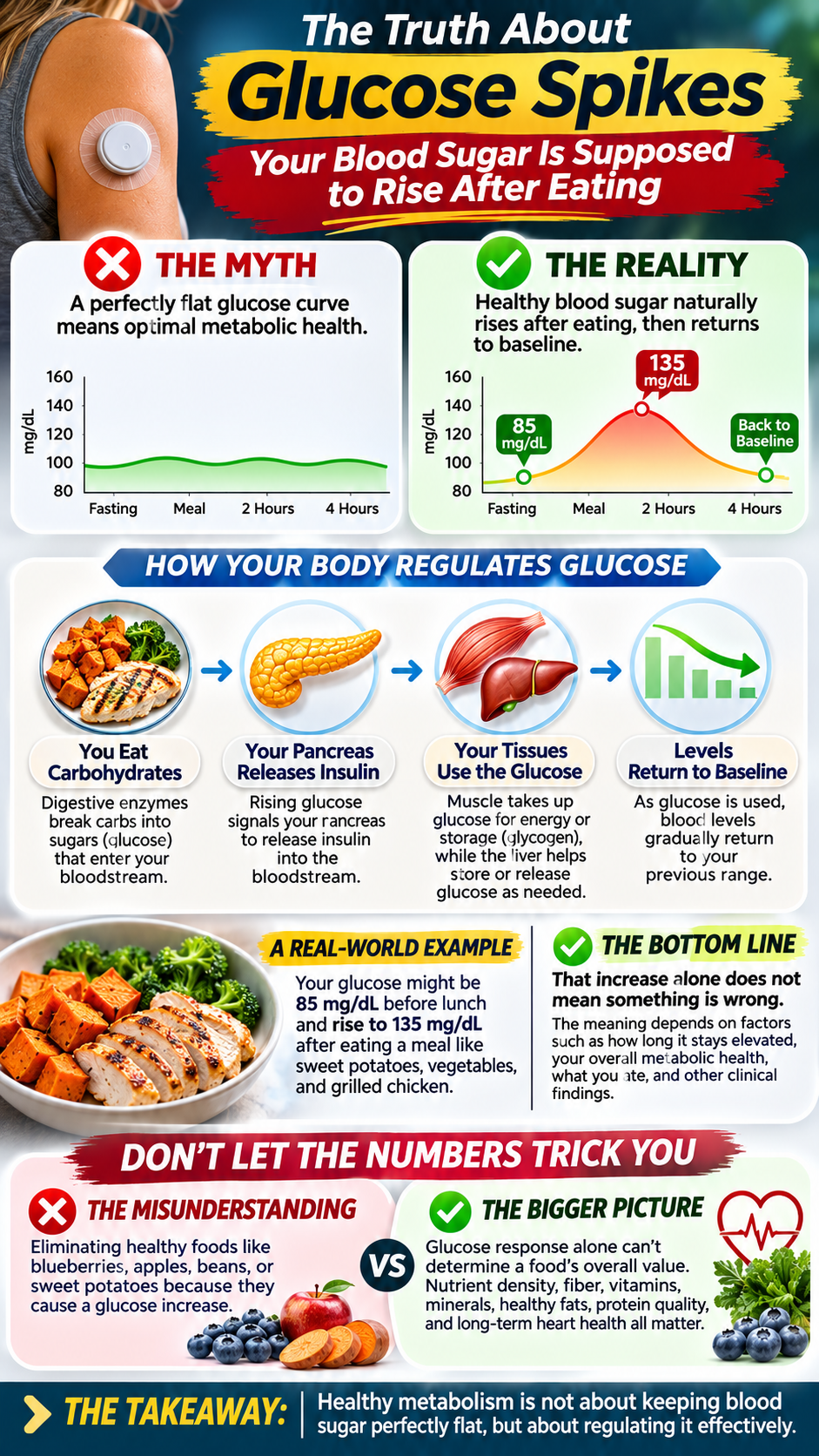
Consider someone whose glucose measures 85 mg/dL before lunch and rises to 135 mg/dL after eating sweet potatoes, vegetables, and grilled chicken. That increase may look dramatic on a smartphone graph, particularly when the application emphasizes the highest reading. Yet the peak alone cannot establish whether the response is abnormal or harmful. Its duration, the person’s overall metabolic status, the meal composition, and other clinical findings all influence interpretation. Researchers have not established one universally applicable post-meal CGM threshold that separates healthy from harmful glucose responses in everyone without diabetes.
This misunderstanding can produce unintended nutritional consequences. Someone might eliminate blueberries, apples, beans, or sweet potatoes because these foods generate noticeable glucose increases. Meanwhile, the same individual may embrace highly processed low-carbohydrate products simply because they produce flatter glucose curves. Yet glucose response alone cannot determine a food’s overall nutritional value. Fiber, vitamins, minerals, fatty acid composition, protein quality, and long-term cardiovascular effects all matter. A meal that produces minimal glucose movement is not automatically healthier than one containing nutrient-dense carbohydrates.
The Metabolic Dysfunction a Glucose Monitor Cannot Fully Reveal
Although ordinary glucose fluctuations should not create panic, genuine metabolic dysfunction deserves serious attention. Insulin resistance can develop gradually, sometimes long before fasting glucose or hemoglobin A1c crosses established diagnostic thresholds. During its early stages, the pancreas may compensate for reduced insulin sensitivity by producing additional insulin. This compensation can maintain relatively normal glucose concentrations even as the body requires greater hormonal effort to regulate them. Consequently, someone may have normal fasting glucose while already developing important metabolic risk factors.
Several interconnected processes contribute to insulin resistance. Excess visceral fat, insufficient physical activity, disrupted sleep, genetic susceptibility, and certain medications can interfere with normal glucose regulation. Accumulation of fat within the liver and skeletal muscle may impair insulin signaling, while chronic inflammation can contribute to metabolic dysfunction. Because skeletal muscle represents a major site of insulin-mediated glucose disposal, declining muscle mass and physical inactivity can further complicate glucose regulation. These relationships help explain why metabolic health involves far more than the amount of sugar someone consumes.
This is where continuous glucose monitoring becomes both interesting and potentially misleading. A sensor may reveal that glucose remains elevated longer after certain meals, but it cannot determine how much insulin the pancreas released to produce that response. It cannot directly measure insulin resistance, evaluate pancreatic beta-cell reserve, identify liver fat accumulation, or determine whether inflammation is contributing to metabolic dysfunction. Two individuals might display similar glucose curves while having substantially different insulin responses and underlying metabolic characteristics. Treating their graphs as equivalent assessments of metabolic health would overlook important physiological differences.
A more comprehensive evaluation considers fasting glucose, hemoglobin A1c, triglycerides, HDL cholesterol, blood pressure, waist circumference, family history, and other relevant findings. Selected individuals may benefit from additional testing, including an oral glucose tolerance test or carefully interpreted insulin measurements. Continuous glucose monitoring can sometimes complement this investigation, but it cannot replace established diagnostic methods. The goal should be identifying meaningful abnormalities rather than assigning disease labels to every unusual sensor reading.
When More Information Creates Less Understanding
The greatest challenge surrounding continuous glucose monitors may not involve sensor accuracy or technological limitations. It may involve the human tendency to interpret every measurable change as something requiring immediate correction. A glucose monitor can generate thousands of readings, but without sufficient physiological context, those numbers may create confusion rather than clarity. A temporary increase after exercise, a higher morning reading following poor sleep, or an unexpected response to coffee can become another source of unnecessary concern.
Research examining CGM use among people without diabetes suggests that structured monitoring may encourage certain behavioral changes, particularly among individuals with prediabetes. However, evidence remains insufficient to conclude that routine monitoring improves long-term health outcomes in otherwise healthy adults. Questions remain about whether glucose-guided dietary changes prevent diabetes, reduce cardiovascular events, or improve longevity beyond established lifestyle interventions. Financial costs and the possibility of anxiety or unnecessary food restriction also deserve consideration.
The central question is therefore not whether continuous glucose monitors produce interesting information. They unquestionably do. The more important question is whether that information leads to decisions that improve health in a meaningful, sustainable way. A device that encourages someone to walk after dinner, improve sleep, or recognize unhealthy eating patterns may provide genuine educational value. A device that convinces someone to fear nutritious foods because of ordinary glucose fluctuations may accomplish precisely the opposite.
The Hidden Price of Knowing Your Glucose Every Five Minutes
Imagine spending several hundred dollars annually on a device that tells you something your body has been managing naturally throughout your entire life. Every meal produces another graph, every workout generates additional data, and every restless night offers another opportunity to investigate your metabolism. For some individuals, this information becomes the catalyst for meaningful lifestyle changes. For others, it creates an exhausting relationship with food, exercise, and numbers that never seem quite good enough. The question is no longer whether continuous glucose monitors can measure glucose fluctuations, but whether the information they provide justifies the financial and psychological investment.
The expanding consumer glucose-monitoring industry has transformed a medical technology into a recurring wellness expense. Depending on the manufacturer, monitoring frequency, and associated coaching services, users may spend hundreds or thousands of dollars annually. Subscription platforms often encourage continuous monitoring, suggesting that uninterrupted glucose awareness is essential for maintaining metabolic health. Yet research has not established that wearing a CGM indefinitely improves long-term outcomes for otherwise healthy individuals. More data does not necessarily translate into better decisions, especially when the person interpreting those measurements lacks the clinical context needed to understand them.
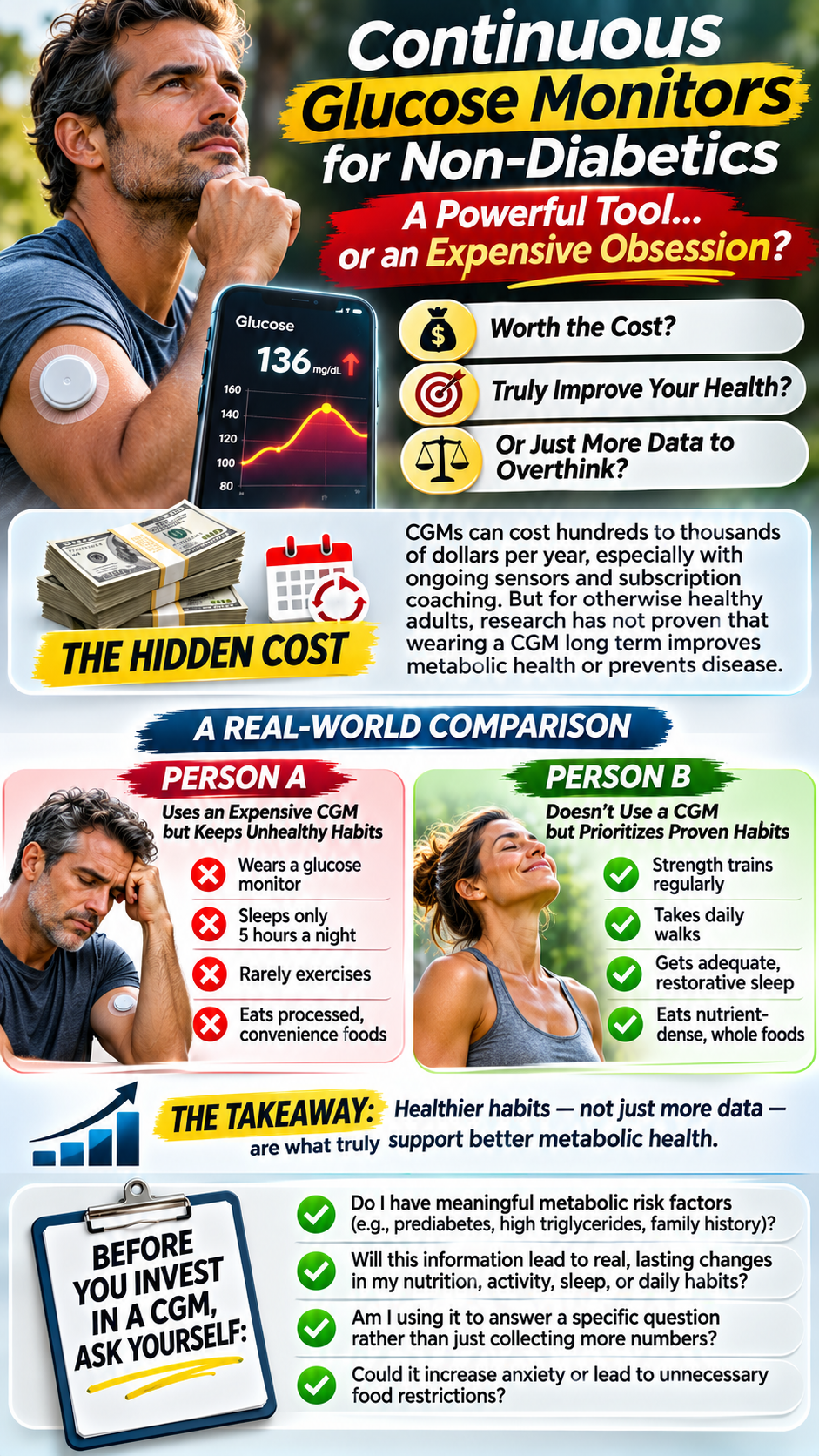
Consider two individuals concerned about developing insulin resistance. One purchases an expensive glucose monitor but continues sleeping five hours nightly, rarely exercises, and relies heavily on processed convenience foods. The other never wears a sensor but prioritizes resistance training, daily walking, adequate sleep, and nutrient-dense meals. Although individual outcomes vary, extensive research supports the metabolic benefits of the second person’s habits. The first individual may possess considerably more information about glucose fluctuations without addressing the behaviors contributing to metabolic risk.
This distinction highlights a fundamental principle of preventive healthcare. Technology becomes valuable when it helps people identify problems and implement effective solutions, not merely when it generates additional measurements. Before investing in continuous monitoring, consumers should ask whether the device will meaningfully change their behavior or simply provide another collection of numbers to analyze.
Who Actually Benefits From Wearing a Continuous Glucose Monitor?
Not everyone without diabetes has the same metabolic risk, and this distinction should influence decisions about glucose monitoring. Someone with normal laboratory findings, healthy blood pressure, favorable body composition, and consistent physical activity may gain relatively little from continuous glucose surveillance. In contrast, an individual with prediabetes, previous gestational diabetes, elevated triglycerides, abdominal obesity, or a strong family history of type 2 diabetes may have more meaningful questions about glucose regulation. Even within these higher-risk groups, however, the clinical benefits of CGM-guided interventions remain incompletely established.
For individuals with prediabetes, temporary monitoring may provide useful feedback about how meal composition, physical activity, and sleep influence glucose patterns. Someone might discover that walking after dinner consistently reduces prolonged post-meal elevations. Another person may recognize that large evening meals coincide with higher overnight glucose concentrations. These observations can encourage behavior changes that support metabolic health, particularly when combined with professional guidance and established diagnostic testing.
The limitation involves confusing glucose patterns with definitive diagnoses. A CGM cannot independently establish insulin resistance, diagnose prediabetes, or determine whether pancreatic function is deteriorating. Sensor readings may differ from blood glucose measurements, especially during rapid changes or when pressure is applied to the sensor during sleep. Unexpected readings should therefore be interpreted cautiously, with appropriate confirmation when clinically necessary.
The most reasonable approach for many interested consumers may involve a defined monitoring period rather than an indefinite subscription. A short experiment with specific behavioral goals can help determine whether the information provides genuine educational value. If the experience produces anxiety, excessive dietary restriction, or little actionable insight, continuing to purchase sensors may offer diminishing returns.
The At-Home Metabolic Reset: Improving Glucose Regulation Naturally
The encouraging reality is that many of the most effective strategies for improving metabolic health require no wearable technology. Skeletal muscle, liver function, sleep quality, physical activity, and dietary composition all influence how efficiently the body regulates glucose. Addressing these factors can improve insulin sensitivity and reduce metabolic risk regardless of whether someone monitors every fluctuation. A practical functional medicine strategy should therefore prioritize the biological systems responsible for glucose regulation rather than focusing exclusively on the numbers displayed by a smartphone.
Start by establishing your metabolic baseline. Fasting glucose and hemoglobin A1c provide useful information, but neither measurement captures every aspect of metabolic health. Blood pressure, waist circumference, triglycerides, HDL cholesterol, family history, and physical activity levels help establish a broader picture of risk. In selected circumstances, additional laboratory evaluation may clarify concerns that routine screening does not fully explain. The objective is to identify meaningful abnormalities before assuming that an isolated glucose increase represents disease.
Build meals around protein, fiber, and minimally processed foods. Adequate protein supports muscle maintenance, while fiber-rich foods can slow carbohydrate absorption and improve satiety. Eggs, fish, poultry, vegetables, seeds, nuts, legumes, and appropriately selected whole-food carbohydrates can contribute to balanced meals. Individual carbohydrate needs vary according to activity, metabolic status, preferences, and medical conditions. Rather than eliminating every food that raises glucose, focus on nutritional quality, appropriate portions, and sustainable eating patterns.
Walk after meals to activate skeletal muscle. Muscle contractions stimulate glucose uptake through mechanisms that are partly independent of insulin, making physical activity especially valuable for post-meal regulation. A ten- to fifteen-minute walk after eating may reduce the magnitude or duration of glucose elevations, although responses differ between individuals. This simple habit also supports cardiovascular fitness, digestion-related comfort for some people, and overall physical activity. A CGM may illustrate the glucose response, but the benefits do not depend on observing the graph.
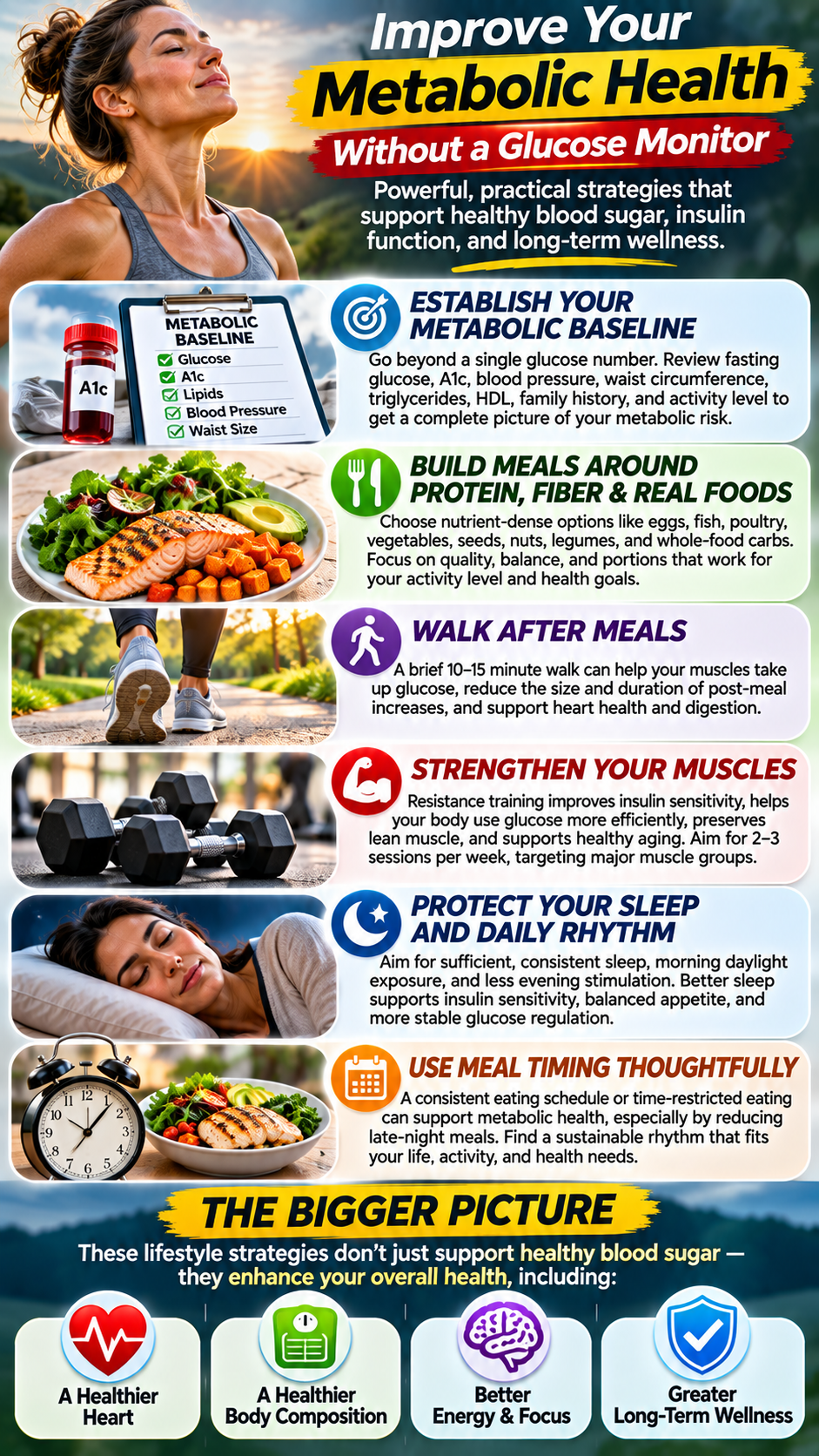
Strengthen your muscles to improve metabolic resilience. Skeletal muscle serves as a major destination for circulating glucose, making resistance training an important component of metabolic health. Progressive strength training can improve insulin sensitivity, preserve lean body mass, and support healthy aging. Two or three weekly sessions targeting major muscle groups provide a practical starting point for many adults. Maintaining muscle becomes especially important with advancing age, when declining activity and muscle mass can contribute to metabolic dysfunction.
Protect your sleep and establish consistent daily rhythms. Inadequate sleep can impair insulin sensitivity, influence appetite regulation, and increase vulnerability to unhealthy food choices. Irregular schedules and frequent late-night eating may further complicate glucose regulation. Aim for sufficient sleep, consistent bedtimes, morning daylight exposure, and reduced evening stimulation. When morning glucose readings appear higher after poor sleep, consider the broader physiological context rather than assuming that a single night caused lasting metabolic damage.
Use meal timing thoughtfully instead of chasing longer fasts. Time-restricted eating may help certain individuals improve dietary consistency and metabolic markers, particularly when it reduces unnecessary late-night consumption. However, longer fasting windows are not universally superior, and fasting is inappropriate for some people. Individuals who are pregnant, have eating-disorder histories, or use medications that can cause hypoglycemia require particular caution. The objective should be a sustainable eating schedule that supports nourishment and metabolic stability.
Together, these interventions address mechanisms involved in glucose regulation rather than simply attempting to suppress visible fluctuations. They also offer benefits extending beyond blood sugar, including improvements in cardiovascular fitness, body composition, sleep quality, and overall well-being.
The Glucose Numbers That Deserve Attention — and Those That Don’t
Consumer CGM applications frequently emphasize average glucose, post-meal peaks, glucose variability, and time spent within predetermined ranges. These measurements can appear remarkably precise, encouraging users to compare meals based on differences of only a few milligrams per deciliter. However, the clinical significance of small glucose variations remains uncertain among otherwise healthy individuals. Sensor accuracy, meal timing, stress, activity, and normal biological variability can all influence the resulting graph.
Time in range provides an excellent example of how useful medical measurements can become misleading when applied outside their intended context. For people with diabetes, established glucose targets help guide treatment and reduce complications. Comparable targets have not been validated for predicting long-term health outcomes in every person without diabetes. Likewise, research has not established that eliminating ordinary post-meal glucose increases prevents cardiovascular disease or extends lifespan.
A healthy meal containing vegetables, protein, and fiber-rich carbohydrates may produce a noticeable glucose increase without indicating metabolic dysfunction. Conversely, a meal dominated by saturated fat may generate a flatter glucose response while influencing cardiovascular risk through pathways a CGM cannot detect. Evaluating food solely through glucose measurements therefore risks ignoring nutritional quality and long-term health consequences.
The Future of Personalized Metabolic Health
Continuous glucose monitoring represents an important advancement in our ability to observe human physiology. Future research may identify specific populations without diabetes who benefit from intermittent monitoring, particularly when glucose feedback accompanies structured nutrition and exercise interventions. More sophisticated systems may eventually integrate glucose information with sleep, physical activity, laboratory findings, and other metabolic measurements. Such developments could improve personalized prevention, provided researchers demonstrate meaningful clinical benefits rather than simply producing increasingly detailed data.
For now, consumers should distinguish promising possibilities from established outcomes. CGMs can reveal glucose patterns and sometimes encourage healthier behavior, but they cannot independently identify the root causes of metabolic dysfunction. Their greatest value may emerge when they help people connect measurable responses with sustainable lifestyle improvements.
Powerful Tool or Expensive Obsession? The Final Verdict
Continuous glucose monitors are remarkable devices, but remarkable technology does not automatically create better health. For individuals with diabetes, CGMs can provide essential information that improves treatment decisions and safety. For selected people without diabetes, temporary monitoring may offer educational insights into nutrition, activity, and glucose regulation. Yet current evidence does not establish that routine, indefinite CGM use prevents chronic disease or improves longevity among otherwise healthy adults.
The greatest opportunity lies in understanding the difference between measuring metabolism and improving it. A glucose sensor can display what happens after dinner, but it cannot replace regular movement, restorative sleep, adequate nutrition, or the preservation of healthy muscle tissue. Those behaviors influence the physiological systems responsible for maintaining metabolic health.
Ultimately, the goal should never be to achieve the flattest glucose curve imaginable. Healthy metabolism involves adapting efficiently to food, exercise, fasting, and changing energy demands throughout the day. Use technology when it helps you make meaningful changes, but never confuse the act of monitoring your body with the work of making it healthier.