
The Real Problem Behind Male Pattern Baldness
Hair loss rarely announces itself with drama. It usually begins with a photograph, a wet head, or an unforgiving bathroom light. The temples appear slightly deeper than they did last year. The crown suddenly reflects light that hair once absorbed. A barber may notice thinning before the man sitting in the chair does. Then comes the familiar search for answers, and one hormone quickly becomes the villain: dihydrotestosterone, better known as DHT.
Search for male pattern baldness online, and the message appears remarkably simple. Testosterone converts into DHT, DHT attacks hair follicles, and blocking DHT saves hair. That explanation contains truth, yet it leaves out the most important part of the story. DHT exists throughout the male body for biological reasons. The deeper problem involves genetically vulnerable follicles that respond differently to androgen signaling. Therefore, indiscriminately suppressing DHT everywhere may treat the scalp while altering physiology elsewhere.
This distinction changes how men should approach androgenetic alopecia. The goal should not be eliminating DHT from the bloodstream. Instead, treatment should reduce damaging androgen activity around vulnerable follicles while supporting healthy hair growth. That strategy becomes especially important for men concerned about libido, erections, energy, mood, and overall sexual function. Hair restoration should never begin with the assumption that every androgen must become collateral damage.
DHT Is Powerful, but DHT Alone Does Not Explain Baldness
Dihydrotestosterone forms when the enzyme 5-alpha-reductase converts testosterone into a more potent androgen. DHT binds strongly to androgen receptors and influences several androgen-dependent tissues. During male development, DHT plays an important role in sexual differentiation and maturation. During adulthood, androgen signaling continues interacting with skin, hair follicles, reproductive tissues, and other biological systems.
However, DHT does not make every hair follicle disappear. If circulating DHT alone caused baldness, men would lose hair uniformly across the entire scalp. Instead, androgenetic alopecia follows a recognizable geographical pattern. Hair commonly retreats around the temples and frontal hairline. Thinning often appears across the vertex and crown. Meanwhile, follicles around the sides and back may remain remarkably resistant.
That pattern exposes the real problem. Susceptible follicles possess biological characteristics that make them unusually responsive to androgen signaling. Genetics influence androgen receptor activity, local enzyme behavior, follicular signaling, and the tendency toward miniaturization. Therefore, male pattern baldness represents an interaction between hormones and genetically sensitive tissue. It is not simply evidence that a man produces too much testosterone or DHT.
This distinction also explains an apparent contradiction. Two men can have similar circulating androgen levels while experiencing completely different hairlines. One may retain thick hair into his seventies. Another may develop significant recession before thirty. The difference does not necessarily live inside their blood tests. Much of that difference resides inside the follicles themselves.
Inside the Follicle: How Thick Hair Slowly Becomes Invisible
A healthy scalp follicle normally cycles through growth, transition, resting, and shedding phases. The active growth phase is called anagen. Healthy terminal hairs can remain in anagen for years. That long growth period allows scalp hair to become thick, pigmented, and visibly substantial.
Androgen-sensitive follicles gradually behave differently. Strong androgen signaling contributes to progressive follicular miniaturization in genetically susceptible scalp regions. Each new growth cycle can produce a finer and shorter hair. Over time, thick terminal hairs begin resembling delicate vellus-like hairs. Eventually, the scalp becomes increasingly visible despite follicles remaining physically present.
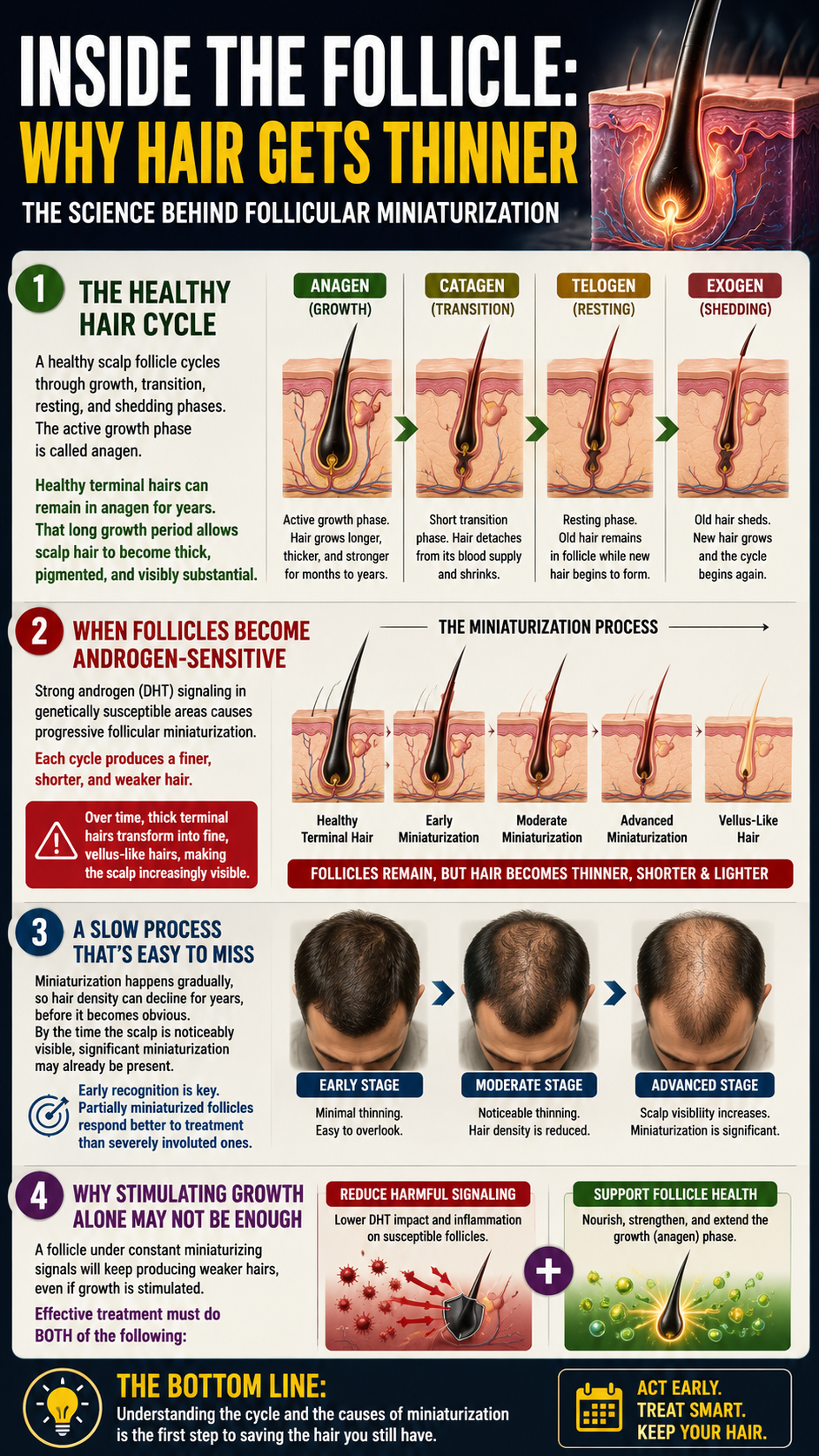
This process often unfolds slowly enough to escape attention. Hair density can decline for years before a man realizes something has changed. By the time scalp visibility becomes obvious, substantial miniaturization may already exist. Early recognition matters because partially miniaturized follicles offer a better therapeutic target than severely involuted follicles.
Follicular miniaturization also explains why simply stimulating faster hair growth may not solve the entire problem. A follicle receiving persistent miniaturizing signals can continue producing progressively weaker hair. Effective treatment often requires addressing both sides of the equation. Men must reduce harmful signaling while supporting the follicle’s ability to produce stronger hair.
The Hormonal Carpet-Bombing Problem
Conventional DHT-blocking therapy often approaches this local scalp problem through systemic hormone modification. Oral finasteride represents the best-known example. Finasteride inhibits type II 5-alpha-reductase and reduces the conversion of testosterone into DHT. Lower DHT exposure can slow follicular miniaturization and preserve hair in many men.
Finasteride clearly works for androgenetic alopecia, so dismissing its effectiveness would ignore decades of evidence. The more important question concerns how the drug reaches its target. A swallowed tablet enters systemic circulation rather than traveling exclusively toward scalp follicles. Consequently, DHT decreases beyond the tissues responsible for hair loss.
Dutasteride expands that effect by inhibiting both type I and type II 5-alpha-reductase. Its broader enzyme inhibition can produce stronger DHT suppression and impressive hair results. However, stronger suppression does not automatically represent a better strategy for every man. Someone prioritizing minimal systemic androgen disruption may reasonably prefer a more targeted approach.
The challenge becomes particularly relevant when sexual function enters the conversation. Sexual side effects from 5-alpha-reductase inhibitors are uncommon, but they are documented. Clinical studies have reported decreased libido, erectile difficulties, and ejaculatory changes among subsets of treated men. Most men will not experience these effects, yet their existence deserves informed discussion rather than dismissal.
Hair Versus Libido Is the Wrong Choice
The phrase “DHT blocker that doesn’t shrink libido” captures a concern shared by many men. They want to preserve their hair without sacrificing sexual performance. However, no responsible discussion should promise that an androgen-modifying substance carries absolutely zero sexual risk. Biology rarely provides guarantees that clean.
A better strategy involves reducing unnecessary systemic exposure. The scalp requires treatment because susceptible follicles live there. Therefore, researchers have increasingly investigated whether DHT-modifying therapy can become more localized. Topical finasteride offers one of the clearest examples of this shift toward precision.
A randomized phase III trial compared topical finasteride with placebo and oral finasteride in men with androgenetic alopecia. Topical treatment significantly improved hair counts compared with placebo. Hair improvement was numerically similar to oral finasteride after 24 weeks. However, plasma finasteride exposure remained dramatically lower with topical treatment.
That difference matters because topical therapy attempts to concentrate treatment near the biological target. Yet topical does not mean completely systemic-free. Serum DHT still decreased during the trial, although the reduction remained smaller than oral treatment. Therefore, topical finasteride represents reduced systemic exposure rather than guaranteed isolation.
The Overlooked Question: Is Every Falling Hair Caused by DHT?
A man can have a receding hairline and still have other problems accelerating his hair loss. This possibility receives surprisingly little attention. Genetics may load the gun, yet additional physiological stressors can influence the speed and severity of shedding. Treating DHT alone may therefore produce disappointing results when another driver remains active.
Thyroid disorders can alter the hair cycle and contribute to diffuse thinning. Iron deficiency can impair normal hair growth, although men should never supplement iron blindly. Inadequate calories, rapid weight loss, severe illness, surgery, fever, and significant stress can trigger telogen effluvium. Nutritional deficiencies can also contribute when restrictive diets create genuine insufficiencies.
Scalp disease adds another layer. Seborrheic dermatitis can produce itching, scaling, redness, and inflammation. Psoriasis can significantly disturb scalp tissue. Fungal infections and inflammatory alopecias require different treatment entirely. Scarring alopecia becomes especially important because permanent follicular destruction can occur without timely diagnosis.
Consequently, sudden or unusual hair loss deserves investigation. Patchy bald areas do not behave like classic male pattern baldness. Rapid shedding across the entire scalp also suggests another process. Pain, pustules, heavy scaling, scarring, or intense itching should raise additional questions. Treating every thinning scalp as “high DHT” can delay the correct diagnosis.
Metabolic Stress Can Reach the Hair Follicle
Hair follicles rank among the body’s most metabolically active structures. Their cells divide rapidly during the growth phase and require adequate energy and nutrients. Therefore, dramatic metabolic stress can influence the hair cycle. The body prioritizes survival above maintaining luxurious hair during periods of physiological strain.
Rapid weight loss provides a classic example. Someone may lose considerable weight through severe calorie restriction and initially feel successful. Several months later, diffuse shedding can suddenly accelerate. The timing often creates confusion because the triggering event happened months earlier. Hair-cycle biology contains a built-in delay between physiological stress and visible shedding.
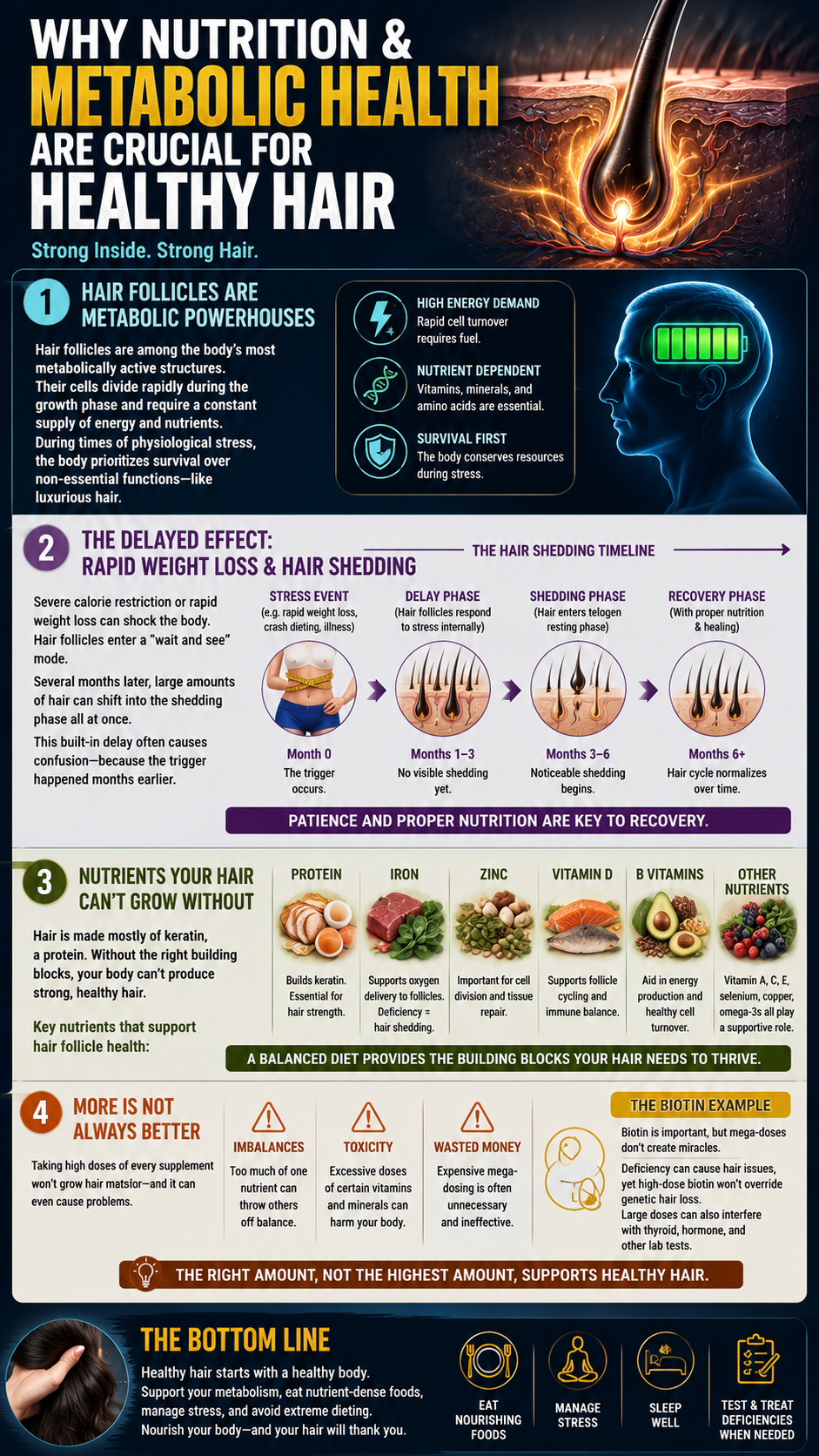
Protein intake also matters because hair consists largely of keratin. Severe protein restriction can compromise the resources required for normal hair production. Zinc, iron, vitamin D, B vitamins, and other nutrients participate in biological processes relevant to follicular health. However, supplementing everything without testing or clinical context creates another problem.
More is not automatically better. Excessive supplementation can create imbalances, toxicity, or unnecessary expense. Biotin provides a useful example because enormous doses appear in many hair products. Deficiency can affect hair, yet indiscriminate high-dose biotin does not reverse genetic androgen sensitivity. Large doses can also interfere with certain laboratory tests.
Inflammation Changes the Environment Around the Follicle
The follicle does not exist in isolation. It lives within skin containing immune cells, sebaceous glands, blood vessels, nerves, connective tissue, and microorganisms. Changes within that environment can influence comfort, inflammation, and potentially hair quality. Therefore, scalp health deserves more attention than most hair-loss advertisements provide.
Chronic itching and scaling should not become normal simply because a man is losing hair. Persistent irritation may signal dermatitis or another scalp disorder. Aggressively scratching the scalp adds mechanical injury. Harsh chemicals and excessive topical treatments can further damage the skin barrier.
Ironically, men often create additional inflammation while desperately trying to stimulate hair growth. They combine strong essential oils, medicated shampoos, acids, alcohol-based solutions, and aggressive microneedling. The resulting burning sensation gets interpreted as evidence of effectiveness. In reality, persistent irritation can make a sustainable hair-restoration program much harder to maintain.
Healthy scalp care should create stability rather than constant warfare. Cleanliness matters, but excessive stripping can worsen dryness and irritation. Treatment needs enough consistency to continue for months because hair biology moves slowly. A scalp that remains angry every day is not evidence of an advanced protocol.
The Root-Cause Model Changes the Entire Strategy
Male pattern baldness begins with genetic susceptibility interacting with androgen signaling. That mechanism deserves respect because no supplement can erase inherited follicular sensitivity. However, understanding that mechanism does not require suppressing every molecule of DHT throughout the body.
A smarter strategy separates local follicular androgen activity from overall male hormonal health. It also searches for additional factors that may accelerate shedding. Nutritional status, thyroid function, metabolic stress, inflammatory scalp conditions, medications, and major health events can all provide useful context.
This framework creates a different goal. Instead of asking how aggressively DHT can be eliminated, ask how effectively vulnerable follicles can be protected. Then support hair growth through additional pathways that do not depend upon systemic hormone suppression.
Precision should replace hormonal carpet bombing. The next generation of hair restoration will likely move further toward localized therapy and combination approaches. Men should not have to choose between protecting their hair and protecting the physiology that matters everywhere else.
Start by Proving What Kind of Hair Loss You Actually Have
Successful treatment begins with identification rather than supplementation. Examine the pattern carefully before purchasing another hair-loss product. Classic androgenetic alopecia commonly affects the temples, frontal scalp, mid-scalp, and crown. Hair around the sides and occipital region often remains comparatively preserved.
Photographs provide more reliable information than memory. Take pictures of the hairline, temples, top, and crown under consistent lighting. Repeat them approximately every four weeks from similar angles. Hair changes too slowly for daily mirror inspections to provide useful feedback.
Sudden diffuse shedding requires a different investigation. Patchy hair loss deserves professional evaluation. Scarring, scalp pain, pustules, or severe inflammation also warrant examination. These findings can indicate conditions that DHT blockers cannot appropriately address.
Once androgenetic alopecia appears likely, establish how advanced the miniaturization has become. Earlier intervention generally offers more opportunity to preserve functioning follicles. Waiting until smooth bald areas dominate the scalp makes restoration considerably harder. Preserving existing follicles often matters more than attempting to resurrect severely miniaturized ones.
Choose Local DHT Management Before Maximum Systemic Suppression
Men concerned about libido should understand the difference between local and systemic exposure. Oral finasteride reduces DHT throughout the body because the medication circulates systemically. Topical finasteride attempts to deliver more medication directly to the scalp while reducing circulating drug exposure.
Clinical evidence makes this approach particularly interesting. In the phase III topical finasteride trial, plasma finasteride concentrations remained over one hundred times lower than oral exposure. Hair-count improvement still compared favorably with oral treatment. Serum DHT also declined less with topical therapy.
However, topical finasteride still enters circulation. That fact should remain central to any libido-conscious strategy. A man cannot assume that applying a medication to his scalp makes systemic effects impossible. Concentration, volume, application area, skin integrity, and treatment frequency can influence exposure.
Therefore, the goal should involve the smallest effective exposure rather than maximum suppression. Men considering prescription DHT blockers should discuss individualized dosing and topical options with a qualified prescriber. Baseline documentation of libido and erectile function can also provide useful comparison during treatment.
Pumpkin Seed Oil Offers an Interesting Natural Alternative
Pumpkin seed oil deserves attention because it possesses actual human trial data. Many natural hair-loss products rely entirely on laboratory mechanisms or marketing claims. Pumpkin seed oil has at least crossed the important threshold of randomized human investigation.
One placebo-controlled trial followed 76 men with androgenetic alopecia for 24 weeks. Participants receiving 400 milligrams of pumpkin seed oil daily experienced significantly greater hair-count improvement than placebo participants. Reported adverse effects did not significantly differ between groups.
Researchers have proposed several possible mechanisms, including phytosterol-related effects and potential influence on 5-alpha-reductase activity. However, the trial did not prove that DHT reduction alone caused the improvement. Therefore, pumpkin seed oil should not be marketed as a guaranteed natural replacement for finasteride.
Still, it represents an attractive adjunct for men wanting a conservative starting point. Its evidence remains modest compared with established medications, but it exceeds the evidence supporting many popular hair supplements. Natural therapies deserve scientific standards rather than automatic acceptance or dismissal.
Saw Palmetto Requires More Nuance Than the Internet Suggests
Saw palmetto frequently appears beside the words “natural DHT blocker.” Extracts from Serenoa repens may influence 5-alpha-reductase activity, which explains the interest. However, evidence supporting meaningful hair restoration remains weaker than evidence for finasteride or minoxidil.
Another contradiction deserves attention. Marketers sometimes claim saw palmetto powerfully blocks DHT while simultaneously guaranteeing no sexual effects. Those two claims should immediately invite skepticism. Any compound capable of meaningfully changing androgen metabolism deserves respect for potential systemic effects.
That does not make saw palmetto useless. Instead, it means men should treat it as a biologically active botanical rather than harmless garnish. Product quality, extraction method, dosage, and individual response can differ considerably.
Pumpkin seed oil currently provides a more interesting human hair-growth signal for conservative protocols. Saw palmetto may still fit selected approaches, but stronger evidence remains necessary. The best natural protocol should follow evidence instead of supplement-industry popularity.
Build Hair Growth Without Making DHT Blocking Do Everything
One of the best ways to minimize aggressive DHT suppression involves attacking hair loss through other mechanisms. Topical minoxidil remains one of the best-established examples. It promotes hair growth without functioning as a 5-alpha-reductase inhibitor.
This distinction becomes strategically important. Imagine androgenetic alopecia as pressure pushing follicles toward miniaturization. DHT-targeted therapy attempts to reduce that pressure. Growth-promoting therapy simultaneously encourages follicles toward stronger production.
Combining mechanisms can reduce the temptation to escalate systemic hormone suppression. Minoxidil has limitations and potential adverse effects, including scalp irritation. Continued use generally remains necessary for maintained benefit. However, sexual dysfunction does not represent its characteristic pharmacological trade-off.
Men should also resist constantly changing treatments. Hair follicles require months to reveal meaningful changes. Switching products every two weeks destroys the ability to determine what works. Consistency often matters more than assembling the longest possible protocol.
Microneedling Needs Precision, Not Aggression
Microneedling can complement a hair-restoration strategy when used thoughtfully. Controlled micro-injury may stimulate signaling associated with tissue repair and hair growth. Research has also examined microneedling alongside established therapies such as minoxidil.
However, deeper does not automatically mean better. Excessive trauma can produce bleeding, prolonged inflammation, infection, and unnecessary scalp injury. Home users frequently make the mistake of equating pain with effectiveness.
Another issue becomes important when topical medications enter the protocol. Microneedling temporarily disrupts the skin barrier and may increase penetration of compounds applied afterward. That effect deserves particular caution with topical finasteride. Increasing systemic absorption undermines the entire purpose of choosing a localized strategy.
Anyone using microneedling should therefore prioritize sanitation, conservative technique, and adequate recovery. Avoid applying irritating products immediately after aggressive needling. Persistent redness, swelling, pain, discharge, or crusting suggests that the scalp needs evaluation rather than another session.
Feed the Follicle Before Asking It to Perform
Hair cannot grow from nutrients the body does not possess. Adequate protein becomes especially important because keratin provides the structural foundation for hair. Severe caloric restriction can also shift follicles away from active growth.
Avoid crash dieting during an active hair-restoration program. Rapid weight loss can trigger telogen effluvium months after the metabolic stress occurred. Someone fighting genetic hair loss does not need a second shedding mechanism layered on top.
Nutritional investigation should become individualized rather than indiscriminate. Iron studies may matter when deficiency seems plausible, although men should avoid unnecessary iron supplementation. Vitamin D, zinc, B12, folate, thyroid markers, and protein intake may deserve consideration based on history and symptoms.
Whole foods should form the nutritional foundation. Eggs, meat, poultry, fish, and other protein-rich foods provide amino acids needed for tissue repair. Nutrient-dense foods also supply minerals and vitamins involved in normal cellular function. Supplements work best when they correct actual gaps rather than replacing a poor diet.
Repair the Scalp Environment at Home
Begin scalp care by reducing unnecessary irritation. Choose a shampoo that cleans effectively without leaving the scalp chronically dry or inflamed. Persistent dandruff, itching, redness, or scaling deserves attention rather than endless scratching.
Avoid stacking several irritating topical products simultaneously. Introducing one intervention at a time makes reactions easier to identify. This approach also protects the skin barrier and simplifies the protocol.
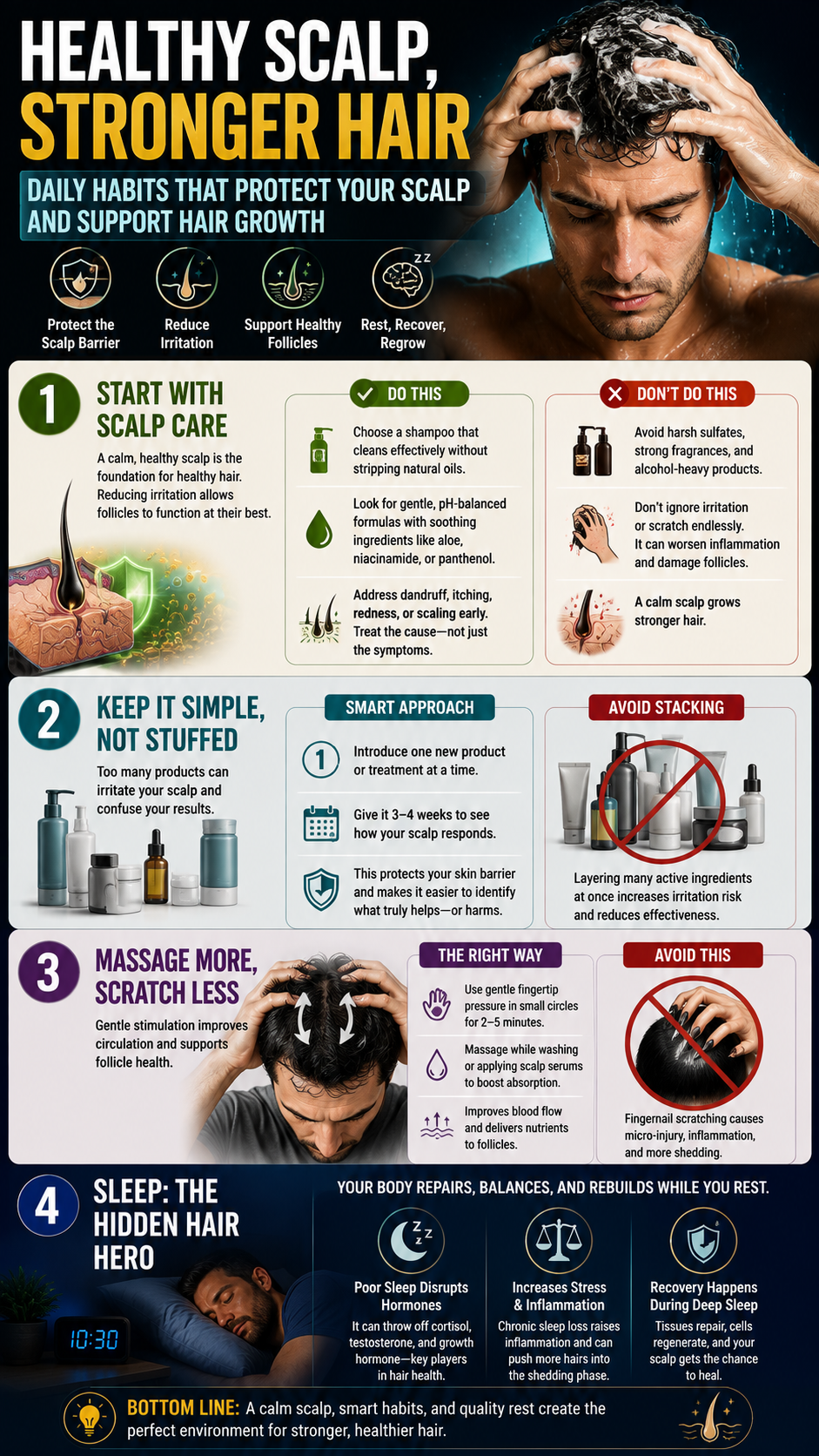
Scalp massage offers a low-risk addition for many people. Gentle massage can be incorporated during washing or topical application. Avoid aggressive scratching with fingernails because repeated trauma can worsen irritation.
Sleep also belongs inside a serious hair protocol. Poor sleep can disturb endocrine, metabolic, and stress-regulation systems. No evidence suggests that one extra hour of sleep magically regrows a receding hairline. However, chronic sleep deprivation creates a poor biological environment for recovery.
Protect Libido While You Track Hair Progress
Sexual function should become an outcome measure when using androgen-modifying treatments. Before starting therapy, document baseline libido, erection quality, morning erections, ejaculation, and general sexual satisfaction. This record creates something more reliable than retrospective guessing.
Monitor changes without becoming obsessive. Sexual function naturally fluctuates with sleep, stress, relationships, alcohol, illness, medications, and psychological factors. A temporary change does not automatically prove that DHT suppression caused it.
Persistent changes deserve attention. Discuss them with the prescribing professional rather than simply increasing or discontinuing medication without context. Individualized adjustments may include changing exposure, formulation, or treatment strategy.
The same principle applies to laboratory testing. Hormone testing can become useful when symptoms or clinical history justify it. Testing every hormone repeatedly without a specific question often creates noise rather than clarity.
The At-Home Strategy That Makes Biological Sense
Start with diagnosis and documentation. Determine whether the pattern resembles androgenetic alopecia, then photograph the scalp consistently. Address unusual shedding or inflammatory signs before assuming DHT explains everything.
Next, strengthen the biological foundation. Eat adequate protein and calories, protect sleep, avoid crash diets, and investigate plausible nutrient deficiencies. Address persistent scalp inflammation rather than covering it with increasingly complicated topical mixtures.
Then select treatments according to risk tolerance. Non-androgen growth support can reduce reliance on aggressive systemic DHT suppression. Pumpkin seed oil provides a conservative botanical option with preliminary human evidence. Prescription topical finasteride offers stronger DHT-targeted therapy with substantially lower systemic drug exposure than oral treatment.
Microneedling can become an adjunct when performed carefully. Avoid turning controlled stimulation into repeated scalp injury. Take particular care when combining needling with topical medications because increased absorption may change systemic exposure.
Finally, give the strategy enough time. Meaningful hair changes usually require months. Measure photographs instead of emotions, and evaluate density rather than daily shedding counts. Sustainable treatment almost always beats an aggressive protocol that gets abandoned after six weeks.
Stop Fighting DHT Everywhere and Start Protecting the Follicle
Male pattern baldness tells a much richer biological story than “DHT is bad.” Genetics create follicles that respond differently to androgen signaling. DHT then contributes to progressive miniaturization within those susceptible follicles. Additional metabolic, nutritional, inflammatory, and physiological stressors can accelerate the visible decline.
Therefore, the solution should become equally sophisticated. Protect vulnerable follicles without automatically declaring war on androgen physiology. Investigate additional causes of shedding. Support the scalp environment, nutrition, metabolism, and growth cycle. Use localized treatments whenever they can accomplish the desired goal with less systemic exposure.
The future of hair restoration belongs to precision. Topical finasteride already demonstrates how localized delivery may retain substantial efficacy while reducing circulating drug exposure. Pumpkin seed oil provides an intriguing natural adjunct with human evidence. Minoxidil offers another pathway that does not require systemic DHT suppression.
Most importantly, men should reject the false choice between their hair and their sexual health. No treatment can guarantee perfect hair or zero adverse effects. However, thoughtful treatment can reduce unnecessary biological trade-offs.
A healthy head of hair should never become the only measurement of success. Libido, metabolic health, energy, scalp health, nutrition, and overall well-being still matter. The smartest male pattern baldness strategy protects more than the hairline.
It protects the man underneath it.