
The Poison Hidden Behind the Perfect Smile
A quiet toxic epidemic has lived inside millions of mouths for generations. Most people never noticed it because the danger appeared harmless and ordinary. Dentists called them silver fillings, which sounded clean, modern, and medically safe. Few patients understood that these restorations contained nearly fifty percent mercury, one of the most toxic substances known to science. For decades, mainstream dentistry defended mercury amalgams as stable and effective despite growing evidence showing continuous mercury vapor release during chewing, brushing, and teeth grinding.
Patients trusted the recommendations because authority naturally creates confidence. Meanwhile, millions developed chronic symptoms that conventional medicine struggled to explain clearly. Brain fog became increasingly common across every age group. Anxiety disorders surged throughout industrialized nations. Chronic fatigue, autoimmune disease, insomnia, digestive dysfunction, and neurological problems expanded rapidly during the same decades that environmental toxic exposure intensified. Most physicians blamed genetics, stress, aging, hormones, or poor lifestyle habits while rarely discussing toxic burden as a major contributor.
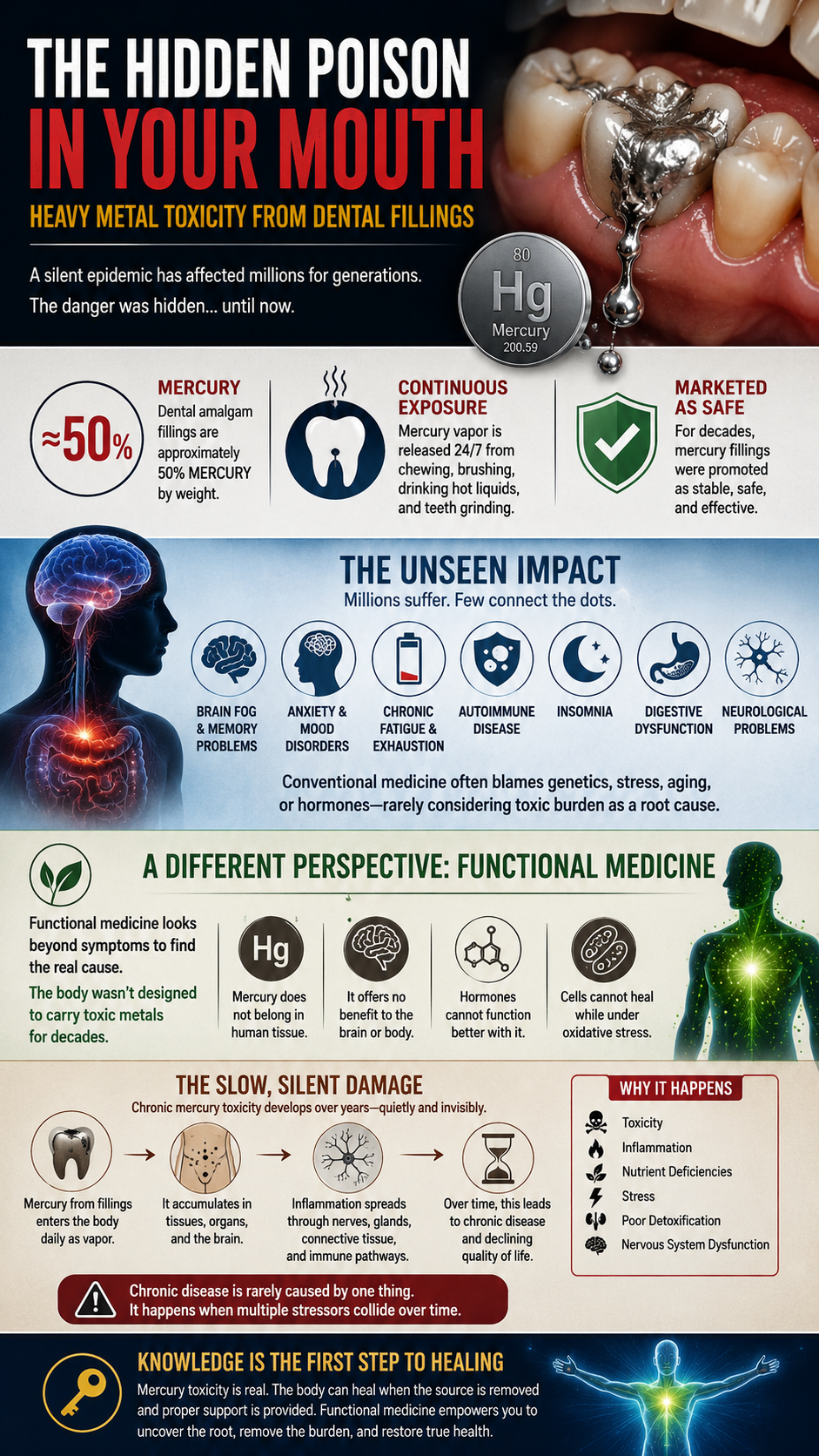
Functional medicine approaches the issue from an entirely different perspective because it investigates the root causes behind chronic dysfunction. Practitioners within this field ask whether the human body can truly remain healthy while carrying toxic metals for decades. That question changes the entire conversation surrounding chronic illness because mercury does not belong inside human tissue. The brain cannot use it beneficially. Hormones cannot function better because of it. Cells cannot heal efficiently while surrounded by chronic oxidative stress caused by heavy metal accumulation.
Unlike acute poisoning, chronic mercury toxicity develops slowly over many years. Symptoms appear gradually enough that most patients never connect their worsening health to the fillings placed inside their mouths decades earlier. The danger remains invisible while inflammation quietly spreads through nerves, glands, mitochondria, connective tissue, and immune pathways. Functional medicine recognizes that chronic disease rarely emerges from one isolated event because illness develops when toxicity, inflammation, nutritional deficiencies, stress, poor detoxification, and nervous system dysfunction collide repeatedly over time.
The Troubling History Behind Mercury Dental Fillings
The history of dental amalgam reveals how convenience and economics often overshadow biological safety. Dentists introduced mercury fillings during the nineteenth century because the material remained inexpensive, durable, and easy to manipulate during procedures. Mercury blended smoothly with silver, tin, copper, and zinc to create a pliable material that hardened inside damaged teeth. Early practitioners appreciated how quickly they could place these fillings compared to more expensive alternatives like gold.
Many physicians and dentists opposed mercury fillings immediately because mercury already carried a dangerous reputation throughout medicine and industry. Hat makers exposed to mercury commonly developed tremors, hallucinations, severe emotional instability, and neurological decline. The phrase “mad as a hatter” emerged directly from those occupational poisonings. Despite those obvious warnings, dentistry continued embracing amalgam because financial practicality often outweighs precaution in modern healthcare systems.
Professional organizations gradually normalized amalgam use while minimizing toxicological concerns publicly. Over time, public perception changed because repetition often creates acceptance. Most patients never heard the word mercury during dental appointments because practitioners preferred the softer term “silver filling.” Language shapes emotional response powerfully. Calling something a silver filling creates reassurance while calling it a mercury-containing neurotoxin creates concern and hesitation.
Modern research now confirms that mercury vapor continuously releases from amalgam fillings throughout their lifespan. Chewing gum increases mercury release dramatically. Hot beverages intensify vaporization further. Teeth grinding during sleep accelerates exposure continuously. Those vapors travel rapidly through lung tissue before entering the bloodstream and brain. Functional medicine views this process through the lens of cumulative burden because the body may tolerate temporary exposure briefly, yet decades of chronic exposure create a completely different biological outcome.
Why Mercury Becomes So Dangerous Inside the Human Body
Mercury creates widespread damage because it attacks human physiology at the cellular level. Every organ system depends upon enzymes, antioxidants, hormones, minerals, and mitochondrial energy production to function properly. Mercury interferes with all of those systems simultaneously, which explains why symptoms often appear throughout the entire body rather than within one isolated area.
Inside every cell exist mitochondria, microscopic structures responsible for producing ATP energy. Without adequate ATP production, tissues cannot function efficiently. The brain slows down mentally. Muscles weaken physically. Hormonal signaling declines steadily. Immune defenses become unstable and overreactive. Mercury damages mitochondrial membranes while increasing oxidative stress throughout tissues. Once mitochondrial function decreases, fatigue develops rapidly because the body loses its ability to generate clean cellular energy.
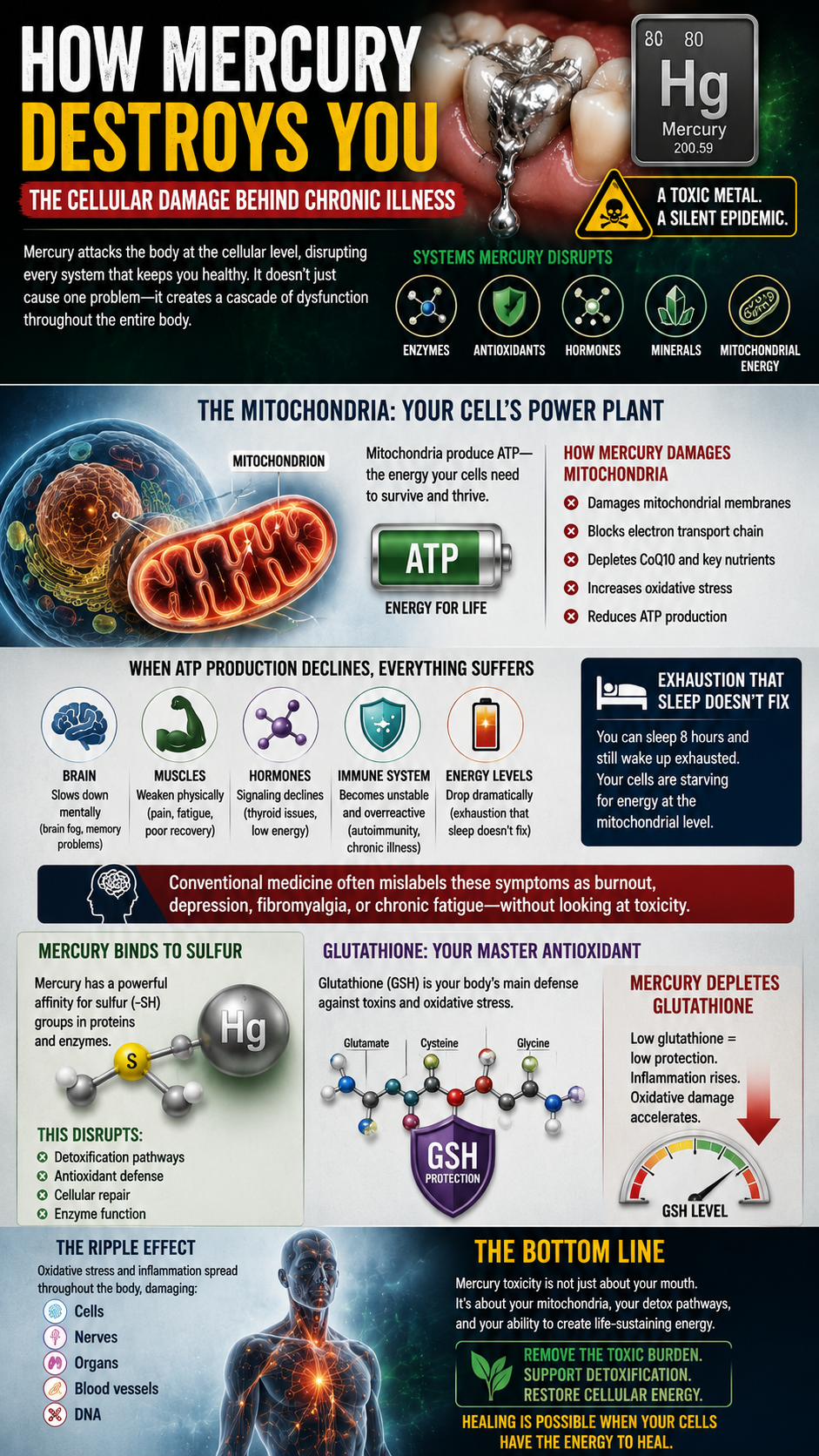
Patients experiencing mercury toxicity often describe exhaustion that sleep never improves. They wake tired despite spending eight hours in bed. Exercise becomes difficult because muscles cannot sustain efficient energy production anymore. Conventional medicine frequently labels these symptoms as burnout, depression, fibromyalgia, or chronic fatigue syndrome without investigating whether toxic burden may contribute significantly to mitochondrial dysfunction.
Mercury also binds aggressively to sulfur-containing proteins inside tissues and enzymes. Sulfur compounds remain essential for detoxification pathways, antioxidant defense, and cellular repair processes. Once mercury occupies those sulfur binding sites, detoxification efficiency declines dramatically. Glutathione, the body’s master antioxidant, becomes severely depleted under mercury exposure. Without adequate glutathione reserves, inflammation spreads quickly while oxidative damage accelerates inside cells, nerves, and organs.
The Modern Brain Fog Epidemic and Mercury Exposure
Brain fog has become one of the defining symptoms of modern life. Millions struggle concentrating during conversations, reading books, completing work tasks, or remembering simple information. Mental sharpness fades despite adequate sleep and caffeine consumption. Many patients describe feeling disconnected from reality, emotionally flat, or mentally slow without understanding why those symptoms continue worsening.
Mercury toxicity contributes heavily to neurological dysfunction because the brain consumes enormous amounts of metabolic energy every day. Neurons require constant ATP production for communication and electrical activity. Mercury disrupts mitochondrial energy production inside brain tissue, leaving neurons inflamed and metabolically exhausted. Inflammation further impairs communication between brain regions while altering neurotransmitter balance.
Patients frequently struggle recalling words during conversations. Focus disappears rapidly during meetings or reading sessions. Emotional resilience weakens because inflamed neurological tissue cannot process stress effectively anymore. Anxiety, panic attacks, depression, irritability, and insomnia commonly accompany mercury toxicity because neurotransmitter pathways become unstable under chronic oxidative stress.
Conventional medicine rarely investigates environmental toxicity when evaluating cognitive decline. Physicians often prescribe stimulants, antidepressants, sleep medications, or anti-anxiety drugs without addressing underlying neurological inflammation. Functional medicine investigates why brain dysfunction developed initially because symptoms often represent warning signs of deeper physiological imbalance rather than isolated mental health conditions.
How Mercury Quietly Damages Thyroid Function
The thyroid gland remains extremely vulnerable to heavy metal toxicity because it depends heavily upon selenium, iodine, zinc, and proper mitochondrial function. Mercury interferes with hormone production, hormone conversion, receptor sensitivity, and cellular thyroid utilization simultaneously. Many patients receive thyroid medication while the underlying toxic burden remains completely unaddressed.
Selenium plays a critical role in thyroid hormone metabolism and antioxidant defense. Mercury binds aggressively to selenium, effectively stealing this mineral from essential physiological processes. Once selenium becomes depleted, thyroid conversion efficiency declines sharply. Patients often develop fatigue, weight gain, constipation, depression, cold intolerance, hair thinning, and hormonal imbalance without realizing toxic exposure may contribute heavily to those symptoms.
Conventional medicine typically responds by prescribing synthetic thyroid hormones while rarely discussing environmental triggers. Functional medicine recognizes that toxins frequently damage endocrine systems long before laboratory markers become dramatically abnormal. Mercury exposure also increases adrenal stress because chronic inflammation activates survival pathways continuously. Elevated cortisol worsens inflammation further while impairing thyroid signaling throughout tissues.
Patients eventually become trapped inside a destructive cycle involving hormonal dysfunction, nervous system exhaustion, poor detoxification, mitochondrial failure, and chronic inflammation. Functional medicine breaks that cycle by investigating the underlying stressors driving dysfunction rather than merely suppressing symptoms temporarily.
The Autoimmune Explosion and the Mercury Connection
Autoimmune disease has increased dramatically during recent decades across industrialized societies. Hashimoto’s thyroiditis, rheumatoid arthritis, psoriasis, lupus, inflammatory bowel disease, and multiple sclerosis now affect millions worldwide. Conventional medicine often frames these conditions as mysterious genetic misfortunes while offering immune-suppressing medications as primary treatment strategies.
Functional medicine sees a much broader picture because genes alone cannot explain the explosive rise in autoimmune disease rates. Environmental triggers often activate genetic vulnerabilities, and mercury acts as one of the most powerful immune disruptors in modern society. Heavy metals alter immune signaling pathways while increasing systemic inflammation throughout tissues.
Mercury also damages intestinal lining integrity, creating increased intestinal permeability commonly called leaky gut. Once leaky gut develops, partially digested food particles and toxins enter circulation more easily. The immune system responds aggressively because those particles appear foreign and dangerous. Chronic inflammation spreads throughout the body while autoimmune reactions intensify continuously.
Many autoimmune patients carry significant toxic burdens alongside gut dysfunction and chronic inflammation. Functional medicine practitioners frequently observe symptom improvement after reducing toxic exposure, restoring gut integrity, replenishing nutrient deficiencies, and supporting detoxification pathways naturally. The goal involves calming immune chaos by addressing the underlying triggers rather than suppressing immune function endlessly.
Why Standard Medical Testing Often Misses Heavy Metal Toxicity
Patients suffering from mercury toxicity frequently hear the same frustrating statement during medical appointments: “Your labs look normal.” That phrase creates enormous confusion because symptoms clearly remain severe and persistent. Conventional blood testing rarely reveals chronic mercury toxicity accurately because mercury leaves the bloodstream quickly before depositing inside tissues.
The body stores mercury inside fat, nerves, kidneys, bones, connective tissue, liver, and brain cells. Blood levels may appear normal even when tissue burden remains dangerously elevated. Conventional medicine often overlooks this reality because acute poisoning models dominate toxicology education. Functional medicine recognizes that chronic low-dose accumulation creates a completely different physiological picture.
Hair mineral analysis sometimes reveals mineral imbalances associated with heavy metal exposure. Provoked urine testing may uncover stored toxic burden more effectively than standard bloodwork alone. Functional medicine practitioners also evaluate symptoms, exposure history, dental history, neurological patterns, digestive function, and inflammatory markers together because chronic illness rarely fits neatly inside simplistic diagnostic models.
Patients often feel emotionally exhausted after years of being dismissed despite obvious physical suffering. Functional medicine validates those experiences by recognizing that chronic toxicity frequently hides beneath fatigue, brain fog, hormonal dysfunction, autoimmune disease, anxiety, and neurological symptoms.
The Extreme Danger of Improper Mercury Filling Removal
Removing mercury fillings incorrectly may create enormous toxic exposure within minutes. Many patients assume any dentist can safely remove amalgams without understanding the massive vapor release that occurs during drilling. Conventional drilling procedures often expose patients directly to concentrated mercury vapor clouds because heat and friction dramatically increase mercury release.
Mercury vapor becomes especially dangerous during removal procedures because inhalation allows rapid absorption through lung tissue into the bloodstream and brain. Biological dentists approach amalgam removal completely differently because they prioritize minimizing exposure at every stage of treatment. Specialized safety measures reduce contamination significantly for both patients and staff.
Rubber dams isolate treated teeth while high-volume suction captures airborne particles immediately. Oxygen masks reduce inhalation risk by providing clean air during procedures. Advanced air filtration systems continuously remove contaminated particles from treatment rooms. Biological dentists also section fillings carefully instead of grinding them aggressively because reducing friction decreases mercury vapor release substantially.
The removal process itself matters enormously because sudden toxic overload may overwhelm detoxification pathways immediately. Functional medicine therefore emphasizes preparation before removal rather than rushing into aggressive treatment without proper support.
Preparing the Body Before Safe Amalgam Removal
Functional medicine prioritizes preparation before mercury removal because weakened detoxification systems struggle handling mobilized toxins effectively. Chronically ill patients often require nutritional and metabolic support before undergoing dental procedures. Healthy detoxification depends upon adequate mineral reserves, antioxidant capacity, liver function, gut integrity, hydration, and bowel regularity.
Protein intake becomes critically important because detoxification pathways require amino acids continuously. Many patients consume insufficient protein while following restrictive diets that impair healing further. Sulfur-rich vegetables support glutathione production naturally because sulfur compounds play essential roles in detoxification chemistry.
Garlic, onions, broccoli, cabbage, cauliflower, and Brussels sprouts provide valuable support for antioxidant pathways. Selenium, magnesium, zinc, and vitamin C also strengthen detoxification systems before removal procedures begin. Functional medicine frequently prioritizes gut repair because constipation and intestinal inflammation increase toxic recirculation dramatically.
Patients often feel eager to remove fillings immediately after learning about mercury toxicity. However, functional medicine recognizes that healing requires strategy and patience rather than impulsive interventions. Supporting the body before removal often improves outcomes significantly while reducing detoxification reactions afterward.
Chelation Therapy and the Functional Medicine Detoxification Approach
Chelation therapy involves binding heavy metals so the body can eliminate them safely through urine or stool. Functional medicine uses both nutritional and medical approaches depending upon individual toxicity levels and overall health status. Chelating compounds attach to mercury, lead, cadmium, arsenic, and aluminum before escorting those toxins out through elimination pathways.
Mainstream medicine typically reserves chelation for acute poisoning emergencies involving life-threatening exposure. Functional medicine recognizes that chronic low-dose toxicity still damages physiology profoundly even without emergency-level poisoning. That philosophical difference changes patient outcomes dramatically because chronic symptoms often reflect cumulative dysfunction rather than isolated disease processes.
True detoxification begins by supporting the body’s natural elimination systems rather than forcing aggressive interventions immediately. The liver, kidneys, intestines, skin, lungs, and lymphatic system work together continuously to remove waste products and toxins. Functional medicine strengthens those systems through nutrition, hydration, sleep optimization, stress reduction, mineral replenishment, movement, and targeted supplementation.
Sweating also plays an important role in heavy metal elimination. Infrared sauna therapy supports circulation, sweating, lymphatic drainage, mitochondrial function, and relaxation simultaneously. Exercise improves blood flow and lymphatic movement while supporting neurological health naturally. Deep restorative sleep remains equally important because the brain activates detoxification pathways most efficiently during sleep cycles.
Practical Steps to Reduce Heavy Metal Burden at Home
Healing from heavy metal toxicity begins through consistent daily habits that reduce toxic exposure while supporting natural detoxification pathways gently. Patients do not need extreme protocols initially because sustainable foundational habits often create profound physiological change over time.
Start by filtering household drinking water using systems designed to remove heavy metals and chemical contaminants effectively. Replace aluminum cookware and plastic food containers with safer alternatives like stainless steel, cast iron, and glass. Avoid high-mercury seafood such as swordfish, shark, and king mackerel while choosing lower-mercury options like sardines and wild salmon instead.
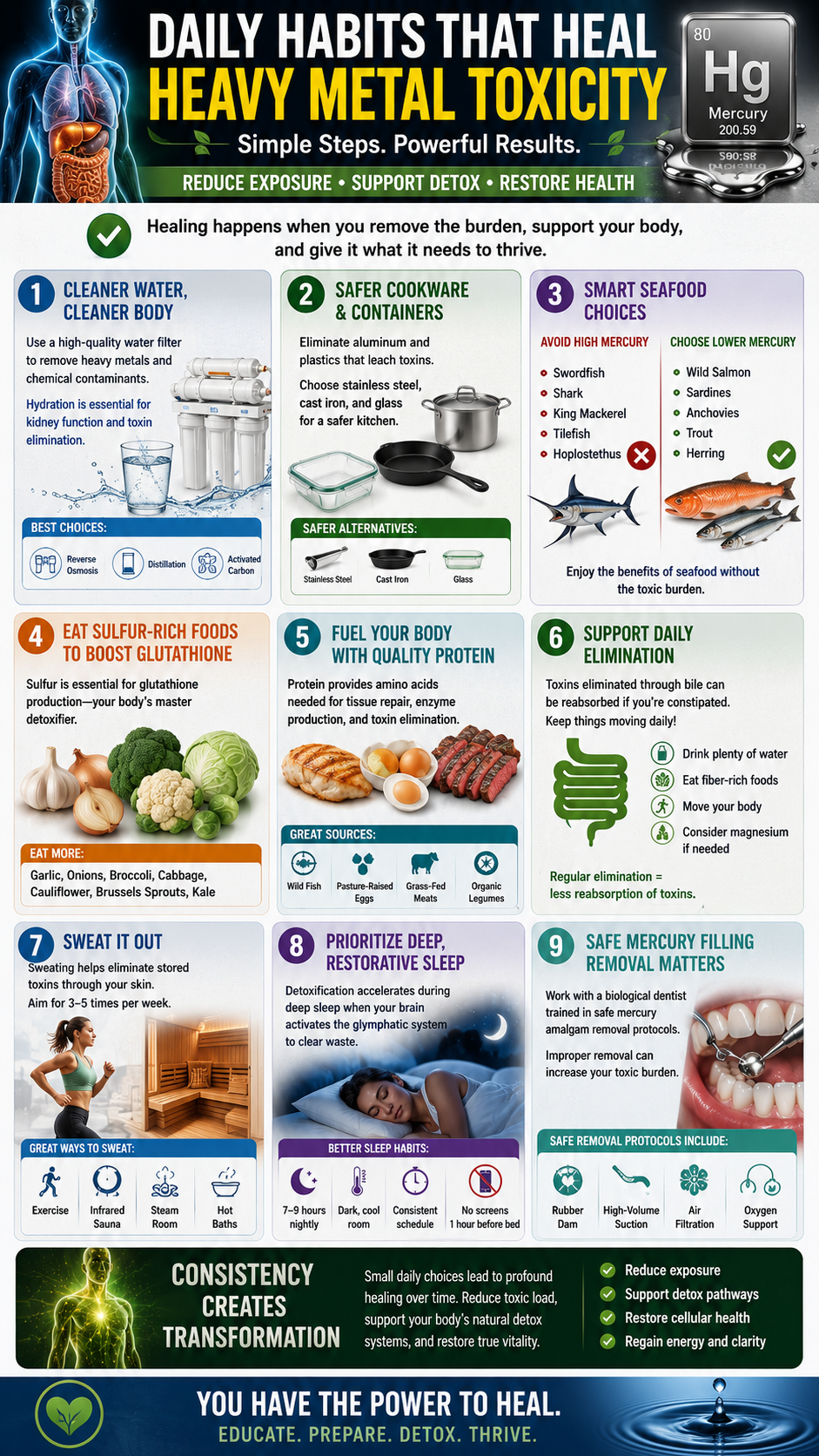
Increase sulfur-rich vegetable intake because those foods naturally support glutathione production and liver detoxification pathways. Focus on adequate protein intake because amino acids remain essential for tissue repair, antioxidant production, and toxin elimination. Support bowel regularity daily because toxins eliminated through bile become reabsorbed during constipation.
Sweat consistently through exercise or sauna use because perspiration helps eliminate stored toxins through the skin. Prioritize sleep aggressively because detoxification accelerates during deep restorative sleep cycles. Reduce evening screen exposure while maintaining consistent sleep schedules whenever possible.
Finally, seek guidance from a biological dentist trained specifically in safe mercury amalgam removal protocols before considering filling replacement procedures. Proper education and preparation often determine whether detoxification supports healing successfully or worsens toxic burden temporarily.
Final Thoughts on Healing from Mercury Toxicity
Recovery from heavy metal toxicity requires patience, education, consistency, and a willingness to investigate deeper causes of chronic illness. Symptoms often develop slowly over decades, which means healing rarely occurs overnight. Yet many patients experience profound improvement after reducing toxic burden and restoring foundational health systems naturally.
Energy frequently returns first because mitochondrial function improves gradually. Mental clarity sharpens as neurological inflammation decreases. Sleep deepens once stress pathways calm down. Digestive function stabilizes as gut integrity improves. Hormonal balance strengthens as toxic burden decreases and nutrient reserves replenish.
Functional medicine offers hope because it investigates why dysfunction developed rather than merely suppressing symptoms endlessly. Mercury toxicity often hides beneath chronic fatigue, autoimmune disease, neurological dysfunction, anxiety, insomnia, and hormonal imbalance. The human body was designed to repair, regenerate, and heal when interference decreases and proper support returns.
Millions still carry mercury fillings without understanding their potential impact on long-term health. Education creates awareness, awareness inspires action, and action opens the door toward genuine healing and restored vitality.