
The Question Almost Nobody Asks Until It Is Too Late
Walk through any grocery store in America and you will find an entire section dedicated to health. Brightly colored fruits, leafy vegetables, fresh berries, and nutrient-dense produce dominate the perimeter of the store. Nutrition experts encourage their consumption. Physicians recommend them. Dietitians praise them. Fitness influencers build entire meal plans around them. Yet hidden beneath the surface of many of these foods is a question that deserves far more attention than it receives.
What happens when the healthiest foods in the grocery store become vehicles for chronic chemical exposure?
For decades, public health discussions have focused almost exclusively on macronutrients. Consumers have been taught to count calories, monitor carbohydrates, reduce sugar intake, and increase fiber consumption. While these conversations remain important, they often ignore a significant factor that may influence human health just as profoundly. Modern food is no longer simply food. It has become a delivery system for thousands of environmental compounds that did not exist in meaningful quantities during most of human history.
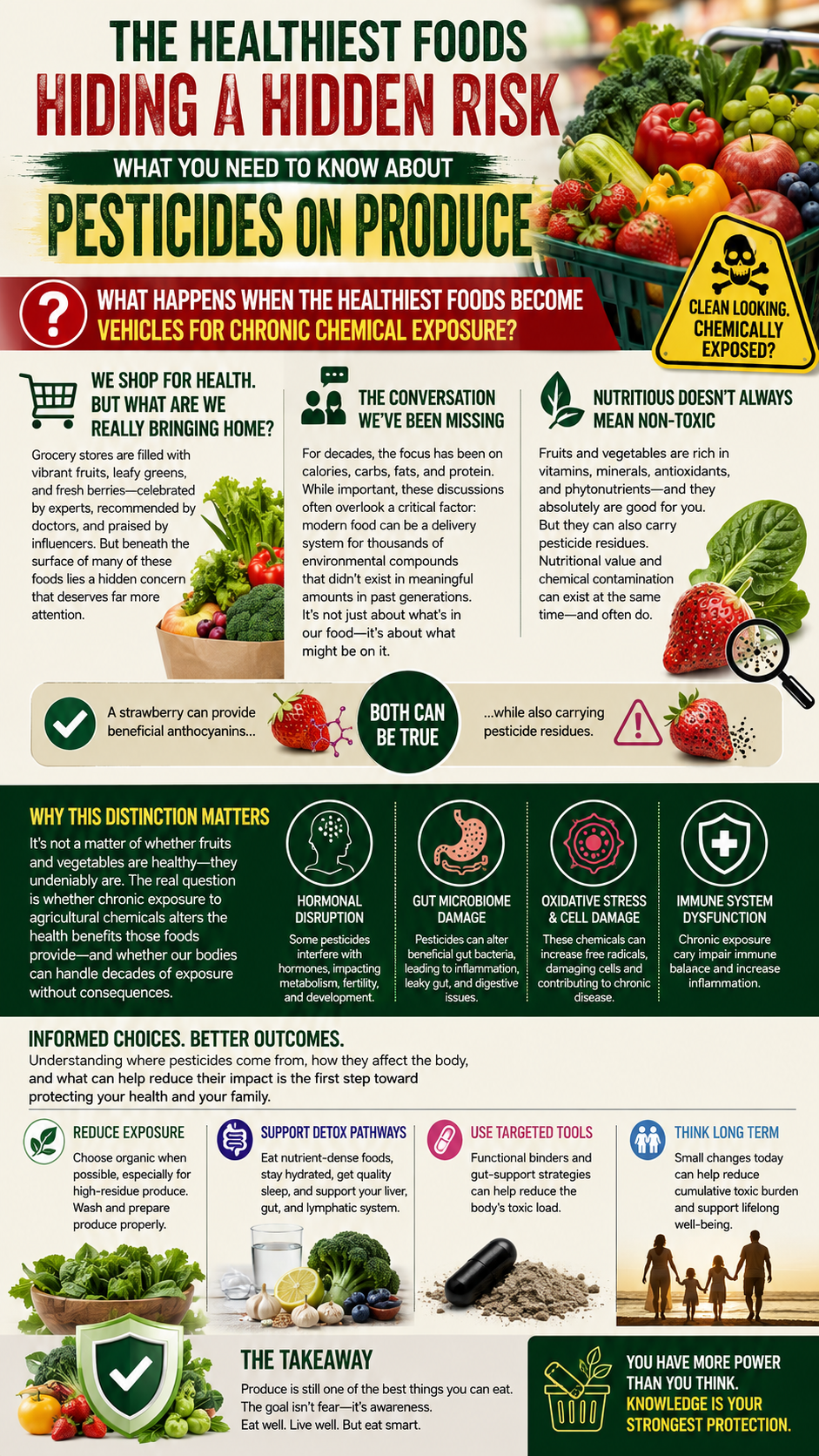
The average consumer assumes that fruits and vegetables are healthy because they contain vitamins, minerals, antioxidants, and phytonutrients. That assumption is generally correct. Produce remains one of the healthiest categories of food available. However, many people fail to recognize that nutritional value and chemical contamination can exist simultaneously. A strawberry can contain beneficial anthocyanins while also carrying pesticide residues. A spinach leaf can provide folate and magnesium while simultaneously exposing the body to agricultural chemicals. Both realities can be true at the same time.
This distinction is critical because the conversation surrounding pesticides is often oversimplified. The issue is not whether fruits and vegetables are healthy. They unquestionably are. The issue is whether chronic exposure to agricultural chemicals alters the health benefits those foods provide. More importantly, the issue is whether the human body can successfully manage decades of exposure without consequences.
Understanding this topic requires moving beyond simplistic headlines and examining the biological reality of what happens when pesticides enter the body. It requires understanding where these chemicals originated, why they became so prevalent, what they do to human physiology, and whether modern detoxification strategies can truly offset their effects. Only then can consumers make informed decisions about whether organic produce is worth the investment or whether functional binders provide sufficient protection.
The Real Origin of the Problem: Industrial Agriculture’s Chemical Revolution
To understand modern pesticide exposure, we must first understand how modern agriculture evolved. For thousands of years, farming relied primarily upon natural methods. Farmers rotated crops, used animal manure, managed pests manually, and depended upon ecological balance to maintain productivity. Crop yields were lower than today, yet food production occurred without the vast chemical arsenal that now defines industrial agriculture.
The landscape changed dramatically during the twentieth century. Following World War II, chemical manufacturers began adapting wartime technologies for agricultural use. Compounds originally designed for industrial and military purposes found new applications in farming. These products promised higher yields, fewer crop losses, and greater profitability. Farmers quickly embraced the technology because it offered solutions to longstanding agricultural challenges.
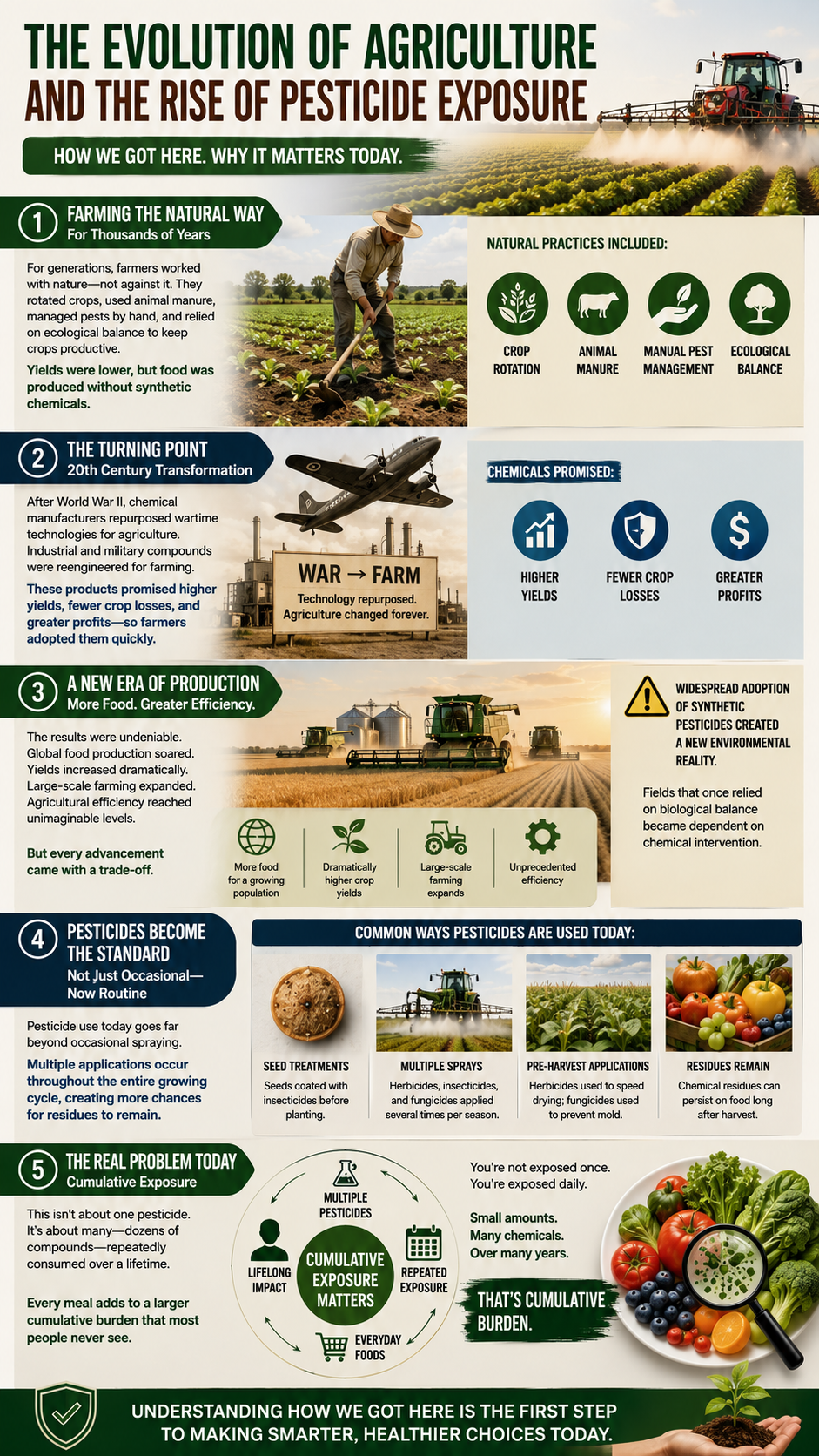
The results transformed global food production. Crop yields increased dramatically. Food became more abundant. Large-scale farming expanded. Agricultural efficiency reached levels previously unimaginable. However, every technological advancement carries trade-offs. The widespread adoption of synthetic pesticides created a new environmental reality. Fields that once relied upon biological balance became dependent upon chemical intervention. Over time, many crops required repeated applications of herbicides, insecticides, fungicides, and desiccants throughout each growing season.
Today, pesticide use extends far beyond occasional spraying. Many crops receive multiple treatments before harvest. Some seeds are coated with insecticides before planting. Certain herbicides are applied directly before harvest to accelerate drying. Fungicides may be used repeatedly throughout the growing season. As a result, residues can remain on food long after it reaches the grocery store.
What makes this situation particularly concerning is the sheer scale of exposure. Consumers are not encountering a single pesticide occasionally. They are encountering dozens of compounds repeatedly throughout their lives. Every meal becomes part of a much larger cumulative exposure pattern. This concept of cumulative burden represents one of the most overlooked aspects of environmental health.
Why Pesticides Are Different From Other Food Contaminants
Many people assume that pesticide exposure functions similarly to food poisoning. They imagine a toxin entering the body, creating immediate symptoms, and then disappearing. Unfortunately, pesticide exposure often operates very differently.
Acute poisoning is relatively easy to identify because symptoms appear rapidly. Chronic exposure is far more difficult to recognize. Instead of creating immediate illness, low-dose exposure often influences biological systems gradually. The effects may develop over years or even decades. Symptoms emerge slowly. Connections become difficult to identify. Most individuals never associate their health concerns with environmental chemical exposure.
Imagine placing a single drop of water onto a stone. Nothing appears to happen. Add another drop. Still nothing changes. Continue for years, however, and the stone eventually erodes. Chronic pesticide exposure functions in a similar manner. The problem often lies not in a single exposure but in the accumulation of thousands of exposures over time.
Researchers increasingly recognize that chronic disease frequently develops through cumulative biological stress. The body possesses remarkable resilience, but resilience has limits. Poor nutrition creates one layer of stress. Sleep deprivation adds another. Chronic psychological stress contributes further strain. Environmental toxins represent an additional burden. Eventually, the combined weight of these stressors exceeds the body’s ability to compensate effectively.
This cumulative burden model helps explain why many individuals experience symptoms despite normal laboratory testing. Traditional diagnostic approaches often focus on identifying disease after significant dysfunction has already occurred. Environmental toxicity frequently influences health long before overt disease develops. The earliest signs may include fatigue, brain fog, hormonal imbalances, digestive complaints, weight-loss resistance, sleep disturbances, or unexplained inflammation.
These symptoms rarely trigger immediate concern because they appear common and nonspecific. Yet they may represent early warning signs that the body’s adaptive capacity is becoming overwhelmed.
What Happens When Pesticides Enter the Human Body
The human body was designed to handle occasional exposure to naturally occurring toxins. Evolution equipped us with sophisticated detoxification systems capable of processing countless environmental compounds. The liver, kidneys, intestines, lungs, skin, lymphatic system, and immune system all participate in this process.
Modern pesticide exposure presents a challenge because the volume and diversity of chemicals often exceed what human biology encountered throughout most of evolutionary history.
Once pesticides enter the body, the liver assumes primary responsibility for processing them. Detoxification occurs through a series of complex biochemical reactions involving specialized enzymes. These enzymes transform fat-soluble toxins into water-soluble compounds that can be eliminated through urine, bile, or stool. This process sounds straightforward, yet it requires enormous nutritional support.
Every detoxification reaction consumes resources. The body requires amino acids, B vitamins, magnesium, zinc, selenium, glutathione, and numerous antioxidants to perform these tasks effectively. Nutritional deficiencies can impair detoxification efficiency, allowing toxins to remain within the body longer than intended.
Some pesticides create additional challenges because they dissolve readily in fat. Fat-soluble compounds tend to accumulate within fatty tissues rather than exiting quickly. Adipose tissue often becomes a storage site for environmental chemicals. The brain, which contains significant amounts of fat, may also accumulate certain compounds. Nerve tissue, endocrine glands, and reproductive organs can become reservoirs as well.
This storage phenomenon creates a critical distinction. Exposure does not necessarily end when consumption ends. Stored toxins may remain within tissues for extended periods, gradually influencing physiology long after the original exposure occurred.
The Silent Assault on the Gut Microbiome
Among all physiological systems affected by pesticide exposure, the gut microbiome may be one of the most vulnerable. Scientific understanding of the microbiome has expanded dramatically during the past decade. Researchers now recognize that the trillions of microorganisms inhabiting the digestive tract influence nearly every aspect of health.
These microbes regulate immune activity, produce neurotransmitters, synthesize vitamins, metabolize hormones, maintain intestinal integrity, and influence inflammation throughout the body. Healthy microbiomes require diversity. Hundreds of species work together to create resilience and stability.
Pesticides were designed to disrupt biological systems. Although they target specific organisms, their effects often extend beyond intended targets. Beneficial bacteria may experience collateral damage. Research increasingly demonstrates associations between pesticide exposure and alterations in microbial diversity.
When beneficial bacteria decline, harmful organisms often expand. This imbalance, known as dysbiosis, creates numerous downstream consequences. Digestive symptoms frequently emerge first. Bloating, gas, constipation, diarrhea, and food sensitivities become more common. However, the effects rarely remain confined to the digestive tract.
The intestinal lining functions as a protective barrier separating the external environment from internal circulation. When microbial balance deteriorates, this barrier may weaken. Increased intestinal permeability allows substances to cross into the bloodstream that normally remain confined to the digestive tract. The immune system responds aggressively, creating inflammation that may affect distant organs and tissues.
Many chronic inflammatory conditions may originate within the gut. Autoimmune diseases, metabolic disorders, skin conditions, mood disturbances, and neurological symptoms often share connections to intestinal dysfunction. Consequently, any factor capable of disrupting the microbiome deserves serious attention.
The Connection Between Pesticides and Hormonal Dysfunction
Hormones coordinate communication throughout the body. Every cell relies upon hormonal signals to regulate metabolism, reproduction, energy production, growth, repair, and adaptation. Small disruptions can create widespread consequences because hormones influence virtually every physiological system.
Certain pesticides belong to a category known as endocrine-disrupting chemicals. These compounds interfere with normal hormonal signaling in several ways. Some mimic hormones and activate receptors inappropriately. Others block receptors and prevent communication. Additional compounds alter hormone production, transport, metabolism, or elimination.
The thyroid gland appears particularly vulnerable. Thyroid hormones regulate metabolic rate, body temperature, cognitive performance, cardiovascular function, and cellular energy production. Even subtle disruptions can create profound symptoms. Individuals experiencing thyroid dysfunction often report fatigue, weight gain, depression, constipation, hair loss, cold intolerance, and cognitive decline.
Researchers have identified several pesticides capable of influencing thyroid physiology. While exposure alone may not cause thyroid disease, chronic disruption may contribute to dysfunction, particularly when combined with nutritional deficiencies and other environmental stressors.
Reproductive hormones face similar challenges. Estrogen, progesterone, testosterone, and related hormones operate within carefully regulated ranges. Endocrine disruptors may alter these delicate balances. Fertility concerns, menstrual irregularities, reduced testosterone levels, and developmental abnormalities have all become areas of active investigation within environmental health research.
The broader implication is significant. Hormonal dysfunction rarely remains isolated. Because hormones influence nearly every organ system, endocrine disruption can manifest as a remarkably diverse collection of symptoms.
Why Children Face Greater Risk Than Adults
Children are not simply smaller adults. Their physiology differs in ways that make them uniquely vulnerable to environmental exposures. Developing brains, immune systems, endocrine glands, and detoxification pathways remain under construction throughout childhood.
Rapid growth requires constant cellular communication. Hormones guide development. Neural pathways form at astonishing rates. Immune systems learn to distinguish friend from foe. Environmental toxins introduced during these critical windows may exert effects disproportionate to the exposure itself.
Children also consume more food relative to body weight than adults. This difference increases exposure potential. A pesticide residue that appears insignificant for a two-hundred-pound adult may represent a much larger burden for a forty-pound child.
Researchers continue examining links between pesticide exposure and developmental outcomes. Areas of investigation include cognitive performance, behavioral regulation, learning capacity, immune function, and neurological development. Although many variables influence these outcomes, environmental chemical exposure remains an important consideration.
Parents often focus on avoiding obvious dangers. Sharp objects, dangerous medications, and unsafe environments receive attention because risks appear visible. Chronic chemical exposure presents a different challenge because its effects may not become apparent for years. Prevention therefore becomes particularly important.
Organic Produce Versus Functional Binders: Understanding the Difference
The debate between organic produce and functional binders often misses an essential point. These strategies address entirely different aspects of the problem.
Organic produce focuses on reducing exposure. Functional binders focus on supporting elimination.
Reducing exposure always represents the most efficient solution. Every toxin avoided eliminates the need for detoxification. The body expends no energy processing chemicals that never enter circulation. Prevention therefore lowers biological stress immediately.
Functional binders serve a different purpose. These compounds help capture toxins within the digestive tract and reduce reabsorption. Activated charcoal, modified citrus pectin, chlorella, humic substances, zeolite, and certain fiber blends fall into this category. They can provide valuable support, particularly during structured detoxification programs.
However, binders cannot neutralize every exposure. No binder functions as an impenetrable shield. Their effectiveness varies according to toxin type, digestive health, timing, dosage, and individual physiology. Expecting binders to compensate completely for ongoing exposure resembles expecting a water filter to solve a flooding problem while leaving the source untouched.
The most effective strategy combines both approaches. Reducing incoming toxins lowers the burden. Supporting detoxification improves elimination. Together they create a more comprehensive solution than either approach alone.
Practical Steps to Reduce Pesticide Burden at Home
Health improvement rarely depends upon a single intervention. Instead, meaningful change emerges through consistent daily decisions. Reducing pesticide exposure follows the same principle.
Choosing organic versions of high-residue produce represents one of the most direct strategies available. Thorough washing remains worthwhile even when purchasing organic foods because environmental contaminants can still accumulate during production and transportation.
Supporting liver function should become a priority. Adequate protein intake provides amino acids required for detoxification pathways. Nutrient-dense foods supply vitamins and minerals necessary for enzyme activity. Hydration supports kidney filtration and waste removal.
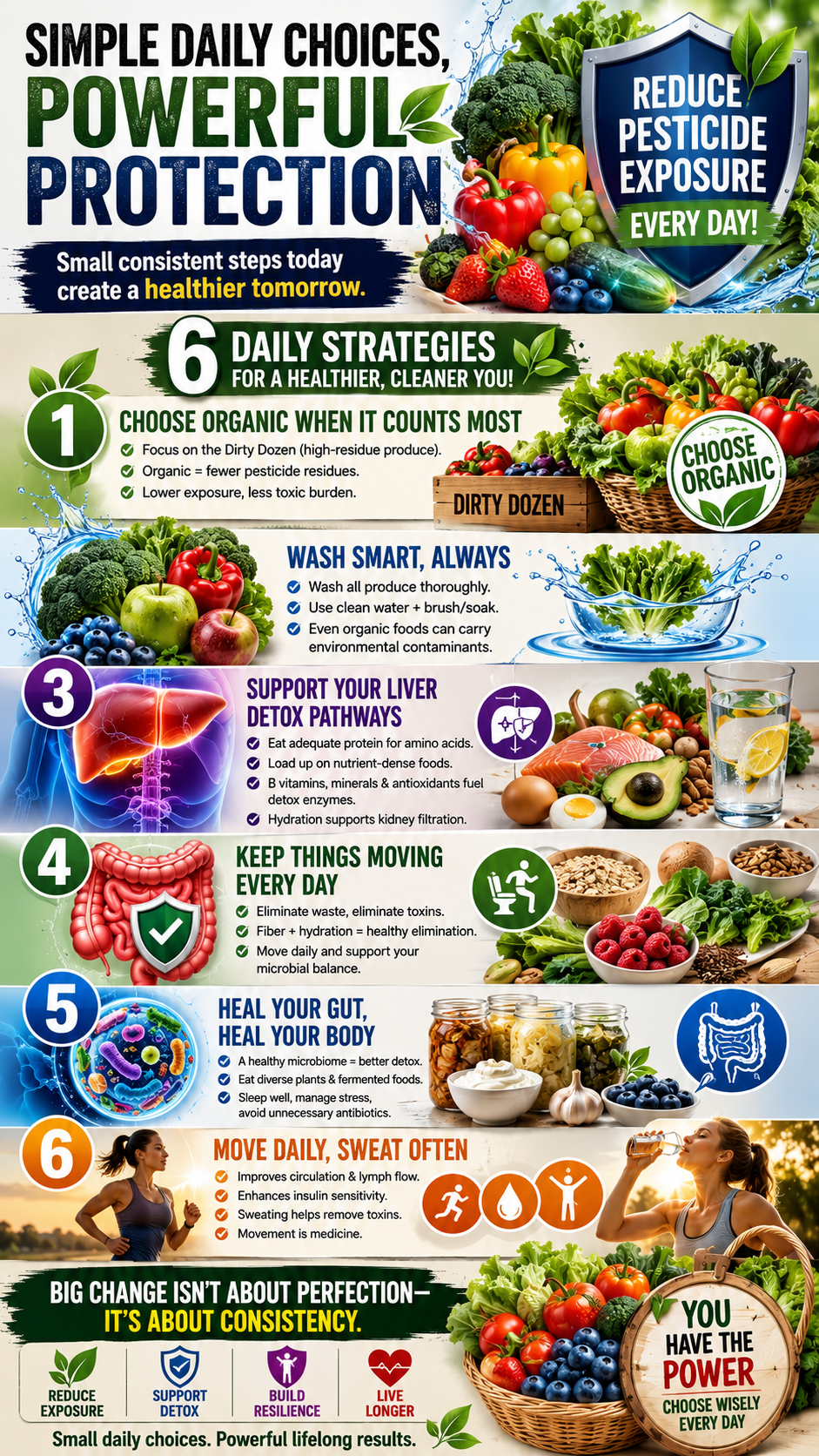
Maintaining regular bowel movements remains equally important. The body cannot eliminate toxins effectively when waste remains stagnant within the digestive tract. Healthy fiber intake, proper hydration, physical activity, and microbial balance all contribute to efficient elimination.
Gut health deserves focused attention. A resilient microbiome enhances detoxification capacity while reducing inflammation. Diverse plant foods, fermented foods, quality sleep, stress management, and avoidance of unnecessary antibiotics help support microbial diversity.
Movement also plays a powerful role. Exercise improves circulation, supports lymphatic flow, enhances insulin sensitivity, and promotes sweating. These effects collectively assist the body’s natural elimination systems.
Each of these strategies may seem modest individually. Together they create a powerful foundation for reducing toxic burden and supporting long-term health.
The Verdict: Organic Is Not Perfection, But It Is Progress
The question was never whether organic produce is perfect. No food system exists entirely free of contamination. Environmental pollutants circulate through air, water, and soil. Complete avoidance remains impossible.
The more important question asks whether reducing exposure matters.
Current evidence suggests that it does.
Organic produce consistently lowers pesticide exposure compared with conventional alternatives. Functional binders can support detoxification. Healthy lifestyle habits strengthen elimination pathways. Gut restoration improves resilience. Together these strategies reduce biological burden and support the body’s capacity to heal.
Ultimately, health depends upon the balance between what enters the body and what leaves it. Modern life constantly introduces new challenges. Environmental chemicals, processed foods, chronic stress, and sedentary lifestyles all contribute to cumulative burden. The goal is not perfection. The goal is creating enough margin that the body’s extraordinary healing systems can function as intended.
Every organic strawberry chosen over a heavily sprayed alternative. Every effort to strengthen detoxification pathways. Every decision that supports gut health and hormonal balance. Each step shifts the equation in a healthier direction.
Viewed through that lens, the debate between organic produce and functional binders has a simple answer. The wisest approach is not choosing one or the other. The wisest approach is reducing exposure whenever possible while simultaneously supporting the body’s remarkable ability to eliminate what inevitably remains.