The Silent Collapse of Your Internal Clock
Sleep has become one of the greatest casualties of modern life. Millions of people climb into bed exhausted, yet their minds continue racing as though the day has only begun. They toss from one side to the other, stare at the ceiling, and count the passing hours until dawn arrives. Desperation often leads them to the pharmacy, where a small bottle labeled “Melatonin” promises a natural solution to restless nights. Because melatonin is sold alongside vitamins rather than prescription medications, many assume it carries little risk. That assumption has fueled an explosion in its popularity. Today, melatonin ranks among the most widely purchased sleep supplements in the world, with adults, teenagers, and even children using it nightly in hopes of reclaiming restorative sleep. Yet an uncomfortable question lingers beneath the surface. Has modern society misunderstood melatonin entirely? Rather than asking whether the supplement works, perhaps we should ask why so many people believe they need it in the first place.
The real story reaches far beyond a sleep aid. It begins with the collision between ancient biology and modern civilization. For nearly all of human history, darkness arrived each evening with remarkable consistency. Sunset signaled the end of activity, allowing the brain to shift effortlessly toward repair, recovery, and sleep. Artificial lighting changed everything. Electric bulbs extended the day by several hours. Television illuminated living rooms late into the night. Smartphones placed brilliant blue light inches from our eyes. Computers, tablets, LED lighting, and twenty-four-hour lifestyles gradually dismantled the natural relationship between light and darkness that shaped human biology for thousands of years. The body still operates according to ancient rhythms, yet the environment surrounding it has transformed almost beyond recognition.
This mismatch between biology and lifestyle explains much of today’s sleep crisis. Many people blame stress, aging, or busy schedules for their insomnia. Although each contributes, they often represent secondary factors. The deeper problem involves disruption of the body’s master circadian clock. Every organ, hormone, immune cell, digestive enzyme, and metabolic pathway follows an internal schedule designed around predictable cycles of daylight and darkness. When that schedule becomes distorted, sleep represents only the first visible symptom. Fatigue, weight gain, anxiety, poor concentration, weakened immunity, blood sugar instability, hormonal imbalance, and chronic inflammation frequently follow. Melatonin sits at the center of this intricate biological orchestra, serving as one of the body’s most important timing signals rather than merely acting as a chemical that induces sleep.
The Hormone That Announces Nightfall
Deep within the brain rests a tiny structure known as the pineal gland. Despite measuring only a few millimeters, this remarkable organ produces one of the body’s most influential hormones. As daylight fades, specialized retinal cells detect decreasing light intensity and send electrical messages to the suprachiasmatic nucleus, often called the body’s master clock. This cluster of neurons coordinates nearly every circadian process within the human body. Once darkness arrives, signals travel from the hypothalamus through the sympathetic nervous system to the pineal gland, triggering the conversion of serotonin into melatonin. Blood levels begin rising shortly after sunset, peak during the middle of the night, and gradually decline as morning light appears.
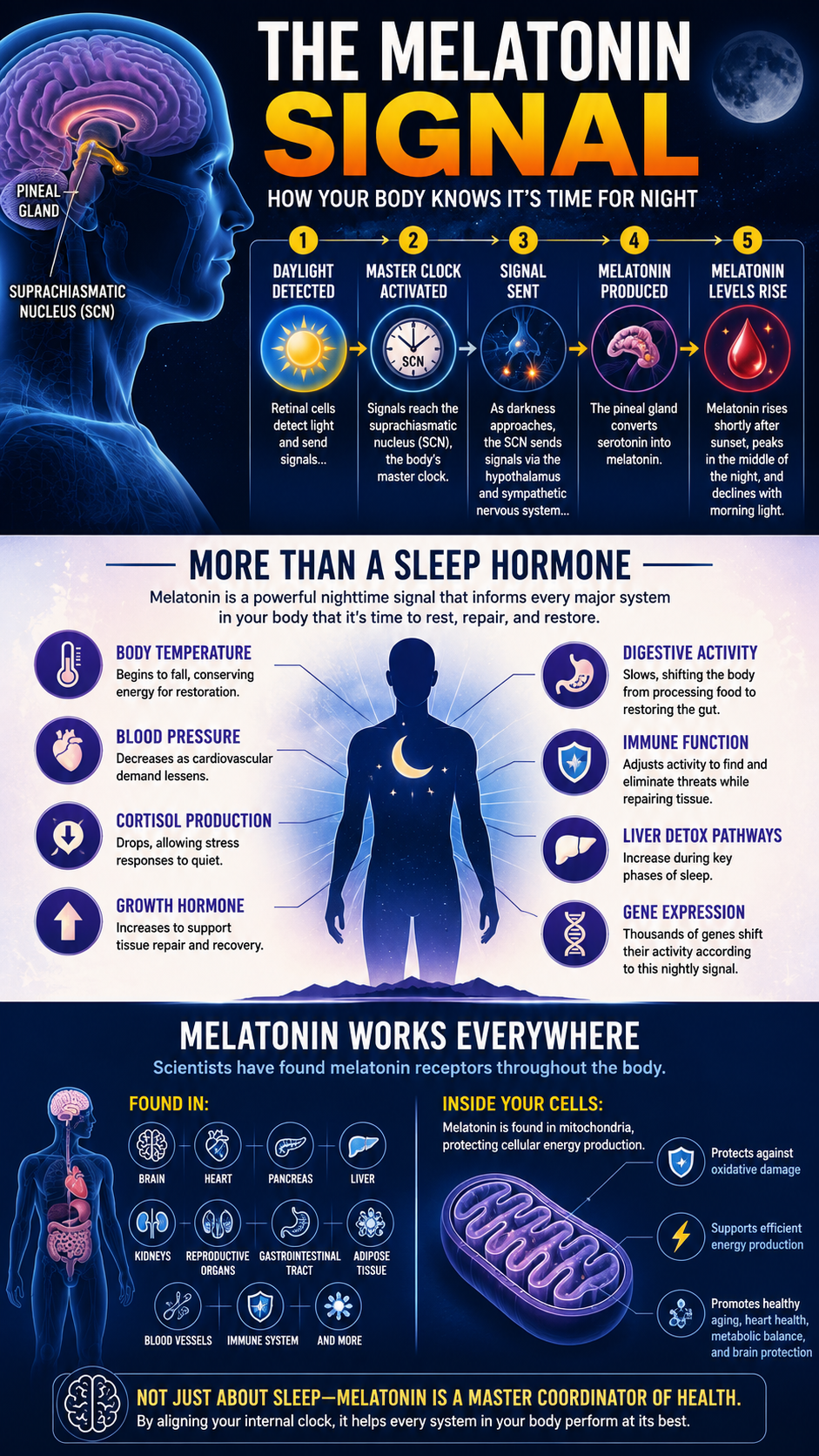
Contrary to popular belief, melatonin does not simply make someone sleepy. Instead, it informs every major organ that nighttime has arrived. This hormonal announcement allows thousands of physiological processes to synchronize with one another. Body temperature begins falling to conserve energy. Blood pressure decreases as cardiovascular demand lessens. Cortisol production drops, allowing stress responses to quiet. Growth hormone secretion increases to support tissue repair. Digestive activity slows, encouraging the gastrointestinal tract to shift from processing food toward restoration. Immune cells change their activity, preparing to identify damaged tissues and invading pathogens. Liver detoxification pathways increase during specific phases of sleep. Even the expression of thousands of genes changes according to this nightly hormonal signal.
Scientists have discovered melatonin receptors throughout the human body, revealing that its influence extends far beyond the brain. These receptors appear within the heart, pancreas, liver, kidneys, reproductive organs, gastrointestinal tract, adipose tissue, blood vessels, and immune system. Researchers have also identified melatonin inside mitochondria, the microscopic structures responsible for producing cellular energy. This discovery transformed scientific understanding of the hormone. Rather than functioning solely as a sleep regulator, melatonin now appears to protect mitochondria from oxidative damage while helping maintain efficient energy production. Since mitochondrial dysfunction contributes to numerous chronic diseases, investigators continue exploring melatonin’s role in healthy aging, cardiovascular function, metabolic health, and neuroprotection.
Modern Life Is Quietly Turning Off Natural Melatonin
The greatest threat to healthy melatonin production does not come from aging alone. It comes from habits that have become so common they rarely attract attention. Every evening, millions of people expose themselves to bright artificial lighting while scrolling through social media, watching television, or answering work emails. The retina cannot distinguish between sunlight and the blue wavelengths emitted by digital screens. Instead, it interprets both as daytime signals. The brain responds by delaying melatonin release, convincing the body that bedtime has not yet arrived. Many people then wonder why they remain awake despite feeling physically exhausted. Their bodies have received contradictory instructions throughout the evening.
Blue light represents only one piece of the puzzle. Shift work disrupts circadian timing by forcing activity during biological nighttime. Frequent travel across time zones repeatedly resets internal clocks before they can stabilize. Chronic stress elevates cortisol long after sunset, interfering with melatonin production. Excess caffeine consumed during the afternoon prolongs nervous system stimulation into the evening. Alcohol initially causes drowsiness but fragments sleep architecture later in the night. Late-night eating forces digestion to compete with nighttime repair processes, confusing metabolic rhythms that evolved around fasting during sleep. Each factor alone may appear harmless. Together they create the perfect environment for circadian dysfunction.
The consequences extend beyond restless nights. Studies increasingly associate circadian disruption with obesity, insulin resistance, hypertension, cardiovascular disease, depression, cognitive decline, certain cancers, and impaired immune function. Scientists now recognize that the body depends upon predictable timing almost as much as it depends upon proper nutrition. Every disrupted night slightly weakens synchronization among hormones, neurotransmitters, metabolic pathways, and inflammatory signals. Over months and years, those seemingly minor disruptions accumulate into widespread physiological dysfunction. Sleep loss often becomes the earliest warning sign rather than the disease itself.
The Hidden Cost of Circadian Chaos
Imagine an orchestra preparing for a concert without a conductor. Each musician possesses exceptional skill, yet every section begins playing according to a different tempo. Violins accelerate while percussion lags behind. Brass instruments enter too early. Woodwinds fall several measures behind the score. Although every musician performs correctly, the result sounds chaotic because coordination has disappeared. Circadian disruption produces a similar effect throughout the body. Hormones continue functioning, but they no longer operate together. Digestion occurs when tissues should recover. Cortisol rises after midnight rather than before sunrise. Blood sugar remains elevated while insulin sensitivity declines. The body loses its biological rhythm long before laboratory tests reveal obvious disease.
Inflammation frequently increases under these conditions. During healthy sleep, immune cells coordinate tissue repair while inflammatory signaling remains carefully regulated. Poor sleep disrupts this balance, allowing inflammatory molecules to circulate longer than intended. Persistent inflammation contributes to endothelial dysfunction, accelerated aging, joint discomfort, impaired recovery, and increased oxidative stress. At the same time, antioxidant defenses weaken, leaving mitochondria increasingly vulnerable to damage. Because melatonin functions as a potent antioxidant within cells, inadequate production removes an important layer of protection against free radical injury.
Metabolism also suffers when circadian rhythms deteriorate. Research demonstrates that identical meals produce different blood sugar responses depending upon the time of day they are consumed. Morning meals generally align with higher insulin sensitivity, while late-night eating often produces greater glucose excursions. Individuals sleeping fewer than seven hours commonly experience increased hunger the following day due to changes in leptin and ghrelin, two hormones governing appetite. Cravings for highly processed carbohydrates often increase as the brain seeks rapid energy to compensate for inadequate restoration. Weight gain then develops not merely because someone eats more, but because hormonal timing has shifted away from its natural design.
Melatonin Supplements Enter the Picture
Faced with persistent sleep problems, many people understandably reach for supplemental melatonin. Unlike prescription sleep medications that directly depress central nervous system activity, melatonin works differently. It functions primarily as a chronobiotic, meaning it helps adjust circadian timing. Taken at the appropriate hour, supplemental melatonin reinforces the message that nighttime has begun. For travelers experiencing jet lag or individuals with delayed sleep phase syndrome, this timing effect can prove remarkably helpful. The supplement does not force unconsciousness as much as it nudges biological rhythms toward alignment.
Problems arise when melatonin becomes a substitute for repairing the underlying causes of circadian disruption. Imagine placing tape over a warning light on your vehicle’s dashboard rather than repairing the engine beneath the hood. The light disappears, but the mechanical problem continues progressing. Nightly melatonin may temporarily improve sleep onset while artificial light exposure, excessive evening stimulation, chronic stress, metabolic dysfunction, and inconsistent sleep schedules continue damaging the body’s internal clock. Eventually the supplement receives either undue credit or unfair blame, while the true causes remain untouched.
Another complication involves dosage. Human physiology naturally produces remarkably small quantities of melatonin each evening. Many commercial supplements contain amounts that greatly exceed physiological nighttime concentrations. Higher doses do not necessarily improve sleep quality. In some individuals they increase vivid dreams, morning grogginess, headaches, or altered sleep architecture. Product quality also varies considerably among manufacturers, with independent analyses finding substantial differences between labeled and actual melatonin content. These inconsistencies complicate both research findings and personal experiences, leaving consumers uncertain about what they are truly taking.
Does Melatonin Create Dependency?
Perhaps no question generates more debate than whether nightly melatonin use causes dependence. Many people worry that prolonged supplementation will convince the pineal gland to stop producing its own hormone. Current scientific evidence offers reassuring news. Unlike corticosteroids, testosterone, or certain prescription hormones that suppress natural production through well-established feedback mechanisms, melatonin has not demonstrated permanent shutdown of endogenous production in healthy adults. Available studies generally suggest that normal melatonin secretion resumes after supplementation ends, although researchers continue studying long-term effects in specific populations.
This finding does not mean every concern should disappear. Dependence involves more than hormonal suppression. Psychological reliance develops surprisingly easily whenever people associate a specific routine with successful sleep. Someone may become convinced that falling asleep without melatonin is impossible, even though their pineal gland continues functioning normally. Anxiety about skipping a nightly supplement can itself delay sleep onset, reinforcing the false belief that the body has become dependent. Over time, the habit strengthens until confidence in natural sleep gradually fades.
The distinction between biological dependency and behavioral conditioning matters enormously. Most evidence suggests the body retains its capacity to produce melatonin naturally. The greater danger lies elsewhere. Modern lifestyles continue destroying the environmental signals that regulate circadian biology. Supplements may ease symptoms temporarily, yet they cannot replace darkness, consistent sleep schedules, healthy metabolic function, or balanced stress physiology. Those foundational elements determine whether the body’s internal clock remains synchronized or slowly drifts into chronic dysfunction.
Rebuilding Your Internal Clock Instead of Depending on a Pill
The greatest misunderstanding surrounding melatonin is not whether it works. The greater misunderstanding is believing that sleep begins when your head touches the pillow. In reality, healthy sleep begins nearly sixteen hours before bedtime. Every decision you make from sunrise until sunset either strengthens or weakens your body’s internal clock. Morning sunlight, meal timing, physical activity, stress levels, blood sugar balance, and evening light exposure all communicate with the brain throughout the day. By the time darkness arrives, your body has already decided whether it will produce abundant melatonin or struggle through another restless night. The supplement has become a convenient solution because it appears to solve the final symptom. Unfortunately, it rarely addresses the biological events that created the problem hours earlier.
This distinction explains why so many individuals report diminishing benefits after months of nightly supplementation. Their supplement never failed. Their lifestyle simply continued working against the body’s natural circadian machinery. Imagine trying to fill a bathtub while someone continuously removes the drain plug. Adding more water cannot compensate forever because the leak remains. Likewise, increasing melatonin dosage cannot fully overcome chronic exposure to blue light, irregular sleep schedules, elevated nighttime cortisol, inflammatory diets, excessive alcohol consumption, and persistent metabolic dysfunction. The body’s biological clock responds to hundreds of environmental signals every day. Restoring those signals offers a far more durable solution than relying exclusively on one hormone.
The Real Risk Is Not Melatonin—It Is Circadian Dysfunction
Conversations about melatonin often focus on the supplement itself while overlooking the condition driving its use. Circadian dysfunction has quietly become one of the defining health problems of the twenty-first century. Unlike hypertension or diabetes, no simple laboratory test diagnoses it during a routine office visit. Nevertheless, disrupted circadian rhythms influence nearly every chronic disease physicians treat today. Researchers continue uncovering connections between poor circadian regulation and obesity, metabolic syndrome, cardiovascular disease, depression, Alzheimer’s disease, impaired immune function, autoimmune disorders, and certain cancers. The body’s timing system affects every organ because nearly every cell contains its own biological clock.
When those clocks drift out of synchronization, communication begins to break down. Cortisol may remain elevated late into the evening when it should decline. Blood sugar regulation weakens because insulin sensitivity no longer follows its normal daily rhythm. Digestive enzymes become less efficient as meals occur at biologically inappropriate hours. Inflammatory pathways remain activated longer than necessary, increasing oxidative stress throughout tissues. Mitochondria produce energy less efficiently because cellular repair cycles become fragmented. Even the liver’s detoxification pathways lose some of their precision when nighttime recovery becomes inconsistent. Sleep disturbance represents only the visible surface of a much deeper physiological imbalance.
Many people assume aging inevitably causes declining melatonin production. Although natural production often decreases with age, lifestyle frequently accelerates that decline. Modern adults spend far less time outdoors than previous generations. Office buildings filter natural sunlight. Sunglasses reduce light intensity reaching the retina. Evening entertainment revolves around illuminated screens rather than darkness. Shift work forces millions of people to remain awake during biological nighttime. These environmental changes repeatedly confuse the brain’s master clock. Aging certainly influences circadian biology, but everyday habits often magnify that process far beyond what nature intended.
When Melatonin Makes Sense
None of this means melatonin lacks value. On the contrary, carefully timed supplementation serves an important purpose for specific situations. Travelers crossing multiple time zones often benefit because supplemental melatonin helps accelerate adjustment to a new light-dark cycle. Shift workers facing unavoidable schedule disruptions may experience improved circadian adaptation with appropriate timing. Individuals diagnosed with delayed sleep phase syndrome frequently respond well because melatonin nudges their internal clocks toward an earlier schedule. Older adults with significantly reduced endogenous production may also benefit under thoughtful guidance.
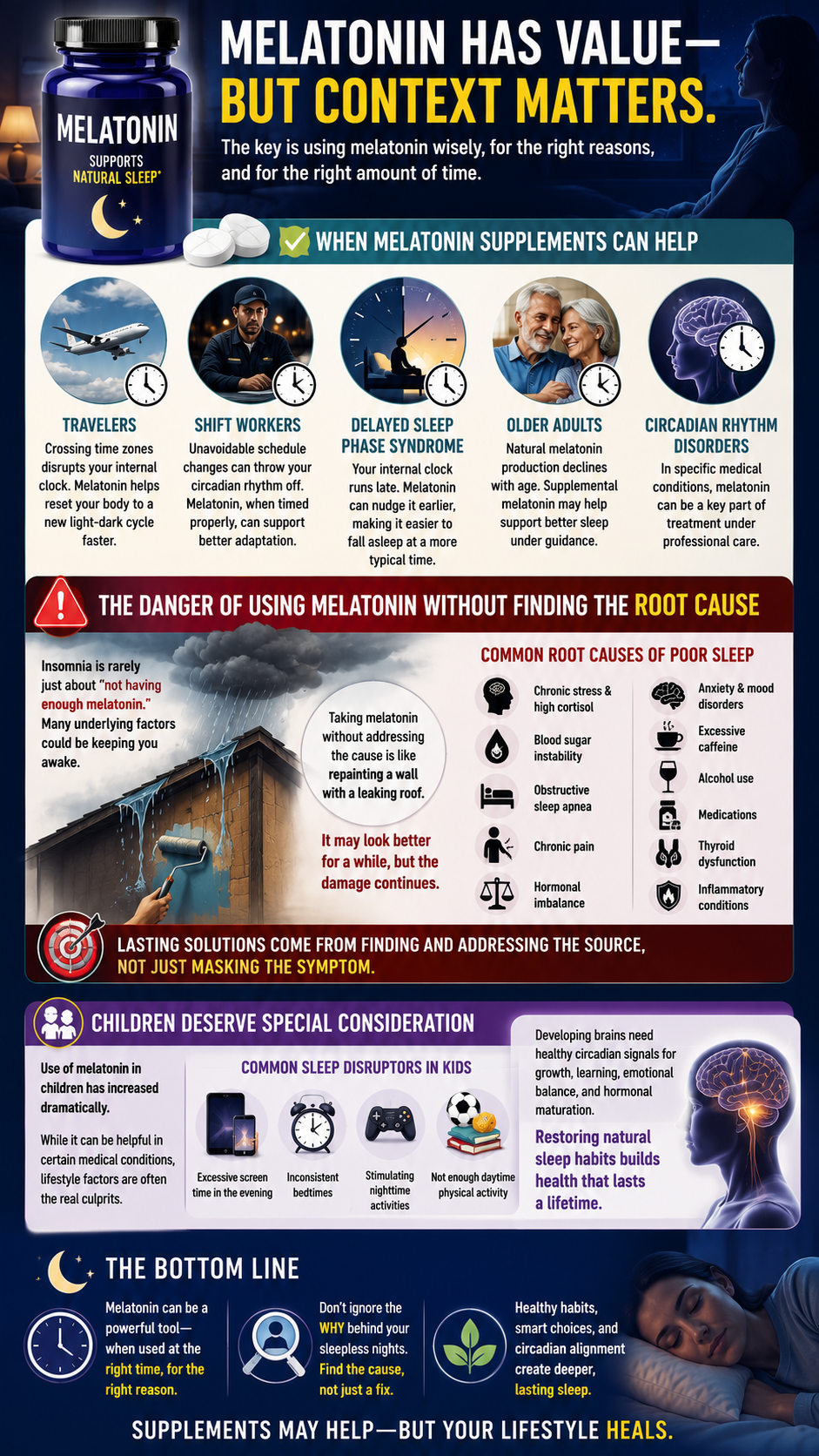
Problems arise when healthy individuals use melatonin indefinitely without investigating the cause of their insomnia. Difficulty sleeping rarely develops in isolation. Chronic stress, blood sugar instability, obstructive sleep apnea, chronic pain, hormonal imbalance, anxiety disorders, excessive caffeine intake, alcohol use, medications, thyroid dysfunction, and inflammatory illness frequently contribute to restless nights. Taking melatonin without exploring these possibilities resembles repainting a wall damaged by a leaking roof. The fresh paint briefly improves appearance, yet water continues destroying the structure beneath. Lasting improvement requires identifying the source rather than disguising its consequences.
Children deserve particular consideration because melatonin use has risen dramatically among younger populations. Pediatric specialists sometimes recommend short-term supplementation for carefully selected situations, including certain neurodevelopmental conditions or circadian rhythm disorders. However, many otherwise healthy children struggle with sleep because of excessive evening screen exposure, inconsistent bedtimes, stimulating nighttime activities, or inadequate daytime physical activity. These lifestyle factors deserve correction before long-term supplementation becomes routine. Developing brains rely upon healthy circadian signaling for growth, learning, emotional regulation, and hormonal maturation. Restoring natural sleep habits often produces broader benefits than relying exclusively on supplements.
Restoring the Body’s Natural Melatonin Production
Healing begins by respecting the biological signals that shaped human physiology long before electricity transformed daily life. Morning sunlight represents one of the most powerful interventions available. Exposure to natural light within the first hour after waking sends an unmistakable message to the suprachiasmatic nucleus that daytime has begun. That single event starts a biological countdown leading toward evening melatonin production approximately fourteen to sixteen hours later. Bright indoor lighting rarely matches the intensity of outdoor sunlight, even on cloudy days. Spending time outside each morning strengthens circadian rhythm more effectively than many people realize.
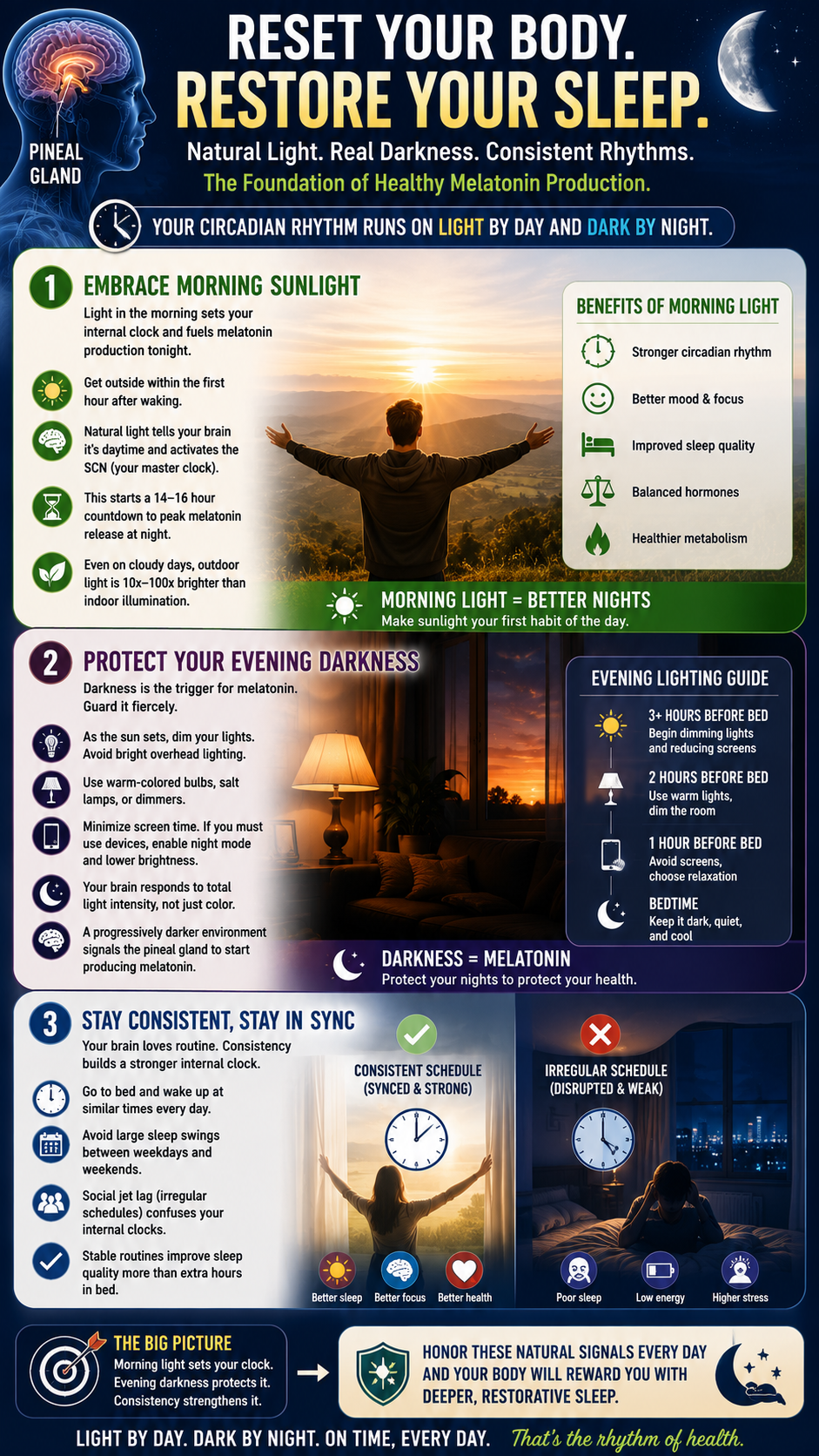
Evening darkness carries equal importance. As sunset approaches, reducing exposure to bright overhead lighting allows the brain to recognize the transition toward nighttime. Warm-colored lamps, dimmer switches, and minimizing unnecessary screen time help preserve endogenous melatonin secretion. Many electronic devices now include night-mode settings that reduce blue light emission, yet lowering overall brightness remains equally valuable. The brain responds not only to light color but also to total intensity. Creating a progressively darker environment each evening tells the pineal gland that its nightly work should begin.
Consistency also rebuilds circadian stability. The human brain thrives on predictable timing. Going to bed and waking at similar hours every day strengthens communication among internal biological clocks. Weekend sleep schedules that differ dramatically from weekday routines create a phenomenon sometimes called social jet lag. Although sleeping late feels restorative after a demanding week, large shifts in timing repeatedly confuse circadian regulation. Maintaining relatively stable sleep and wake times often improves sleep quality more than simply increasing total hours spent in bed.
Nutrition Shapes the Sleep Hormone More Than Most People Realize
Food communicates with circadian biology just as powerfully as light. Every meal activates hormonal pathways that help determine whether the body prioritizes activity or recovery. Late-night eating forces digestion to remain active during hours normally reserved for cellular repair. Blood sugar remains elevated when insulin sensitivity naturally declines. Liver metabolism shifts toward nutrient processing rather than restorative functions. Over time, this repeated mismatch weakens synchronization between metabolic clocks and the brain’s master pacemaker.
Balanced blood sugar throughout the day also supports healthy sleep. Large swings between glucose spikes and crashes stimulate cortisol and adrenaline release, especially during the night. Some individuals awaken at two or three o’clock each morning not because of insomnia itself but because falling blood sugar triggers stress hormone production. Their brains perceive metabolic instability as a threat requiring immediate attention. Stable meals emphasizing adequate protein, healthy fats, fiber-rich vegetables, and minimally processed carbohydrates help reduce these nocturnal hormonal disturbances.
Caffeine deserves thoughtful consideration because its effects extend longer than many people appreciate. Although half of consumed caffeine leaves the bloodstream within several hours, meaningful amounts often remain active well into the evening. Individuals metabolize caffeine at different rates according to genetics, liver function, age, medications, and overall health. Someone who falls asleep easily after an afternoon coffee may still experience reduced deep sleep without realizing it. Sleep quality often deteriorates long before obvious insomnia develops.
Stress Quietly Silences the Night
Few biological relationships prove more important than the interaction between cortisol and melatonin. These hormones function almost like opposite ends of a seesaw. Cortisol prepares the body for daytime alertness, while melatonin announces nighttime recovery. Chronic psychological stress disrupts this elegant rhythm by keeping cortisol elevated long after sunset. The brain remains prepared for danger instead of restoration. Even if someone manages to fall asleep, elevated nighttime cortisol fragments sleep architecture and reduces time spent in deeply restorative stages.
Modern stress differs dramatically from the challenges faced by previous generations. Human physiology evolved to handle short periods of acute danger followed by recovery. Today’s stress often remains continuous. Financial worries, workplace demands, nonstop notifications, relationship conflict, and constant media exposure prevent the nervous system from fully disengaging. The body cannot distinguish between an approaching predator and an overflowing email inbox. Both activate remarkably similar stress pathways. Learning to calm the nervous system before bedtime therefore becomes essential for healthy melatonin production.
Simple evening rituals help signal safety to the brain. Quiet reading, gentle stretching, deep breathing exercises, prayer, meditation, journaling, or calm conversation gradually shift the autonomic nervous system away from constant vigilance. These practices may appear insignificant compared with taking a supplement. Their cumulative physiological effects, however, often exceed expectations because they remove obstacles preventing natural melatonin release rather than attempting to replace it artificially.
A Supplement Should Never Replace Healthy Biology
The popularity of melatonin reveals something much larger than widespread insomnia. It reflects a society increasingly disconnected from the environmental rhythms that once regulated human health automatically. Artificial light extends our evenings. Processed food ignores natural meal timing. Constant stimulation prevents mental recovery. Chronic stress convinces the brain that danger never ends. Within that environment, melatonin becomes less of a miracle and more of a biological substitute for conditions our ancestors experienced every single night.
Current research offers reassuring evidence that melatonin itself does not appear to permanently shut down the body’s natural production in healthy adults. Most people can discontinue supplementation without losing their ability to produce endogenous melatonin. That finding should provide comfort for individuals using the supplement appropriately. Yet the absence of permanent hormonal suppression should not encourage complacency. Depending indefinitely on supplementation while ignoring circadian health allows deeper dysfunction to continue progressing beneath the surface.
True restorative sleep cannot be purchased in a bottle because sleep represents the final chapter of a story written throughout the entire day. Every sunrise begins preparing the brain for that evening’s melatonin release. Every healthy meal strengthens metabolic rhythms. Every hour spent outdoors reinforces biological timing. Every effort to reduce unnecessary nighttime light protects one of the body’s most remarkable hormones. Supplements may assist specific circumstances, but they work best when supporting healthy biology rather than replacing it.
The ultimate goal should never involve becoming better at taking melatonin. The goal should involve creating a lifestyle where the brain no longer needs help remembering when night has arrived. When darkness once again signals restoration instead of stimulation, the body’s remarkable internal clock often resumes the work it has performed faithfully for thousands of years. That transformation represents something far greater than better sleep. It marks the return of biological harmony, allowing every system within the body to function according to the rhythms nature designed from the very beginning.