
Why Adult ADHD May Not Begin in the Brain
A successful entrepreneur sits at his desk surrounded by unfinished projects. His intelligence is obvious. His ambition is undeniable. Yet emails remain unanswered, deadlines slip away, and concentration disappears whenever a task lacks excitement. Across town, a mother struggles to remember appointments, loses her keys several times each week, and feels mentally exhausted before noon despite getting what appears to be adequate sleep. Both individuals have been told they suffer from Adult Attention Deficit Hyperactivity Disorder, commonly called ADHD. Conventional medicine explains their symptoms as a disorder of brain chemistry, usually involving dopamine deficiency or dysfunction. While dopamine certainly plays a major role, this explanation barely scratches the surface of what is actually happening inside the body.
The modern understanding of adult ADHD has become remarkably narrow. Most discussions revolve around neurotransmitters and medications while ignoring the biological systems that regulate those neurotransmitters in the first place. The brain does not manufacture its chemistry independently. Every neurotransmitter depends upon nutrients, hormones, immune signals, microbial activity, blood sugar regulation, and nervous system communication. When these systems become dysfunctional, the brain eventually follows. Many adults spend years treating symptoms while the root causes continue to worsen beneath the surface.
Emerging research is painting a much larger picture. Scientists now recognize a powerful communication network connecting the brain, digestive system, immune system, and autonomic nervous system. This network influences attention, memory, motivation, emotional stability, and cognitive performance. When communication breaks down, symptoms resembling ADHD frequently emerge. In many cases, the problem begins far away from the brain itself.
Understanding adult ADHD requires us to examine dopamine, gut health, inflammation, and vagus nerve function as parts of one interconnected system. Once this broader perspective becomes clear, many of the mysteries surrounding attention problems begin to make sense.
The Real Job of Dopamine
Most people have heard dopamine described as the brain’s pleasure chemical. That description is incomplete and somewhat misleading. Dopamine functions primarily as a motivation molecule. It drives curiosity, anticipation, goal-directed behavior, learning, reward processing, and sustained attention. Without proper dopamine activity, the brain struggles to determine what deserves focus and what should be ignored.
Imagine walking into a crowded room filled with conversations, flashing screens, ringing phones, and background noise. A healthy dopamine system helps filter irrelevant information while allowing concentration on the task at hand. When dopamine signaling becomes impaired, every stimulus competes for attention at the same intensity. The brain becomes overwhelmed by incoming information, making focus difficult and mental fatigue almost inevitable.
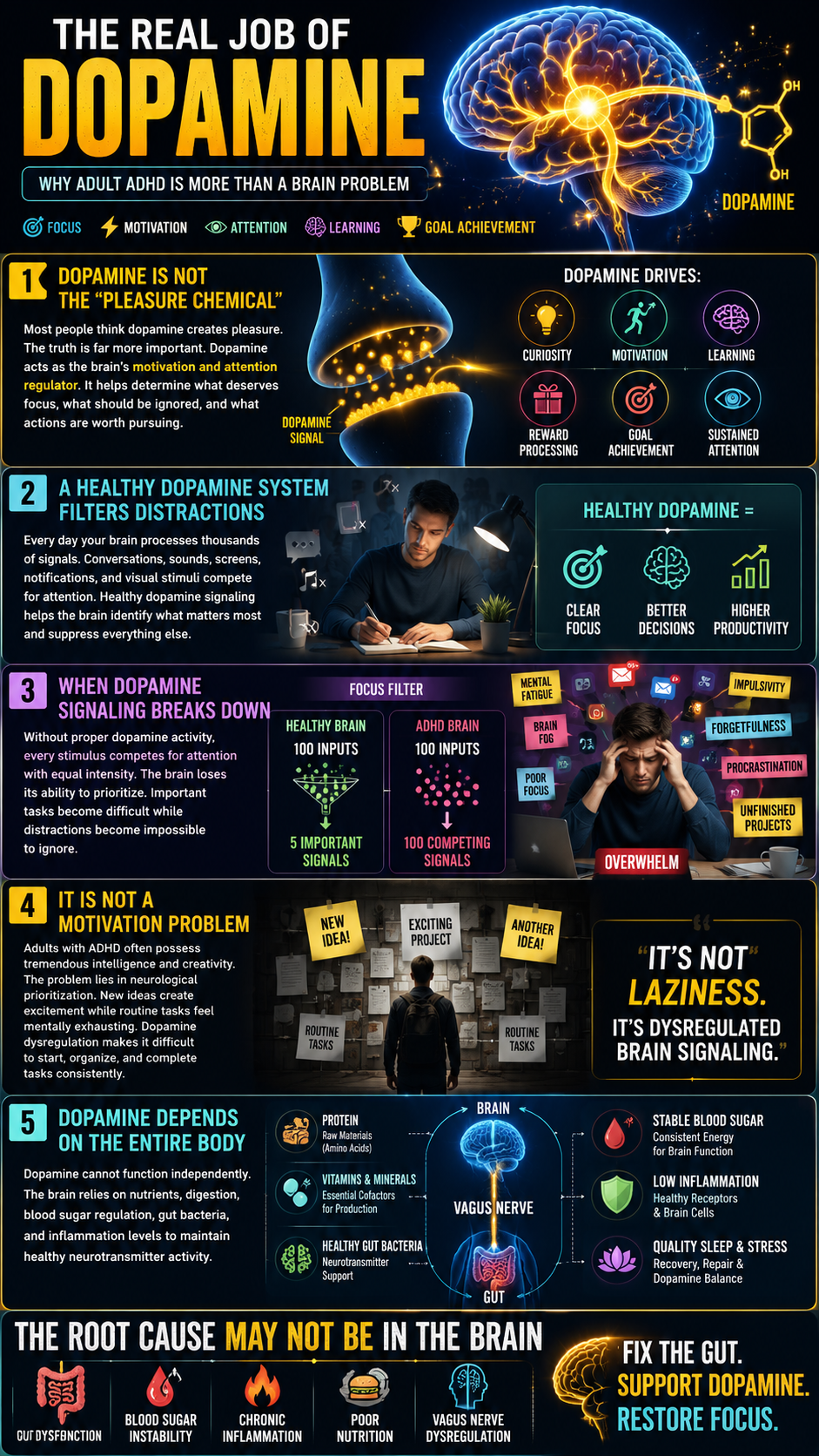
Adults with ADHD frequently describe feeling as though their minds never stop moving. Thoughts arrive rapidly and often disappear before completion. New ideas seem exciting while routine responsibilities feel unbearable. Many individuals begin dozens of projects yet finish very few. This pattern does not reflect laziness or lack of discipline. Instead, it reflects impaired neurological prioritization driven largely by dopamine dysregulation.
Unfortunately, dopamine does not operate independently. Every aspect of dopamine production depends upon factors occurring throughout the body. Amino acids from dietary protein serve as raw materials. Vitamins and minerals act as essential cofactors. Healthy gut bacteria participate in neurotransmitter regulation. Stable blood sugar supports consistent dopamine activity. Chronic inflammation interferes with dopamine receptor function. Any disruption within these systems can influence attention, focus, and motivation.
Where the Problem Actually Begins
Many experts continue searching for answers exclusively within the brain. Increasing evidence suggests that the origin of adult ADHD often begins elsewhere. The digestive system, immune system, and autonomic nervous system influence neurological function every minute of every day. Problems developing within these systems frequently manifest as brain-related symptoms.
Modern lifestyles create an environment that challenges neurological health from multiple directions simultaneously. Processed foods dominate many diets. Chronic stress activates survival pathways throughout the day. Sleep deprivation has become common. Environmental toxins continue accumulating within food, water, and air. Physical activity has declined while screen exposure continues rising. Each factor contributes to biological dysfunction capable of disrupting neurotransmitter balance.
The human body evolved under dramatically different conditions. Our ancestors consumed nutrient-dense foods, experienced natural light cycles, engaged in regular movement, and encountered far fewer environmental chemicals. Modern lifestyles create physiological stressors that the nervous system must continually adapt to. Over time, these adaptations can contribute to impaired attention, mood instability, cognitive decline, and symptoms commonly associated with ADHD.
Looking beyond the brain reveals a surprising reality. Many individuals suffering from attention problems also experience digestive complaints, fatigue, sleep disturbances, blood sugar instability, anxiety, food sensitivities, chronic inflammation, and hormonal imbalances. These seemingly unrelated symptoms often share common underlying mechanisms.
The Gut-Brain Axis and Adult ADHD
For decades, scientists viewed the digestive system primarily as a collection of organs responsible for processing food. Today, researchers recognize the gut as one of the most neurologically active systems in the human body. More than one hundred million neurons reside within the digestive tract. This vast neural network communicates continuously with the brain through chemical messengers, immune signals, hormones, and the vagus nerve.
The gut microbiome adds another layer of complexity. Trillions of bacteria inhabit the digestive tract, influencing nearly every aspect of human physiology. These microorganisms help regulate immune activity, nutrient absorption, inflammation, hormone production, and neurotransmitter metabolism. Changes within the microbiome can alter brain function in profound ways.
Several studies have identified distinct differences in gut bacterial populations among individuals diagnosed with ADHD. Researchers continue investigating the precise mechanisms involved, yet the patterns remain intriguing. Certain bacterial species appear capable of influencing dopamine pathways directly. Others affect serotonin production, stress resilience, and inflammatory responses.
When beneficial bacteria decline, harmful microbes often gain influence. This imbalance, known as dysbiosis, can trigger widespread consequences throughout the body. Digestive efficiency decreases. Nutrient absorption weakens. Inflammatory compounds increase. Immune activation accelerates. Neurotransmitter regulation becomes increasingly difficult. Eventually, the brain begins receiving distorted signals from the digestive system.
Adults struggling with ADHD frequently report chronic bloating, constipation, diarrhea, acid reflux, food sensitivities, or abdominal discomfort. Conventional medicine often treats these symptoms separately from neurological concerns. Functional approaches recognize them as potential clues pointing toward deeper physiological dysfunction.
How Leaky Gut Affects the Brain
One of the most important developments in neuroscience involves understanding the relationship between intestinal permeability and neurological health. The intestinal lining serves as a protective barrier separating the external environment from the bloodstream. Under ideal circumstances, this barrier allows nutrients to enter circulation while blocking harmful substances.
Various factors can compromise intestinal integrity. Processed foods, chronic stress, excessive alcohol consumption, environmental toxins, infections, medications, and inflammatory diets all contribute to increased intestinal permeability. Many practitioners refer to this condition as leaky gut syndrome.
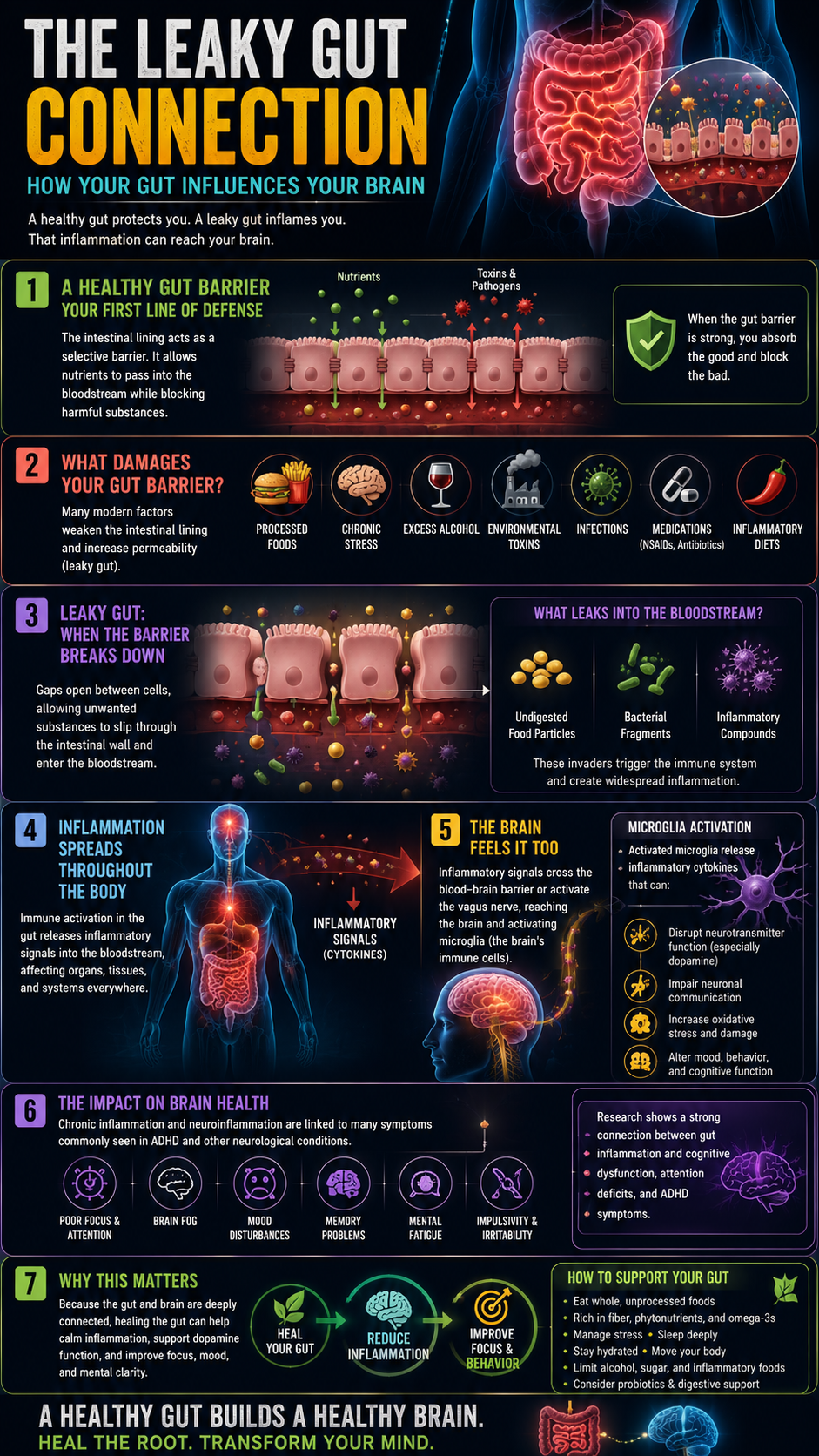
Once intestinal permeability increases, substances that normally remain confined within the digestive tract can enter circulation. Undigested food particles, bacterial fragments, and inflammatory compounds begin interacting with the immune system. The resulting immune activation often triggers widespread inflammation throughout the body.
Inflammation does not remain confined to the digestive system. Immune signals travel throughout circulation and eventually influence the brain. Specialized immune cells called microglia become activated and begin producing inflammatory cytokines. These compounds alter neurotransmitter function, impair neuronal communication, and interfere with dopamine signaling.
Research increasingly links neuroinflammation with cognitive dysfunction, attention deficits, brain fog, mood disturbances, and memory problems. Many symptoms commonly associated with ADHD may be amplified by inflammatory processes originating within the digestive tract. This perspective helps explain why dietary changes often influence concentration, behavior, and mental clarity.
The Vagus Nerve: The Missing Link
Among all structures involved in ADHD physiology, few receive less attention than the vagus nerve. This remarkable nerve serves as the primary communication highway connecting the brain with the digestive system. Signals travel continuously in both directions, providing real-time updates regarding digestion, inflammation, microbial activity, stress levels, and metabolic status.
Approximately eighty percent of vagal fibers carry information from the body toward the brain. This statistic surprises many people because it means the brain spends much of its time listening to the body rather than directing it. Every sensation arising from the digestive tract influences neurological function through vagal communication.
Healthy vagus nerve function promotes relaxation, emotional regulation, digestion, recovery, and cognitive flexibility. Poor vagal tone creates the opposite effect. Stress responses become exaggerated. Digestion slows. Inflammation increases. Sleep quality declines. Focus becomes more difficult to maintain.
Many adults with ADHD exhibit signs of autonomic nervous system imbalance. Their bodies remain trapped in a state of chronic fight-or-flight activation. Heart rates run higher than normal. Muscles remain tense. Relaxation feels difficult. Sleep becomes fragmented. Under these conditions, optimal dopamine regulation becomes nearly impossible.
The modern world bombards the nervous system with continuous stimulation. Notifications, deadlines, financial pressures, social media, and information overload create a state of persistent neurological arousal. Over time, chronic sympathetic activation suppresses vagal activity and disrupts communication throughout the gut-brain axis.
What Chronic Stress Does to Dopamine
Stress represents one of the most powerful forces affecting attention and cognitive performance. Acute stress serves an important purpose by enhancing survival during emergencies. Chronic stress creates a completely different outcome.
When stress becomes persistent, cortisol levels remain elevated for prolonged periods. Excess cortisol disrupts dopamine production, alters receptor sensitivity, impairs sleep, increases inflammation, and damages gut microbial diversity. Each effect contributes directly to worsening ADHD symptoms.
Many adults notice their concentration deteriorates dramatically during stressful periods. Tasks requiring minimal effort suddenly become overwhelming. Emotional regulation weakens. Motivation disappears. Memory becomes unreliable. These changes reflect measurable physiological shifts occurring within the nervous system.
Long-term stress also influences the structure of the brain itself. Research demonstrates that chronic cortisol exposure can affect regions involved in executive function, decision-making, and emotional control. While these changes may sound alarming, they also highlight the remarkable adaptability of the nervous system. Positive lifestyle interventions can help restore healthier neurological function over time.
Why Blood Sugar Matters More Than Most People Realize
The brain consumes an enormous amount of energy despite representing only a small percentage of total body weight. Stable blood sugar remains essential for optimal neurological performance. Unfortunately, modern dietary patterns often create dramatic glucose fluctuations throughout the day.
Highly processed carbohydrates trigger rapid increases in blood sugar followed by equally dramatic crashes. During these crashes, the brain experiences a temporary energy shortage. Concentration weakens. Irritability increases. Mental clarity declines. Cravings intensify. Many individuals mistakenly interpret these symptoms as evidence of worsening ADHD.
Repeated blood sugar fluctuations also increase inflammation and oxidative stress. Over time, insulin resistance may develop, further impairing neurological health. Several studies have linked metabolic dysfunction with cognitive decline, attention problems, and impaired executive function.
Adults struggling with ADHD frequently report significant improvements when they stabilize blood sugar through dietary changes. Consistent energy availability helps support dopamine regulation while reducing physiological stress throughout the nervous system.
Natural Strategies to Support Dopamine, Gut Health, and Vagal Tone
Recovery begins by addressing the biological systems influencing attention rather than focusing exclusively on symptoms. Nutrition forms the foundation of this process because every neurotransmitter depends upon nutrients derived from food. High-quality proteins provide amino acids necessary for dopamine synthesis. Healthy fats support neuronal membranes and brain communication. Micronutrients serve as essential cofactors for countless neurological reactions.
Sleep deserves equal attention because dopamine receptors undergo restoration during deep sleep cycles. Even modest sleep deprivation can impair focus, memory, decision-making, and emotional regulation. Establishing consistent sleep routines often produces noticeable cognitive improvements within days.
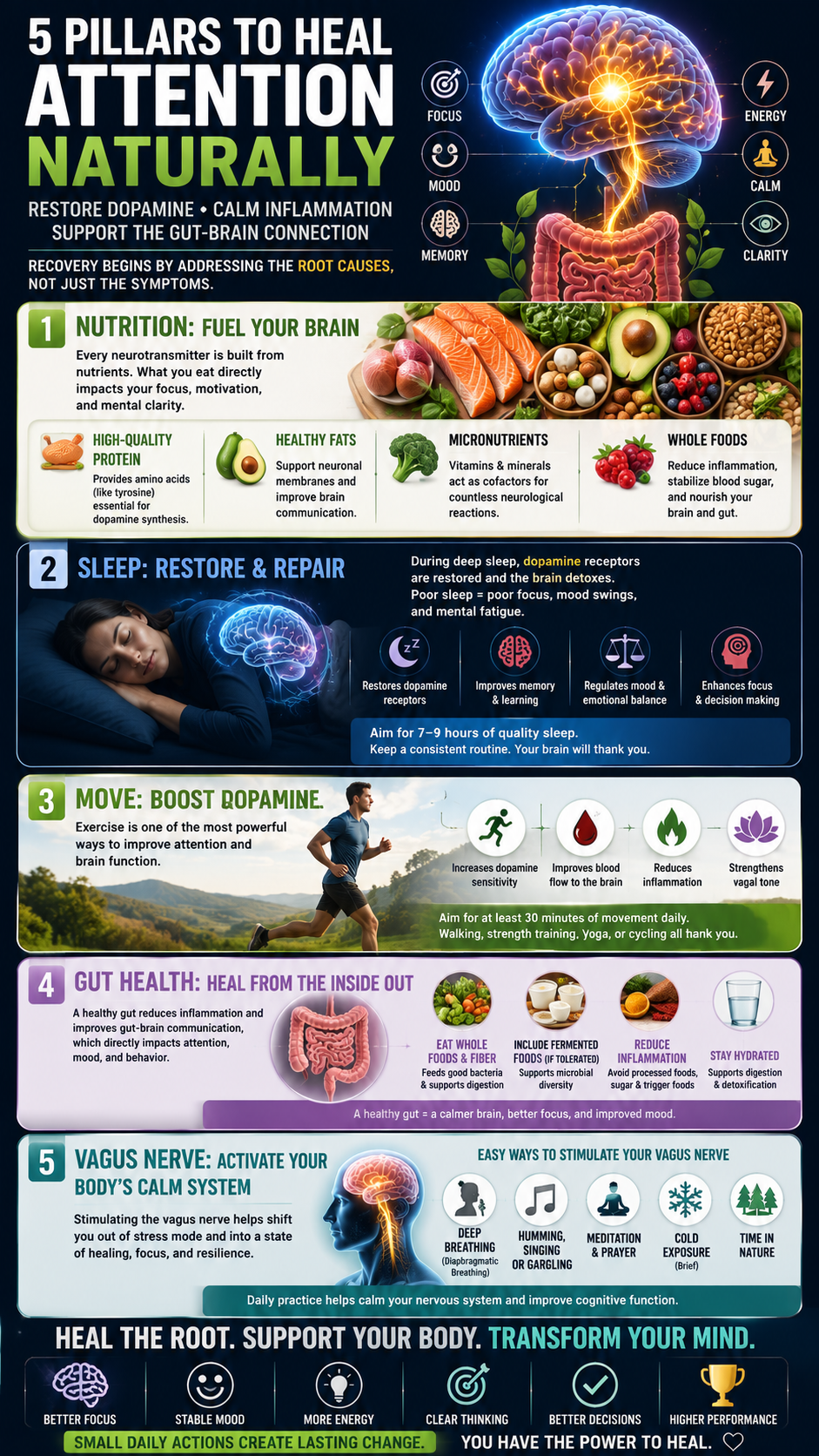
Movement also plays a critical role in neurological regulation. Exercise enhances dopamine sensitivity, improves blood flow, reduces inflammation, and strengthens vagal tone. Regular physical activity creates measurable benefits for attention, mood, and cognitive performance.
Gut health interventions should focus on reducing inflammation while supporting microbial diversity. Whole foods, adequate fiber, fermented foods when tolerated, and removal of inflammatory triggers can help restore healthier gut-brain communication. As digestive function improves, many individuals experience parallel improvements in mental clarity and concentration.
Specific vagus nerve exercises may further enhance neurological regulation. Deep diaphragmatic breathing, humming, singing, meditation, prayer, cold exposure, and time spent in nature all stimulate vagal activity. These practices help shift the body away from chronic fight-or-flight activation and toward a state more conducive to healing and cognitive performance.
The Future of Adult ADHD
Adult ADHD may represent far more than a simple neurotransmitter deficiency. Increasing evidence suggests that attention disorders emerge from complex interactions involving the brain, gut, immune system, metabolism, and nervous system. Dopamine remains important, but dopamine itself responds to signals originating throughout the body.
The future of ADHD care will likely involve a broader understanding of these interconnected systems. Instead of asking how to force the brain to focus, practitioners may increasingly investigate why attention became dysregulated in the first place. That shift in perspective changes everything.
When gut health improves, inflammation decreases, blood sugar stabilizes, sleep deepens, and vagal tone strengthens, the brain often responds favorably. Concentration improves. Motivation returns. Mental clarity increases. Emotional resilience grows stronger. These outcomes suggest that addressing root causes may provide opportunities that symptom-based approaches frequently overlook.
The human body functions as an integrated network rather than a collection of isolated organs. Adult ADHD offers a powerful example of this reality. The brain may express the symptoms, but the origins often extend far beyond the skull. Understanding those origins provides a roadmap toward restoring healthier neurological function and achieving lasting improvements in attention, focus, and cognitive performance.