
The Missing Link Behind the Autoimmune Disease Epidemic
Autoimmune disease has become one of the defining health crises of the twenty-first century. Rates of Hashimoto’s thyroiditis, rheumatoid arthritis, lupus, multiple sclerosis, psoriasis, Crohn’s disease, ulcerative colitis, celiac disease, and dozens of other autoimmune disorders continue to climb despite unprecedented advances in medical technology. Hospitals have become more sophisticated. Diagnostic testing has become more advanced. Pharmaceutical options have become more powerful. Yet autoimmune disease continues to affect more people each year. This troubling reality should force both patients and practitioners to ask an uncomfortable question. If modern medicine understands autoimmune disease so well, why does the epidemic continue to accelerate?
The answer may be found in a question that conventional medicine often fails to ask. What caused the immune system to begin attacking the body in the first place? Most patients receive explanations centered around genetics, family history, or immune dysfunction. While those factors may influence disease development, they rarely explain the root cause. Human genetics have remained relatively unchanged over the last several generations, yet autoimmune diseases have increased dramatically during that same period. Something in the modern environment has shifted. Something is interacting with the immune system in ways that previous generations rarely experienced. Functional medicine has spent decades investigating this connection and repeatedly arrives at the same conclusion. The foundation of autoimmune disease often begins long before symptoms appear and frequently starts within the lining of the digestive tract.
For decades, the gut was viewed primarily as a digestive organ responsible for breaking down food and absorbing nutrients. Today, researchers recognize that the digestive tract serves as one of the most important immune organs in the entire body. The gut acts as a sophisticated checkpoint between the outside world and the bloodstream. Every meal, every beverage, every environmental toxin, every microorganism, and every chemical compound entering the body must first pass through this critical barrier. When that barrier functions properly, it protects the body from harm while allowing essential nutrients to enter circulation. When that barrier becomes compromised, the consequences extend far beyond digestion. Chronic inflammation develops, immune confusion emerges, and the conditions necessary for autoimmune disease begin to take shape.
What Is Leaky Gut and Why Does It Matter?
Leaky gut, scientifically known as increased intestinal permeability, describes a breakdown in the protective lining of the digestive tract. The intestinal barrier consists of a single layer of cells connected by specialized proteins called tight junctions. These junctions act like security gates, carefully controlling what enters the bloodstream and what remains inside the digestive tract. Under healthy conditions, nutrients pass through while toxins, pathogens, and partially digested food particles remain confined within the intestinal lumen.
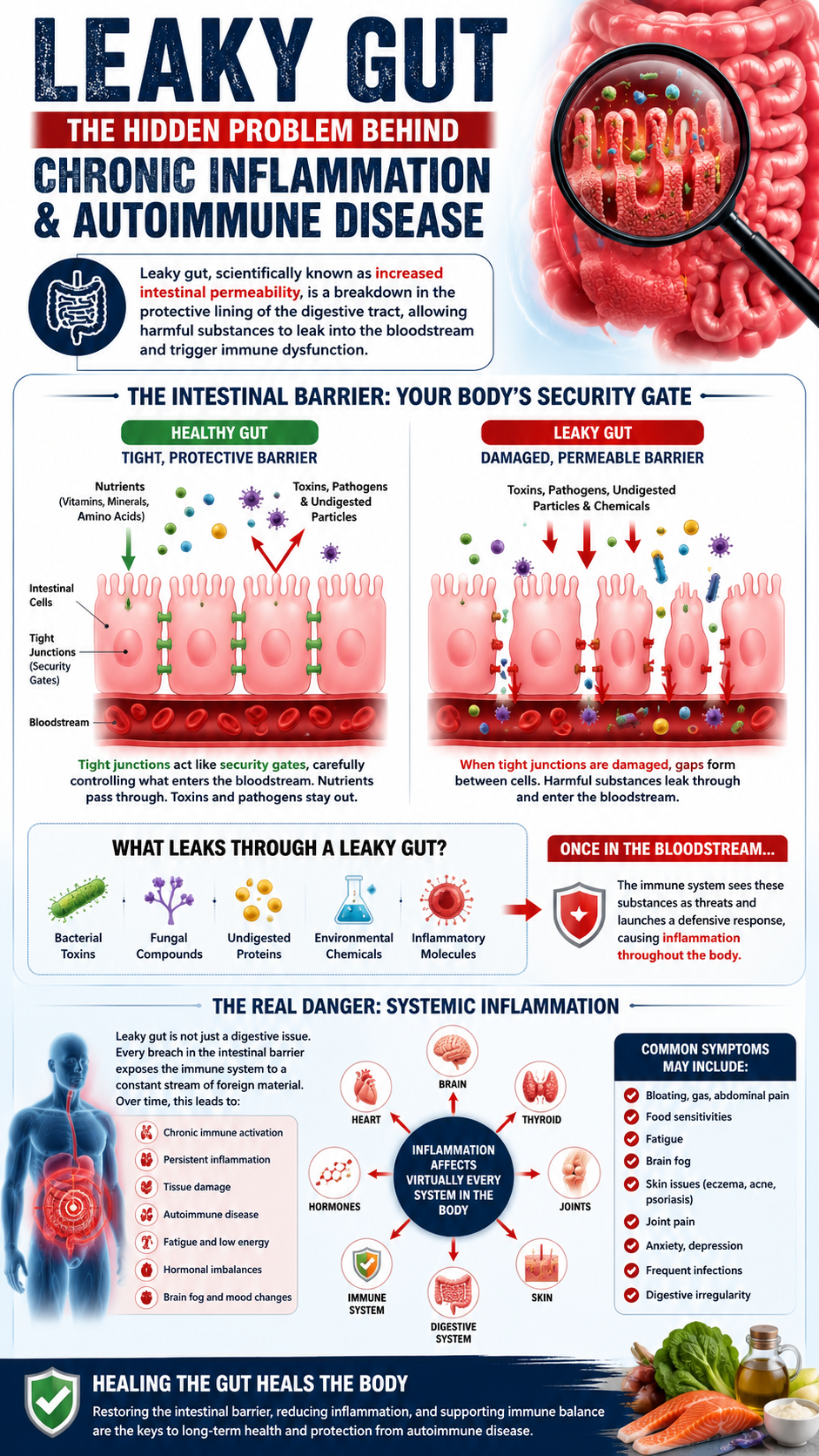
Problems arise when these tight junctions become damaged. Instead of functioning as a selective filter, the intestinal lining becomes increasingly porous. Tiny gaps develop between intestinal cells, allowing substances to cross into circulation that were never intended to enter the body. Bacterial toxins, fungal compounds, undigested proteins, environmental chemicals, and inflammatory molecules begin leaking through the intestinal wall. Once these substances enter the bloodstream, the immune system immediately recognizes them as threats and launches a defensive response.
Many people mistakenly believe leaky gut is merely a digestive issue associated with bloating, gas, or abdominal discomfort. While digestive symptoms commonly occur, the true danger lies in the systemic inflammation that follows. Every breach in the intestinal barrier exposes the immune system to a constant stream of foreign material. The immune system responds exactly as it was designed to respond. It attacks, defends, and produces inflammatory compounds intended to protect the body. Unfortunately, when this process occurs day after day and year after year, chronic inflammation becomes the new normal. The result is a state of ongoing immune activation that affects virtually every tissue in the body.
The Real Origin of Autoimmune Disease
One of the greatest misconceptions surrounding autoimmune disease is the belief that it begins in the organ being attacked. Patients with Hashimoto’s disease are told they have a thyroid problem. Individuals with rheumatoid arthritis are told they have a joint problem. Those suffering from psoriasis often believe they have a skin disorder. While symptoms certainly appear in these tissues, the site of symptoms is not always the site of origin. Functional medicine recognizes that autoimmune disease often begins long before symptoms appear and frequently develops far away from the organ ultimately affected.
The immune system does not wake up one morning and randomly decide to attack healthy tissue. Autoimmune disease develops through a series of events that gradually push the immune system toward dysfunction. Environmental triggers activate inflammatory pathways. Chronic stress alters immune regulation. Nutritional deficiencies weaken protective mechanisms. Toxic exposures increase oxidative stress. Microbial imbalances disrupt normal communication between the gut and immune system. Over time, these factors create a perfect storm that overwhelms the body’s ability to maintain immune tolerance.
Among all these contributing factors, intestinal permeability occupies a uniquely important position. A healthy gut barrier protects the immune system from constant exposure to foreign substances. A damaged gut barrier removes that protection. The immune system suddenly encounters proteins, toxins, and microbial fragments that it was never designed to see. As exposure increases, immune activity increases. As immune activity increases, inflammation spreads. As inflammation spreads, the risk of autoimmune disease rises dramatically.
Why Modern Life Is Destroying the Gut
The human digestive system evolved over thousands of years in an environment vastly different from the one people inhabit today. Modern lifestyles expose the body to a relentless barrage of factors that challenge intestinal integrity and promote inflammation. Many of these factors have become so common that society rarely recognizes them as threats.
Processed foods represent one of the most significant assaults on gut health. Grocery store shelves are filled with products containing refined sugars, artificial sweeteners, preservatives, emulsifiers, food colorings, flavor enhancers, and industrial seed oils. These ingredients did not exist in the diets of our ancestors. Research increasingly suggests that many food additives disrupt microbial balance and weaken the intestinal barrier. While consumers focus on calorie counts and macronutrient ratios, the chemical complexity of modern food often receives little attention despite its profound impact on digestive health.
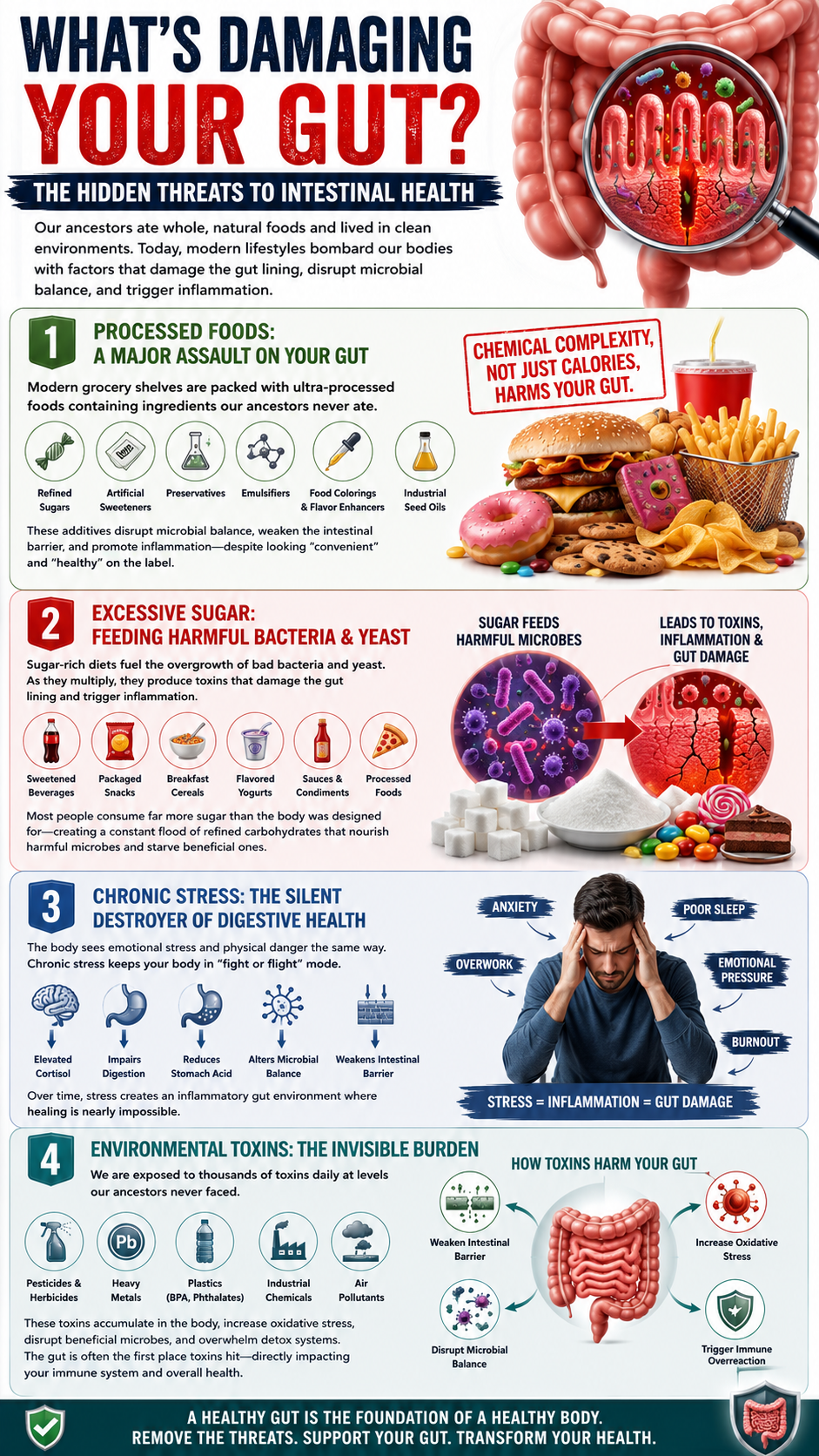
Excessive sugar consumption creates another major challenge. Harmful bacteria and yeast thrive on sugar-rich diets. As these organisms multiply, they produce toxins that damage the intestinal lining and fuel inflammation. The average person consumes far more sugar than the human body was designed to handle. Sweetened beverages, packaged snacks, breakfast cereals, flavored yogurts, sauces, and processed foods contribute to a constant flood of refined carbohydrates that nourish harmful microbes while starving beneficial bacteria.
Stress may be an even greater threat because its effects often go unnoticed. The body interprets emotional stress and physical danger through the same biological pathways. Elevated cortisol levels impair digestion, reduce stomach acid production, alter microbial balance, and weaken intestinal barrier function. Chronic stress transforms the digestive system into an inflammatory environment where healing becomes increasingly difficult. Many individuals attempt to improve their health through diet alone while overlooking the powerful influence of chronic psychological stress.
Environmental toxins add yet another layer of complexity. Modern society exposes individuals to pesticides, herbicides, heavy metals, plastics, industrial chemicals, and air pollutants at levels unprecedented in human history. These compounds accumulate within tissues, increase oxidative stress, disrupt microbial communities, and challenge the body’s detoxification systems. The digestive tract often becomes one of the first areas affected because it serves as a primary point of contact between environmental exposures and the immune system.
The Gut-Immune System Connection
Approximately seventy percent of the immune system resides within the gastrointestinal tract. This fact fundamentally changes how autoimmune disease should be understood. The gut is not merely connected to the immune system. The gut is one of the immune system’s most important command centers. Every day, immune cells within the digestive tract evaluate countless substances and determine whether they pose a threat or deserve tolerance.
When the intestinal barrier remains intact, this process occurs smoothly. Beneficial bacteria support immune balance. Nutrients enter circulation without triggering inflammation. Harmful organisms remain confined to the digestive tract. The immune system maintains a state of vigilance without becoming excessively reactive. A healthy gut creates a healthy immune response.
When intestinal permeability develops, that balance begins to collapse. Food proteins enter circulation before being fully digested. Bacterial toxins cross the intestinal barrier. Microbial fragments gain access to immune tissues. The immune system responds by increasing antibody production and inflammatory signaling. What began as a protective response gradually evolves into chronic immune activation. The body remains trapped in a cycle of inflammation that eventually contributes to tissue damage and autoimmune disease.
Molecular Mimicry: When the Immune System Loses Its Target
One of the most fascinating and dangerous mechanisms involved in autoimmune disease is molecular mimicry. This process occurs when foreign proteins resemble proteins naturally found within the human body. The immune system creates antibodies against the foreign invader, but those antibodies mistakenly attack healthy tissues that share similar structural characteristics.
Imagine a security system programmed to identify a specific threat. If innocent individuals closely resemble that threat, the system may begin targeting them as well. The immune system behaves similarly. Certain food proteins, bacterial compounds, and microbial fragments resemble tissues found within the thyroid gland, joints, nervous system, skin, pancreas, and digestive tract. Once the immune system becomes sensitized, collateral damage becomes increasingly likely.
Leaky gut accelerates this process by dramatically increasing exposure to foreign proteins. Every breach in the intestinal barrier creates another opportunity for immune confusion. Over time, antibody production intensifies, inflammation escalates, and autoimmune disease emerges. What appears to be an attack against the thyroid, joints, skin, or nervous system may actually represent the downstream consequence of a damaged intestinal barrier.
The Connection Between Leaky Gut and Hashimoto’s Disease
Hashimoto’s thyroiditis has become one of the most common autoimmune disorders worldwide. Millions of individuals struggle with fatigue, weight gain, depression, brain fog, constipation, hormonal imbalances, and declining thyroid function. Conventional treatment focuses primarily on replacing thyroid hormone after significant damage has already occurred. While hormone replacement may alleviate symptoms, it rarely addresses the underlying immune dysfunction driving thyroid destruction.
Researchers continue identifying strong connections between intestinal permeability and autoimmune thyroid disease. Many individuals with Hashimoto’s exhibit food sensitivities, microbial imbalances, nutrient deficiencies, and chronic intestinal inflammation. The immune system encounters foreign proteins crossing a compromised intestinal barrier and begins producing antibodies. Through molecular mimicry, those antibodies may eventually target thyroid tissue. As thyroid damage progresses, symptoms become increasingly severe.
Functional medicine practitioners often focus on restoring gut integrity because they recognize the importance of reducing immune activation. Supporting digestive health, addressing microbial imbalances, improving nutrient status, and reducing inflammatory triggers may help create an environment where immune regulation becomes possible. Although no single strategy works for every patient, gut restoration remains one of the most important considerations in autoimmune thyroid disease.
How Leaky Gut Affects the Brain, Hormones, and Metabolism
The consequences of intestinal permeability extend far beyond autoimmune disease. Chronic inflammation affects virtually every system in the body. The gut and brain maintain constant communication through the gut-brain axis, a sophisticated network involving nerves, hormones, immune signals, and microbial metabolites. When gut health deteriorates, brain function often suffers as well.
Inflammatory compounds originating in the digestive tract can influence neurotransmitter production and alter communication within the nervous system. Many individuals with leaky gut experience brain fog, difficulty concentrating, memory challenges, anxiety, mood changes, and reduced mental clarity. These symptoms are often dismissed as unrelated problems despite their close relationship to digestive health.
Hormonal balance also depends heavily on gut integrity. Chronic inflammation interferes with insulin signaling, thyroid function, adrenal regulation, and reproductive hormones. Many individuals struggling with stubborn weight gain, blood sugar instability, fatigue, and hormonal imbalances may unknowingly have underlying gut dysfunction contributing to their symptoms. The digestive system influences far more than nutrient absorption. It helps regulate the entire physiological landscape of the body.
Healing Leaky Gut Naturally at Home
Repairing the intestinal barrier requires removing the factors that continue causing damage while providing the body with the resources necessary for healing. Recovery rarely occurs through a single supplement or short-term intervention. Successful healing typically involves a comprehensive strategy that addresses diet, lifestyle, microbial balance, stress, sleep, and environmental exposures simultaneously.
Nutrition forms the foundation of intestinal repair. Whole foods provide the vitamins, minerals, amino acids, antioxidants, and healthy fats required for tissue regeneration. Fresh vegetables, quality proteins, healthy fats, herbs, spices, and nutrient-dense foods support cellular repair while reducing inflammatory burden. Processed foods, refined sugars, and artificial additives should be minimized because they often perpetuate the cycle of intestinal damage.
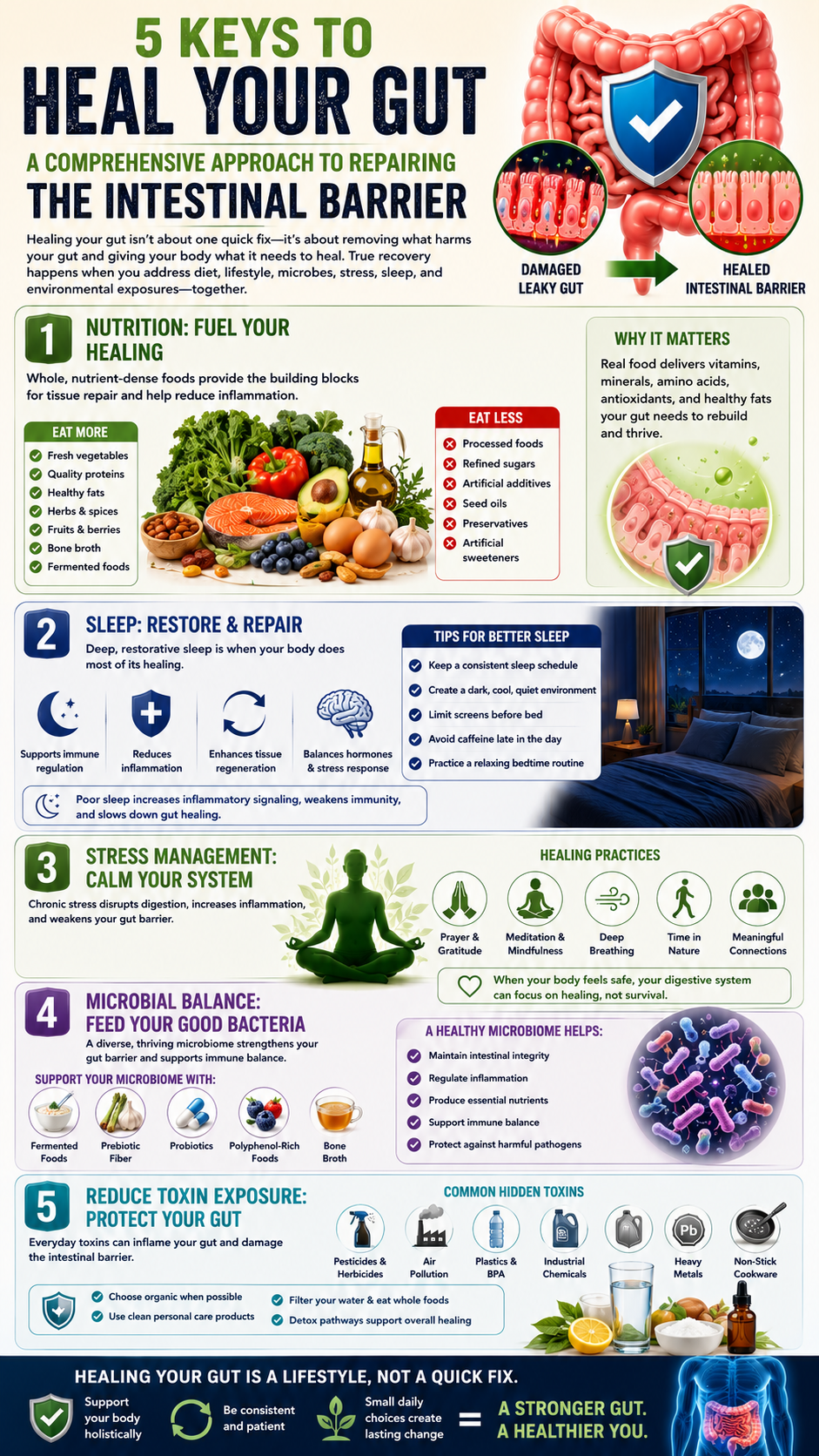
Sleep plays a critical role in recovery because the body performs much of its repair work during deep restorative sleep. Inadequate sleep increases inflammatory signaling, disrupts immune regulation, and impairs tissue regeneration. Individuals seeking to heal their gut must prioritize consistent, high-quality sleep as a non-negotiable component of their recovery plan.
Stress reduction remains equally important because chronic stress directly affects digestive function and immune activity. Practices such as prayer, meditation, deep breathing, walking outdoors, and meaningful social connection help regulate the nervous system and create conditions that support healing. The digestive tract functions best when the body feels safe rather than threatened.
Supporting microbial diversity further enhances recovery. Beneficial bacteria help maintain intestinal integrity, regulate inflammation, produce important nutrients, and support immune balance. A healthy microbiome strengthens the intestinal barrier and reduces the likelihood of future immune dysfunction. Every step that supports beneficial microbes also supports long-term digestive and immune health.
Conclusion
The growing epidemic of autoimmune disease cannot be fully understood without understanding the gut. The intestinal barrier serves as one of the body’s most important defenses, protecting the immune system from unnecessary exposure to foreign substances. When that barrier breaks down, inflammation spreads, immune confusion develops, and the risk of autoimmune disease rises dramatically. Conditions such as Hashimoto’s thyroiditis, rheumatoid arthritis, lupus, psoriasis, multiple sclerosis, and many others often share a common underlying thread that begins within the digestive tract.
Functional medicine recognizes that symptoms represent the final chapter of a story that often begins years earlier. Instead of asking which medication best suppresses the immune response, it asks what caused the immune response to become dysregulated in the first place. Increasingly, the evidence points toward intestinal permeability as one of the most important answers. By restoring gut integrity, reducing inflammation, supporting microbial balance, and addressing root causes, individuals may create an environment where healing becomes possible. The path toward better immune health often starts in the same place where autoimmune disease frequently begins. It starts with healing the gut.