
The Nail Fungus Industry Has Been Asking the Wrong Question
For decades, people have been told that nail fungus is a nail problem. That belief has fueled an enormous industry built around creams, ointments, oils, sprays, powders, medicated polishes, laser treatments, and prescription drugs. Every year, millions of people spend money attempting to eliminate what appears to be a simple fungal infection. Despite these efforts, recurring nail fungus remains one of the most stubborn and frustrating conditions affecting adults around the world.
The same story plays out repeatedly. Someone notices a yellow discoloration on a toenail. They begin applying creams or oils. They soak their feet in various solutions. They try home remedies recommended by friends and social media influencers. The nail appears slightly better for a period of time. Then the discoloration returns. The thickening returns. The brittleness returns. Eventually, many people conclude that they simply have not found the right product yet.
What if the problem is not that people are using the wrong treatment? What if the problem is that they are asking the wrong question?
Instead of asking how to kill the fungus, perhaps we should ask why the fungus continues finding an opportunity to grow. That question changes the entire conversation. It shifts attention away from the nail itself and toward the biological environment that may be influencing the body’s ability to maintain healthy tissues and microbial balance.
Understanding What Nail Fungus Really Is
Nail fungus, known medically as onychomycosis, occurs when fungal organisms colonize the nail plate, nail bed, or surrounding tissues. These organisms can alter the structure of the nail, leading to thickening, discoloration, brittleness, distortion, and separation from the nail bed. In some cases, discomfort and difficulty walking may develop.
Most discussions stop at this point. The fungus is identified, treatment options are discussed, and the condition is viewed as a localized problem. Yet this explanation leaves a major question unanswered. Why do some individuals struggle with recurring fungal infections while others remain unaffected despite frequent exposure?
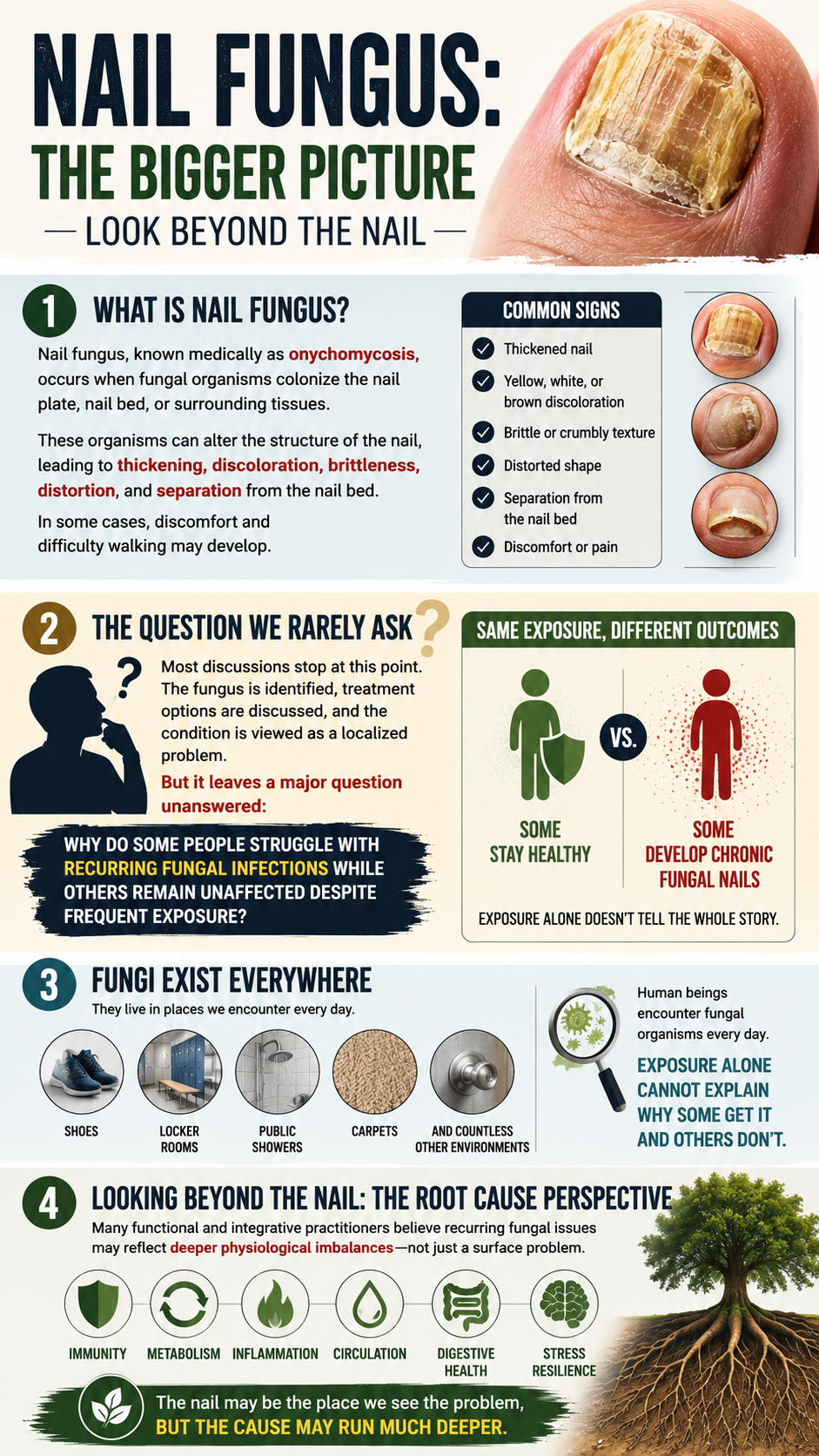
Fungi exist everywhere. They live in shoes, locker rooms, public showers, carpets, and countless other environments. Human beings encounter fungal organisms every day. Exposure alone cannot explain why one person develops chronic fungal nails while another does not.
This observation has led many functional and integrative practitioners to explore a broader perspective. They believe recurring fungal issues may sometimes reflect deeper physiological imbalances involving immunity, metabolism, inflammation, circulation, digestive health, and stress resilience.
Why Surface Treatments Often Produce Temporary Results
Many individuals spend years applying topical solutions to their nails. They use oils, creams, powders, and soaking treatments with varying degrees of success. Some experience temporary improvement. Others notice little change at all. This pattern has encouraged a growing number of practitioners to question whether recurring nail fungus should be viewed solely as a surface issue.
The nail itself presents a challenge. It consists of dense layers of keratin designed to protect underlying tissues. This structure makes penetration difficult for many topical substances. Even when topical products reach the target area, another problem may remain. The internal conditions that contributed to the recurrence may still exist.
A useful analogy involves mold inside a home. Scrubbing visible mold may improve appearance temporarily. However, if moisture remains present behind the walls, the mold often returns. The mold is visible. The moisture problem remains hidden. Some practitioners believe recurring nail fungus follows a similar pattern. The fungus becomes visible while deeper contributors remain unnoticed.
This perspective does not suggest that topical treatments never help. Rather, it proposes that focusing exclusively on the nail may overlook factors that influence long-term outcomes.
The Functional Medicine Perspective on Recurring Nail Fungus
Functional medicine differs from conventional medicine in one important way. It focuses heavily on understanding why a condition developed rather than focusing exclusively on symptom management. This approach encourages practitioners to investigate underlying factors that may influence the body’s ability to maintain balance.
When evaluating recurring fungal conditions, functional practitioners frequently examine immune health, digestive function, blood sugar regulation, inflammatory burden, sleep quality, nutrient status, stress physiology, and environmental exposures. They view the body as an interconnected system rather than a collection of isolated parts.
From this perspective, the nail may represent the final destination of a process that began elsewhere. The visible fungal infection becomes a clue rather than the entire story. Exploring that story may reveal opportunities to improve overall health while supporting healthier tissues.
The Gut Health Theory Behind Chronic Fungal Issues
One theory frequently discussed within functional medicine involves the relationship between digestive health and immune resilience. Researchers continue discovering important connections between the gastrointestinal tract and the immune system. Approximately seventy percent of immune tissue associates with the digestive tract, making gut health a major influence on overall immune function.
Supporters of this perspective suggest that digestive dysfunction may contribute to chronic inflammatory activity and impaired immune regulation. They believe these changes may reduce the body’s ability to maintain microbial balance in various tissues, including the skin and nails.
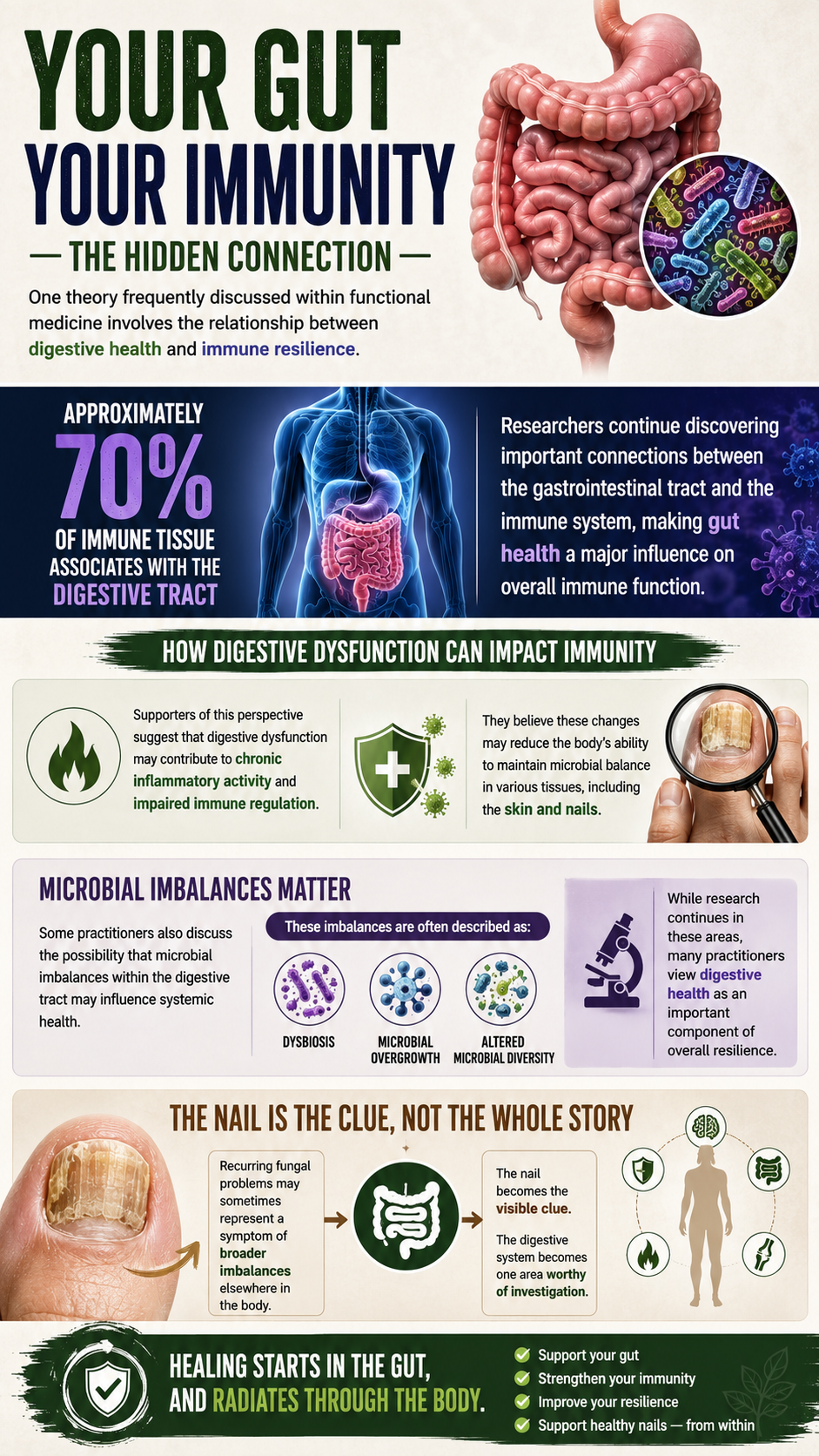
Some practitioners also discuss the possibility that microbial imbalances within the digestive tract may influence systemic health. These imbalances are often described using terms such as dysbiosis, microbial overgrowth, or altered microbial diversity. While research continues in these areas, many practitioners view digestive health as an important component of overall resilience.
According to this theory, recurring fungal problems may sometimes represent a symptom of broader imbalances occurring elsewhere in the body. The nail becomes the visible clue. The digestive system becomes one area worthy of investigation.
Biofilms and Chronic Microbial Communities
Another concept frequently discussed within functional medicine involves biofilms. Biofilms are organized communities of microorganisms surrounded by protective structures. Scientists have identified biofilms in numerous chronic infections and microbial ecosystems.
These communities function almost like microscopic cities. Microorganisms communicate with one another, exchange resources, and develop protective mechanisms that enhance survival. Researchers continue studying their role in chronic health conditions.
Some functional practitioners believe biofilms may contribute to recurring microbial issues because they can make certain organisms more difficult to eliminate. They suggest that focusing exclusively on visible symptoms may fail to address larger microbial ecosystems that influence long-term outcomes.
Although much remains to be learned about biofilms, the concept highlights an important principle. Chronic health conditions often involve complexity. Rarely does a single factor explain every symptom. Multiple systems frequently interact to produce the final outcome.
The Nervous System Connection
One of the most overlooked areas of health involves the autonomic nervous system. This system regulates digestion, circulation, hormone production, immune activity, inflammatory responses, and tissue repair. Many functional practitioners believe chronic stress can significantly influence these systems.
When the body remains in a prolonged stress response, physiological priorities change. Resources shift toward survival rather than recovery. Sleep quality often declines. Digestive efficiency may decrease. Inflammatory activity can increase. Immune regulation may become less efficient.
Some practitioners refer to these changes collectively as nervous system dysregulation. They suggest that prolonged stress may contribute to a biological environment that makes recovery more difficult. While this does not mean stress directly causes nail fungus, it may influence several systems involved in resilience and repair.
This theory helps explain why some individuals experience improvement in multiple health areas after addressing chronic stress. Better sleep, improved digestion, enhanced energy levels, and stronger immune function often occur together because these systems remain interconnected.
What Recurring Nail Fungus May Be Telling You
Recurring nail fungus may serve as more than a cosmetic inconvenience. It may function as a signal encouraging a broader examination of health. The condition itself may not be dangerous, but the factors contributing to recurrence may deserve attention.
Many people struggling with recurring fungal issues also report fatigue, digestive complaints, poor sleep, weight challenges, chronic stress, and inflammatory symptoms. These patterns have encouraged functional practitioners to look beyond the nail and investigate the bigger picture.
The body often communicates through symptoms. A yellow nail may seem insignificant compared with more serious conditions. Yet symptoms frequently appear long before major disease develops. Paying attention to these signals may provide valuable insight into areas requiring support.
How to Support Health at Home
Whether one approaches recurring nail fungus through a conventional or functional lens, supporting overall health remains beneficial. Nutrition provides a logical starting point. Whole foods rich in vitamins, minerals, antioxidants, and quality proteins support tissue repair and immune function. Reducing highly processed foods and excessive sugar intake may help support metabolic health and inflammatory balance.
Movement represents another essential strategy. Walking, strength training, cycling, and swimming improve circulation throughout the body. Better circulation supports oxygen delivery, nutrient transport, and tissue maintenance. Healthy nails depend upon healthy circulation.

Sleep deserves equal attention. During deep sleep, the body performs critical repair processes. Hormones become regulated, tissues recover, and immune surveillance improves. Consistent sleep habits support multiple systems involved in resilience.
Stress management also plays an important role. Prayer, meditation, breathing exercises, time outdoors, meaningful relationships, and physical activity may help improve nervous system regulation. These practices support recovery rather than merely reducing emotional stress.
Digestive health should not be overlooked. Hydration, nutrient-dense foods, adequate fiber intake, and attention to digestive symptoms may support overall wellness. Individuals experiencing persistent digestive concerns may benefit from discussing those issues with a qualified healthcare professional.
Looking Beyond the Nail
The most important lesson from recurring nail fungus may have little to do with the nail itself. Human health operates through interconnected systems. Digestion influences immunity. Immunity affects microbial balance. Stress impacts circulation. Sleep influences recovery. Every system affects the others.
A recurring fungal nail may therefore represent more than a fungal infection. It may serve as a reminder that health extends beyond visible symptoms. Exploring the broader picture can reveal opportunities to improve resilience, energy, recovery, and overall well-being.
The fungus may be visible. The larger story may not be. Understanding that possibility encourages a deeper conversation about health, one that moves beyond treating symptoms and begins exploring the factors that influence long-term wellness.