
Most people struggling with weight gain, fatigue, blood sugar problems, and stubborn belly fat assume the cause must be poor diet or lack of exercise. They are told to simply eat less and move more, yet millions of people follow that advice and still find their metabolism slowing down year after year.
What many people do not realize is that modern life exposes us to thousands of chemicals every day. These compounds are found in food, water, household products, plastics, pesticides, and even the air we breathe. Many of them are known as “obesogens” or metabolic disruptors because they interfere with the body’s natural ability to regulate hormones, burn fat, and maintain healthy energy production.
Scientific research over the last two decades has shown that certain toxins can disrupt thyroid signaling, damage mitochondria, impair insulin sensitivity, and block the body’s detoxification pathways. When these systems become compromised, the metabolism begins to slow, inflammation increases, and fat storage becomes easier than fat burning.
Understanding these hidden metabolic disruptors is one of the most important steps toward restoring energy, improving metabolic health, and allowing the body to heal itself naturally.
Below are five everyday toxins that quietly sabotage metabolism and what can be done to reduce their impact.
1. Plastic Chemicals and Endocrine Disruptors

Plastics have become so common in modern life that most people never question their safety. Food containers, water bottles, packaging materials, grocery bags, and even receipts often contain chemical compounds capable of interfering with human hormones.
One of the most well-known chemicals in plastics is Bisphenol-A (BPA). BPA and similar compounds such as BPS and phthalates act as endocrine disruptors, meaning they mimic or block hormones inside the body. Because hormones regulate metabolism, thyroid function, and fat storage, even small amounts of these chemicals can create widespread metabolic consequences.
Research published in Environmental Health Perspectives has demonstrated that BPA exposure is associated with increased risk of obesity, insulin resistance, and metabolic syndrome. These chemicals can bind to estrogen receptors, alter thyroid signaling, and disrupt normal insulin regulation. When these hormonal signals become distorted, the body becomes more likely to store fat and less capable of burning it.
Plastic chemicals also contribute to inflammation and oxidative stress. They interfere with mitochondrial function, which reduces the body’s ability to produce cellular energy efficiently. Over time this can lead to chronic fatigue, brain fog, and difficulty maintaining a healthy weight.
Reducing exposure begins with simple changes such as avoiding plastic food containers, never heating food in plastic, using glass or stainless steel water bottles, and choosing fresh foods over heavily packaged products. Even small reductions in plastic exposure can significantly reduce the body’s toxic burden.
2. Pesticides and Herbicides in Food

Modern agriculture relies heavily on chemical pesticides and herbicides designed to kill weeds, insects, and fungi. While these compounds protect crops from pests, they also leave residues on the foods people eat every day.
One of the most widely used herbicides in the world is glyphosate, commonly associated with weed-control products used in industrial farming. Glyphosate residues are now detectable in grains, fruits, vegetables, and even drinking water.
Scientific evidence suggests glyphosate can disrupt the gut microbiome, which plays a critical role in metabolism. The gut microbiome regulates nutrient absorption, immune function, and inflammatory balance. When beneficial bacteria are damaged by chemical exposure, metabolic health often declines.
Glyphosate may also interfere with mitochondrial function and impair detoxification pathways in the liver. The liver is responsible for processing hormones, breaking down toxins, and regulating metabolic signals. When liver function becomes compromised, fat metabolism slows and inflammation increases.
Pesticides have also been associated with increased risk of insulin resistance and obesity in several epidemiological studies. Chronic low-dose exposure appears to alter metabolic signaling and contribute to weight gain even when caloric intake remains unchanged.
Choosing organic foods when possible, washing produce thoroughly, and prioritizing whole unprocessed foods can significantly reduce pesticide exposure and support healthier metabolic function.
3. Heavy Metals

Heavy metals such as mercury, lead, cadmium, and arsenic have long been recognized as toxic to the human body. Unfortunately, these metals continue to enter the body through contaminated water, industrial pollution, dental materials, seafood, and certain processed foods.
Unlike many chemicals that break down over time, heavy metals can accumulate in tissues for decades. They often become stored in the brain, liver, kidneys, and fatty tissue, where they interfere with cellular function.
Heavy metals are particularly damaging to the mitochondria, the tiny structures responsible for generating energy inside each cell. When mitochondrial function becomes impaired, energy production drops and metabolism slows. This can manifest as chronic fatigue, poor exercise tolerance, and difficulty losing weight.
Mercury and lead have also been shown to interfere with thyroid hormone signaling. The thyroid gland regulates metabolic rate throughout the body. When heavy metals disrupt thyroid function, metabolism can slow dramatically.
Additionally, heavy metals promote chronic inflammation and oxidative stress. These processes damage tissues, impair insulin sensitivity, and contribute to metabolic disorders such as diabetes and cardiovascular disease.
Supporting the body’s natural detoxification pathways through proper nutrition, hydration, and liver support is essential for reducing heavy metal burden and restoring metabolic health.
4. Tap Water Contaminants
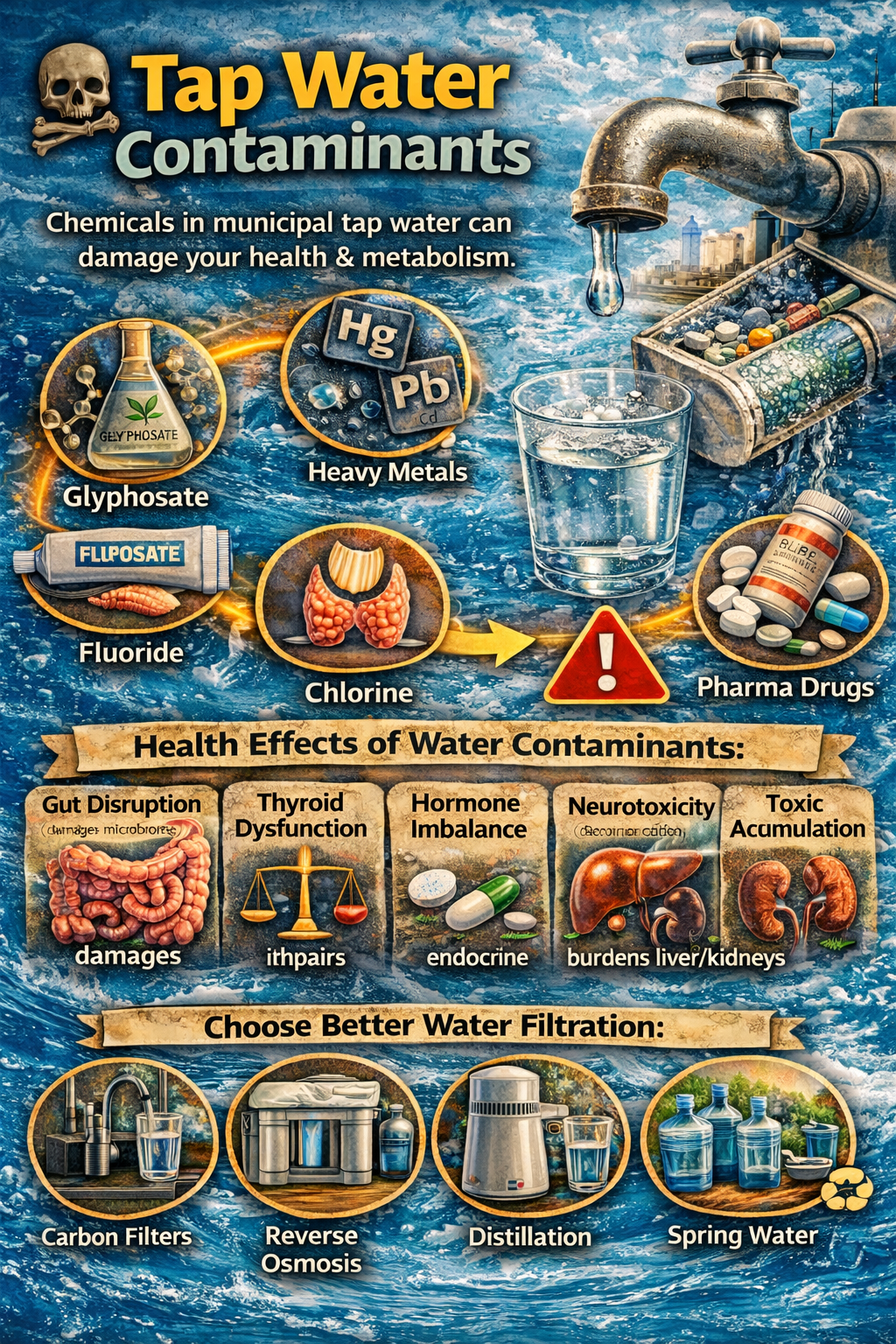
Water is the most essential nutrient the body requires, yet the quality of municipal tap water varies dramatically depending on location. Many water supplies contain a mixture of disinfectants, industrial contaminants, pharmaceutical residues, and heavy metals.
Common substances found in tap water include chlorine, chloramine, fluoride, pesticide residues, and trace pharmaceuticals. While these compounds are often present in small concentrations, long-term exposure can place significant stress on the body’s detoxification systems.
Chlorine and chloramine are used to disinfect municipal water supplies, but they can also disrupt the gut microbiome when consumed regularly. As previously discussed, a healthy microbiome is essential for maintaining metabolic balance and controlling inflammation.
Fluoride exposure has also been associated with altered thyroid function in several studies. Because thyroid hormones regulate metabolic rate, disruptions in thyroid signaling can contribute to fatigue, weight gain, and hormonal imbalance.
Industrial pollutants and pharmaceutical residues can further increase toxic burden on the liver and kidneys. Over time this burden may slow the body’s ability to process hormones, regulate blood sugar, and maintain healthy metabolic signaling.
Investing in high-quality water filtration systems is one of the most effective steps individuals can take to reduce their daily toxin exposure.
5. Ultra-Processed Food Additives

Ultra-processed foods dominate the modern diet. These products are engineered for taste, convenience, and long shelf life, but they often contain a long list of artificial additives, preservatives, flavor enhancers, and chemical stabilizers.
Many of these compounds have been linked to metabolic disturbances. Artificial sweeteners, for example, were originally introduced as a weight-loss tool. However, research has shown that certain sweeteners may alter the gut microbiome and impair glucose tolerance.
Preservatives and food dyes may also contribute to inflammation and oxidative stress. Chronic inflammation is a key driver of metabolic dysfunction and plays a role in conditions such as insulin resistance, obesity, and cardiovascular disease.
Ultra-processed foods also tend to be highly refined and stripped of fiber and essential nutrients. Without adequate nutrients, the body struggles to perform essential detoxification processes that protect metabolic health.
The most effective strategy for avoiding these additives is focusing on whole foods—fresh vegetables, clean proteins, healthy fats, and minimally processed ingredients. These foods support mitochondrial function, improve insulin sensitivity, and provide the nutrients necessary for proper detoxification.
Restoring Metabolic Health
Metabolism is not simply determined by calories or exercise. It is deeply influenced by hormones, mitochondrial function, gut health, detoxification capacity, and environmental exposures.
The modern world introduces thousands of chemicals that the human body was never designed to handle. When these substances accumulate, they can interfere with the biological systems responsible for maintaining energy balance and metabolic efficiency.
Reducing toxin exposure, supporting detoxification pathways, and restoring proper nervous system regulation allows the body to function the way it was designed to function. When these systems are restored, metabolism often begins to normalize, energy improves, and the body regains its ability to heal itself.
True health is not achieved by suppressing symptoms. It comes from removing interference and restoring the body’s natural ability to regulate itself.