
The Strange Economics Of The Human Body
A cooler packed with ice races through the night in the cargo hold of a medical jet. Inside rests a human heart.
Across state lines, an operating room waits in silence. Surgeons stand beside a patient whose chest has already been opened. Machines breathe for him. Monitors pulse rhythmically in the darkness. Every minute matters. The organ inside that cooler represents hope, desperation, modern science, and an astonishing amount of money.
The average heart transplant procedure in the United States can generate well over a million dollars in billed medical costs once surgery, transportation, procurement, intensive care, medications, specialists, and long-term follow-up are included. Entire industries mobilize around the movement of a single organ from one body to another.
And yet the question few people ever stop to ask is this:
What is the actual financial value of the human body?
Not emotionally. Not spiritually. Not philosophically. Economically.
If every usable component of the human body were assigned a value—from blood plasma to corneas, skin grafts to bone marrow, kidneys to ligaments—what would a human being be worth? The answer is unsettling.
Depending on how those calculations are made, some estimates place the cumulative medical and biological value of a single healthy human body in the millions of dollars. Certain speculative calculations climb dramatically higher when advanced pharmaceutical products, transplant markets, tissue engineering, and research-grade biological materials are included.
The Billion Dollar Biological Industry
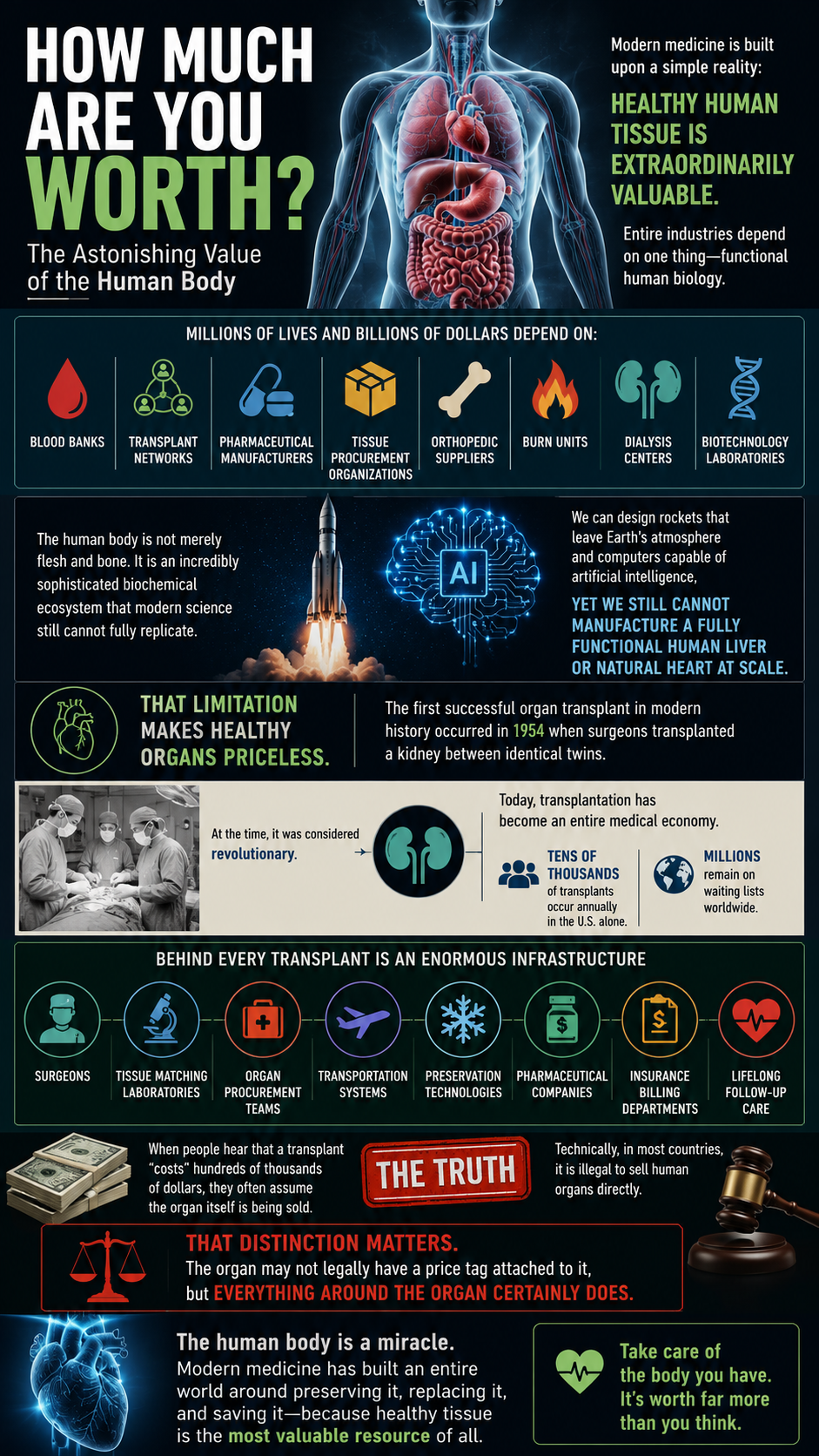
Modern medicine is built upon a simple reality: healthy human tissue is extraordinarily valuable.
Blood banks, transplant networks, pharmaceutical manufacturers, tissue procurement organizations, orthopedic suppliers, burn units, dialysis centers, and biotechnology laboratories all depend upon one thing—functional human biology.
The human body is not merely flesh and bone. It is an incredibly sophisticated biochemical ecosystem that modern science still cannot fully replicate. We can design rockets that leave Earth’s atmosphere and computers capable of artificial intelligence, yet we still cannot manufacture a fully functional human liver or natural heart at scale.
That limitation makes healthy organs priceless.
The first successful organ transplant in modern history occurred in 1954 when surgeons transplanted a kidney between identical twins. At the time, it was considered revolutionary. Today, transplantation has become an entire medical economy. Tens of thousands of organ transplants occur annually in the United States alone, while millions remain on waiting lists worldwide.
Behind every transplant lies an enormous infrastructure:
- surgeons,
- tissue matching laboratories,
- organ procurement teams,
- transportation systems,
- preservation technologies,
- pharmaceutical companies,
- insurance billing departments,
- and lifelong follow-up care.
When people hear that a transplant “costs” hundreds of thousands of dollars, they often assume the organ itself is being sold. Technically, in most countries, it is illegal to sell human organs directly. Yet the systems surrounding those organs generate extraordinary amounts of money.
That distinction matters. The organ may not legally have a price tag attached to it, but everything around the organ certainly does.
Your Body Is More Valuable Than You Think
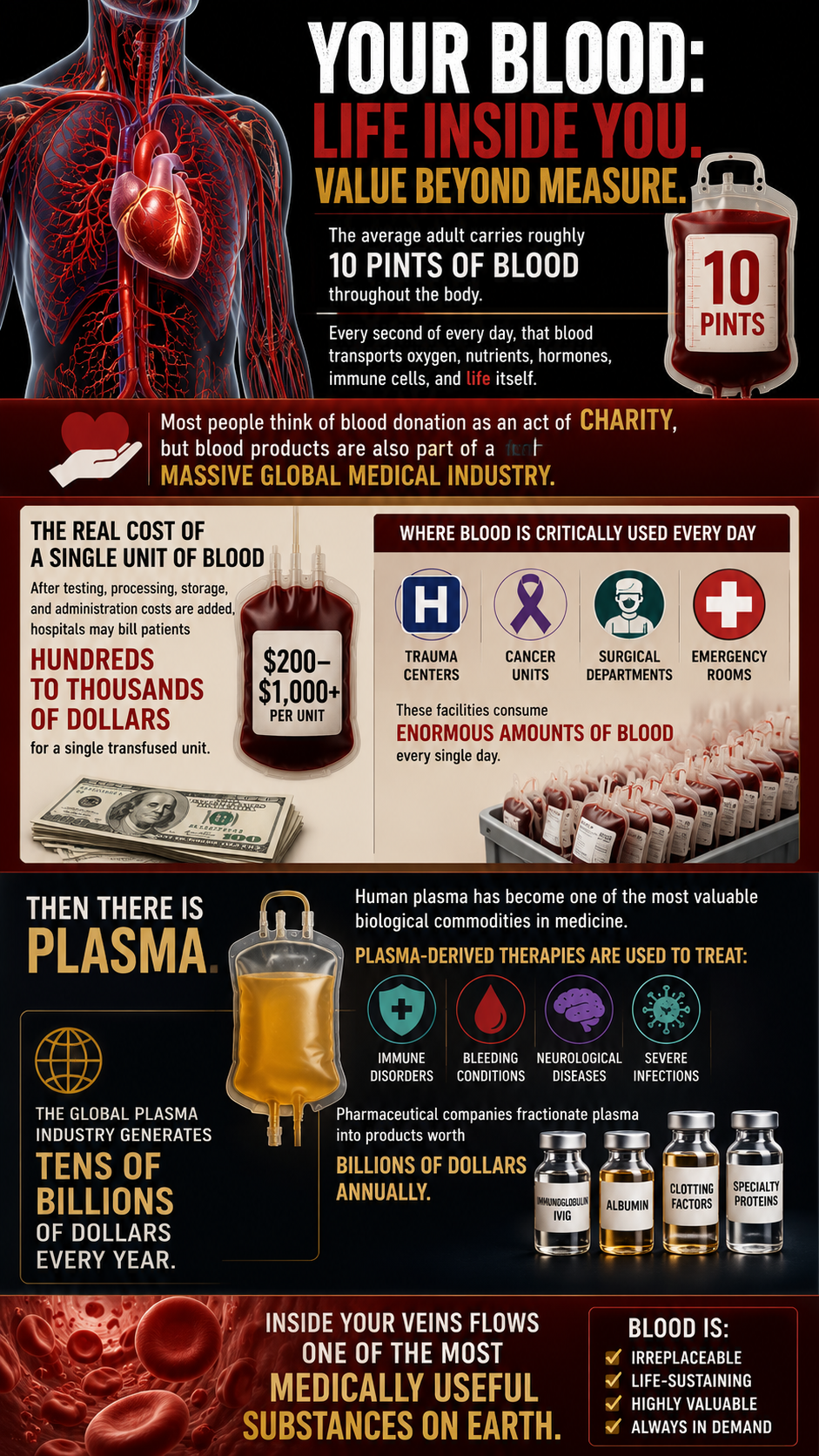
The average adult carries roughly 10 pints of blood throughout the body. Every second of every day, that blood transports oxygen, nutrients, hormones, immune cells, and life itself.
Most people think of blood donation as an act of charity, but blood products are also part of a massive global medical industry.
Hospitals may bill patients hundreds or even thousands of dollars for a single transfused unit after testing, processing, storage, and administration costs are added. Trauma centers, cancer units, surgical departments, and emergency rooms consume enormous amounts of blood daily.
Then there is plasma.
Human plasma has become one of the most valuable biological commodities in medicine. Plasma-derived therapies are used to treat immune disorders, bleeding conditions, neurological diseases, and severe infections. Pharmaceutical companies fractionate plasma into products worth billions annually.
The global plasma industry generates tens of billions of dollars every year.
Inside your veins flows one of the most medically useful substances on Earth.
Skin: The Organ Nobody Is Talking About
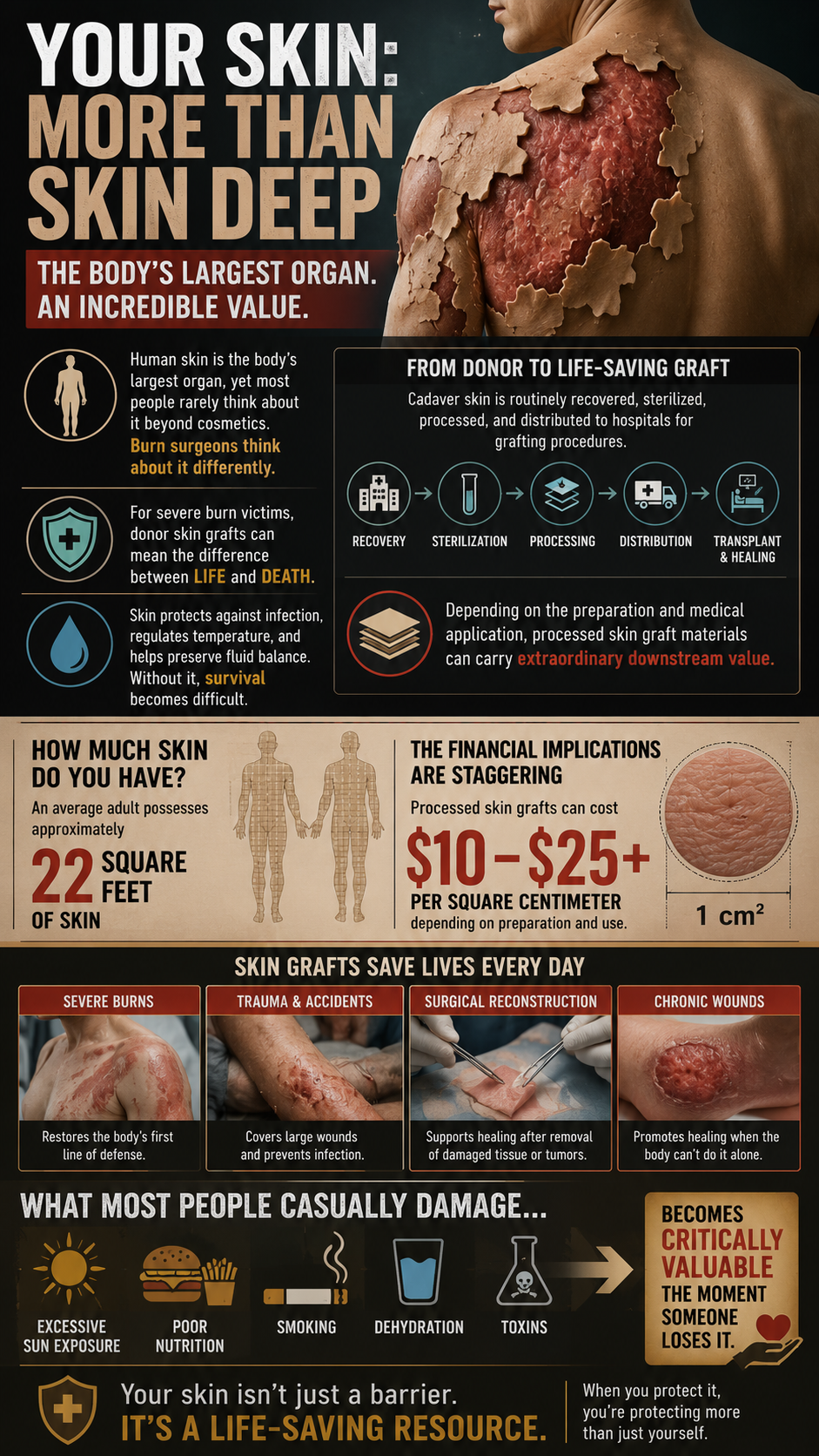
Human skin is the body’s largest organ, yet most people rarely think about it beyond cosmetics. Burn surgeons think about it differently.
For severe burn victims, donor skin grafts can mean the difference between life and death. Skin protects against infection, regulates temperature, and helps preserve fluid balance. Without it, survival becomes difficult.
Cadaver skin is routinely recovered, sterilized, processed, and distributed to hospitals for grafting procedures. Depending on the preparation and medical application, processed skin graft materials can carry extraordinary downstream value.
An average adult possesses approximately 22 square feet of skin. The financial implications are staggering.
What most people casually damage through excessive sun exposure, poor nutrition, smoking, dehydration, and toxins becomes critically valuable the moment someone loses it.
Bones, Tendons & The Hidden Marketplace Inside Your Body
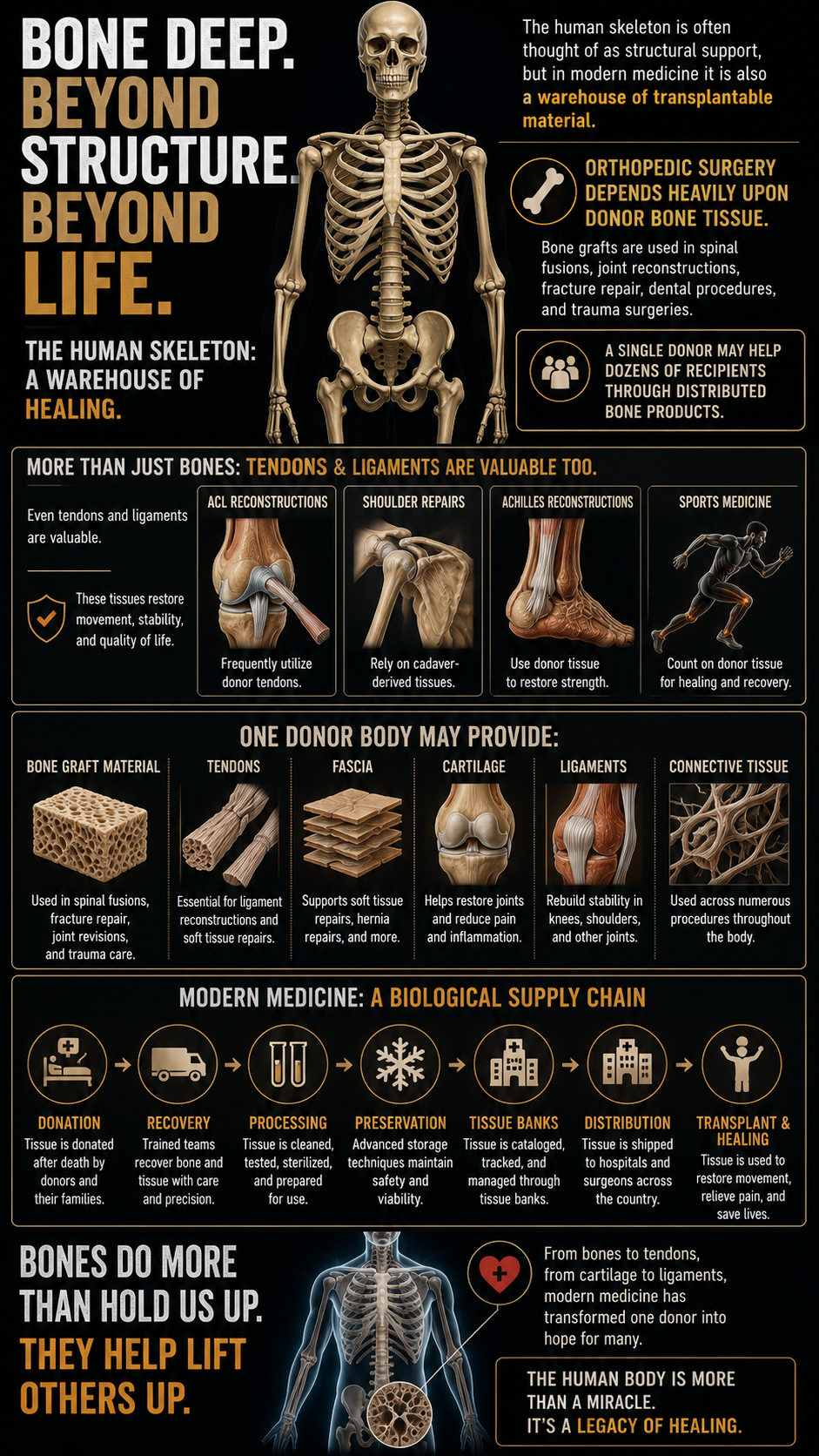
The human skeleton is often thought of as structural support, but in modern medicine it is also a warehouse of transplantable material.
Orthopedic surgery depends heavily upon donor bone tissue. Bone grafts are used in spinal fusions, joint reconstructions, fracture repair, dental procedures, and trauma surgeries. A single donor may help dozens of recipients through distributed bone products.
Even tendons and ligaments are valuable.
ACL reconstruction surgeries frequently utilize donor tendons. Shoulder repairs, Achilles reconstructions, and sports medicine procedures often rely upon cadaver-derived connective tissues processed through tissue banks.
One donor body may provide:
- bone graft material,
- tendons,
- fascia,
- cartilage,
- ligaments,
- and connective tissue used across numerous procedures.
Modern medicine has effectively created a biological supply chain.
Cornea: The Gift Of Sight
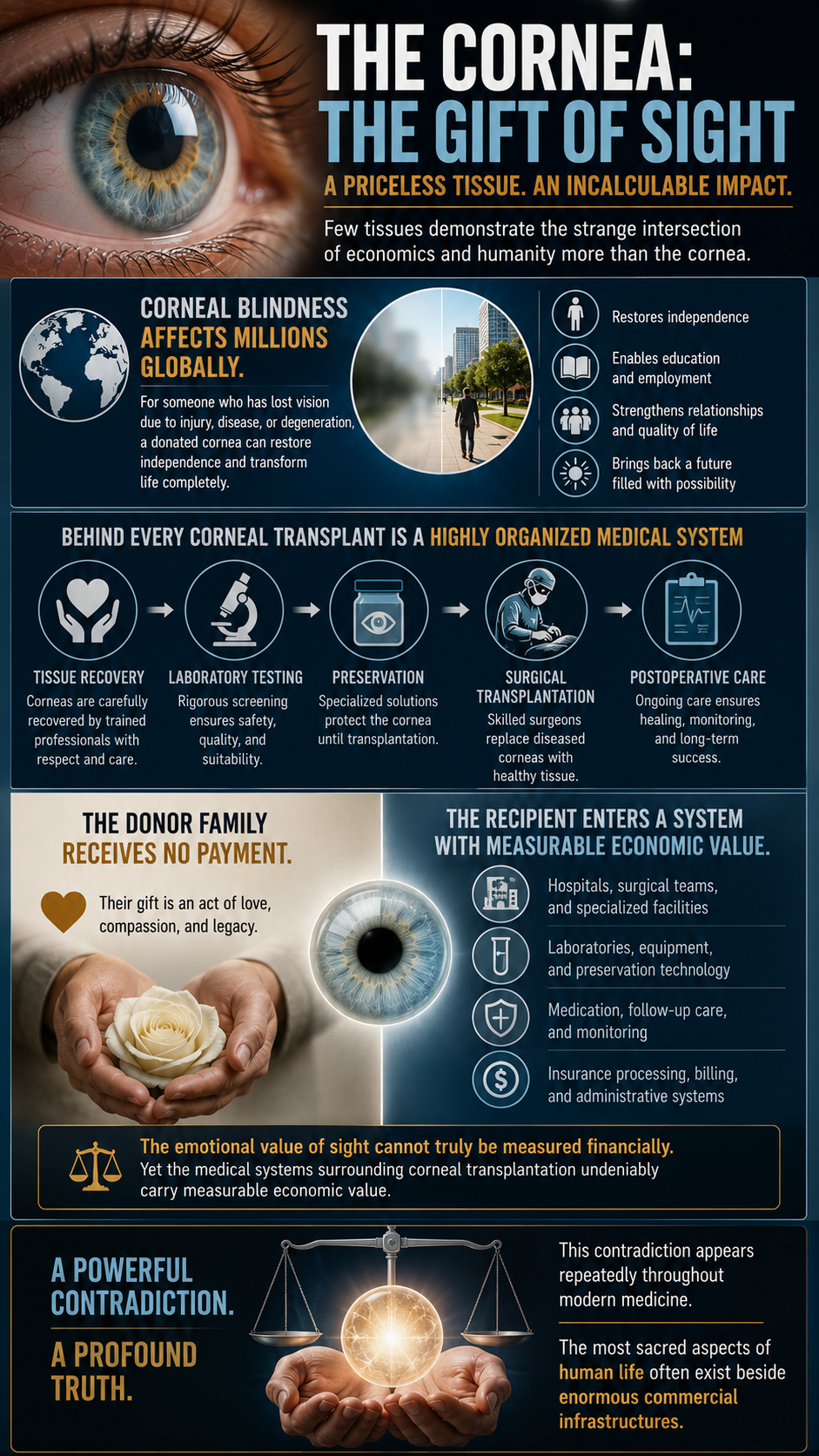
Few tissues demonstrate the strange intersection of economics and humanity more than the cornea.
Corneal blindness affects millions globally. For someone who has lost vision due to injury, disease, or degeneration, a donated cornea can restore independence and transform life completely.
The donor family receives no payment. The recipient, however, enters a highly organized medical system involving tissue recovery, laboratory testing, preservation, surgical transplantation, and postoperative care.
The emotional value of sight cannot truly be measured financially.
Yet the medical systems surrounding corneal transplantation undeniably carry measurable economic value.
This contradiction appears repeatedly throughout modern medicine. The most sacred aspects of human life often exist beside enormous commercial infrastructures.
The Black Market No One Wants To Disucss
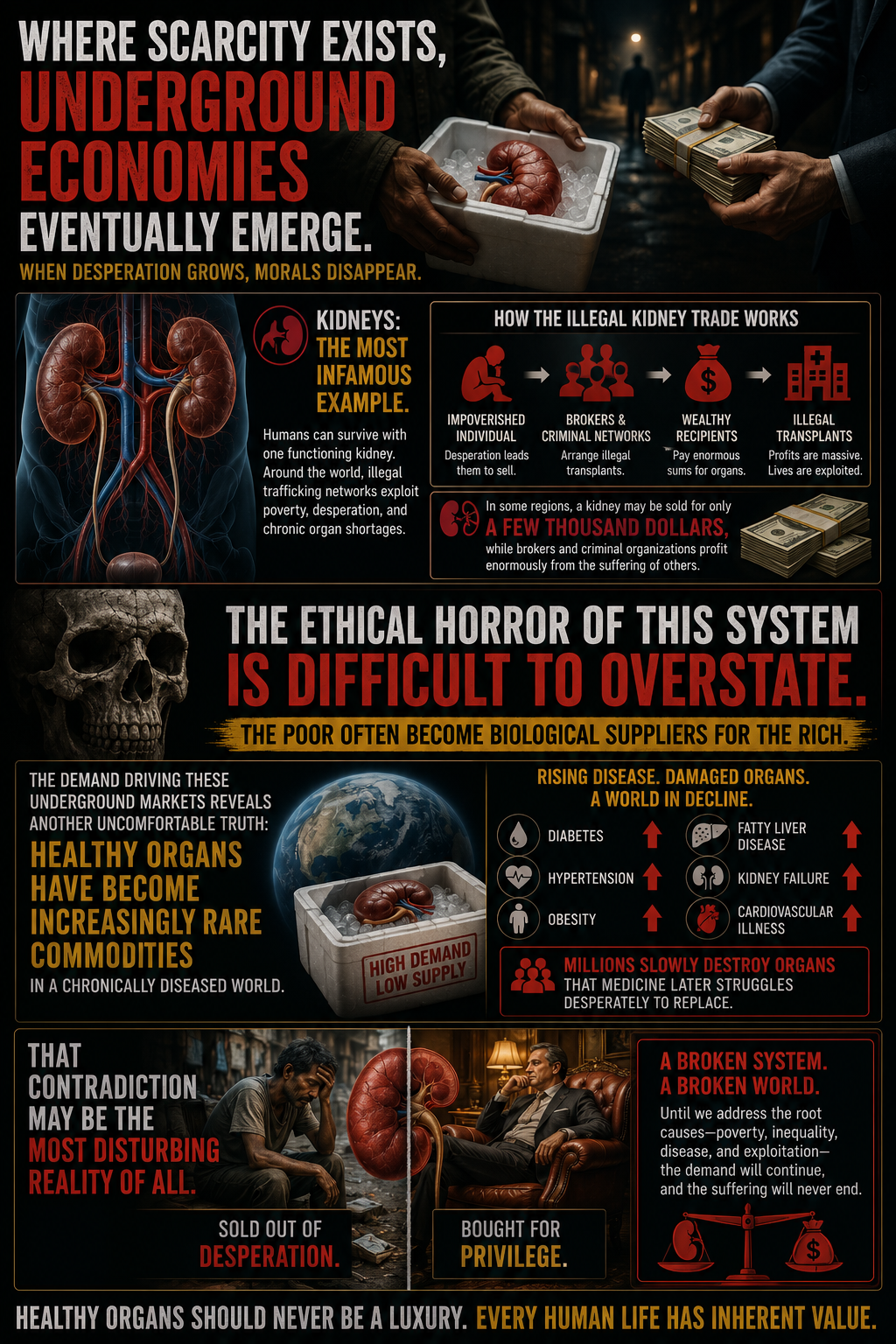
Where scarcity exists, underground economies eventually emerge.
Kidneys have become the most infamous example because humans can survive with one functioning kidney. Around the world, illegal trafficking networks exploit poverty, desperation, and chronic organ shortages.
In some regions, impoverished individuals may sell a kidney for only a few thousand dollars while brokers and criminal organizations profit enormously from arranging illegal transplants for wealthy recipients.
The ethical horror of this system is difficult to overstate.
The poor often become biological suppliers for the rich.
At the same time, the demand driving these underground markets reveals another uncomfortable truth: healthy organs have become increasingly rare commodities in a chronically diseased world.
Rates of diabetes, hypertension, obesity, fatty liver disease, kidney failure, and cardiovascular illness continue rising globally. Millions slowly destroy organs that medicine later struggles desperately to replace.
That contradiction may be the most disturbing reality of all.
Humanities Most Sophisticated Technology: You
There is something profoundly humbling about the realization that the human body remains more advanced than anything mankind has engineered.
Your liver performs hundreds of biochemical functions simultaneously. Your kidneys filter enormous volumes of fluid continuously without conscious effort. Your immune system identifies microscopic threats with astonishing precision. Your heart will beat more than 100,000 times today alone.
Modern science can support failing organs temporarily. It can transplant them. It can bypass them. It can sometimes imitate portions of their function.
But it still cannot fully recreate them. A healthy body is among the rarest and most valuable technologies on Earth.
The Great Contradiction Of Modern Society
Perhaps the strangest part of this entire conversation is not the dollar amounts. It is the contradiction.
Modern healthcare systems spend millions replacing organs while society normalizes lifestyles that destroy them.
People consume ultra-processed foods daily while liver disease explodes. They live under chronic stress while cardiovascular disease remains the leading cause of death. They poison lungs with smoke, overwhelm kidneys with metabolic dysfunction, inflame arteries with sugar and toxins, and deprive bodies of sleep, movement, sunlight, hydration, and nourishment.
Then, years later, medicine attempts to salvage what remains.
A healthy kidney may support life quietly for decades without appreciation. Yet once it fails, its value becomes unmistakably clear.
The same is true for the heart. The liver. The pancreas. The brain.
Health is usually invisible until it disappears.
So… How Much Are You Worth?
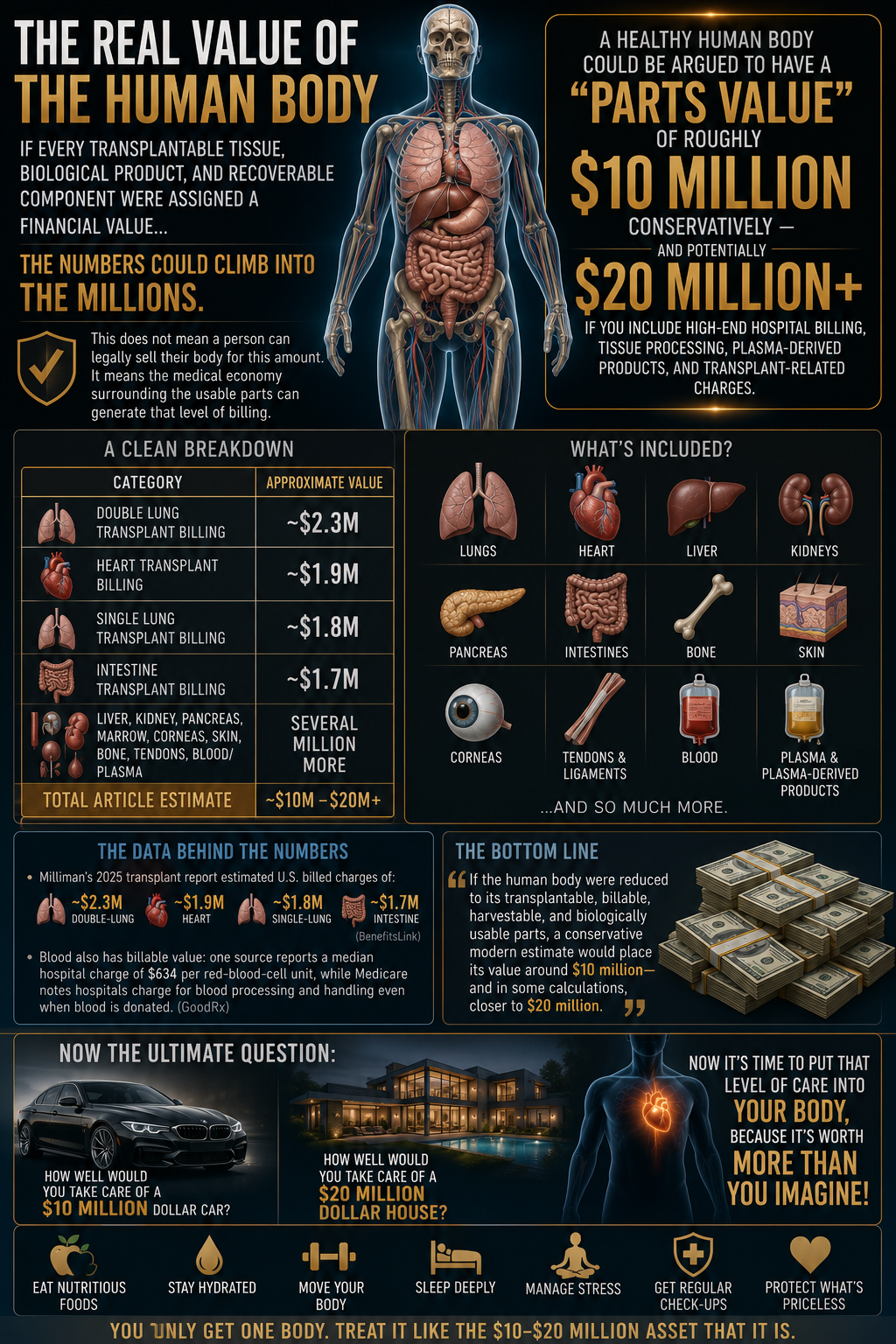
If every transplantable tissue, biological product, and recoverable component of the human body were assigned a financial value, the numbers could climb into the millions.
For the article, I’d use this line:
A healthy human body could be argued to have a “parts value” of roughly $10 million, conservatively — and potentially $20 million or more if you include high-end hospital billing, tissue processing, plasma-derived products, and transplant-related charges.
Important nuance: that does not mean a person can legally sell their body for that amount. It means the medical economy surrounding the usable parts can generate that level of billing.
A clean breakdown:
| Category | Approximate value |
|---|---|
| Double lung transplant billing | ~$2.3M |
| Heart transplant billing | ~$1.9M |
| Single lung transplant billing | ~$1.8M |
| Intestine transplant billing | ~$1.7M |
| Liver, kidney, pancreas, marrow, corneas, skin, bone, tendons, blood/plasma | several million more |
| Total article estimate | ~$10M–$20M+ |
Milliman’s 2025 transplant report estimated U.S. billed charges of about $2.3M for double-lung, $1.9M for heart, $1.8M for single-lung, and $1.7M for intestine transplants. (BenefitsLink) Blood also has billable value: one source reports a median hospital charge of $634 per red-blood-cell unit, while Medicare notes hospitals charge for blood processing and handling even when blood is donated. (GoodRx)
“If the human body were reduced to its transplantable, billable, harvestable, and biologically usable parts, a conservative modern estimate would place its value around $10 million — and in some calculations, closer to $20 million.”
Now the ultimate question – how well would you take care of a $10 million dollar car? A $20 million dollar house?
Now it’s time to put that level of care into your body, because its worth more than you imagine!