
What’s Really in Your Drinking Water? The Hidden Contaminants, Packaging Problems, and Health Questions Nobody Is Asking
Water is the most essential beverage we consume, yet it may also be one of the most misunderstood. We spend enormous amounts of money choosing organic foods, avoiding artificial ingredients, and purchasing supplements. However, many people rarely investigate the quality of the water they drink every single day.
Walk into almost any grocery store and you will discover an overwhelming selection of drinking water. Plastic bottles promise purity, aluminum cans advertise sustainability, glass bottles showcase pristine mountain springs, and alkaline waters claim extraordinary health benefits.
But how much of this marketing actually tells us what is inside the bottle?
Water quality involves much more than its source or how refreshing it tastes. Contaminants may originate in groundwater, agricultural runoff, industrial pollution, manufacturing equipment, filtration systems, and packaging materials. Even water that begins in a protected natural spring can acquire unwanted substances before reaching the consumer.
The real challenge is separating legitimate concerns from exaggerated marketing claims. Understanding water quality requires investigating both the contaminants that may be present and the evidence supporting their potential health effects.
The Plastic Water Bottle Problem
Plastic water bottles have become nearly synonymous with convenience. They are inexpensive, lightweight, portable, and available virtually everywhere. However, their widespread use raises important questions about chemical migration and microscopic plastic contamination.
Most disposable water bottles are manufactured from polyethylene terephthalate, commonly called PET. Although this plastic is generally manufactured without bisphenol A (BPA), it is not chemically identical to glass or completely immune to degradation.
Research has identified microplastics and nanoplastics in bottled water. These particles may originate from the bottle, cap, bottling equipment, filtration systems, or original water source.
Microplastics measure less than five millimeters, while nanoplastics are substantially smaller. Their size makes them especially challenging to measure consistently across different laboratory methods.
A widely discussed 2024 study published in Proceedings of the National Academy of Sciences identified approximately 240,000 detectable plastic particles per liter, on average, across three bottled-water brands. Approximately 90% were classified as nanoplastics. These findings should not be generalized to every bottled-water product, but they demonstrate how conventional testing may underestimate smaller particles.
Scientists are investigating whether microplastic exposure contributes to oxidative stress, inflammatory signaling, or other biological effects. However, the presence of these particles does not automatically establish that ordinary drinking-water exposure causes disease. Long-term human health effects remain an active research question.
Chemicals That May Migrate From Plastic
Plastic packaging also raises questions about chemical migration.
Antimony compounds are used as catalysts in some PET manufacturing processes. Trace amounts of antimony may migrate into water, particularly when bottles experience prolonged storage or elevated temperatures.
Certain plastics and packaging materials may also contain bisphenols or other chemical additives. Although conventional PET bottles generally do not contain BPA, consumers should not assume that every plastic component in a packaging system has the same composition.
Phthalates are another chemical family frequently discussed in relation to plastic exposure. They are not generally used as the primary plasticizers in PET bottles, but they may enter water through other environmental or processing sources.
The important distinction involves actual exposure. Detecting a chemical does not automatically mean its concentration presents a meaningful health risk. Nevertheless, understanding migration and reducing unnecessary exposure remain reasonable goals.
Does Leaving Plastic Water Bottles in a Hot Car Matter?
Temperature and storage conditions can influence chemical migration from plastic packaging. Studies have demonstrated that heat may increase the release of certain substances from PET containers. Mechanical stress and repeated handling can also contribute to particle shedding.
This does not mean every bottle left in a hot vehicle becomes dangerous. The actual risk depends on the material, temperature, duration, chemical involved, and measured concentration. However, avoiding prolonged heat exposure is a sensible precaution. Consumers can also reduce reliance on disposable plastic by choosing reusable glass or stainless-steel containers.
Aluminum Cans: The Hidden Lining Most Consumers Never Consider
Aluminum has become a popular alternative to plastic packaging. Companies increasingly promote canned water as environmentally responsible, highly recyclable, and convenient.
Yet aluminum containers introduce a different set of questions. Most beverage cans contain a thin internal polymer lining. This protective coating prevents the beverage from reacting directly with the aluminum and helps preserve product quality.
Historically, certain can linings used BPA-based epoxy resins. Manufacturers have increasingly adopted alternative formulations, but the exact chemical composition can vary between products.
A BPA-free label therefore does not necessarily mean the container is free from every polymer-related substance. Aluminum itself can also migrate under certain conditions, particularly if protective coatings become compromised or the beverage chemistry promotes corrosion.
High aluminum exposure can cause toxicity, especially in individuals with impaired kidney function. However, evidence of toxicity at high doses should not be confused with proof that ordinary canned drinking water produces harmful aluminum exposure.
Consumers interested in canned water should investigate the manufacturer’s lining materials, migration testing, and product-specific quality reports.
A recyclable container is not automatically a chemically inert container.
Environmental sustainability and contaminant exposure are related considerations, but they are not interchangeable.
Glass Bottles: My Preferred Packaging, With Important Qualifications
Glass has several meaningful advantages over conventional disposable plastic and polymer-lined aluminum containers.
The glass bottle itself does not release plastic fragments. It is chemically stable under ordinary drinking-water storage conditions and generally does not require the internal polymer coating used in aluminum cans. Glass also resists odor absorption and can be reused repeatedly when properly cleaned and maintained. These characteristics make glass my preferred material for storing drinking water.
However, glass packaging does not guarantee contaminant-free water. Bottle caps, sealing compounds, manufacturing equipment, and the water source itself can introduce unwanted substances.
Research has identified microplastic contamination in some glass-bottled beverages, with bottle closures and production processes among the possible contributors.
Glass is also heavier and more fragile than plastic or aluminum. Its environmental footprint depends on transportation, reuse rates, and recycling practices.
Despite these limitations, glass offers a practical advantage for consumers seeking to reduce direct contact between drinking water and plastic packaging.
The most useful standard is not simply “glass is safe.” It is independently tested water in a chemically stable container, with attention to the entire bottling system.
Stainless Steel: An Excellent Reusable Option
Food-grade stainless steel represents another useful option for storing drinking water. High-quality stainless-steel bottles are durable, reusable, and resistant to breakage. Unlike disposable plastic bottles, they do not shed plastic particles from the bottle wall.
However, stainless steel is an alloy that may contain iron, chromium, and nickel. Under certain conditions, small amounts of these metals can migrate into liquids.
For most people, appropriately manufactured food-grade stainless steel is a practical choice. Individuals with specific metal sensitivities may prefer glass, although actual exposure depends on the product and its use.
The bottle’s cap and seals also matter. A stainless-steel bottle may still contain plastic or silicone components that contact the water. For everyday use, I favor glass when breakage is not a concern and high-quality stainless steel when portability and durability are important.
Cartons, Boxed Water, and Multilayer Packaging
Some water companies have introduced paperboard cartons as alternatives to plastic bottles. These packages may appear to be made primarily from paper, but many contain multiple layers of materials, including polyethylene and sometimes aluminum.
The layers help prevent leakage, protect the contents, and maintain package integrity. However, they also mean that the water may contact polymer-based materials. Multilayer packaging can present recycling challenges because the materials must be separated or processed using specialized systems.
Consumers should therefore avoid assuming that paper-based packaging automatically eliminates plastic contact or guarantees superior purity. The specific materials, manufacturing process, and independent testing remain more informative than the appearance of the package.
The Different Types of Water Sold in Stores
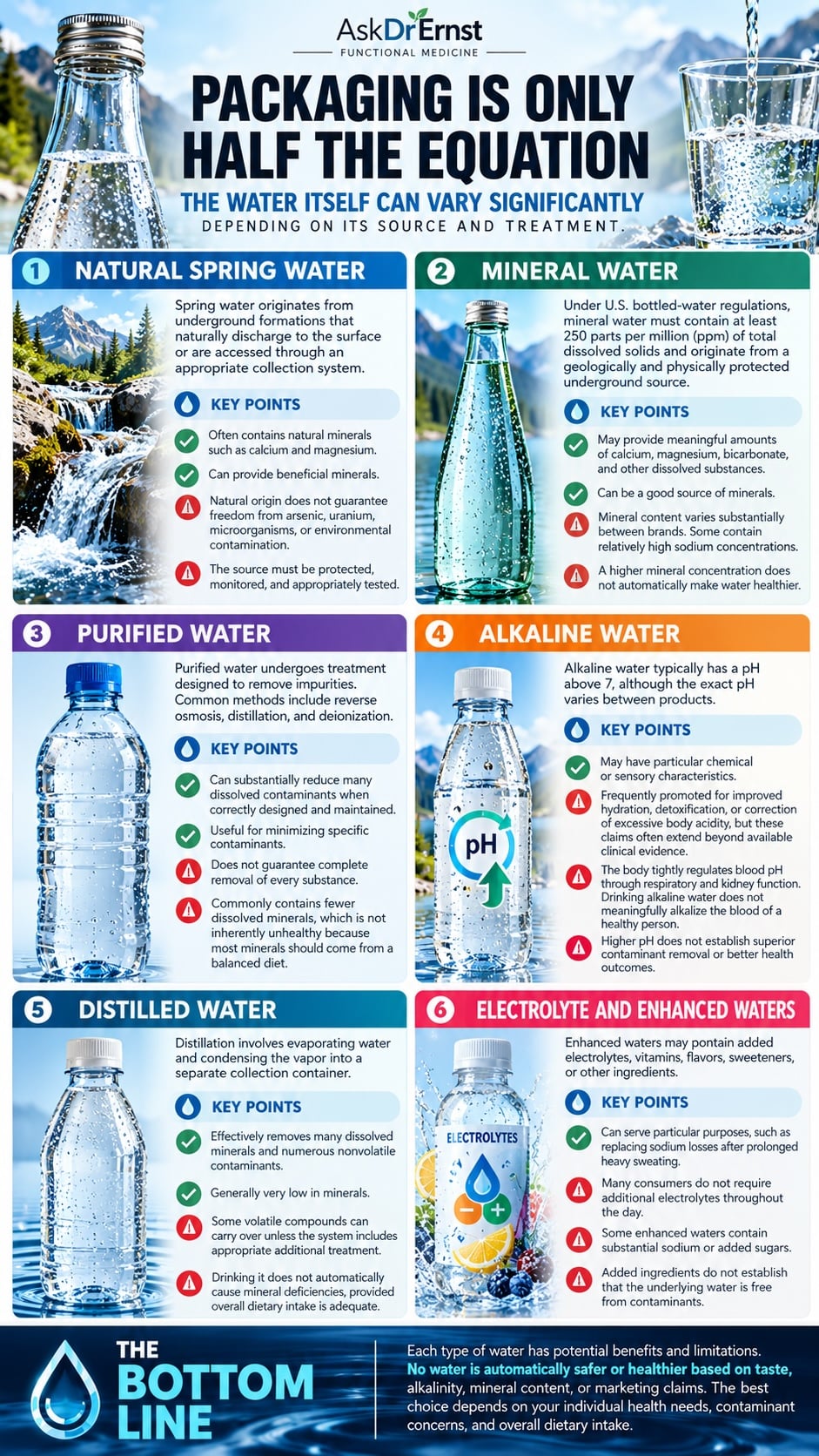
What Contaminants Should You Actually Look For?
When evaluating bottled water, I would prioritize contaminants according to their established toxicity, potential exposure, and available laboratory evidence.
Heavy metals and metalloids: Lead, arsenic, cadmium, mercury, and uranium deserve particular attention. Their potential effects depend on concentration, chemical form, duration of exposure, and individual susceptibility.
PFAS: Certain per- and polyfluoroalkyl substances persist in the environment and have been associated with immune, metabolic, reproductive, and other health concerns. Testing should identify specific PFAS rather than relying on a generic claim that water is free from forever chemicals.
Microplastics and nanoplastics: These particles have been detected in drinking water, but standardized measurement methods and long-term human risk estimates remain incomplete.
Agricultural contaminants: Nitrates and pesticide residues may enter water through agricultural runoff and other environmental pathways. Elevated nitrate exposure is especially concerning for infants.
Industrial chemicals: Volatile organic compounds, solvents, and other pollutants can contaminate certain water sources. Testing priorities should reflect local industrial and environmental conditions.
Microorganisms: Bacteria, viruses, and parasites can present immediate health risks when water sources or treatment systems are compromised. Microbiological safety should never be sacrificed in pursuit of a particular mineral profile.
The strongest water-quality assessment includes a current laboratory report identifying the testing methods, reporting limits, measured concentrations, and applicable health-based standards.
A statement such as “no contaminants detected” has limited meaning unless the laboratory specifies which contaminants were tested and how sensitive its methods were.
Why TDS Does Not Tell You Whether Water Is Pure
Total dissolved solids, commonly called TDS, measure the concentration of dissolved substances in water.
Many consumers purchase inexpensive TDS meters believing they can identify toxic water simply by measuring dissolved solids.
Unfortunately, this approach can be misleading.
A water containing substantial calcium, magnesium, and bicarbonate may produce a relatively high TDS reading despite having low concentrations of regulated contaminants.
Conversely, water with a low TDS reading may still contain PFAS, certain organic chemicals, microorganisms, or microscopic plastic particles that the meter cannot identify.
TDS is useful for understanding aspects of water chemistry, but it is not a comprehensive safety test.
The same principle applies to pH. Neither a high nor low pH reading independently establishes whether drinking water is free from harmful contaminants.
The Charlotte Water Question: What Should Families in #CLT Area Consider?
For our local residence of Charlotte, North Carolina, you have access to a wide variety of bottled waters, but retail availability alone should not determine which product enters the home.
I would begin by comparing independently tested glass-bottled spring waters and mineral waters. Products worth investigating include Mountain Valley Spring Water, Saratoga Spring Water, and Hallstein Water.
These are candidates for comparison, not three products verified to contain zero contaminants. Their laboratory results, packaging, cap materials, and availability should be confirmed before ranking them.
A practical shopping decision should include recent product-specific contaminant testing rather than relying exclusively on brand reputation, packaging claims, or price.
For households using municipal water, Charlotte Water’s annual Consumer Confidence Report offers a starting point for evaluating the public water supply. However, utility-level results do not necessarily reflect contaminants introduced by plumbing inside an individual home.
Certified point-of-use filtration, selected for the contaminants actually present, may offer another practical solution. Reverse osmosis systems can reduce many dissolved contaminants, while appropriately certified carbon filters can address certain organic compounds and other substances.
Remember: No single filter removes everything, and maintenance is essential.
The Question That Inspired This Article: Does Water Quality/Purity Matter More Than Taste?
This brings us to the reason for examining drinking water so carefully.
Imagine sitting at an upscale restaurant where a water sommelier presents several extraordinary waters from around the world. Each comes from a different geological source, contains a distinctive mineral profile, and delivers its own sensory experience.
One pairs beautifully with seafood. Another complements a rich steak. A third has an exceptionally smooth mouthfeel and subtle mineral finish.
The presentation is impressive, but it raises a question that deserves serious consideration.
Does the quality and potential toxicity of drinking water matter more than its taste, prestige, and food pairing?
To answer that question, we must understand how a water sommelier evaluates water compared with how a functional medicine practitioner approaches the same product.
What a “Water Sommelier” Looks For
A professional water sommelier studies the sensory qualities and origins of drinking water, sommelier to how a Wine Sommelier evaluates the sensory experience, quality, origin, and food compatibility of wine. A water sommelier applies similar principles to water, focusing on mineral composition, taste, mouthfeel, origin, and food pairing.
Currently Martin Riese is considered the be the world’s leading and famous water sommelier. Certified by the German Mineral Water Trade Association, he gained international fame for creating high-end restaurant water menus, analyzing water mineral profiles (Total Dissolved Solids), and advocating for water appreciation
The evaluation of water by a sommelier often includes mineral composition, geological source, total dissolved solids, carbonation, mouthfeel, flavor intensity, and compatibility with particular foods.
For example: Calcium, magnesium, sodium, and bicarbonate can all influence the way water tastes. Waters with higher mineral concentrations may feel fuller or more pronounced, while low-mineral waters often have a lighter character.
Often a water sommelier will recommend one water for delicate seafood and another for richly flavored meat. These recommendations reflect sensory balance rather than claims about medical treatment.
Importantly, professional water appreciation does not require ignoring safety. A responsible sommelier should also, in addition to taste, value reliable sourcing, quality control methods and bottling practices.
Where most sommeliers can fall short when their assessment stops at taste, because flavor and mouthfeel reveal very little about trace contaminants. Minerals that make water “interesting” can mask the fact that PFAS, heavy metals or microplastics are present below any sensory threshold. Functional evaluation, by contrast, begins with independent lab testing, not sensory notes.
What a Functional Medicine Practitioner Looks For
A functional medicine doctor approaches drinking water from a fundamentally different perspective, prioritizing its purity, potential toxicity, and impact on long-term health rather than simply its taste. While a water sommelier may appreciate mineral complexity, mouthfeel, and food pairings, a functional medicine practitioner asks a more important question:
What am I putting into my body every time I drink this water? Contaminants such as arsenic, lead, PFAS, pesticide residues, and microplastics may be present without altering the water’s flavor, appearance, or smell. Water that tastes exceptional is not necessarily water with the lowest contaminant levels.
Functional medicine emphasizes investigating potential sources of exposure rather than waiting for symptoms to appear. Because water is consumed repeatedly throughout a person’s lifetime, understanding its chemical composition and contaminant concentrations is an important part of evaluating environmental exposures. A functional medicine doctor may examine independent laboratory results, filtration methods, mineral composition, and packaging materials to determine whether water contains potentially harmful substances. Plastic bottles, aluminum can linings, and even bottle caps may introduce additional exposure concerns. The objective is not simply to drink water that tastes clean, but to choose water with demonstrated safety and minimal unnecessary contamination.
Ultimately, a functional medicine doctor recognizes that taste is a sensory experience, while water safety is a scientific determination. The human tongue cannot reliably detect heavy metals, industrial chemicals, or microscopic plastic particles at concentrations relevant to health. Therefore, flavor should never replace independent testing when evaluating water quality. Although mineral content and taste can influence enjoyment and hydration habits, the first priority should be selecting water that meets appropriate safety standards and has a transparent contaminant profile. The best drinking water should not merely complement your next meal; it should support hydration without introducing avoidable health risks.
For example, someone with advanced kidney disease may require different considerations than a healthy athlete losing substantial electrolytes through sweat.
Someone managing sodium intake may benefit from checking the sodium content of highly mineralized water. Meanwhile, a person concerned about lead or PFAS exposure needs contaminant-specific testing rather than a general purity score.
This approach should distinguish established health risks from emerging hypotheses. It should also recognize that many substances have safe or acceptable exposure ranges, rather than treating every detectable molecule as inherently dangerous.
Two Different Evaluations of the Same Water
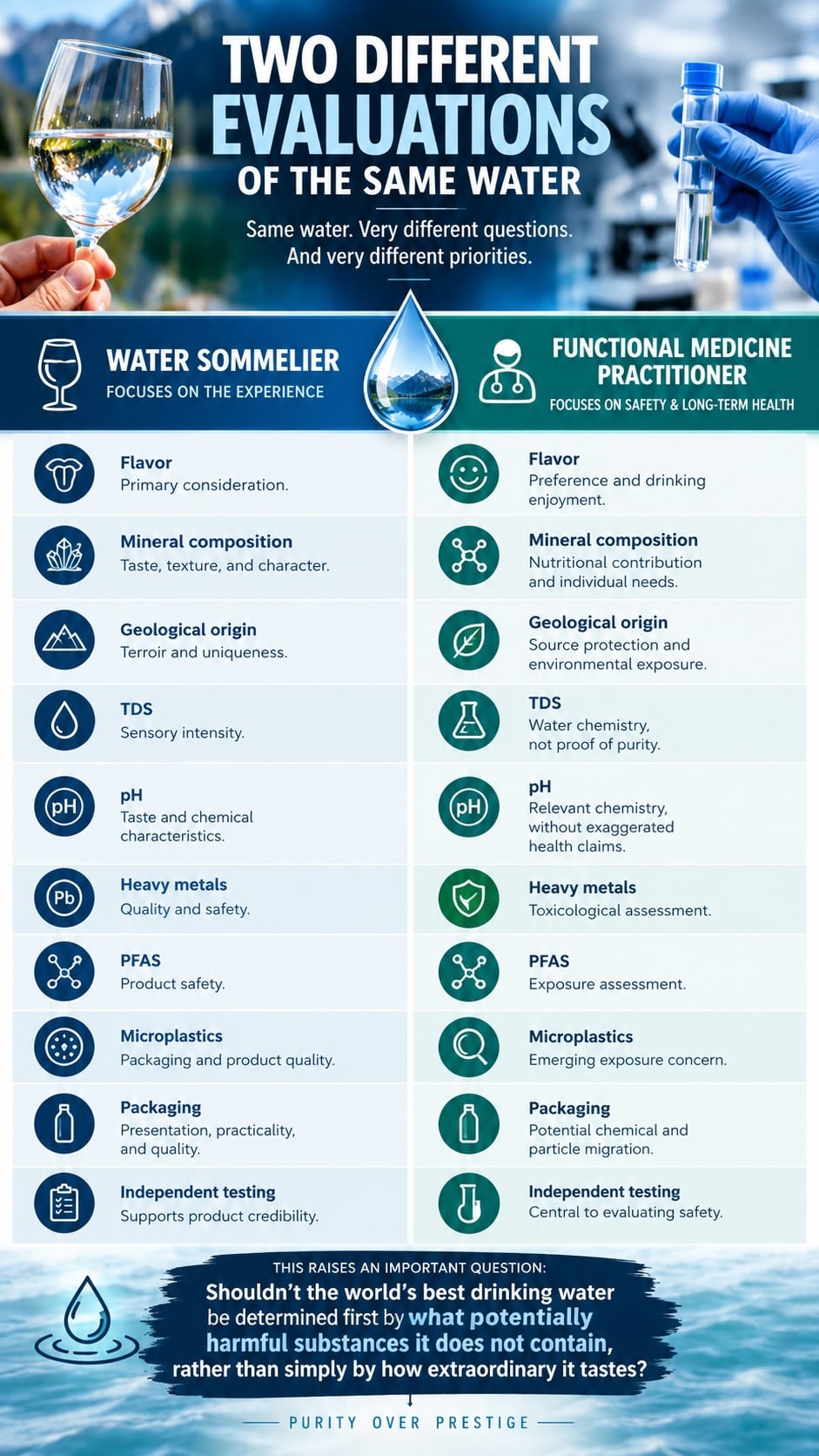
My Perspective: Safety First, Taste Second
Water can be delicious, refreshing, mineral-rich, and perfectly paired with an exceptional meal, but outstanding taste should never be confused with exceptional purity. A water sommelier may appreciate the subtle flavors, mineral complexity, mouthfeel, and geological origin of premium bottled water, yet these characteristics reveal very little about its potential toxicity. Water can appear crystal clear, smell completely normal, and taste extraordinary while containing measurable concentrations of arsenic, lead, PFAS, pesticide residues, or microplastics. Many of these contaminants are undetectable through human senses, even at concentrations that may be relevant to health. Your taste buds can tell you whether water is enjoyable, but they cannot tell you whether it is safe.
From a functional medicine perspective, evaluating water requires investigating what enters the body with every glass, not simply how the water tastes. This means examining its source, independent laboratory results, mineral composition, filtration methods, and packaging materials. Plastic bottles may introduce microscopic plastic particles, aluminum cans frequently contain polymer linings, and even premium glass-bottled waters can acquire contaminants through caps or processing equipment. Because drinking water represents a repeated, lifelong exposure, understanding the concentrations of potentially harmful substances is especially important. The objective is not to eliminate beneficial minerals or assume every detectable contaminant is dangerous, but to minimize unnecessary exposure while prioritizing substances with established health risks. A prestigious label, expensive bottle, or award-winning flavor cannot replace credible laboratory evidence.
Ultimately, the conversation about water must extend beyond taste, luxury, and food pairing to include its potential impact on long-term health. Water sommeliers provide valuable expertise in sensory characteristics, but a functional medicine practitioner places greater emphasis on evaluating contaminant exposure and individual health considerations. Consumers should first determine whether their water meets appropriate safety standards, review available contaminant testing, and consider the materials used to package it. Only then should flavor, mineral preference, and food pairing guide the final choice. The best water is not necessarily the most expensive, the most alkaline, or the one that wins a tasting competition. It is water with demonstrated safety, an appropriate mineral composition, minimal unnecessary contamination, and a taste you enjoy enough to drink consistently.
Top Three Bottled Waters Worth Considering From a Functional Medicine Perspective
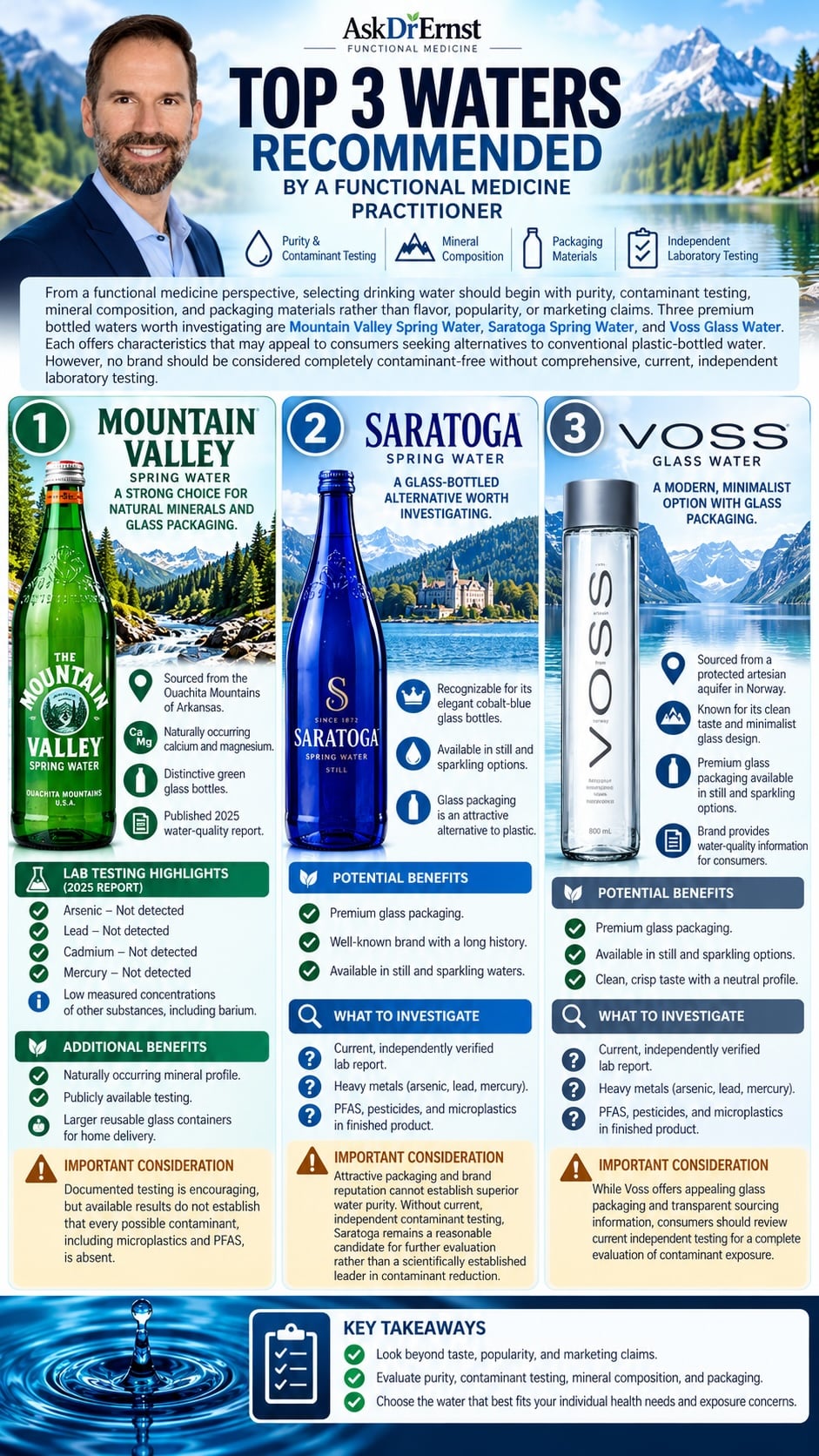
My Final Recommendation: Let Laboratory Evidence Determine the Winner. These three waters illustrate why choosing drinking water requires more than comparing taste, alkalinity, or beautiful glass bottles. Mountain Valley stands out for its natural mineral content and accessible water-quality documentation. Saratoga offers appealing glass packaging but needs more comprehensive publicly verified contaminant data before receiving a strong purity recommendation. Hallstein provides extensive testing documentation, although its conflicting microplastic results should not be ignored. For consumers in Charlotte’s 28269 ZIP code, Mountain Valley is a practical first brand to investigate because of its national distribution network, while Saratoga and Hallstein deserve consideration depending on availability and updated testing. My preferred water is not necessarily the one that tastes best or costs the most. It is the one with the strongest independent evidence of safety, the lowest concerning contaminant concentrations, and packaging that minimizes unnecessary exposure.
Top Three Bottled Waters Worth Considering From a Water Sommelier Perspective
To explore this distinction further, I personally reached out to one of the world’s leading water sommeliers and asked him the very same question: What are your top three waters in the world?
His response was revealing. He explained that it was impossible to select just three because there are simply too many unique flavor profiles, mineral compositions, and sensory characteristics to declare three waters the best of all time.
While I appreciate his expertise, his response highlighted the fundamental difference between evaluating water for sensory enjoyment and evaluating it from a functional medicine perspective.
Water sommeliers frequently emphasize taste, mouthfeel, geological origin, and total dissolved solids (TDS), primarily discussing TDS in terms of mineral content and flavor complexity. Yet TDS readings cannot identify potentially harmful contaminants such as PFAS, arsenic, lead, or hexavalent chromium, and they do not measure suspended microplastics or nanoplastics.
These substances require specialized laboratory testing, and many cannot be detected through taste, smell, or appearance. Although responsible water sommeliers certainly recognize the importance of safety, detailed toxicological testing is not necessarily the focus of their evaluations.
This raises an important question: Shouldn’t the world’s best drinking water be determined first by what potentially harmful substances it does not contain, rather than simply by how extraordinary it tastes?