
THE HIDDEN FAT THAT CHANGES YOUR METABOLISM
You can stand in front of a mirror and see wrinkles, muscle, posture, and the changing shape of your waist. Yet some of the most important changes happening inside your body remain completely invisible. Deep behind the abdominal wall, fat can accumulate around the liver, intestines, pancreas, kidneys, and other organs. This tissue is called visceral fat, and it behaves very differently from the soft fat sitting beneath your skin. It does not simply occupy space or make your pants tighter. Visceral adipose tissue actively communicates with the rest of your body through hormones, fatty acids, and inflammatory signals. When excessive amounts accumulate, the problem extends far beyond appearance.
For years, popular weight-loss culture taught people to think about body fat as stored calories. That explanation sounds logical, yet it misses the biological complexity of adipose tissue. Fat cells are living, metabolically active cells that constantly communicate with your brain, liver, muscles, immune system, and endocrine system. Healthy adipose tissue provides a safe location for storing excess energy until the body needs it. Trouble develops when those storage cells enlarge, become dysfunctional, and begin spilling fatty acids into circulation. At that point, fat stops behaving like a quiet energy reserve and becomes part of a larger metabolic disturbance.
This distinction changes how we should think about belly fat. The question is not simply, “How much do you weigh?” A better question asks where your body stores fat and what that tissue is doing metabolically. Two people can weigh exactly the same amount while carrying dramatically different metabolic risks. One may store most excess fat beneath the skin. Another may carry substantial visceral fat despite appearing relatively thin. That hidden difference can influence insulin sensitivity, liver health, blood pressure, inflammation, and cardiovascular risk.
Visceral Fat Versus the Fat You Can Pinch
Most visible body fat is called subcutaneous fat because it sits directly beneath the skin. Pinch your abdomen, thighs, hips, or upper arms, and you are largely grabbing subcutaneous tissue. Visceral fat occupies a deeper location inside the abdominal cavity. It surrounds internal organs and cannot be measured accurately by simply grabbing your waist. CT and MRI imaging can quantify visceral adipose tissue directly, although waist measurements often provide a practical estimate of abdominal fat accumulation.
Location matters because visceral fat behaves differently from subcutaneous fat. Visceral adipose tissue tends to release fatty acids more readily and shows strong associations with insulin resistance. Its anatomical location also connects it closely with the liver through the portal circulation. Consequently, metabolic disturbances developing inside abdominal fat can directly influence hepatic metabolism. The liver then changes how it handles glucose, triglycerides, cholesterol particles, and stored energy. What appears to be a belly problem can therefore become a whole-body metabolic problem.
Subcutaneous fat is not automatically harmless, especially when total body fat becomes excessive. However, visceral and ectopic fat deserve particular attention because they frequently accompany metabolic disease. Fat can also accumulate inside tissues not designed for large energy stores. The liver, skeletal muscles, pancreas, and heart can develop these abnormal fat deposits. Scientists call this process ectopic fat deposition, and it provides another clue about why waist size alone never tells the complete story.
The Real Problem Begins When Fat Storage Starts Failing
Your body needs somewhere to store excess energy. Healthy fat cells provide that storage space by expanding when energy intake exceeds immediate demand. Problems develop when adipose tissue reaches its ability to expand safely. Individual fat cells enlarge, blood supply becomes less efficient, and local cellular stress begins increasing. Immune cells can enter the tissue and contribute to inflammatory signaling. Meanwhile, the enlarged fat cells become increasingly resistant to insulin’s normal regulatory effects.
This process changes what fat tissue releases into circulation. Dysfunctional adipocytes can release excessive free fatty acids while producing altered patterns of signaling molecules called adipokines. Adiponectin, which generally supports insulin sensitivity and healthy fatty-acid metabolism, often declines as visceral adiposity increases. Other inflammatory signals may rise as the tissue becomes increasingly dysfunctional. These changes influence organs far beyond the abdomen.
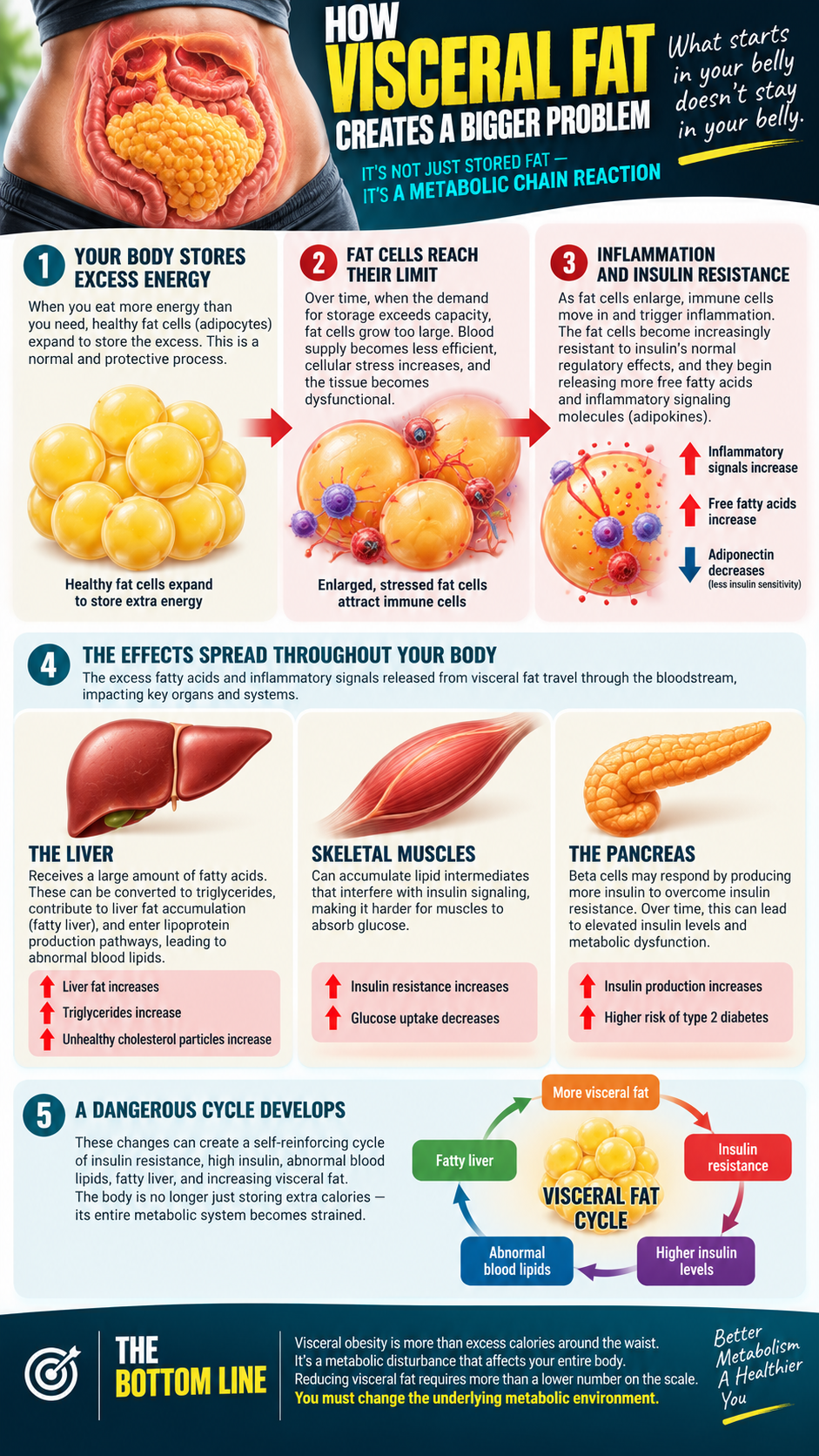
The liver receives much of this metabolic traffic. Excess fatty acids arriving at the liver can become triglycerides, contribute to liver-fat accumulation, or enter lipoprotein production pathways. Skeletal muscles can also accumulate lipid intermediates that interfere with insulin signaling. Pancreatic beta cells may respond by producing increasing amounts of insulin. Over time, the body can enter a metabolic cycle involving insulin resistance, elevated insulin, abnormal blood lipids, fatty liver, and increasing abdominal fat.
That is the deeper problem behind visceral obesity. The body has not merely stored too many calories around the waist. Its normal system for safely managing energy has become increasingly strained. Once that happens, reducing visceral fat requires more than chasing a lower number on the scale. The metabolic environment that encouraged the accumulation must also change.
Insulin Resistance and the Expanding Waistline
Insulin plays an essential role in human metabolism. After eating, rising blood glucose signals pancreatic beta cells to release insulin. That hormone helps muscle cells absorb glucose and tells the liver to reduce glucose production. Insulin also suppresses excessive fat breakdown when energy from food remains readily available. Under healthy conditions, this carefully coordinated process keeps circulating fuel within a narrow range.
Insulin resistance disrupts that coordination. Muscle cells become less responsive to insulin, while the liver may continue producing glucose despite adequate energy availability. Adipose tissue can also become resistant to insulin’s normal suppression of fatty-acid release. The pancreas compensates by secreting more insulin. Blood glucose may therefore remain within a conventional reference range for years while the body requires increasingly high insulin levels.
This compensatory stage can hide metabolic dysfunction from anyone looking only at glucose. Elevated insulin does not automatically prove that visceral fat caused the problem, because the relationship works in several directions. Genetics, excessive energy intake, inactivity, sleep loss, medications, and hormonal disorders can all contribute. However, visceral and ectopic fat frequently travel alongside insulin resistance because these processes reinforce one another.
Chronically excessive energy intake makes this cycle harder to escape. Highly refined foods can make overconsumption remarkably easy, especially when meals contain little protein or fiber. Liquid calories create another challenge because they often produce less satiety than whole foods. Frequent snacking can extend the daily eating period and increase total energy consumption. None of these behaviors alone explains every case, but together they can create ideal conditions for expanding visceral fat stores.
When Belly Fat Reaches the Liver
The liver deserves special attention because visceral obesity frequently accompanies metabolic dysfunction-associated steatotic liver disease, commonly called MASLD. This condition develops when excessive fat accumulates within liver cells alongside metabolic risk factors. Many people never feel the process occurring. Liver enzymes can even remain relatively unremarkable during earlier stages, allowing substantial metabolic dysfunction to progress quietly.
A fatty liver changes the metabolic landscape. Hepatic insulin resistance can increase glucose production even when the bloodstream already contains sufficient glucose. The liver may also increase production of triglyceride-rich lipoproteins. Blood triglycerides can rise while HDL cholesterol may decline. These changes frequently appear alongside elevated blood pressure, increased waist circumference, and impaired glucose regulation.
Excess calories remain central to fatty-liver development, but food quality can influence how easily those calories accumulate. Sugar-sweetened beverages deserve particular attention because large quantities of sugar can enter the body quickly without producing strong satiety. The liver plays a major role in processing fructose, making excessive intake from sweetened drinks especially relevant. Whole fruit creates a different metabolic context because it contains water, fiber, micronutrients, and an intact food structure.
Alcohol can add another metabolic burden. The liver prioritizes alcohol metabolism because the body cannot store alcohol safely. Frequent heavy consumption can promote triglyceride accumulation and impair normal liver metabolism. Someone attempting to reduce visceral fat while regularly drinking significant amounts of alcohol may therefore face an obstacle that no supplement can overcome.
Chronic Inflammation: When Visceral Fat Starts Sending Signals
Inflammation represents another important connection between visceral fat and chronic disease. Inflammation itself is not inherently harmful. The immune system needs inflammatory signaling to fight infections, repair damaged tissues, and coordinate healing. Problems develop when inflammatory signaling becomes persistent rather than resolving after its purpose ends.
Expanding visceral adipose tissue can become infiltrated with immune cells, including macrophages. Those cells participate in a changing inflammatory environment inside dysfunctional fat tissue. Cytokines and other signaling molecules can then influence insulin signaling, vascular biology, and liver metabolism. The result is not necessarily dramatic inflammation that produces pain or fever. Instead, low-grade metabolic inflammation can persist quietly for years.
Blood vessels also respond to this internal environment. Insulin resistance, elevated blood pressure, abnormal lipoproteins, oxidative stress, smoking, and inflammation can interact to damage vascular health. Visceral fat therefore becomes important because it often marks a broader cluster of cardiometabolic abnormalities. The belly itself is not attacking the heart. Rather, the underlying metabolic environment can influence multiple disease pathways simultaneously.
Stress, Cortisol, and Abdominal Fat
Cortisol frequently enters conversations about stubborn belly fat, although its role requires careful explanation. Cortisol is not a toxin or an enemy hormone. Your adrenal glands produce cortisol because survival depends upon it. The hormone helps regulate blood pressure, glucose availability, immune activity, and the physiological response to stress.
Problems arise when stress becomes chronic and begins changing behavior, sleep, appetite, and metabolic regulation. People under sustained psychological stress may sleep poorly, exercise less, consume more alcohol, and crave highly palatable foods. These behavioral changes can increase energy intake while reducing energy expenditure. Stress can therefore promote abdominal weight gain through several overlapping pathways.
Pathological cortisol excess provides a more dramatic example. People with Cushing syndrome can develop pronounced central adiposity alongside muscle weakness, glucose abnormalities, and other symptoms. Everyday stress does not equal Cushing syndrome, yet the condition demonstrates how strongly glucocorticoid biology can influence fat distribution.
Stress management should therefore become part of any comprehensive visceral-fat strategy. Reducing stress does not magically melt abdominal fat. However, improving stress regulation can strengthen sleep, appetite control, exercise consistency, and food choices. Those changes directly influence the metabolic environment where visceral fat either grows or shrinks.
Sleep May Be the Missing Metabolic Treatment
A person can eat carefully and exercise regularly while undermining both efforts through chronic sleep deprivation. Sleep influences glucose regulation, appetite, sympathetic nervous activity, and recovery. Experimental sleep restriction can reduce insulin sensitivity within surprisingly short periods. Chronic sleep disruption can also alter hunger and increase the desire for calorie-dense foods.
Obstructive sleep apnea deserves particular attention in people carrying significant abdominal weight. Repeated airway obstruction fragments sleep and causes intermittent reductions in oxygen. The body responds with sympathetic activation and stress signaling throughout the night. Daytime fatigue then makes exercise more difficult while increasing dependence on stimulants and convenience foods.
Poor sleep can therefore create a vicious metabolic cycle. Weight gain increases sleep-apnea risk, while sleep apnea can worsen metabolic control. Fatigue reduces physical activity, and inactivity further decreases insulin sensitivity. Increased hunger makes overeating easier, and excess energy encourages additional fat storage.
Anyone struggling with stubborn visceral fat should examine sleep with the same seriousness given to nutrition. Persistent snoring, witnessed breathing pauses, gasping, morning headaches, and severe daytime sleepiness deserve professional evaluation. Sometimes the path toward a healthier waist begins with repairing the eight hours most people ignore.
Visceral Fat Can Change Faster Than You Think
Visceral fat is dangerous, but it also responds remarkably well when the metabolic environment changes. That distinction offers an important reason for optimism. You do not need to achieve a perfect body weight before meaningful improvements can begin. Research shows that weight loss, exercise, improved nutrition, and better metabolic health can reduce visceral adipose tissue. The body can begin changing internally before those changes become dramatic in the mirror.
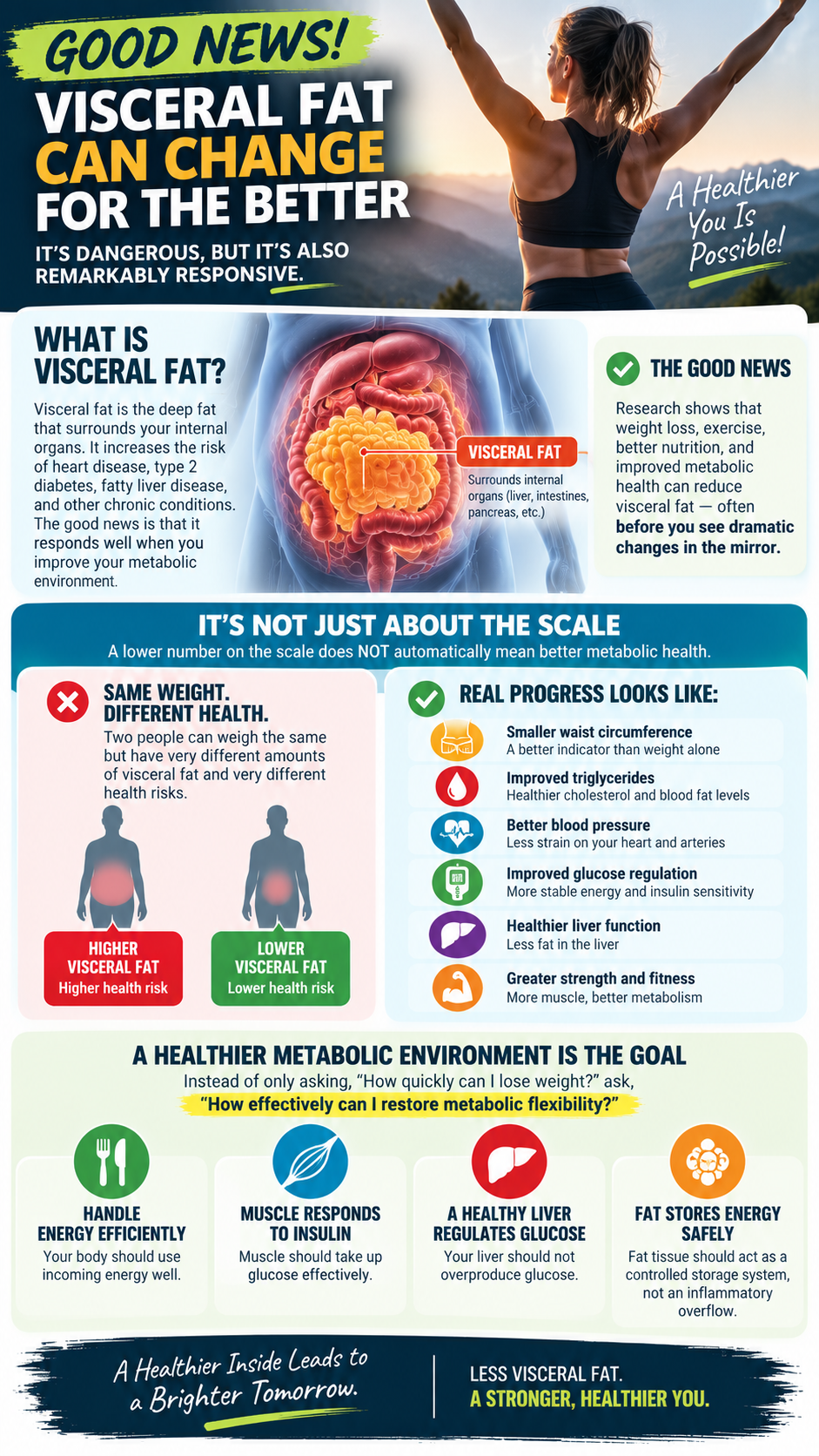
The real target should therefore extend beyond weight loss. A lower number on the scale does not automatically mean better metabolic health. Someone can lose muscle, water, and glycogen while retaining significant visceral fat. Another person may lose fewer pounds while reducing waist circumference and improving insulin sensitivity. Better triglycerides, blood pressure, glucose regulation, liver health, strength, and fitness can reveal progress that body weight misses.
That changes the central question. Instead of asking how quickly you can lose weight, ask how effectively you can restore metabolic flexibility. Your body should handle incoming energy efficiently and access stored energy when needed. Muscle should respond appropriately to insulin, while the liver should regulate glucose without constantly overproducing it. Fat tissue should function as controlled energy storage rather than an inflammatory overflow system.
Build Muscle While You Lose Belly Fat
Muscle deserves a central place in every visceral-fat strategy. Skeletal muscle represents one of the body’s largest destinations for glucose after meals. When muscle contracts, it increases glucose uptake and consumes stored fuel. Greater muscle activity therefore gives circulating glucose somewhere productive to go.
Resistance training becomes increasingly important with age. Adults gradually lose muscle when they stop challenging it, and aggressive dieting can accelerate that decline. Losing twenty pounds means less if a substantial portion comes from muscle. The scale may celebrate while metabolic capacity quietly decreases.
Strength training sends a different biological message. Squats, rows, presses, carries, hinges, resistance bands, and appropriately selected machines challenge muscles to adapt. Progressive resistance encourages the body to maintain or build lean tissue during fat loss. Stronger muscles also improve physical independence, glucose disposal, balance, bone loading, and long-term function.
Cardiovascular exercise complements strength training. Walking, cycling, swimming, hiking, and similar activities increase energy expenditure and improve cardiovascular fitness. Neither form of exercise needs to become extreme. Consistency creates the metabolic advantage, especially when resistance training and regular aerobic movement work together.
Stop Feeding the Ultra-Processed Food Cycle
Visceral fat rarely develops because someone consciously decides to overeat every day. The modern food environment makes excessive energy consumption remarkably easy. Ultra-processed foods often combine refined carbohydrates, fats, salt, flavorings, and textures that encourage rapid consumption. Many deliver enormous amounts of energy before normal fullness signals can effectively respond.
Food structure matters because humans do not eat isolated calories. Protein influences satiety differently from refined starch. Whole foods generally require more chewing than highly processed foods. Fiber and water increase food volume, while liquid calories can disappear quickly without producing comparable fullness.
Start rebuilding meals around recognizable foods. Quality protein can form the foundation, followed by vegetables and other whole foods appropriate for individual tolerance. Healthy fats can provide flavor and satiety without turning every meal into processed convenience food. Carbohydrate intake can then reflect metabolic health, physical activity, glucose tolerance, and individual goals.
Sugar-sweetened beverages deserve special attention. Soda, sweetened coffee drinks, energy drinks, juices, and other caloric beverages can deliver substantial sugar rapidly. Removing these drinks may eliminate hundreds of unnecessary calories without reducing the amount of solid food someone eats. Water, sparkling water, or unsweetened beverages provide much simpler alternatives.
Protein Protects the Metabolism You Are Trying to Restore
Reducing calories without protecting muscle creates an avoidable problem. The body can lose both fat and lean tissue during weight reduction. Adequate protein and resistance training help shift that outcome toward greater muscle preservation.
Protein also influences satiety. A substantial protein-centered meal can control hunger differently than pastries, crackers, cereal, or other refined foods. Eggs, fish, poultry, meat, and other appropriate protein sources can create meals that remain satisfying for several hours.
Individual protein requirements vary. Age, body size, activity, kidney function, goals, and health status all matter. The objective is not uncontrolled protein consumption. Instead, consume enough quality protein to support muscle while reducing the foods driving unnecessary energy intake.
Protecting muscle changes the meaning of weight loss. The goal should never become shrinking at any cost. Reduce the tissue creating metabolic problems while preserving the tissue helping solve them.
Use Intermittent Fasting as a Tool
Intermittent fasting can provide another useful strategy because it limits opportunities to eat. A shorter eating window may reduce total energy intake without requiring constant calorie counting. Periods without food also allow insulin concentrations to decline between meals.
Fasting should remain flexible rather than ideological. Someone does not need an extreme fasting schedule to receive benefits from eliminating late-night grazing. A consistent overnight fasting period can provide an excellent starting point. Finishing dinner earlier and avoiding unnecessary nighttime snacks may naturally create a twelve-hour fasting window.
Longer fasting periods work well for some people but poorly for others. A sixteen-hour fast becomes counterproductive when someone spends the remaining hours overeating. Likewise, fasting that produces fatigue, poor training, sleep disruption, or repeated binge eating defeats its purpose.
People using glucose-lowering medications require additional caution because fasting can change medication needs and hypoglycemia risk. Pregnancy, eating disorders, frailty, and certain medical conditions also require individualized guidance. The objective is better metabolic health, not winning a fasting competition.
Walk After Meals and Make Your Muscles Use Fuel
One of the most accessible metabolic strategies begins immediately after eating. Get up and walk. Contracting skeletal muscle increases glucose uptake and creates demand for incoming fuel. Post-meal movement can therefore reduce glucose excursions while breaking prolonged sedentary periods.
The walk does not need to become a workout. Ten to twenty minutes after lunch or dinner can create meaningful movement without overwhelming your schedule. Two fifteen-minute walks provide thirty minutes of activity that might otherwise have been spent sitting.
Daily movement outside formal exercise matters too. Stand while talking on the phone. Take stairs when practical. Park farther away. Walk while thinking through a problem. Break prolonged sitting with brief movement throughout the day.
These behaviors appear almost too simple to matter. Their power comes from repetition. Thirty minutes of additional walking daily becomes more than 180 hours of movement across one year.
Sleep Is Part of Your Visceral-Fat Strategy
Sleep should receive the same attention as food and exercise. Chronic sleep restriction can impair insulin sensitivity while altering appetite and energy regulation. Fatigue also makes exercise less appealing and highly palatable food more attractive.
Create consistent sleep and waking times whenever possible. Keep the bedroom dark, quiet, and comfortably cool. Reduce bright screens near bedtime and avoid turning late evenings into another eating period. Morning outdoor light can strengthen circadian signaling and help establish healthier sleep timing.
Persistent snoring deserves attention rather than jokes. Loud snoring, gasping, breathing pauses, morning headaches, and severe daytime sleepiness may indicate obstructive sleep apnea. Untreated sleep apnea can contribute to metabolic dysfunction, hypertension, and persistent fatigue.
Improving sleep will not magically dissolve abdominal fat overnight. However, better sleep makes almost every other metabolic strategy easier. Hunger becomes easier to manage, exercise recovery improves, and daytime energy often becomes more stable.
The At-Home Visceral Fat Reset
Begin with your waist rather than obsessing over your bathroom scale. Measure waist circumference consistently at the same location and under similar conditions. Record the measurement every few weeks rather than several times daily. A shrinking waist can reveal improvements in abdominal adiposity even when body weight changes slowly.
Next, transform the kitchen into an environment that supports your goal. Remove sugar-sweetened beverages, habitual desserts, refined snack foods, and ultra-processed products that repeatedly trigger overeating. Replace them with protein-rich whole foods and minimally processed ingredients. Make the healthier decision the easiest decision before hunger arrives.
Structure meals rather than grazing continuously. Begin meals with adequate protein and add whole foods according to individual needs. Allow genuine space between meals when appropriate. Constant snacking can quietly increase energy intake without ever producing the satisfaction of a complete meal.
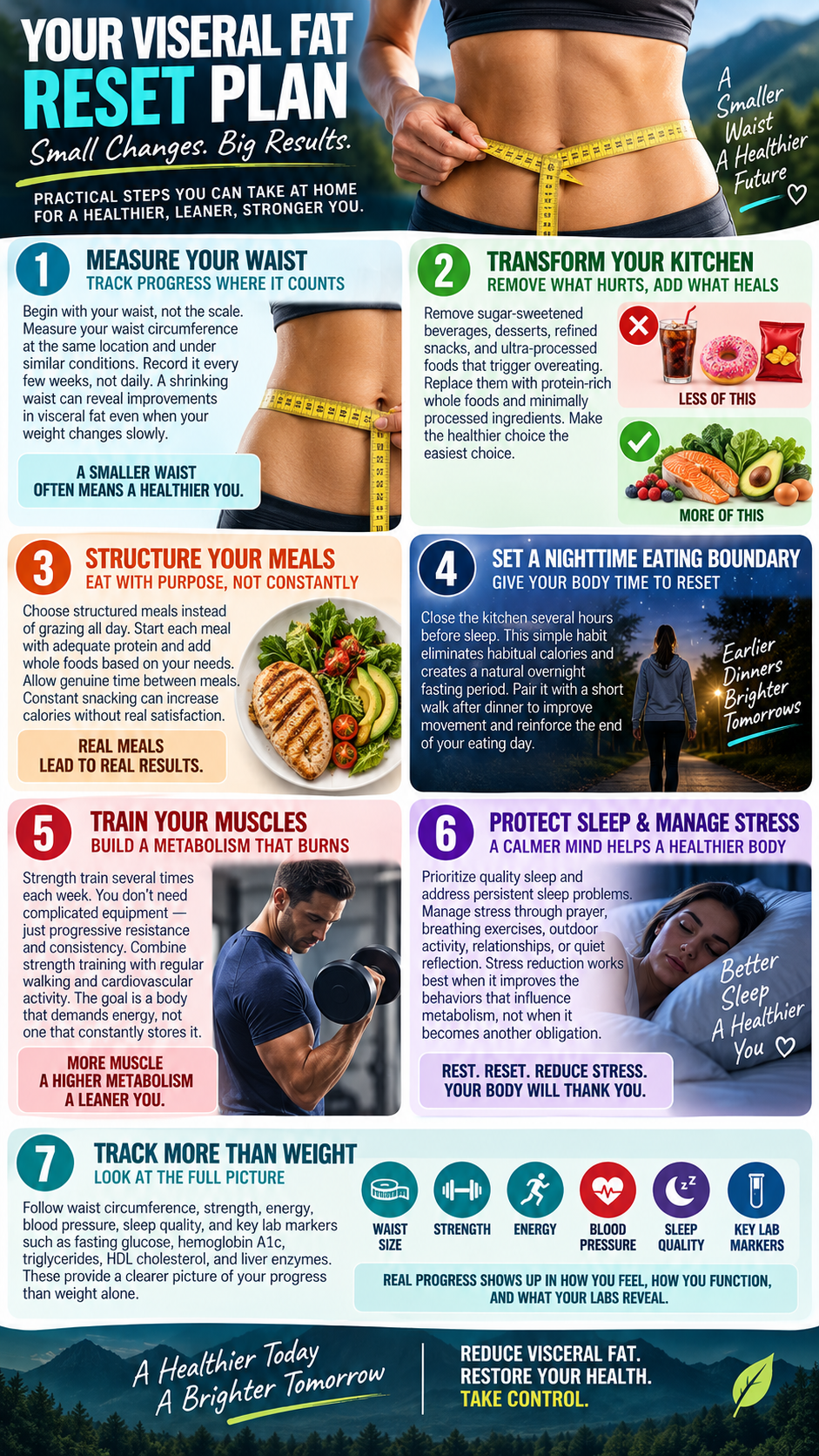
Establish a nighttime eating boundary. Close the kitchen several hours before sleep whenever practical. That single behavior can eliminate habitual calories while creating a natural overnight fasting period. Combine that routine with a short walk after dinner to improve movement and reinforce the end of the eating day.
Train your muscles several times each week. You do not need complicated equipment, although resistance should gradually increase as strength improves. Combine strength training with frequent walking and regular cardiovascular activity. The objective is creating a body that demands energy rather than constantly storing it.
Protect sleep aggressively and address persistent sleep problems. Manage chronic stress through prayer, breathing exercises, outdoor activity, relationships, quiet reflection, or other sustainable practices. Stress reduction works best when it changes the behaviors that influence metabolism rather than becoming another obligation.
Finally, track more than weight. Follow waist circumference, strength, energy, blood pressure, sleep quality, and appropriate metabolic laboratory markers. Fasting glucose, hemoglobin A1c, triglycerides, HDL cholesterol, and liver enzymes can provide useful information when interpreted within the larger clinical picture.
The Goal Is Not Simply a Smaller Belly
Visceral fat tells a larger metabolic story. It can reflect years of excessive energy intake, inactivity, lost muscle, poor sleep, stress, insulin resistance, and liver dysfunction. Therefore, attacking the belly while ignoring the environment that created it rarely provides a complete solution.
The encouraging reality is that your metabolism remains adaptable. Muscles respond when challenged. Insulin sensitivity can improve. Liver fat can decline. Visceral fat can decrease. Sleep can recover, food habits can change, and metabolic health can move in a better direction.
Do not measure success only by how much less space your body occupies. Measure whether your body functions better. Build muscle, move after meals, prioritize whole foods, control unnecessary eating, improve sleep, and create consistent daily rhythms. Those habits address the physiology beneath the waistline rather than merely fighting its appearance.
The belly may be where visceral fat becomes visible, but the real story unfolds throughout the body. Change the metabolic environment, and the waist often follows. More importantly, the organs hidden behind that waist finally receive the healthier environment they need.