The Golden Root That Sparked a Modern Controversy
Turmeric has stood the test of time in a way that very few natural compounds have, woven deeply into the fabric of ancient healing systems long before modern medicine attempted to quantify its value. In Ayurvedic and Eastern traditions, turmeric was not isolated, purified, or reduced into a single molecule, yet it was consistently used to address inflammation, digestive distress, wound healing, and systemic imbalance. It was not treated as a drug, but as a daily therapeutic food that communicated with the body in subtle yet profound ways. The modern era, however, has taken a drastically different approach, stripping turmeric down to curcumin, labeling it the “active ingredient,” and then declaring it flawed due to something called poor bioavailability, which has led to widespread confusion among consumers trying to determine whether turmeric is genuinely powerful or simply overhyped.
This transformation reflects a deeper issue within modern healthcare, where there is a persistent tendency to force natural compounds into a pharmaceutical framework that was never designed to understand them. Once curcumin was isolated and studied like a drug, expectations shifted toward measurable blood levels, stability, and direct biochemical targeting, which created a mismatch between what researchers expected and how the compound actually behaves in a living human body. When curcumin failed to meet those drug-like expectations, the conclusion was not that the model was flawed, but that the compound itself was ineffective, which opened the door for supplement companies to step in and “fix” the problem through engineered formulations that promise better absorption.
Understanding the Bioavailability Narrative: Where It Comes From
The concept of bioavailability has become a dominant talking point in both clinical research and supplement marketing, often used to imply that without enhancement, curcumin is poorly absorbed and therefore ineffective. In strict scientific terms, bioavailability refers to how much of a substance enters the bloodstream in its original form after ingestion, a measurement that is extremely useful when evaluating pharmaceutical drugs but far less meaningful when applied to complex plant compounds. Curcumin is rapidly metabolized in the liver and intestines, undergoing transformation into various metabolites through natural detoxification pathways, which results in low detectable levels of free curcumin in the blood and has been interpreted as poor absorption.
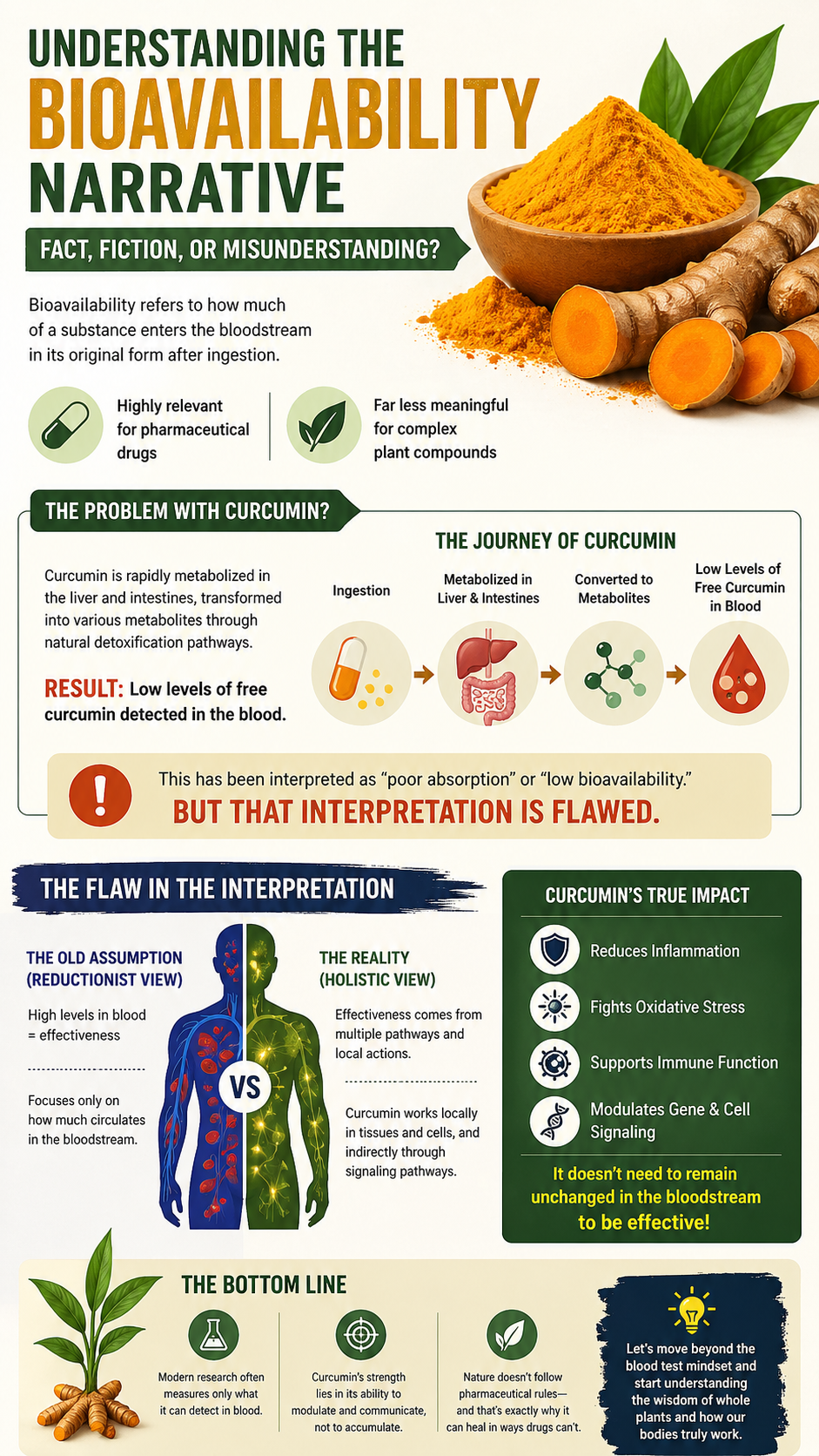
The flaw in this interpretation lies in the assumption that circulating levels in the bloodstream are the primary indicator of effectiveness, which ignores the fact that many natural compounds exert their effects locally within tissues or indirectly through signaling pathways. Curcumin does not need to remain unchanged in the bloodstream to influence inflammation, oxidative stress, and immune function, yet modern research frameworks often fail to account for these indirect mechanisms. This has led to a narrative that positions curcumin as deficient, when in reality it may be functioning exactly as intended within the body’s complex biological systems.
The Hidden Problem: Reductionism in Modern Health Science
The controversy surrounding curcumin’s bioavailability is a direct reflection of the reductionist approach that dominates modern health science, where complex systems are broken down into isolated components in an attempt to understand their function. While this approach has contributed to advancements in pharmacology, it becomes problematic when applied to whole-food compounds like turmeric, which derive their therapeutic effects from the interaction of multiple constituents working together. Turmeric contains not only curcumin but also essential oils, polysaccharides, and a variety of other bioactive compounds that influence absorption, metabolism, and biological activity in ways that cannot be replicated by isolating a single molecule.
When curcumin is extracted and studied in isolation, it loses the context that shapes its behavior, much like removing a single instrument from an orchestra changes the entire composition of the music. This loss of synergy is rarely acknowledged in mainstream discussions, yet it is critical to understanding why isolated curcumin behaves differently than whole turmeric. The reductionist mindset also influences how success is measured, prioritizing narrow biomarkers such as plasma concentration over broader indicators of health, which can lead to the dismissal of effective natural therapies simply because they do not conform to conventional standards.
What the Bioavailability Problem Is Really Doing to the Body
In response to the perceived issue of poor bioavailability, the supplement industry has developed a range of strategies designed to increase curcumin absorption, including the use of piperine, liposomal delivery systems, and nanoparticle technologies. While these approaches can increase measurable levels of curcumin in the bloodstream, they also introduce unintended consequences that are often overlooked. Piperine, for example, enhances absorption by inhibiting enzymes responsible for detoxification in the liver, which slows the breakdown and elimination of not only curcumin but also other substances, including medications and environmental toxins.

This interference with detoxification pathways can create a bottleneck in the body’s ability to process and eliminate harmful compounds, leading to accumulation and increased stress on the liver over time. Instead of supporting the body’s natural healing processes, these enhancements may disrupt them, contributing to imbalances that can exacerbate inflammation rather than resolve it. Liposomal and nanoparticle formulations, while marketed as advanced solutions, also raise concerns about long-term safety, as they alter the natural delivery and distribution of compounds in ways that may bypass the body’s regulatory mechanisms.
Inflammation: The Real Battlefield
To fully understand the role of turmeric and curcumin, it is essential to shift the focus from bioavailability to the underlying issue they are intended to address, which is inflammation. Inflammation is a natural and necessary process that helps the body respond to injury and infection, but when it becomes chronic, it contributes to a wide range of health problems, including cardiovascular disease, metabolic disorders, and autoimmune conditions. Mainstream medicine often approaches inflammation as something to be suppressed, using medications that block specific pathways and provide temporary relief without addressing the root causes.
Functional medicine takes a fundamentally different approach, viewing inflammation as a signal rather than a problem in itself, and seeking to identify and correct the underlying factors that are driving it. These factors often include poor diet, gut dysfunction, toxic exposure, and chronic stress, all of which create an internal environment that promotes persistent inflammation. Turmeric and curcumin operate within this broader context, influencing multiple pathways involved in inflammation and oxidative stress, and helping to restore balance rather than simply shutting down the body’s response.
Why Turmeric Still Works Despite Low Bioavailability
Despite the widespread belief that curcumin’s low bioavailability limits its effectiveness, both historical use and modern research continue to demonstrate its therapeutic potential. One of the key reasons for this is that curcumin does not need to achieve high concentrations in the bloodstream to exert its effects, as much of its activity occurs locally within the gastrointestinal tract. The gut is a central hub for immune function and plays a critical role in regulating inflammation throughout the body, and curcumin’s ability to support gut health may be one of its most important mechanisms of action.
By reducing inflammation in the gut, supporting the integrity of the intestinal barrier, and influencing the composition of the microbiome, turmeric can create systemic effects that extend far beyond the digestive system. Additionally, the metabolites produced during curcumin’s breakdown may retain biological activity, contributing to its overall effectiveness in ways that are not captured by traditional measurements. This broader perspective challenges the assumption that higher blood levels are necessary for effectiveness and highlights the importance of considering the full range of interactions that occur within the body.
The Real Root Cause: A Mismatch Between Nature and Modern Thinking
The debate over turmeric and curcumin ultimately reflects a deeper disconnect between natural healing principles and modern scientific paradigms, where the complexity of nature is often reduced to simplified models that fail to capture its full potential. Nature operates through synergy, balance, and interconnected systems, while modern medicine often seeks to isolate and control individual variables, creating a framework in which natural compounds are judged by criteria that do not fully reflect their function. This mismatch has led to a widespread misunderstanding of turmeric and its role in supporting health.
By attempting to force turmeric into a pharmaceutical model, we risk overlooking the very qualities that make it effective, and the focus on bioavailability has become a distraction from the more important question of how to address the root causes of inflammation. True healing requires a shift in perspective, moving away from the pursuit of isolated metrics and toward an understanding of the body as a dynamic, interconnected system that responds to a wide range of influences.
Actionable Steps: How to Use Turmeric Effectively at Home
To harness the full potential of turmeric, it is essential to adopt a practical approach that aligns with the body’s natural processes, beginning with the use of whole turmeric rather than isolated curcumin whenever possible. Incorporating turmeric into daily meals provides a consistent source of its full spectrum of bioactive compounds, allowing for gradual and sustained support of inflammatory pathways without overwhelming the body. Cooking turmeric with healthy fats such as coconut oil or olive oil enhances its absorption naturally, reflecting traditional preparation methods that have been used for centuries.
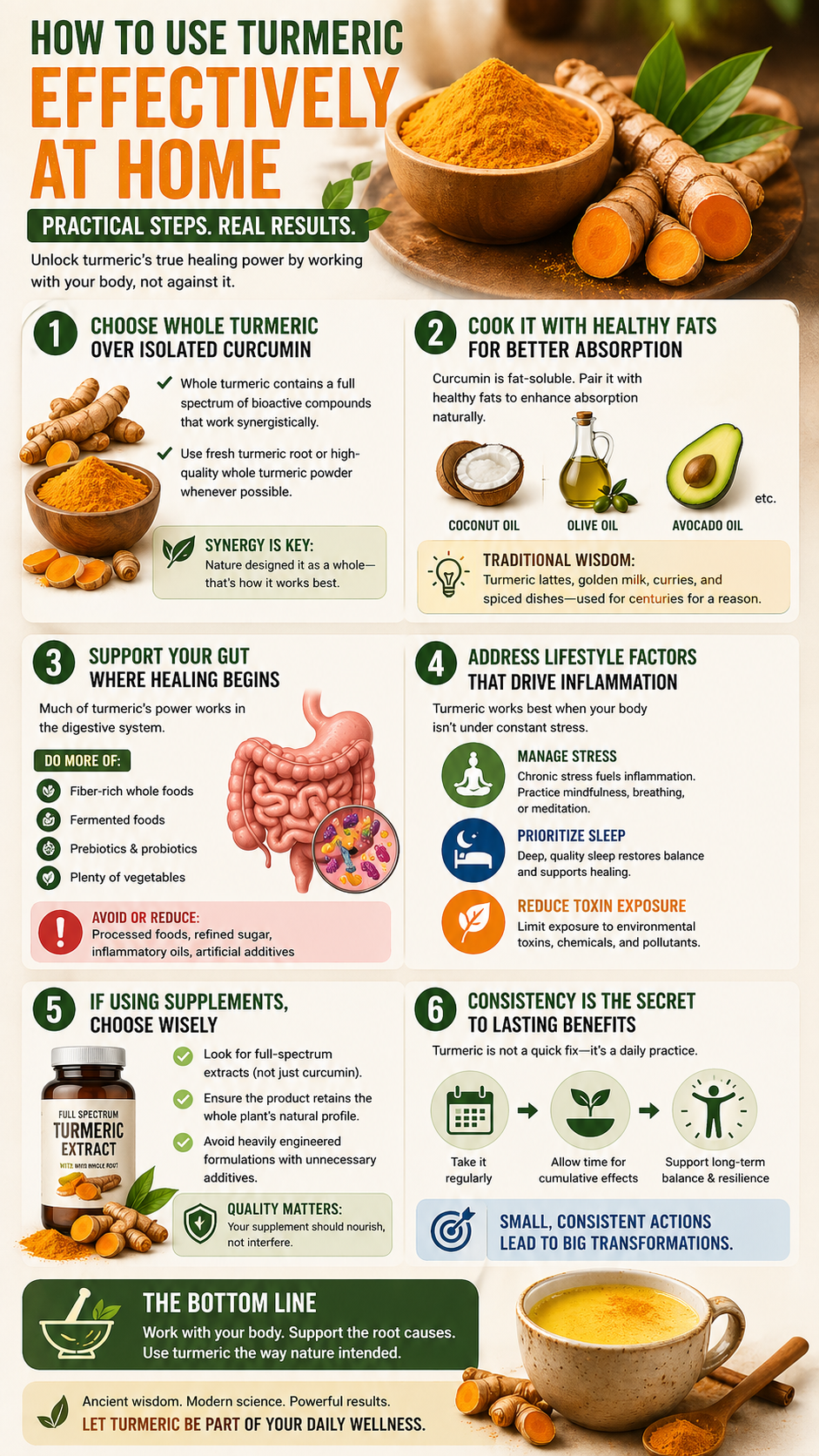
Supporting gut health is another critical component of maximizing turmeric’s benefits, as much of its activity occurs within the digestive system, and this involves reducing the intake of processed foods, refined sugars, and inflammatory oils while focusing on nutrient-dense, whole foods that promote microbial balance. Addressing lifestyle factors such as stress, sleep, and environmental toxin exposure further enhances the body’s ability to respond to natural interventions, creating an environment in which turmeric can exert its effects more effectively.
For those who choose to use supplements, selecting high-quality, full-spectrum turmeric extracts that preserve the plant’s natural composition is preferable to heavily engineered formulations, and consistency in use is key, as the benefits of turmeric are cumulative and depend on regular intake over time. By focusing on these foundational principles, individuals can move beyond the confusion surrounding bioavailability and begin to experience the true benefits of this ancient remedy.
Conclusion: Scam or Superpower
The question of whether turmeric’s bioavailability issue represents a scam or a legitimate concern reflects a complex interplay of scientific observation, marketing influence, and philosophical perspective, but what becomes clear upon deeper investigation is that the narrative has been shaped in a way that prioritizes measurable metrics over meaningful outcomes. When viewed through a functional lens, turmeric emerges not as a flawed compound in need of enhancement, but as a powerful tool for supporting balance and resilience within the body.
Its effects extend beyond the bloodstream, influencing the gut, immune system, and cellular signaling pathways in ways that cannot be fully captured by traditional measurements, and by shifting the focus from bioavailability to the root causes of inflammation, individuals can unlock the true potential of turmeric. The real issue is not whether turmeric works, but whether we are willing to rethink the assumptions that have shaped our understanding of it, and in doing so, move toward a more comprehensive and effective approach to healing.