The Disease Can Begin Long Before the Diagnosis
There is a strange moment that happens in thyroid disease long before many people ever receive a diagnosis. The body begins sending signals, but the laboratory report still looks reassuring. Energy disappears earlier in the afternoon. Weight becomes harder to control despite unchanged habits. Cold temperatures become unusually uncomfortable. Hair collects around the shower drain, digestion slows, and concentration starts slipping. Yet the standard thyroid test returns inside the laboratory reference range. The patient hears some version of the same conclusion: “Your thyroid looks normal.” The problem is that normal hormone production does not necessarily mean nothing has started.
Autoimmune thyroid disease can develop across a much longer timeline than most people realize. The thyroid may continue producing adequate hormone while immune activity develops against thyroid-related proteins. During this period, thyroid peroxidase antibodies, called TPO antibodies, or thyroglobulin antibodies may become detectable. Research has found thyroid antibodies years before some patients receive an autoimmune thyroid diagnosis. However, antibodies do not guarantee future hypothyroidism. Some people remain antibody-positive without progressing to overt thyroid failure. That distinction matters because antibodies should function as information, not a prediction of destiny.
The Difference Between Thyroid Function and Thyroid Autoimmunity
One major problem begins with the way thyroid health is often discussed. Thyroid function and thyroid autoimmunity are related, but they are not identical. Thyroid-stimulating hormone, or TSH, reflects communication between the pituitary gland and thyroid. When circulating thyroid hormone becomes inadequate, the pituitary usually releases more TSH. That rising signal tells the thyroid to increase production. Free T4 adds another valuable measurement because it helps assess available circulating thyroid hormone. Together, these markers provide important information about thyroid function.
Antibodies answer a different question. Instead of asking how much hormone the thyroid currently produces, antibody testing investigates autoimmune recognition. Thyroid peroxidase helps the gland manufacture thyroid hormones. Thyroglobulin provides an essential protein framework involved in hormone production and storage. When antibodies develop against these structures, they can indicate thyroid autoimmunity. Therefore, someone can have normal TSH and free T4 while also carrying elevated thyroid antibodies. The thyroid may still accomplish its hormonal job even while an autoimmune process has already begun.
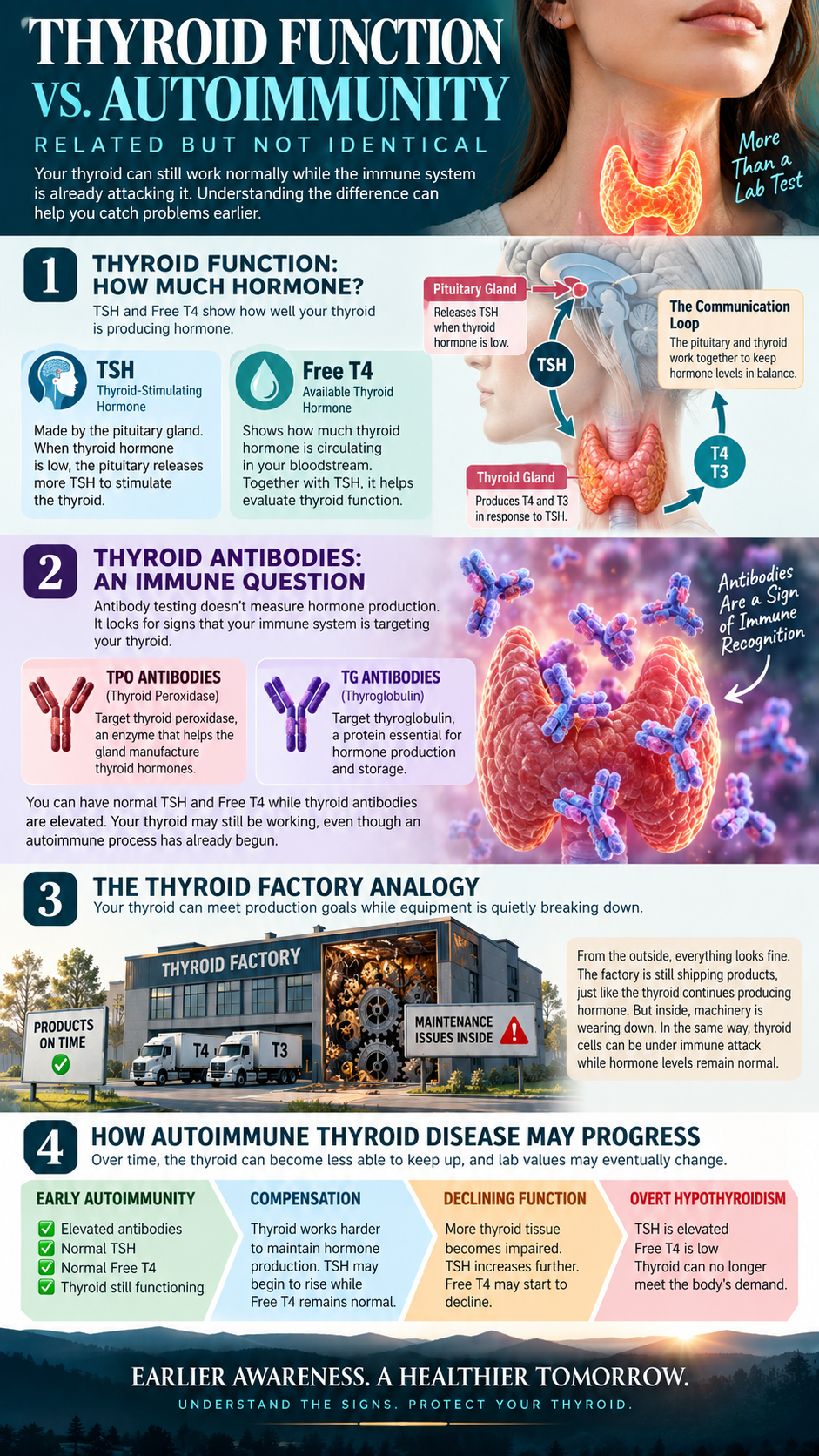
Imagine a factory that continues meeting every production deadline while machinery slowly deteriorates behind the walls. Finished products still leave the loading dock on schedule. Management sees acceptable production numbers and assumes everything works perfectly. Yet maintenance crews inside the building see another story unfolding. The thyroid can experience something similar. Hormone output may remain sufficient because surviving thyroid cells compensate effectively. Standard functional measurements can therefore remain acceptable during earlier stages of autoimmune activity.
Eventually, compensation may become harder. Chronic autoimmune thyroiditis can involve lymphocytes entering thyroid tissue and inflammatory signaling affecting the gland. Over time, enough functional tissue may become impaired to influence hormone production. The pituitary responds by increasing TSH, pushing the thyroid harder. Free T4 can initially remain normal despite that additional stimulation. If functional capacity declines further, thyroid hormone levels can eventually fall and overt hypothyroidism can emerge.
The Thyroid Is Not Simply a Weight-Loss Gland
Most people associate thyroid disease with metabolism and weight gain. That description barely captures the thyroid’s reach. Thyroid hormones influence energy expenditure, temperature regulation, cardiovascular function, gastrointestinal movement, neurological activity, muscle performance, cholesterol metabolism, skin health, and reproductive physiology. Almost every organ responds directly or indirectly to thyroid hormone signaling. This explains why declining thyroid function can produce seemingly unrelated symptoms across the body.
Energy problems often receive the most attention. Thyroid hormones help regulate metabolic activity within cells, including processes connected with mitochondrial energy production. When thyroid signaling becomes inadequate, someone may feel exhausted despite adequate sleep. Exercise recovery can worsen, and ordinary activities may require greater effort. Cold intolerance can develop because thyroid hormones contribute to heat production. These changes can feel mysterious when routine testing remains near the edge of normal.
The digestive system can also change. Reduced thyroid activity can slow gastrointestinal motility, contributing to constipation and abdominal discomfort. Skin may become dry, while hair growth patterns can change. Cholesterol levels may rise because thyroid hormones participate in lipid metabolism. Muscles can become painful, stiff, or unusually weak. None of these symptoms belongs exclusively to thyroid disease, which makes thoughtful investigation especially important.
The brain may provide some of the most frustrating signals. People often describe slower thinking, poor concentration, forgetfulness, and an inability to maintain previous mental stamina. Mood can change alongside cognitive symptoms. Reproductive function may also shift, including changes in menstrual patterns. These effects demonstrate why thyroid dysfunction can feel like a whole-body problem rather than an isolated gland disorder.
Why Does the Immune System Target the Thyroid?
The deeper question is not simply whether antibodies exist. The more interesting question asks why immune tolerance became disrupted. Under normal circumstances, the immune system performs an extraordinary balancing act. It must identify dangerous organisms while avoiding unnecessary attacks against the body’s own tissues. Specialized immune mechanisms continuously maintain that distinction. Autoimmune disease develops when portions of this tolerance system malfunction and self-tissue becomes an immune target.
Hashimoto’s thyroiditis represents one expression of that breakdown. Genetics clearly influence susceptibility, which helps explain why autoimmune thyroid disorders can cluster within families. However, genes alone cannot explain every case. Environmental influences, nutrient status, hormonal changes, medications, infections, and other immune pressures may interact with inherited susceptibility. Rather than searching for one universal cause, a more useful model examines how several biological pressures may converge within a susceptible person.
Iodine illustrates this complexity perfectly. The thyroid requires iodine because thyroid hormones cannot be produced without it. Too little iodine can therefore impair thyroid physiology. However, excessive iodine exposure can also create problems in susceptible individuals and has been associated with autoimmune thyroiditis. Modern supplementation complicates the picture because some thyroid formulas provide concentrated iodine or kelp extracts. A nutrient can be essential at appropriate levels and problematic when consumed excessively.
Selenium tells a similar story. The thyroid contains selenium-dependent enzymes involved in antioxidant defense and thyroid hormone metabolism. Hormone production also creates oxidative chemistry inside the gland, making antioxidant protection especially important. Researchers have studied selenium supplementation in Hashimoto’s disease, with some trials showing reductions in thyroid antibody concentrations. However, lowering antibodies does not automatically prove that thyroid tissue has healed or future hypothyroidism has been prevented. Selenium should therefore be viewed through the lens of nutritional adequacy rather than megadosing.
The Gut-Immune-Thyroid Connection
The gastrointestinal system deserves attention because it represents an enormous meeting place between the outside world and human immunity. Food proteins, microorganisms, microbial metabolites, and environmental compounds constantly interact with the intestinal environment. A large portion of immune activity occurs around this interface. Researchers have consequently become increasingly interested in relationships between intestinal microbiota, barrier function, nutrient absorption, and autoimmune diseases.
This does not mean every person with Hashimoto’s has a damaged intestinal barrier. It also does not prove that fixing the microbiome cures autoimmune thyroid disease. Those claims stretch the science beyond what current evidence can establish. However, digestive problems should not be ignored when thyroid autoimmunity exists. Persistent diarrhea, constipation, bloating, unexplained iron deficiency, or abdominal discomfort may justify further evaluation. Celiac disease deserves particular consideration because it occurs more frequently among people with autoimmune thyroid disease.
Digestive dysfunction can also affect nutritional status. Poor absorption may influence iron, vitamin B12, folate, and other nutrients required throughout metabolism. Someone may therefore experience overlapping symptoms from thyroid dysfunction, nutritional deficiencies, and gastrointestinal disease. Treating every complaint as purely thyroid-related can miss important contributors. A root-cause investigation asks how these systems interact rather than forcing every symptom into one diagnostic box.
The Years Before Hypothyroidism May Be the Most Important
This brings us back to the person holding a supposedly reassuring thyroid report. A normal TSH does not prove that thyroid autoimmunity is absent. Likewise, elevated thyroid antibodies do not prove that hypothyroidism will inevitably develop. Both truths must exist together. The goal should never be frightening people with positive antibodies. The goal should be recognizing that autoimmunity and hormone failure can occupy different places on the same timeline.
Those years create an important opportunity for investigation. Family history can be reviewed. Iodine exposure can be examined. Nutritional deficiencies can be identified. Persistent gastrointestinal symptoms can receive appropriate evaluation. Medication history, pregnancy-related thyroid changes, metabolic health, sleep quality, smoking, and relevant environmental exposures can also enter the discussion. No single factor explains every case, but ignoring the larger biological environment wastes valuable information.
Thyroid antibodies should therefore be viewed as an early warning rather than a final verdict. They tell us that something involving immune recognition has changed. They cannot tell us exactly how quickly disease will progress, whether thyroid failure will occur, or which factor initiated the process. Those questions require context, monitoring, and careful investigation.
The greatest mistake may be assuming disease begins when the laboratory finally becomes abnormal enough to earn a diagnosis. Biology rarely works that way. The body adapts, compensates, and struggles to preserve function long before obvious failure appears. Thyroid autoimmunity provides a powerful example of that hidden timeline. By the time hormone production clearly declines, the story may have been unfolding for years. Recognizing that earlier chapter changes the conversation from simply waiting for thyroid failure to understanding what the body has been signaling all along.
The Window Before Thyroid Disease
Finding thyroid antibodies before overt hypothyroidism creates an unusual opportunity. The thyroid may still produce adequate hormones, yet the immune system has already revealed something important. This stage should not create panic, nor should it automatically trigger thyroid hormone treatment. Instead, it should change the questions being asked. Rather than waiting for TSH to climb, attention can turn toward thyroid function, immune activity, nutrition, metabolic health, digestive problems, and environmental influences. The objective is not to promise a cure for Hashimoto’s disease. The objective is to identify modifiable pressures while the thyroid still possesses substantial functional capacity.
That distinction matters because antibodies represent immune recognition, not thyroid failure itself. Some people remain antibody-positive for years without developing overt hypothyroidism. Others gradually lose thyroid function as autoimmune thyroiditis progresses. No laboratory test can perfectly predict which path one individual will follow. However, ignoring antibodies until hormone production deteriorates wastes potentially useful information. The earlier period offers time to investigate why the immune system may be struggling and what conditions can reasonably be improved.
Stop Chasing the Antibody Number
Once someone discovers elevated TPO or thyroglobulin antibodies, the natural instinct involves wanting those numbers lowered immediately. This understandable goal can quickly become misleading. Antibody concentrations fluctuate, and a falling antibody level does not necessarily mean thyroid tissue has regenerated. Likewise, persistently elevated antibodies do not automatically mean thyroid function is rapidly deteriorating. The person matters more than the antibody number.
A more useful approach follows thyroid function while examining the larger clinical picture. TSH and free T4 remain central measurements because they show whether the gland continues meeting hormonal demands. Symptoms, examination findings, medications, family history, pregnancy status, and other medical conditions add essential context. Thyroid ultrasound can sometimes provide useful structural information when clinically indicated. The objective involves understanding the thyroid’s trajectory rather than repeatedly celebrating or fearing one antibody measurement.
This approach also protects patients from aggressive protocols designed only to manipulate laboratory numbers. Supplements, extreme diets, unnecessary detoxification programs, and excessive iodine can create new problems. A lower antibody measurement means little if someone becomes nutritionally depleted or metabolically unhealthy. True progress should improve the biological environment surrounding the thyroid while preserving overall health.
Look at the Terrain Around Autoimmunity
Autoimmune disease rarely fits a simple one-cause, one-solution model. Genetic susceptibility interacts with environmental influences, immune regulation, hormonal changes, nutrition, infections, and other physiological pressures. That complexity explains why two people with similar antibody levels can experience completely different outcomes. Their antibodies may look similar on paper while their biological environments differ substantially.
Iodine deserves particular attention because both deficiency and excess can affect thyroid physiology. The thyroid needs iodine to manufacture T4 and T3. However, high iodine exposure may aggravate autoimmune thyroiditis in susceptible individuals. This creates an important distinction between replacing a deficiency and flooding the thyroid with unnecessary amounts. Supplements containing kelp, seaweed extracts, or concentrated iodine should therefore receive careful scrutiny when thyroid antibodies are present.
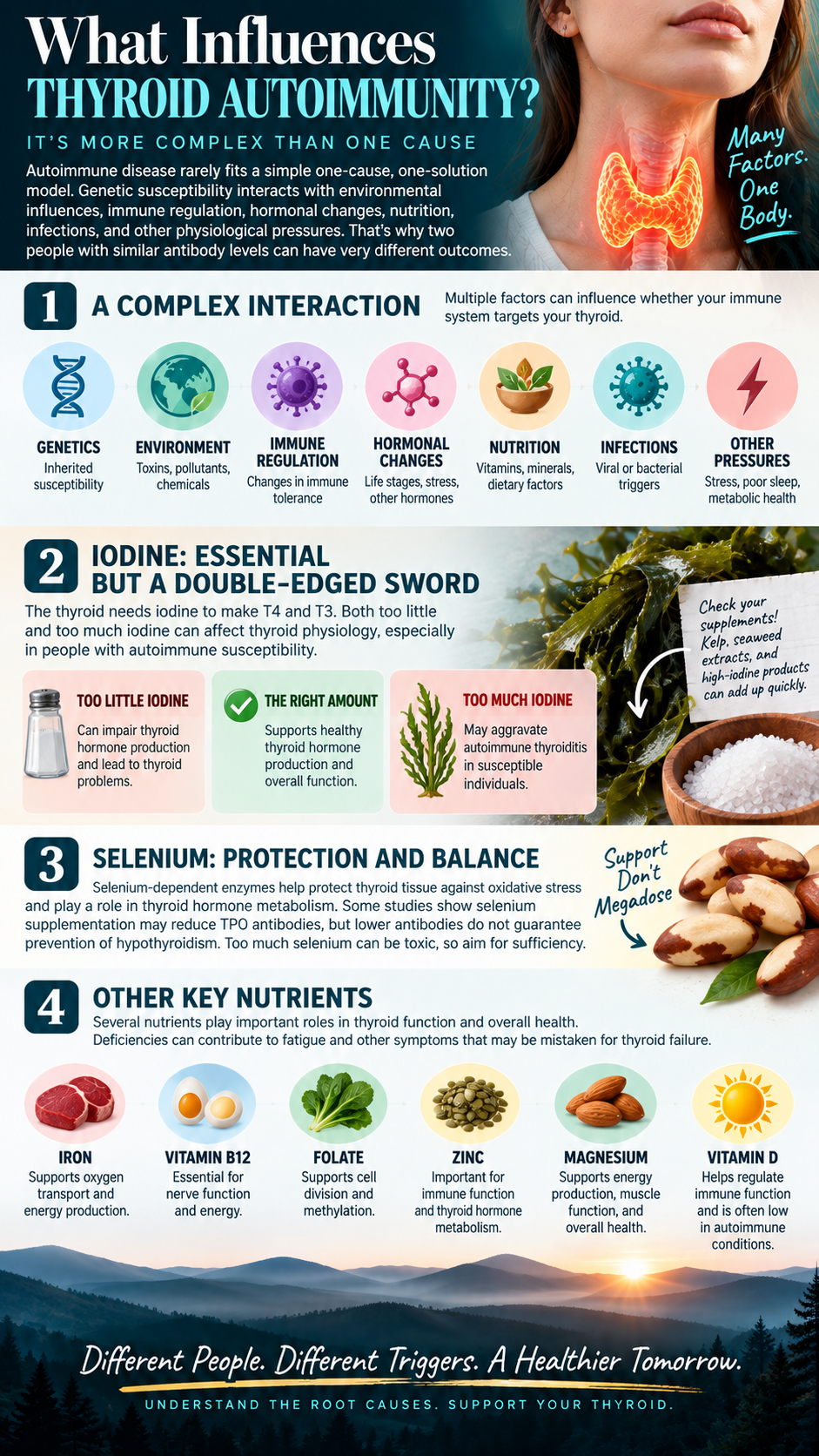
Selenium provides another example of biological balance. Selenium-dependent enzymes help protect thyroid tissue against oxidative stress and participate in thyroid hormone metabolism. Some clinical trials have reported reductions in TPO antibodies following selenium supplementation. However, antibody reduction does not prove prevention of hypothyroidism, and excessive selenium can become toxic. Nutritional sufficiency remains a more defensible goal than indiscriminate high-dose supplementation.
Iron, vitamin B12, folate, zinc, magnesium, and vitamin D can also deserve investigation when symptoms or history suggest deficiency. Fatigue attributed entirely to Hashimoto’s may sometimes include iron deficiency, anemia, poor sleep, or another problem. Correcting a documented deficiency can improve physiology without pretending that one nutrient caused the autoimmune condition.
The Gut Deserves Investigation, Not Assumptions
Digestive health belongs in the thyroid conversation, but accuracy matters. It has become fashionable to blame every autoimmune disorder on “leaky gut.” Human immunology is considerably more complicated. Intestinal barrier function and the microbiome influence immune signaling, but current evidence does not support claiming that every case of Hashimoto’s begins inside the gut.
Nevertheless, persistent digestive symptoms should not be dismissed. Celiac disease has an established association with autoimmune thyroid disease. Chronic diarrhea, unexplained constipation, abdominal discomfort, bloating, iron deficiency, or unexplained weight changes may justify appropriate evaluation. Identifying celiac disease matters because treatment requires more than casually reducing gluten intake. Accurate testing and proper diagnosis can significantly change long-term management.
The microbiome represents another developing research area. Intestinal organisms produce metabolites that interact with immunity, metabolism, and barrier function. Researchers continue investigating whether particular microbial patterns contribute to autoimmune thyroid disease. These findings remain fascinating but incomplete. Rather than purchasing endless microbiome supplements, patients can begin with fundamentals that support gastrointestinal and metabolic health.
Metabolic Health Changes the Biological Environment
The thyroid does not operate independently from the rest of metabolism. Insulin signaling, body composition, liver function, sleep, physical activity, and dietary quality all influence the physiological environment. Improving these systems does not guarantee disappearance of thyroid antibodies. However, stronger metabolic health reduces several burdens that can compound fatigue, inflammation, weight gain, and poor recovery.
Blood sugar instability deserves special attention because people often interpret every energy crash as a thyroid symptom. Diets dominated by refined carbohydrates and frequent snacking can produce substantial glucose fluctuations. Poor sleep can worsen insulin sensitivity further. Low muscle mass reduces one of the body’s major destinations for glucose. These problems can coexist with thyroid autoimmunity and magnify the way someone feels.
Movement becomes especially valuable here. Walking after meals can support glucose regulation without requiring punishing exercise. Resistance training helps preserve muscle and metabolic capacity. Exercise also supports cardiovascular health, mood, sleep, and long-term function. Someone experiencing severe fatigue should progress carefully, because exhausting an already struggling body accomplishes little.
Sleep and Stress Cannot Remain Afterthoughts
Sleep may be one of the most underestimated variables in chronic disease. Inadequate sleep affects glucose regulation, appetite hormones, immune signaling, cognitive performance, and stress physiology. Someone sleeping five hours nightly cannot supplement their way around that biological reality. Improving sleep will not magically eliminate Hashimoto’s disease, but it strengthens the environment in which immune regulation occurs.
Chronic psychological stress requires similar nuance. Stress should not receive blame for every autoimmune disease, and patients should never hear that they caused their illness by worrying. However, persistent stress can disrupt sleep, food choices, glucose regulation, autonomic function, and inflammatory signaling. Addressing those effects belongs within comprehensive care. The goal is not achieving a stress-free existence. It involves improving the body’s capacity to recover from unavoidable stress.
What You Can Begin Doing at Home
Start with your kitchen rather than your supplement cabinet. Build meals around nutrient-dense whole foods and adequate protein. Reduce heavily refined foods that provide calories without substantial micronutrition. Include tolerated vegetables, fruits, healthy fats, and quality protein sources according to individual needs. Avoid creating a massive list of forbidden foods without evidence that those foods cause problems for you. Restrictive diets can become nutritionally inadequate when followed carelessly.
Next, inspect every supplement you currently take. Look specifically for iodine, kelp, seaweed concentrates, selenium, and overlapping ingredients across multiple products. People sometimes unknowingly consume several times the intended dose because the same nutrient appears in numerous formulas. More does not mean better. Discuss substantial iodine or selenium supplementation with an appropriately qualified healthcare professional, particularly when antibodies or abnormal thyroid function exist.
Create a consistent sleep schedule and protect it aggressively. Aim for a dark bedroom, predictable bedtime, morning daylight, and reduced bright light before sleep. Move caffeine earlier in the day when sleep remains poor. Keep alcohol from becoming a nightly sleep strategy because it can disrupt normal sleep architecture. Track how you feel after several weeks rather than expecting transformation after two nights.
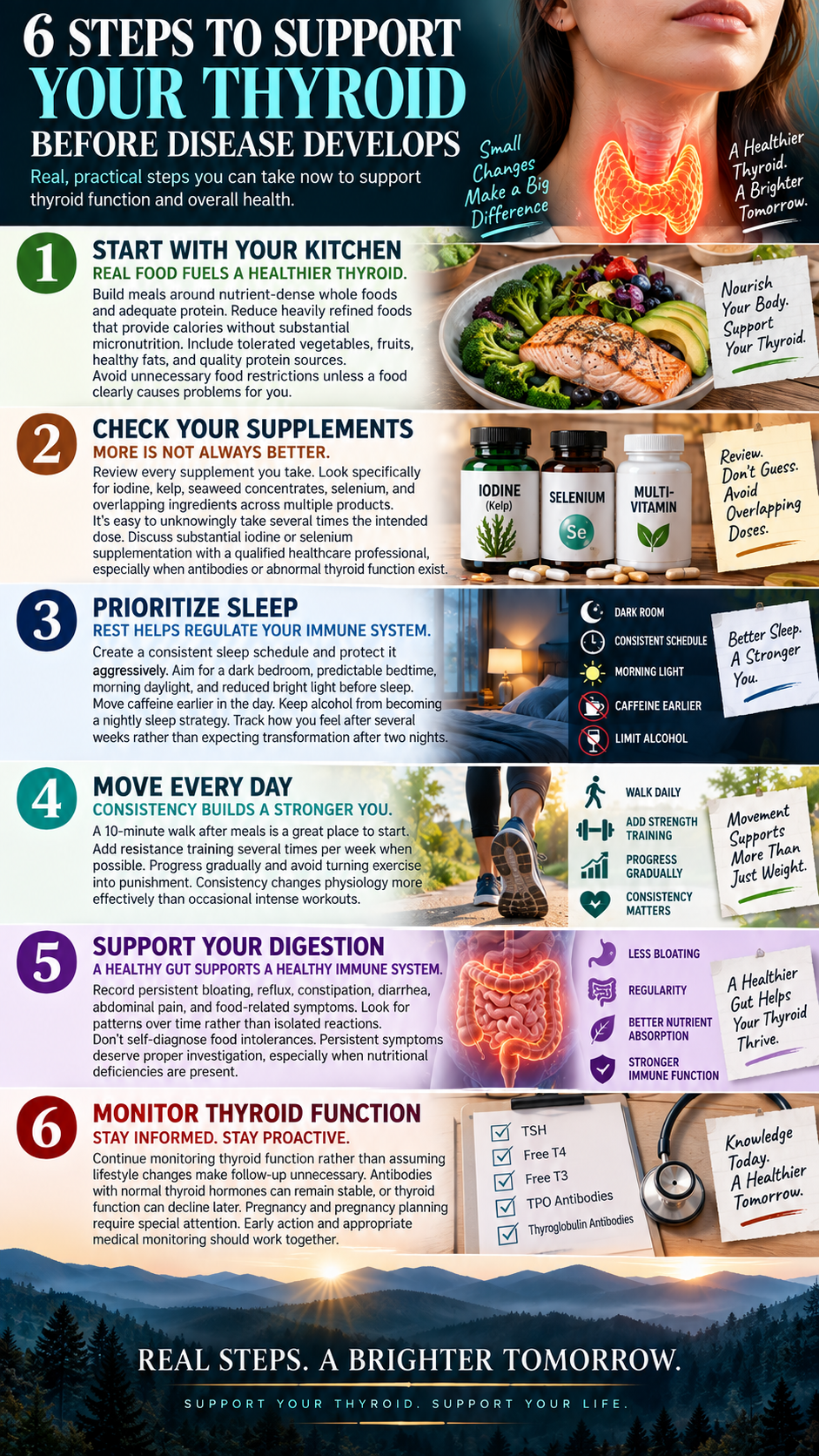
Begin moving every day. A ten-minute walk after meals provides an accessible starting point for many people. Add resistance training several times weekly when health and physical capacity permit. Progress gradually instead of turning exercise into punishment. Consistency changes physiology more effectively than occasional extreme workouts followed by exhaustion.
Pay attention to digestion. Record persistent bloating, reflux, constipation, diarrhea, abdominal pain, and food-related symptoms. Do not immediately diagnose yourself with food intolerance or intestinal permeability. Repeated patterns provide better information than isolated reactions. Persistent symptoms deserve proper investigation, especially when nutritional deficiencies accompany them.
Finally, monitor thyroid function instead of assuming lifestyle changes make follow-up unnecessary. Positive antibodies with normal thyroid hormones can remain stable, or thyroid function can decline later. Pregnancy and pregnancy planning require particular attention because thyroid hormone requirements change during this period. Early action and appropriate medical monitoring should work together rather than compete.
The Goal Is Not to Wait for Failure
The greatest opportunity created by early thyroid antibodies is time. They can appear while the thyroid still possesses enough functional tissue to maintain hormone production. That period should not become a countdown toward inevitable hypothyroidism. It should become a reason to investigate intelligently.
Correct genuine deficiencies. Avoid excessive iodine. Strengthen metabolic health. Protect sleep and recovery. Investigate persistent gastrointestinal problems. Review medications and supplements. Reduce tobacco smoke and unnecessary environmental exposures. Continue monitoring thyroid function so meaningful changes are recognized rather than guessed.
Most importantly, stop treating the body like disconnected laboratory compartments. The thyroid exists inside an immune system, digestive system, nervous system, metabolic system, and human life. Each influences the conditions surrounding health.
Thyroid antibodies may therefore represent something more valuable than a frightening laboratory abnormality. They can become an early signal that encourages investigation before substantial thyroid function disappears. The goal is not to obsess over making antibodies reach zero. The goal is to understand the biological terrain, remove reasonable obstacles, support what remains healthy, and watch the thyroid carefully.
By the time TSH rises dramatically, the story may have been developing for years. Finding antibodies earlier gives us something precious that late-stage disease cannot return: an earlier chapter. What we do with that chapter deserves far more attention than simply waiting for the next laboratory result.