There are few medications in modern medicine as widely prescribed, as strongly defended, and as rarely questioned as statins. They are handed out to millions of people every year with a simple promise: lower your cholesterol and you will reduce your risk of heart disease. For many, the decision to take a statin is presented as obvious, almost inevitable, especially as they age. Yet beneath that surface lies a far more complex and controversial reality that deserves careful examination.
This is not a conversation about rejecting all medication or dismissing every benefit of statins. There are situations where they may play a role, particularly in acute or high-risk scenarios. However, the way they are commonly prescribed, the assumptions they are based on, and the long-term consequences they may carry often go unexplored. The gap between what people are told and what is actually happening inside their bodies is wider than most realize.
The purpose of this article is to step beyond surface-level thinking and explore the deeper layers of cholesterol, statins, and cardiovascular health. It is about asking better questions, understanding the body’s design, and identifying practical steps that support true healing rather than simply managing numbers on a lab report.
The Cholesterol Myth: What Most People Believe vs. What Actually Matters
For decades, cholesterol has been portrayed as a villain. It has been blamed for clogged arteries, heart attacks, and strokes, leading to a widespread fear of foods like eggs, butter, and red meat. This narrative has shaped dietary guidelines, medical practices, and public perception on a global scale. Yet the story of cholesterol is far more nuanced than this simplified view suggests.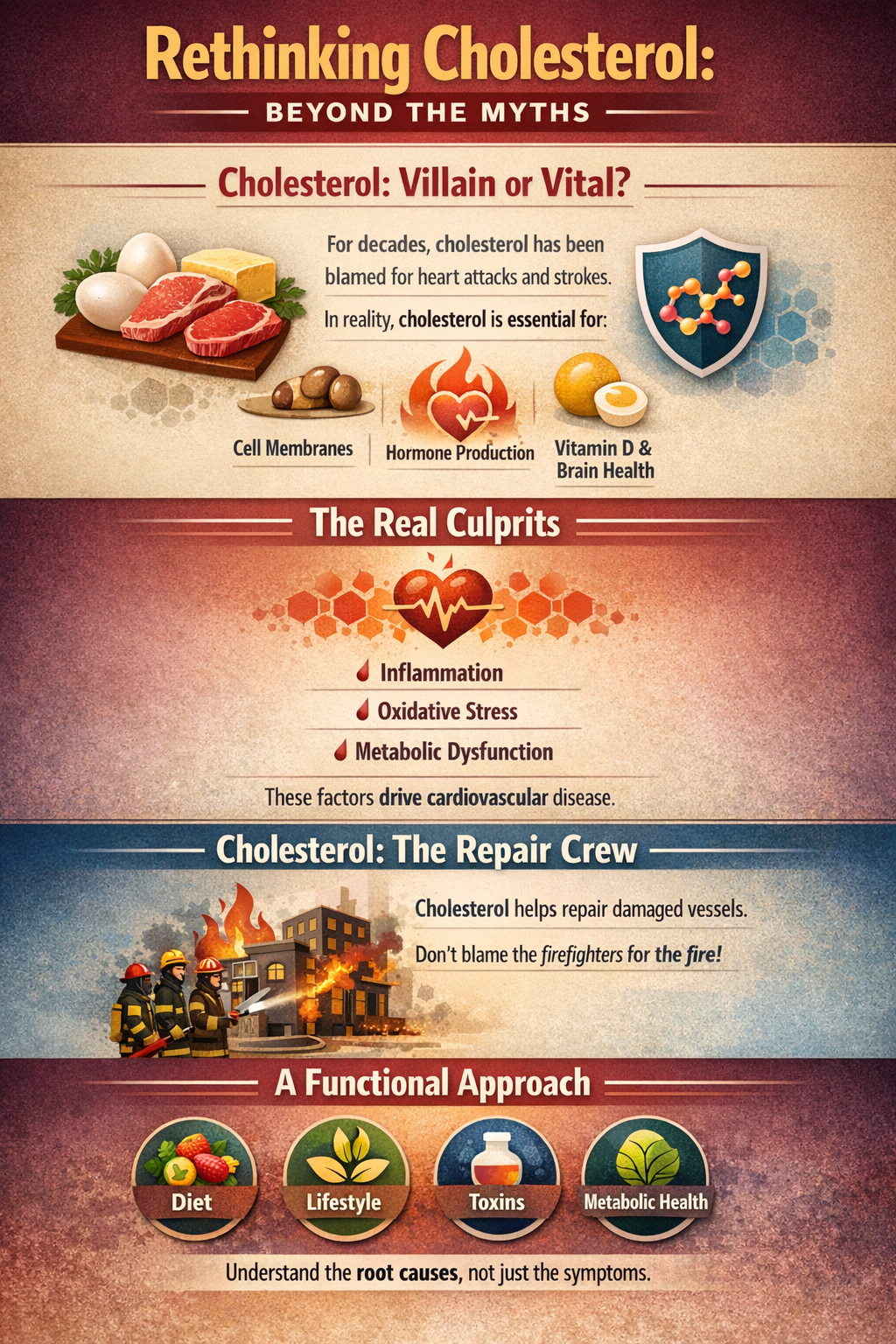
Cholesterol is not a toxin. It is a vital substance that the body produces for essential functions. It is a key component of cell membranes, a precursor for steroid hormones, and necessary for the production of vitamin D. The brain itself is composed largely of cholesterol, and proper neurological function depends on its presence. When you lower cholesterol indiscriminately, you are not just reducing a risk factor; you are altering fundamental biological processes.
The real issue is not cholesterol itself but how it behaves within the body. Inflammation, oxidative stress, and metabolic dysfunction play a much larger role in the development of cardiovascular disease than cholesterol alone. When blood vessels are inflamed and damaged, cholesterol becomes part of the repair process. Blaming cholesterol for the damage is like blaming firefighters for a burning building.
Mainstream approaches often focus on lowering LDL cholesterol as the primary goal. While this can influence risk markers, it does not address the underlying causes of vascular damage. Functional perspectives shift the focus toward understanding why the body is in a state that requires repair in the first place. This includes examining diet, lifestyle, toxin exposure, and metabolic health.
What Statins Actually Do Inside the Body
Statins work by inhibiting an enzyme in the liver known as HMG-CoA reductase, which is involved in cholesterol production. By blocking this pathway, statins reduce the amount of cholesterol the liver produces, leading to lower levels in the bloodstream. On the surface, this seems straightforward and beneficial. Lower cholesterol, lower risk.
However, this pathway does more than just produce cholesterol. It is also responsible for the production of other critical compounds, including Coenzyme Q10 (CoQ10), which plays a central role in energy production within cells. When statins inhibit this pathway, they do not selectively target cholesterol alone. They affect multiple biochemical processes simultaneously.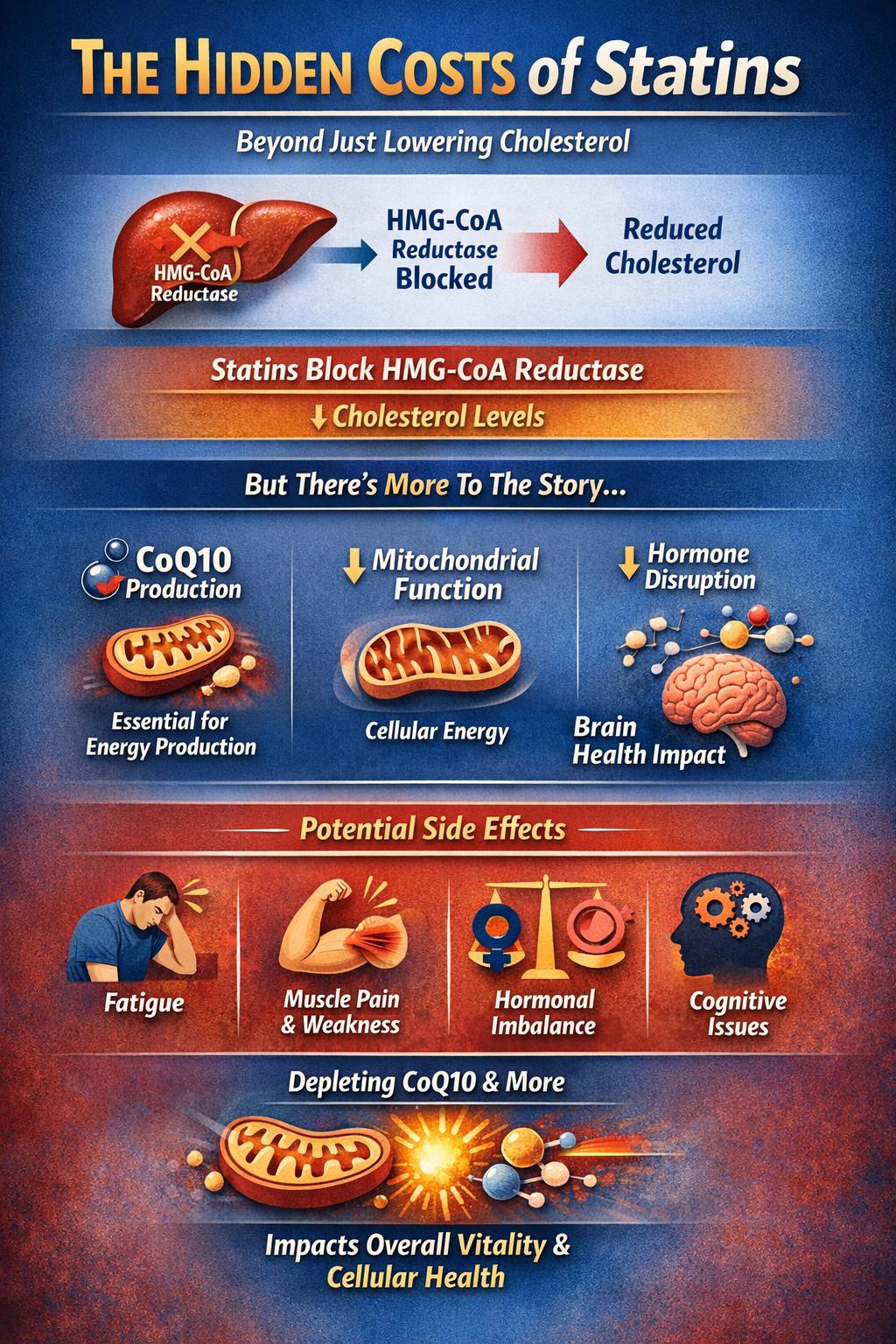
CoQ10 is particularly important for tissues with high energy demands, such as the heart and muscles. A reduction in CoQ10 can lead to fatigue, muscle weakness, and impaired cellular function. This is one of the reasons why muscle-related side effects are commonly reported among statin users. The body is being deprived of a key component needed for efficient energy production.
In addition to CoQ10 depletion, statins may impact mitochondrial function, hormone synthesis, and even brain health. These effects are not always immediately noticeable, which makes them easy to overlook. Over time, however, they can contribute to a decline in overall vitality and resilience.
The Muscle Problem: Coincidence or Predictable Outcome?
One of the most frequently reported side effects of statins is muscle pain, weakness, and fatigue. In some cases, this can progress to a more severe condition known as rhabdomyolysis, where muscle tissue breaks down and releases harmful substances into the bloodstream. While this severe outcome is rare, milder forms of muscle dysfunction are far more common.
From a functional perspective, this is not surprising. Muscles rely heavily on mitochondrial energy production, which depends on adequate levels of CoQ10. When statins reduce CoQ10 availability, the muscles are essentially being starved of the energy they need to function properly. This creates a predictable chain reaction of fatigue, soreness, and decreased performance.
What makes this particularly concerning is that these symptoms are often dismissed or attributed to aging, overexertion, or unrelated factors. Patients may not connect their symptoms to the medication, especially if they were not informed about potential side effects. This can lead to prolonged suffering and a gradual decline in physical capacity.
There is also the issue of long-term muscle health. Chronic suppression of energy production can lead to muscle atrophy, reduced strength, and impaired recovery. For individuals who value mobility, independence, and quality of life, this is not a trivial concern. It raises important questions about the trade-offs being made in the name of risk reduction.
Who Really Benefits from Statins?
The effectiveness of statins is often presented in broad terms, but the reality is more nuanced. Research suggests that statins may provide the most benefit for individuals who have already experienced a cardiovascular event, such as a heart attack. In these cases, reducing certain risk factors may help prevent recurrence.
However, for individuals without a history of heart disease, the benefits are less clear. The concept of “primary prevention” involves prescribing statins to reduce the likelihood of a first event, but the absolute risk reduction in these cases is often modest. This means that many people may take the medication for years without experiencing a significant benefit.
When evaluating any treatment, it is important to consider both relative and absolute risk. A relative reduction may sound impressive, but if the baseline risk is low, the actual benefit may be small. This distinction is rarely emphasized in everyday conversations about statins, leading to a perception that they are universally necessary.
Functional approaches emphasize individualized assessment rather than blanket recommendations. Not everyone with elevated cholesterol is at high risk, and not everyone at risk has elevated cholesterol. Factors such as inflammation, insulin resistance, and lifestyle play a critical role in determining true risk.
The Overlooked Root Causes of High Cholesterol
Elevated cholesterol is often treated as a problem in itself, but it is more accurately a signal that something deeper may be occurring. The body does not randomly produce excess cholesterol without a reason. Understanding that reason is key to addressing the issue effectively.
One common factor is chronic inflammation. When the body is in a state of ongoing inflammation, it may increase cholesterol production as part of a protective response. Cholesterol helps repair damaged tissues and stabilize cell membranes. Lowering it without addressing the source of inflammation is like silencing an alarm without putting out the fire.
Another factor is insulin resistance, which is closely linked to diet and metabolic health. High levels of insulin can alter lipid metabolism, leading to changes in cholesterol levels and particle size. This is often seen in individuals consuming diets high in refined carbohydrates and sugars.
Toxin exposure, gut health, and hormonal imbalances can also influence cholesterol levels. These factors are rarely addressed in conventional care, yet they play a significant role in overall metabolic function. A comprehensive approach considers all of these elements rather than focusing on a single number.
Natural Alternatives That Support True Cardiovascular Health
There is a growing recognition that lifestyle and nutritional interventions can have a profound impact on cardiovascular health. These approaches do not simply mask symptoms but work to restore balance and support the body’s natural processes.
Diet is a foundational element. Emphasizing whole, unprocessed foods rich in healthy fats, quality proteins, and fiber can improve lipid profiles and reduce inflammation. Foods such as fatty fish, avocados, nuts, and vegetables provide nutrients that support heart health without the drawbacks associated with highly processed options.
Physical activity is another powerful tool. Regular movement improves circulation, enhances insulin sensitivity, and supports mitochondrial function. It does not require extreme measures. Consistent, moderate activity can produce meaningful benefits over time.
Stress management and sleep are often overlooked but critically important. Chronic stress and poor sleep can disrupt hormonal balance, increase inflammation, and negatively impact metabolic health. Addressing these areas can lead to improvements that extend far beyond cholesterol levels.
Actionable Steps You Can Start Today
Begin by reassessing your diet. Remove or reduce processed foods, particularly those high in refined sugars and unhealthy fats. Focus on nutrient-dense, whole foods that provide the building blocks your body needs to function optimally. This single step can create a ripple effect across multiple systems in the body.
Incorporate healthy fats into your meals. Contrary to popular belief, not all fats are harmful. Choosing the right types of fats can support cellular health and reduce inflammation. This includes sources such as olive oil, coconut oil, and omega-3-rich foods.
Move your body consistently. Find activities you enjoy and make them a regular part of your routine. This could be walking, strength training, or any form of exercise that keeps you engaged. The goal is consistency, not perfection.
Support your body’s nutrient needs. If you are currently taking a statin, consider discussing CoQ10 supplementation with a knowledgeable practitioner. Supporting mitochondrial function can help mitigate some of the side effects associated with statin use.
Finally, ask better questions. Do not accept recommendations without understanding the reasoning behind them. Seek out comprehensive evaluations that consider your unique physiology, lifestyle, and goals. Health is not a one-size-fits-all equation, and your approach should reflect that.
Rethinking the Path to Heart Health
The conversation around statins and cholesterol is not as simple as it is often portrayed. It is a reflection of a broader issue in healthcare, where complex problems are frequently reduced to single metrics and quick fixes. While this approach may offer convenience, it does not always lead to optimal outcomes.
True cardiovascular health requires a deeper understanding of the body’s interconnected systems. It involves addressing inflammation, supporting metabolic function, and creating an environment in which the body can heal and thrive. This cannot be achieved through medication alone.
There is a growing movement toward more comprehensive, individualized care. It is driven by a recognition that health is not just the absence of disease but the presence of vitality. This shift is empowering individuals to take a more active role in their well-being.
The question is not whether statins are entirely good or entirely bad. The question is whether they are being used appropriately and whether other, more foundational approaches are being overlooked. When you begin to explore these questions, you open the door to a more informed and balanced perspective on health.