
The Oil That Ignited a Worldwide Debate
Few natural substances have generated as much hope, controversy, and scientific curiosity as Rick Simpson Oil, commonly called RSO. For some families facing advanced cancer, the thick, dark cannabis extract represents a final opportunity when conventional treatments have failed to produce the desired outcome. Others view it as an unproven remedy supported primarily by compelling personal stories rather than definitive clinical evidence. Between those opposing viewpoints lies a far more complex story, one rooted in decades of scientific discovery, evolving laws, patient advocacy, and a growing understanding of how cannabis interacts with human biology. The discussion extends beyond cannabis itself because it raises difficult questions about patient autonomy, medical innovation, scientific standards, and the pace at which healthcare systems evaluate promising therapies.
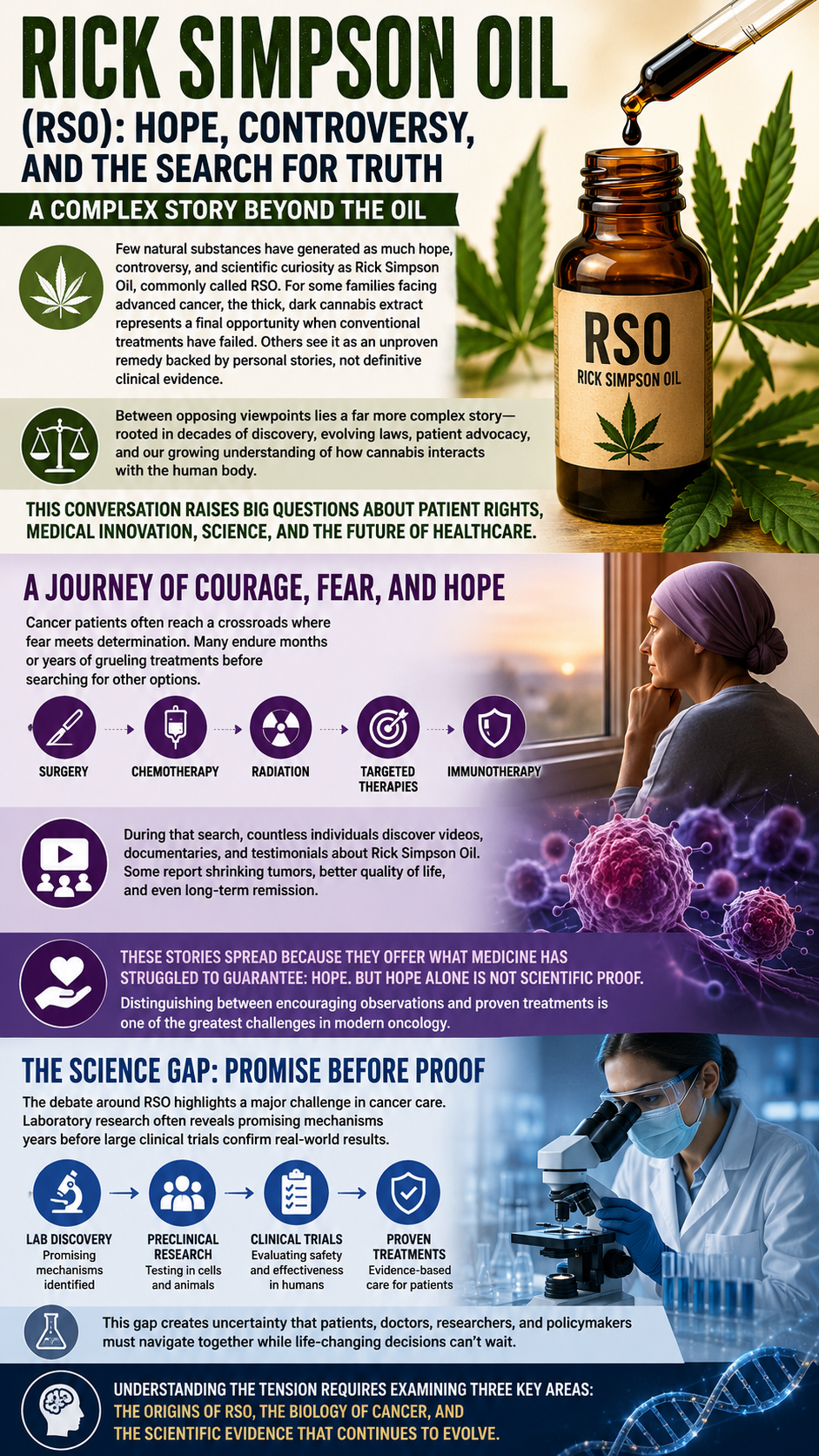
Cancer patients often reach a crossroads where fear meets determination. Many spend months or years navigating surgery, chemotherapy, radiation, targeted therapies, and immunotherapy before searching for additional options. During that search, countless individuals discover videos, documentaries, and testimonials describing remarkable recoveries attributed to Rick Simpson Oil. Some accounts describe shrinking tumors, improved quality of life, and long-term remission after beginning concentrated cannabis extracts. Those stories spread rapidly because they offer something medicine has struggled to guarantee: hope. Yet hope alone cannot establish scientific truth. Distinguishing between encouraging observations and proven medical treatments remains one of the greatest challenges in modern oncology.
The debate surrounding Rick Simpson Oil reflects a broader problem within cancer care. Laboratory research often uncovers promising biological mechanisms years before large clinical trials confirm whether those findings improve human outcomes. This gap creates uncertainty that patients, physicians, researchers, and policymakers must navigate together. While scientists continue investigating cannabinoids, patients with life-threatening illnesses frequently make decisions before definitive answers become available. Understanding this tension requires examining the origins of Rick Simpson Oil, the biology of cancer itself, and the scientific evidence that continues to evolve.
The Story Behind Rick Simpson Oil
Rick Simpson, a Canadian engineer and cannabis advocate, entered the public spotlight after sharing his personal experiences with concentrated cannabis oil. According to Simpson’s account, he suffered chronic health problems following a workplace accident. While exploring alternative approaches, he became interested in cannabis after reviewing early laboratory studies suggesting cannabinoids possessed anti-inflammatory and potential anti-tumor properties. Several years later, he reported developing suspicious skin lesions diagnosed as basal cell carcinoma. Rather than relying solely on conventional management, he applied a homemade cannabis extract directly to the affected skin and later claimed the lesions disappeared.
Simpson’s personal experience transformed into a worldwide movement because he freely shared both his extraction method and his belief that concentrated cannabis oil possessed broad healing potential. Thousands of individuals contacted him, describing their own illnesses and requesting assistance. Rather than commercializing the product, Simpson became known for distributing homemade oil without charge to many seriously ill patients. His advocacy attracted international attention, but it also drew the scrutiny of law enforcement because cannabis remained illegal in many jurisdictions. That legal conflict ultimately helped shape the public identity of Rick Simpson Oil as both a potential therapeutic agent and a symbol of medical freedom.
The story resonated because it reflected a familiar pattern in medical history. Throughout history, many discoveries emerged from individual observations before researchers understood their underlying mechanisms. Aspirin originated from willow bark, penicillin emerged after an unexpected laboratory observation, and numerous cancer drugs evolved from naturally occurring compounds. Those historical examples encourage scientific curiosity, yet they also remind us that promising observations require rigorous testing before becoming accepted treatments. Anecdotes may inspire research, but carefully designed clinical studies determine whether a therapy consistently benefits patients.
Understanding the Real Enemy: What Cancer Actually Is
To understand why Rick Simpson Oil continues attracting scientific interest, readers must first understand cancer itself. Cancer does not arise because a single cell suddenly becomes aggressive. Instead, the disease develops through a gradual accumulation of genetic mutations, environmental influences, chronic inflammation, immune dysfunction, and altered cellular communication. Healthy cells normally grow, repair damaged tissues, and die according to tightly regulated biological programs. Cancer cells escape those controls, allowing them to divide continuously while ignoring signals that normally limit growth.
The body possesses remarkable defense systems that identify and eliminate abnormal cells every day. Specialized immune cells patrol tissues, recognize damaged or mutated cells, and remove them before they develop into clinically detectable tumors. Problems arise when cancer cells acquire mutations allowing them to evade immune surveillance. Once those cells escape detection, they begin recruiting blood vessels, altering nearby tissues, suppressing immune responses, and creating an environment that supports continued growth. This process explains why many cancers remain undetected for years before producing symptoms.
Inflammation often accelerates this progression. Persistent inflammation exposes tissues to oxidative stress, inflammatory cytokines, and repeated cycles of cellular injury and repair. Over time, this environment increases opportunities for DNA damage while simultaneously weakening normal repair mechanisms. Researchers have linked chronic inflammation to numerous cancers, including colorectal, liver, pancreatic, stomach, and several others. Reducing unnecessary inflammation therefore remains an important component of overall health, although inflammation alone does not explain every cancer diagnosis.
Environmental exposures also contribute to cancer development. Tobacco smoke, excessive ultraviolet radiation, certain occupational chemicals, some viral infections, excessive alcohol consumption, and inherited genetic mutations all increase risk for particular cancers. Most malignancies arise through a combination of multiple factors rather than a single cause. This complexity explains why researchers continue searching for therapies capable of influencing several biological pathways simultaneously. Cannabinoids have attracted attention partly because laboratory studies suggest they interact with numerous cellular signaling networks involved in inflammation, immune regulation, and programmed cell death.
The Endocannabinoid System: A Hidden Communication Network
Scientists discovered the endocannabinoid system while investigating how cannabis compounds affect the human body. Researchers soon realized this signaling network exists naturally within every person, regardless of cannabis exposure. The system includes cannabinoid receptors, naturally produced signaling molecules called endocannabinoids, and enzymes that regulate their activity. Rather than serving a single function, this network helps maintain physiological balance across multiple organ systems.
Cannabinoid receptors appear throughout the brain, immune system, digestive tract, skin, connective tissues, and many other organs. These receptors influence pain perception, appetite, mood, sleep, inflammation, memory, immune responses, and cellular communication. Scientists often describe this system as one of the body’s homeostatic regulators because it helps maintain internal stability despite changing environmental conditions. When researchers discovered that many tumors express cannabinoid receptors differently than healthy tissues, interest in cannabis-based therapies increased dramatically.
Laboratory experiments suggest cannabinoids may influence cellular behavior through several mechanisms. Some studies demonstrate reduced proliferation in specific cancer cell lines. Others report increased programmed cell death, altered inflammatory signaling, impaired formation of new blood vessels, and reduced metastatic potential in experimental models. These findings have generated legitimate scientific interest because they identify biological pathways worthy of further investigation. Laboratory observations, however, represent only the earliest stage of medical discovery. Human biology introduces countless variables that cannot be fully replicated in isolated cells or animal models.
Why Laboratory Success Does Not Always Become Clinical Success
The public often assumes that destroying cancer cells in a laboratory automatically translates into successful treatment for patients. Medical research rarely follows such a straightforward path. Thousands of compounds eliminate cancer cells growing inside laboratory dishes each year, yet only a small percentage eventually become approved cancer therapies. Human tumors exist within extraordinarily complex biological environments that include blood vessels, immune cells, connective tissues, hormones, and countless biochemical interactions.
Scientists have demonstrated anti-tumor activity for cannabinoids in laboratory models involving glioblastoma, breast cancer, prostate cancer, melanoma, pancreatic cancer, leukemia, and several additional malignancies. Animal studies have also shown slower tumor growth under certain experimental conditions. Those results justify continued research because they demonstrate genuine biological activity rather than simple speculation. Nevertheless, researchers cannot conclude that Rick Simpson Oil cures cancer solely from laboratory findings because carefully controlled human studies remain limited.
Clinical research evaluates whether a treatment produces consistent benefits across diverse patient populations while maintaining acceptable safety. Researchers must determine effective dosing, identify potential interactions, understand long-term effects, and compare outcomes against existing therapies. Until large randomized clinical trials answer those questions, scientists remain appropriately cautious when interpreting anecdotal remission stories. Responsible medical practice requires balancing optimism with evidence, especially when patients face life-threatening illnesses.
Why Cancer Patients Continue Searching Beyond Conventional Care
Many patients pursuing Rick Simpson Oil do not reject conventional medicine entirely. Instead, they seek additional options after experiencing difficult side effects, incomplete responses, or disease progression despite receiving standard therapies. Chemotherapy can produce fatigue, nausea, neuropathy, immune suppression, and digestive disturbances. Radiation therapy may damage surrounding healthy tissues. Surgical procedures often require lengthy recovery periods. Even successful treatments may leave patients searching for strategies that improve quality of life during recovery.
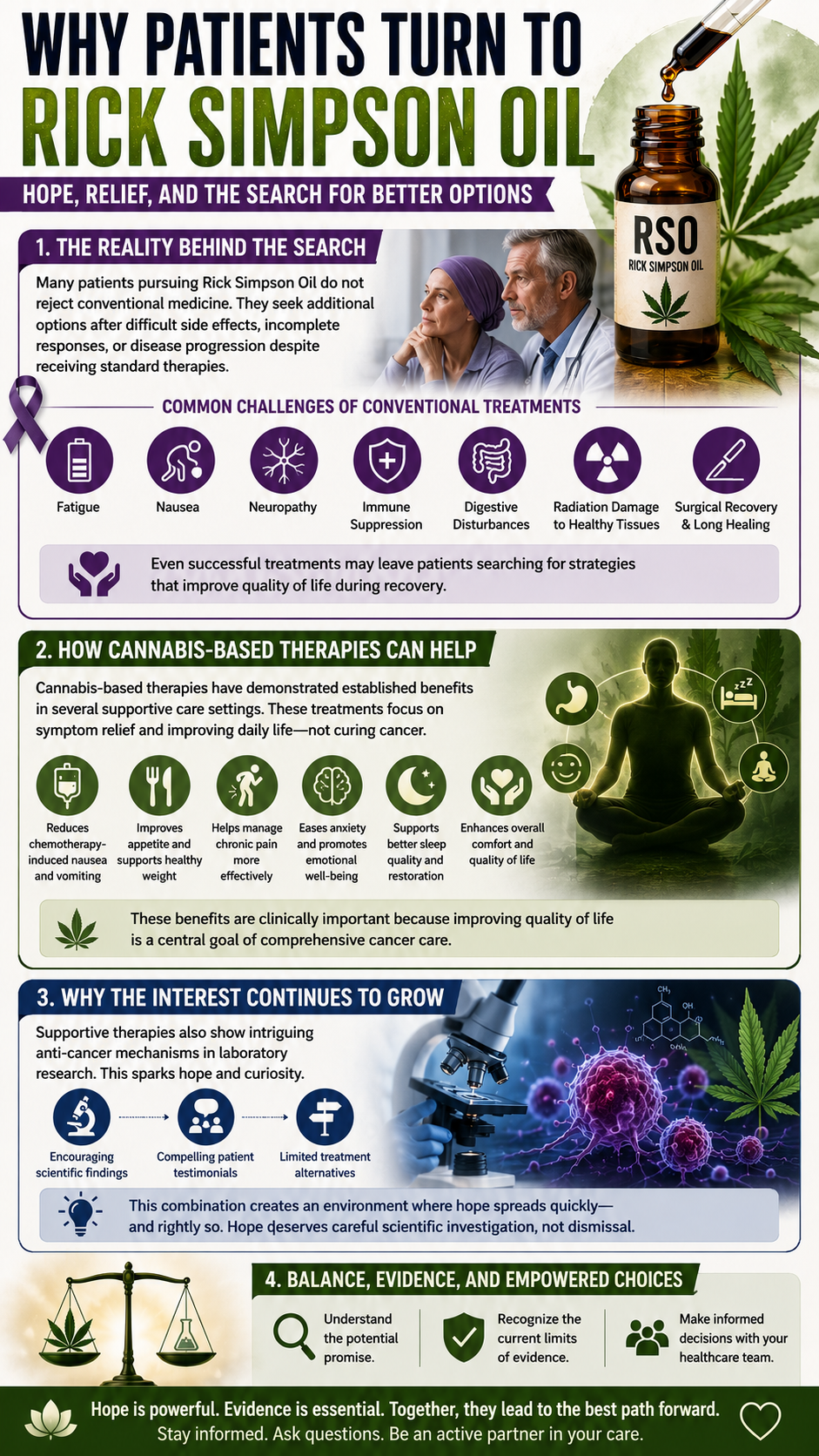
Cannabis-based therapies have demonstrated established benefits in several supportive care settings. Certain cannabinoid medications help reduce chemotherapy-induced nausea and vomiting in selected patients. Others improve appetite among individuals experiencing severe weight loss. Some patients also report meaningful improvements in chronic pain, anxiety, sleep quality, and overall comfort. These symptom-management benefits differ from claims that cannabis cures cancer, yet they remain clinically important because improving quality of life represents a central goal of comprehensive cancer care.
Patients understandably become interested when supportive therapies also demonstrate intriguing anti-cancer mechanisms in laboratory research. The combination of encouraging scientific findings, compelling personal testimonials, and limited treatment alternatives creates an environment where hope spreads rapidly. That hope deserves careful scientific investigation rather than dismissal, but it also requires honest discussion about the current limits of available evidence. Patients make their best decisions when they understand both the potential promise and the remaining uncertainties surrounding emerging therapies.
Looking Beyond the Headlines
The conversation surrounding Rick Simpson Oil extends far beyond whether cannabis can influence cancer biology. It challenges society to examine how scientific discoveries become accepted medical practice, how patients access experimental therapies, and how governments balance public safety with individual choice. Understanding those broader issues requires exploring the legal battles that transformed Rick Simpson into an international symbol, the regulatory barriers surrounding cannabis research, and the current state of clinical evidence. Those topics will reveal why Rick Simpson Oil remains one of the most debated natural therapies in modern medicine despite decades of growing scientific interest.
The Science, the Legal Battles, and the Search for Truth
The discussion surrounding Rick Simpson Oil rarely remains confined to biology. It quickly expands into questions of law, ethics, patient rights, and scientific responsibility. Few natural substances have traveled such an unusual path from home kitchens to research laboratories, courtrooms, legislative chambers, and cancer support groups around the world. That journey explains why Rick Simpson Oil continues generating passionate debate decades after it first entered public awareness. Supporters believe concentrated cannabis oil deserves far greater scientific attention, while skeptics argue that extraordinary claims require equally extraordinary evidence. The truth lies within a landscape far more nuanced than either extreme often portrays.
Patients confronting life-threatening disease frequently view time differently than researchers. A scientist may spend ten years completing laboratory studies, securing funding, recruiting participants, and publishing clinical trials. Someone diagnosed with an aggressive cancer often measures time in months rather than decades. This difference creates enormous tension between the deliberate pace of medical research and the urgent decisions patients must make every day. Understanding that reality helps explain why Rick Simpson Oil became a symbol of hope long before science could fully evaluate its potential.
Why Rick Simpson Faced Legal Challenges
Rick Simpson’s legal troubles did not arise because authorities specifically targeted cancer research. They developed because cannabis remained prohibited under Canadian law during much of his advocacy. Simpson openly produced concentrated cannabis oil using extraction methods that violated existing drug regulations. He distributed the oil to seriously ill patients without receiving authorization from regulatory agencies. Although he insisted he never intended to profit from the oil, law enforcement viewed its production and distribution as violations of controlled substance laws.
These legal actions reflected broader governmental concerns extending beyond cannabis itself. Homemade extraction methods often relied on highly flammable solvents, creating risks of explosions and chemical contamination. Regulators also worried about inconsistent cannabinoid concentrations, inaccurate dosing, and the absence of manufacturing standards. Unlike pharmaceutical medications, homemade cannabis oils varied dramatically from one batch to another. Patients therefore had little assurance regarding potency, purity, or contamination. Authorities argued that these uncertainties created significant public health concerns independent of the ongoing debate about cannabis itself.
Public opinion gradually shifted as medical cannabis programs expanded across many countries. Researchers gained greater opportunities to investigate cannabinoids, while legislators began recognizing potential therapeutic applications for certain medical conditions. Despite these changes, legal frameworks continue varying considerably throughout the world. Some jurisdictions permit medical cannabis under physician supervision, others allow recreational use, and several continue prohibiting cannabis entirely. Consequently, access to Rick Simpson Oil remains heavily influenced by geography rather than scientific consensus alone.
The Problem with Homemade Cannabis Oils
One of the greatest challenges surrounding Rick Simpson Oil involves consistency. Pharmaceutical medicines undergo rigorous quality control before reaching patients. Manufacturers carefully verify active ingredients, remove contaminants, measure potency, and test stability under standardized conditions. Homemade cannabis oils rarely undergo comparable evaluation. Two preparations made from different cannabis plants may contain substantially different concentrations of cannabinoids, terpenes, pesticides, heavy metals, residual solvents, or microbial contaminants.
This inconsistency complicates both patient care and scientific research. Physicians cannot confidently predict how one homemade preparation compares with another because each batch possesses its own unique chemical profile. Researchers encounter similar obstacles when attempting to evaluate outcomes. If patients consume oils with different cannabinoid concentrations, identifying effective doses becomes extremely difficult. Standardization therefore represents one of the most important steps toward understanding whether concentrated cannabis extracts offer meaningful therapeutic benefits beyond symptom management.
Extraction methods also influence safety. Some solvents leave chemical residues if evaporation remains incomplete. Improper storage may accelerate degradation of cannabinoids or promote microbial growth. Heating during extraction alters cannabinoid chemistry, potentially changing biological activity. Commercial manufacturers operating within regulated medical cannabis programs generally employ laboratory testing to minimize these concerns. Homemade preparations may lack such safeguards, increasing uncertainty regarding both safety and effectiveness.
What Researchers Currently Know About Cannabinoids and Cancer
Modern cancer biology has revealed that cannabinoids influence numerous signaling pathways involved in inflammation, immune regulation, oxidative stress, and programmed cell death. Laboratory investigations consistently demonstrate that cannabinoids possess genuine biological activity. Scientists have reported anti-proliferative effects in several cancer cell lines, reductions in inflammatory signaling, impaired angiogenesis, and enhanced apoptosis under carefully controlled experimental conditions. These findings explain why cannabinoids remain an active area of oncology research rather than a passing scientific curiosity.
Human evidence, however, remains far less definitive than laboratory research. Most clinical studies involving cannabinoids have focused on supportive care rather than direct cancer treatment. Several cannabinoid-based medications have demonstrated benefits for chemotherapy-induced nausea, cancer-related pain, appetite loss, and selected neurological conditions. These outcomes have led regulatory agencies in several countries to approve specific cannabinoid formulations for carefully defined medical indications. Those approvals reflect meaningful therapeutic value, yet they should not be interpreted as proof that Rick Simpson Oil cures cancer.
Researchers have also explored combining cannabinoids with conventional therapies. Preliminary investigations suggest cannabinoids may influence how certain tumors respond to chemotherapy or radiation under experimental conditions. Some early human studies report encouraging signals, particularly for difficult-to-treat brain tumors, although participant numbers remain small. Larger randomized clinical trials must confirm those findings before clinicians can recommend cannabinoids as standard anti-cancer therapy. Scientific progress often advances through cautious accumulation of evidence rather than dramatic breakthroughs.
Why Anecdotal Remission Stories Deserve Careful Interpretation
Personal testimonies occupy a unique place within medical history. They frequently inspire important scientific discoveries because they identify observations deserving further investigation. Countless medical advances began when physicians noticed unexpected patient responses and pursued those observations through systematic research. Anecdotes therefore possess genuine value as starting points for scientific inquiry. They become problematic only when people mistake them for definitive proof of effectiveness.
Cancer follows an extraordinarily unpredictable course. Some tumors respond dramatically to conventional treatment after appearing resistant. Others grow slowly despite minimal intervention. Rare spontaneous remissions also occur, although scientists still struggle to explain them completely. Many patients pursuing Rick Simpson Oil simultaneously receive surgery, chemotherapy, radiation, immunotherapy, dietary changes, nutritional counseling, exercise programs, and supportive care. Isolating the contribution of any single intervention becomes nearly impossible without carefully controlled clinical studies.
Confirmation bias further complicates public perception. Individuals experiencing remarkable improvements often share their stories enthusiastically, while those experiencing little benefit may remain silent. Social media algorithms amplify emotionally powerful narratives because hopeful stories attract widespread attention. This phenomenon creates the impression that dramatic recoveries occur more frequently than available clinical evidence currently supports. Balanced decision-making requires considering both inspiring personal accounts and rigorous scientific data together rather than relying exclusively on either source.
What Cannabis May Do Inside the Human Body
Cannabinoids influence far more than tumor biology. The endocannabinoid system helps regulate numerous physiological processes that affect daily health. Activation of cannabinoid receptors may alter neurotransmitter release, immune signaling, inflammatory responses, gastrointestinal function, appetite regulation, sleep quality, and pain perception. These widespread effects explain why cannabis produces such diverse experiences among different individuals.
High concentrations of THC may also produce unwanted effects. Some users experience impaired concentration, dizziness, anxiety, rapid heart rate, confusion, or excessive sedation. Older adults and individuals taking multiple medications may prove particularly vulnerable to adverse interactions. Cannabinoids may influence liver enzymes responsible for metabolizing numerous prescription drugs, potentially altering blood concentrations of anticoagulants, anti-seizure medications, immunosuppressants, and certain chemotherapy agents. Patients considering concentrated cannabis extracts should therefore discuss potential interactions with qualified healthcare professionals familiar with their complete medical history.
Heavy cannabis consumption also carries potential psychiatric risks for susceptible individuals. Research suggests that high-THC products may increase the likelihood of psychotic symptoms among people with specific genetic or psychiatric vulnerabilities. Adolescents appear especially sensitive because their brains continue developing throughout early adulthood. These considerations highlight the importance of individualized medical guidance rather than assuming every cannabis preparation suits every patient.
Supporting Overall Health at Home
Although no home strategy guarantees cancer prevention or remission, decades of research demonstrate that lifestyle profoundly influences overall health. Nutrition remains one of the most powerful tools individuals control daily. Diets emphasizing vegetables, fruits, legumes, whole grains, lean protein sources, healthy fats, and minimally processed foods consistently associate with lower risks for several chronic diseases. Limiting tobacco exposure, moderating alcohol intake, maintaining healthy body weight, and engaging in regular physical activity further strengthen long-term health.
Sleep deserves equal attention because restorative sleep supports immune surveillance, hormonal balance, tissue repair, and cognitive function. Chronic sleep deprivation disrupts inflammatory regulation and metabolic health, potentially influencing disease risk over time. Stress management also plays an important role. Persistent psychological stress alters hormonal signaling and immune function, although stress alone does not cause cancer. Mindfulness practices, social connection, counseling, and regular physical activity may improve emotional well-being during treatment and recovery.

Patients undergoing cancer treatment should communicate openly with their oncology team before introducing supplements, herbal preparations, or cannabis products. Some natural compounds influence blood clotting, liver metabolism, or treatment effectiveness. Coordinated care helps reduce unintended interactions while ensuring that supportive strategies complement rather than interfere with evidence-based therapy. Integrative oncology programs increasingly recognize the value of combining symptom management, nutrition, physical rehabilitation, psychological support, and conventional treatment within comprehensive care plans.
Where Research Is Headed
Scientific interest in cannabinoids continues expanding because researchers recognize their complex biological actions. Investigators now explore synthetic cannabinoids, purified cannabinoid formulations, terpene combinations, targeted receptor modulators, and personalized approaches based on tumor genetics. Advances in molecular biology allow scientists to identify which cancers express cannabinoid receptors most strongly and which signaling pathways respond to cannabinoid exposure. These discoveries may eventually help determine whether particular patients benefit more than others from cannabinoid-based interventions.
Artificial intelligence and precision medicine further accelerate this work. Modern computational tools analyze enormous datasets linking genetics, tumor biology, treatment response, and molecular signaling. Researchers increasingly hope to identify biomarkers predicting cannabinoid responsiveness before treatment begins. Such advances could transform cannabinoids from broadly discussed natural compounds into carefully targeted therapeutic tools supported by individualized evidence. That future remains speculative today, but ongoing research continues moving steadily in that direction.
A Balanced Perspective for Patients and Families
Rick Simpson Oil occupies a unique place within modern medicine because it sits at the intersection of compelling patient experiences and incomplete scientific evidence. Laboratory research provides legitimate reasons for continued investigation, while supportive care studies already demonstrate important symptom-management benefits for selected patients. At the same time, current evidence does not establish Rick Simpson Oil as a proven stand-alone cure for cancer. Recognizing both realities protects patients from false certainty while encouraging continued scientific exploration.
Medical progress depends upon curiosity guided by evidence rather than ideology. Throughout history, researchers have repeatedly transformed controversial observations into accepted therapies after careful investigation. Others have discovered that initially promising treatments failed to withstand rigorous testing. Science advances by remaining open to new possibilities while demanding reliable evidence before changing standards of care. Rick Simpson Oil remains an active chapter within that ongoing process rather than its final conclusion.
For patients and families confronting cancer, informed decisions arise from balanced information rather than exaggerated promises or dismissive skepticism. Hope should never disappear from the conversation, yet hope becomes strongest when paired with honesty, critical thinking, and collaborative medical care. As researchers continue exploring cannabinoids, the coming decade will likely provide far clearer answers than exist today. Until then, Rick Simpson Oil remains one of the most fascinating and debated subjects in modern integrative oncology, inviting continued research while reminding us that the search for better cancer treatments remains one of medicine’s greatest priorities.