
There are stories that medicine eagerly celebrates, and there are stories it quietly leaves behind. Few natural remedies illustrate that divide more dramatically than Essiac tea. For nearly a century, this humble blend of herbs has inspired passionate supporters, skeptical scientists, determined physicians, and countless patients searching for hope during life’s darkest moments. Its history stretches far beyond health food stores and internet forums. It reaches into Indigenous botanical traditions, early twentieth-century Canada, political hearings, scientific laboratories, and one of the longest-running debates in natural medicine. Despite its remarkable legacy, Essiac remains one of the most misunderstood herbal formulas ever created. Some proclaim it as a miracle that modern medicine ignored, while others dismiss it entirely because large clinical trials never confirmed its effectiveness against cancer. The truth lies somewhere between those extremes, and understanding that truth requires examining history, biology, and science with equal care.
Modern conversations about Essiac often focus exclusively on cancer, yet doing so overlooks the broader biological principles that made this formula noteworthy in the first place. The original herbal combination was never designed to attack disease through the same mechanisms as chemotherapy or radiation. Instead, traditional herbalists viewed the body as an interconnected system whose organs, immune defenses, digestive tract, and elimination pathways constantly influenced one another. Their philosophy held that restoring internal balance could strengthen the body’s resilience against chronic illness. While modern medicine uses different language and demands different standards of evidence, contemporary research increasingly recognizes that inflammation, oxidative stress, immune regulation, microbial diversity, and metabolic health all contribute to long-term wellness. Those discoveries invite a fresh examination of why these herbs attracted attention decades before scientists understood many of the pathways they influence.
A Nurse, an Indigenous Remedy, and a Medical Mystery
The story begins in rural Ontario during the early twentieth century with Canadian nurse Rene Caisse. While caring for patients, Caisse reportedly met a woman who claimed she had survived breast cancer many years earlier after receiving an herbal remedy from an Ojibwa healer. The patient shared the formula with Caisse, believing it deserved preservation rather than obscurity. Intrigued by both the woman’s account and the herbal ingredients themselves, Caisse devoted much of her professional life to preparing and distributing the tea to individuals who sought alternatives or complementary approaches to conventional treatment. She eventually named the formula “Essiac,” simply spelling her surname backward.
Historical records confirm that thousands of people visited Caisse during the following decades, creating enormous public interest throughout Canada. Newspapers published stories about desperate patients traveling long distances in hopes of obtaining the herbal preparation. Physicians questioned its effectiveness, government agencies demanded scientific validation, and politicians debated whether Caisse should receive official permission to continue her work. Regardless of where one stands on the controversy, Essiac became one of North America’s most recognizable herbal formulas long before the internet allowed health stories to spread globally.
Several details surrounding the formula’s earliest origins remain impossible to verify with complete historical certainty. Some historians question whether every aspect of the traditional origin story occurred exactly as described, while others argue that Indigenous herbal knowledge often existed through oral tradition rather than written documentation. That uncertainty does not diminish the broader historical reality that Indigenous communities across North America possessed extensive botanical knowledge developed through centuries of observation. Long before laboratories isolated plant compounds, experienced healers understood that certain herbs supported digestion, soothed inflammation, encouraged elimination, or promoted recovery following illness. Essiac emerged from that larger tradition of botanical medicine rather than appearing suddenly as an isolated invention.
The Real Battlefield Begins Long Before Disease Appears
Many people search for a single cause of chronic illness because simple explanations feel reassuring. Human biology rarely works that way. Most chronic diseases develop after years of cumulative physiological stress that slowly alters the body’s internal environment. Cells continually encounter inflammatory chemicals, oxidative damage, environmental toxins, metabolic dysfunction, hormonal disturbances, poor dietary patterns, disrupted sleep, and chronic psychological stress. Individually, these challenges often appear insignificant. Together, they create conditions that can impair normal cellular function over time.
Modern research increasingly describes chronic disease as a progressive breakdown of biological resilience rather than the sudden arrival of a single pathological event. Persistent inflammation encourages immune cells to remain activated longer than necessary. Excessive oxidative stress damages proteins, lipids, and DNA faster than the body can repair them. Mitochondria gradually lose efficiency, reducing cellular energy production. Meanwhile, disruptions within the intestinal microbiome weaken communication between the digestive tract and the immune system. These changes rarely occur overnight, yet they steadily reshape the internal environment in ways that may contribute to numerous chronic conditions.
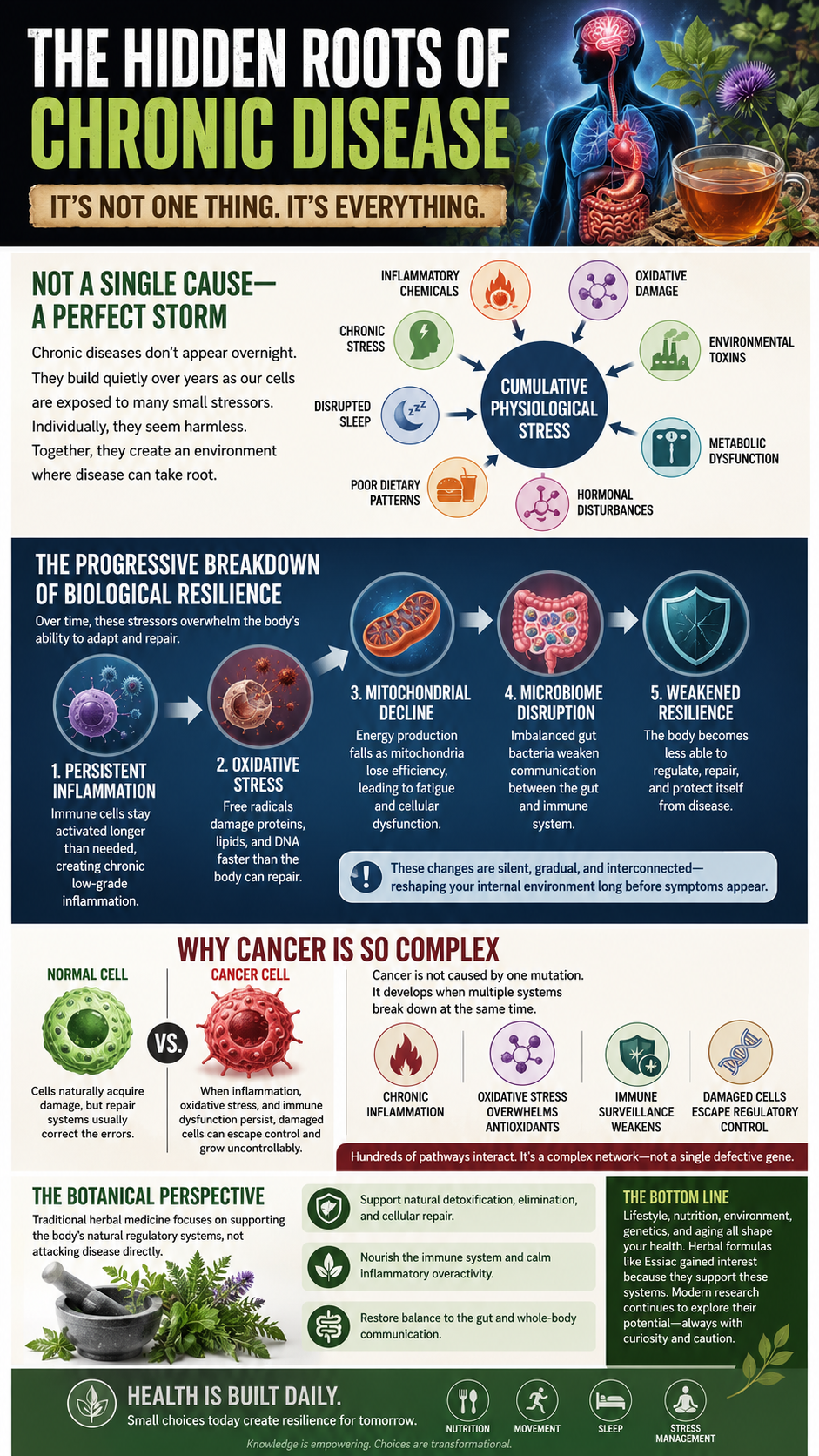
Cancer illustrates this complexity particularly well. Contrary to popular belief, cancer rarely develops because one isolated mutation suddenly appears. Normal cells acquire genetic damage throughout life, yet sophisticated repair mechanisms usually correct those mistakes before they become dangerous. Problems arise when inflammation persists, oxidative stress overwhelms antioxidant defenses, immune surveillance weakens, and damaged cells escape normal regulatory control. These processes involve hundreds of interacting biological pathways rather than a single defective gene. Scientists continue investigating how lifestyle, nutrition, environmental exposures, aging, and inherited genetics influence that intricate network.
Understanding these mechanisms helps explain why herbal formulas like Essiac generated interest among traditional practitioners. Rather than attempting to destroy abnormal cells directly, many botanical therapies historically aimed to support the body’s natural regulatory systems. Although modern research has not demonstrated that Essiac treats cancer in humans, investigators continue studying individual herbs because several contain compounds capable of influencing inflammation, oxidative stress, cellular signaling, and immune responses under laboratory conditions. Those findings encourage further investigation without establishing clinical effectiveness.
The Four Herbs That Built a Worldwide Reputation
The original Essiac formula contains only four botanicals, yet each contributes a remarkably diverse collection of bioactive compounds. Their combined chemistry explains why researchers continue examining these plants decades after Rene Caisse first introduced the formula to the public.
Burdock root serves as the foundation of the mixture. Traditional European and Asian herbalists often recommended burdock to support healthy digestion, liver function, and elimination. Modern analysis reveals that the root contains arctigenin, arctiin, chlorogenic acid, lignans, polyphenols, and abundant inulin fiber. Scientists have investigated arctigenin extensively because laboratory experiments suggest it influences inflammatory signaling pathways, oxidative stress responses, mitochondrial metabolism, and programmed cell death within cultured cancer cells. Although these findings remain confined largely to preclinical research, they demonstrate that burdock contains biologically active compounds capable of interacting with complex cellular systems.
Beyond its phytochemicals, burdock provides substantial amounts of prebiotic fiber that nourish beneficial intestinal bacteria. Those microbes produce short-chain fatty acids, including butyrate, which help maintain the integrity of the intestinal lining and regulate immune activity. Researchers increasingly recognize that microbial diversity influences metabolism, inflammatory balance, and immune communication throughout the body. This growing understanding has renewed scientific interest in herbs traditionally associated with digestive wellness.
Sheep sorrel contributes a different collection of plant compounds, including flavonoids, tannins, carotenoids, anthraquinones, and vitamin C. Traditional herbal medicine viewed sheep sorrel as a cleansing herb that supported elimination and digestive health. Contemporary laboratory research demonstrates antioxidant activity and several effects on inflammatory signaling pathways. Investigators have also reported growth inhibition in certain cultured cancer cell lines exposed to concentrated extracts. Such experiments provide valuable mechanistic insights, yet they cannot predict clinical outcomes because isolated cells growing inside laboratory dishes differ profoundly from complex human physiology.
Slippery elm offers a unique role within the formula because it emphasizes tissue protection rather than direct cellular signaling. The tree’s inner bark contains abundant mucilage, a gel-forming substance that coats irritated mucous membranes throughout the digestive tract. Herbal practitioners historically recommended slippery elm for sore throats, gastritis, reflux, and intestinal irritation. Modern investigators continue exploring how plant polysaccharides influence gut barrier integrity, microbial ecology, and local inflammatory responses. While definitive evidence demonstrating repair of intestinal permeability remains limited, slippery elm continues to occupy an important place within traditional gastrointestinal herbal medicine.
Turkish rhubarb root completes the original formula with an impressive collection of anthraquinones, including emodin, rhein, chrysophanol, and aloe-emodin. Among these compounds, emodin has received particular scientific attention because laboratory studies suggest it influences apoptosis, angiogenesis, inflammatory signaling, oxidative stress, and several molecular pathways involved in cellular regulation. Researchers have published hundreds of experimental studies exploring emodin’s biological activities, yet human clinical trials remain insufficient to conclude that medicinal rhubarb improves cancer outcomes. The distinction between laboratory promise and proven clinical benefit remains essential when interpreting botanical research responsibly.
The Inflammatory Landscape That Allows Disease to Flourish
Although Essiac became famous for its association with cancer, the biological processes influencing chronic illness extend far beyond oncology. Persistent inflammation now appears in research involving cardiovascular disease, neurodegenerative disorders, autoimmune conditions, insulin resistance, obesity, arthritis, and accelerated aging. Inflammation itself serves an essential purpose because it protects the body from infection and injury. Problems develop when inflammatory signals remain chronically elevated despite the absence of immediate danger.
Inflammatory molecules continuously communicate with immune cells, blood vessels, connective tissues, hormones, and the nervous system. Excessive activation gradually alters cellular metabolism while increasing free radical production. Antioxidant defenses struggle to maintain equilibrium under those conditions, allowing oxidative stress to damage proteins, membranes, and genetic material. Over time, mitochondrial efficiency declines, tissue repair slows, and immune regulation becomes increasingly complex. These biological changes create an internal environment less capable of maintaining normal physiological balance.
Nutrition strongly influences this inflammatory landscape. Diets dominated by ultra-processed foods, refined carbohydrates, industrial seed oils, excessive alcohol, and inadequate fiber often correlate with higher inflammatory biomarkers. Chronic sleep deprivation, sedentary lifestyles, environmental pollutants, smoking, persistent psychological stress, and obesity amplify those effects. Functional medicine emphasizes addressing these modifiable factors because they influence numerous biological systems simultaneously rather than targeting a single symptom.
This broader perspective explains why traditional botanical medicine rarely focused upon one isolated disease. Herbalists historically selected combinations of plants that supported digestion, elimination, circulation, tissue repair, and immune resilience simultaneously. Whether those approaches translate into measurable clinical improvements depends upon rigorous scientific evaluation, yet the underlying philosophy reflects an appreciation for biological complexity that modern systems biology increasingly acknowledges.
When Politics, Patents, and Plants Collided
As Essiac spread across Canada during the 1930s and 1940s, the debate surrounding the herbal tea expanded far beyond medicine. It entered the worlds of politics, economics, regulation, and public opinion. Thousands of individuals claimed the tea improved their quality of life. Many physicians dismissed those reports because they lacked controlled scientific evidence. Government agencies insisted that extraordinary medical claims required extraordinary proof, while supporters argued that patients deserved access to a therapy they believed had helped them. The controversy intensified because Essiac emerged during an era when pharmaceutical medicine increasingly depended on standardized drugs that could be manufactured, patented, and studied through tightly controlled clinical trials. An herbal mixture harvested from nature simply did not fit that business model.
That historical context gave rise to a lasting perception that Essiac had been deliberately suppressed. The historical record supports intense regulatory scrutiny, political hearings, and skepticism from medical authorities. However, it does not establish a coordinated conspiracy proving that an effective cancer cure was intentionally hidden. A more evidence-based conclusion is that Essiac became trapped between two worlds. Traditional herbal medicine relied heavily on historical use and observational experience, while modern medicine demanded randomized clinical trials before accepting therapeutic claims. Because those trials were never completed to contemporary standards, the debate never reached a satisfying conclusion for either side.
The absence of large clinical trials created an unfortunate vacuum that still exists today. Supporters often fill that space with remarkable testimonials, while critics use the same lack of evidence to dismiss every aspect of the formula. Neither position fully reflects the complexity of botanical medicine. Many modern prescription drugs originated from plants first used in traditional healing systems. Aspirin traces its origins to willow bark. Digoxin emerged from foxglove. Paclitaxel, one of the world’s best-known chemotherapy drugs, originated from the Pacific yew tree. History repeatedly demonstrates that nature contains powerful biological compounds. The challenge lies in determining which traditional remedies truly produce meaningful clinical benefits and under what circumstances.
What Modern Science Has Actually Discovered
Scientific interest in Essiac has never completely disappeared. Instead of studying the tea only as a finished product, researchers have spent decades examining the chemistry of its individual ingredients. That work has revealed an extraordinary collection of polyphenols, flavonoids, lignans, anthraquinones, tannins, antioxidants, and plant fibers capable of influencing numerous biological pathways. Those discoveries explain why scientists continue publishing laboratory studies involving the herbs despite the lack of definitive clinical evidence for the formula itself.
Many of these plant compounds influence inflammation by regulating transcription factors such as NF-κB and other signaling molecules that coordinate immune activity. Others reduce oxidative stress by neutralizing reactive oxygen species before they damage cellular structures. Several appear to affect mitochondrial metabolism, the process responsible for producing energy inside nearly every cell. Researchers have also observed changes in programmed cell death, known as apoptosis, within cultured cancer cells exposed to concentrated plant extracts. These findings demonstrate biological activity rather than clinical effectiveness. Cells growing inside laboratory dishes behave very differently from tumors developing within the complex environment of the human body.
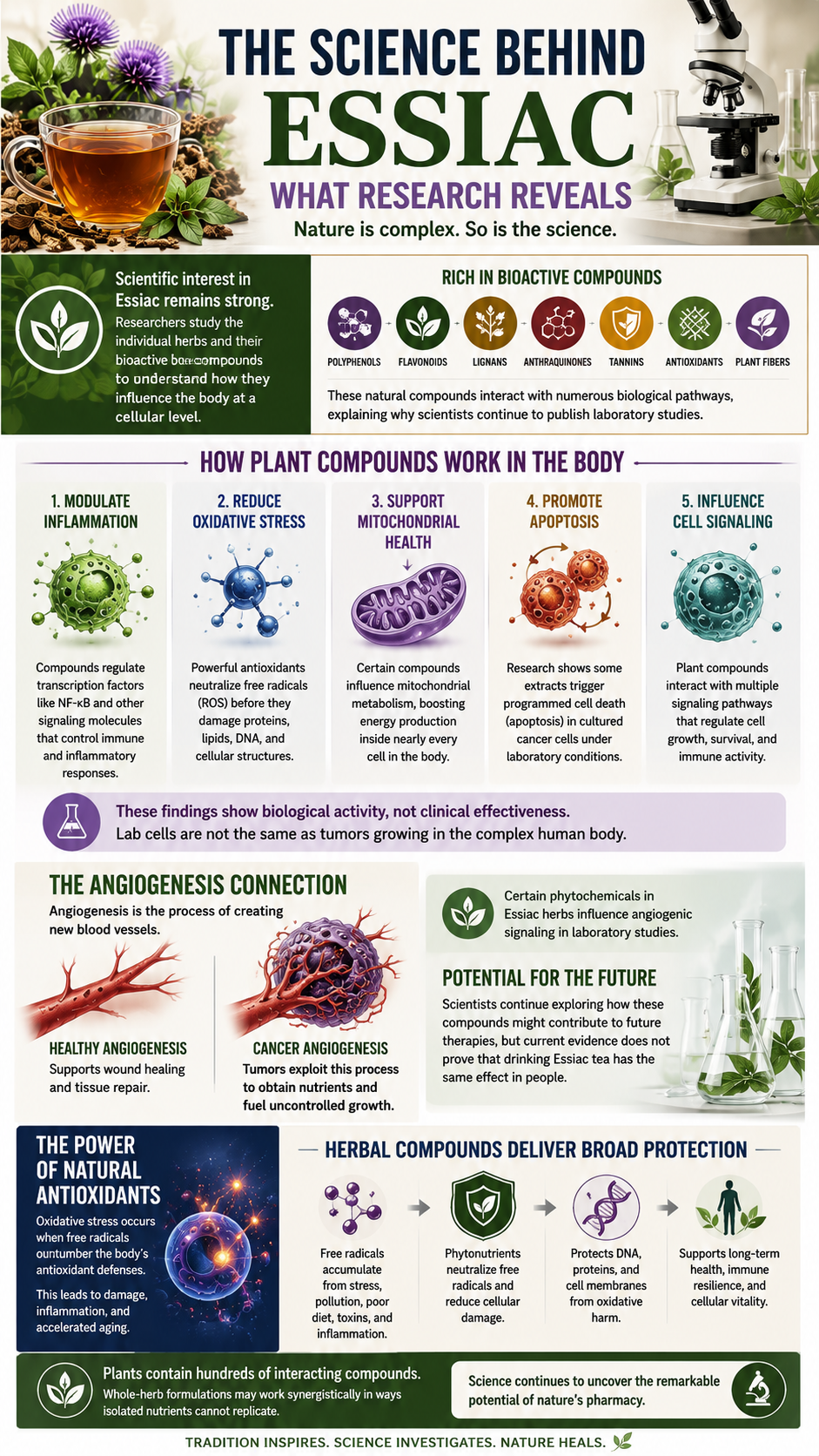
Another fascinating area of investigation involves angiogenesis, the process through which new blood vessels develop. Healthy angiogenesis supports wound healing and tissue repair. Cancer cells often exploit the same process to obtain nutrients that fuel uncontrolled growth. Certain phytochemicals found in medicinal herbs have demonstrated the ability to influence angiogenic signaling under experimental conditions. Investigators continue exploring whether these observations might eventually contribute to future therapies, although current evidence remains far from proving that drinking herbal tea produces comparable effects in people.
The scientific literature also highlights the remarkable antioxidant capacity of several Essiac ingredients. Oxidative stress develops when free radicals accumulate faster than the body’s antioxidant systems can neutralize them. Those unstable molecules damage DNA, proteins, and cellular membranes while accelerating inflammation. Although antioxidant supplements have produced mixed results in clinical trials, diets naturally rich in colorful plant compounds consistently associate with better long-term health outcomes. Researchers increasingly suspect that complex mixtures of phytochemicals may behave differently from isolated vitamins because plants contain hundreds of interacting compounds rather than a single antioxidant molecule.
The Hidden Connection Between the Gut and the Immune System
One of the most intriguing aspects of Essiac has little to do with cancer directly. Instead, it involves the digestive tract. Modern research continues revealing that the gastrointestinal system functions as one of the body’s largest immune organs. Trillions of microorganisms living within the intestines communicate constantly with immune cells, hormones, neurotransmitters, and metabolic pathways. This intricate ecosystem influences far more than digestion alone. It helps regulate inflammation, nutrient absorption, immune tolerance, and even aspects of brain function.
Disruptions within the intestinal microbiome may contribute to chronic inflammation when beneficial bacteria decline and harmful organisms gain dominance. Poor dietary patterns, repeated antibiotic exposure, chronic stress, environmental chemicals, and inadequate fiber all influence microbial diversity. A less diverse microbiome often produces fewer beneficial short-chain fatty acids such as butyrate. Those compounds nourish the intestinal lining while helping maintain the barrier separating the bloodstream from intestinal contents. When that protective barrier becomes compromised, bacterial components and incompletely digested food particles may interact more extensively with the immune system, potentially increasing inflammatory signaling in susceptible individuals.
Several Essiac ingredients intersect with this area of research. Burdock root provides prebiotic fibers that nourish beneficial bacteria. Slippery elm supplies mucilage capable of soothing irritated gastrointestinal tissues. Polyphenols found throughout the formula may also influence microbial composition because intestinal bacteria metabolize many plant compounds into smaller molecules with distinct biological activities. Scientists continue investigating these interactions because the relationship between dietary plants and the microbiome represents one of nutrition’s fastest-growing fields.
Supporting digestive health alone cannot prevent or cure cancer, yet maintaining a healthy intestinal environment contributes to overall physiological resilience. That principle illustrates an important distinction often overlooked in public discussions. A therapy does not need to cure a disease to provide meaningful biological support. Nutrition, sleep, physical activity, stress management, and digestive health all influence recovery, immune function, and quality of life without serving as stand-alone cures for serious illness.
The Functional Medicine Perspective on Botanical Support
Functional medicine encourages clinicians to examine the terrain in which disease develops rather than focusing exclusively on the diagnosis itself. Instead of asking only what disease a patient has, practitioners often explore why normal physiological regulation deteriorated over time. That approach considers nutrition, environmental exposures, metabolic health, sleep, movement, emotional well-being, digestive function, and inflammatory balance together because these systems constantly influence one another.
Within that framework, herbs function primarily as biological supporters rather than pharmaceutical replacements. They complement healthy behaviors instead of compensating for their absence. Drinking Essiac tea while continuing a lifestyle dominated by ultra-processed foods, smoking, chronic sleep deprivation, excessive alcohol consumption, and physical inactivity ignores the broader context in which health develops. Conversely, incorporating botanicals into a comprehensive wellness strategy may provide additional phytochemicals alongside improvements in diet and lifestyle, although the specific contribution of the tea itself remains difficult to measure scientifically.
The body already possesses sophisticated detoxification systems involving the liver, kidneys, intestines, lungs, skin, and lymphatic circulation. Those organs continually process metabolic waste products and environmental compounds without requiring specialized cleanses. Everyday habits strongly influence their efficiency. Consuming abundant vegetables, fruits, legumes, herbs, spices, and fiber supports microbial diversity and provides numerous plant compounds associated with reduced inflammation. Regular physical activity improves circulation while enhancing insulin sensitivity. Adequate hydration supports kidney function. Consistent sleep promotes hormonal regulation and immune resilience. Stress reduction helps moderate excessive inflammatory signaling through neuroendocrine pathways.
People interested in herbal teas should therefore view them as one component within a much larger picture. A botanical formula cannot compensate for persistent metabolic dysfunction, uncontrolled diabetes, obesity, chronic tobacco use, or severe nutritional deficiencies. Long-term health emerges from the interaction of countless daily choices rather than any single supplement, beverage, or medication.
Practical Steps to Build a Healthier Internal Environment
Creating an internal environment that supports normal cellular function begins with nutrition. Emphasizing minimally processed foods provides vitamins, minerals, fiber, and thousands of naturally occurring phytochemicals that work together in ways isolated supplements cannot fully replicate. Colorful vegetables, berries, herbs, mushrooms, legumes, nuts, seeds, and appropriately chosen protein sources contribute nutrients that help maintain antioxidant defenses and immune regulation. Replacing sugar-sweetened beverages with water or unsweetened herbal teas reduces excessive caloric intake while encouraging better hydration.
Daily movement represents another powerful intervention that requires no prescription. Moderate exercise improves insulin sensitivity, supports cardiovascular health, enhances lymphatic circulation, and reduces chronic inflammation over time. Even brisk walking performed consistently produces measurable improvements in metabolic function. Strength training preserves muscle mass during aging while increasing glucose utilization, making it an essential component of long-term wellness rather than merely an athletic activity.

Sleep deserves equal attention because the body performs extensive repair during nighttime rest. Hormonal regulation, immune coordination, memory consolidation, and tissue recovery all depend upon consistent sleep patterns. Adults who routinely sleep fewer than seven hours often demonstrate higher inflammatory biomarkers and impaired glucose regulation compared with individuals obtaining sufficient rest. Establishing regular bedtimes, limiting evening light exposure, and reducing caffeine intake later in the day support healthier sleep architecture.
Managing psychological stress also influences physical health more profoundly than many people realize. Chronic stress activates the hypothalamic-pituitary-adrenal axis, increasing cortisol production while altering immune regulation. Mindfulness practices, prayer, deep breathing, meaningful relationships, time outdoors, and regular physical activity all help moderate those physiological responses. Although no single technique eliminates life’s challenges, consistent stress management strengthens resilience across multiple body systems.
A Balanced View of Essiac’s Legacy
Essiac remains one of the most fascinating stories in botanical medicine because it refuses to fit neatly into either enthusiastic promotion or complete dismissal. Historical evidence confirms that Rene Caisse devoted decades to sharing the formula with thousands of individuals. Scientific evidence confirms that the herbs contain biologically active compounds capable of influencing numerous pathways under laboratory conditions. Clinical evidence, however, has not demonstrated that Essiac treats or cures cancer according to modern medical standards. Those three realities coexist without contradicting one another.
Perhaps the greatest lesson Essiac offers involves humility. Nature continues revealing extraordinary complexity each time scientists investigate medicinal plants more deeply. Traditional healing systems accumulated valuable observational knowledge across generations, yet historical use alone cannot establish effectiveness. Modern research provides powerful investigative tools, yet absence of definitive evidence does not automatically render every traditional practice biologically meaningless. Progress often occurs when curiosity replaces certainty and careful investigation replaces polarized debate.
The future of botanical medicine will likely depend upon combining rigorous scientific research with respect for traditional knowledge rather than forcing one system to exclude the other. Essiac’s story reminds us that health rarely depends upon a single miracle therapy. Instead, wellness develops through countless interactions among nutrition, movement, sleep, emotional well-being, environmental exposures, genetics, and the remarkable capacity of the human body to adapt and repair. Herbal medicine may contribute to that larger picture for some individuals, but it works best when viewed as part of a comprehensive, evidence-informed approach to lifelong health rather than as a substitute for appropriate medical evaluation and treatment.