
Why Probiotics Don’t Work for Most People—and the Gut Problem No One Is Talking About
The question “do probiotics survive stomach acid” has become one of the most searched topics in gut health, yet the way it is commonly answered completely misses the real issue. Most explanations stop at surface-level science, claiming that stomach acid kills probiotics and that special capsules or higher doses are needed to ensure survival. While this may sound reasonable, it distracts from a much deeper and far more important truth, which is that the effectiveness of probiotics has very little to do with stomach acid alone and everything to do with the condition of the digestive system they are entering. The true problem is not simply probiotic survival, but a widespread collapse of gut function that prevents beneficial bacteria from thriving, regardless of how many are consumed.
The Real Issue: A Broken Gut Environment, Not Just Stomach Acid
The central issue behind failed probiotics is a dysfunctional digestive system that has lost its ability to regulate microbial balance, and this problem originates from modern lifestyle patterns that have steadily degraded gut health over time. The widespread use of acid-blocking medications has significantly reduced stomach acid production in millions of people, creating a condition known as hypochlorhydria, where the stomach is no longer acidic enough to properly break down food or filter incoming microbes. At the same time, diets dominated by processed foods, refined sugars, and chemical additives have deprived the gut microbiome of the nutrients it needs to sustain itself, while chronic stress has shut down digestive function at a neurological level by keeping the body in a constant state of fight-or-flight.
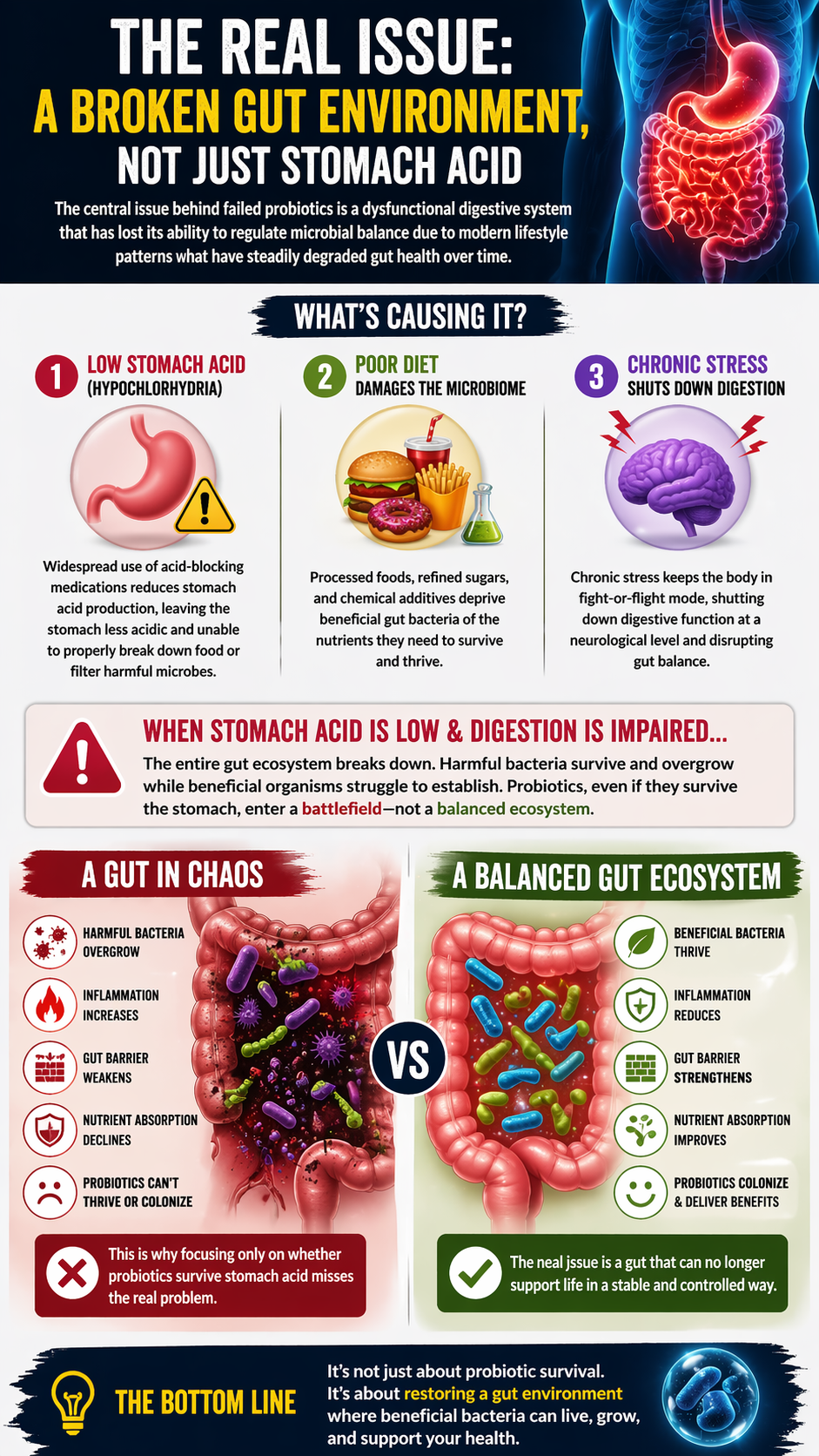
When stomach acid is low and digestion is impaired, the entire ecosystem of the gut begins to break down, allowing harmful bacteria to survive and overgrow while beneficial organisms struggle to establish themselves. This creates a chaotic internal environment where probiotics, even if they survive the stomach, enter a battlefield rather than a balanced ecosystem. The focus on whether probiotics survive stomach acid becomes misleading because the real issue is that the gut is no longer capable of supporting life in a stable and controlled way.
What Happens in the Body When Probiotics Don’t Work
When probiotics fail to survive or function properly, the consequences extend far beyond digestion and begin to affect nearly every system in the body. One of the most immediate effects is microbial imbalance, known as dysbiosis, which leads to chronic inflammation that spreads throughout the body and contributes to fatigue, weight gain, and metabolic dysfunction. The gut lining, which is designed to act as a protective barrier, becomes damaged under these conditions, allowing toxins, undigested food particles, and bacteria to enter the bloodstream, triggering immune responses that manifest as food sensitivities, joint pain, and skin conditions.

As this dysfunction progresses, the body’s ability to absorb nutrients becomes compromised, leading to deficiencies in critical vitamins and minerals such as magnesium, zinc, and B vitamins, all of which are essential for energy production and cellular repair. The gut microbiome also plays a central role in producing neurotransmitters, meaning that imbalances can directly affect mood, leading to anxiety, brain fog, and reduced cognitive clarity. This cascade of dysfunction reveals that the failure of probiotics is not a minor inconvenience but a reflection of a deeper systemic issue that is quietly undermining overall health.
The Truth About Probiotic Survival in Stomach Acid
The survival of probiotics in stomach acid is not a myth, but it is also not the main problem people think it is, because certain strains are naturally equipped to survive the acidic environment of the stomach. Soil-based organisms, for example, form protective spores that allow them to pass through the stomach intact, while yeast-based probiotics such as Saccharomyces boulardii are inherently resistant to acid and antibiotics. On the other hand, many commonly used strains like Lactobacillus and Bifidobacterium are more sensitive and may not survive in large numbers unless the digestive system is functioning properly.
The key point is that survival depends on both the strain and the environment, and focusing only on stomach acid ignores the broader context of gut health. Even if a probiotic survives the stomach, it still needs a supportive environment in the intestines to colonize and function, and this is where most people fall short. Without addressing the underlying dysfunction, probiotics become temporary visitors rather than long-term residents, passing through the system without delivering meaningful benefits.
What Is Causing This Problem in the First Place
The root causes of poor probiotic survival and gut dysfunction are deeply embedded in modern living, where convenience has replaced biological compatibility. The overuse of antibiotics has wiped out beneficial bacteria on a massive scale, leaving behind resistant strains that dominate the gut environment. Environmental toxins such as pesticides, heavy metals, and industrial chemicals further disrupt microbial balance by damaging the gut lining and interfering with cellular function. Diets lacking in fiber and natural nutrients deprive beneficial bacteria of the fuel they need to grow, while excessive sugar intake feeds harmful organisms that crowd out the good ones.
Chronic stress compounds these issues by altering gut motility and reducing digestive secretions, creating an environment where food is not properly broken down and bacteria can overgrow in areas where they do not belong. This combination of factors creates a perfect storm in which the gut becomes inflamed, imbalanced, and unable to support the very organisms that are supposed to restore it.
How to Fix the Problem at Home: Restoring the Gut Environment
The solution to poor probiotic survival does not begin with buying a better supplement, but with restoring the internal conditions that allow beneficial bacteria to thrive naturally. The first priority is improving digestive function by supporting stomach acid production, which can be encouraged by eating whole, unprocessed foods, slowing down during meals, and avoiding habits that suppress digestion such as eating under stress or consuming excessive liquids with meals. Natural compounds like apple cider vinegar or digestive bitters can help stimulate gastric activity, creating a more effective filtering system that supports microbial balance.
Equally important is repairing the gut lining, which requires removing inflammatory foods such as refined sugars, processed oils, and chemical additives while introducing nutrients that support tissue repair. Amino acids like glutamine, along with minerals such as zinc, play a critical role in restoring the integrity of the intestinal barrier, reducing inflammation and improving the body’s ability to regulate what enters the bloodstream. As the gut lining heals, it becomes a more stable environment for beneficial bacteria to attach and grow.

Another critical aspect of restoring gut health is addressing microbial imbalance by reducing the presence of harmful bacteria that compete with probiotics. This can be achieved through dietary strategies that limit sugar and refined carbohydrates, as well as the use of natural antimicrobial compounds that help rebalance the microbiome without causing the widespread damage associated with antibiotics. Once the harmful organisms are reduced, space is created for beneficial bacteria to establish themselves more effectively.
Feeding the microbiome is equally essential, as beneficial bacteria require specific nutrients to survive and multiply. Prebiotic-rich foods such as vegetables, resistant starches, and plant fibers provide the fuel needed for microbial fermentation, leading to the production of short-chain fatty acids that support gut health and reduce inflammation. Without these nutrients, even the most resilient probiotics will struggle to survive, making diet one of the most important factors in determining success.
Finally, addressing the gut-brain connection is crucial, as the state of the nervous system directly influences digestive function. Practices that promote relaxation, such as deep breathing, adequate sleep, and time spent in nature, help shift the body into a parasympathetic state where digestion can occur efficiently. This not only improves the effectiveness of probiotics but also enhances overall gut health by restoring the natural rhythms of the digestive system.
The Bottom Line: It’s Not About the Probiotic, It’s About the Environment
The question “do probiotics survive stomach acid” ultimately reveals a much deeper issue that goes beyond the survival of bacteria and into the fundamental health of the digestive system. While certain strains are capable of withstanding stomach acid, their ability to provide meaningful benefits depends entirely on the condition of the environment they enter. A compromised gut cannot be fixed by simply adding more bacteria, no matter how advanced the supplement may appear.
True gut healing requires a shift in focus from supplementation to restoration, where the goal is to rebuild the digestive system, reduce inflammation, and create a balanced ecosystem that supports microbial life. When this environment is restored, probiotics are no longer a gamble but a powerful tool that works in harmony with the body’s natural processes. This is the difference between chasing symptoms and creating lasting health, and it is a distinction that transforms the way probiotics should be understood and used.