
The Invisible Chemistry We Invited Into Everyday Life
The most dangerous pollution rarely announces itself with black smoke, poisoned rivers, or an obvious chemical smell. Sometimes it arrives wrapped around dinner, woven into clothing, sprayed onto furniture, or dissolved invisibly in drinking water. It may begin as an innovation, become an industry standard, and eventually settle into human blood. That is the disturbing story behind PFAS, commonly called “forever chemicals.”
PFAS stands for per- and polyfluoroalkyl substances, a vast family of synthetic chemicals. Manufacturers developed these compounds because many resist water, grease, heat, stains, and chemical breakdown. Those properties made PFAS extraordinarily useful across modern industry. Unfortunately, the same durability that made them commercially attractive created an environmental problem that now spans generations.
Scientists have detected PFAS throughout the environment and within human populations worldwide. Nearly everyone tested in the United States has measurable PFAS in their blood. Yet blood contamination tells only part of the story. The larger concern involves what persistent exposure may do to cholesterol, liver function, immunity, pregnancy, development, and cancer risk.
Understanding PFAS exposure requires moving beyond the idea of one chemical causing one disease. The human body operates through interconnected systems, and environmental chemicals enter that network. They circulate through blood, interact with proteins, reach tissues, and may influence biological signaling. Some PFAS can remain inside the body for years after exposure occurs.
The real PFAS problem, therefore, is not simply that these chemicals exist. Humans created exceptionally persistent chemistry and distributed it across environments where people live, eat, drink, work, and raise children. Now science is discovering what happens when industrial durability collides with human biology.
The Birth of a Chemical Problem
Modern chemistry spent much of the twentieth century chasing durability. Industry wanted coatings that rejected water, fabrics that resisted stains, surfaces that repelled grease, and foams capable of fighting intense fires. Fluorinated chemistry offered remarkable solutions because carbon-fluorine bonds rank among the strongest bonds found in organic chemistry.
That strength became PFAS chemistry’s commercial superpower. Certain compounds could tolerate conditions that destroyed ordinary materials. Manufacturers incorporated PFAS into industrial applications, firefighting foams, stain-resistant treatments, water-resistant products, and various food-contact materials. Convenience grew quickly because consumers rarely saw the chemistry behind the products.
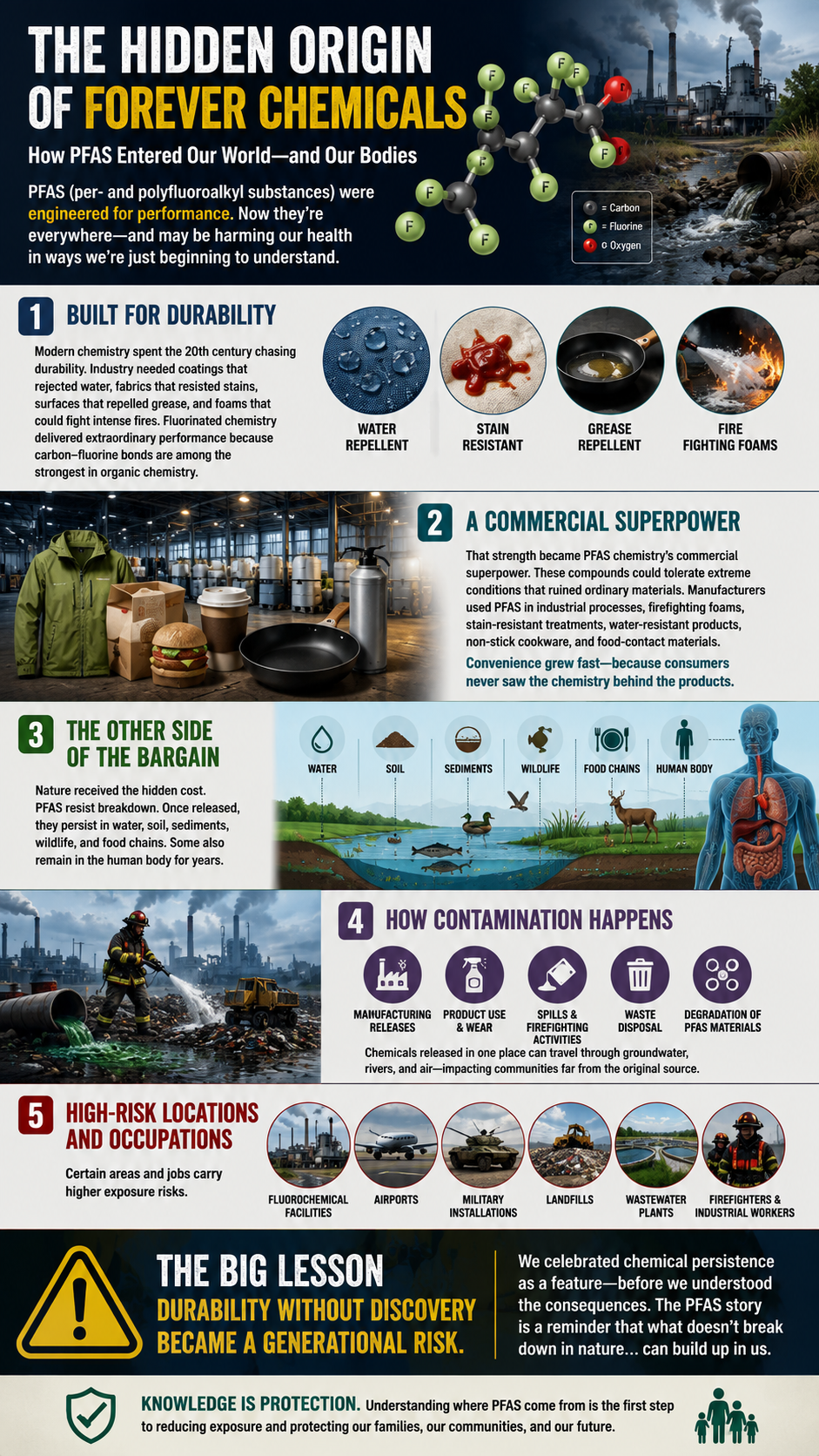
Yet nature received the other side of the bargain. Many PFAS resist processes that normally break chemicals apart. Once released, they can persist in water, soil, sediments, wildlife, and food chains. Some compounds also remain within humans for prolonged periods.
Contamination can begin during manufacturing, product use, spills, firefighting activities, waste disposal, or degradation of PFAS-containing materials. Chemicals released in one location can migrate through groundwater or other environmental pathways. Communities far removed from chemical factories can therefore encounter contamination.
Certain locations deserve particular attention. Areas surrounding fluorochemical facilities, airports, military installations, landfills, wastewater plants, and sites using firefighting foams may carry elevated exposure risks. Occupational exposure can also occur among firefighters and workers handling fluorinated materials.
The PFAS story reveals a fundamental environmental mistake. Society celebrated chemical persistence as a feature before fully understanding persistence as a biological liability.
Drinking Water: The Exposure That Keeps Returning
One contaminated product may create occasional exposure. Contaminated water can create exposure every morning, afternoon, and evening.
Water becomes especially important because people drink it continuously throughout life. Families also use it for coffee, tea, soups, cooking, infant formula, and other foods. When PFAS enter a water supply, exposure can become repetitive rather than occasional.
Unlike contamination that changes water’s taste or smell, PFAS contamination usually provides no sensory warning. Clear water may still contain measurable concentrations. That invisibility allows exposure to continue unless communities or homeowners specifically investigate their water.
Public attention has consequently focused heavily on contaminated groundwater surrounding military bases, airports, industrial sites, and firefighting training areas. Certain firefighting foams historically contained substantial PFAS concentrations. Repeated foam use allowed these compounds to enter nearby soil and water.
Private well owners may face another challenge because monitoring differs from municipal systems. A well can appear pristine while containing contaminants that cannot be detected by sight. Geographic exposure history therefore matters enormously when evaluating potential PFAS risk.
This changes the first question families should ask about environmental health. Instead of asking whether their water looks clean, they should ask what laboratory testing shows.
Food, Packaging, Dust and the Everyday Exposure Web
Water receives deserved attention, but PFAS exposure does not stop at the kitchen faucet. Food, packaging, household dust, consumer products, and occupational environments can add additional exposure.
Grease-resistant materials historically offered an obvious application for fluorinated chemistry. Food packaging needed to prevent oils from soaking through paper and cardboard. Water-resistant textiles needed to repel rain. Carpets and furniture benefited commercially from stain resistance.
Those conveniences created numerous opportunities for environmental distribution. Chemicals can move during manufacturing, product use, disposal, and environmental degradation. PFAS entering soil or water may eventually reach plants, animals, fish, or agricultural systems.
Indoor dust adds another dimension. Household materials gradually release particles and chemicals into indoor environments. People then inhale dust or ingest tiny quantities through normal hand-to-mouth contact.
Children may experience proportionally different exposures because they crawl, touch floors, handle objects, and place their hands near their mouths. Their developing bodies also differ physiologically from adult bodies. Exposure during critical developmental periods therefore deserves particular attention.
The modern exposure picture resembles a web rather than a single pipeline. Water may contribute one strand, food another, dust another, and occupational contact another. Removing one source helps, but identifying the largest recurring sources usually produces the greatest benefit.
What Happens When PFAS Enter the Human Body?
PFAS chemistry behaves differently from many pollutants people commonly associate with “toxins.” Several important PFAS bind extensively to proteins within blood and tissues. Their biological behavior cannot simply be described as chemicals hiding inside body fat.
After absorption, PFAS can circulate through blood and distribute throughout the body. Elimination rates differ considerably between compounds. Some historically important PFAS can remain within humans for years, creating opportunities for repeated exposure to maintain body burden.
Persistence changes the mathematics of exposure. Imagine pouring water into a bathtub while the drain empties very slowly. Even a modest stream can raise the water level when input repeatedly exceeds removal.
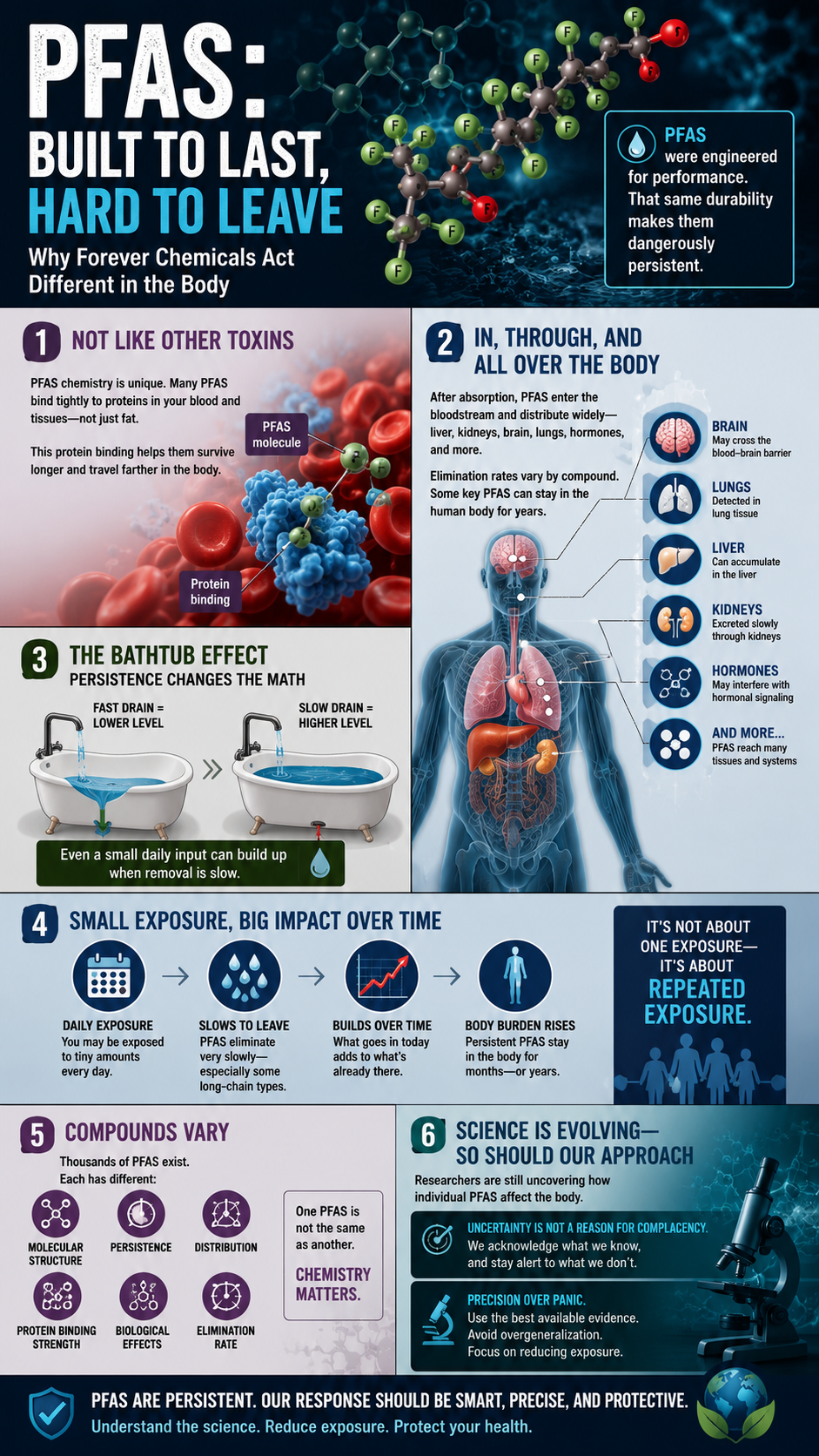
A similar principle can apply to persistent chemicals. Daily exposure may appear tiny when examined individually. However, repeated contact becomes more significant when elimination occurs slowly.
Researchers continue investigating exactly how individual PFAS produce biological effects. Current evidence does not prove one universal mechanism for thousands of different PFAS chemicals. Different compounds vary in persistence, structure, distribution, and biological behavior.
That scientific uncertainty should encourage precision rather than complacency. We should not claim every PFAS causes every disease. Neither should we ignore established associations because every molecular detail remains unresolved.
The Liver: Where PFAS Meets Metabolism
The liver operates like a biochemical command center. It regulates glucose, synthesizes and processes lipids, produces bile, transforms hormones, handles nutrients, and processes numerous foreign compounds. Any persistent chemical interacting with liver biology therefore deserves attention.
Human studies have associated exposure to PFOA, PFOS, and PFHxS with changes in liver enzymes. The National Academies classified evidence linking PFAS exposure with elevated liver enzymes as limited or suggestive. Researchers continue studying mechanisms behind those observations.
An abnormal liver enzyme does not prove PFAS toxicity. Alcohol, metabolic dysfunction, medications, infections, fatty liver disease, and other conditions can produce similar findings. Environmental exposure belongs within that differential picture rather than replacing it.
The metabolic implications extend beyond liver enzymes. Liver function connects directly with cholesterol production, lipoprotein metabolism, glucose regulation, hormone processing, and inflammatory signaling. Disturbance within one pathway can influence several others.
That interconnected biology helps explain why environmental health cannot remain separated from metabolic health. A patient’s physiology reflects genetics, nutrition, movement, sleep, metabolic state, medications, stressors, and environmental exposures simultaneously.
Ignoring environmental inputs creates an incomplete picture.
PFAS and Cholesterol: A Signal Too Consistent to Ignore
One of the strongest human findings surrounding PFAS involves blood lipids. Researchers have repeatedly found associations between several PFAS compounds and increased cholesterol concentrations.
ATSDR reports associations involving PFOA, PFOS, PFNA, and PFDA. The National Academies concluded that sufficient evidence supports an association between PFAS exposure and dyslipidemia among children and adults.
This matters because cholesterol physiology extends far beyond dietary fat. The liver manufactures cholesterol because humans require it for cellular membranes, bile acids, steroid hormones, and other functions. Blood concentrations emerge from a sophisticated system involving synthesis, transport, receptors, recycling, and elimination.
Environmental chemicals capable of interacting with lipid regulation complicate simplistic explanations for elevated cholesterol. Diet remains relevant, but it does not operate alone. Insulin resistance, genetics, thyroid function, liver health, activity, body composition, medications, and environmental exposures can all influence lipid patterns.
A comprehensive evaluation should therefore investigate metabolic context rather than treating a cholesterol number as an isolated disease. PFAS exposure does not explain every elevated LDL result. However, evidence supports including PFAS within the broader environmental conversation.
That perspective changes the question from “How do we lower this number?” toward something more useful. We should also ask what biological and environmental conditions helped produce it.
PFAS and the Immune System
The immune system relies upon exquisite communication. Cells must recognize threats, coordinate inflammation, generate antibodies, remember previous exposures, eliminate damaged cells, and eventually stop inflammatory responses.
PFAS research has identified changes within this system. Human studies associate several compounds with lower antibody responses following certain vaccinations. The National Academies found sufficient evidence supporting decreased antibody response among exposed children and adults.
Importantly, lower antibody measurements do not automatically mean vaccines fail or infections become more severe. Current evidence does not justify making that leap. The finding still matters because measurable immune changes indicate biological interaction.
The immune system also communicates continuously with the gut, liver, nervous system, endocrine system, and metabolic tissues. Chronic disruption within immune signaling can therefore carry consequences beyond infection resistance.
Animal research and human epidemiology continue helping scientists investigate those mechanisms. Researchers still need greater clarity regarding compound-specific effects, doses, exposure timing, and long-term outcomes.
The responsible conclusion sits between fear and dismissal. PFAS exposure can influence measurable aspects of immune biology, while scientists continue determining the complete clinical significance.
Pregnancy, Development and the Vulnerability of Early Life
Pregnancy represents a remarkable period of biological construction. Cells divide rapidly, organs form, hormones coordinate development, and the immune system learns its earliest instructions. Small disturbances during critical windows may matter differently than identical disturbances during adulthood.
PFAS research has therefore paid considerable attention to pregnancy and childhood. Studies associate PFOA and PFOS exposure with small reductions in infant birth weight. Evidence also links these compounds with pregnancy-induced hypertension and preeclampsia.
The National Academies judged evidence for reduced birth weight sufficient. Evidence concerning pregnancy-related hypertension remains more limited or suggestive. These distinctions matter because environmental health claims should match the strength of available science.
No pregnant woman should interpret PFAS exposure as a guarantee of complications. Pregnancy outcomes reflect genetics, maternal health, nutrition, blood pressure, metabolic status, placental function, medical history, and numerous environmental factors.
Nevertheless, pregnancy offers a compelling reason to reduce unnecessary exposures. Developing children cannot choose their water source, food packaging, household environment, or maternal exposures.
Adults make those decisions for them.
Part 2: The Deeper Biological Cost of Forever Chemicals
Cancer Risk and the Consequences of Long-Term Exposure
Few words create more fear than cancer, so PFAS discussions require careful language. Evidence does not show that every PFAS causes cancer or that exposure guarantees malignancy.
The strongest human cancer evidence concerns specific compounds. PFOA exposure has been associated with kidney and testicular cancer. The National Academies concluded that evidence supports an association with kidney cancer, while testicular cancer evidence remains limited or suggestive.
That distinction matters because cancer develops through numerous interacting forces. Genetics, age, smoking, radiation, infections, obesity, metabolic dysfunction, occupational exposures, immune surveillance, and environmental chemicals may contribute.
Cancer usually emerges after accumulated biological disruptions rather than one isolated insult. DNA damage, altered signaling, impaired repair, metabolic changes, inflammation, and immune escape can eventually create conditions favoring malignant growth.
Environmental medicine therefore should not promise certainty where none exists. Instead, it should identify preventable exposures and reduce them when doing so carries reasonable benefit.
PFAS fits that model perfectly. Nobody can eliminate every environmental risk. However, reducing a persistent chemical exposure becomes sensible when reliable strategies exist.
The Thyroid Question Is More Complicated Than Headlines Suggest
The thyroid frequently appears in PFAS discussions, although evidence requires nuance. The National Academies found limited or suggestive evidence linking PFAS exposure with adult thyroid dysfunction. ATSDR reports less consistent epidemiological evidence for thyroid disease overall.
Those differences illustrate how scientific conclusions evolve. Researchers may examine different compounds, populations, exposure levels, thyroid outcomes, or statistical methods. One study can measure thyroid hormones, while another examines diagnosed hypothyroidism.
Thyroid physiology itself adds complexity. The gland must manufacture hormones, release them, and coordinate their transport through blood. Peripheral tissues must then convert hormones appropriately and respond through cellular receptors.
Environmental chemicals could theoretically influence several points within that system. However, biological plausibility does not equal proven clinical causation. Strong health writing must preserve that boundary.
The National Academies still considered thyroid monitoring important for people with substantially elevated PFAS blood concentrations. Its guidance recommends TSH testing during well visits for adults with summed serum PFAS concentrations at or above 20 ng/mL.
That recommendation does not establish PFAS as the cause of every thyroid disorder. It recognizes that exposure history can influence appropriate clinical surveillance.
The Kidney: An Organ Caught Between Exposure and Elimination
The kidneys continuously filter blood while regulating minerals, fluids, blood pressure, and acid-base balance. Their constant contact with circulating compounds makes them important within environmental toxicology.
PFAS research raises particular concern because kidney cancer represents one of the better-supported disease associations. The National Academies classified the evidence linking PFAS exposure and adult kidney cancer as sufficient.
Yet screening presents difficulties. No universally recommended routine screening program can reliably detect kidney cancer early across average-risk populations. Imaging everyone would create expense, incidental findings, and unnecessary interventions.
Exposure history therefore becomes valuable. People with unusually high occupational or environmental exposure deserve different conversations from individuals without identifiable elevated exposure.
Kidney health also reminds us that “detoxification” is not a single organ or supplement. Elimination depends upon coordinated physiology involving kidneys, liver, gastrointestinal pathways, and other processes.
Persistent PFAS complicate that process because some compounds leave the body slowly. No weekend cleanse can rewrite their biological half-lives.
Why PFAS Can Become a Long-Term Body-Burden Problem
The word “forever” can sound sensational, but it describes an important environmental reality. Many PFAS resist degradation extremely well, while several historically important compounds persist inside humans for extended periods.
Persistence creates a fundamental problem. The body can reduce concentrations after exposure stops, yet elimination may require considerable time. Continued exposure can keep replacing what the body removes.
Picture a bank account receiving daily deposits while withdrawals occur slowly. Even small deposits accumulate when they repeatedly exceed withdrawals.
This model explains why source control matters more than flashy detoxification claims. Supplements cannot compensate for contaminated water consumed every day.
Removing or reducing the exposure changes the equation. Once incoming exposure falls, natural elimination can gradually reduce concentrations of certain PFAS.
That process may take years for some compounds. Patience matters because environmental recovery rarely resembles an overnight transformation.
PFAS Blood Testing: Useful Information With Important Limits
People who discover PFAS contamination naturally want to know how much has entered their bodies. Blood testing can measure several PFAS compounds and estimate current concentrations.
However, testing has limitations. A PFAS blood test cannot identify the exact source of exposure. It cannot prove that PFAS caused someone’s current symptoms. It cannot predict whether that person will eventually develop cancer, thyroid disease, or another condition.
Testing becomes more meaningful when someone has a credible history of elevated exposure. Examples include certain occupational exposures or residence near documented contamination. Water testing may also reveal a source worth investigating.
The National Academies proposed clinical interpretation ranges for a sum of several measured PFAS. Concentrations below 2 ng/mL represent the lowest category. Levels from 2 to below 20 ng/mL represent potential concern, especially among sensitive populations. Concentrations at 20 ng/mL or higher indicate increased risk within that framework.
These values are not diagnostic borders between healthy and poisoned. They provide a framework for discussing exposure reduction and appropriate health monitoring.
A useful test should change a decision. Testing without understanding its limitations can create anxiety without improving health.
Fix the Source Before Chasing a Detox
The most important PFAS intervention starts outside the supplement cabinet. Find the source and reduce the exposure.
Imagine discovering water pouring across your kitchen floor. You could buy better towels, stronger mops, larger buckets, and powerful drying machines. None solves the real problem while the faucet continues running.
Environmental medicine follows the same logic. Stop filling the bathtub before arguing about how quickly the drain works.
This principle becomes especially important with PFAS because no supplement has established evidence for rapidly eliminating these chemicals and improving PFAS-related clinical outcomes. Marketing claims often move much faster than toxicology research.
Supporting normal physiology still matters tremendously. Good nutrition, hydration, movement, sleep, bowel regularity, and metabolic health support human function. They should not be misrepresented as proven PFAS extraction therapies.
The strongest first move remains exposure reduction.
At Home: Start With the Water You Drink
Home intervention should begin where repeated exposure often occurs: drinking water.
People using municipal water can review current PFAS reports from their utility or environmental authorities. Private well owners near potential contamination areas should consider appropriate laboratory testing.
Once testing identifies PFAS, filtration becomes practical. EPA guidance recognizes granular activated carbon, reverse osmosis, and ion-exchange technologies as options capable of reducing PFAS under appropriate conditions.
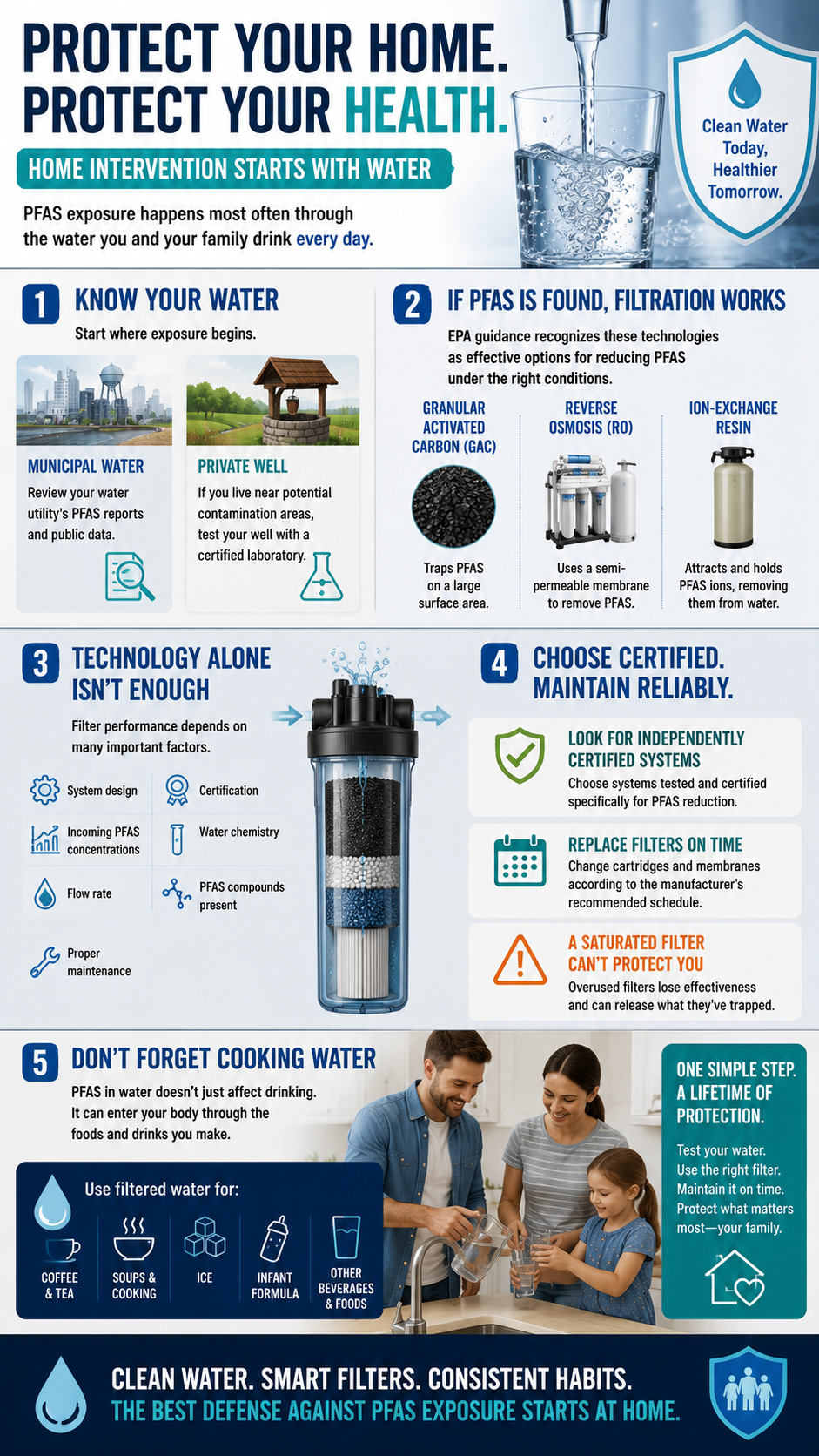
Technology alone does not guarantee performance. Filter effectiveness depends upon design, certification, incoming concentrations, water chemistry, flow rates, specific PFAS compounds, and proper maintenance.
Look for independently certified systems that specifically address PFAS reduction. Replace cartridges and membranes according to their service requirements. A saturated filter cannot provide indefinite protection.
Cooking water deserves the same attention as drinking water. Coffee, tea, soups, ice, infant formula, and other foods can all become exposure routes when contaminated water remains the source.
Transform the Kitchen Into a Lower-Exposure Environment
Next, examine how food enters, cooks, and leaves your kitchen.
PFAS historically appeared in some grease-resistant food-contact materials because fluorinated coatings prevent oils from soaking through packaging. Regulatory changes continue reducing certain uses, but minimizing unnecessary disposable packaging remains reasonable.
Whole foods naturally reduce dependence on heavily packaged meals. Home cooking also gives families greater control over ingredients, water, cookware, and storage.
Glass and stainless steel provide practical storage choices for many foods. Replacing every household item immediately makes little sense, but future purchases can prioritize simpler materials.
Cookware deserves thoughtful evaluation rather than panic. Damaged or heavily worn coated cookware can be replaced when appropriate. Stainless steel, cast iron, carbon steel, and other durable options can reduce dependence on specialty surface coatings.
Small changes become meaningful when they affect activities repeated every day.
Clean the House With Exposure Reduction in Mind
Indoor dust acts as a reservoir for numerous environmental chemicals. Regular cleaning therefore serves a broader purpose than making a home look attractive.
A HEPA-equipped vacuum can capture fine particles effectively. Damp dusting and wet cleaning prevent particles from simply becoming airborne and settling elsewhere.
Handwashing before meals provides another simple defense, especially for children. Young children spend considerable time close to floors and repeatedly touch their mouths.
Furniture, rugs, outdoor clothing, and textiles deserve consideration when replacement time arrives. Consumers can ask whether stain-resistant or water-repellent chemical treatments are necessary.
Do not create another environmental problem by throwing away an entire household overnight. Replace intelligently as items wear out, and favor products with transparent chemical policies.
Environmental health improves through consistency rather than panic.
Support the Body While Exposure Falls
Once exposure has been reduced, the body needs time.
Adequate hydration supports normal kidney physiology. Hydration does not magically wash PFAS from tissues, but dehydration certainly does not improve normal elimination.
Protein provides amino acids required for enzymes, transport proteins, tissue maintenance, and metabolic processes. Nutrient-dense whole foods supply vitamins and minerals needed throughout hepatic and cellular metabolism.
Dietary fiber supports bowel regularity and gastrointestinal health. Regular elimination matters for overall metabolic health, although evidence does not justify claiming ordinary fiber removes PFAS at clinically meaningful rates.
Exercise improves insulin sensitivity, cardiovascular fitness, mitochondrial function, circulation, and metabolic resilience. Sleep supports hormonal regulation, immune coordination, neurological recovery, and glucose control.
Reducing alcohol, tobacco exposure, and highly processed foods can lower additional physiological burdens. These measures do not constitute a PFAS cure. They create a healthier biological environment while source reduction does the most important work.
Follow the Biological Clues Instead of Waiting for Disease
Environmental health should not end with exposure reduction. Meaningful exposure can justify closer attention to biological systems associated with PFAS research.
Lipid testing can reveal cholesterol abnormalities. Liver enzymes can provide information about hepatic stress. Blood pressure deserves monitoring, especially during pregnancy. Thyroid testing may become appropriate according to exposure level and clinical context.
The National Academies recommends more intensive follow-up for people with summed PFAS blood concentrations at or above 20 ng/mL. Guidance includes prioritized lipid screening and thyroid assessment in adults. It also addresses symptoms related to kidney cancer, testicular cancer, and ulcerative colitis.
Those recommendations illustrate a broader principle. Environmental exposure should lead to intelligent surveillance rather than fear.
Nobody should diagnose PFAS toxicity from fatigue, weight gain, cholesterol, or thyroid symptoms alone. Those findings have many possible causes.
Instead, combine exposure history with objective testing and the person’s broader health picture. That approach transforms environmental medicine from speculation into investigation.
The Lesson Hidden Inside the Forever Chemical Crisis
PFAS tells a larger story about modern health.
For decades, society often judged chemicals by immediate toxicity. If a substance did not rapidly poison someone, its long-term biological consequences could receive less attention.
Persistent chemicals expose the weakness in that approach. A compound does not need to cause immediate collapse to deserve scrutiny. Repeated low-level exposure can become relevant when a chemical remains in the environment and body.
Health also cannot be separated neatly from surroundings. Humans continuously exchange matter with their environment through water, food, air, dust, skin contact, and occupation.
Every meal becomes chemistry. Every glass of water becomes chemistry. Every breath becomes chemistry.
That realization should not create fear. It should create agency.
We cannot control every molecule surrounding us, but we can identify major recurring exposures. We can filter contaminated water, choose simpler materials, improve household cleanliness, and investigate meaningful occupational risks.
Most importantly, we can stop treating environmental exposure as an afterthought. The body does not wait for a diagnosis before responding to its surroundings.
The Way Forward: Reduce the Input and Strengthen the Terrain
The PFAS crisis offers one final lesson that reaches beyond forever chemicals.
Health rarely changes because of one heroic intervention. It changes when the daily environment changes.
Start with the largest exposure sources. Test questionable water instead of guessing. Filter confirmed contamination using appropriately certified technology. Improve food quality and reduce unnecessary packaging.
Make household purchases with chemical exposure in mind. Keep indoor dust under control. Investigate occupational exposures when they apply.
Then support the body’s ordinary physiological systems through nutrient-dense food, adequate hydration, regular movement, restorative sleep, and healthy elimination. Monitor objective health markers when exposure history warrants greater attention.
Do not waste energy chasing perfection. Environmental perfection no longer exists in the modern world.
Instead, pursue something far more powerful: lower exposure, stronger physiology, better information, and earlier action.
Forever chemicals earned their nickname because they resist disappearing. That does not mean people are powerless against them.
The most effective first step is surprisingly simple. Find where exposure enters your life and begin closing that door.
Because the future of environmental health will not depend only upon treating diseases after they appear. It will depend upon recognizing what enters the body years before disease receives a name.