
Peptides have moved from obscure research laboratories into the center of modern conversations about longevity, recovery, cognition, immunity, and regenerative medicine. BPC-157 is discussed as a possible tool for connective-tissue and gut repair. Thymosin alpha-1 is promoted for immune support. Thymosin beta-4 and TB-500 are associated with wound healing and tissue regeneration. Dihexa has developed a reputation in biohacking circles as a potential cognitive enhancer because of its preclinical effects on synaptic signaling. The interest is understandable because all four compounds touch biologically important pathways, but their growing popularity has also created a problem: they are often discussed as though they belong to the same category and carry the same level of evidence, safety, and physiological relevance. They do not.
A more responsible functional-medicine perspective begins by separating enthusiasm from evidence and by asking better questions than whether a compound is simply “natural” or “synthetic.” The body responds to molecular structure, receptor activity, dose, timing, distribution, and downstream signaling. A synthetic compound that closely replicates an endogenous peptide may interact with human physiology in a familiar way, while another laboratory-designed molecule may manipulate pathways that are only indirectly related to natural signaling. At the same time, a naturally occurring molecule can still produce adverse effects if it is delivered at the wrong dose, at the wrong time, or for too long. The natural-versus-synthetic argument is therefore too crude to answer the question of whether these compounds are safe.
The deeper issue is physiological context. Human biology depends on exquisitely controlled signaling. Peptides and hormones are often produced in specific tissues, released in pulses, degraded quickly, and restricted to particular biological environments. When a peptide is administered by injection or other pharmacologic route, its exposure profile can become very different from the way the body would normally produce and use it. The same molecular signal may therefore behave differently when it appears systemically, repeatedly, or at concentrations that exceed physiological levels. This distinction is central to understanding the potential value and potential risk of peptide therapy.
Peptides Are Biological Signals, Not Ordinary Supplements
Peptides are chains of amino acids that often function as signaling molecules. In the body, peptides can influence immune activity, vascular function, tissue repair, metabolism, neurological signaling, endocrine activity, and cellular communication. This makes them fundamentally different from many nutrients. Vitamin C, zinc, magnesium, and amino acids act primarily as cofactors, minerals, structural substrates, or metabolic participants. A signaling peptide can behave more like an instruction sent to a cell, directing that cell to change its behavior.
That difference matters because supplying a missing nutrient is not the same as adding a signaling command. If someone is deficient in vitamin C, restoring adequate vitamin C allows collagen synthesis to proceed more normally. If someone injects a compound that modifies angiogenesis, immune regulation, or synaptic development, that intervention may alter biological behavior directly rather than simply replenishing a nutritional deficiency. The intervention can still be useful, but it should be evaluated with the same respect given to any molecule capable of changing cellular signaling.
This is also why the phrase “the body naturally makes something similar” is not enough to establish safety. Insulin is a natural human hormone, but excessive insulin can be dangerous. Cortisol is natural, yet chronic excessive cortisol signaling can contribute to metabolic dysfunction, immune disruption, muscle loss, and altered cognition. Growth factors are essential for healing, yet abnormal activation of growth pathways can contribute to pathological processes. Nature uses powerful molecules because the body also possesses mechanisms to control when, where, and how strongly those molecules act.
Functional medicine is at its best when it studies those control systems rather than simply adding more stimulation. The question should not be whether a peptide is fashionable, whether it has an impressive mechanism, or whether it can produce an effect in an animal model. The more meaningful question is whether the intervention is restoring normal physiology, compensating for a missing signal, or overriding an already functioning regulatory system.
BPC-157: Promising Biology, Limited Human Evidence
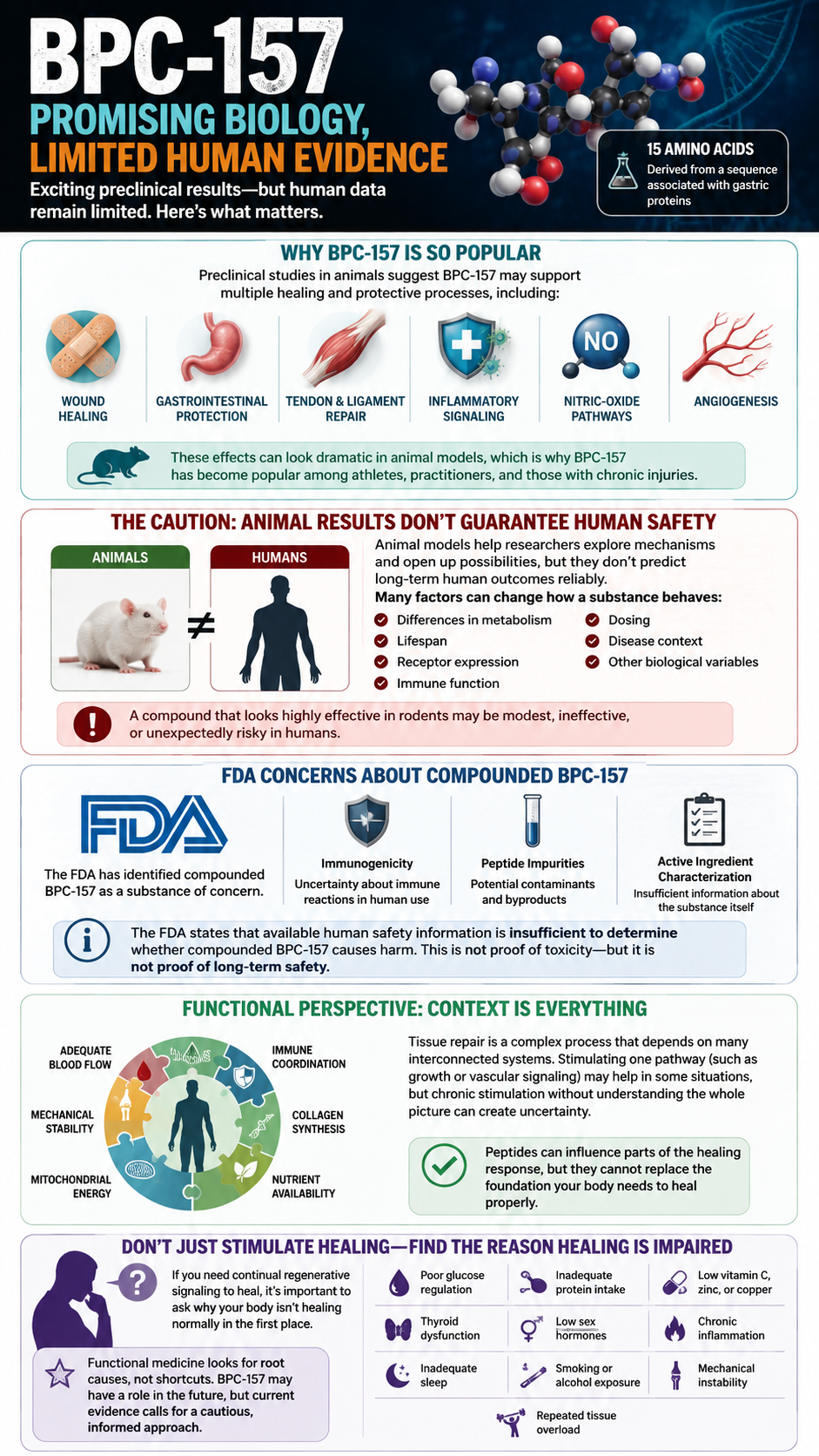
BPC-157 is one of the most heavily promoted peptides in regenerative and biohacking circles. It is a 15-amino-acid peptide derived from a sequence associated with gastric proteins, and much of the excitement surrounding it comes from preclinical research involving wound healing, gastrointestinal protection, tendon and ligament repair, inflammatory signaling, nitric-oxide pathways, and angiogenesis. In animal studies, these effects can appear dramatic, which helps explain why BPC-157 has developed such a strong reputation among athletes, practitioners, and individuals dealing with chronic injuries.
The concern is not that all of those findings are meaningless. The concern is that the biological enthusiasm has moved far ahead of the quality of the human evidence. Animal models are valuable because they allow researchers to explore mechanisms and establish plausible pathways, but they do not reliably predict long-term human safety. Differences in metabolism, lifespan, receptor expression, immune function, dosing, and disease context can all change how a substance behaves. A compound that appears highly effective in rodents may ultimately prove modest, ineffective, or unexpectedly risky in humans.
The FDA has specifically identified compounded BPC-157 as a substance associated with concerns involving immunogenicity, peptide impurities, and characterization of the active pharmaceutical ingredient. The agency also notes that available human safety information is insufficient to determine whether compounded BPC-157 causes harm. This does not prove that BPC-157 is toxic, but it does establish that confident claims of long-term safety are not supported by robust clinical data.
From a functional perspective, the most important issue is not whether BPC-157 can influence healing pathways. It is whether those pathways are being manipulated in an appropriate biological setting. Tissue repair requires angiogenesis, immune coordination, collagen synthesis, adequate blood flow, mechanical stability, mitochondrial energy production, and appropriate nutrient availability. Increasing one part of that process can be useful under some circumstances, but chronic stimulation of growth and vascular pathways without understanding the person’s broader physiology introduces uncertainty that should not be ignored.
This becomes especially relevant when people use BPC-157 repeatedly because their bodies do not appear to heal normally. If someone requires continual regenerative signaling to recover from tendon injury, gastrointestinal irritation, or musculoskeletal strain, it is worth investigating why healing is impaired in the first place. Poor glucose regulation, inadequate protein intake, low vitamin C, zinc or copper insufficiency, thyroid dysfunction, low sex hormones, chronic inflammation, inadequate sleep, smoking, alcohol exposure, mechanical instability, and repeated tissue overload can all interfere with normal repair. In that context, a peptide may influence one part of the healing response while leaving the deeper obstacle untouched.
That is an important distinction because functional medicine is not simply the use of unconventional therapies. Its real value lies in identifying the biological reason a system is failing. BPC-157 may eventually prove useful for certain indications, but the current evidence supports a cautious interpretation rather than treating it as a harmless wellness compound or an automatic substitute for identifying and correcting the causes of poor tissue repair.
Thymosin Alpha-1: A More Established Clinical History
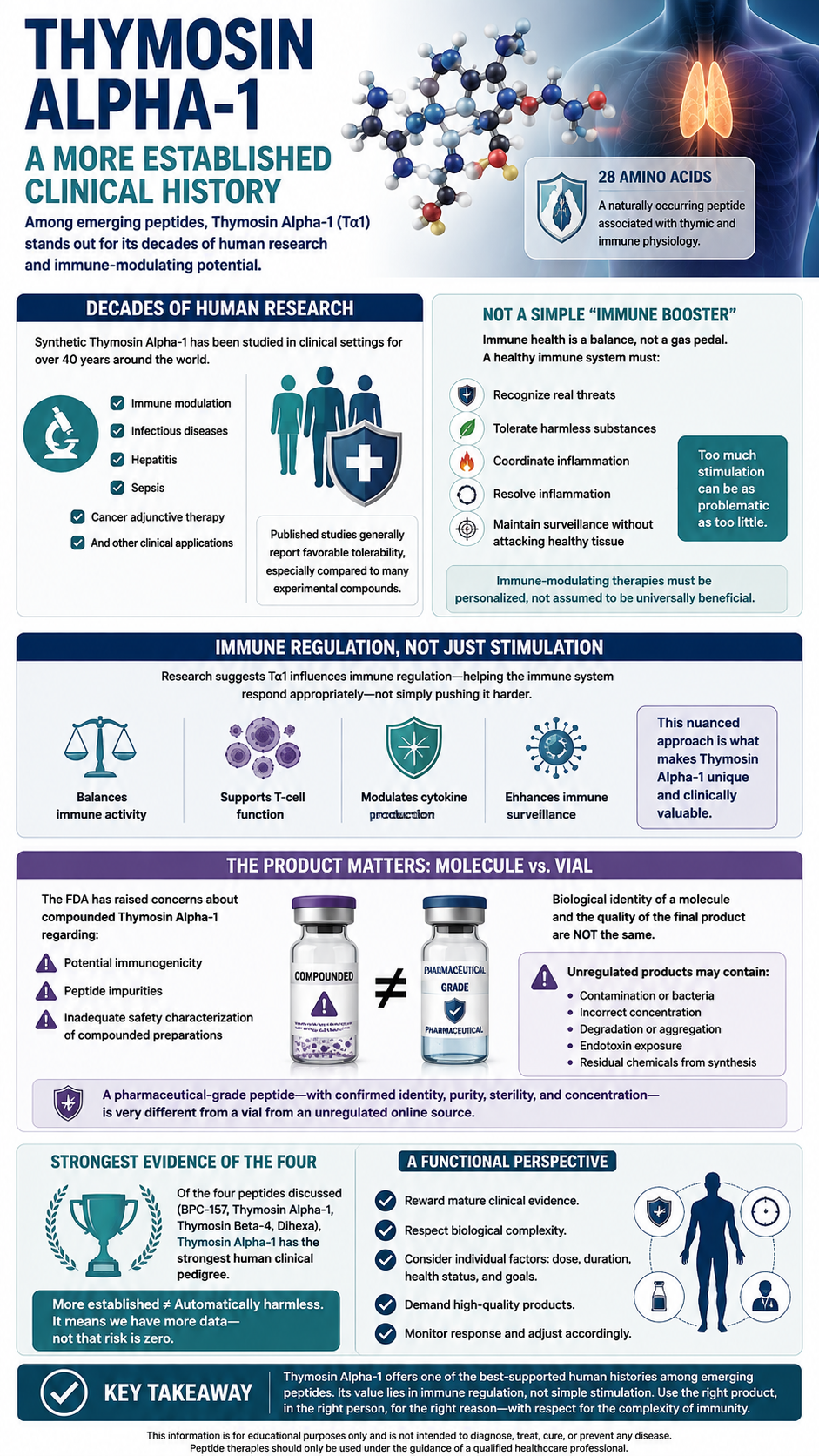
Thymosin alpha-1 occupies a different position because it has a considerably more developed history of human research. It is a 28-amino-acid peptide associated with thymic and immune physiology, and synthetic thymosin alpha-1 has been studied for decades in connection with immune modulation, infectious diseases, hepatitis, sepsis, cancer adjunctive therapy, and other clinical settings. Published literature generally describes favorable tolerability, particularly when compared with many experimental compounds whose evidence is still largely preclinical.
That does not mean thymosin alpha-1 should be viewed as universally safe or appropriate. Immune signaling is extremely complex, and the idea of “boosting” the immune system oversimplifies how immune health works. A healthy immune system must recognize threats, tolerate harmless substances, coordinate inflammation, resolve inflammatory responses, and maintain surveillance without attacking healthy tissue. Excessive stimulation can be just as problematic as inadequate activity, which means immune-modulating therapies should be evaluated within the context of the individual rather than assumed to be broadly beneficial.
Thymosin alpha-1 is interesting precisely because research suggests it can influence immune regulation rather than acting simply as a generalized stimulant. Even so, the quality of the product remains important. The FDA has raised concerns about compounded thymosin alpha-1 involving potential immunogenicity, impurities, and inadequate information to fully characterize the safety of compounded preparations. This is another reminder that the biological identity of a molecule and the quality of the final product are separate issues.
A pharmaceutical-grade peptide with confirmed identity, purity, sterility, and concentration is very different from a vial obtained through an unregulated online source. Even when the molecule is chemically identical, poor manufacturing can introduce risk through contamination, degradation, aggregation, incorrect concentration, endotoxin exposure, or residual synthesis chemicals. The body may recognize the intended peptide, but it also has to deal with everything else that enters the bloodstream with it.
Of the four compounds discussed here, thymosin alpha-1 has the strongest human clinical pedigree. That makes it more established, not automatically harmless. The distinction is important because a functional perspective should reward mature evidence while still respecting the possibility that individual context, dose, duration, and product quality can alter risk.
Thymosin Beta-4: The Difference Between the Full Molecule and TB-500
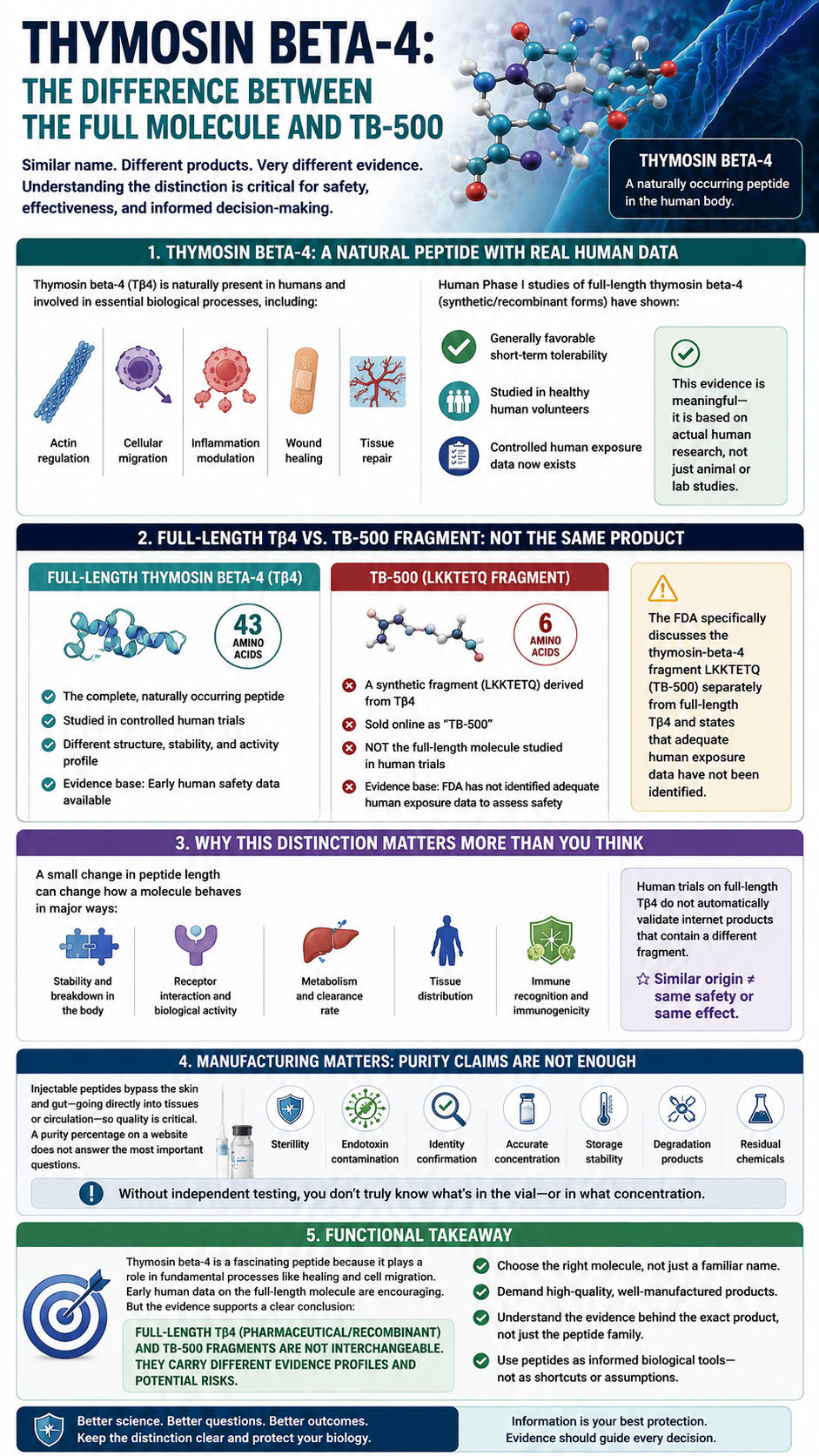
Thymosin beta-4 is another peptide with a biological basis in human physiology. It is naturally present in the body and participates in actin regulation, cellular migration, inflammation, wound healing, and tissue repair. Human Phase I studies of full-length thymosin beta-4 have reported generally favorable short-term tolerability in healthy volunteers, including studies involving synthetic or recombinant forms. These data are meaningful because they demonstrate that at least some controlled human exposure has been studied rather than inferred entirely from animal research.
The problem is that thymosin beta-4 and TB-500 are frequently treated as though they are interchangeable. They are not necessarily the same product. TB-500 products sold online may involve fragments related to thymosin beta-4 rather than the full-length molecule studied in controlled research. The FDA has specifically discussed the thymosin-beta-4 fragment LKKTETQ, commonly associated with TB-500, separately from full-length thymosin beta-4 and has indicated that adequate human exposure data have not been identified to characterize its safety.
That distinction is more important than it may sound. A human trial involving full-length recombinant thymosin beta-4 does not automatically validate an internet product that contains a related fragment. A small change in peptide length can alter stability, receptor interaction, metabolism, tissue distribution, or immune recognition. Even compounds derived from the same parent molecule can behave differently once their structure is changed.
The same manufacturing concerns also apply. Online peptide markets often emphasize nominal purity percentages, but a purity claim alone does not answer questions about sterility, endotoxin contamination, identity confirmation, concentration accuracy, storage stability, or the presence of degradation products. Injectable substances require a higher level of scrutiny because they bypass the skin and gastrointestinal tract and enter tissues or circulation directly.
From a functional standpoint, thymosin beta-4 is scientifically interesting because wound healing and cellular migration are fundamental biological processes. The presence of early human safety data is encouraging, but the evidence should not be stretched beyond what has actually been studied. Full-length pharmaceutical or recombinant thymosin beta-4 has a different evidence profile from TB-500 fragments sold through less controlled channels, and anyone evaluating these compounds should keep that distinction clear.
Dihexa: The Most Experimental Compound in the Group
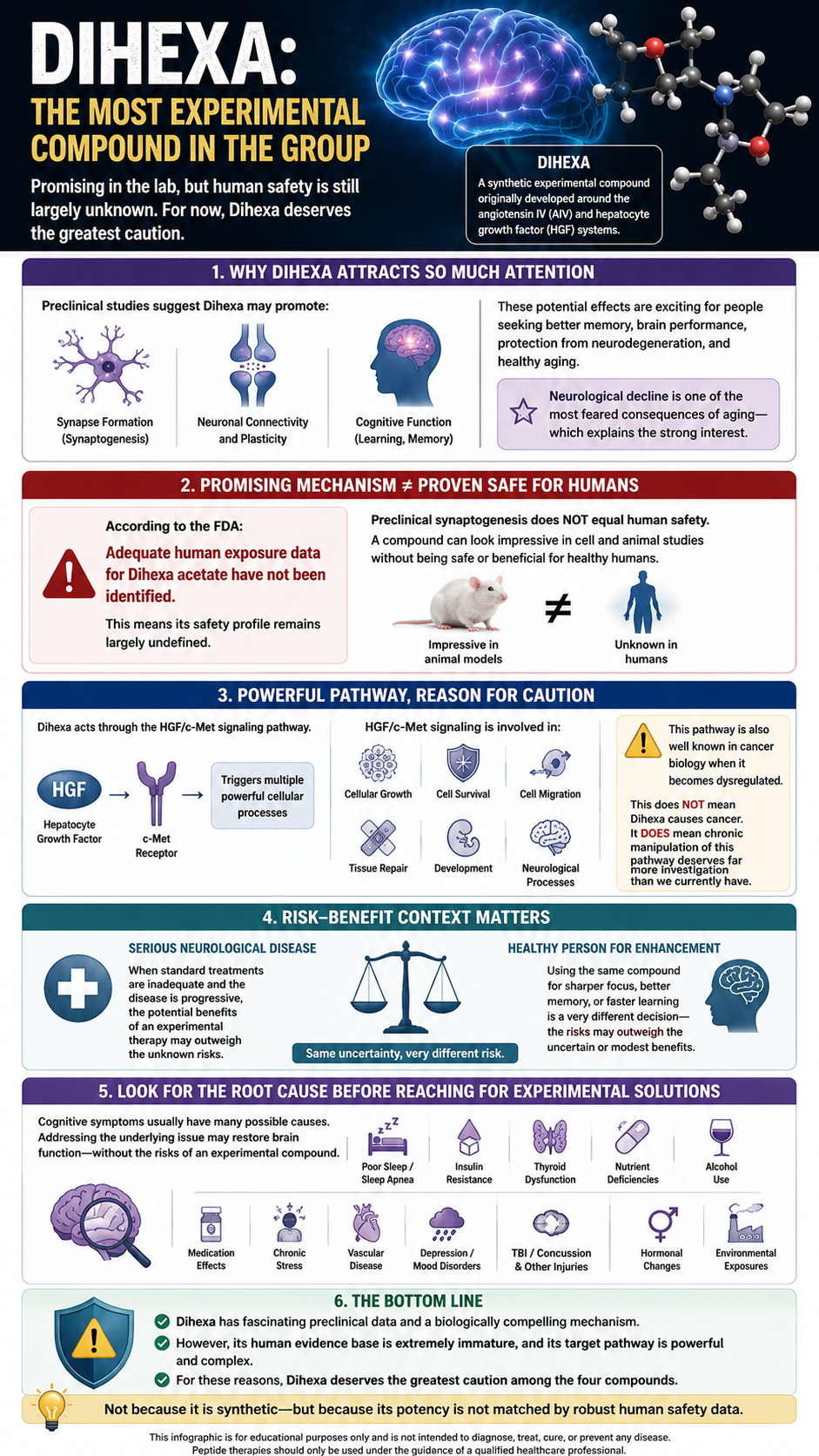
Dihexa stands apart from the other three because it is a synthetic experimental compound developed around the angiotensin IV and hepatocyte growth factor signaling systems. It became prominent because preclinical studies suggested effects on synapse formation, neuronal connectivity, and cognitive function. Those findings are understandably attractive to people interested in memory, brain performance, neurodegeneration, and longevity, especially because neurological decline remains one of the most feared consequences of aging.
The difficulty is that the strength of the mechanism has often been mistaken for strength of clinical evidence. A compound that appears to promote synaptogenesis in experimental systems can be scientifically impressive without being established as safe for healthy humans. According to the FDA, adequate human exposure data for Dihexa acetate have not been identified, which means its safety profile remains largely undefined.
The biological pathway itself also deserves caution. Dihexa has been studied in relation to hepatocyte growth factor and the c-Met receptor. HGF/c-Met signaling participates in cellular growth, survival, migration, tissue repair, development, and neurological processes. These are powerful functions, and the same pathway is also well known in cancer biology when it becomes dysregulated. That does not prove that Dihexa causes cancer, and it would be irresponsible to claim that it does without evidence. It does mean that chronic manipulation of such a pathway deserves far more investigation than is currently available.
This is where risk-benefit thinking becomes essential. An experimental compound considered in the setting of a serious neurological disease for which established options are inadequate presents one type of decision. A healthy person using the same compound for sharper concentration or faster learning presents a very different decision. The biological uncertainty is the same, but the potential benefit is not.
A functional approach should also ask what is driving the cognitive complaint before using an experimental synaptogenic compound. Brain fog, memory difficulty, and poor concentration can arise from sleep deprivation, sleep apnea, insulin resistance, thyroid dysfunction, nutrient deficiencies, alcohol use, medication effects, chronic stress, vascular disease, depression, environmental exposures, traumatic brain injury, hormonal changes, and many other causes. Improving those factors may restore cognitive function without introducing an experimental compound whose long-term neurological and systemic effects remain uncertain.
For that reason, Dihexa deserves the greatest caution among the four compounds discussed here. The concern is not that it is inherently poisonous because it is synthetic. The concern is that its biological potency is paired with an unusually immature human evidence base.
The Molecule Is Only Half of the Story
Peptide conversations often focus almost entirely on the intended molecule, but product quality may be just as important. Peptide synthesis is technically complex. Manufacturing can produce truncated sequences, deletion products, residual solvents, degradation compounds, aggregates, incorrect amino-acid sequences, and other impurities. When the final product is injectable, sterility and endotoxin contamination become additional concerns.
This creates a major practical problem because the word printed on the label does not guarantee that the material inside the vial is what the label claims. A vial labeled BPC-157 might contain the correct peptide at the correct concentration, or it might contain a lower concentration, degradation products, contaminants, or another compound entirely. Laboratory confirmation of identity, purity, sterility, endotoxin levels, and concentration can materially change the risk profile.
The FDA has taken enforcement action against sellers marketing injectable “research use only” peptides in ways that imply human use. The agency has emphasized that injectable products create special concerns because injection bypasses natural protective barriers. This is particularly relevant when people assume that an absence of immediate side effects proves a product is safe. Short-term tolerance cannot establish long-term safety, and it cannot confirm that a product was manufactured correctly.
There is also the problem of storage and transport. Peptides may degrade when exposed to inappropriate temperatures, light, repeated freeze-thaw cycles, or incorrect reconstitution conditions. A product that left the manufacturer in acceptable condition may not remain chemically identical after transport and storage. For this reason, the practical safety question is not simply whether BPC-157, thymosin alpha-1, thymosin beta-4, or Dihexa has desirable biological effects. The real question includes whether the exact product being administered has been adequately manufactured, tested, transported, stored, and prepared.
Physiological Signaling and Pharmacological Signaling Are Not the Same Thing
The human body does not operate by continuously flooding tissues with the same signals. Biological systems depend on timing, feedback, localization, and rhythm. Hormones rise and fall. Immune mediators appear during particular phases of inflammation and then decline. Growth factors become active during tissue injury and repair. Neurotransmitters are released in specific locations and rapidly cleared. Peptides can act locally in tissues where their concentration is much higher than it would ever become in the bloodstream.
Pharmacological administration can disrupt those patterns even when the molecule itself is familiar to human biology. A subcutaneous injection may expose distant tissues to concentrations they would not normally experience. Repeated dosing may prolong a biological signal well beyond its natural window. The intervention may still be beneficial, but the exposure is no longer identical to normal physiology.
This is especially important for people who assume that a synthetic peptide is safe simply because the body contains an endogenous version. Molecular similarity is reassuring, but it does not answer questions about dose, distribution, receptor saturation, duration, metabolism, or interaction with disease states. Those variables can transform an otherwise physiological molecule into a pharmacological intervention.
A functional-medicine framework should therefore evaluate whether a peptide is replacing something genuinely deficient, supporting a temporarily impaired process, or forcing a pathway that the body has not demonstrated a need to increase. That distinction often determines whether the intervention is restorative or merely stimulatory.
A Practical Hierarchy of Evidence
If BPC-157, thymosin alpha-1, full-length thymosin beta-4, and Dihexa are ranked according to the maturity of human clinical evidence rather than popularity, the order is reasonably clear. Thymosin alpha-1 has the most developed clinical history. Full-length thymosin beta-4 has meaningful early human safety research. BPC-157 has extensive preclinical interest but much weaker human safety evidence. Dihexa remains the least established from a human clinical standpoint.
That hierarchy is not a recommendation to take any of them, nor is it a definitive statement about comparative effectiveness. It simply reflects the amount and quality of human evidence currently available. Science is dynamic, and future clinical trials could strengthen or weaken the case for any of these compounds.
The ranking also illustrates an important lesson. A peptide with a more established human history should not be treated as automatically safe, and a peptide with little human evidence should not be labeled toxic without evidence. The appropriate conclusion is proportional confidence. Greater evidence allows greater confidence. Limited evidence requires greater caution.
Before Stimulating Repair, Investigate the Failure to Heal
One of the biggest advantages of a functional approach is that it asks why a biological process is impaired before trying to stimulate that process pharmacologically. When someone has chronic tendon pain, slow recovery, recurrent injury, or gastrointestinal damage, there may be multiple upstream reasons that repair is incomplete.
Collagen synthesis requires adequate amino acids and vitamin C. Zinc participates in tissue repair and protein synthesis. Copper contributes to connective-tissue integrity. Iron affects oxygen transport. Magnesium supports hundreds of enzymatic reactions. Thyroid function influences metabolism and tissue turnover. Sex hormones affect connective tissue, bone, and muscle. Poor glucose regulation impairs wound healing, while chronic inflammation can interfere with appropriate resolution and regeneration.
Mechanical factors matter just as much. A tendon that is continually overloaded because of poor joint mechanics or repetitive strain may remain inflamed regardless of how aggressively repair pathways are stimulated. In that setting, the tissue is being damaged at the same time that the body is attempting to rebuild it. Correcting movement patterns, reducing repetitive overload, improving muscle balance, and restoring structural stability may be more important than adding another regenerative signal.
Sleep is another frequently overlooked factor. Inadequate sleep alters glucose regulation, cortisol signaling, immune function, appetite hormones, and tissue recovery. A person who sleeps poorly, eats insufficient protein, remains metabolically inflamed, and repeatedly overloads injured tissue may not need a stronger healing signal as much as they need the conditions that allow normal healing to proceed.
This is the difference between using peptides as a targeted biological tool and using them as a substitute for understanding physiology.
Before Enhancing Cognition, Investigate the Brain Environment
The same principle applies to Dihexa and other compounds promoted for cognitive enhancement. Brain fog is not a single disease, and memory difficulty is not automatically evidence that synapse formation needs to be pharmacologically increased. Neurological performance depends on sleep, glucose regulation, vascular health, mitochondrial function, thyroid status, mood, hormones, nutrient sufficiency, physical activity, toxin exposure, medication burden, and many other variables.
Sleep apnea alone can produce substantial cognitive impairment. Insulin resistance can alter brain metabolism. Hypothyroidism can slow cognition and processing speed. Deficiencies in vitamin B12, folate, iron, or other nutrients can impair neurological function. Chronic alcohol exposure, sedating medications, stress, depression, inactivity, and vascular dysfunction can all reduce cognitive performance.
Exercise remains one of the most powerful tools for supporting brain health because it influences cerebral blood flow, insulin sensitivity, mitochondrial function, cardiovascular health, neurotrophic signaling, mood, and sleep simultaneously. Restoring these foundational systems may produce meaningful cognitive improvement without the uncertainties associated with an experimental compound.
This does not mean experimental neurological therapies have no place. It means they should not become the first response to a problem that has not been adequately investigated.
The Most Important Distinction Is Between Restoration and Override
The central question in peptide therapy is not whether the compound came from a laboratory. The more important question is what the compound is asking the body to do and whether that instruction fits the person’s physiology.
A peptide used to restore an impaired signal for a limited period may be conceptually different from a peptide used indefinitely to push growth, immune, vascular, or neurological pathways beyond their normal regulatory range. Both can be pharmacological interventions, but their biological purpose is different.
This is where functional medicine should remain rigorous. The goal should not be to reject advanced therapies simply because they are synthetic, and it should not be to adopt them simply because they are novel or biologically interesting. The goal should be to understand the system well enough to know whether the intervention is correcting a defect, compensating for unresolved dysfunction, or creating a new biological pressure.
When that framework is applied to BPC-157, thymosin alpha-1, thymosin beta-4, and Dihexa, the differences become easier to understand. Thymosin alpha-1 has the most established human clinical history. Full-length thymosin beta-4 has encouraging early human safety data, while TB-500 fragments remain less well characterized. BPC-157 continues to show intriguing preclinical effects but lacks the human evidence required to call chronic use reliably safe. Dihexa remains highly experimental and deserves the greatest caution because of its limited human data and its involvement with powerful growth and neurological signaling pathways.
Peptides may eventually become an important part of regenerative and precision medicine, but they should be treated as biological tools rather than wellness supplements. Their value depends on the right molecule, the right indication, the right patient, the right manufacturing quality, the right dose, and the right duration. Equally important, they should not distract from the fundamental work of identifying and correcting the conditions that prevent the body from healing, regulating immunity, or maintaining neurological function on its own.
A mature functional-medicine approach is therefore neither anti-peptide nor blindly pro-peptide. It recognizes that sophisticated interventions require sophisticated reasoning. The more powerful the signaling pathway, the more important it becomes to understand what is being changed, why it needs to be changed, and what the long-term consequences of that change might be.
References and Further Reading
U.S. Food and Drug Administration. Certain Bulk Drug Substances for Use in Compounding That May Present Significant Safety Risks. This resource discusses safety concerns and evidence limitations involving BPC-157, thymosin alpha-1, thymosin-beta-4 fragments, Dihexa acetate, and other compounded substances.
Published clinical reviews of thymosin alpha-1 describe decades of investigation involving immune modulation, infectious diseases, cancer adjunctive care, and other clinical applications, with generally favorable tolerability reported across multiple studies.
First-in-human research involving recombinant human thymosin beta-4 has evaluated single and multiple doses in healthy volunteers and reported no dose-limiting toxicity or serious adverse events in those early trials.
U.S. Food and Drug Administration enforcement communications concerning injectable peptide products marketed as “research use only” highlight concerns about unapproved drugs, sterility, contamination, and the additional risks associated with injection.
This article is intended for educational purposes and does not diagnose disease, prescribe peptide therapy, or replace individualized medical evaluation. The regulatory status, manufacturing quality, evidence base, and safety profile of peptide products vary substantially.