
The Day the Workout That Once Built Your Health Begins Destroying It
Every athlete remembers the day exercise stopped feeling rewarding. The weights suddenly felt heavier despite months of consistent training. Morning runs became exhausting before the first mile ended. Motivation disappeared without warning, and recovery stretched from hours into days. Many people blamed aging, poor sleep, or a temporary lack of discipline. Few realized their bodies had quietly entered one of the most misunderstood conditions in modern health: Overtraining Syndrome.
The irony could not be greater. Exercise remains one of the most powerful forms of medicine ever discovered. It strengthens the cardiovascular system, improves insulin sensitivity, stimulates new mitochondria, enhances brain function, increases bone density, and reduces the risk of dozens of chronic diseases. Yet the very activity capable of extending life can also become a destructive force when the body loses its ability to recover. What begins as a pursuit of health can slowly transform into a physiological crisis that affects nearly every hormone, organ, and metabolic pathway.
Modern fitness culture unintentionally fuels this problem. Social media celebrates relentless discipline while glorifying phrases such as “no days off,” “pain is weakness leaving the body,” and “train harder than everyone else.” Fitness trackers reward constant movement, while wearable devices congratulate users for burning more calories than yesterday. Rarely does anyone receive praise for taking a recovery day or sleeping an extra hour. As a result, countless dedicated individuals unknowingly push beyond the body’s ability to repair itself, believing more effort always produces better results.
Overtraining Syndrome develops quietly because the body excels at hiding its distress. Instead of shutting down immediately, it compensates for weeks or even months. Hormones shift. Metabolism slows. Inflammation rises. The nervous system changes its priorities. These adjustments protect survival in the short term but eventually rob the body of energy, strength, mental clarity, and resilience. By the time obvious symptoms appear, the physiological changes have often been building for far longer than most people realize.
Understanding this condition requires abandoning one of the most common misconceptions in health and fitness. Overtraining does not begin inside the muscles. Sore muscles merely reflect one small piece of a much larger puzzle. The true story begins deep inside the brain, where an ancient survival system constantly evaluates whether the body lives in safety or danger. Once that system concludes resources have become scarce, it changes nearly every aspect of human physiology. What follows resembles a carefully orchestrated survival program rather than a collection of unrelated symptoms.
Exercise Is Stress by Design
Most people believe exercise itself creates better health. Biology tells a different story. Every workout intentionally places stress upon the body. Heavy lifting creates microscopic muscle tears. Long-distance running depletes stored glycogen. High-intensity intervals flood the bloodstream with adrenaline and cortisol. Even moderate exercise increases inflammation for a short period. Although this sounds alarming, it actually reflects brilliant biological design.
The body does not become stronger while lifting weights or running on a treadmill. It grows stronger afterward. During recovery, damaged muscle fibers rebuild thicker and stronger. Mitochondria multiply inside cells to improve energy production. Bones increase their density, connective tissues strengthen, and the cardiovascular system becomes more efficient. None of these improvements happen during the workout itself. Every benefit depends entirely upon the body’s ability to repair what exercise temporarily disrupted.
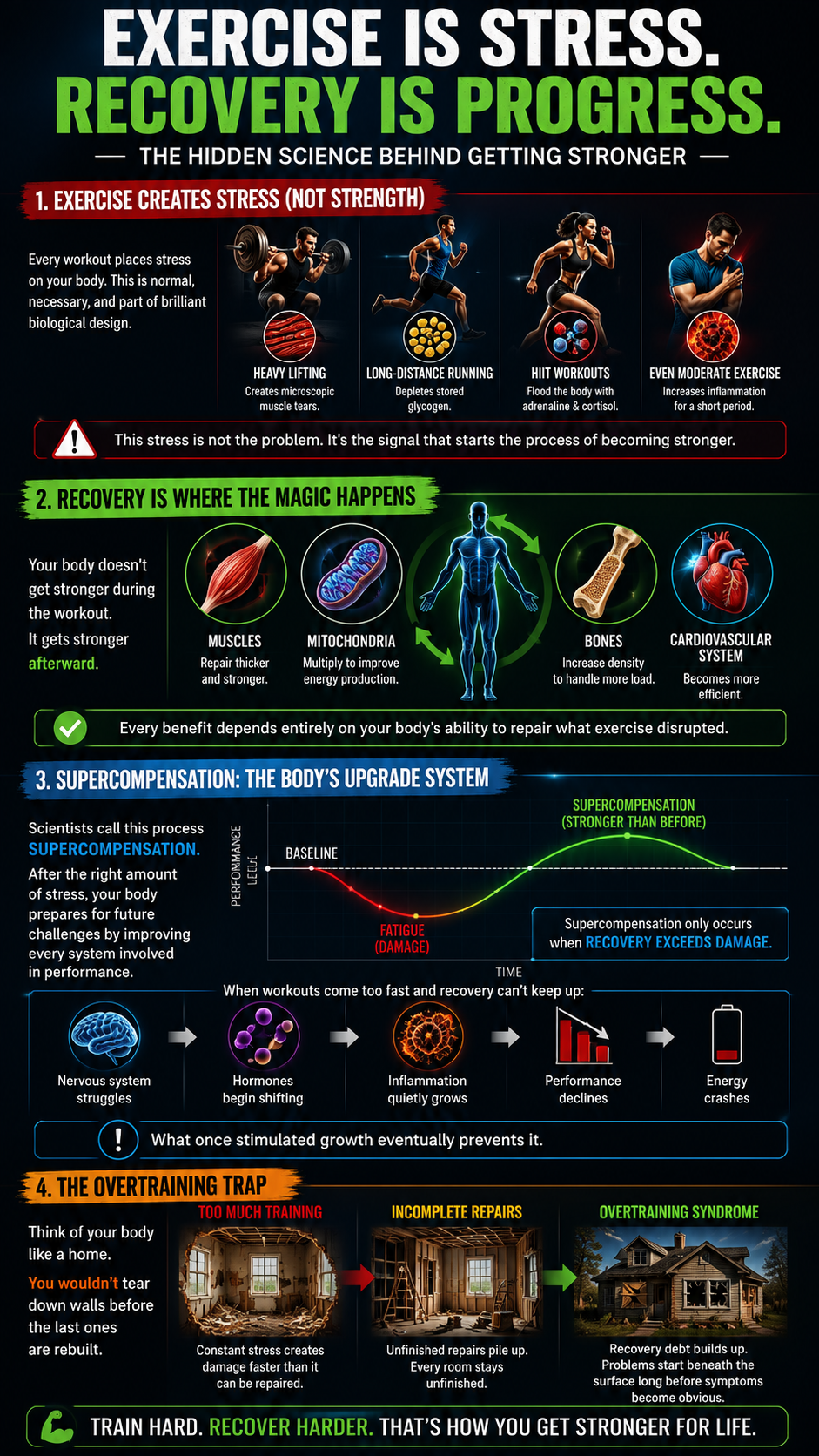
Scientists describe this rebuilding process as supercompensation. Following an appropriate stress, the body prepares itself for future challenges by improving every system involved in performance. Unfortunately, supercompensation only occurs when recovery exceeds damage. When workouts arrive faster than healing can occur, unfinished repairs accumulate throughout the body. The nervous system struggles to maintain performance, hormones begin shifting, and inflammation quietly grows. What once stimulated growth eventually prevents it.
Imagine renovating a home while repeatedly tearing down new walls before construction crews finish repairing the previous damage. Eventually every room sits unfinished. Exercise follows the same principle. Every workout creates a recovery debt that the body must repay. When those debts accumulate faster than the body can eliminate them, Overtraining Syndrome begins developing beneath the surface long before noticeable symptoms appear.
The Brain Pulls the Strings Behind Every Hormone
Many people assume muscles determine recovery because soreness develops there first. In reality, recovery begins inside the brain. The hypothalamus serves as the master regulator of survival, constantly monitoring blood sugar, nutrient availability, inflammation, stress hormones, immune activity, body temperature, hydration, sleep quality, and emotional stress. Every second of every day this tiny structure decides whether the environment supports growth or demands survival.
When the hypothalamus detects safety, it allows the body to invest energy into repair and adaptation. Testosterone supports muscle growth. Thyroid hormones maintain an active metabolism. Growth hormone accelerates tissue repair. Digestion efficiently absorbs nutrients, and the immune system maintains healthy surveillance. Under these favorable conditions, each workout leaves the body slightly stronger than before because the brain believes resources remain plentiful.
The picture changes when stress accumulates without sufficient recovery. The hypothalamus cannot distinguish emotional stress from physical stress. Financial worries, poor sleep, chronic inflammation, restrictive dieting, environmental toxins, relationship conflict, and intense exercise all activate similar survival pathways. Once these stressors exceed recovery capacity, the brain changes priorities. Instead of promoting growth, it conserves energy. Every major hormone receives new instructions designed to preserve survival rather than optimize performance.
This ancient adaptation protected our ancestors during famine, harsh winters, prolonged illness, and food shortages. Conserving energy increased the chances of survival when calories became scarce. Muscle growth, reproduction, and athletic performance no longer represented priorities during those dangerous periods. Modern lifestyles recreate many of the same biological alarms despite abundant food and relatively safe environments. The brain responds according to evolutionary programming, not according to gym memberships or fitness goals.
The Total Stress Load Determines Recovery
Exercise never exists in isolation. Every workout becomes one more demand added to the body’s total stress burden. Sleep deprivation forces the nervous system to work harder before the day begins. Processed foods increase inflammation while providing fewer nutrients for recovery. Blood sugar swings require additional hormonal regulation. Chronic infections quietly activate the immune system. Environmental toxins consume detoxification resources. Emotional stress stimulates cortisol production regardless of whether the stress originates from work or family life.
Researchers refer to this accumulated burden as the allostatic load. Every stressor fills the same physiological bucket regardless of its source. Two individuals may perform identical workouts while experiencing dramatically different outcomes because their total stress loads differ substantially. One person sleeps well, manages emotional stress effectively, eats nutrient-dense foods, and recovers rapidly. The other sleeps poorly, skips meals, works long hours, and trains intensely despite chronic fatigue. Their muscles perform the same exercises, but their brains interpret those workouts through entirely different biological environments.
Recovery capacity often matters more than training intensity. Elite athletes succeed because they devote enormous resources toward recovery. They prioritize sleep, nutrition, hydration, mobility work, stress management, and structured training cycles. Recreational athletes frequently attempt similar exercise volumes without those recovery practices. Eventually the gap between stress and recovery widens until the body’s adaptive systems begin failing.
This principle explains why adding another workout rarely fixes persistent fatigue. The problem usually involves insufficient recovery rather than insufficient effort. Unfortunately, many individuals respond by exercising even harder because they mistake declining performance for inadequate discipline. That decision accelerates the very physiological breakdown they hope to overcome.
Cortisol Changes from Protector to Problem
Cortisol has become one of the most misunderstood hormones in modern health discussions. Many articles portray it as harmful under every circumstance. Human physiology reveals a far more balanced story. Cortisol helps maintain healthy blood pressure, stabilizes blood sugar, regulates inflammation, mobilizes stored energy, sharpens mental focus, and prepares the body for physical activity. Without cortisol, survival becomes impossible.
Healthy exercise naturally increases cortisol because physical exertion demands additional energy. After the workout ends, cortisol gradually declines, allowing repair processes to begin. This predictable rhythm supports healthy adaptation while preventing unnecessary tissue breakdown. Problems develop only when the body never receives enough recovery time to restore hormonal balance.
Repeated intense training convinces the brain that danger continues indefinitely. Cortisol remains elevated long after exercise ends. Evening cortisol rises while nighttime melatonin falls. Sleep becomes lighter and less restorative. Blood sugar regulation deteriorates because stress hormones continually release stored glucose into circulation. Muscle protein breakdown accelerates, while tissue repair slows dramatically. Fat increasingly accumulates around the abdomen because prolonged cortisol changes how the body stores energy during chronic stress.
Eventually the stress response itself becomes dysregulated. Some individuals remain locked in chronically elevated cortisol, while others develop flattened daily cortisol rhythms that leave them exhausted throughout the day. Morning energy disappears. Afternoon fatigue worsens. Evening alertness increases despite overwhelming exhaustion. Many people describe this experience as feeling tired yet unable to relax. That sensation reflects a nervous system trapped inside an endless stress response.
The Hormonal Collapse Begins
Cortisol rarely acts alone. Once chronic stress alters its normal rhythm, other hormones soon follow. Testosterone commonly declines because reproduction requires considerable energy. Men often notice reduced strength, slower recovery, lower libido, diminished motivation, and increasing difficulty building muscle despite consistent training. Women frequently experience irregular menstrual cycles, reduced progesterone production, altered estrogen balance, and declining exercise performance. These changes represent intelligent survival adaptations rather than isolated hormonal failures.
The thyroid also responds quickly to chronic physiological stress. Instead of maintaining an active metabolic rate, the brain begins conserving calories by reducing thyroid hormone activity. Active T3 declines, metabolic efficiency slows, body temperature decreases, and energy production falls. Many individuals suddenly experience constipation, thinning hair, cold hands, stubborn weight gain, and persistent fatigue despite maintaining healthy eating habits. Standard thyroid testing sometimes appears normal because the underlying problem begins inside the brain rather than inside the thyroid gland itself.
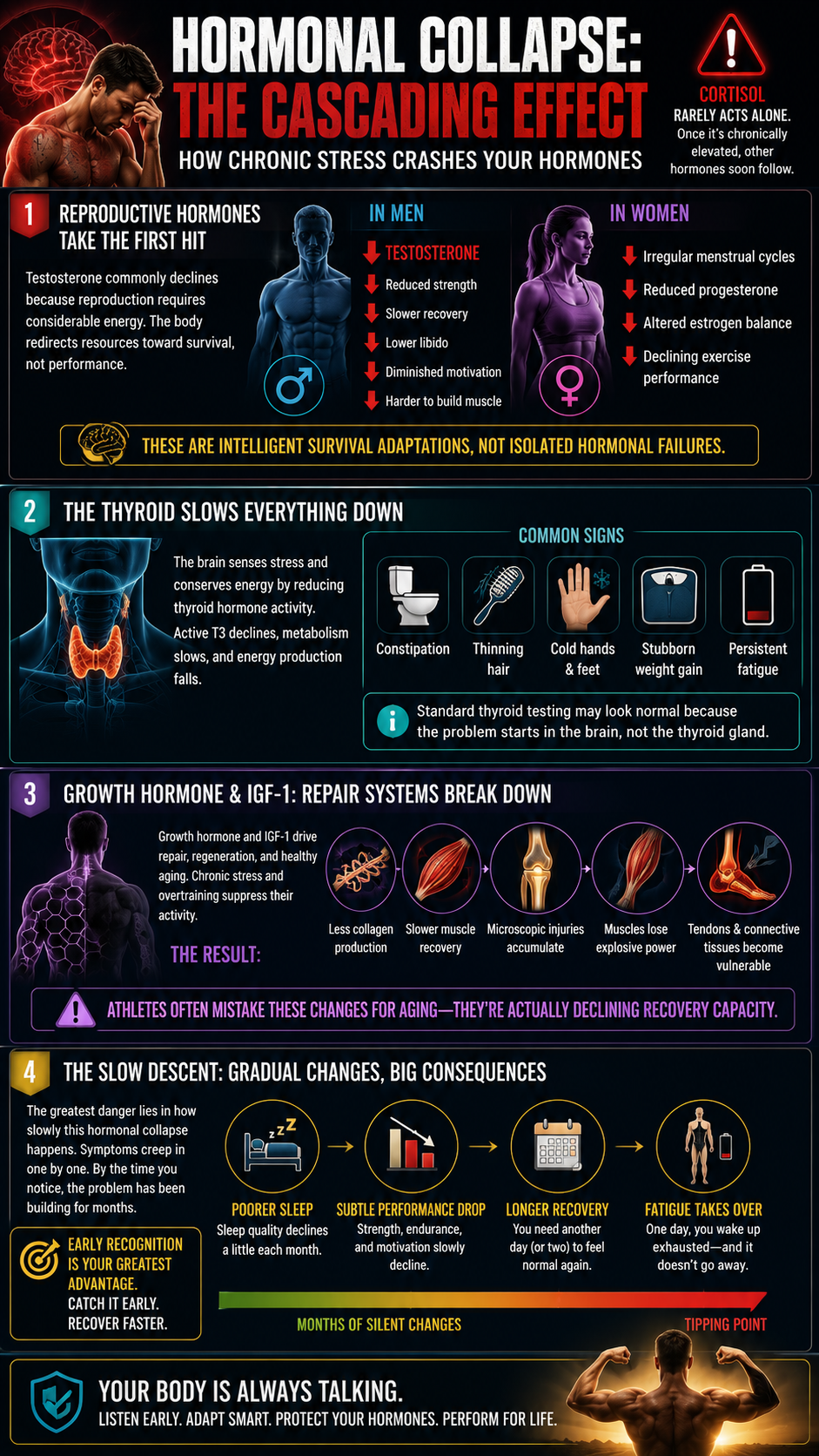
Growth hormone and insulin-like growth factor also become less effective. These powerful repair hormones normally stimulate collagen production, muscle recovery, tissue regeneration, and healthy aging. Chronic overtraining suppresses their activity, allowing microscopic injuries to accumulate faster than they heal. Tendons remain sore longer, muscles lose their explosive power, and connective tissues become increasingly vulnerable to injury. Athletes often mistake these changes for aging when they actually reflect declining recovery capacity.
The greatest danger lies in the gradual nature of this hormonal collapse. Few people recognize the warning signs because each symptom develops slowly. Performance decreases almost imperceptibly. Sleep quality declines a little each month. Recovery requires another day after every workout. Eventually the body reaches a tipping point where fatigue seems to appear overnight. In reality, the physiological changes often began many months earlier. Recognizing those subtle signals early offers the greatest opportunity to restore hormonal balance before deeper dysfunction develops.
Inflammation Quietly Replaces Adaptation
Every workout creates inflammation. That statement surprises many people because exercise has earned its reputation as one of the best anti-inflammatory tools available. Both ideas remain true. Short-lived inflammation serves an important purpose because it attracts immune cells that remove damaged tissue and begin rebuilding stronger muscle fibers. Healthy inflammation resembles a construction crew arriving after a storm. It clears debris, repairs broken structures, and leaves the building stronger than before.
Problems begin when the construction crew never leaves. Repeated intense workouts without adequate recovery prevent inflammation from returning to baseline. Instead of repairing tissue, inflammatory chemicals continue circulating throughout the bloodstream. Cytokines such as interleukin-6, tumor necrosis factor-alpha, and other signaling molecules remain elevated far longer than intended. These compounds begin influencing tissues far beyond the muscles that created them. The brain becomes less responsive, joints ache more frequently, blood vessels lose flexibility, and hormone receptors stop responding with their usual precision.
Chronic inflammation also changes the way cells produce energy. Healthy mitochondria generate large amounts of adenosine triphosphate, the molecule that powers nearly every biological process. Persistent inflammation damages these tiny power plants through excessive oxidative stress. Instead of producing abundant energy, mitochondria begin generating more free radicals while producing less ATP. Every organ pays the price because every organ depends upon healthy mitochondrial function. The result feels like someone slowly dimming every light inside the body.
Inflammation also creates a vicious cycle that makes recovery increasingly difficult. Elevated inflammatory chemicals stimulate additional cortisol production, while high cortisol further alters immune regulation. Poor sleep follows, reducing the body’s ability to control inflammation the next day. Each workout then adds another layer to an already overwhelmed system. What once represented healthy physiological stress gradually transforms into chronic biochemical chaos.
The Immune System Begins Losing the Battle
One of the earliest warning signs of Overtraining Syndrome often appears far away from the gym. Instead of setting personal records, many athletes suddenly develop frequent colds, recurring sinus infections, lingering sore throats, or unexplained viral illnesses. They assume exposure caused the problem, yet the true culprit often lies inside a weakened immune system struggling to keep pace with constant physiological stress.
The immune system requires tremendous energy to function efficiently. Every white blood cell depends upon adequate nutrients, healthy mitochondria, balanced hormones, and restorative sleep. Chronic overtraining quietly steals each of those resources. Natural killer cells lose efficiency, protective antibodies decline, and immune communication becomes increasingly disorganized. Instead of mounting quick responses against invading microbes, the immune system begins reacting slowly and inconsistently.
Latent viruses present another challenge. Many adults carry dormant viruses such as Epstein-Barr virus or cytomegalovirus without experiencing symptoms because healthy immunity keeps them under control. Overtraining weakens that surveillance system, allowing these viruses to become active again. Individuals suddenly experience crushing fatigue, swollen lymph nodes, brain fog, or prolonged recovery after even mild illnesses. They often believe they caught another virus when their immune system simply lost control over one that had remained dormant for years.
Chronic immune activation also accelerates tissue breakdown. Every inflammatory response requires proteins, vitamins, minerals, and antioxidants. Instead of directing those nutrients toward muscle repair, the body diverts them into immune defense. Recovery slows further, hormone production declines, and fatigue deepens. Eventually even light exercise feels exhausting because the immune system has become another major consumer of the body’s limited recovery resources.
Your Nervous System Never Truly Turns Off
Exercise depends upon the autonomic nervous system, which constantly balances activity between its sympathetic and parasympathetic branches. The sympathetic system prepares the body for action by increasing heart rate, sharpening focus, and releasing adrenaline. The parasympathetic system restores balance by slowing the heart, improving digestion, stimulating tissue repair, and promoting deep sleep. Optimal health depends upon smooth transitions between these two states.
Overtraining traps the nervous system inside prolonged sympathetic activation. Morning heart rate rises before leaving bed. Small inconveniences trigger exaggerated emotional responses. Digestion slows because blood flow shifts away from the intestines. Muscles remain tight throughout the day, while deep sleep becomes increasingly difficult to achieve. Many individuals describe feeling exhausted physically while their minds continue racing late into the night. That contradiction reflects a nervous system unable to shift fully into recovery mode.
Heart rate variability often declines during this stage because the parasympathetic nervous system loses influence over the heart. Researchers increasingly use heart rate variability as an early marker of inadequate recovery because it reflects the body’s ability to adapt to changing demands. Lower variability often indicates greater physiological strain, while higher variability usually suggests better resilience. Although no single measurement diagnoses Overtraining Syndrome, declining variability frequently appears before major symptoms develop.
Months of chronic sympathetic activation eventually produce the opposite problem. The nervous system becomes exhausted after remaining constantly stimulated. Motivation disappears. Exercise feels emotionally draining instead of energizing. Reaction times slow, concentration weakens, and enthusiasm fades. Many athletes mistakenly assume they have become lazy when their nervous system simply lacks the energy required to sustain high performance.
The Gut Often Suffers in Silence
Most discussions about Overtraining Syndrome overlook one of the body’s most important recovery organs: the digestive tract. Intense exercise temporarily redirects blood away from the intestines toward working muscles. Healthy individuals recover quickly because circulation returns to normal after training ends. Chronic overtraining repeatedly interrupts intestinal blood flow until the lining begins losing its integrity.
The intestinal barrier functions like a finely woven screen that allows nutrients to enter while keeping harmful compounds inside the digestive tract. Persistent stress weakens this protective barrier by increasing cortisol, reducing blood flow, and disrupting healthy gut bacteria. Small gaps may develop between intestinal cells, allowing incompletely digested food particles and bacterial toxins to enter the bloodstream. The immune system immediately recognizes these substances as threats and mounts an inflammatory response.
This process places additional strain upon an already overwhelmed recovery system. Chronic inflammation increases nutrient requirements precisely when digestion becomes less efficient. Protein absorption may decline despite adequate intake. Vitamins, minerals, and amino acids become less available for tissue repair. Fatigue worsens because the body struggles to extract the raw materials needed to rebuild damaged muscles and produce healthy hormones.
Changes within the gut microbiome may further amplify these problems. Beneficial bacteria help regulate immunity, manufacture vitamins, produce short-chain fatty acids, and communicate directly with the brain through the gut-brain axis. Chronic physiological stress alters microbial diversity, allowing less beneficial organisms to dominate. Emerging research continues exploring this relationship, but growing evidence suggests gut health plays an important role in both athletic recovery and hormonal regulation.
The Functional Medicine Approach to Recovery Begins with Removing the Stressor
The greatest mistake people make after developing Overtraining Syndrome involves searching for a supplement capable of overcoming continued excessive training. No vitamin, herb, hormone, or protein powder can compensate for recovery that never occurs. The first step always involves reducing the stress load enough for healing to begin. This does not necessarily require complete inactivity, but it does require respecting the body’s current physiological limits rather than its previous capabilities.
Reducing training volume for several weeks allows inflammatory pathways to quiet, cortisol rhythms to normalize, and tissue repair to accelerate. Gentle walking, mobility exercises, swimming, or light cycling often maintain movement without overwhelming the nervous system. These lower-intensity activities improve circulation while encouraging recovery instead of creating additional physiological debt. Many athletes fear losing fitness during this period, yet proper recovery frequently restores performance far faster than continued overtraining.
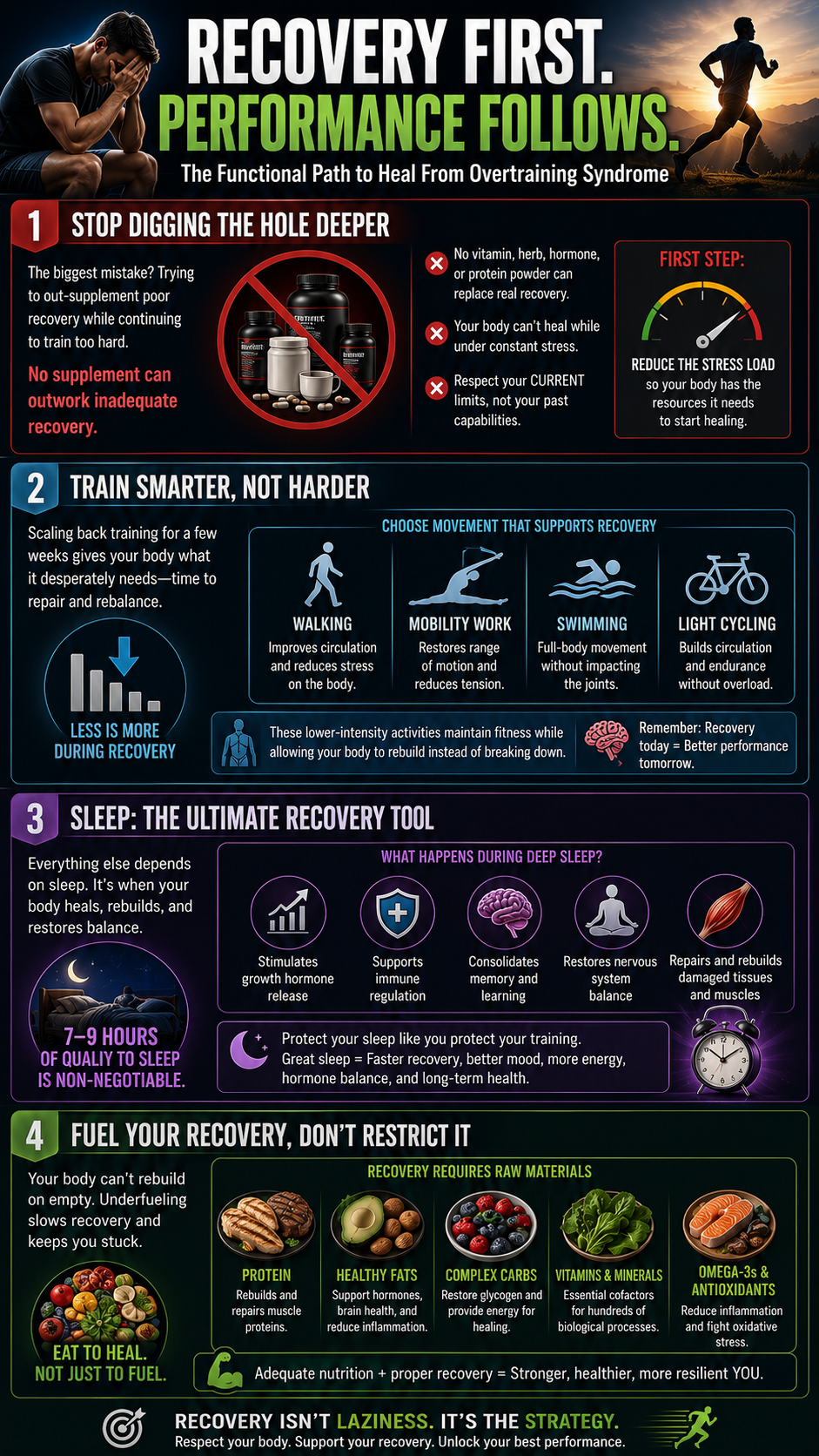
Sleep becomes the foundation upon which every other recovery strategy depends. Deep sleep stimulates growth hormone release, supports immune regulation, consolidates memory, restores nervous system balance, and repairs damaged tissues throughout the body. Consistently obtaining seven to nine hours of high-quality sleep often produces greater improvements than adding another workout or purchasing another supplement. Protecting sleep should become as non-negotiable as exercise itself.
Nutrition must also shift from calorie restriction toward rebuilding. Many individuals unintentionally underfuel intense training by consuming insufficient protein, healthy fats, vitamins, minerals, and carbohydrates appropriate for their activity level. Recovery demands raw materials. Amino acids rebuild muscle proteins, magnesium supports hundreds of enzymatic reactions, zinc assists hormone production, omega-3 fatty acids regulate inflammation, and antioxidant-rich foods help neutralize oxidative stress. Healing accelerates only when the body receives adequate resources to rebuild damaged tissues.
Restoring Hormonal Balance Naturally at Home
Hormonal recovery rarely occurs overnight because the body restores balance gradually. Patience becomes an essential part of the healing process. Consistent sleep schedules help reestablish healthy cortisol rhythms by reinforcing the body’s internal clock. Morning sunlight exposure further strengthens circadian signaling, encouraging cortisol to rise appropriately after waking while allowing melatonin to increase naturally after sunset. These simple habits often produce profound improvements in energy within several weeks.
Strength training should return cautiously rather than aggressively. Beginning with fewer weekly sessions and leaving several repetitions in reserve prevents unnecessary stress while rebuilding resilience. Alternating demanding workouts with easier recovery days allows supercompensation to occur instead of interrupting it. Athletes often discover they become stronger despite performing fewer workouts because their bodies finally receive enough time to complete the repair process.
Mind-body practices deserve equal attention because psychological stress activates many of the same biological pathways triggered by excessive exercise. Deep breathing, prayer, meditation, nature walks, and quiet reflection stimulate the parasympathetic nervous system, lowering heart rate and improving recovery. Although these practices appear simple, they directly influence the same hypothalamic centers responsible for regulating hormones and stress responses. Reducing mental stress often improves physical recovery more than another hour inside the gym.
Hydration also influences hormonal health more than many realize. Even mild dehydration increases cortisol while reducing exercise performance and delaying tissue repair. Electrolytes such as sodium, potassium, and magnesium support nerve conduction, muscle contraction, and cellular hydration. Consuming adequate fluids throughout the day helps maintain blood volume, improves nutrient delivery, and supports efficient recovery after physical activity.
Learning to Train Smarter Instead of Harder
Exercise should build health instead of stealing it. The strongest athletes rarely succeed because they tolerate endless punishment. They succeed because they understand the rhythm between challenge and recovery. Every productive training program includes periods of greater intensity followed by intentional restoration. Nature follows this principle everywhere. Muscles grow during rest. Bones strengthen after healing. The brain consolidates learning during sleep. Even the seasons alternate between growth and restoration.
Overtraining Syndrome reminds us that human physiology still follows ancient biological laws despite modern ambitions. The body rewards consistency, balance, nourishment, and recovery far more reliably than relentless intensity. Listening to early warning signs prevents months of unnecessary suffering while preserving long-term performance. Fatigue should never become a badge of honor when it represents the body’s desperate request for restoration.
The ultimate goal of fitness has never been to survive the hardest workout. True health means creating a body capable of producing abundant energy, resilient hormones, sharp thinking, restful sleep, and joyful movement throughout life. When exercise serves that purpose, it remains one of the greatest medicines ever discovered. When recovery disappears, however, even the healthiest habit can become another source of chronic disease. Understanding that distinction may prove the most valuable training lesson anyone ever learns.