
America’s Pain Crisis Did Not Begin With Pain
America’s addiction crisis did not begin with heroin dealers or illegal fentanyl labs hidden across international borders. The disaster started quietly inside hospitals, clinics, and medical offices where pain became a billion-dollar industry. Physicians once reserved opioids for severe trauma, cancer pain, and surgical recovery. During the 1990s, pharmaceutical companies reshaped medicine through aggressive marketing campaigns that claimed opioid medications carried minimal addiction risk. Drug manufacturers promoted these medications as compassionate, modern, and safe answers for chronic pain. Those claims reshaped healthcare forever.
Millions of Americans trusted the system because they believed physicians prescribed treatments designed to restore health. Instead, many patients entered a cycle of dependency that slowly destroyed their nervous systems, hormones, digestive tracts, relationships, finances, and emotional stability. Prescription painkillers flooded communities while chronic pain rates continued rising. That contradiction exposed a devastating truth. Modern medicine became exceptional at suppressing symptoms while failing to correct the underlying causes of pain.
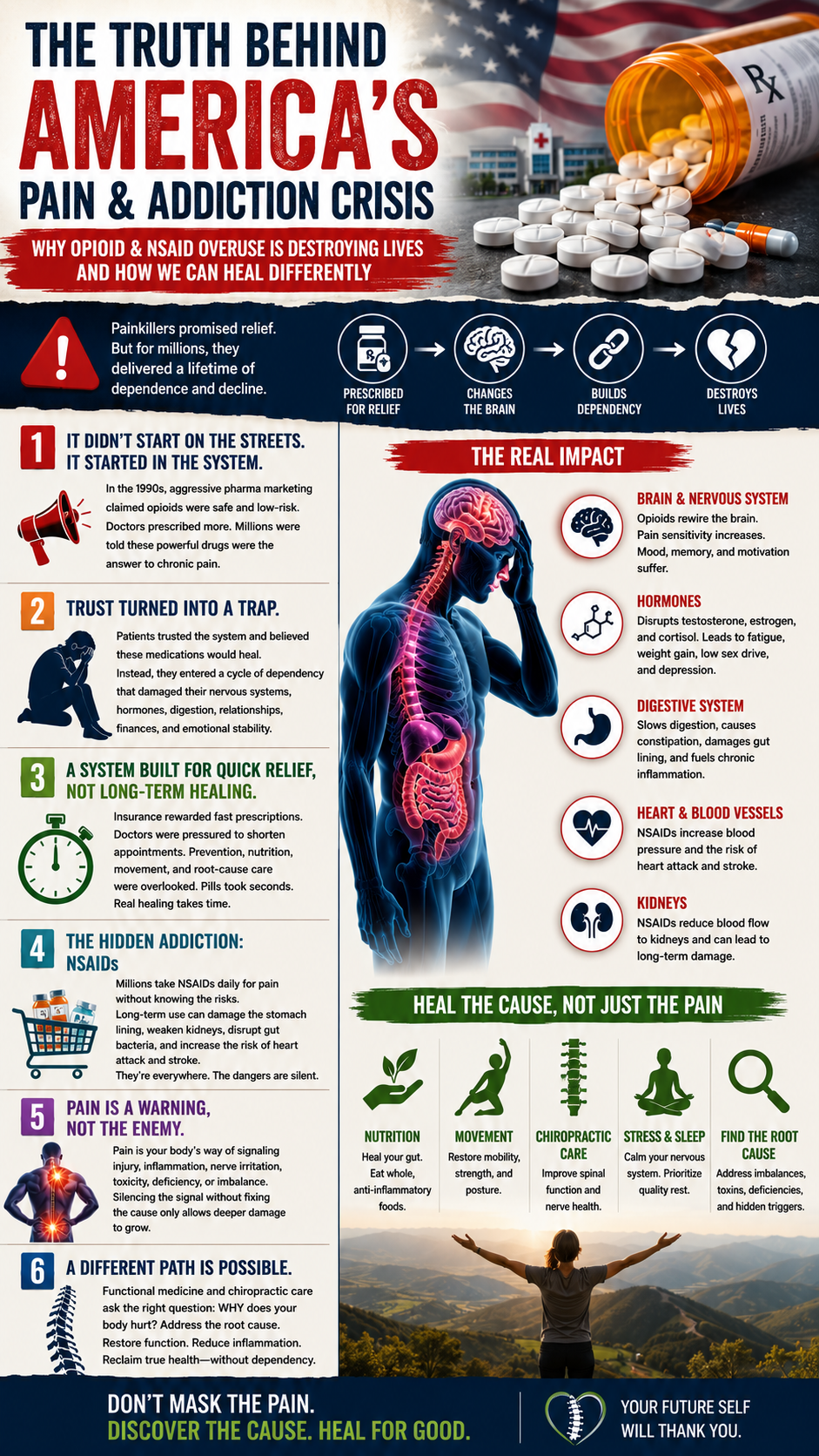
The opioid epidemic represents far more than a pharmaceutical problem. Society created an environment where quick relief became more valuable than long-term healing. Patients expected immediate symptom suppression, while insurance systems rewarded fast prescriptions instead of comprehensive investigation. Doctors faced pressure to shorten appointments, increase patient turnover, and provide instant relief. Chiropractic care, nutritional therapy, movement correction, and lifestyle interventions required time and education. Prescription drugs required seconds.
Meanwhile, another addiction spread almost unnoticed through homes across America. Millions began consuming NSAIDs daily for headaches, joint pain, back pain, arthritis, and inflammation. Ibuprofen, naproxen, aspirin, and prescription anti-inflammatory medications became household staples. Most people never considered these drugs dangerous because they appeared beside vitamins in grocery stores. Unfortunately, long-term NSAID use silently damages the stomach lining, weakens kidney function, disrupts gut bacteria, and increases cardiovascular risk. Many people consume these medications daily while believing they protect their health.
The tragedy deepens because pain itself rarely represents the true problem. Pain acts as a warning signal from a stressed body. The body uses pain to communicate injury, inflammation, instability, nerve irritation, toxicity, nutritional deficiency, or structural imbalance. Covering that warning signal without addressing the cause allows degeneration to continue quietly beneath the surface. Modern healthcare often silences the alarm while ignoring the fire causing it.
Functional medicine and chiropractic care approach pain from a radically different perspective. These disciplines ask why the body generates pain signals instead of merely suppressing them. That question changes everything because true healing begins when practitioners investigate root causes rather than masking symptoms.
The Real Cause of Chronic Pain
Most chronic pain does not originate from a drug deficiency. Human beings do not suffer because their bodies lack opioids or NSAIDs. Chronic pain usually develops through years of accumulated stress, inflammation, movement dysfunction, poor posture, toxic exposure, nutrient depletion, nervous system imbalance, and metabolic breakdown. Pain emerges when tissues lose their ability to recover from daily stress.
The human body was designed for movement, sunlight, nutrient-dense food, physical labor, quality sleep, and nervous system balance. Modern lifestyles oppose nearly every one of those biological needs. Many people spend entire days sitting beneath artificial lighting while consuming inflammatory foods loaded with sugar, refined flour, industrial oils, preservatives, and chemical additives. Sleep becomes fragmented by stress, blue light exposure, and excessive stimulation. Chronic dehydration, emotional tension, and inactivity gradually transform the body into an inflammatory environment.
The spine often suffers first because modern posture places enormous stress upon joints, discs, ligaments, and nerves. Hours spent staring downward at phones and computers create forward head posture that strains the cervical spine. Weak core muscles destabilize the lumbar spine. Tight hips and immobile thoracic joints alter movement patterns throughout the body. Muscles begin compensating for structural instability until chronic inflammation develops.
Painkillers never correct those biomechanical problems. Opioids simply alter how the brain perceives pain signals. NSAIDs blunt inflammatory pathways temporarily. Neither approach restores spinal motion, improves posture, repairs weakened stabilizers, or corrects nerve compression. The underlying dysfunction continues progressing while symptoms become chemically masked.
Functional medicine recognizes another major contributor to chronic pain that mainstream medicine frequently overlooks. Chronic inflammation often originates inside the digestive tract. Processed foods damage the intestinal lining while disrupting the gut microbiome. Antibiotics, NSAIDs, alcohol, pesticides, artificial sweeteners, and chronic stress weaken digestive integrity further. Over time, the intestinal barrier becomes permeable. This condition, often called leaky gut, allows inflammatory particles to enter the bloodstream.
The immune system responds aggressively because it recognizes these particles as threats. Chronic immune activation then spreads inflammation throughout the body. Many people experience joint pain, headaches, fatigue, brain fog, skin problems, autoimmune conditions, and muscle pain because gut inflammation continually activates systemic immune responses. Conventional medicine often treats these symptoms individually without addressing the digestive dysfunction driving them.
How Opioids Hijack the Brain and Body
Opioids alter the brain’s reward pathways with extraordinary power. These drugs bind to opioid receptors located throughout the brain, spinal cord, and digestive system. Initially, opioids create powerful pain relief while stimulating dopamine release. Dopamine produces pleasure, reward, relaxation, and emotional comfort. Many patients describe feeling emotionally numb, calm, or detached from suffering after beginning opioid therapy.
The body adapts quickly to repeated opioid exposure. Receptors become less responsive over time, forcing patients to require higher doses for identical effects. This process, known as tolerance, marks the beginning of dependency. Patients often discover that medications no longer provide meaningful relief, yet stopping them produces severe withdrawal symptoms.
Withdrawal affects nearly every system within the body. Individuals may experience anxiety, muscle pain, insomnia, sweating, diarrhea, nausea, chills, depression, irritability, and overwhelming cravings. These symptoms develop because opioids suppress the body’s natural endorphin production. The nervous system gradually loses its ability to regulate pain normally without pharmaceutical stimulation.
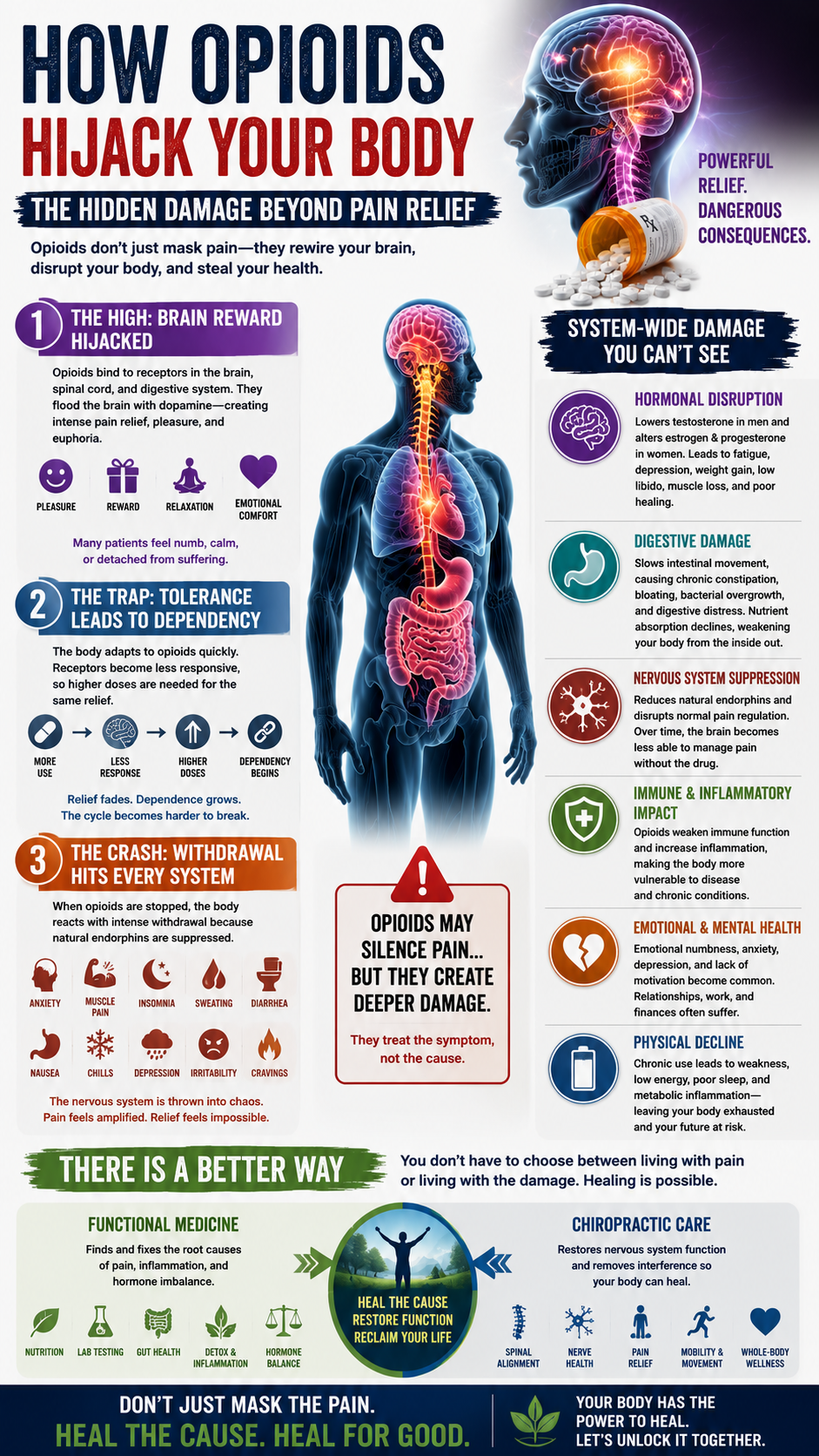
Opioids also disrupt hormonal balance profoundly. Long-term use often lowers testosterone levels in men while altering estrogen and progesterone patterns in women. Hormonal disruption contributes to fatigue, depression, weight gain, sexual dysfunction, muscle loss, and impaired healing. Many chronic opioid users experience emotional numbness and motivational decline because these medications suppress normal neurological signaling.
The digestive system suffers extensively as well. Opioids slow intestinal movement dramatically, leading to chronic constipation, bloating, bacterial overgrowth, and digestive discomfort. Poor digestion weakens nutrient absorption, which further impairs tissue repair and nervous system function. Patients trapped within chronic opioid use frequently become physically weaker, emotionally exhausted, and metabolically inflamed.
Functional medicine recognizes that these consequences emerge because opioids interfere with foundational physiological systems. Chiropractic care offers an alternative approach because it seeks to reduce pain through nervous system restoration rather than neurological suppression.
The Hidden Destruction Caused by NSAIDs
NSAIDs appear harmless because people purchase them without prescriptions. That accessibility creates a dangerous illusion of safety. Many individuals consume ibuprofen or naproxen daily for years without understanding the cumulative damage occurring within their bodies.
NSAIDs work by blocking cyclooxygenase enzymes involved in inflammatory signaling. While this action reduces pain temporarily, these enzymes also protect the stomach lining, regulate blood flow to the kidneys, and support tissue repair. Chronic NSAID use therefore creates widespread physiological consequences.
The digestive tract often suffers first. NSAIDs weaken the protective mucus lining inside the stomach and intestines. Stomach acid then damages exposed tissues, increasing the risk of ulcers, gastritis, bleeding, and intestinal permeability. Many people experience chronic bloating, reflux, abdominal discomfort, and food sensitivities after prolonged NSAID exposure.
Kidney function declines because NSAIDs reduce blood flow to these organs. Chronic users face increased risks of fluid retention, hypertension, and kidney damage. Cardiovascular risks also rise significantly because NSAIDs alter vascular function and clotting mechanisms. Research continues linking long-term NSAID use with elevated risks of heart attack and stroke.
Even more concerning, NSAIDs may impair cartilage healing within joints. Many individuals consume anti-inflammatory medications for arthritis while unknowingly accelerating degeneration. The body requires controlled inflammation for proper repair. Suppressing inflammation chronically can interfere with natural recovery processes.
Functional medicine views inflammation differently than conventional medicine. Inflammation itself rarely acts as the enemy. Chronic inflammation usually signals deeper dysfunction involving diet, toxicity, stress, gut damage, insulin resistance, poor movement patterns, or immune imbalance. Suppressing inflammation chemically without addressing those triggers resembles silencing a smoke alarm while the building continues burning.
Chiropractic and the Nervous System Connection
The nervous system controls every organ, tissue, gland, and muscle within the body. The spine protects this communication network while allowing movement and flexibility. When spinal joints lose proper motion, abnormal stress develops throughout the nervous system.
Chiropractic care focuses upon restoring healthy spinal movement and reducing neurological interference. Many people misunderstand chiropractic adjustments because they associate them only with cracking sounds. In reality, adjustments influence mechanoreceptors, proprioception, muscle tone, joint mobility, and nervous system signaling.
Restricted spinal joints create dysfunctional communication between the brain and body. Muscles tighten to protect unstable regions. Movement patterns become distorted. Nerves may become irritated through compression and inflammation. Blood flow decreases while tissue healing slows. Over time, chronic dysfunction creates widespread pain patterns extending far beyond the original injury.
Chiropractic adjustments help normalize these dysfunctional patterns. Improved spinal movement reduces mechanical stress upon discs, joints, and nerves. Muscles relax because the nervous system receives healthier input. Circulation improves while inflammatory pressure decreases naturally.
Many patients report benefits extending beyond pain relief. Improved sleep, better digestion, increased energy, enhanced mobility, reduced headaches, and lower stress levels frequently occur because the nervous system regulates the entire body. Chiropractic care supports overall neurological function instead of merely targeting symptoms.
Research continues supporting chiropractic care for low back pain, neck pain, headaches, sciatica, and musculoskeletal dysfunction. Many studies demonstrate that patients receiving chiropractic treatment reduce medication use substantially. This outcome matters tremendously during an era dominated by pharmaceutical dependency.
Why Mainstream Medicine Often Misses the Root Cause
Modern healthcare excels during emergencies. Trauma care, infectious disease management, and surgical interventions save countless lives. Chronic disease management, however, often follows a fundamentally flawed model centered upon symptom suppression.
Most physicians receive minimal education regarding nutrition, biomechanics, movement therapy, stress physiology, toxicology, or gut health. Medical systems prioritize diagnosing diseases and prescribing treatments rapidly. Insurance structures reward volume rather than investigative depth. Consequently, many chronic pain patients receive medications before anyone evaluates posture, movement patterns, inflammatory diets, sleep quality, digestive health, or nervous system function.
A patient suffering from migraines may receive painkillers for years while underlying cervical instability remains untreated. Someone experiencing chronic knee pain might undergo injections despite severe hip weakness and postural imbalance. Another patient may consume anti-inflammatory medications daily while hidden gluten sensitivity fuels systemic inflammation continuously.
Functional medicine investigates these interconnected factors because the body functions as an integrated system rather than isolated parts. Chronic pain frequently emerges from multiple overlapping stressors that conventional medicine addresses separately or ignores entirely.
This reductionistic model creates dependency because symptoms persist while root causes remain active. Patients then require increasing intervention as degeneration progresses.
The Inflammatory Diet Fueling Chronic Pain
Food either promotes healing or drives inflammation. Unfortunately, the modern food supply contains countless substances that damage metabolism, digestion, hormones, and nervous system function.
Refined sugar acts as one of the most inflammatory compounds within the average diet. Excess sugar increases insulin levels while stimulating inflammatory cytokines throughout the body. Chronic sugar consumption contributes to obesity, fatty liver disease, insulin resistance, and accelerated aging. Elevated blood sugar also damages nerves and blood vessels, worsening chronic pain dramatically.
Industrial seed oils represent another major problem. Corn oil, soybean oil, canola oil, sunflower oil, and cottonseed oil contain unstable omega-6 fatty acids that promote oxidative stress and inflammation when consumed excessively. These oils dominate processed foods, restaurant meals, dressings, chips, and packaged snacks.
Gluten and dairy trigger inflammatory responses in many individuals as well. Some people develop overt digestive symptoms, while others experience headaches, joint pain, skin problems, brain fog, fatigue, or autoimmune activation. Hidden food sensitivities create chronic immune stress that conventional medicine rarely investigates.
Artificial sweeteners disrupt gut bacteria while altering insulin signaling. Preservatives, food dyes, pesticides, and chemical additives burden detoxification pathways continually. Combined together, these dietary factors create systemic inflammation capable of amplifying pain sensitivity throughout the nervous system.
Functional medicine emphasizes nutrient-dense whole foods because tissues cannot heal without proper raw materials. Healthy fats, clean proteins, vegetables, minerals, antioxidants, and hydration support repair while reducing inflammatory burden naturally.
How Stress Intensifies Pain
Emotional stress affects the body physically. Chronic stress activates the sympathetic nervous system continuously, trapping the body within fight-or-flight physiology. Cortisol and adrenaline remain elevated while muscles tighten protectively. Digestion weakens because the body prioritizes survival rather than repair.
This chronic stress response sensitizes pain pathways significantly. Individuals under prolonged emotional strain often develop headaches, jaw tension, neck pain, digestive problems, fatigue, insomnia, and muscle tightness. Stress also increases inflammatory cytokines that worsen chronic pain further.
Modern society creates constant overstimulation through technology, financial pressure, news cycles, social media, sleep deprivation, and emotional overload. Many people remain neurologically exhausted while expecting their bodies to heal properly.
Chiropractic care helps calm the nervous system by reducing mechanical stress and improving neurological communication. Functional medicine supports this process through sleep optimization, nutritional support, blood sugar stabilization, and stress management strategies.
Healing chronic pain requires addressing both structural and emotional stressors because the nervous system cannot separate them completely.
Steps to Heal Pain Naturally at Home
Healing begins when individuals remove inflammatory stressors while supporting the body’s repair mechanisms consistently. Recovery rarely occurs through one miracle intervention. Instead, healing develops through daily habits that reduce stress upon tissues and the nervous system.
Nutrition must become the foundation of recovery. Eliminating processed foods, refined sugar, industrial oils, and excessive alcohol dramatically lowers inflammatory burden. Whole foods provide minerals, antioxidants, amino acids, and healthy fats required for tissue repair. Hydration supports discs, fascia, circulation, and detoxification pathways. Many chronic pain sufferers remain chronically dehydrated while consuming excessive caffeine and sugary beverages.
Movement restores circulation, joint mobility, and muscular balance. Walking daily improves lymphatic flow while reducing stiffness. Gentle stretching supports flexibility and nervous system relaxation. Core strengthening stabilizes the spine while protecting joints from excessive stress. Consistency matters more than intensity because the body heals gradually through repeated healthy patterns.

Sleep acts as one of the body’s most powerful anti-inflammatory mechanisms. Growth hormone release increases during deep sleep while tissues repair overnight. Poor sleep increases cortisol, pain sensitivity, insulin resistance, and emotional stress. Creating dark sleeping environments, avoiding screens before bedtime, and maintaining consistent sleep schedules improve recovery substantially.
Stress reduction also remains essential. Deep breathing, prayer, journaling, time outdoors, and meditation calm sympathetic overactivation while improving parasympathetic healing responses. The nervous system requires periods of safety and calm for proper recovery.
Seeking chiropractic evaluation often reveals structural dysfunction contributing to chronic pain. Correcting spinal imbalances improves biomechanics while reducing nerve irritation naturally. Many patients discover their pain decreases significantly once movement patterns normalize.
Functional medicine testing may uncover hidden contributors including nutrient deficiencies, gut dysfunction, food sensitivities, hormone imbalance, mold exposure, heavy metals, or blood sugar dysregulation. Addressing these deeper factors often transforms recovery outcomes dramatically.
The Future of Pain Treatment
Society stands at a turning point regarding chronic pain treatment. The opioid epidemic exposed the catastrophic consequences of relying primarily upon pharmaceuticals for long-term pain management. NSAID overuse continues creating widespread digestive, cardiovascular, and kidney damage silently. Patients increasingly recognize that symptom suppression alone cannot restore health.
Chiropractic care and functional medicine offer a different vision rooted in restoration rather than dependency. These approaches acknowledge the body’s extraordinary ability to heal when underlying stressors are removed and physiological function improves.
Pain should never become merely an inconvenience to silence chemically. Pain represents communication from the body. Symptoms reveal dysfunction requiring investigation, correction, and support. Ignoring those signals while suppressing them pharmacologically often creates deeper degeneration over time.
The future of healthcare will likely reward practitioners who understand this complexity. Nutrition, biomechanics, nervous system regulation, movement therapy, gut health, detoxification, and lifestyle medicine will continue gaining importance because they address foundational causes rather than superficial symptoms.
Final Thoughts
Opioid and NSAID addiction emerged because modern medicine taught society to fear symptoms while ignoring causes. Millions of people believed pain represented an enemy requiring chemical suppression. In reality, pain frequently signals that the body struggles beneath layers of inflammation, structural dysfunction, metabolic stress, poor nutrition, toxicity, and nervous system imbalance.
Opioids hijack brain chemistry while destroying hormonal balance, digestive health, and neurological resilience. NSAIDs silently damage the stomach, kidneys, cardiovascular system, and gut lining. Neither approach restores structural integrity or addresses the inflammatory lifestyle patterns driving chronic pain.
Chiropractic care offers a profoundly different solution because it focuses upon restoring movement, reducing nerve irritation, and improving nervous system function naturally. Functional medicine expands that philosophy by investigating diet, inflammation, gut health, stress physiology, toxicity, and nutrient deficiencies.
True healing demands deeper questions. Why has the body become inflamed? Why do joints degenerate prematurely? Why does the nervous system remain hypersensitive? Why does recovery fail despite medication?
Answering those questions honestly transforms healthcare entirely. The body possesses remarkable healing capacity when given proper support. Pain may disappear not because symptoms became chemically silenced, but because the underlying dysfunction finally resolved.
That truth offers hope for millions trapped within cycles of chronic pain and pharmaceutical dependency.