
Why the Fear Around Chiropractic Neck Adjustments Continues to Spread
Few healthcare topics generate more emotional controversy than chiropractic neck adjustments and stroke risk. Television reports, online articles, and sensational headlines often portray cervical chiropractic care as dangerous and unpredictable. Those reports usually focus on isolated tragedies without explaining the broader scientific context surrounding vertebral artery dissection, chronic vascular disease, or the actual statistical evidence. As a result, millions of people now associate chiropractic care with fear before they ever examine the data themselves.
This fear-driven narrative has shaped public opinion for decades because stroke represents one of the most terrifying medical events imaginable. A stroke can alter speech, movement, memory, balance, and independence within moments. Emotional reactions naturally follow stories connecting spinal adjustments to neurological injury. Unfortunately, emotional storytelling often replaces careful scientific analysis in mainstream discussions. Most people never hear the full story regarding why these vascular events occur, what truly damages the arteries, and why many patients already experience the earliest stages of arterial injury before visiting any healthcare provider.
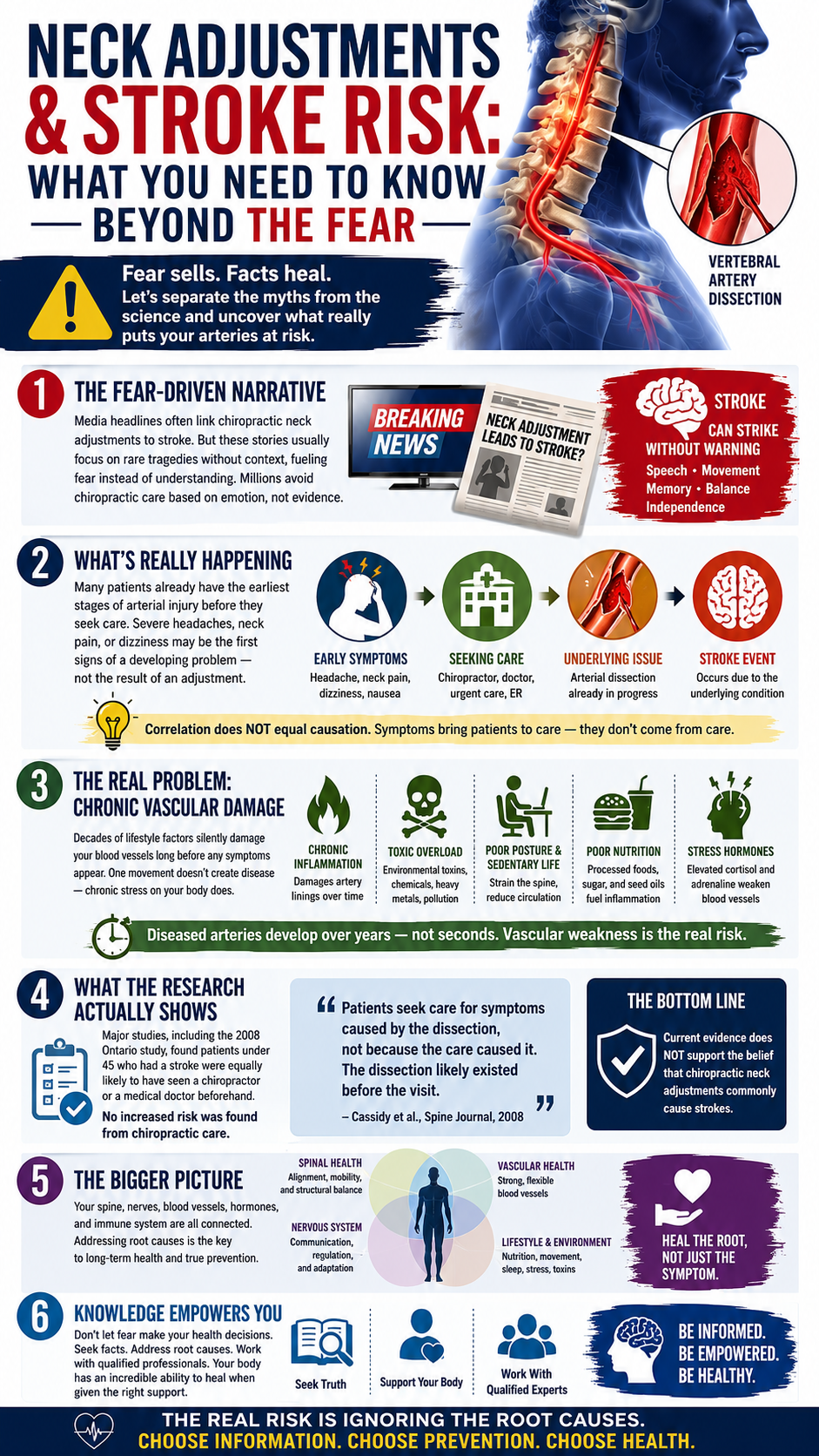
The modern healthcare system frequently approaches this issue backwards. Public discussions tend to focus on a single cervical movement while ignoring the decades of physiological damage that weaken blood vessels long before symptoms emerge. Chronic inflammation, toxic overload, poor posture, sedentary lifestyles, nutrient deficiencies, stress hormones, and metabolic dysfunction silently erode vascular health over time. Diseased arteries do not suddenly appear because of one movement. Vascular weakness develops gradually through years of inflammatory stress damaging the delicate inner lining of the arteries.
Understanding this distinction changes the entire conversation surrounding chiropractic care and stroke risk. Research increasingly shows that many patients experiencing vertebral artery dissection already suffer from severe headaches, neck pain, dizziness, or neurological symptoms before seeking treatment. Those early symptoms often motivate patients to visit chiropractors, medical doctors, urgent care centers, or emergency rooms. The pain itself may represent the beginning of the vascular event already unfolding beneath the surface. Most mainstream articles fail to explain this critically important detail.
A deeper examination of anatomy, biomechanics, inflammation, vascular physiology, and neurological health reveals a much more complex and evidence-based picture than the one presented through fear-based headlines. The real problem affecting millions of people involves chronic degeneration of vascular and spinal health driven by modern lifestyle habits. Without understanding those root causes, society continues blaming isolated events while ignoring the widespread physiological breakdown occurring every day inside the human body.
Understanding What a Cervical Chiropractic Adjustment Actually Does
The cervical spine represents one of the most intricate structures within the human body. Seven vertebrae support the weight of the head while protecting the spinal cord and allowing remarkable mobility. Surrounding those vertebrae sit muscles, ligaments, fascia, discs, nerves, arteries, and joints working together continuously. Every movement of the neck requires extraordinary coordination between structural and neurological systems.
A chiropractic neck adjustment attempts to restore motion to restricted spinal joints. Chiropractors apply controlled force using specific angles, depth, timing, and direction. The adjustment aims to reduce mechanical restriction, improve mobility, decrease muscular tension, and normalize communication between the spine and nervous system. Contrary to common misconceptions, trained chiropractors do not randomly twist the neck. Licensed practitioners spend years studying anatomy, radiology, neurology, orthopedics, biomechanics, vascular anatomy, pathology, and differential diagnosis.
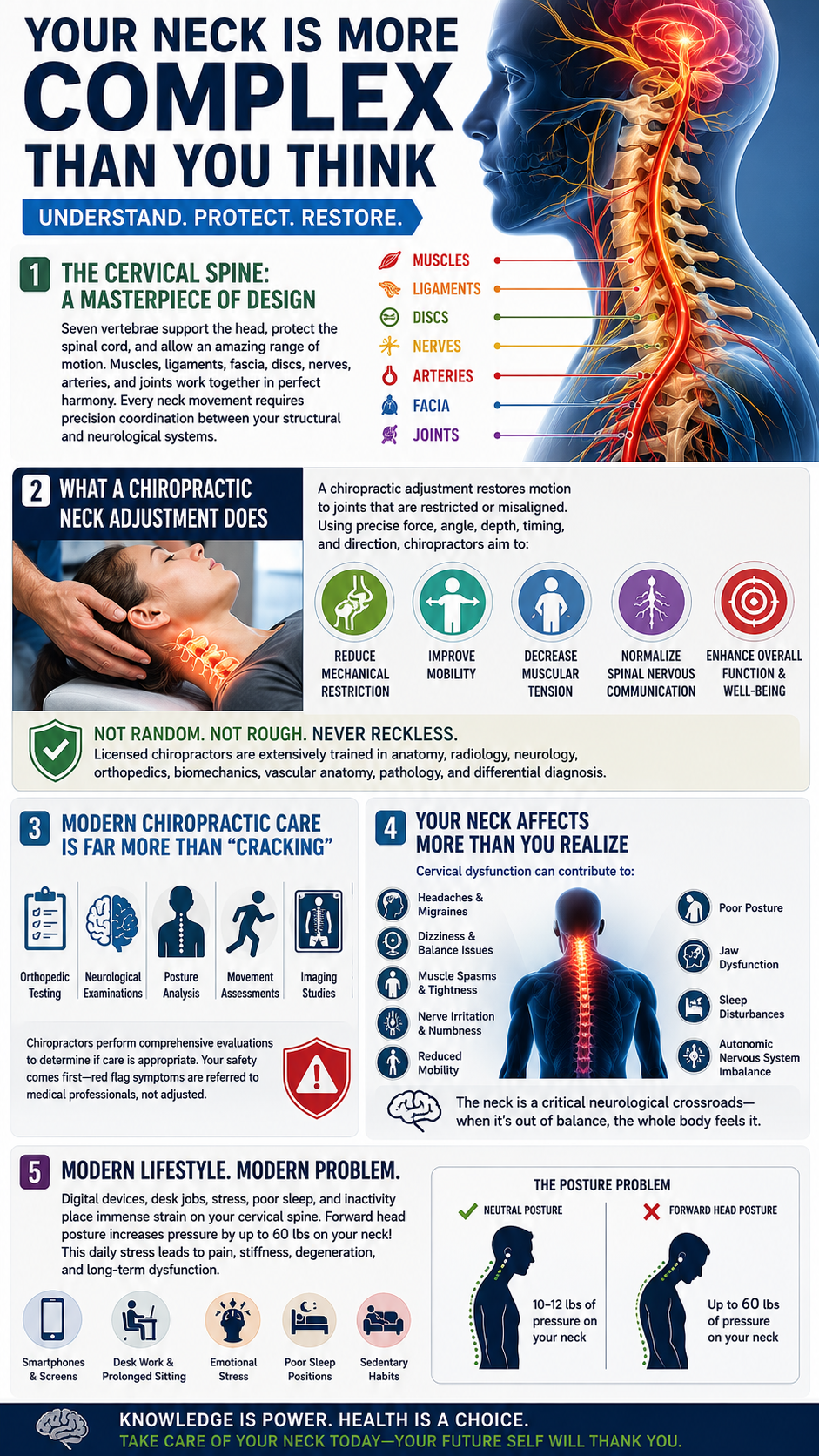
Modern chiropractic care involves far more than simple spinal manipulation. Many practitioners perform orthopedic testing, neurological examinations, posture analysis, movement assessments, and imaging studies before deciding whether cervical adjustments are appropriate. Responsible chiropractors understand the importance of identifying red flag symptoms that may require immediate medical referral rather than manual treatment.
The cervical spine influences far more than neck comfort alone. Dysfunction within the neck may contribute to headaches, migraines, dizziness, poor posture, muscle spasms, nerve irritation, sleep disturbances, reduced mobility, jaw dysfunction, and autonomic nervous system imbalance. The neck acts as a critical neurological crossroads connecting the brain with the rest of the body. When cervical joints lose proper motion, surrounding tissues often compensate through muscular guarding, inflammation, and altered movement patterns.
Modern lifestyles create enormous stress on cervical structures long before patients ever seek treatment. Smartphones, computers, office work, prolonged sitting, emotional stress, poor sleeping positions, and sedentary behavior now dominate daily life. Millions of people spend hours each day with their heads tilted forward staring into screens. That repetitive posture places extraordinary pressure on cervical joints, muscles, ligaments, and connective tissues.
The Origins of the Stroke Controversy
The controversy surrounding chiropractic adjustments and stroke primarily involves a condition called vertebral artery dissection. The vertebral arteries travel through openings within the cervical vertebrae before entering the skull and supplying blood to critical areas of the brain. A dissection occurs when a tear develops within the inner lining of the artery wall. Blood then enters the vessel wall, potentially forming a clot or restricting circulation to the brainstem and cerebellum.
Mainstream media often presents vertebral artery dissection as though cervical adjustments suddenly and directly create catastrophic vascular injury. However, scientific research paints a far more nuanced picture. Many patients developing vertebral artery dissection experience severe neck pain and headaches before any stroke occurs. Those symptoms frequently send patients searching for answers and relief. Some individuals visit chiropractors because of neck pain. Others seek help from family physicians, neurologists, urgent care centers, or emergency departments.
This timeline matters enormously because correlation does not automatically prove causation. If a patient develops severe neck pain from an evolving arterial dissection and later experiences stroke symptoms after seeking care, the provider often receives blame despite the vascular injury already developing beforehand. Researchers describe this phenomenon as protopathic bias, meaning patients seek treatment because of the earliest symptoms of the disease itself before the condition fully declares itself clinically.
Most media outlets never explain this concept to the public. Instead, headlines often simplify the narrative into emotionally charged statements implying that chiropractic care directly causes strokes. Those oversimplified conclusions ignore decades of research investigating the true relationship between cervical manipulation and vascular events.
The Research Most People Never Hear About
One of the most influential studies examining chiropractic care and stroke risk appeared in the journal Spine in 2008. Researchers Cassidy, Boyle, Côté, and their colleagues analyzed every vertebrobasilar stroke occurring throughout Ontario over a nine-year period. The study reviewed millions of healthcare records in an attempt to determine whether chiropractic care increased stroke risk.
The findings significantly challenged the assumptions dominating public discussion. Researchers discovered that patients under forty-five who experienced vertebrobasilar stroke were equally likely to have visited a chiropractor or a medical doctor before the event occurred. If chiropractic adjustments directly caused dissections regularly, chiropractic visits would appear dramatically more often than medical visits. That pattern never emerged within the data.
The researchers concluded that patients likely sought care because of headaches and neck pain already caused by evolving arterial dissections. In other words, the vascular injury probably existed before the chiropractic visit occurred. The study found no evidence showing excess stroke risk associated specifically with chiropractic care compared with medical care.
Additional systematic reviews and analyses have continued supporting similar conclusions. Researchers consistently describe vertebral artery dissection following chiropractic care as extraordinarily rare. Many investigations also acknowledge that proving direct causation remains extremely difficult because patients often present with symptoms before seeking treatment.
Despite these findings, fear-driven narratives continue dominating public perception. Emotional anecdotes frequently overshadow statistical evidence because dramatic stories spread more rapidly through media channels than careful scientific explanations.
Why Fear Persists Despite the Evidence
Human psychology plays a major role in sustaining fear around chiropractic neck adjustments. Emotional experiences create stronger memories than statistical discussions. A single tragic story often influences public opinion more powerfully than decades of epidemiological research involving millions of patients.
Modern media organizations also understand that fear generates attention. Headlines warning readers about “deadly neck cracking” attract far more engagement than balanced discussions involving vascular pathology, biomechanics, and epidemiology. Fear-based content increases clicks, shares, ratings, and advertising revenue. Unfortunately, emotionally charged reporting often sacrifices nuance and scientific accuracy in pursuit of attention.
Historical tensions between organized medicine and chiropractic care also shaped public attitudes over many decades. Chiropractic emerged outside conventional medical systems and frequently challenged pharmaceutical and surgical approaches to chronic pain management. Historical campaigns attempted to marginalize chiropractic care entirely. Although collaboration between professions has improved substantially, remnants of those conflicts still influence public perception today.
Another major issue involves disproportionate risk perception. Every healthcare intervention carries potential complications. Prescription medications, surgeries, injections, and hospital procedures all produce adverse events regularly. Yet society rarely discusses those risks with the same intensity directed toward chiropractic care.
Nonsteroidal anti-inflammatory drugs contribute to gastrointestinal bleeding, kidney injury, and cardiovascular complications each year. Opioid medications fueled addiction crises that devastated countless families and communities. Cervical spine surgeries carry risks including infection, paralysis, failed procedures, clot formation, and chronic pain syndromes. Despite those realities, conservative spinal care often receives harsher scrutiny because dramatic media narratives shape public emotions more effectively than statistical context.
The Real Problem: Chronic Vascular Degeneration
The larger issue hidden beneath this entire debate involves chronic vascular degeneration developing silently throughout modern society. Healthy arteries possess elasticity, flexibility, and structural resilience. Diseased arteries become inflamed, stiffened, weakened, and vulnerable to injury. Functional medicine practitioners recognize that vascular integrity depends heavily on overall physiological health rather than isolated mechanical events.
Modern lifestyles continuously damage blood vessels through chronic inflammatory stress. Highly processed foods flood the bloodstream with oxidized fats, refined sugars, preservatives, and inflammatory compounds. Blood sugar instability damages endothelial cells lining the arteries. Elevated stress hormones constrict blood vessels repeatedly while increasing blood pressure and oxidative stress. Sleep deprivation impairs tissue repair and accelerates inflammatory chemistry throughout the vascular system.
Environmental toxins create additional vascular burden. Heavy metals, pesticides, plastics, industrial chemicals, and airborne pollutants generate oxidative damage within delicate tissues. Sedentary behavior worsens circulation while weakening muscular support systems surrounding the spine. Poor posture alters biomechanics and restricts healthy movement patterns throughout the body.
Over time, these stressors gradually erode vascular resilience. Arteries lose flexibility while inflammation damages connective tissue integrity. The body becomes increasingly vulnerable to circulatory dysfunction, clot formation, and degenerative disease processes. Blaming a single movement without examining decades of physiological breakdown ignores the true origins of vascular dysfunction.
How Inflammation Damages the Neck and Nervous System
Inflammation drives much of the degeneration affecting both spinal and vascular health. Chronic inflammation damages endothelial tissue lining the arteries while accelerating oxidative stress throughout the body. Blood vessels gradually lose elasticity as inflammatory compounds weaken connective tissue structure.
The cervical spine also suffers under chronic inflammatory conditions. Muscles tighten defensively around restricted joints. Fascia thickens and loses flexibility. Disc degeneration accelerates while spinal mobility decreases. Nerve irritation increases muscular guarding throughout the neck and shoulders, creating a vicious cycle of tension and dysfunction.
Forward head posture compounds these problems dramatically. Modern technology encourages people to spend hours with their heads tilted downward toward screens. Every inch the head moves forward significantly increases cervical loading. Some biomechanical studies estimate forward posture may place more than sixty pounds of effective force on cervical structures.
This chronic strain compresses joints, irritates nerves, reduces circulation, tightens muscles, and accelerates degeneration. Many patients seeking chiropractic care already suffer from years of accumulated structural dysfunction before receiving treatment. The adjustment often becomes the most visible moment within a much larger process involving chronic inflammation and biomechanical stress.
Inflammation also affects neurological function directly. The nervous system communicates constantly with immune pathways, hormonal systems, and vascular regulation mechanisms. Chronic inflammation disrupts autonomic nervous system balance while increasing sympathetic stress responses throughout the body. Patients frequently experience headaches, dizziness, brain fog, sleep problems, fatigue, and muscular tension under these conditions.
The Hidden Role of Stress Chemistry
Chronic stress profoundly alters human physiology. Elevated cortisol and adrenaline levels increase blood pressure, tighten muscles, impair digestion, disrupt sleep, weaken immune regulation, and accelerate inflammatory chemistry. Blood vessels repeatedly constrict under prolonged stress exposure while tissue healing slows dramatically.
The cervical spine often reflects emotional stress physically. Many people carry tension within the neck, shoulders, and jaw during periods of chronic psychological strain. Tight muscles restrict circulation while compressing joints and irritating nerves. Restricted movement patterns then worsen muscular guarding and spinal dysfunction.
Stress also disrupts breathing mechanics. Many individuals with forward head posture develop shallow chest breathing patterns instead of healthy diaphragmatic breathing. Reduced oxygenation negatively affects circulation, neurological regulation, energy production, and tissue repair.
Functional medicine recognizes that emotional stress, spinal dysfunction, inflammation, and vascular health interact continuously. The body cannot fully heal while remaining trapped within constant fight-or-flight physiology. True recovery requires reducing chronic stress chemistry while supporting nervous system balance.
Steps You Can Take at Home to Improve Neck and Vascular Health
Protecting cervical and vascular health requires consistent daily habits supporting structural and physiological resilience. Small changes practiced regularly often produce profound long-term benefits.
Posture correction remains one of the most powerful interventions available. Raising computer screens to eye level immediately reduces cervical strain. Frequent movement breaks restore circulation while decreasing muscular tension. Strengthening upper back muscles helps support healthier spinal alignment naturally.
Hydration also plays a critical role in tissue health. Dehydrated discs, fascia, muscles, and vascular tissues lose elasticity and healing capacity. Consistent water intake supports circulation, spinal mobility, and detoxification pathways throughout the body.
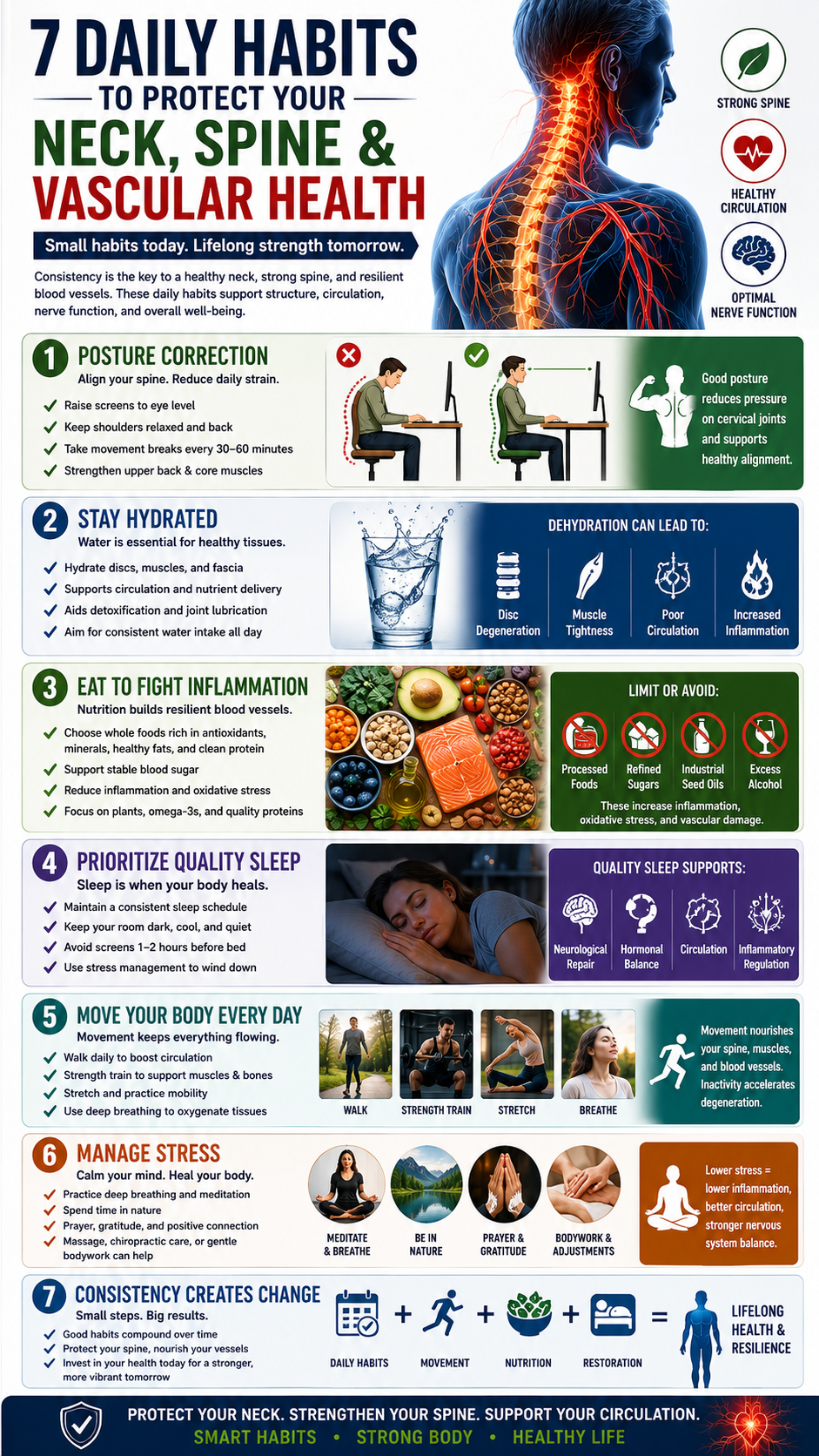
Anti-inflammatory nutrition significantly improves vascular resilience. Whole foods rich in antioxidants, minerals, healthy fats, and clean protein help stabilize blood sugar while reducing inflammatory burden. Processed foods, refined sugars, industrial seed oils, and excessive alcohol increase oxidative stress throughout the vascular system.
Quality sleep supports neurological repair, hormonal balance, circulation, and inflammatory regulation. Consistent sleep schedules, dark sleeping environments, reduced evening screen exposure, and stress management practices all improve restorative sleep quality.
Movement remains essential for circulation and spinal function. Walking, resistance exercise, stretching, mobility training, and breathing exercises improve blood flow while supporting musculoskeletal balance. Sedentary lifestyles accelerate degeneration rapidly throughout both vascular and spinal systems.
Stress management techniques also improve physiological resilience significantly. Prayer, meditation, breathing exercises, outdoor activity, massage therapy, chiropractic care, and nervous system regulation practices help reduce sympathetic overload while promoting healing physiology.
Recognizing Symptoms That Require Immediate Medical Attention
Although vertebral artery dissection remains extremely rare, recognizing warning signs remains critically important. Sudden severe headaches, slurred speech, facial drooping, difficulty swallowing, sudden weakness, double vision, severe dizziness, loss of coordination, or one-sided numbness require immediate emergency evaluation.
Responsible chiropractors understand these red flag symptoms clearly. Ethical practitioners refer patients immediately whenever vascular or neurological emergencies appear possible. Patient safety must always remain the highest priority within every healthcare setting.
Balanced healthcare discussions acknowledge both potential risks and statistical realities. Fear-based narratives fail to empower patients because they oversimplify complex physiological issues. True education helps individuals understand the broader factors influencing vascular and neurological health.
The Bigger Picture Most People Never Consider
The real epidemic affecting modern society involves chronic inflammation, vascular degeneration, poor posture, metabolic dysfunction, toxic overload, sedentary behavior, and nervous system imbalance. Millions of people suffer daily from headaches, neck pain, fatigue, dizziness, spinal degeneration, sleep disturbances, and chronic stress-related disorders.
Most conventional treatments focus primarily on symptom suppression rather than root-cause correction. Pain medications, muscle relaxers, injections, and surgeries may temporarily reduce symptoms while underlying dysfunction continues progressing beneath the surface.
Functional medicine and conservative spinal care attempt to address deeper physiological imbalances contributing to chronic degeneration. Patients increasingly seek non-drug approaches because they recognize the limitations of symptom-based healthcare models. They want solutions addressing inflammation, posture, nervous system regulation, circulation, and overall tissue health rather than endless cycles of pharmaceutical dependence.
The conversation surrounding chiropractic adjustments and stroke risk therefore requires far greater nuance than sensational headlines allow. Current evidence does not support the widespread belief that chiropractic neck adjustments commonly cause strokes. Research strongly suggests many patients already experience evolving vascular symptoms before seeking care.
Meanwhile, modern lifestyles continue destroying vascular and spinal health through inflammatory diets, toxic exposure, chronic stress, poor posture, sleep deprivation, and inactivity. Those factors represent the true drivers of chronic degeneration affecting millions of people worldwide.
Fear alone never creates health. Education, prevention, movement, nutrition, nervous system balance, and informed healthcare choices create resilience instead. Patients deserve honest discussions grounded in evidence rather than emotionally amplified myths disconnected from the broader realities of human physiology.