
The Hidden Metabolic Story Happening While You Sleep
Long before sunrise, an invisible metabolic shift begins inside your body. Your kitchen remains dark, your stomach contains no breakfast, and you may have eaten nothing for ten hours. Yet your liver can begin releasing glucose into your bloodstream as morning approaches. Hormones start changing, insulin sensitivity shifts, and stored energy becomes available for the coming day. By the time you open your eyes, your blood sugar may be higher than it was at bedtime.
That morning increase can feel especially frustrating when you have worked hard to improve your diet. You may have eliminated desserts, stopped nighttime snacking, reduced refined carbohydrates, and finished dinner hours before bed. Nevertheless, a glucose meter can still display 105, 115, or even higher the following morning. The natural conclusion is that something you ate must have caused the increase. However, the human body can raise blood glucose without receiving a single calorie from food.
This is where the morning blood sugar mystery becomes far more interesting than a discussion about carbohydrates. Your liver can store glucose, release stored glucose, and manufacture new glucose during an overnight fast. Meanwhile, cortisol, glucagon, growth hormone, adrenaline, and insulin help determine how much fuel enters circulation. Skeletal muscle influences how effectively that glucose leaves the bloodstream. Sleep quality, circadian timing, stress, visceral fat, and liver health can further influence the final morning reading.
The real problem is therefore not that the body produces glucose while you sleep. That ability represents an essential survival mechanism that keeps the brain and other tissues supplied with energy. Trouble begins when glucose production exceeds actual metabolic requirements or remains elevated for too long. Insulin resistance can make that situation worse by reducing the body’s ability to control liver output. Morning glucose then becomes a clue pointing toward a larger loss of metabolic flexibility.
Your Liver Can Produce Sugar Without Eating Sugar
Most people understand blood glucose through a simple nutritional model. Carbohydrates enter the digestive tract, become glucose, and eventually reach the bloodstream. Insulin then helps manage the resulting increase by directing glucose toward tissues that can use or store it. Although this explanation remains correct, it accounts for only part of human glucose physiology.
The liver provides another major source of circulating glucose. Following meals, some glucose becomes glycogen and gets stored primarily inside the liver and skeletal muscles. During fasting, liver glycogen can be broken apart through a process called glycogenolysis. The liver then releases glucose into circulation so vital tissues continue receiving adequate energy between meals.
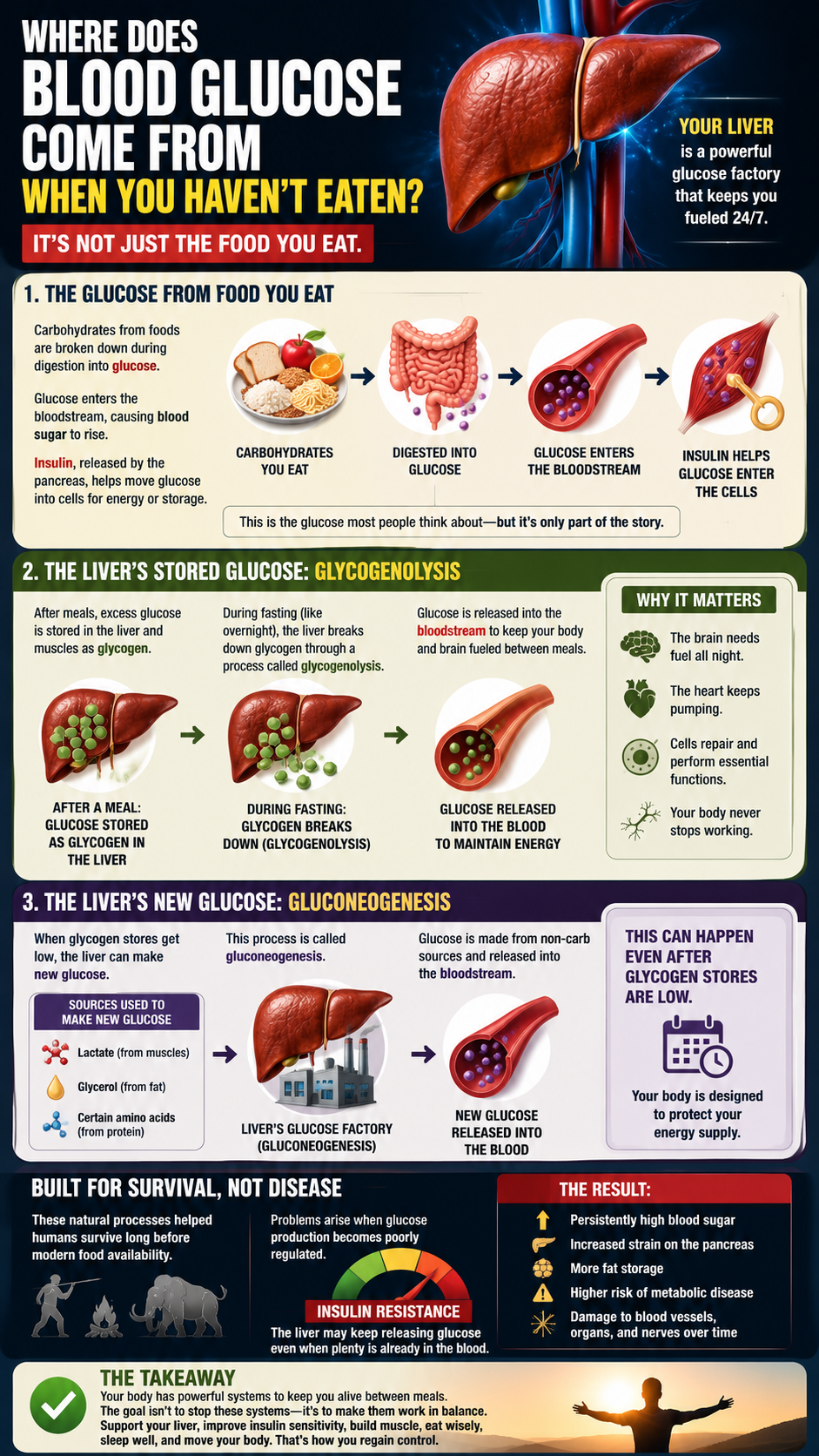
This ability becomes especially important overnight because your metabolism never goes to sleep. Your heart continues contracting, your brain remains active, and cells continue performing energy-dependent repair processes. The nervous system also requires a dependable energy supply throughout the night. Without internal fuel reserves, humans would need to wake repeatedly just to maintain adequate blood glucose.
The liver carries another metabolic tool called gluconeogenesis. This process creates new glucose from substances including glycerol, lactate, and certain amino acids. Consequently, glucose can continue entering circulation even after liver glycogen begins declining. The body essentially carries an internal glucose factory capable of protecting energy availability during extended periods without food.
Neither glycogenolysis nor gluconeogenesis represents disease. Both processes helped humans survive long before refrigerators, supermarkets, and twenty-four-hour food access existed. Problems arise when glucose production becomes poorly regulated rather than appropriately responsive. An insulin-resistant liver may keep releasing glucose even when circulating fuel is already abundant.
Insulin Should Control the Glucose Faucet
Insulin is commonly described as the hormone that lowers blood sugar. Its actual responsibilities extend much further because insulin coordinates fuel storage, utilization, and production. One of its most important jobs involves telling the liver when additional glucose is unnecessary. After eating, rising insulin should reduce hepatic glucose production while incoming nutrients supply the body’s energy needs.
A metabolically healthy liver responds efficiently to that signal. When glucose and insulin increase after a meal, the liver reduces its internal glucose output. Skeletal muscle simultaneously absorbs substantial glucose from circulation. This coordination prevents excessive glucose accumulation and allows the body to transition smoothly between feeding and fasting.
Insulin resistance changes the entire conversation. Liver cells become less responsive to insulin, so hepatic glucose production may continue despite adequate circulating glucose. Skeletal muscle can also become insulin resistant and remove glucose less efficiently. The bloodstream then faces glucose arriving from the liver while one of its largest disposal systems struggles to clear it.
The pancreas initially responds by producing more insulin. Higher insulin concentrations can overcome some resistance and maintain apparently normal glucose for years. Someone may therefore receive a reassuring fasting glucose result while their pancreas works increasingly hard behind the scenes. Metabolic dysfunction can progress silently during this compensated stage.
Eventually, compensation can become less effective. Fasting glucose begins climbing, post-meal spikes become larger, and HbA1c may gradually increase. What appears to be a sudden blood sugar problem often represents the visible stage of a process developing for years. High morning blood sugar can become one of the earliest obvious signs that metabolic regulation is losing efficiency.
The Dawn Phenomenon Begins Before You Wake
Your body operates according to powerful circadian rhythms that coordinate physiology across each twenty-four-hour cycle. Hormones, body temperature, sleep, digestion, blood pressure, and energy metabolism all change according to biological timing. Several hours before waking, the endocrine system begins preparing the body for increased activity. That preparation can influence blood glucose even while you remain asleep.
Cortisol generally begins rising toward morning and helps increase energy availability. Glucagon encourages the liver to release glucose when additional fuel becomes necessary. Catecholamines can also mobilize stored energy, while growth hormone influences glucose metabolism and insulin sensitivity during sleep. Together, these signals help prepare the body for waking, movement, and the demands of another day.
This early-morning glucose increase is commonly called the dawn phenomenon. In metabolically healthy people, the body generally controls the rise without producing dramatic hyperglycemia. Insulin secretion adjusts, the liver remains responsive, and skeletal muscle handles circulating glucose efficiently. The system increases available fuel without losing control of the bloodstream.
Insulin resistance can magnify the same normal process. The liver may respond strongly to hormones encouraging glucose production while responding weakly to insulin’s braking signal. Muscles can simultaneously struggle to absorb circulating glucose. Morning blood sugar then rises higher because production has increased while disposal remains impaired.
This distinction prevents cortisol from becoming an easy scapegoat. A normal morning cortisol rise performs essential physiological work and should not be treated as a metabolic defect. The more important question concerns whether the body handles that hormonal signal appropriately. Healthy metabolism adapts to normal hormonal changes, while metabolically inflexible physiology can exaggerate their glucose effects.
The Real Problem May Have Started Years Earlier
Type 2 diabetes rarely appears without warning. Insulin resistance often develops gradually while the pancreas works harder to preserve normal glucose. During this period, fasting glucose can remain surprisingly ordinary. Standard glucose testing may therefore provide reassurance while deeper metabolic changes continue progressing.
Increasing insulin production represents one of the body’s earliest compensatory strategies. When tissues respond poorly, the pancreas releases more insulin to achieve the same metabolic effect. Higher insulin can maintain glucose control for a considerable period. Eventually, however, the metabolic cost of that compensation becomes harder to ignore.
Other warning signs can emerge before fasting glucose reaches diabetic levels. Triglycerides may increase, HDL cholesterol can decline, and blood pressure may gradually rise. Waist circumference can expand as visceral fat accumulates around abdominal organs. Fat can also build inside the liver and further interfere with normal insulin signaling.
These abnormalities frequently reinforce one another. More visceral fat can worsen insulin resistance, while higher insulin can encourage continued energy storage. Hepatic insulin resistance allows inappropriate glucose production to continue during fasting. Reduced muscle activity simultaneously decreases one of the body’s largest pathways for glucose disposal.
Morning glucose should therefore be interpreted as part of a metabolic pattern rather than an isolated laboratory value. One unusual reading proves very little because glucose naturally fluctuates. Repeated elevations accompanied by other metabolic changes deserve closer investigation. Early recognition creates an opportunity to intervene before the system becomes substantially more difficult to correct.
Visceral Fat Can Keep the Liver Producing Glucose
Body fat does not behave as one uniform tissue. Visceral fat surrounds internal abdominal organs and has particularly important metabolic effects. As visceral fat expands, insulin resistance often worsens throughout the body. The liver can become especially vulnerable because fatty acids and other metabolic signals directly influence hepatic function.
Excess fat can accumulate inside liver cells and interfere with normal insulin signaling. The liver then becomes less responsive when insulin tells it to reduce glucose production. Consequently, hepatic glucose output may remain elevated during fasting. Morning blood sugar can rise even though no carbohydrate entered the body overnight.
This creates a frustrating cycle for people who focus only on dietary sugar. They may dramatically reduce carbohydrate intake yet continue seeing elevated fasting glucose. The liver can manufacture glucose internally because the underlying problem involves regulation rather than simply carbohydrate consumption. Removing sugar from dinner cannot instantly reverse years of hepatic insulin resistance.
Reducing visceral fat can therefore improve far more than appearance. Decreasing abdominal fat often accompanies improvements in insulin sensitivity, liver metabolism, triglycerides, and glucose regulation. Waist circumference may sometimes reveal meaningful progress before dramatic scale changes occur. Metabolic health depends greatly on where energy gets stored and how those tissues communicate.
Muscle Is a Missing Piece of the Blood Sugar Puzzle
Skeletal muscle represents one of the largest glucose-consuming tissues in the human body. After eating, muscle can absorb substantial glucose and store part of it as glycogen. Physical activity increases this demand because contracting muscles require readily available energy. Muscle therefore acts as an enormous metabolic reservoir rather than merely a tool for movement.
Modern lifestyles remove much of this natural glucose demand. Many people spend most waking hours sitting in cars, offices, restaurants, and living rooms. Large muscles remain inactive while food continues arriving several times each day. The metabolic equation gradually shifts toward greater fuel intake and lower fuel utilization.
Muscle loss compounds the problem as people age. Without resistance training, lean tissue can gradually decline while body fat increases. Less muscle means less tissue available to absorb glucose efficiently. Insulin must work harder because the body’s glucose-storage and utilization capacity has decreased.
This explains why morning glucose cannot be treated solely as a pancreas problem. Excessive liver production represents one side of the equation, while inadequate muscular disposal represents another. Improving muscle function can help restore glucose regulation from the opposite direction. Stronger, frequently used muscles give circulating glucose somewhere productive to go.
Poor Sleep Can Raise Tomorrow Morning’s Blood Sugar
Sleep represents an active metabolic state rather than a period when physiology simply shuts down. Hormonal rhythms, nervous system activity, tissue repair, and glucose regulation continue throughout the night. Restorative sleep helps coordinate these processes and supports normal insulin sensitivity. Poor sleep can disrupt several systems simultaneously.
Repeated sleep restriction may reduce insulin sensitivity and increase sympathetic nervous system activity. Fragmented sleep can create repeated physiological stress responses throughout the night. Cortisol rhythms may also become less predictable when sleep timing remains inconsistent. Morning glucose can reflect this disrupted overnight environment.
Sleep-disordered breathing deserves particular attention because it can repeatedly interrupt restorative sleep without complete awakening. Snoring, gasping, oxygen fluctuations, and repeated micro-awakenings create significant physiological stress. Someone can spend eight hours in bed while receiving far less restorative sleep than expected. Diet alone cannot compensate for a nightly breathing problem.
Circadian disruption adds another layer to glucose regulation. Late-night artificial light, irregular sleep schedules, nighttime work, and inconsistent waking times can disturb biological timing. Meal timing can amplify those disruptions when large amounts of food arrive late at night. Metabolism responds to both what you eat and when your biological clock expects you to eat.
What Repeated High Blood Sugar Does Inside the Body
Glucose remains essential for life, but chronically excessive glucose can damage tissues through several mechanisms. One involves glycation, where glucose attaches to proteins without normal enzymatic control. HbA1c provides a familiar example because it measures glucose attached to hemoglobin. Similar processes can affect proteins throughout the body when glucose remains elevated.
Excessive glucose exposure can also increase oxidative stress and impair vascular function. Small blood vessels become particularly vulnerable during longstanding metabolic disease. Damage can eventually affect the retina, kidneys, peripheral nerves, and other tissues. These complications develop through repeated metabolic injury rather than one unusual glucose reading.
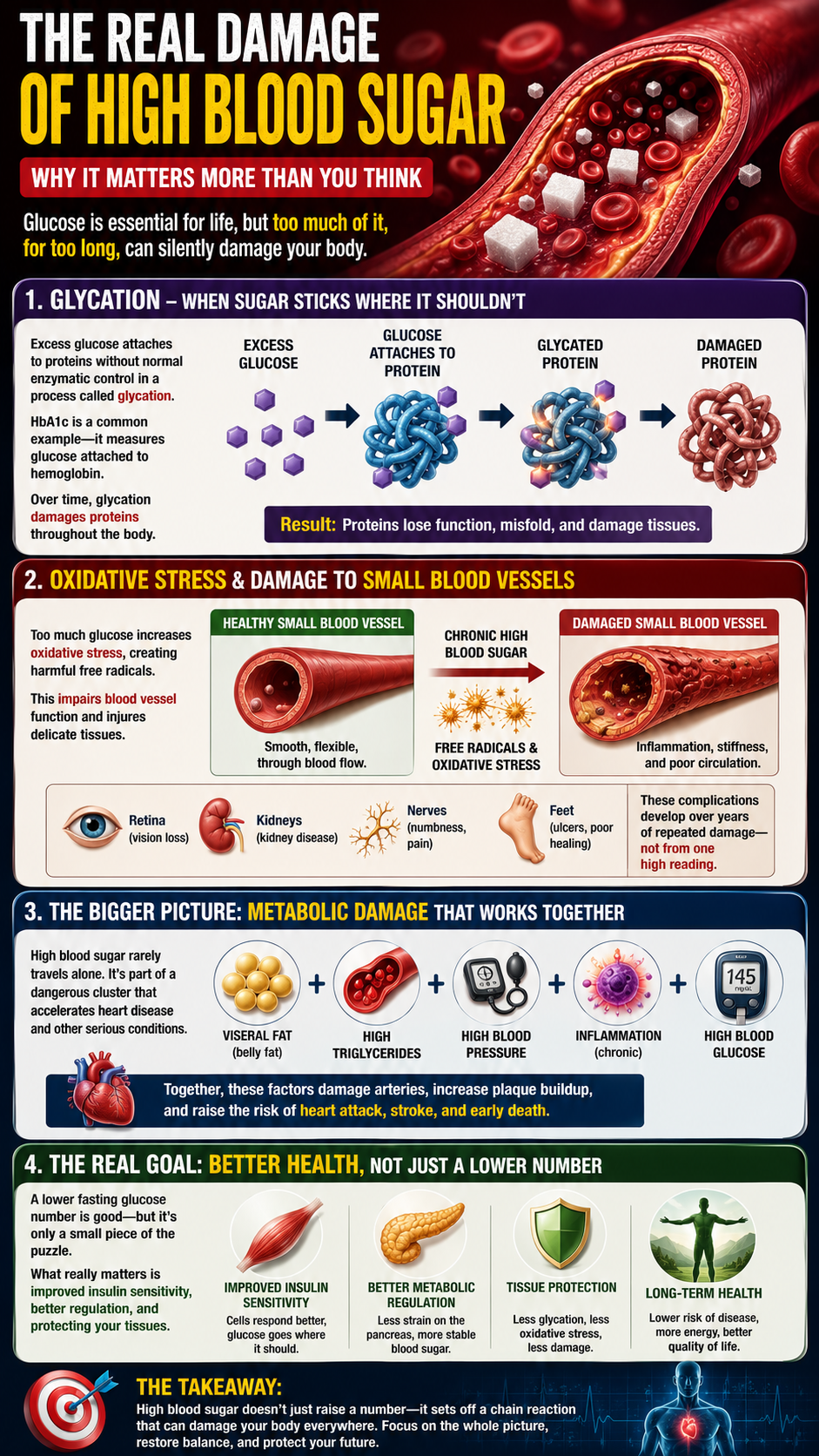
Larger blood vessels face problems within the broader environment surrounding insulin resistance. High triglycerides, hypertension, visceral fat, inflammation, and abnormal glucose frequently travel together. Their combined effects can accelerate cardiovascular disease and increase long-term health risks. Treating glucose while ignoring the surrounding metabolic environment leaves much of the problem untouched.
The objective should therefore extend beyond producing an attractive fasting number. A lower glucose reading becomes meaningful when it reflects improved insulin sensitivity and better metabolic regulation. Protecting tissues requires changing the physiology that repeatedly exposes them to excessive glucose. That approach addresses the problem rather than simply watching its measurement.
One Morning Reading Cannot Tell the Entire Story
A fasting glucose measurement represents the final frame of an eight-hour metabolic movie. Someone can awaken at 115 mg/dL after several very different overnight patterns. Understanding those patterns can reveal more than the morning number alone. Timing often provides clues about the physiological process driving the elevation.
One person might remain near 90 mg/dL for most of the night before rising around 4 a.m. Another could remain above 110 mg/dL from midnight until morning. A third person may experience substantial fluctuations throughout the night. Each pattern suggests a different metabolic story and deserves a different investigation.
Continuous glucose monitors can reveal these patterns with remarkable detail. People without CGMs can still compare bedtime and morning glucose when appropriate. Meal timing, sleep quality, evening exercise, and stress can be recorded beside those measurements. Several days of information usually provide more insight than one isolated reading.
The objective should involve discovering relationships rather than chasing perfection. When did glucose begin rising, and what happened beforehand? Did late dinners produce higher readings than earlier meals? Did excellent sleep change the morning response? Those questions transform glucose monitoring from judgment into investigation.
Fatty Liver Can Quietly Drive Fasting Glucose Higher
The liver deserves special attention when morning glucose remains elevated because it controls much of fasting glucose production. Metabolic dysfunction-associated steatotic liver disease frequently accompanies insulin resistance. Excess fat accumulates within liver cells and can interfere with normal metabolic signaling. The problem may develop long before obvious liver symptoms appear.
A healthy liver should reduce glucose production when insulin signals that sufficient energy exists. Hepatic insulin resistance weakens that response. Glucose production can continue despite elevated insulin and adequate circulating fuel. Morning glucose then becomes a possible clue to deeper liver-related metabolic dysfunction.
Fatty liver also connects glucose metabolism with triglyceride abnormalities and visceral adiposity. These conditions rarely exist in isolation because they share common metabolic drivers. Excess energy intake, inactivity, insulin resistance, and poor metabolic flexibility can push several systems in the wrong direction. Focusing only on fasting glucose misses these interconnected changes.
Improving hepatic insulin sensitivity can therefore influence much more than tomorrow morning’s meter reading. Better liver metabolism can support healthier triglycerides, improved glucose regulation, and more appropriate fuel storage. The objective is not forcing the liver to stop producing glucose completely. Healthy physiology requires the liver to know when production is necessary and when it should stop.
High Insulin Can Hide Behind Normal-Looking Glucose
Glucose receives most of the attention because it appears on common laboratory reports and home meters. Insulin can tell an earlier part of the story. The pancreas may increase insulin output for years before fasting glucose becomes dramatically abnormal. That compensation can hide declining insulin sensitivity.
Imagine two people with identical fasting glucose of 95 mg/dL. One maintains that glucose with relatively modest insulin, while another requires substantially more insulin. Their glucose numbers look identical, but their metabolic conditions may differ greatly. One system operates efficiently, while the other requires increasing hormonal pressure.
Chronically elevated insulin can also make stored fat harder to access. Insulin strongly influences whether energy gets stored or released. Frequent eating can keep insulin stimulated across much of the day, especially when meals contain large refined carbohydrate loads. The body receives fewer opportunities to transition toward stored fuel.
This pattern helps explain why metabolic dysfunction can progress despite acceptable fasting glucose. Waiting until glucose becomes severely elevated means waiting until compensation has weakened substantially. Looking at the broader metabolic picture can reveal problems earlier. Prevention becomes more realistic when warning signs receive attention before advanced disease develops.
Breakfast Can Magnify a Problem That Began Before Sunrise
An exaggerated dawn rise can create a difficult starting point for breakfast. Someone may wake with glucose already elevated because the liver increased glucose output during the early morning hours. A high-carbohydrate breakfast then adds another glucose challenge before the first one has completely resolved. The pancreas must respond with even greater insulin output.
Many popular breakfasts create exactly this situation. Sweetened cereal, juice, pastries, flavored coffee, toast, and breakfast bars can deliver substantial refined carbohydrates quickly. Marketing may describe some of these foods as healthy despite their glucose impact. The resulting morning spike can extend elevated glucose well beyond breakfast.
Protein-centered whole-food breakfasts generally create a different metabolic challenge. Eggs, appropriate animal proteins, and other minimally processed options can reduce the rapid carbohydrate load. Individual tolerance still matters because metabolic responses differ. Glucose monitoring can help reveal those differences without relying entirely on assumptions.
Breakfast, however, should not become the sole target. The metabolic disturbance may have started several hours earlier through hepatic glucose production. Correcting breakfast while ignoring insulin resistance, sleep, liver health, and muscle leaves deeper drivers untouched. Morning glucose needs a twenty-four-hour strategy rather than a breakfast-only solution.
Stress Can Manufacture Fuel Without a Meal
The human stress response evolved to make energy available quickly. Adrenaline can stimulate glycogen breakdown, while cortisol helps maintain adequate circulating fuel. These responses make sense when physical survival requires immediate action. Glucose becomes useful when muscles need energy for running, climbing, fighting, or escaping.
Modern stress often triggers similar physiology without requiring meaningful physical activity. Financial pressure, constant notifications, emotional conflict, deadlines, overtraining, and sleep deprivation can keep the nervous system activated. The body mobilizes fuel even though the person may remain seated at a desk. That mismatch can contribute to an unfavorable metabolic environment.
Chronic stress should not become a universal explanation for every elevated glucose reading. Liver insulin resistance, meal timing, inactivity, medications, sleep problems, and other factors can matter greatly. However, persistent sympathetic activation can amplify several of those problems. Stress deserves investigation as part of the system rather than becoming another simplistic villain.
Improving stress physiology does not require escaping all responsibility or living without challenges. The body needs periods when sympathetic activation declines and recovery can occur. Exercise, sleep, breathing practices, prayer, time outdoors, and reduced evening stimulation can support that transition. Metabolic health benefits when the nervous system receives genuine opportunities to recover.
The Deeper Goal Is Restoring Metabolic Flexibility
Healthy metabolism should move between different fuel sources according to changing conditions. After eating, the body can use incoming nutrients and store excess energy. During fasting, insulin should fall while stored fuel becomes increasingly available. The liver can supply necessary glucose without overwhelming circulation. Muscle should readily use glucose when demand increases.
Insulin resistance gradually erodes this flexibility. Insulin remains elevated for longer periods, while fat mobilization becomes more difficult. The liver becomes harder to restrain, and muscle becomes less responsive to insulin. Metabolism begins losing its ability to transition smoothly between feeding and fasting.
This explains why simply eliminating sugar cannot solve every case of elevated morning glucose. A person can consume very little sugar while remaining sedentary, sleep deprived, insulin resistant, and metabolically unhealthy. The liver can still manufacture glucose through gluconeogenesis. Correcting the metabolic environment requires addressing several interconnected systems.
The desired outcome reaches beyond one glucose measurement. Better insulin sensitivity should reduce the amount of insulin needed to manage fuel. Improved muscle function should increase glucose disposal, while better liver signaling should regulate glucose production. Restorative sleep and circadian consistency should support healthier hormonal rhythms. Those changes represent metabolic repair rather than simple number chasing.
Practical At-Home Actions for Better Morning Blood Sugar
Start with the final meal because nighttime metabolism begins long before bedtime. Finish dinner approximately three hours before sleep whenever possible. Removing habitual evening snacks creates a clearer overnight fasting period and allows insulin to decline. Several consistent evenings provide more useful information than one isolated attempt.
Dinner composition deserves attention alongside timing. Reduce desserts, sweetened beverages, refined flour, and highly processed carbohydrates during the evening. Build meals around quality protein, non-starchy vegetables, and minimally processed foods. Carbohydrate quantity can then be adjusted according to individual glucose response and metabolic needs.
Movement after dinner can change how incoming glucose gets handled. A comfortable 10-to-20-minute walk activates large skeletal muscles during the post-meal period. Contracting muscle can increase glucose uptake without relying entirely on insulin. Consistent walking also reduces the long sedentary period that often follows dinner.
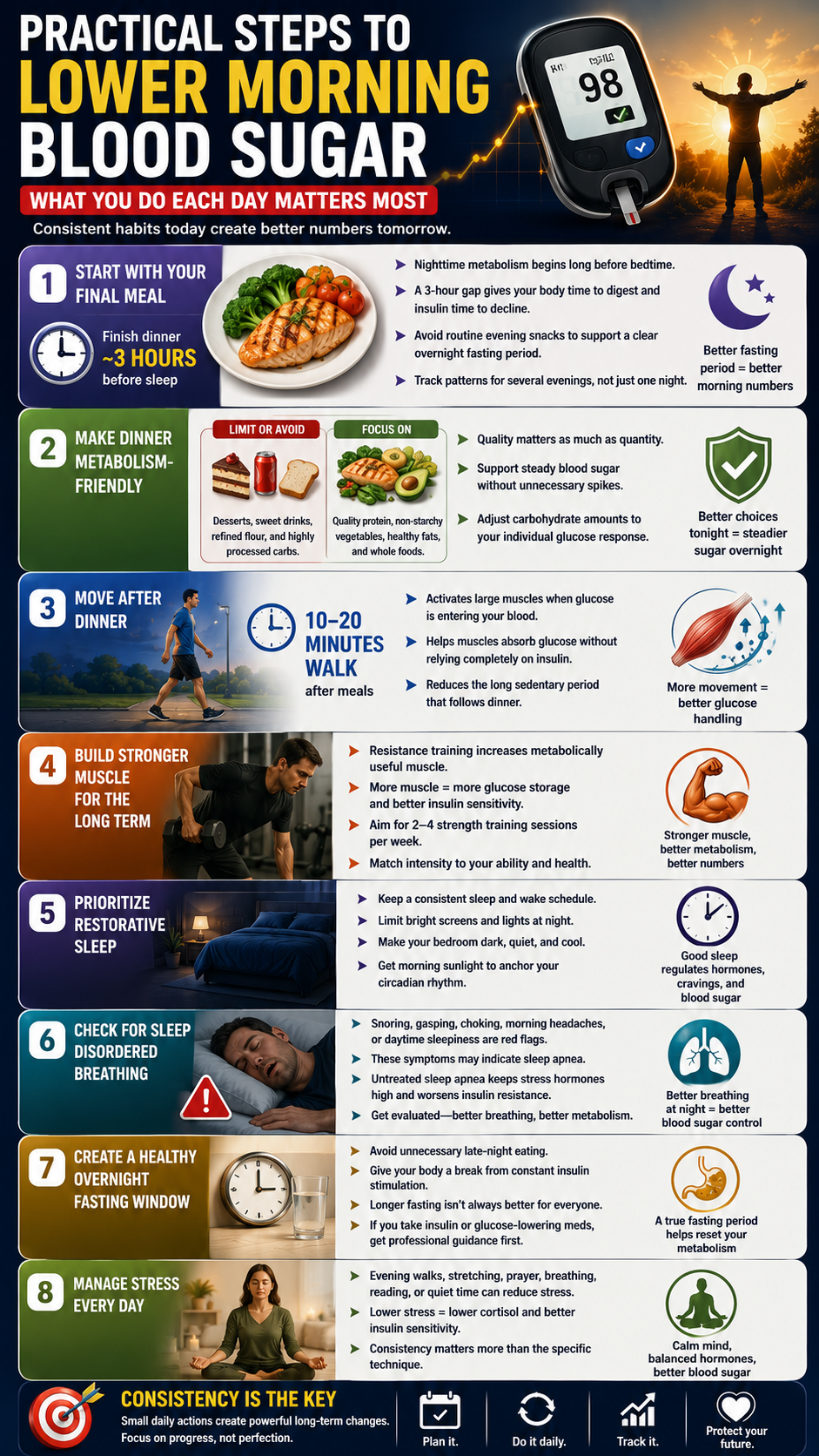
Resistance training provides a longer-term strategy by increasing metabolically useful muscle. Regular strength training creates more tissue capable of storing glycogen and utilizing glucose. Two to four appropriate sessions weekly can support insulin sensitivity while preserving lean mass. Exercise intensity should always match individual ability and health status.
Sleep should become another deliberate part of the home strategy. Maintain consistent bedtimes and waking times while reducing bright artificial light late at night. Keep the bedroom dark, quiet, and comfortable enough to support uninterrupted sleep. Morning outdoor light can help reinforce circadian timing and establish a clearer biological rhythm.
Persistent snoring, choking, gasping, morning headaches, or severe daytime sleepiness deserve further investigation. These symptoms can indicate sleep-disordered breathing rather than simple poor sleep habits. No dietary strategy can fully compensate for repeated nighttime breathing disturbances. Correcting sleep quality may significantly change the metabolic environment.
Creating a sensible overnight fasting interval can also reduce constant insulin stimulation. Begin by removing unnecessary nighttime eating rather than immediately attempting extreme fasting. Longer fasting periods are not automatically superior and can be inappropriate for certain people. Anyone using insulin or glucose-lowering medications should make significant dietary changes with appropriate guidance.
Stress reduction should become practical enough to repeat daily. Evening walking, gentle stretching, prayer, slow breathing, reading, and quiet time can help reduce unnecessary stimulation. The specific technique matters less than creating a consistent transition away from constant sympathetic activation. Recovery needs a place within the daily schedule.
Turn Your Glucose Meter Into an Investigation
Spend several days establishing a baseline before dramatically changing your routine. Record dinner timing, general meal composition, bedtime glucose, morning glucose, sleep quality, and evening activity. Anyone using a CGM can also observe the approximate time glucose begins rising. Patterns often become visible surprisingly quickly.
After establishing that baseline, change one major variable at a time. Move dinner earlier for several nights while keeping other habits relatively stable. Next, compare similar evenings with and without a post-dinner walk. Later, examine whether improved sleep changes the morning response.
This approach prevents the confusion created by changing everything simultaneously. Starting a new diet, five supplements, fasting, exercise, and a sleep routine together destroys your ability to identify what worked. Structured experimentation produces better personal information. Repeatable changes carry far more meaning than one unusually good morning reading.
Morning glucose should become feedback rather than a daily grade. The objective is discovering which behaviors improve the underlying physiology consistently. Better metabolic decisions become easier once personal patterns emerge. Knowledge replaces the frustration created by random experimentation.
Look Beyond Glucose When the Pattern Persists
Persistent high fasting glucose deserves a broader metabolic investigation. HbA1c can provide information about longer-term glucose exposure rather than one morning measurement. Fasting insulin can offer additional context about how much hormonal effort maintains glucose control. These measurements answer different questions and become more useful when considered together.
Triglycerides, HDL cholesterol, blood pressure, waist circumference, and liver-related markers can expand the metabolic picture. Increasing abdominal fat alongside elevated triglycerides and fasting insulin may reveal dysfunction before severe hyperglycemia appears. No single laboratory marker should become the entire diagnosis. Patterns across multiple measurements usually provide greater insight.
Repeated fasting glucose elevations should also be interpreted alongside medications, sleep, illness, alcohol intake, and other individual factors. People using glucose-lowering medications require additional caution when changing carbohydrate intake or fasting schedules. Significant hyperglycemia deserves appropriate evaluation rather than endless home experimentation. Excessive thirst, frequent urination, or unexplained weight loss also warrant timely attention.
Early investigation should not create fear because metabolic dysfunction develops along a continuum. Identifying problems sooner creates more opportunities to improve the underlying environment. Waiting until advanced diabetes develops gives the dysfunction additional years to become established. Morning glucose can serve as an early invitation to investigate rather than a reason to panic.
The Morning Number Is a Message From Your Metabolism
High morning blood sugar stops looking mysterious once we understand where glucose can originate. The liver can release stored glucose and manufacture additional glucose throughout an overnight fast. Hormonal changes before waking can increase that output as the body prepares for another day. None of those processes represents a metabolic mistake by itself.
The deeper problem appears when normal glucose production meets abnormal glucose regulation. Insulin resistance makes the liver harder to restrain and muscles less efficient at glucose disposal. Visceral fat, fatty liver, inactivity, poor sleep, chronic stress, and constant eating can intensify that imbalance. Morning glucose becomes one visible measurement emerging from a much larger physiological network.
That perspective changes what improvement should look like. The goal should not involve forcing the liver to stop making glucose or fearing every carbohydrate. Instead, the body needs better insulin sensitivity, stronger muscle, healthier liver signaling, restorative sleep, and appropriate feeding rhythms. Glucose production should match actual metabolic demand rather than exceed it.
Tomorrow morning’s glucose reading can therefore become valuable information rather than another source of frustration. Watch the pattern, investigate the causes, and change the conditions producing that pattern. Give muscles reasons to use glucose and provide the liver opportunities to respond appropriately to insulin. Protect the biological rhythms that coordinate those systems every night.
A better fasting glucose number certainly matters, but it should represent something larger happening underneath. The real victory comes when the pancreas no longer needs excessive insulin to maintain control. It continues when the liver knows when to release glucose and when to reduce production. Strong muscle then provides an efficient destination for the fuel entering circulation.
That is the deeper answer to the morning blood sugar mystery. The body is not malfunctioning because it can produce glucose without food. The danger begins when metabolic flexibility disappears and normal survival mechanisms become poorly regulated. Restoring that flexibility addresses far more than tomorrow morning’s number because it changes the metabolic environment producing it.