The Hidden Epidemic Living Inside Homes
There is a silent epidemic affecting millions of people worldwide, yet it remains largely unrecognized, misunderstood, and often dismissed. Mold toxicity is not a fringe concept or a rare environmental hazard. It is a pervasive issue embedded within homes, workplaces, schools, and buildings that appear perfectly normal on the surface. The most concerning aspect is not just that mold exists, but that it thrives in the very environments where people spend the majority of their time, breathing, sleeping, and recovering.
Modern construction practices have unintentionally created ideal conditions for mold growth. Buildings are designed to be energy-efficient, tightly sealed, and insulated, which limits airflow and traps moisture. Add to this the presence of leaks, humidity, condensation, or past water damage, and you have the perfect breeding ground for mold colonies. These colonies release microscopic particles known as mycotoxins, which are capable of entering the body through inhalation, ingestion, and skin contact.
The relevance of this issue extends far beyond individuals with obvious mold exposure. Many people are living with chronic symptoms that have no clear explanation, ranging from fatigue and brain fog to respiratory issues and hormonal imbalances. These symptoms are often treated individually, rather than traced back to a common environmental cause. Mold toxicity is rarely the first thing considered, and in many cases, it is not considered at all.
What makes this topic universally important is that exposure does not always present as a dramatic event. It can be subtle, cumulative, and insidious. A slow leak behind a wall, a poorly ventilated bathroom, or a previously flooded basement can all contribute to ongoing exposure. The question is not whether mold exists, but whether it is affecting your health without your awareness.
Understanding Mold Toxicity: What It Really Does to the Body
Mold itself is a natural part of the environment, but the problem arises when it grows indoors and releases mycotoxins into confined spaces. These toxins are not benign. They are biologically active compounds designed to protect the mold from threats, including bacteria and other organisms. Unfortunately, when humans are exposed, these same compounds can disrupt normal physiological function.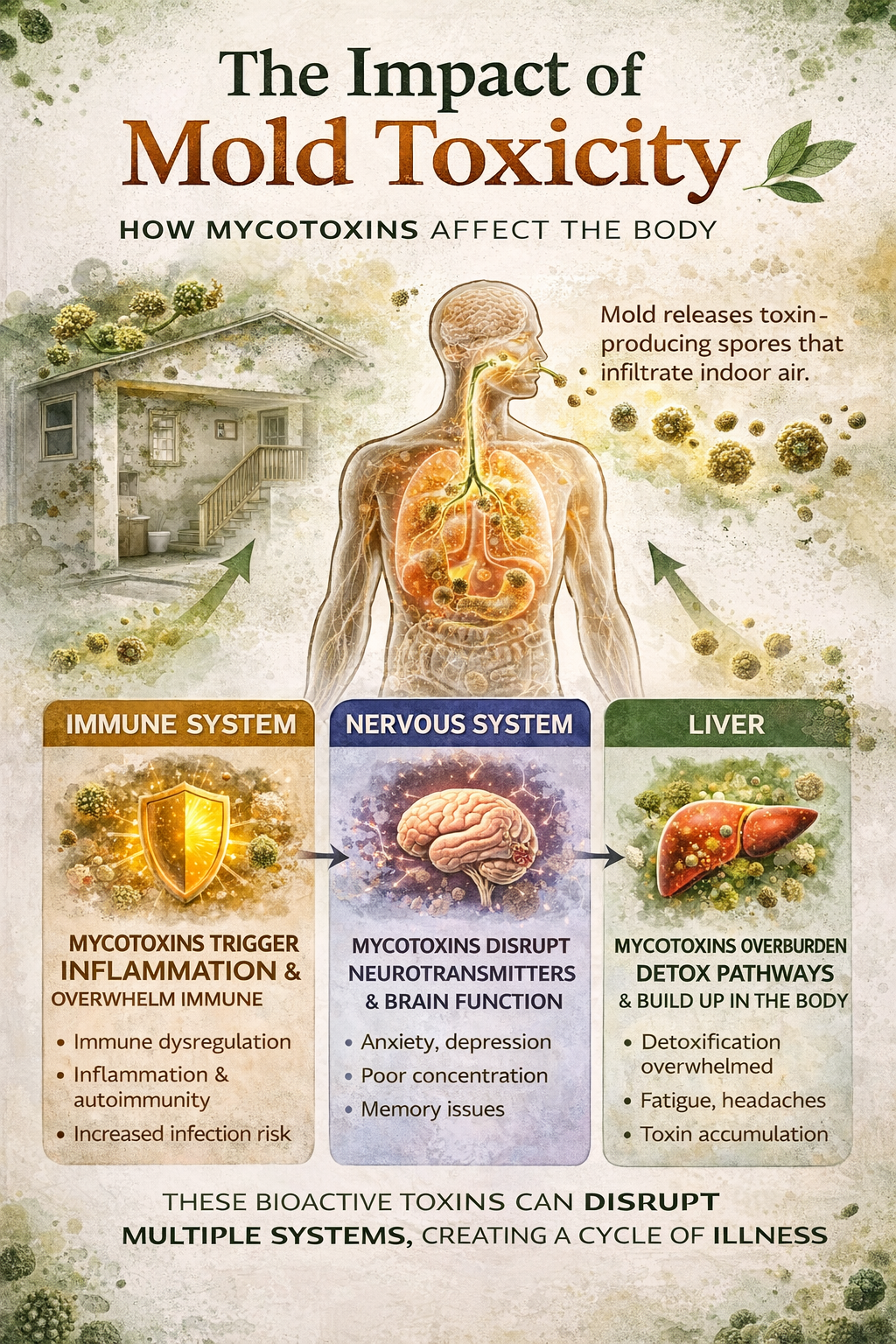
Once inside the body, mycotoxins can affect multiple systems simultaneously. The immune system is often the first to respond, triggering inflammation as it attempts to neutralize the perceived threat. However, chronic exposure can overwhelm this response, leading to immune dysregulation. Some individuals may become hypersensitive, reacting strongly to even small exposures, while others may experience immune suppression, making them more susceptible to infections.
The nervous system is particularly vulnerable. Mycotoxins can cross the blood-brain barrier, interfering with neurotransmitter function and contributing to symptoms such as anxiety, depression, poor concentration, and memory issues. This neurological impact is one of the most debilitating aspects of mold toxicity, as it affects not just physical health, but cognitive and emotional well-being.
The liver, as the body’s primary detoxification organ, also bears a significant burden. Processing mycotoxins requires energy, nutrients, and efficient biochemical pathways. When exposure is ongoing, the liver can become overwhelmed, leading to a buildup of toxins in circulation. This creates a cycle where the body is constantly trying to eliminate toxins but never fully catching up.
Symptoms of Mold Toxicity: Why It’s So Often Missed
One of the biggest challenges with mold toxicity is that its symptoms are nonspecific. They overlap with many other conditions, making it difficult to identify without considering environmental factors. People may experience chronic fatigue, headaches, sinus congestion, skin issues, digestive problems, and joint pain, all of which can be attributed to a wide range of causes.
Brain fog is one of the most commonly reported symptoms. Individuals often describe difficulty concentrating, forgetfulness, and a general sense of mental sluggishness. This can significantly impact daily functioning, work performance, and quality of life. Yet, it is frequently dismissed as stress, lack of sleep, or aging.
Respiratory symptoms are another common presentation. Persistent coughing, wheezing, or shortness of breath may be treated as asthma or allergies without addressing the underlying environmental trigger. In some cases, individuals may not exhibit classic respiratory symptoms at all, further complicating diagnosis.
The variability of symptoms is a key reason mold toxicity is overlooked. Two people exposed to the same environment may have completely different reactions. This variability depends on genetic factors, immune status, detoxification capacity, and overall health. Without a clear pattern, the condition is often misdiagnosed or ignored entirely.
Mainstream Medicine vs Functional Perspective: A Critical Contrast
Mainstream medicine often approaches health issues by isolating symptoms and addressing them individually. This reductionist model can be effective in acute situations, but it falls short when dealing with complex, multifactorial conditions like mold toxicity. The focus is typically on treating symptoms rather than identifying and removing the root cause.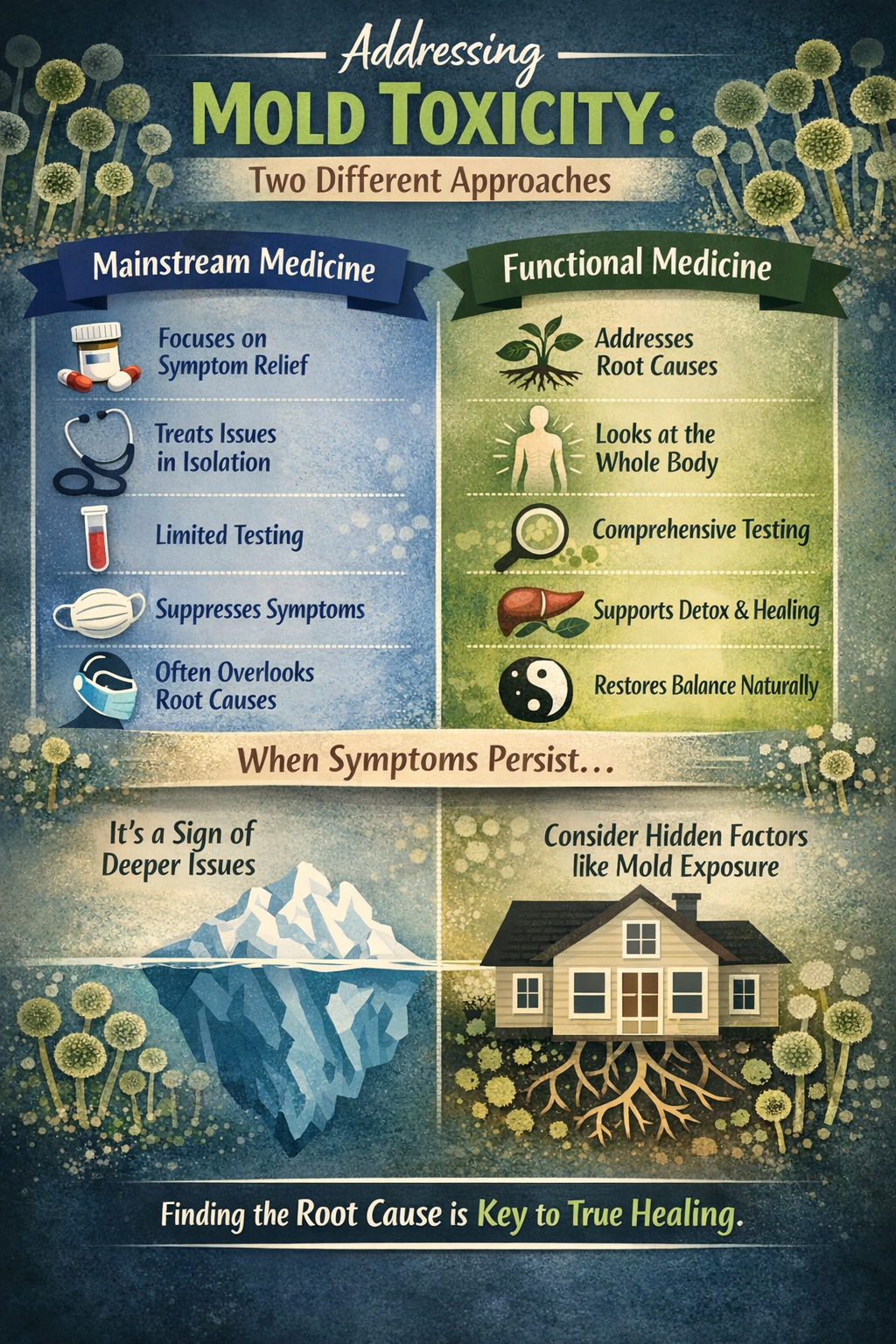
When it comes to mold, conventional approaches may acknowledge its role in allergies or respiratory conditions, but rarely consider systemic toxicity. Testing is often limited, and treatment may involve medications that suppress symptoms rather than addressing the underlying exposure. This can provide temporary relief but does not resolve the problem.
Functional medicine takes a fundamentally different approach. It views the body as an interconnected system and seeks to identify the root causes of dysfunction. In the case of mold toxicity, this means assessing environmental exposure, evaluating detoxification pathways, and understanding individual susceptibility. The goal is not just to manage symptoms, but to restore balance and support the body’s natural healing processes.
This contrast is not about dismissing one approach in favor of another, but about recognizing limitations. When symptoms persist despite conventional treatment, it is a signal that something deeper may be at play. Mold toxicity represents one of those hidden factors that requires a broader, more integrative perspective.
Why Mold Toxicity Persists: The Role of Modern Living
Modern lifestyles have inadvertently increased the risk of mold exposure. Urban living often involves spending the majority of time indoors, where air quality may be compromised. Buildings are designed for efficiency, not necessarily for optimal health, and ventilation is often insufficient to prevent moisture buildup.
Diet and lifestyle also play a role. Nutrient deficiencies can impair the body’s ability to detoxify, while chronic stress can weaken immune function. Poor sleep further compounds these issues, reducing the body’s capacity to repair and recover. When these factors are combined with ongoing exposure, the result is a perfect storm for chronic illness.
Another contributing factor is lack of awareness. Many people do not consider their environment as a source of illness. They may focus on diet, exercise, and supplements, while overlooking the air they breathe and the spaces they inhabit. Without addressing environmental triggers, even the best health practices may fall short.
Understanding the role of modern living is essential because it shifts the focus from isolated symptoms to a broader context. Health is not determined by a single factor, but by the interaction of environment, lifestyle, and individual biology. Mold toxicity is a clear example of how these elements intersect.
Chiropractic and the Nervous System: A Critical Piece of Detox
Chiropractic care is often associated with musculoskeletal health, but its impact extends far beyond the spine. The nervous system controls every function in the body, including detoxification, immune response, and organ function. When the nervous system is compromised, the body’s ability to heal and detoxify is impaired.
Spinal misalignments, or subluxations, can interfere with nerve signaling, disrupting communication between the brain and the body. This can affect the function of organs involved in detoxification, such as the liver and kidneys. By restoring proper alignment, chiropractic care helps optimize nervous system function, allowing the body to operate more efficiently.
In the context of mold toxicity, this is particularly important. The body is already under stress from toxic exposure, and any additional interference can exacerbate symptoms. Chiropractic adjustments support the body’s natural ability to adapt and respond, enhancing resilience and recovery.
This perspective highlights the importance of addressing not just the toxin, but the system that processes it. Detoxification is not a single pathway, but a coordinated effort involving multiple systems. Supporting the nervous system is a foundational step in improving overall function and facilitating detox.
Functional Detoxification: Supporting the Body Naturally
Detoxification is often misunderstood as a quick fix or a temporary cleanse. In reality, it is an ongoing process that occurs continuously within the body. The liver, kidneys, lymphatic system, and gut all play critical roles in eliminating toxins, including mycotoxins from mold exposure.
Supporting detoxification begins with reducing exposure. Identifying and addressing sources of mold in the environment is essential. This may involve professional inspection, remediation, or changes in living conditions. Without removing the source, detox efforts are likely to be limited in effectiveness.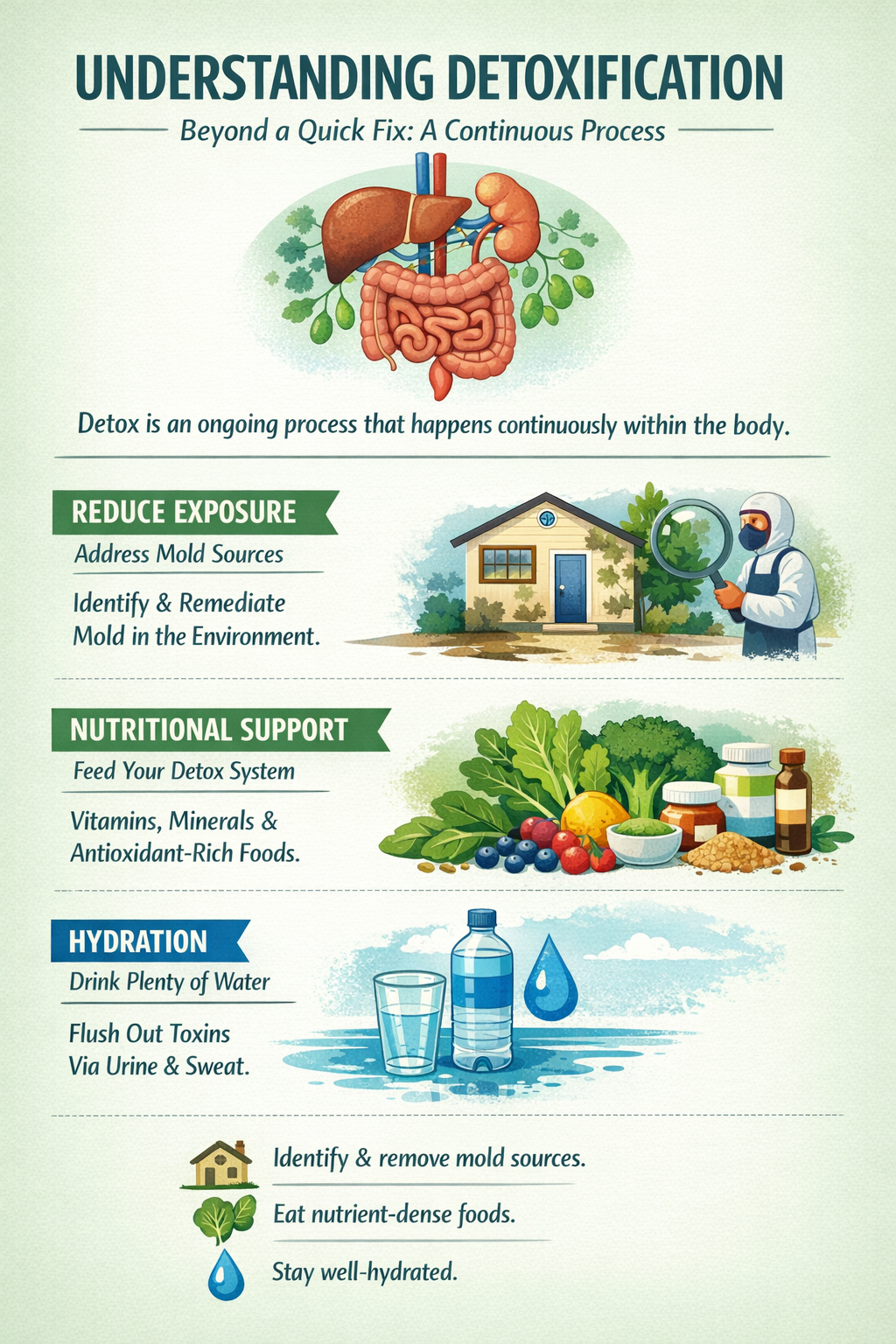
Nutritional support is another key component. The body requires specific nutrients to carry out detoxification processes, including vitamins, minerals, and antioxidants. Foods rich in these nutrients, such as leafy greens, cruciferous vegetables, and healthy fats, provide the building blocks for optimal function.
Hydration is equally important. Water is necessary for the elimination of toxins through urine and sweat. Adequate intake supports kidney function and helps maintain overall balance. Simple practices, such as drinking clean, filtered water and incorporating hydrating foods, can make a significant difference.
Actionable Steps to Protect Yourself from Mold Toxicity
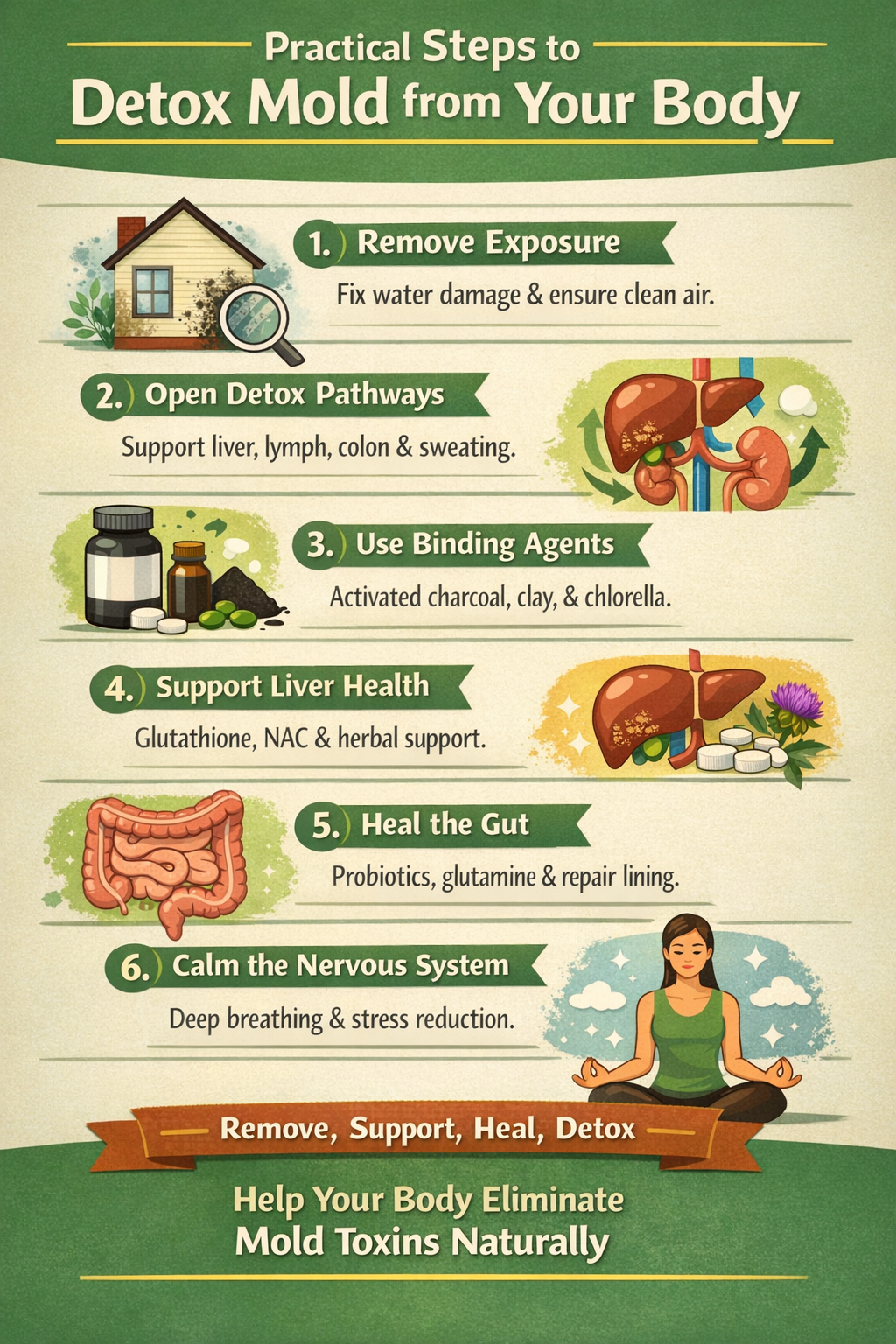
Mold toxicity is one of those hidden stressors that quietly drains the body—impacting energy, cognition, immune function, and even hormone balance. While conventional approaches often focus on symptom suppression, a deeper, more effective strategy looks at how to support the body’s innate detoxification systems so it can eliminate mold naturally and efficiently. The body already knows how to detox; the key is removing the obstacles and providing the right support.
The first and most critical step is eliminating exposure. You cannot out-supplement ongoing mold exposure. This means identifying and addressing the source—whether it’s water-damaged drywall, HVAC systems, crawl spaces, or even hidden leaks behind cabinets. Professional inspection is often necessary, but even simple awareness of musty smells, humidity, or visible discoloration can be a starting point. Clean air is foundational; without it, the detox process becomes nearly impossible.
Once exposure is reduced or eliminated, the focus shifts to opening the body’s detox pathways. Think of this as “drainage before detox.” The liver, lymphatic system, colon, kidneys, and skin all play essential roles. Supporting bowel regularity is crucial—if toxins cannot leave through the colon, they will recirculate. Hydration, magnesium, and fiber can help ensure daily elimination. Sweating through sauna therapy or exercise also assists the body in pushing toxins out through the skin, while lymphatic movement—via walking, rebounding, or chiropractic adjustments—keeps fluid and waste moving efficiently.
Binding agents are another powerful tool. Mold toxins, or mycotoxins, are often reabsorbed in the gut if not properly bound. Natural binders like activated charcoal, bentonite clay, chlorella, and modified citrus pectin can help “grab” these toxins and escort them safely out of the body. These should be used strategically, typically away from meals and supplements, to avoid interfering with nutrient absorption.
The liver is the body’s primary detox organ, and mold places a significant burden on it. Supporting liver function with nutrients like glutathione, N-acetylcysteine (NAC), B vitamins, and herbal compounds such as milk thistle and dandelion root can enhance detoxification pathways. Bitter foods and herbs also stimulate bile flow, which is essential for carrying toxins out of the body.
Gut health cannot be overlooked. Mold toxicity often disrupts the microbiome and damages the intestinal lining, leading to increased permeability—commonly referred to as “leaky gut.” Repairing the gut with targeted nutrition, probiotics, and amino acids like glutamine helps restore the barrier and prevents toxins from re-entering circulation.
Finally, the nervous system plays a surprisingly important role. Chronic mold exposure can keep the body in a stressed, sympathetic state, which suppresses detoxification. Practices like deep breathing, prayer, time in nature, and adequate sleep help shift the body into a parasympathetic, healing mode where true detoxification can occur.
Detoxing from mold is not about forcing the body—it’s about supporting it. When exposure is removed, pathways are open, and the body is nourished correctly, healing becomes not only possible, but inevitable.
Conclusion: Taking Control of an Overlooked Threat
Mold toxicity represents a hidden but significant challenge in modern health. Its impact is widespread, affecting multiple systems and often going unrecognized. The gap between mainstream approaches and functional perspectives highlights the need for a more comprehensive understanding of health and disease.
The most important takeaway is that awareness leads to action. By understanding the role of mold in health, individuals can take steps to reduce exposure, support detoxification, and improve overall well-being. This is not about fear, but about empowerment.
Health is not determined by a single factor, but by the choices made daily. Addressing mold toxicity is one piece of a larger puzzle, but it is a critical one. By taking a proactive approach, it is possible to move from chronic symptoms to clarity, from confusion to understanding, and from illness to resilience.